Converting Council Housing to HMO: Planning, Legal, and Regulatory Requirements
By Housey · Last reviewed 25th of May 2026
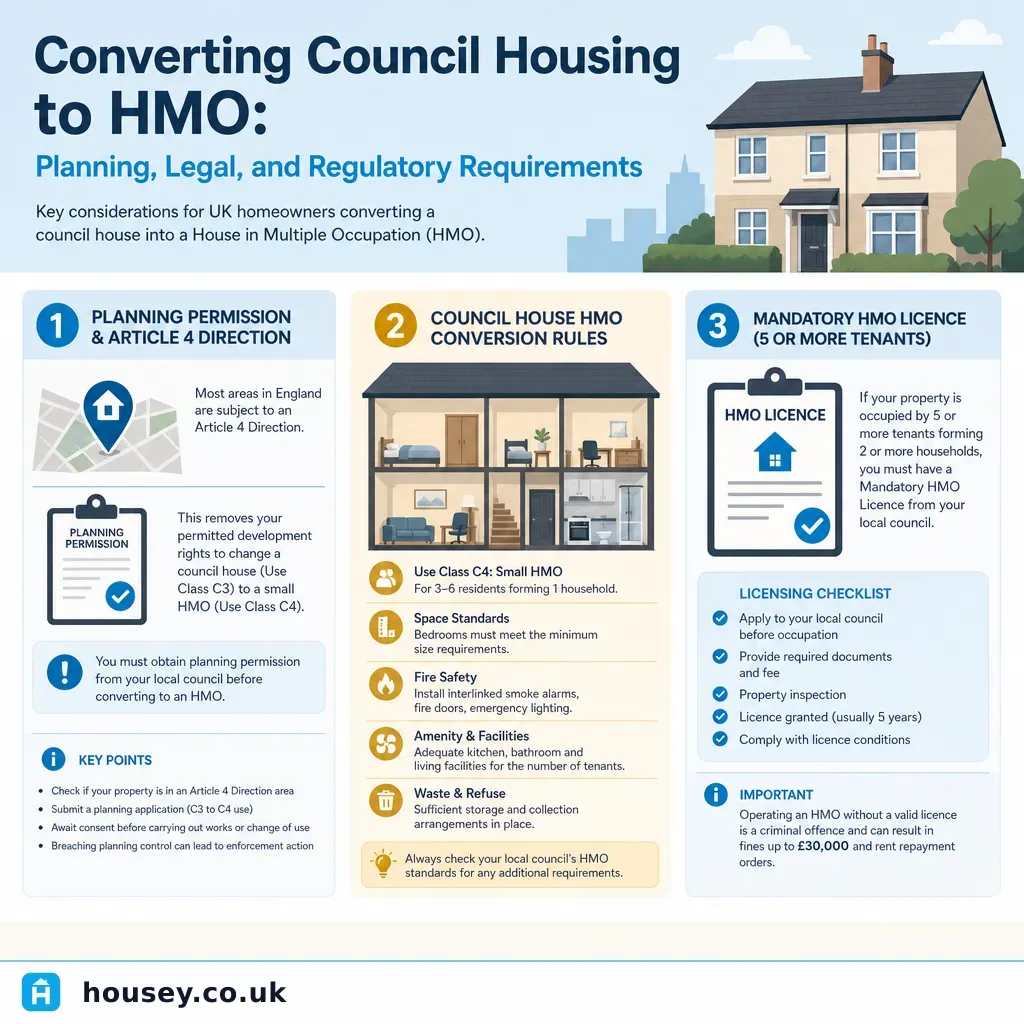
Converting Council Housing to HMO: Planning, Legal, and Regulatory Requirements
If you have purchased a former council property through Right to Buy, or acquired ex-local authority stock on the open market, and are considering converting it to a House in Multiple Occupation (HMO), the regulatory path is more complex than a standard residential conversion. Former council homes often carry restrictive covenants that are easily overlooked, and the planning and licensing obligations for HMOs in England have tightened considerably since 2018 — making early professional advice essential before any works begin.
Key points
- Any property rented to 5 or more people from 2 or more separate households who share facilities requires a mandatory HMO licence from the local authority under the Housing Act 2004 (as amended in 2018).
- Properties accommodating 7 or more unrelated occupants fall into the sui generis use class under the Town and Country Planning (Use Classes) Order 1987 and almost always require full planning permission.
- Over 60 local authorities in England have introduced Article 4 Directions removing permitted development rights, meaning smaller HMOs (C4 use class, 3–6 people) also require planning permission in those areas.
- Former council homes may carry clawback covenants requiring the local authority's consent before the property is sub-divided or its use materially changed.
- Building Regulations apply to HMO conversions — particularly Approved Document B (fire safety), Part G (sanitation), and Part F (ventilation) — and building control sign-off is required for material alterations.
What is an HMO and which use class applies?
An HMO is a property rented by at least 3 people who are not from the same household but share facilities such as a kitchen, bathroom, or toilet. The Town and Country Planning (Use Classes) Order 1987 (as amended) places HMOs in two categories:
Use class | Occupancy | Planning permission usually needed? |
|---|---|---|
C4 (small HMO) | 3–6 unrelated occupants sharing | No — usually permitted development, unless an Article 4 Direction applies |
Sui generis | 7 or more unrelated occupants sharing | Yes — always requires full planning permission |
Moving from a standard dwelling (C3 use) to C4 is typically permitted development in areas without an Article 4 Direction. Moving to sui generis use — or to C4 in an Article 4 Direction area — requires a formal planning application to the local planning authority (LPA).
Article 4 Directions and why they matter
Many local authorities have introduced Article 4 Directions in areas with high concentrations of HMOs — often the same areas with significant former council housing stock. If your property is within an Article 4 Direction area, planning permission is required even to convert from a single-family home to a small 3-person HMO.
You can check whether an Article 4 Direction applies by using your LPA's planning portal or by requesting a formal pre-application enquiry. This check should be the first step before any further planning is undertaken.
Covenants, clawback, and consent on former council properties
Former council properties acquired through Right to Buy often carry conditions that are not always apparent from the sale particulars:
- Clawback (resale) covenants: if the property is sold or its use is significantly altered within a certain period (often up to 10 years from purchase), the council may be entitled to a percentage of the value uplift. Sub-dividing or changing use could constitute a trigger event.
- Restrictive covenants: some transfers include conditions on use, such as prohibiting sub-division or multi-occupancy. These run with the land and bind subsequent owners.
- Estate management schemes: some former council estates are subject to schemes under Part XI of the Leasehold Reform, Housing and Urban Development Act 1993, restricting alterations to the property.
Check the original transfer deed and title register at HM Land Registry before proceeding. If a covenant restricts the intended use, a deed of variation or indemnity insurance may be required — both require a solicitor.
HMO licensing requirements
Mandatory HMO licensing applies nationally to properties with 5 or more occupants from 2 or more households. Many councils also operate additional licensing schemes or selective licensing schemes that extend coverage to smaller HMOs or all private rented properties in a defined area.
Minimum room sizes under mandatory licensing
Under the Licensing of Houses in Multiple Occupation (Mandatory Conditions of Licences) (England) Regulations 2018:
- 6.51 m² minimum floor area for a room occupied by one person aged 10 or over
- 10.22 m² minimum for a room shared by two persons aged 10 or over
- 4.64 m² for rooms used by children under 10; rooms below this threshold cannot be used as sleeping accommodation at all
Building Regulations for HMO conversions
Converting a former council house to an HMO is a material change of use that triggers Building Regulations requirements. Key Approved Documents include:
- Part B (Fire Safety): inter-tenancy fire separation, fire doors, mains-wired interlinked smoke and heat alarms, and emergency lighting in some cases.
- Part G (Sanitation): minimum numbers of toilets and bathrooms relative to occupancy.
- Part F (Ventilation): adequate ventilation in habitable rooms and bathrooms.
- Part P (Electrical Safety): any new electrical work must comply and may require notification to building control.
You will need to submit a building regulations application — either a full plans application or a building notice — to your LPA's building control department or a registered Approved Inspector before beginning structural or material alterations.
Decision tree: do you need planning permission?
- Permitted development applies if: the property is not in an Article 4 Direction area AND you plan for 3–6 unrelated tenants only.
- Apply for planning permission (C4 application) if: an Article 4 Direction covers the area AND you want 3–6 tenants.
- Apply for planning permission (sui generis) if: you want 7 or more tenants, regardless of location.
- Seek specialist planning advice if: the property is listed, in a conservation area, or the LPA has specific policies on HMO density.
- Review the title register first if: the property was acquired via Right to Buy or transferred from the council within the last 20 years.
Red flags to address before proceeding
- The title shows a clawback covenant or a restrictive covenant on use.
- The property is in an Article 4 Direction area and planning permission has not been obtained.
- Room sizes do not meet the minimum 6.51 m² threshold for single occupancy.
- The existing fire detection is battery-only and not interlinked.
- The electrical installation has not had an Electrical Installation Condition Report (EICR) within the last 5 years.
- The property is leasehold — freeholder consent for change of use will also be required.
Important limitations
This article provides general information about the planning, licensing, and building regulations framework in England. Rules vary by local authority, property history, lease terms, and individual circumstances. Planning policy, licensing scheme boundaries, and Article 4 Direction areas change over time. A qualified planning consultant, solicitor, and building control professional should assess your specific property before any works begin or any application is submitted.
What to ask a qualified professional
Planning consultant
- Does an Article 4 Direction apply to this address, and which use class does my intended occupancy fall into?
- What is the LPA's current policy on HMO density in this area?
- Is pre-application advice from the LPA recommended before submitting a formal application?
Solicitor or conveyancer
- Does the title contain any restrictive covenants or clawback provisions relating to use or sub-division?
- Do I need the local authority's formal consent before proceeding?
- Is the property leasehold, and does the lease permit HMO use?
Building control professional
- What building regulations applications are required for the proposed works?
- Will the existing structure meet Part B fire safety requirements for the intended occupancy?
- Which alterations would require a full plans application rather than a building notice?
When to get professional help
Instruct a planning consultant and solicitor before committing to the conversion if: you are unsure whether an Article 4 Direction covers the postcode; the title has not been fully reviewed for covenants; the property requires structural alterations to achieve minimum room sizes; you intend to accommodate 7 or more occupants; or the building is listed or in a conservation area.
How Housey can help
Housey connects you with experienced planning consultants with HMO and Article 4 expertise who can advise on planning applications and pre-application engagement with your local authority. You can also find building control consultants for HMO conversion sign-off to guide you through the regulatory approval process for your conversion works.
Frequently asked questions
Does a former council house need planning permission to become an HMO?
It depends on the number of occupants and whether an Article 4 Direction covers the area. For 3–6 unrelated tenants, it is usually permitted development unless an Article 4 Direction removes that right. For 7 or more tenants, planning permission is always required. Check your local planning authority's Article 4 register before proceeding.
Do Right to Buy clawback clauses affect HMO conversions?
They may. Right to Buy clawback covenants typically relate to resale within a specified period, but some may also apply to material changes in use or sub-division. Review the title register at HM Land Registry and take legal advice before proceeding with any change of use.
How many bathrooms are required in a mandatory HMO?
Local authority licensing conditions vary, but most councils require one bathroom and one toilet per 4–5 occupants. Your local HMO licensing team will specify minimum amenity standards as part of the licence conditions, which must be met before a licence is granted.
Can a leasehold former council flat be converted to an HMO?
You would need to review the lease carefully. Many leases prohibit sub-letting to multiple unrelated occupants or require the freeholder's written consent for change of use. Breaching lease terms can result in forfeiture proceedings. Obtain legal advice before proceeding with any change of use.
Sources and further reading
- Houses in Multiple Occupation — GOV.UK
- The Licensing of Houses in Multiple Occupation (Mandatory Conditions of Licences) (England) Regulations 2018 — legislation.gov.uk
- Town and Country Planning (Use Classes) Order 1987 — legislation.gov.uk
- Right to Buy: buying your council home — GOV.UK
- Search the property register — HM Land Registry
Useful next reads
 Planning & Pre-Build
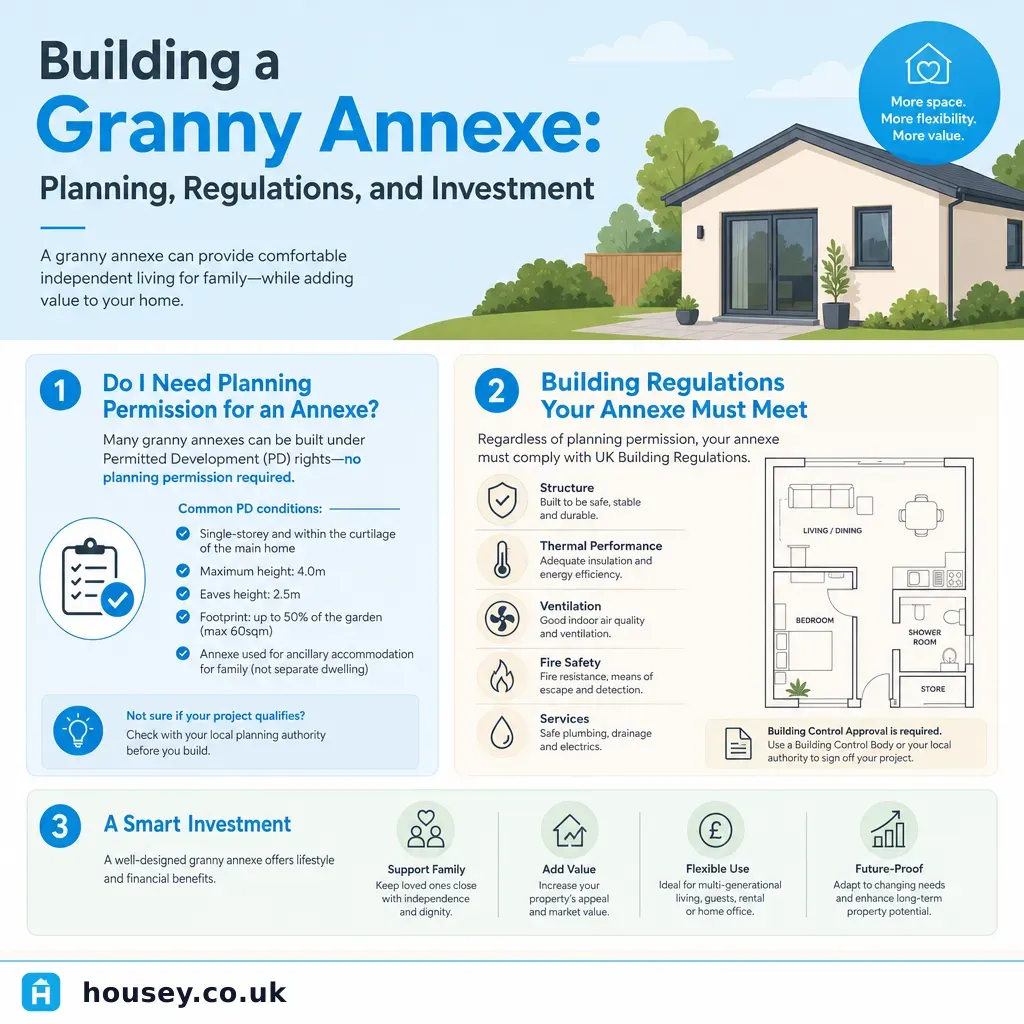
Building a Granny Annexe: Planning, Regulations, and Investment
A granny annexe in the UK may or may not need planning permission depending on whether it is classed as incidental to the main house or as a separate dwelling.
 Planning & Pre-Build
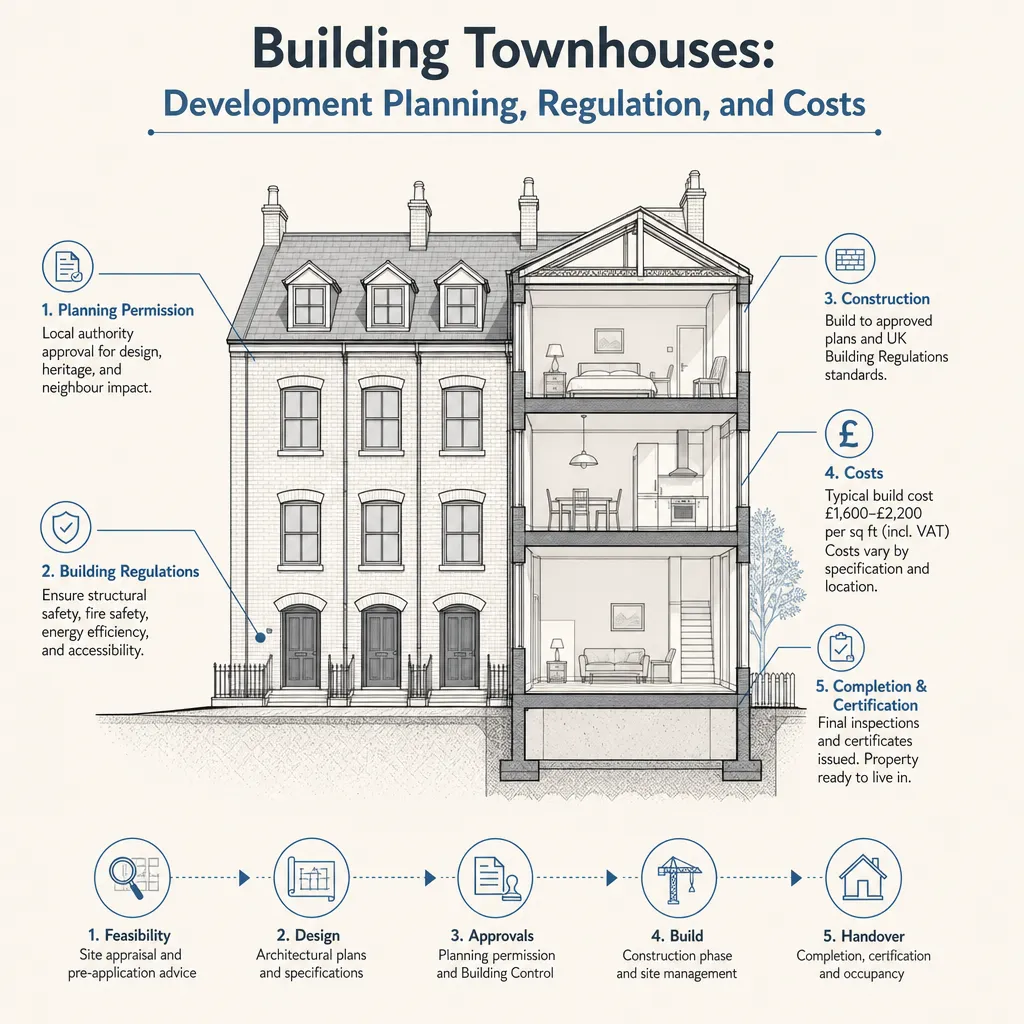
Building Townhouses: Development Planning, Regulation, and Costs
Building townhouses in the UK requires full planning permission for all new dwellings — permitted development rights do not apply to new residential construction.
 Planning & Pre-Build
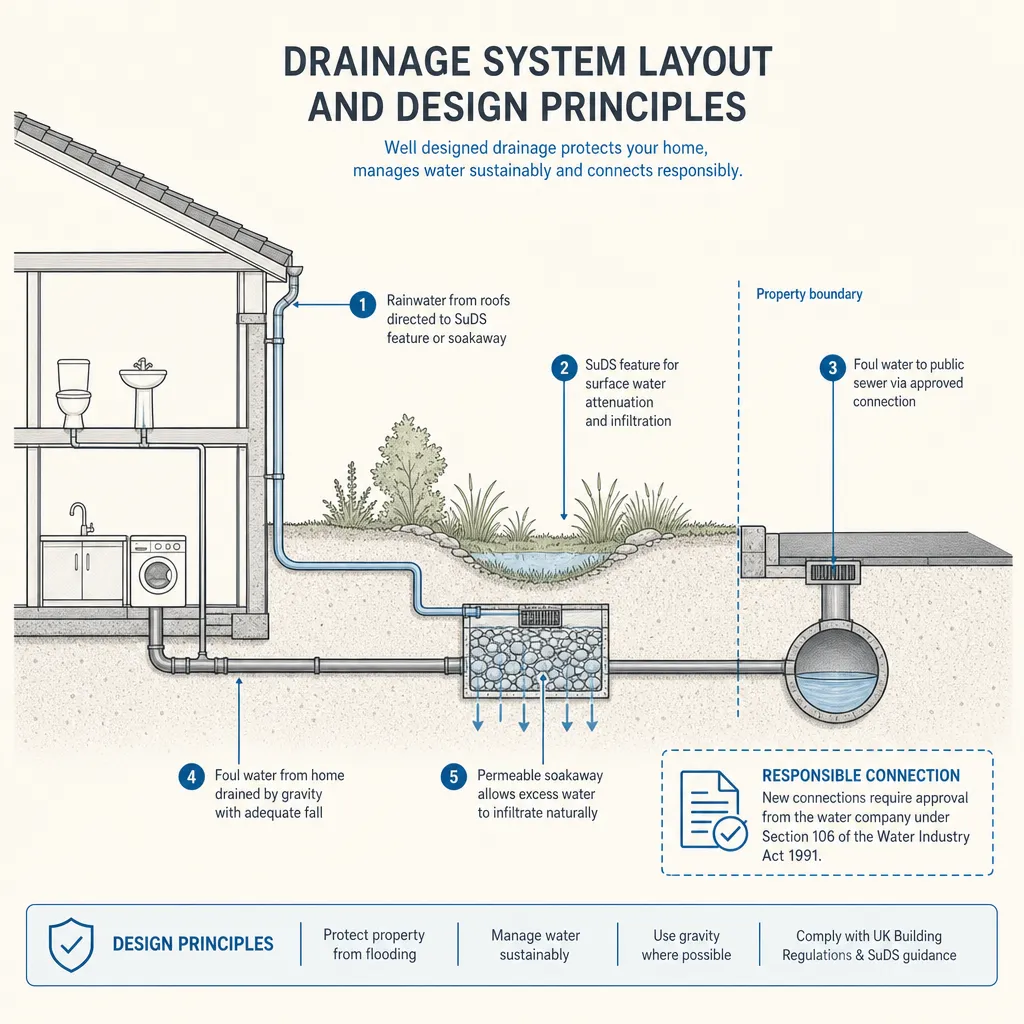
Drainage System Layout and Design Principles
A UK drainage layout separates foul water from surface water, routes both via correctly graded pipes to the public sewer, a soakaway, or a treatment plant, and incorporates Sustainable Drainage Systems where required.
 Planning & Pre-Build
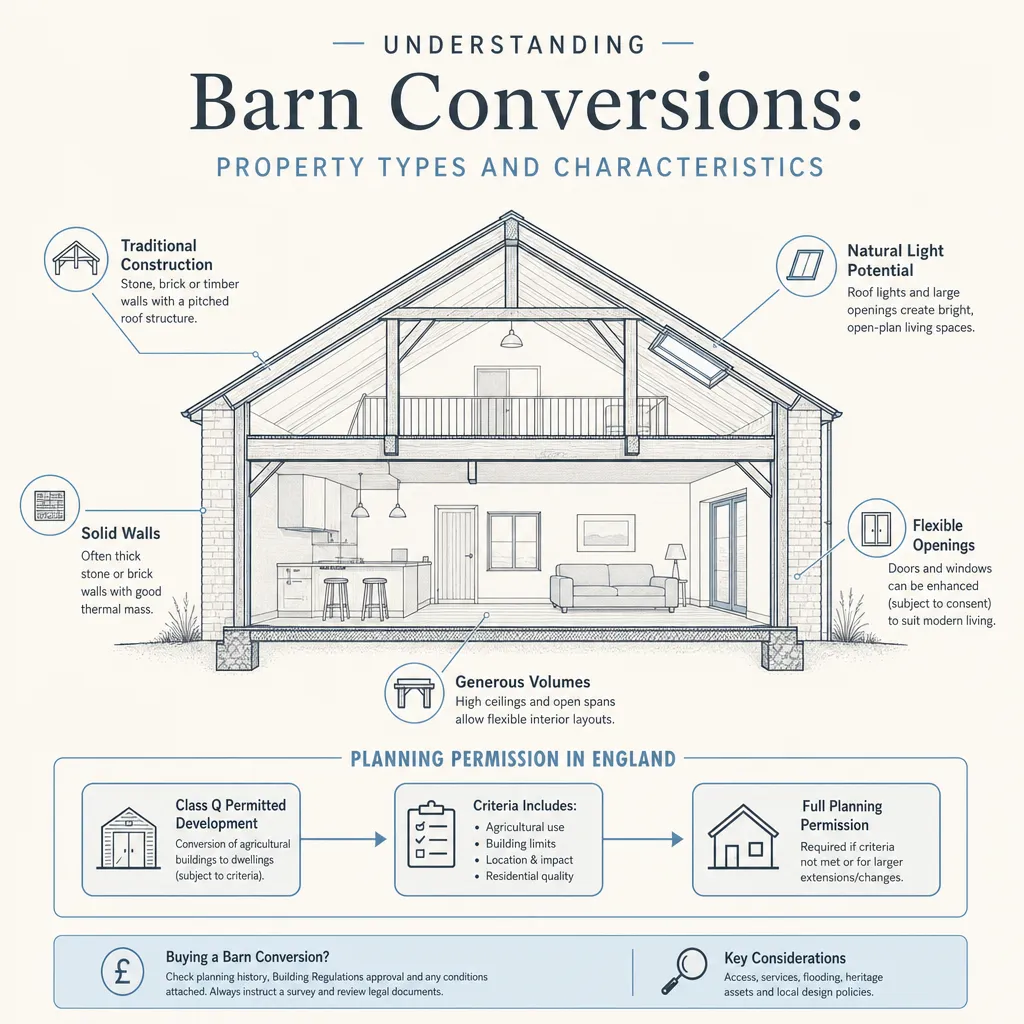
Understanding Barn Conversions: Property Types and Characteristics
A barn conversion is an agricultural building — typically a former threshing barn, cattle shed, or granary — converted into residential use.
 Planning & Pre-Build
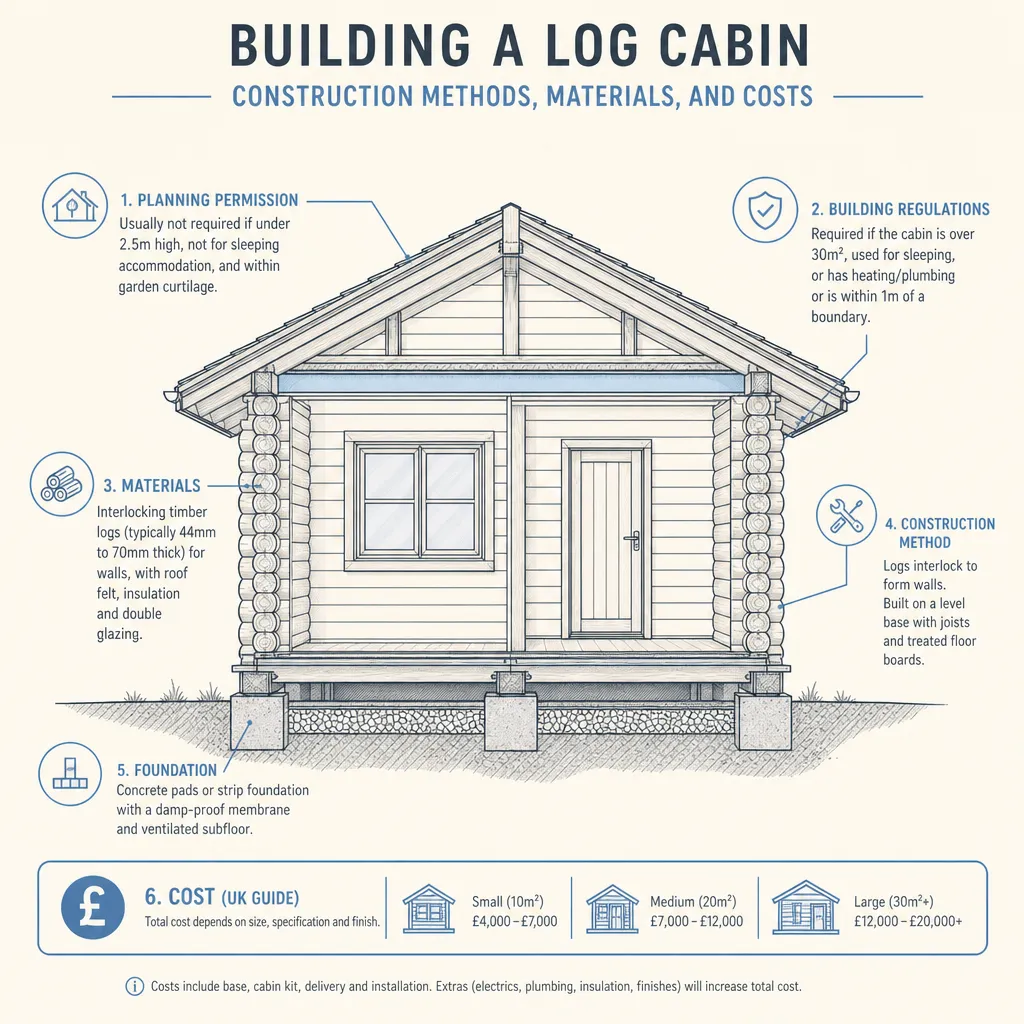
Building a Log Cabin: Construction Methods, Materials, and Costs
Building a habitable log cabin in the UK requires full planning permission and Building Regulations approval, the same as any new house.