Understanding Barn Conversions: Property Types and Characteristics
By Housey · Last reviewed 11th of May 2026
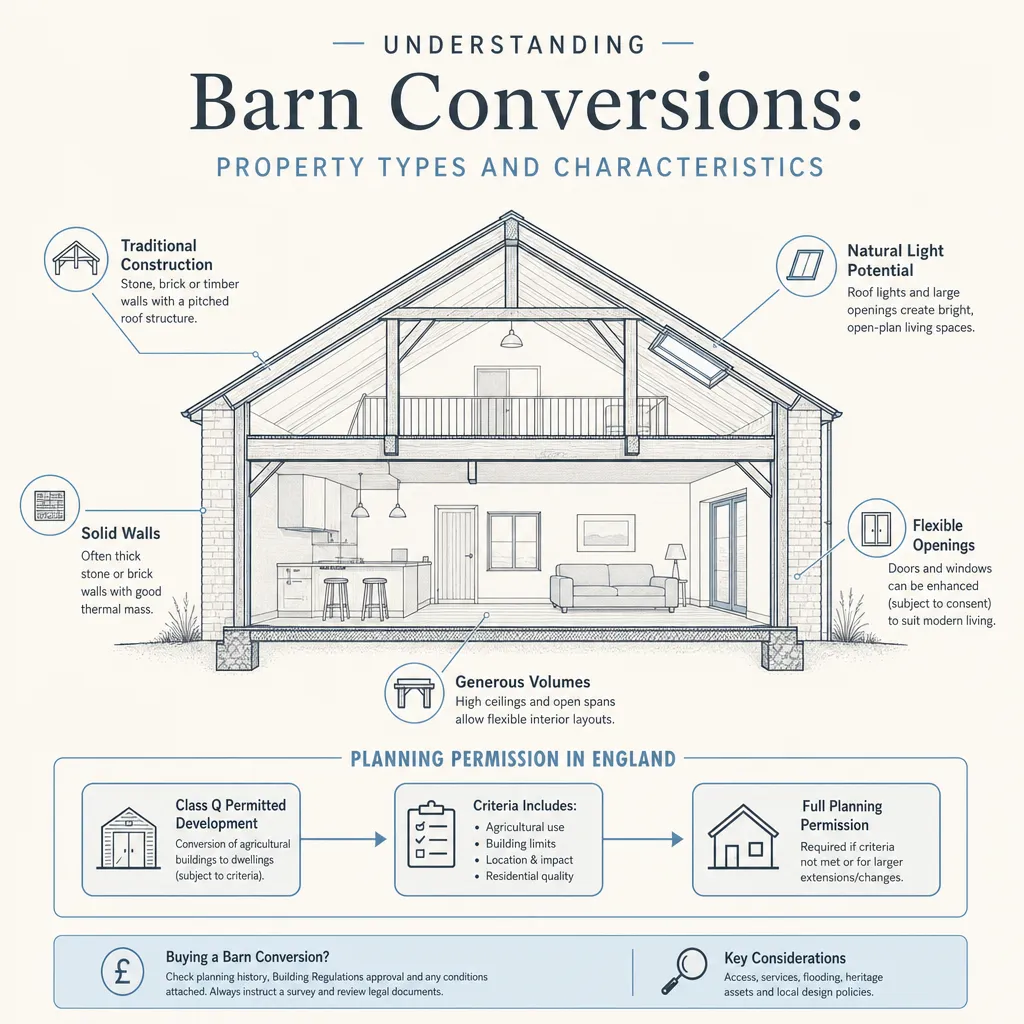
Understanding Barn Conversions: Property Types and Characteristics
Barn conversions occupy a distinct position in the UK property market — neither straightforwardly new-build nor conventionally period, they combine agricultural heritage with residential function in ways that affect planning rules, construction standards, mortgage availability, and long-term maintenance. The question of what a barn conversion is — and what that means practically — arises most often for buyers, rural landowners exploring diversification, and developers assessing whether a building qualifies for permitted development rights before committing to a purchase.
Key points
- In England, converting an agricultural building to residential use most often requires either full planning permission from the local planning authority or a prior approval application under Class Q permitted development rights (Town and Country Planning (General Permitted Development) (England) Order 2015).
- Class Q does not apply in National Parks, Areas of Outstanding Natural Beauty (AONBs), the Broads, conservation areas, or listed building curtilages — full planning permission is required in all of these settings.
- Barn conversions span very different construction types: timber-framed threshing barns, loadbearing stone or brick cowhouses, and steel-portal-frame sheds each carry different structural, thermal, and moisture implications.
- Many mainstream mortgage lenders treat barn conversions cautiously as non-standard construction; specialist rural lenders and some building societies are often more appropriate.
- A RICS Level 3 Building Survey, carried out by a surveyor with experience of rural and non-standard properties, is strongly recommended before purchasing any barn conversion.
What is a barn conversion?
The term covers a range of agricultural buildings that have been, or are proposed to be, converted into habitable dwellings. Common original building types include:
- Threshing barns — large open-span timber or stone structures used to separate grain; often the most architecturally significant type
- Cattle sheds and cowhouses — typically lower-ceilinged with brick or stone walls; drainage channels can be present below floor level
- Granaries — often raised on staddle stones or above cart sheds; floor construction varies considerably
- Steel-portal-frame sheds — post-1950s galvanised steel agricultural buildings; easier to meet modern insulation standards but less visually distinctive
- Cart sheds and implement stores — open-fronted buildings requiring significant infilling and glazing to create habitable space
The original construction type determines what is structurally and thermally achievable in the conversion, and has direct consequences for building regulations compliance, insulation strategy, and moisture management.
Planning routes: Class Q versus full planning permission
| Full planning permission | Class Q prior approval |
|---|---|---|
Where it applies | All locations; always an option | Excluded in National Parks, AONBs, Broads, conservation areas, listed building curtilages |
Agricultural use requirement | No specific prior-use requirement | Building must have been in agricultural use on or before 26 July 2013 |
Design flexibility | Full design scope subject to LPA approval | Limited; building must be capable of conversion without extensive rebuilding |
Maximum floor area | Set by LPA development plan policy | Up to 1,000 sq m total across all dwellings on the agricultural unit |
Maximum dwellings | Set by LPA development plan policy | Up to 10 dwellings per agricultural unit |
LPA assessment scope | Full development plan assessment | Structural suitability, transport, noise, contamination, flooding, design and appearance |
Building control | Separate full application required | Separate full application required |
Class Q introduced under the Town and Country Planning (General Permitted Development) (England) Order 2015, as amended.
Decision tree: which planning route applies?
- Is the property in a National Park, AONB, the Broads, or a conservation area? → Full planning permission required; Class Q is unavailable.
- Was the building in agricultural use on or before 26 July 2013? → If not, Class Q does not apply; full planning permission is required.
- Does the proposal require extensive structural rebuilding? → If yes, Class Q is unlikely to be granted; full planning permission is needed.
- Does the proposal exceed 1,000 sq m total floor area or 10 dwellings? → Full planning permission required.
- Is the building listed, or within the curtilage of a listed building? → Listed building consent required in addition to any planning route; consult a planning consultant before proceeding.
- Unsure of any of the above? → Seek pre-application advice from the local planning authority before incurring design or legal costs.
Construction characteristics and buyer considerations
Structural
Timber-framed barns — post-and-beam or cruck construction — are often architecturally striking but present real challenges for insulation and air-tightness without specialist detailing. Loadbearing stone or brick walls in older barns frequently lack a damp-proof course and cavity, making moisture management critical from the outset. Steel-portal-frame buildings offer clear spans but require secondary structural framing and insulation systems to create a habitable envelope.
Thermal performance and building regulations
A material change of use triggers the requirement under the Building Regulations to meet current energy performance standards where reasonably practicable. Achieving a wall U-value of 0.28 W/m²K or better in a solid-walled or open-framed barn requires careful insulation detailing — typically internal insulation (which reduces usable floor area) or external insulation (which may conflict with planning conditions on appearance). A retrofit assessor with PAS 2035 experience can be valuable at design stage for conversions where thermal performance is a priority.
What not to assume
Common assumption | Reality |
|---|---|
Class Q approval means conversion is straightforward | Prior approval does not replace building regulations; a full building control application is still required |
Planning permission means a mortgage will be simple | Lenders vary widely; specialist rural mortgage advice is often needed before exchange |
Agricultural buildings are structurally sound for homes | Agricultural buildings are not designed to residential structural loadings; independent structural assessment is essential |
All barn conversions face the same insulation challenges | Timber-framed, steel-portal, and masonry barns each require different thermal strategies |
The seller's architect handled building control | Always request the building control completion certificate; its absence is a significant legal and financial risk |
Mortgages and resale
Standard mortgage lenders sometimes decline barn conversions classed as non-standard construction, or require a specialist valuation report before offering terms. Rural-specialist lenders and some building societies are more experienced with this property type. Conversions without a building control completion certificate, or without documented planning or prior approval, may be unmortgageable and difficult to resell. Always verify documentation before exchange of contracts.
Important limitations
This article provides general information about barn conversion planning routes and construction characteristics in England. Planning rules, Class Q eligibility, structural requirements, and mortgage availability all depend on the specific property, its planning history, location, and physical condition — none of which can be assessed without a professional site visit and review of the relevant planning and title documentation. Nothing in this article constitutes planning, legal, structural, or financial advice.
When to get professional help
Instruct specialist professionals if:
- You are considering purchasing a barn conversion and cannot evidence building control sign-off or planning documentation
- You are a rural landowner assessing whether your building qualifies for Class Q before incurring design costs
- The seller cannot produce the prior approval decision notice or full planning permission documents
- You have concerns about structural integrity, moisture penetration, or thermal performance
- A mortgage lender has requested a specialist structural or non-standard construction report
What to ask a qualified professional
Before instructing an architect, planning consultant, or surveyor on a barn conversion project, ask:
- Does this building qualify for Class Q, or is full planning permission required — and what are the risks and timescales of each route?
- What structural survey or engineer's report will be needed before or during the planning application?
- Will the building meet current building regulations thermal and structural requirements, and what are the options if it falls short?
- Is there a building control completion certificate, and if not, what is the regularisation or indemnity insurance route?
- Are there any planning conditions on the existing approval that restrict future use, extensions, or external alterations?
- What are the likely mortgage implications for this property type, and should I obtain specialist advice before exchange?
How Housey can help
Housey connects buyers and developers with professionals experienced in rural and non-standard property. An experienced architect can assess conversion feasibility, prepare the necessary drawings, and manage the building regulations process. A planning consultant can advise on Class Q eligibility, pre-application negotiations with the local planning authority, and planning risk before you commit to a purchase or development.
Frequently asked questions
Is a barn conversion a listed building?
Not automatically. The barn itself may be listed if it is of sufficient architectural or historic interest, or it may fall within the curtilage of a listed farmhouse — which triggers its own consent requirements. Check the Historic England National Heritage List for England and the local authority's own local list before assuming the building's status.
Can I extend a barn conversion after completion?
Permitted development rights are frequently removed by planning condition on barn conversion approvals, meaning any future extension requires a fresh planning application. Check the original planning decision notice for Article 4 directions or conditions restricting further development before purchasing.
Do I need a specialist survey for a barn conversion?
Yes. A standard RICS Level 2 Home Survey is not designed for non-standard construction. Commission a RICS Level 3 Building Survey from a surveyor experienced with rural properties, and consider a separate structural engineer's report if the original construction type is unclear or if there are visible signs of movement or deterioration.
How long does Class Q prior approval take?
The local planning authority must determine a prior approval application within 56 days of receiving a valid application. If no determination is made within that period, prior approval is deemed granted. A valid application must include all required plans, a structural survey confirming conversion capability, and — where required — transport and noise assessments.
Sources and further reading
- Class Q: agricultural buildings to dwellinghouses — Planning Portal / GOV.UK
- Town and Country Planning (General Permitted Development) (England) Order 2015 — legislation.gov.uk
- RICS Home Survey Standard — RICS
- National Heritage List for England — Historic England
Useful next reads
 Planning & Pre-Build
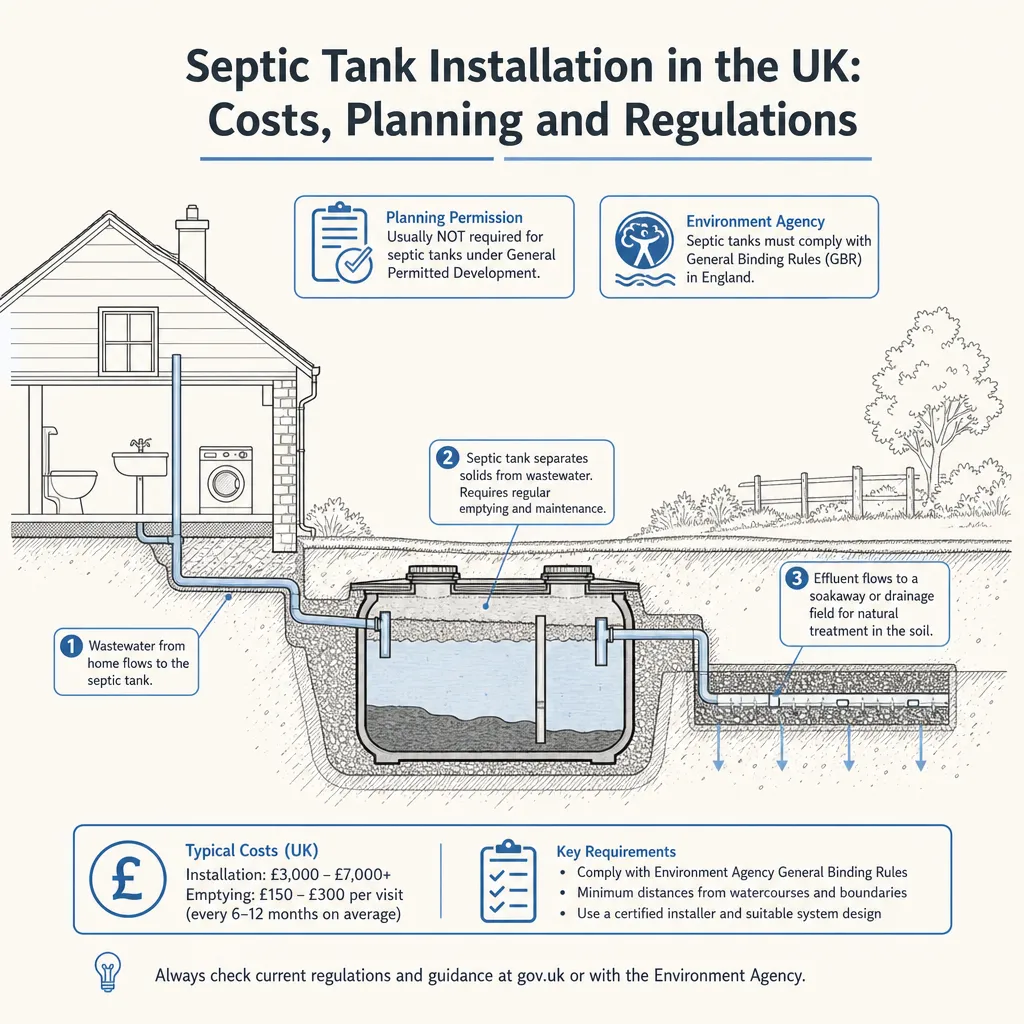
Septic Tank Installation in the UK: Costs, Planning and Regulations
Installing a septic tank or sewage treatment plant in the UK requires registration or a permit under the Environment Agency's General Binding Rules, Building Regulations Part H compliance, and a percolation test to assess ground suitability.
 Planning & Pre-Build
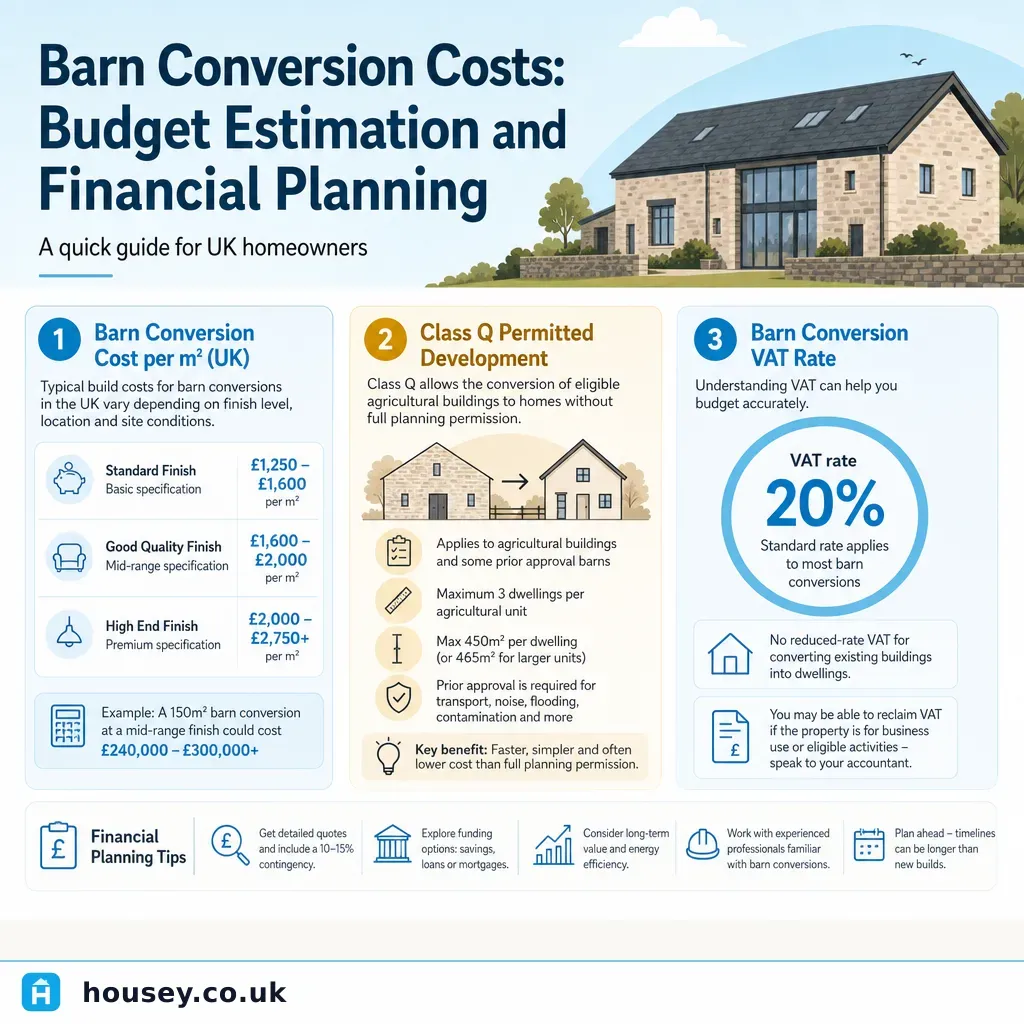
Barn Conversion Costs: Budget Estimation and Financial Planning
Barn conversions in the UK typically cost £1,500–£3,000 or more per square metre depending on structural condition, specification, and location.
 Planning & Pre-Build
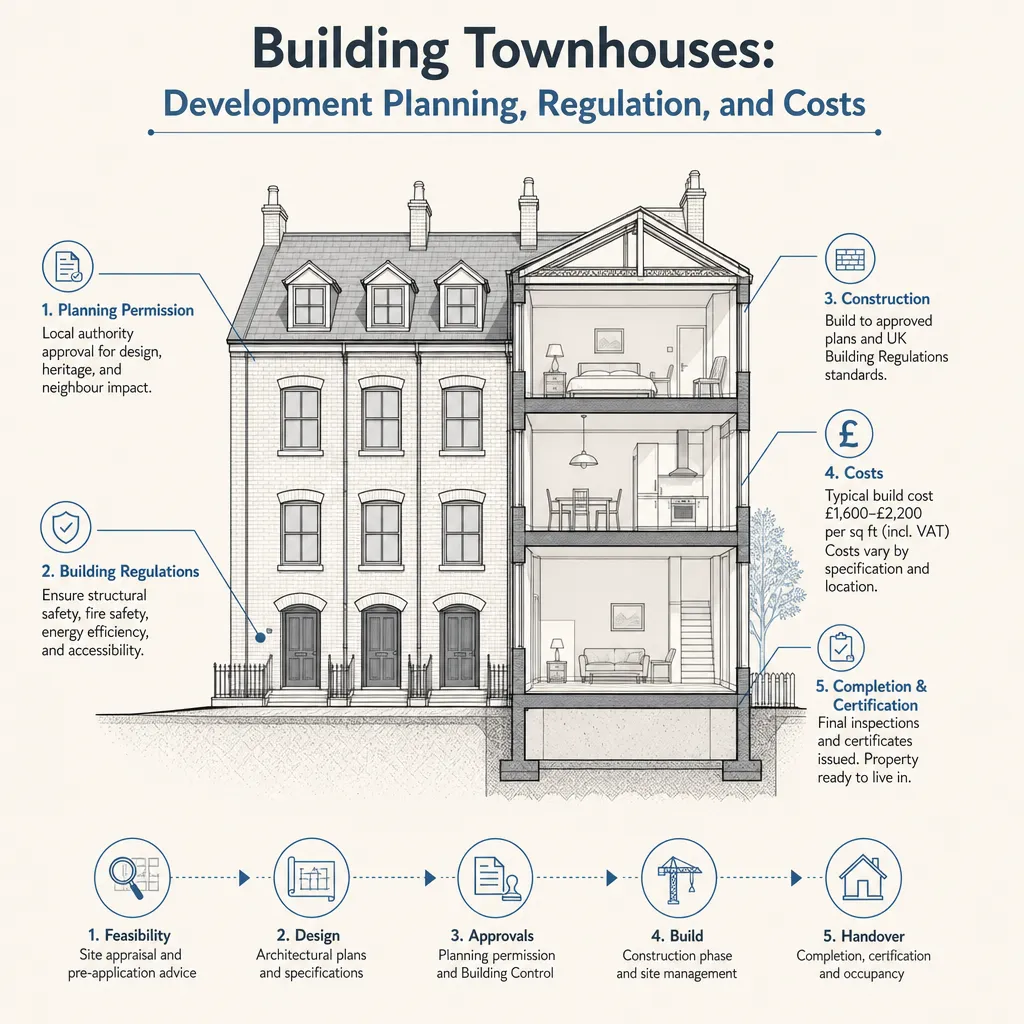
Building Townhouses: Development Planning, Regulation, and Costs
Building townhouses in the UK requires full planning permission for all new dwellings — permitted development rights do not apply to new residential construction.
 Planning & Pre-Build
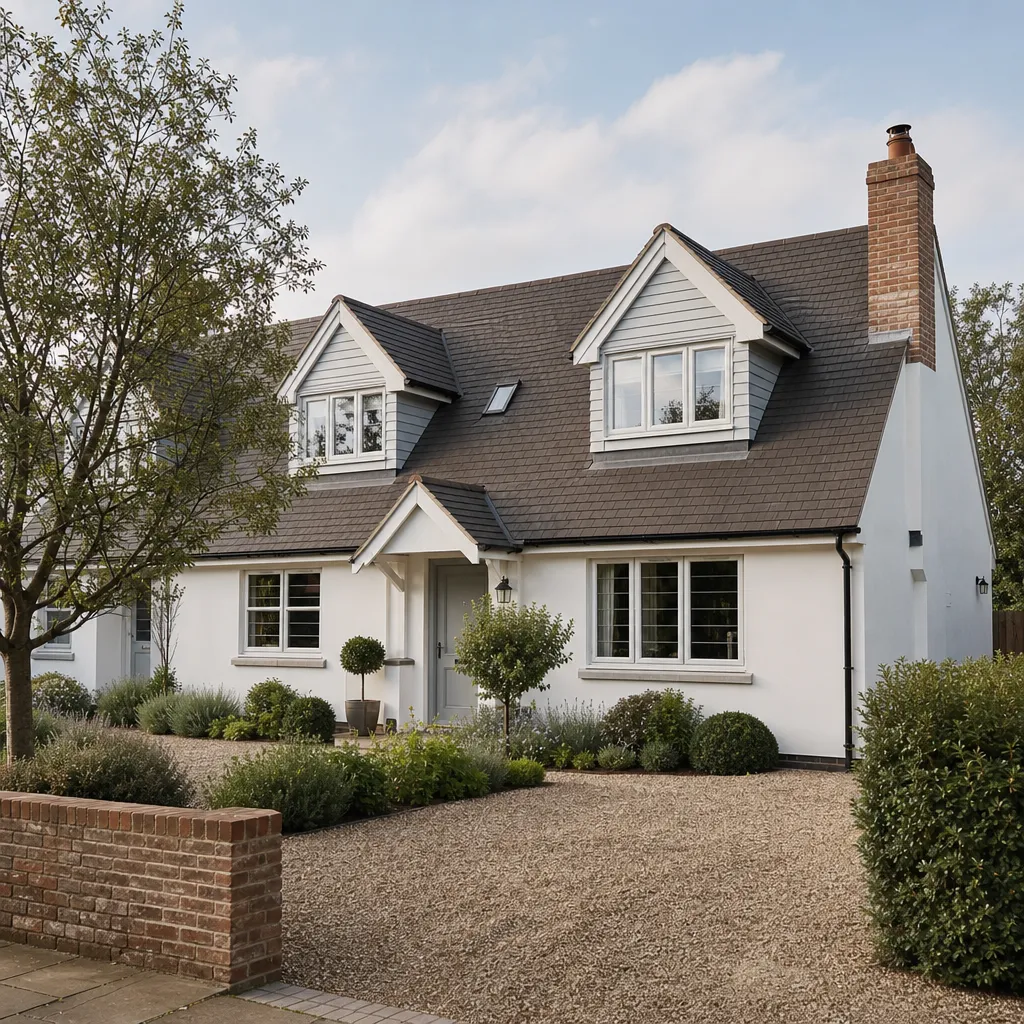
Cape Cod Style Homes: Design Elements and Characteristics
A Cape Cod home is defined by its steep symmetrical gabled roof, compact 1.
 Planning & Pre-Build
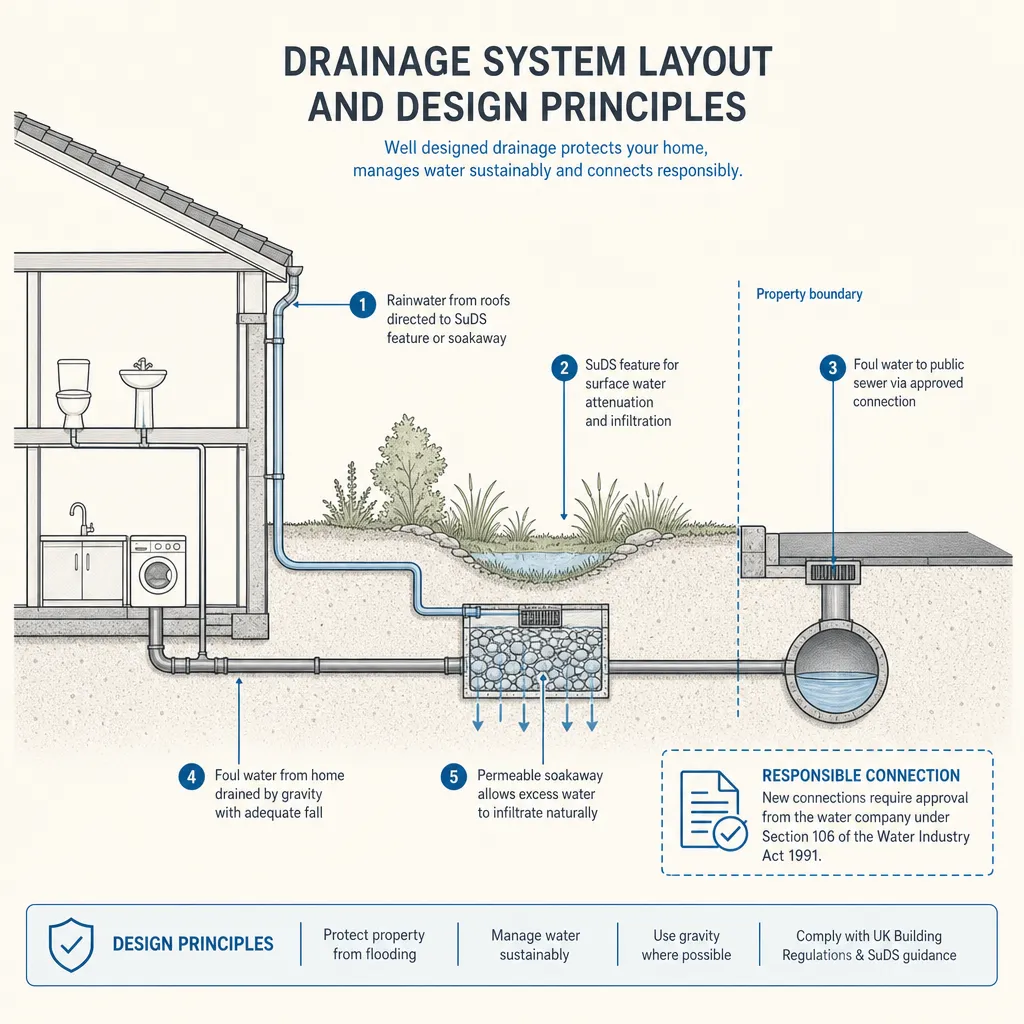
Drainage System Layout and Design Principles
A UK drainage layout separates foul water from surface water, routes both via correctly graded pipes to the public sewer, a soakaway, or a treatment plant, and incorporates Sustainable Drainage Systems where required.