Converting Front Garden Space into Parking
By Housey · Last reviewed 11th of May 2026
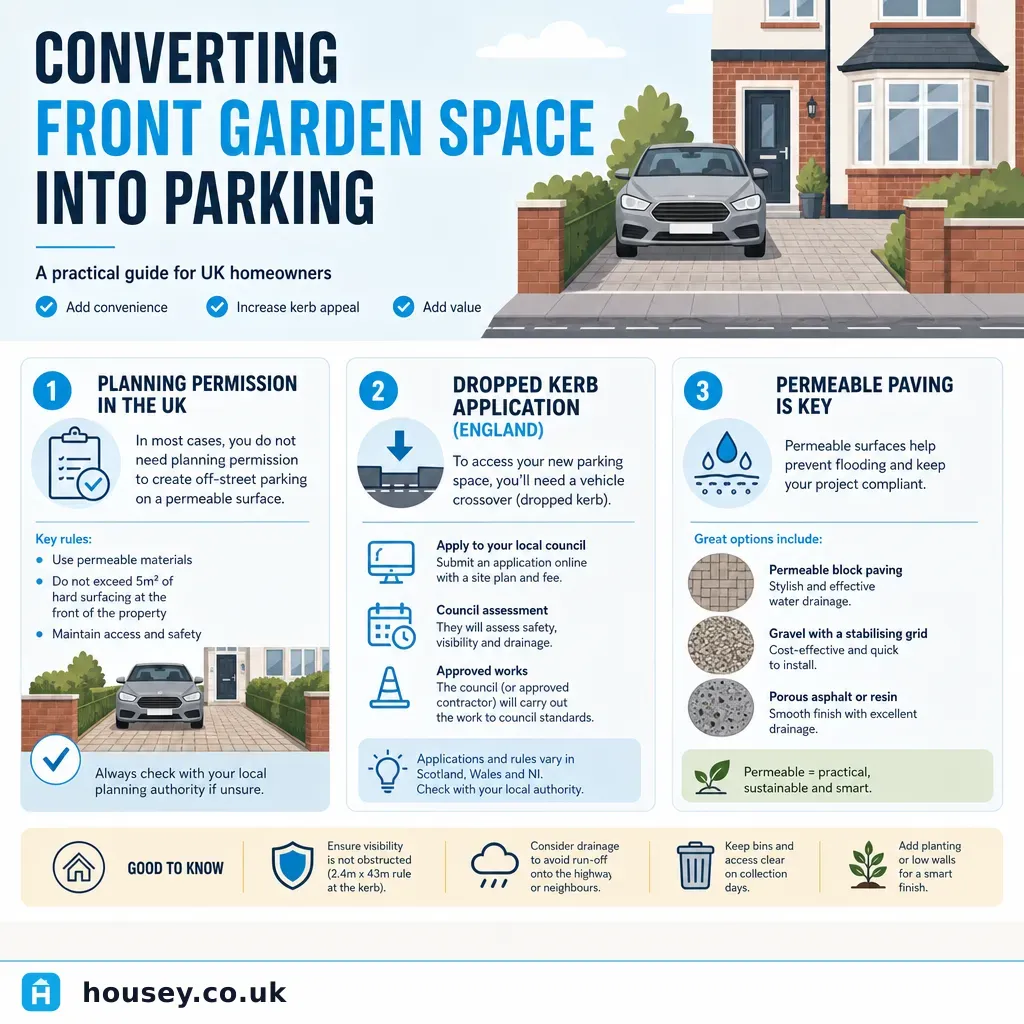
Converting Front Garden Space into Parking
Turning a front garden into off-street parking is one of the most practical improvements a UK homeowner can make — particularly where on-street parking is restricted, charged, or heavily competed for. What can look like a straightforward project involves several distinct regulatory layers: permitted development rules for the surfacing itself, a separate highway authority consent for the dropped kerb, and in certain locations a full planning application regardless of surface area or material. Getting the sequence right matters, because carrying out any element without the correct consent can lead to enforcement action and costly reinstatement.
Key points
- In England, paving a front garden with an impermeable surface larger than 5 m² requires planning permission; permeable surfaces (gravel, block paving with open joints, porous resin) are generally permitted development for most residential properties.
- A vehicle-crossing consent (dropped kerb) from the local highway authority is a separate legal requirement under the Highways Act 1980, needed before any vehicle crosses a public footway — regardless of whether planning permission is required for the driveway surface.
- Conservation area and listed building properties generally have no permitted development rights for front garden works and require a full planning application regardless of surface material or size.
- Indicative costs for a standard domestic dropped kerb in England range from £1,000 to £3,000 (indicative UK costs, last reviewed 2026-05-11), though the highway authority or its approved contractor always carries out the physical kerb works.
- Wales, Scotland, and Northern Ireland each operate under different planning frameworks — verify the rules with your local authority and the relevant national planning guidance before beginning any works.
Do you need planning permission?
The rules in England — set out in GOV.UK guidance on surfacing your front garden — turn on two questions: what surface material is used, and how large the area is.
Which route applies to your situation?
- Choose permeable surfacing (loose gravel, open-jointed block paving, porous resin-bound aggregate, grass reinforcement grids) if the property is not in a conservation area or listed — permeable surfaces of any size are generally permitted development, and no planning application is needed.
- Apply for planning permission if you want an impermeable surface (solid tarmac, concrete, mortared clay or concrete paviours) and the area exceeds 5 m².
- Apply for planning permission regardless of material or size if the property is in a conservation area, an Article 4 Direction area, or is a listed building — the 5 m² threshold does not apply to these properties.
- Check with your local planning authority if the site is in a flood risk zone, if permitted development rights have been removed by a prior planning condition, or if the planning history of the property is unclear.
- Seek professional planning advice if the property is listed — listed building consent may be required for changes to the setting as well as the structure itself.
Surface types and planning status (England)
Surface type | Permeable? | Planning permission needed (England)? | Notes |
|---|---|---|---|
Loose gravel | Yes | Generally no | Edging restraint recommended to prevent spread onto footway |
Open-jointed block paving | Yes | Generally no | Joint infill must remain permeable |
Porous resin-bound aggregate | Yes | Generally no | Confirm specification is genuinely porous with installer |
Grass reinforcement grid | Yes | Generally no | Less suitable for frequent or heavy vehicle use |
Solid tarmac or asphalt | No | Yes, if over 5 m² | Durable and common; requires planning permission above threshold |
Solid concrete | No | Yes, if over 5 m² | Drainage solution must be addressed |
Mortared clay or concrete paviours | No | Yes, if over 5 m² | Attractive finish but impermeable |
Dropped kerb consent: a separate requirement
A vehicle-crossing consent is administered by the local highway authority — not the planning department — and is legally required before any vehicle crosses a public footway or verge to access a private drive.
Key points on dropped kerb applications:
- Apply to your local council's highways department via the GOV.UK dropped kerb application portal or the council's own portal.
- The highway authority will assess sight lines, proximity to road junctions (most authorities will not permit a crossover within 10 m of a junction, though this varies), footway condition, and the presence of utilities beneath the footway.
- The physical kerb lowering must be carried out by the authority or its approved contractor — not your chosen driveway installer — and the cost is charged to you.
- Processing times commonly range from 6 to 12 weeks from a complete application.
- An existing vehicle crossover does not automatically authorise a new or extended driveway.
What the project typically involves
- Confirm planning status — check permitted development or obtain planning permission before any groundworks begin.
- Apply for dropped kerb consent — submit to the highway authority and await approval in principle before committing to driveway construction dates.
- Engage a driveway installer — obtain at least three written quotes specifying excavation depth, sub-base thickness, edging, drainage direction, and surface finish.
- Highway works — the council or its contractor lowers the kerb and constructs the vehicle crossover.
- Driveway construction — once the crossover is in place, the installer lays the sub-base and chosen surface.
- Drainage check — confirm surface water discharges to a permeable area, soakaway, or approved drainage system and not directly onto the highway.
Document preparation list
Assemble the following before applying for dropped kerb consent or planning permission:
Important limitations
This article provides general information about the planning and highway consent process for front garden parking conversions in England. Rules vary significantly by local planning authority, property history, conservation area or Article 4 designation, flood risk zone, and national jurisdiction. Nothing in this article constitutes planning advice for your specific property. Always confirm the applicable rules with your local planning authority or a qualified planning consultant before committing to any works or expenditure.
When this becomes urgent
Seek professional advice without delay if:
- Works have already begun without the required planning or highway consent — enforcement action can require full reinstatement at the homeowner's expense.
- The property is in a conservation area or is listed, and consent has not been confirmed in writing.
- A neighbour or the local authority has raised an objection or issued a notice relating to the works.
- The site falls within a flood risk zone (check the Environment Agency's Flood Map for Planning before applying).
What to ask a qualified professional
If instructing a planning consultant or driveway installer, ask:
- Is the property subject to any Article 4 Directions or planning conditions that remove permitted development rights for front garden works?
- Does the proposed surface qualify as permeable under the GOV.UK guidance?
- What drainage provision is required for this site's ground conditions and surface water risk?
- Will any trees (particularly those covered by TPOs or in a conservation area) be affected by the excavation required for the sub-base?
- What is the specified sub-base depth and material, and is it appropriate for the expected vehicle type and frequency?
- Who is responsible for coordinating the timing of the highway authority's kerb works with the driveway installation programme?
- What certificates, guarantees, or warranties will be provided on completion of the driveway?
When to get professional help
If the property is listed, in a conservation area, or in an area where permitted development rights are restricted, instruct a qualified planning consultant before beginning any works. For the driveway installation itself, obtain at least three written quotes specifying the sub-base depth, drainage method, and surface material — and confirm the installer is aware of the planning status before work starts.
How Housey can help
Housey can connect you with local driveway installers experienced in permeable and impermeable surfacing solutions, landscapers who can advise on surface options that work with your garden layout, and planning consultancy professionals who can confirm your permitted development status and handle any planning application before a single slab is laid.
Frequently asked questions
Do I always need planning permission to pave my front garden in England?
Not always. In England, permeable surfaces of any size are generally permitted development for most properties. Impermeable surfaces over 5 m² do require planning permission. Properties in conservation areas or listed buildings need planning permission regardless of size or material. Always check with your local planning authority if you are uncertain about the property's designation or planning history.
How long does a dropped kerb application take?
Processing times vary by local highway authority but commonly range from 6 to 12 weeks from submission of a complete application. Some authorities offer a faster-track service for straightforward cases. Begin this application early — the dropped kerb works must be completed before you can legally drive a vehicle across the public footway to access your new driveway.
Can I install the dropped kerb myself to save money?
No. The physical lowering of a public highway kerb must be carried out by the local highway authority or its approved contractor. You cannot carry out the kerb works yourself or use an unapproved private contractor, regardless of the standard of workmanship. The application fee covers assessment and the authority-supervised construction.
What happens if I pave my front garden without the required permission?
If impermeable surfacing over 5 m² is laid without planning permission, or a dropped kerb is installed without highway consent, the local authority may issue an enforcement notice requiring reinstatement of the original surface or footway at your own expense. Retrospective planning permission can sometimes be sought, but there is no guarantee it will be granted.
Sources and further reading
- Surfacing your front garden — GOV.UK
- Apply for a dropped kerb or vehicle crossover — GOV.UK
- When is planning permission required? — Planning Portal
- Flood Map for Planning — Environment Agency
Useful next reads
 Improvement & Build
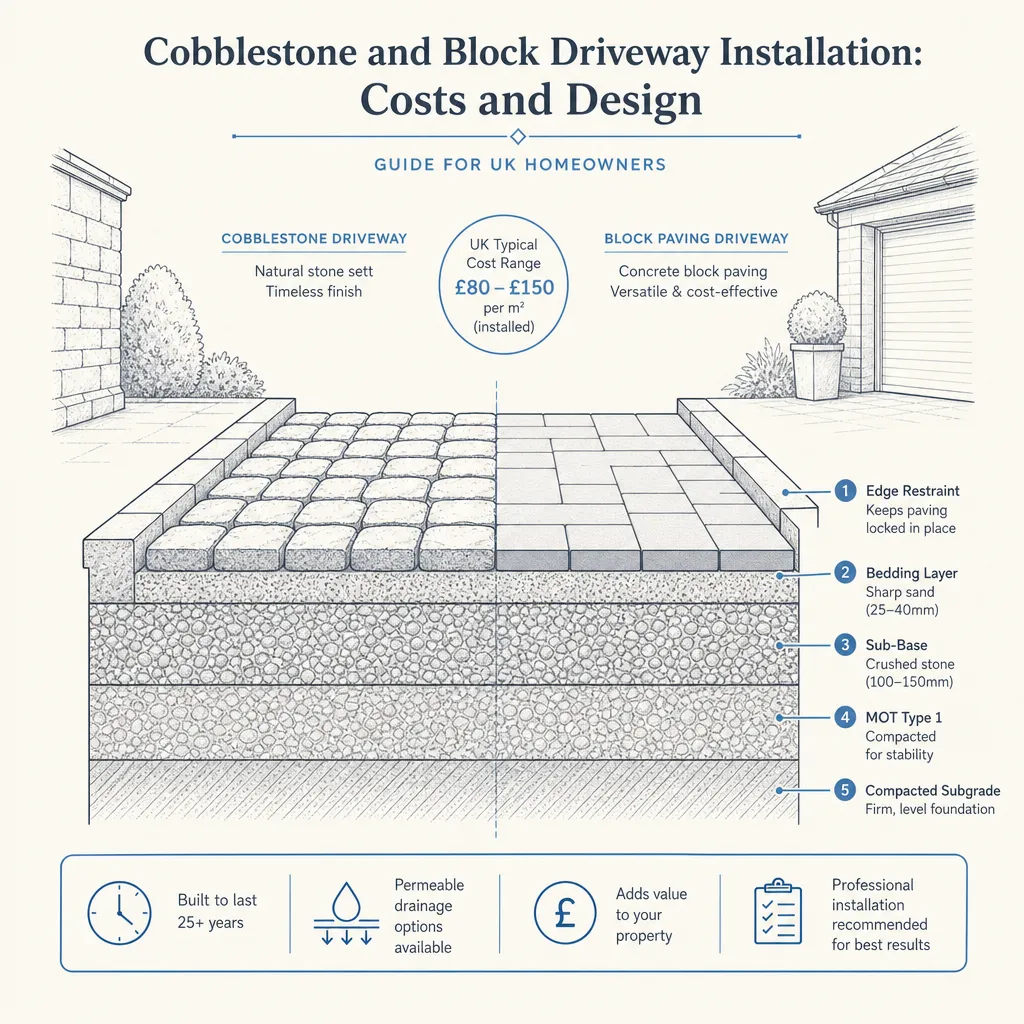
Cobblestone and Block Driveway Installation: Costs and Design
Cobblestone and block paving driveways cost roughly £50–£200 per m² installed in the UK, depending on material and site conditions.
 Improvement & Build
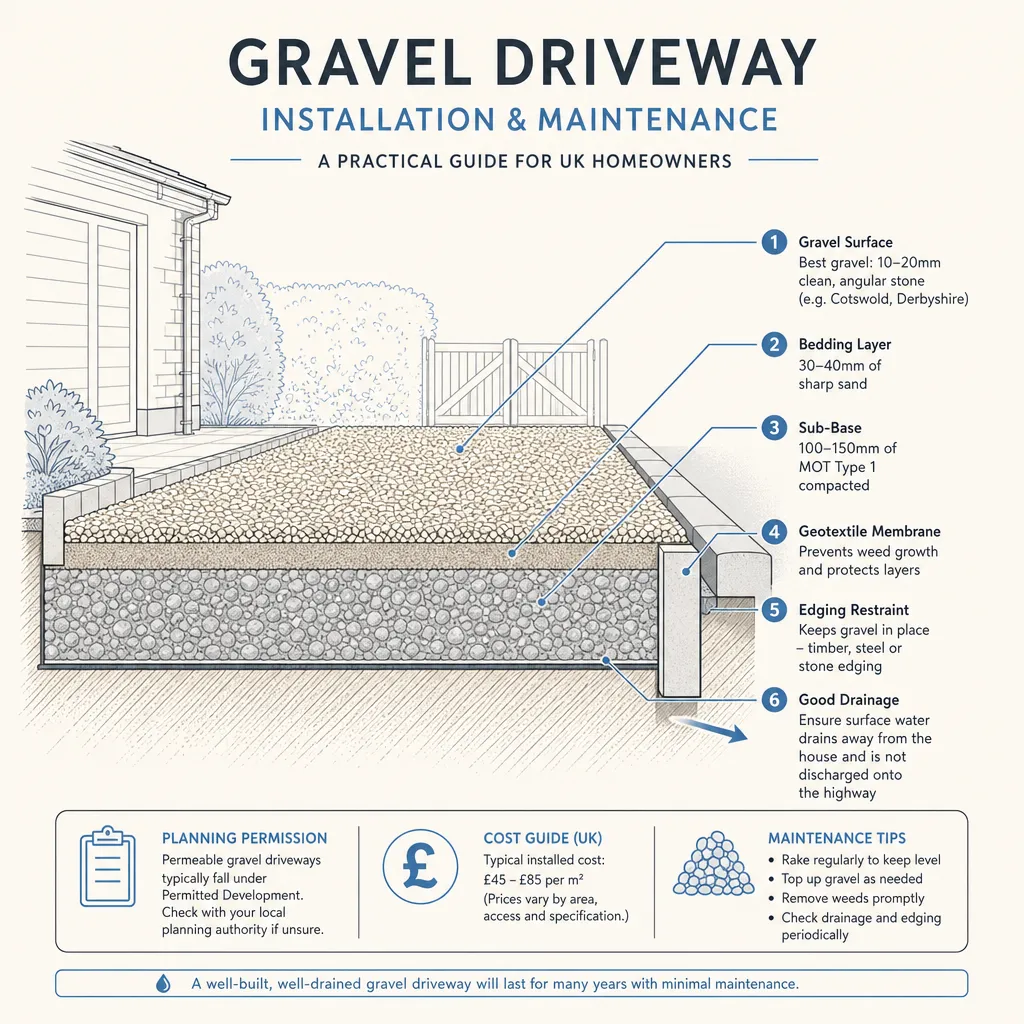
Gravel Driveway Installation and Maintenance
Gravel is one of the most practical and affordable driveway surfaces for UK homes.
 Improvement & Build
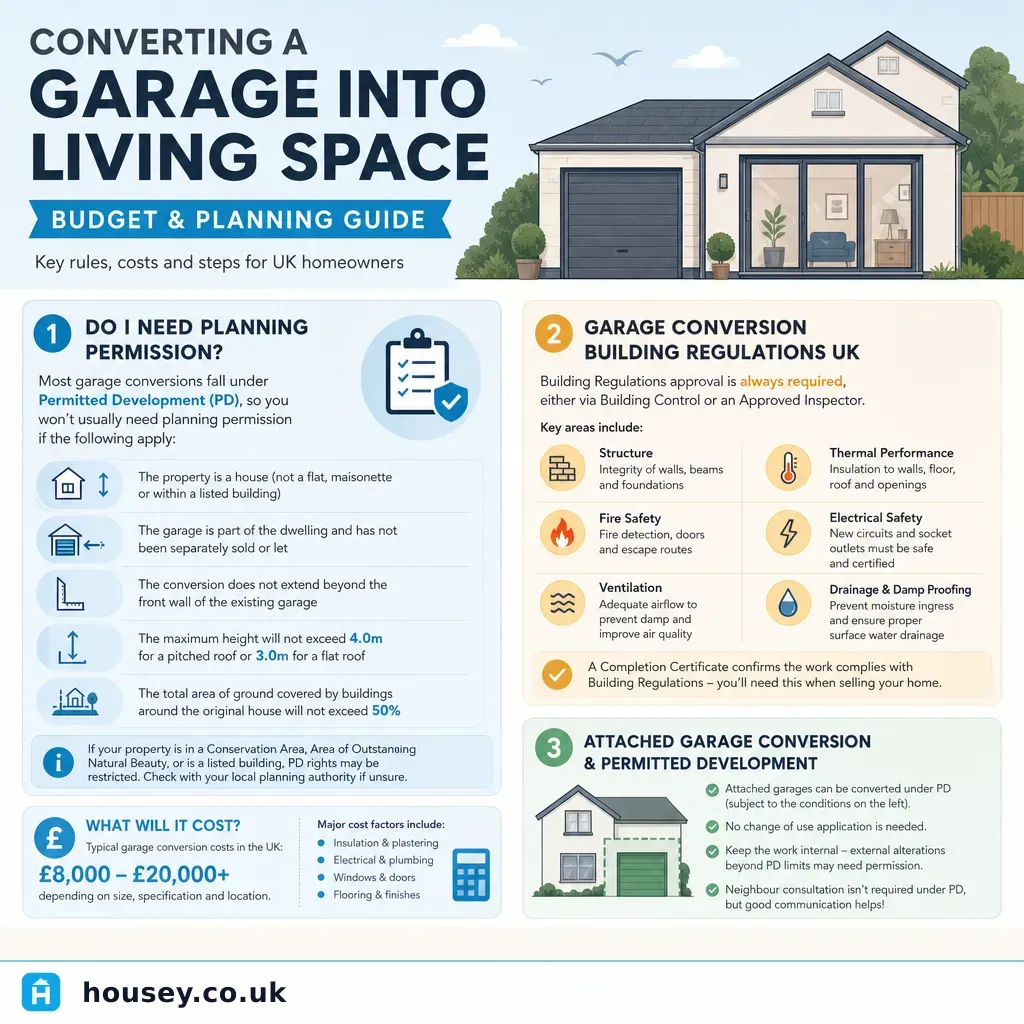
Converting a Garage into Living Space: Budget and Planning Guide
A single-garage conversion typically costs £8,000–£20,000 in the UK.
 Improvement & Build
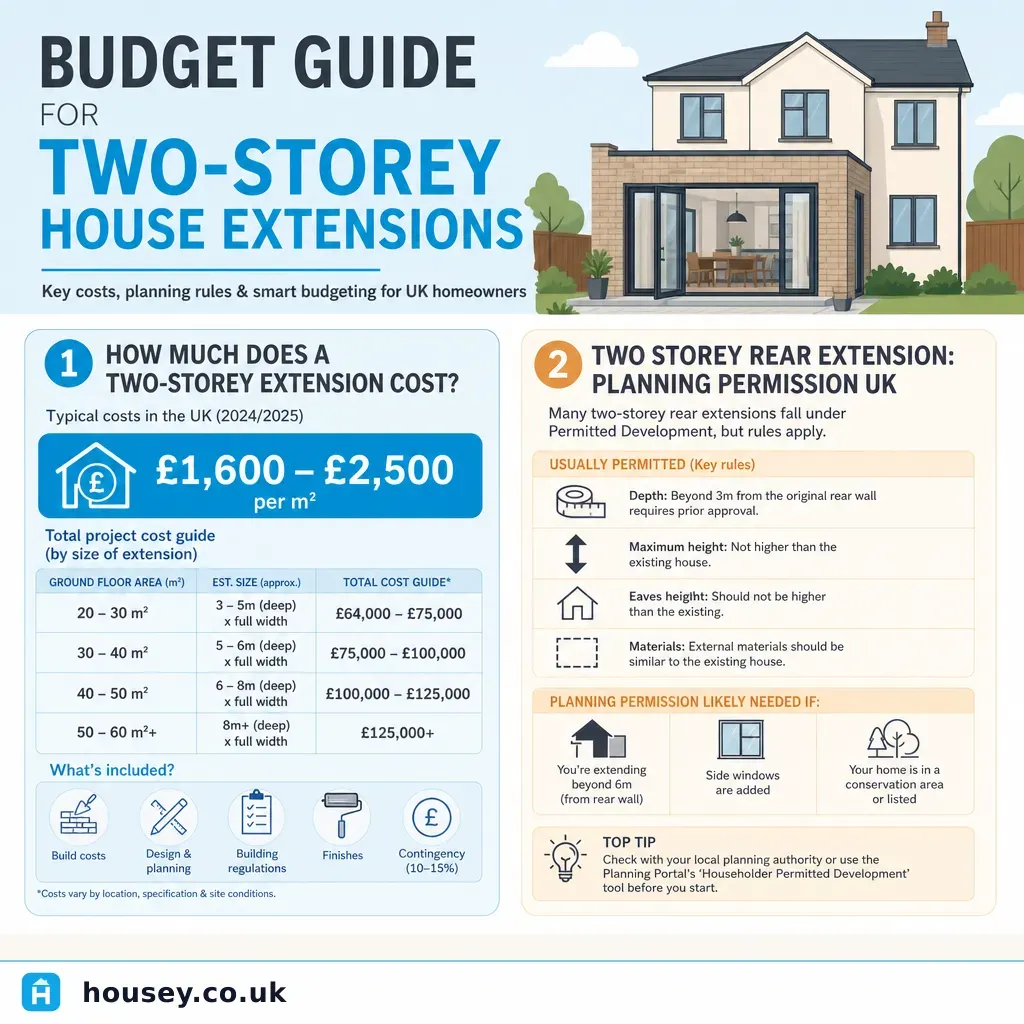
Budget Guide for Two-Storey House Extensions
A two-storey house extension in the UK typically costs £1,800–£3,000+ per square metre for the build alone.
 Improvement & Build
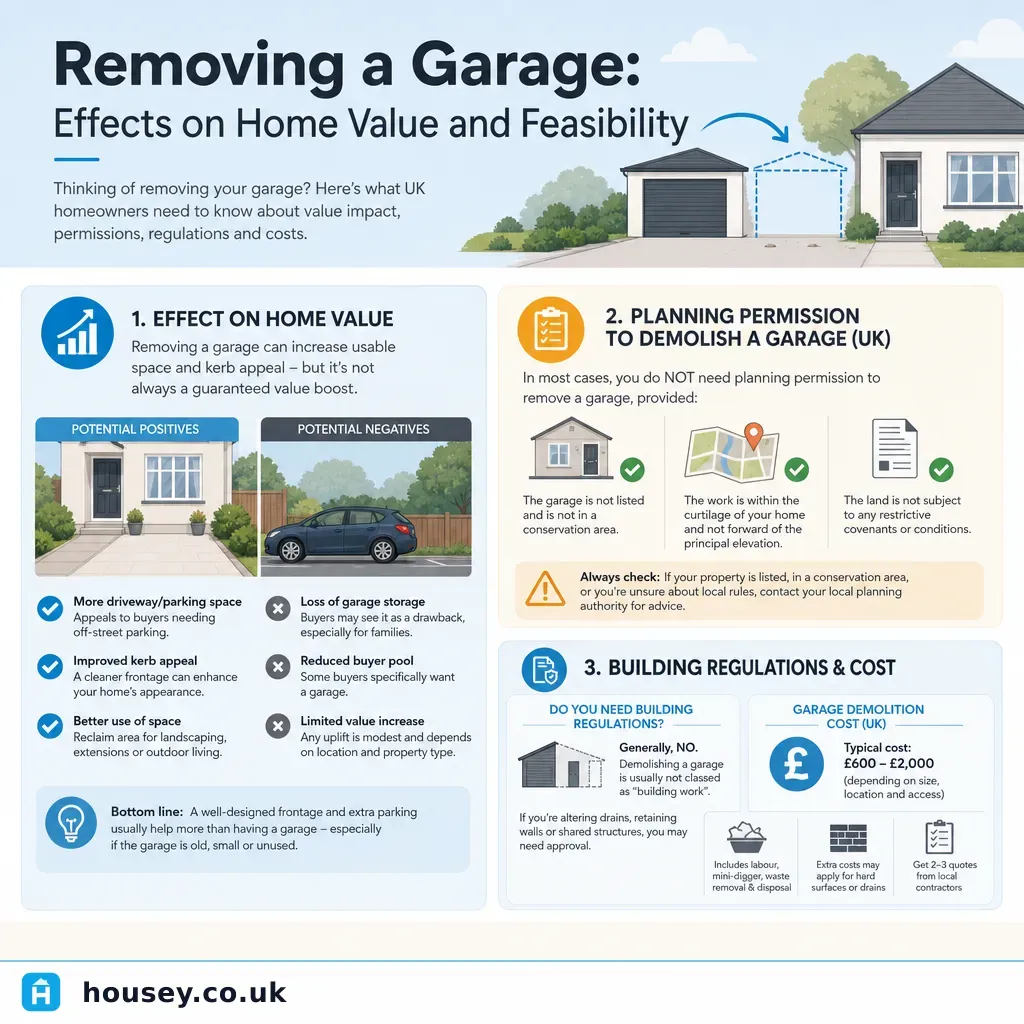
Removing a Garage: Effects on Home Value and Feasibility
Demolishing a garage in England may require prior notification to the local planning authority, and structural or building regulations assessments are often needed if the garage is attached to or integral with the house.