Gravel Driveway Installation and Maintenance
By Housey · Last reviewed 11th of May 2026
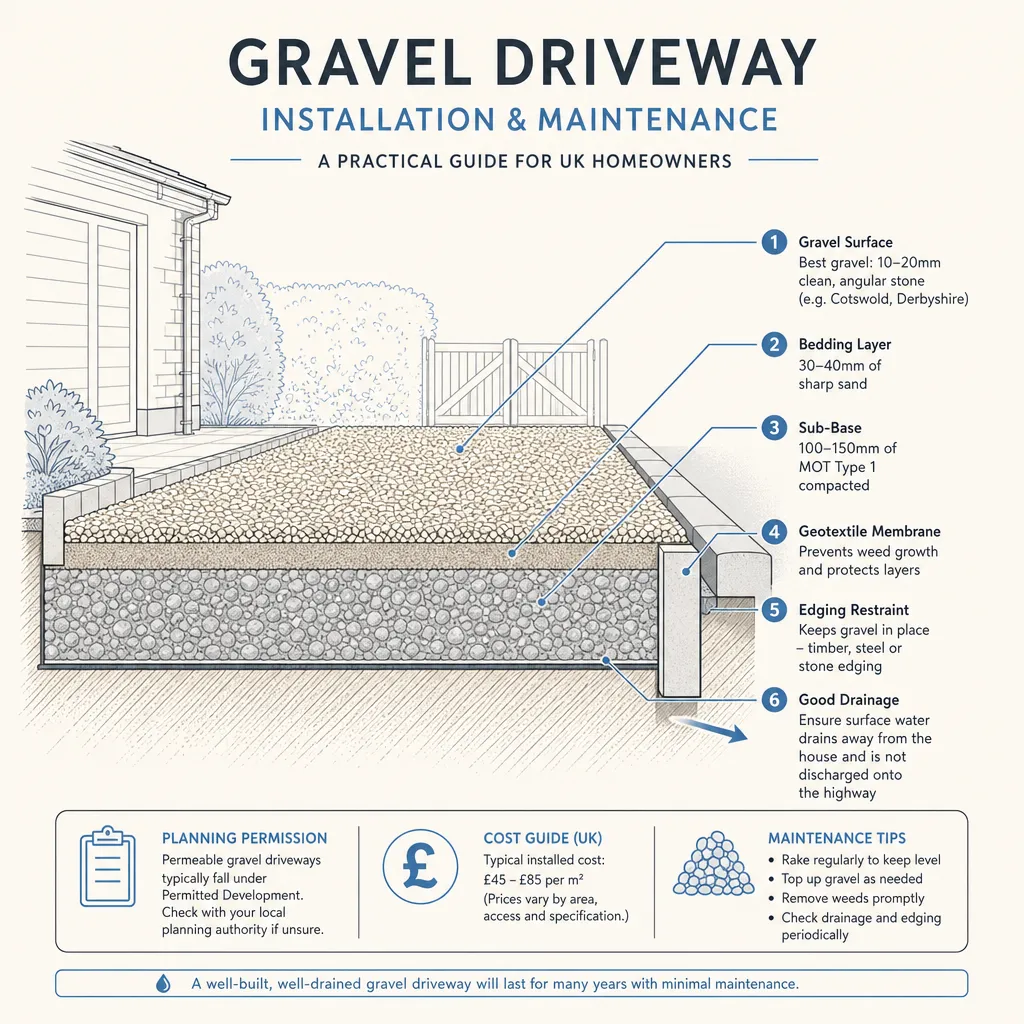
Gravel Driveway Installation and Maintenance
Replacing or creating a driveway is one of the more impactful changes you can make to a property's kerb appeal and everyday practicality. Gravel sits alongside block paving and tarmac as one of the most widely chosen surfaces in the UK — partly because it drains well, partly because it is relatively affordable to install, and partly because loose stone acts as a natural deterrent to anyone approaching quietly. Whether you are dealing with a compact terraced-house forecourt or a longer rural approach, getting the specification and installation right from the start will save considerably on ongoing maintenance.
Key points
- Under SuDS (Sustainable Drainage Systems) regulations in England, replacing a front garden with an impermeable hard surface over 5m² may require planning permission; gravel is permeable and generally exempt — but check with your local planning authority if the property is listed or within a conservation area.
- A correctly installed gravel driveway requires a compacted MOT Type 1 sub-base (typically 100–150mm deep), a geotextile weed membrane, and a 40–50mm topping of angular gravel; pea gravel is not recommended for vehicle areas as it rolls under tyres.
- 20mm angular crushed stone (limestone or granite) is the most widely specified driveway topping in the UK, balancing stability, drainage, and appearance.
- Cellular geo-grid or confinement systems significantly reduce gravel migration and are increasingly specified for sloped driveways or high-traffic areas.
- Indicative installation costs for a double driveway (approximately 40m²) range from £1,000 to £3,500 depending on access, existing surface removal, excavation depth, and gravel type. (Indicative UK costs, last reviewed 2026-05-11.)
Is a gravel driveway right for your property?
Gravel is a practical choice for many UK properties, but understanding the trade-offs before you commit will help you avoid costly remediation later.
Where gravel works well:
- Properties with longer approaches or larger parking areas where block paving or resin bonding would be cost-prohibitive.
- Rural and semi-rural settings where loose stone sits naturally within the local aesthetic.
- Driveways where good surface-water drainage is a priority without the premium cost of permeable block paving.
- Households where an acoustic deterrent effect — the crunch underfoot — is valued.
Where gravel may cause problems:
- Steep driveways, where stone migrates downhill and needs frequent raking back.
- Properties close to shared paths or manicured lawns where loose gravel travels easily.
- Households with mobility limitations, as loose gravel is less stable underfoot than bound surfaces.
- High-traffic or multi-vehicle settings, where a bound surface may perform better over the long term.
Gravel type comparison
Gravel type | Typical size | Best for | Limitations |
|---|---|---|---|
20mm angular crushed stone | 20mm | Vehicle driveways — beds well, resists migration | Less decorative than rounded stone |
Pea gravel | 10–20mm | Garden paths, decorative areas | Rolls under tyres; unsuitable as driveway topping |
Limestone chippings | 14–20mm | Driveways, brightens appearance | Can discolour; reacts with some herbicides |
Slate chippings | 20–40mm | Decorative and garden use | Sharp edges; uncomfortable underfoot |
Self-binding gravel | Mixed fine grades | Low-traffic paths, some driveway use | Not fully permeable; can become uneven |
How a gravel driveway is installed
A professional installation typically follows these stages:
- Mark out and excavate. The installer removes the existing surface and excavates to the required depth — usually 150–200mm for vehicle use, depending on ground conditions and expected load.
- Install edging restraints. Timber board, concrete haunching, or steel edging is set to contain the gravel and define the shape, preventing spread onto lawns or paths.
- Lay and compact the sub-base. MOT Type 1 crushed aggregate is spread and mechanically compacted in layers. Inadequate compaction at this stage is the most common cause of rutting and premature failure.
- Lay geotextile membrane. A permeable weed membrane is placed over the sub-base to suppress weed growth while allowing water to drain freely.
- Spread and rake gravel topping. The chosen gravel is spread to an even 40–50mm depth and raked to a consistent finish.
- Geo-grid installation (if specified). For sloped driveways or where migration is a concern, a cellular plastic grid is pinned over the membrane before gravel is spread, holding stone in place.
Do you need planning permission for a gravel driveway?
In most cases in England, no. Under the Town and Country Planning (General Permitted Development) Order, permeable surfaces — which gravel qualifies as — are generally exempt from the 2008 requirement that made planning permission necessary for impermeable front driveways over 5m².
However, you may need consent if:
- The property is a listed building — any external alteration may require listed building consent.
- The property is in a conservation area — works affecting the character of the area may require a planning application.
- You need to create or widen access onto a classified road — a dropped kerb application through the local highway authority is likely needed regardless of the driveway surface.
- You are in Scotland, Wales, or Northern Ireland — planning rules differ from England; check with your local planning authority.
The Planning Portal's driveways guidance and pre-application advice from your council can confirm the position for your specific property before any work begins.
Gravel driveway maintenance checklist
A gravel driveway is low-maintenance compared with most bound surfaces, but regular attention keeps it functional and attractive.
- Annual raking and levelling — redistribute stone that has migrated toward edges or hollows, particularly after winter or periods of heavy use.
- Top-up every 3–5 years — expect to lose 10–20mm of depth through migration and settlement; a fresh load renews appearance and drainage performance.
- Weed treatment — despite the membrane, weeds can establish in the surface layer; a path-approved weedkiller or hand-weeding before weeds set seed keeps the surface clean.
- Edge maintenance — check edging restraints annually and reset any that have shifted to prevent gravel spreading.
- Drainage check after heavy rain — persistent puddles suggest a blocked or degraded membrane or uneven sub-base settlement; a professional assessment may be needed.
- Leaf and debris clearance — accumulated organic matter accelerates weed establishment; a leaf blower is more effective than raking on gravel surfaces.
When to get professional help
Most gravel driveway installations benefit from professional input when the area exceeds approximately 20m², when ground conditions are poor, or when highway access works are involved.
Red flags that indicate professional installation is preferable to DIY:
- The ground is consistently waterlogged or drains slowly after rainfall — additional drainage works may be needed before installation can proceed safely.
- You need a dropped kerb or are modifying vehicle access onto a public road — this requires a formal highway authority application.
- The existing surface includes substantial concrete or tarmac — mechanical breaking out and skip disposal are normally required, needing specialist equipment.
- The driveway must bear vehicles over 3.5 tonnes — standard domestic specifications are likely insufficient.
How Housey can help
Housey connects homeowners with vetted driveway installers, landscapers, and groundworkers who can assess your site, specify the right sub-base depth and gravel type, manage any kerb drop applications, and complete the work to a professional standard. Submit one request to compare up to four local quotes.
Frequently asked questions
How deep should gravel be on a driveway?
For a vehicle-bearing driveway, the recommended total construction depth is 150–200mm: typically 100–150mm of compacted MOT Type 1 sub-base plus 40–50mm of angular gravel topping. Pedestrian-only paths can use around 75–100mm total. Skimping on depth for vehicle areas leads to rutting and early failure — the most common mistake in DIY gravel installations.
Does a gravel driveway need planning permission in the UK?
In most cases in England, no. Gravel is permeable and generally exempt from the 2008 requirement for planning permission on impermeable front driveways over 5m². However, listed buildings, conservation areas, and vehicle access works onto classified roads are exceptions. Scotland, Wales, and Northern Ireland have different rules. Always check with your local planning authority before starting.
How do I stop gravel spreading onto the road or lawn?
The most effective methods are: installing solid edging restraints (timber, concrete, or steel) around the perimeter; using a cellular geo-grid system within the driveway; and choosing angular rather than rounded gravel, which beds under tyre pressure rather than rolling. Annual raking to redistribute migrated stone also helps maintain the surface.
How long does a gravel driveway last?
A well-installed gravel driveway can last 20 years or more. The gravel topping needs top-ups every 3–5 years and the weed membrane may need replacing after 10–15 years. The MOT Type 1 sub-base, if correctly compacted at installation, should last indefinitely. Longevity depends heavily on the quality of the original sub-base preparation and the standard of edge containment.
Sources and further reading
- Driveways and dropped kerbs — do I need permission? — Planning Portal
- Sustainable drainage systems (SuDS) — GOV.UK
- The SuDS Manual (C753) — CIRIA
Useful next reads
 Improvement & Build
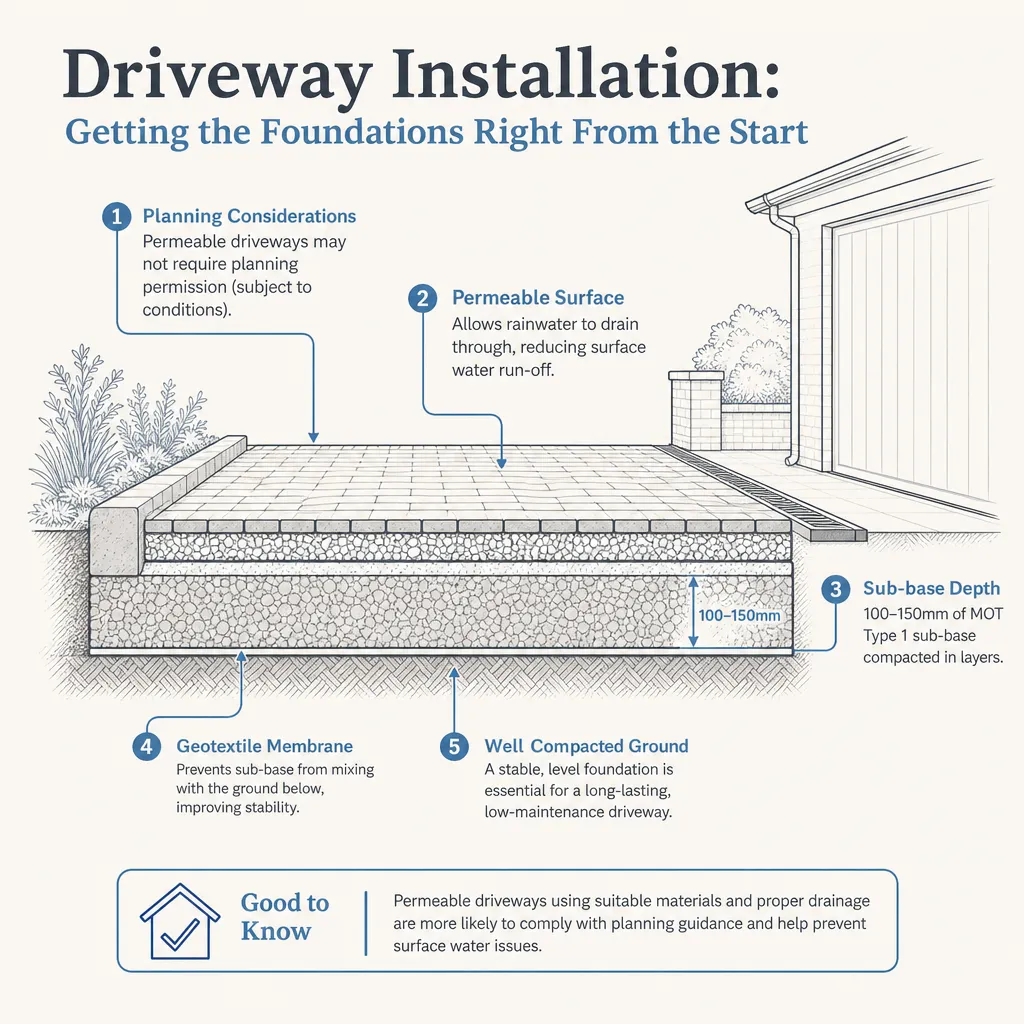
Driveway Installation: Getting the Foundations Right From the Start
A long-lasting driveway depends more on sub-base depth and drainage design than on the surface material chosen.
 Improvement & Build
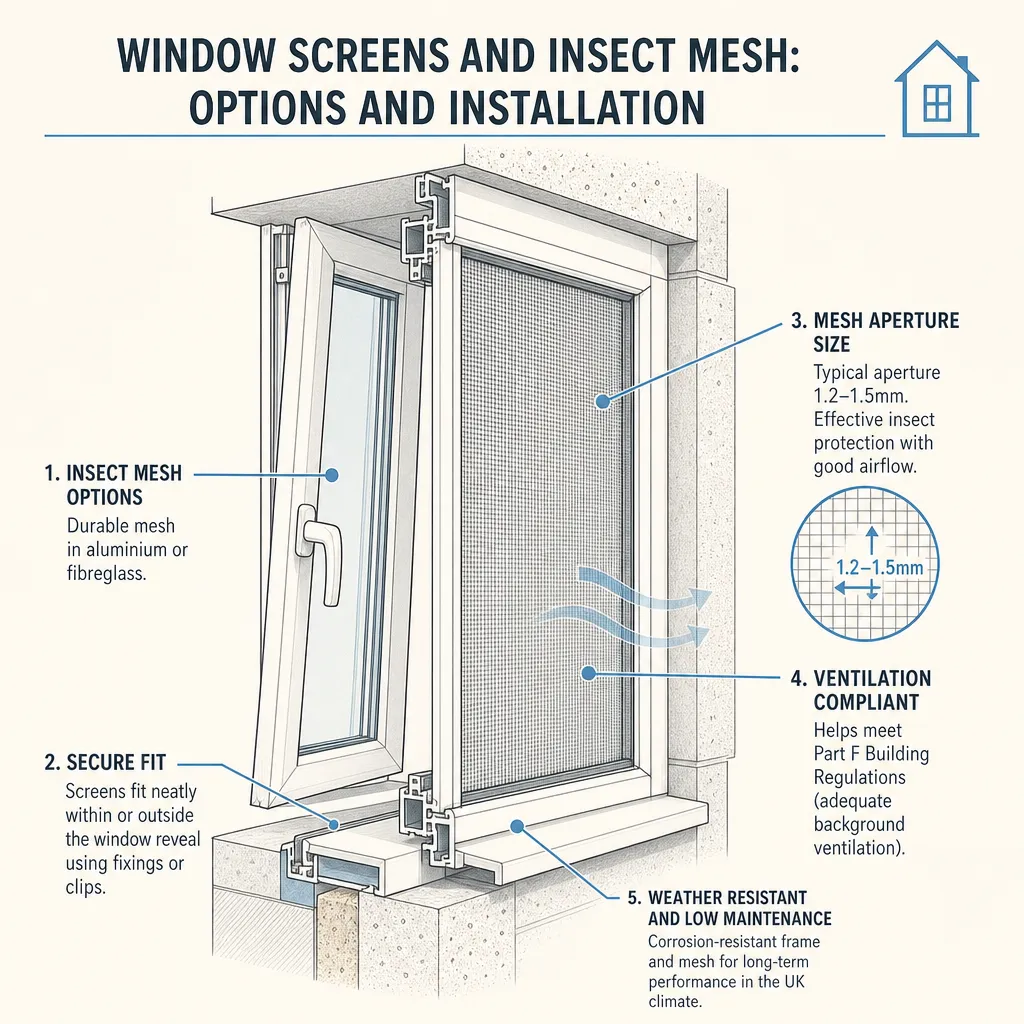
Window Screens and Insect Mesh: Options and Installation
UK window screens fall into four main types: fixed frame, roller retractable, pleated folding, and magnetic snap-fit.
 Improvement & Build
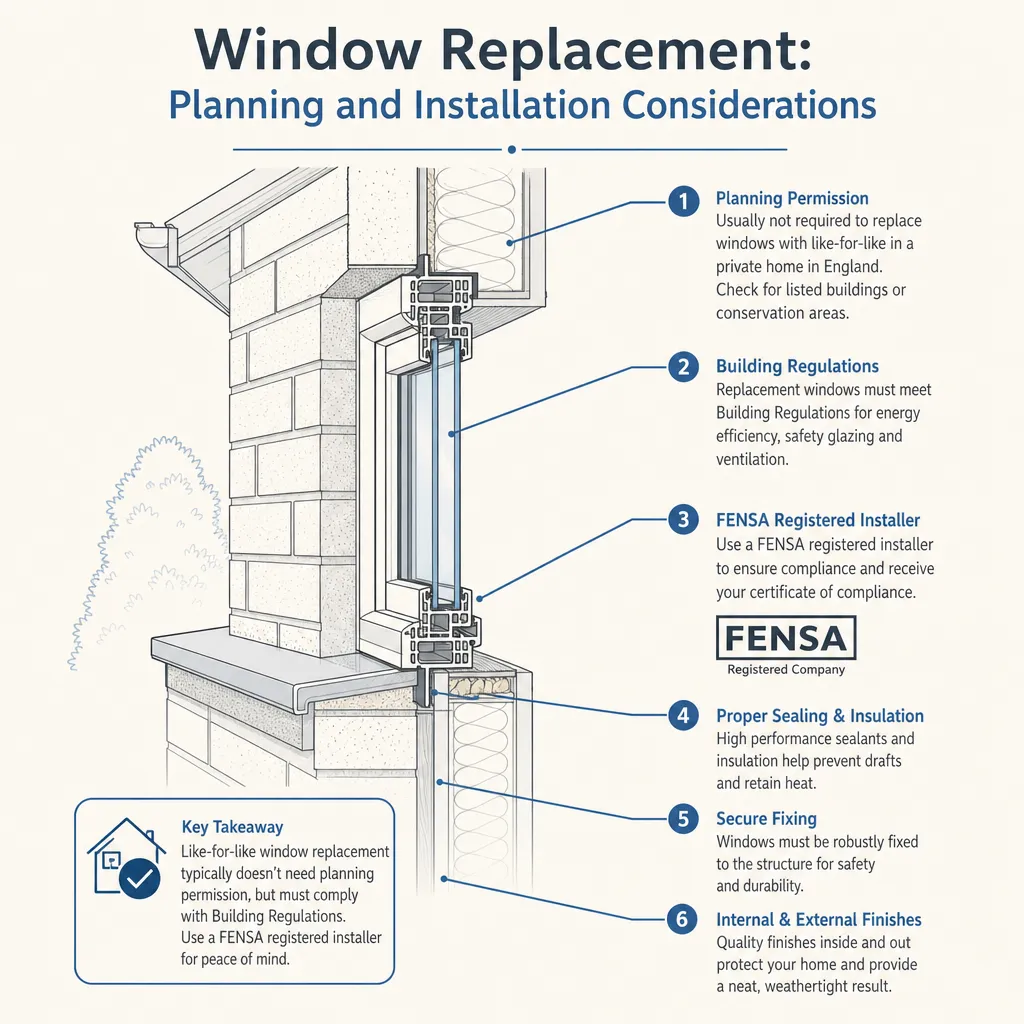
Window Replacement: Planning and Installation Considerations
Most window replacements in England fall under permitted development and do not need planning permission, though listed buildings, flats, and conservation areas are exceptions.
 Improvement & Build
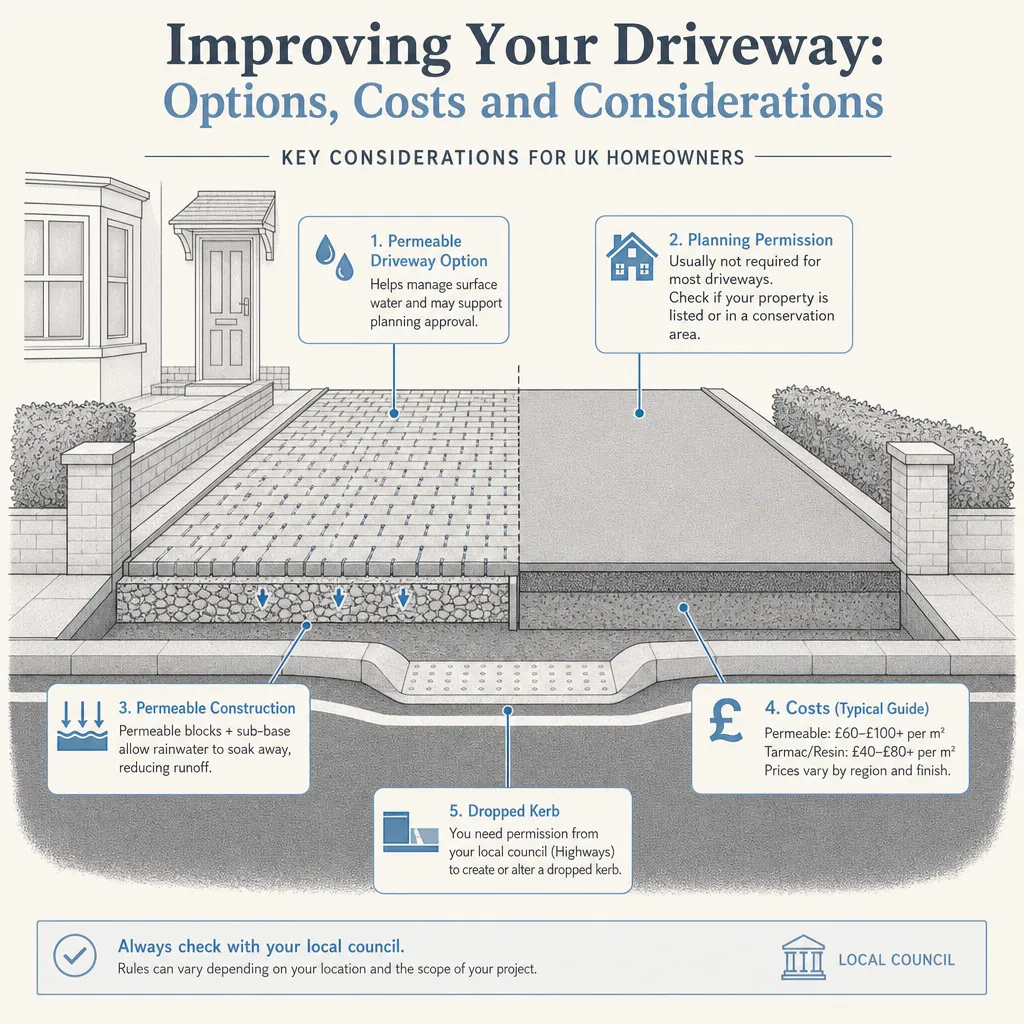
Improving Your Driveway: Options, Costs and Considerations
Installing a new driveway with a non-permeable surface larger than 5m² over a front garden in England requires planning permission unless water drains to a permeable area.
 Improvement & Build
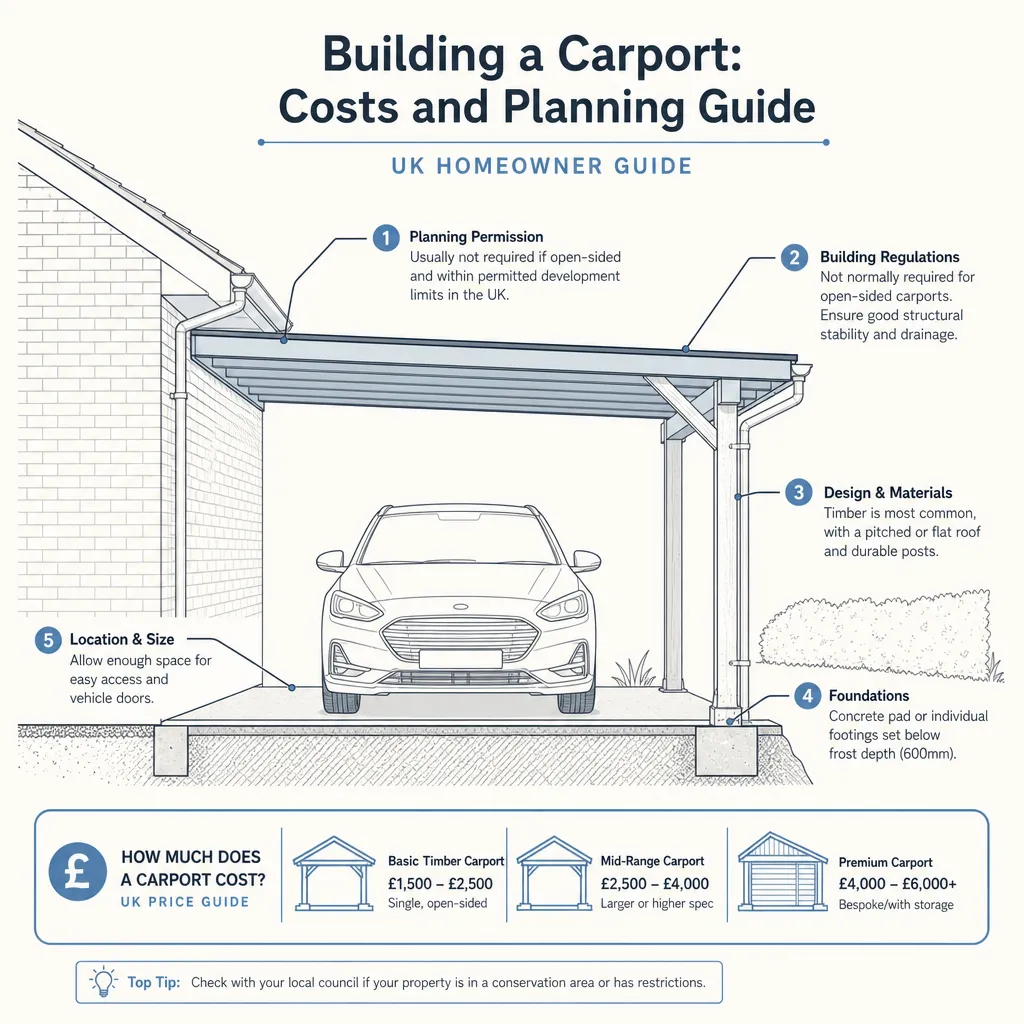
Building a Carport: Costs and Planning Guide
A single-bay carport in the UK typically costs £3,000–£12,000 installed, depending on material and groundworks.