Converting Garden Space into a Football Pitch: Layout and Costs
By Housey · Last reviewed 5th of May 2026
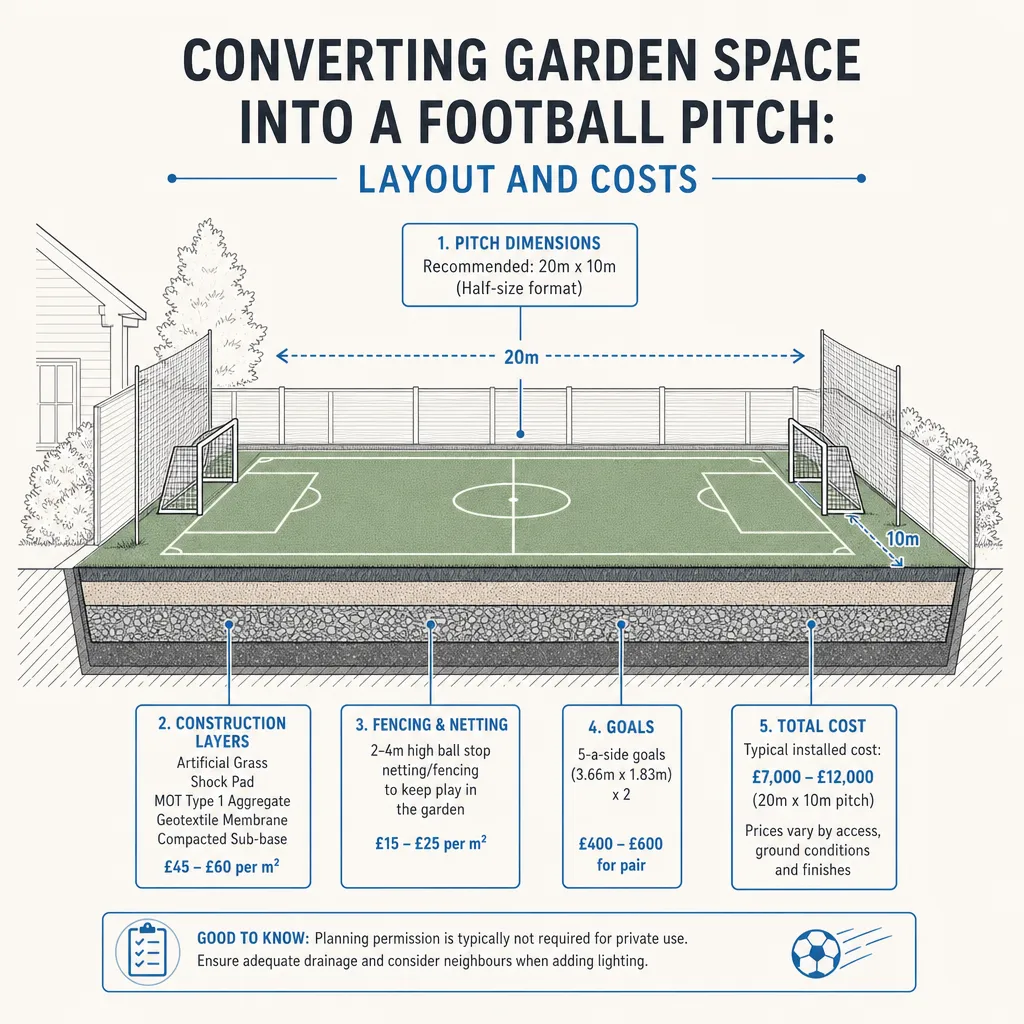
Converting Garden Space into a Football Pitch: Layout and Costs
If you have a large rear garden and want to convert it into a usable football pitch, the project involves considerably more than laying a new surface. Ground conditions, drainage, pitch dimensions, surfacing type, and planning rules all interact — and getting any one element wrong can lead to a poorly performing pitch or persistent waterlogging within a single season.
Key points
- A standard 5-a-side recreational pitch requires approximately 25m × 16m of clear playing area; smaller recreational layouts can work from around 20m × 12m.
- 3G artificial turf on a compacted stone sub-base handles year-round intensive play and is the most practical residential surface choice.
- Most domestic garden football pitches are permitted development and do not require a planning application, but perimeter fencing over 2m and floodlighting typically will.
- Drainage is the most commonly underestimated element: inadequate sub-base drainage causes surface pooling and pitch failure within a few seasons.
- Indicative project costs range from £8,000 to £40,000+ depending on pitch size, surfacing, drainage specification, and whether fencing and goals are included.
What pitch size fits your garden?
The usable space in your garden determines which format is realistic. Safety margins of at least 1–2m on each side are recommended beyond the playing area.
Format | Playing area | Minimum garden size needed |
|---|---|---|
Recreational kick-about | 15m × 10m | ~18m × 13m |
4-a-side | 20m × 12m | ~23m × 15m |
5-a-side (recreational) | 25m × 16m | ~28m × 19m |
5-a-side (FA guidance) | 30m × 20m | ~33m × 23m |
7-a-side | 55m × 37m | ~58m × 40m |
Measure your usable garden carefully, excluding trees, structures, and areas with known drainage problems.
Which surface should you choose?
Natural turf
The cheapest upfront option, but natural turf deteriorates quickly under intensive use. Bare patches and muddy areas typically appear within one to two seasons on a well-used pitch. Only practical for very light, occasional play.
3G artificial turf
Third-generation synthetic turf (3G) filled with rubber crumb or organic infill closely replicates natural grass underfoot and handles year-round intensive use. It is the standard surface for residential and community football pitches across the UK.
A 3G system typically comprises: a geotextile membrane over prepared ground; a compacted stone sub-base (100–150mm of Type 1 MOT aggregate); an optional shockpad layer improving safety and comfort; and the 3G carpet, seamed and infilled.
Surface type | Upfront cost | Maintenance | Lifespan | Suited to garden pitch? |
|---|---|---|---|---|
Natural turf | Low | High — mowing, scarifying, rest periods | Ongoing | Light use only |
3G artificial turf | Medium–high | Low — brushing, infill top-up | 8–12 years | Yes — recommended |
Sand-dressed artificial turf | Medium | Medium | 8–10 years | Limited |
Do you need planning permission?
Planning permission is generally not required for a domestic garden pitch in England, provided: the pitch is at ground level; no fencing exceeds 2m adjacent to a highway or 1m within 20m of a highway; no floodlighting is installed; and the property is not in a conservation area or subject to conditions restricting hard standings.
Fencing is the most common planning trigger. Practical football pitch perimeter fencing typically reaches 3–5m in height — well above permitted development limits. A planning application is very likely needed before erecting any high perimeter fence. Always confirm requirements with your local planning authority before installation.
If your property is listed or in a conservation area, consult the local planning authority before any groundworks or fencing.
What does a garden football pitch cost?
Indicative UK costs, last reviewed 2026-05-05.
Project element | Indicative cost range |
|---|---|
Ground preparation and excavation | £1,500 – £5,000 |
Sub-base installation (Type 1 MOT aggregate) | £1,500 – £4,000 |
Shockpad layer | £1,000 – £2,500 |
3G artificial turf supply and installation | £4,000 – £20,000+ |
Drainage system | £1,000 – £5,000 |
Perimeter fencing (3m height) | £2,000 – £10,000+ |
Goals and line markings | £500 – £2,500 |
Total — 5-a-side, 3G surface, fencing, goals | £15,000 – £40,000+ |
Smaller pitches without fencing can be completed for £8,000–£15,000. Costs vary significantly by ground conditions, site access, and contractor rates. Always obtain at least three itemised quotes from contractors with a verifiable portfolio of sports surface or artificial turf installations.
Worked example: 5-a-side pitch in the East Midlands
A homeowner with a 30m × 22m level rear garden commissioned a 25m × 16m 5-a-side pitch for regular family use. The scope included: stripping the existing lawn and 200mm of topsoil across the pitch area; installing 150mm of compacted Type 1 MOT sub-base with a perimeter drainage channel; laying a 3G artificial turf system with rubber crumb infill; erecting 3m-high rebound fencing on three sides; and fitting two steel 5-a-side goals with painted line markings.
Total project cost: approximately £22,000 including VAT. No planning application was made at the outset. The 3m perimeter fencing subsequently prompted a neighbour complaint and a retrospective planning application for the fencing structure. The key lesson: confirm fencing height requirements with your local planning authority before installation, not after.
This example is illustrative of typical project parameters and cost ranges. Actual costs vary by location, ground conditions, and specification.
Checklist before you begin
When to get professional help
Most garden football pitch projects are handled by specialist landscaping or sports surface contractors. Professional advice is particularly valuable if:
- Ground conditions are soft, waterlogged, or unknown — a ground investigation prevents costly sub-base failure after the surface is laid.
- You are uncertain about planning permission for fencing or lighting — contact your local planning authority or a planning consultant before proceeding.
- The garden slopes significantly — substantial earthworks to create a level pitch may require civil engineering input.
- Any proposed excavation falls within 3m of a neighbour's structure — check your obligations under the Party Wall etc. Act 1996.
How Housey can help
Housey connects homeowners with experienced contractors for garden sports pitch projects. Get quotes from landscapers specialising in sports surfaces or work with a garden designer to integrate the pitch into your wider outdoor space — both are available through the Housey marketplace.
Frequently asked questions
How much space do I need for a 5-a-side football pitch in my garden?
A 5-a-side pitch at recreational dimensions (25m × 16m) needs around 400m² of clear playing area plus safety margins of at least 1–2m on each side. A garden of approximately 28m × 19m is the practical minimum. Smaller gardens can accommodate reduced recreational layouts for informal play.
How long does a garden football pitch installation take?
A straightforward 3G pitch on level ground typically takes two to three weeks from groundworks to completion. Complex projects involving significant earthworks, planning applications, or drainage connections can take two to three months from first instruction.
How do you maintain artificial turf on a garden pitch?
3G artificial turf requires periodic brushing to keep pile upright and distribute infill evenly, an annual top-up of rubber crumb or organic infill, and occasional removal of moss and debris. A professional deep-clean and infill inspection is recommended every two to three years.
Do I need planning permission for a garden football pitch?
The pitch surface itself usually falls within permitted development. The most common triggers are perimeter fencing above 2m and floodlighting installations — both typically require a planning application. Always check with your local planning authority before specifying fence height or any lighting for the pitch.
Will a garden football pitch affect my property value?
The effect depends on the buyer profile and local market. A well-installed pitch on a large plot may appeal strongly to families with children. For buyers prioritising open garden space it could be neutral or negative. A RICS-registered valuer can provide a more specific assessment for your property and location.
Sources and further reading
- Planning permission: when is it required? — GOV.UK
- Artificial Turf Pitches: design and cost guidance — Sport England
- Football Facilities: pitch dimensions guidance — The Football Association
- Party Wall etc. Act 1996 — legislation.gov.uk
Useful next reads
 Improvement & Build
Building an Outdoor Kitchen: Design, Materials, and Investment
Building an outdoor kitchen in the UK costs roughly £3,000–£25,000 depending on size and materials.
 Improvement & Build
Building a Playground: Equipment, Safety, and Project Costs
A garden playground in England usually falls within permitted development rights and needs no planning permission.
 Improvement & Build
Aluminium Windows: Benefits, Specifications, and Installation Costs
Aluminium windows typically cost £600–£1,800 per window installed in the UK, depending on size and specification.
 Improvement & Build
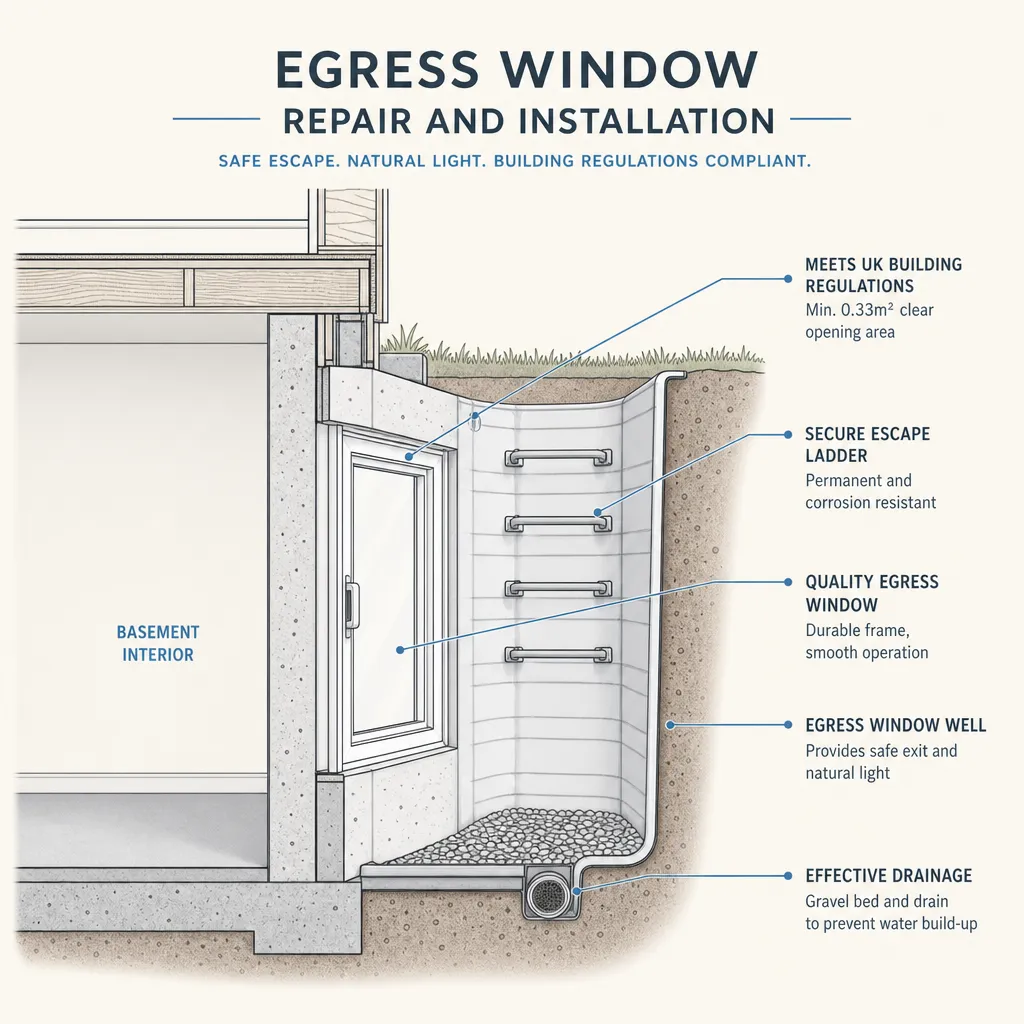
Egress Window Repair and Installation
An egress window is a window large enough to serve as an emergency escape route from a habitable room.
 Improvement & Build
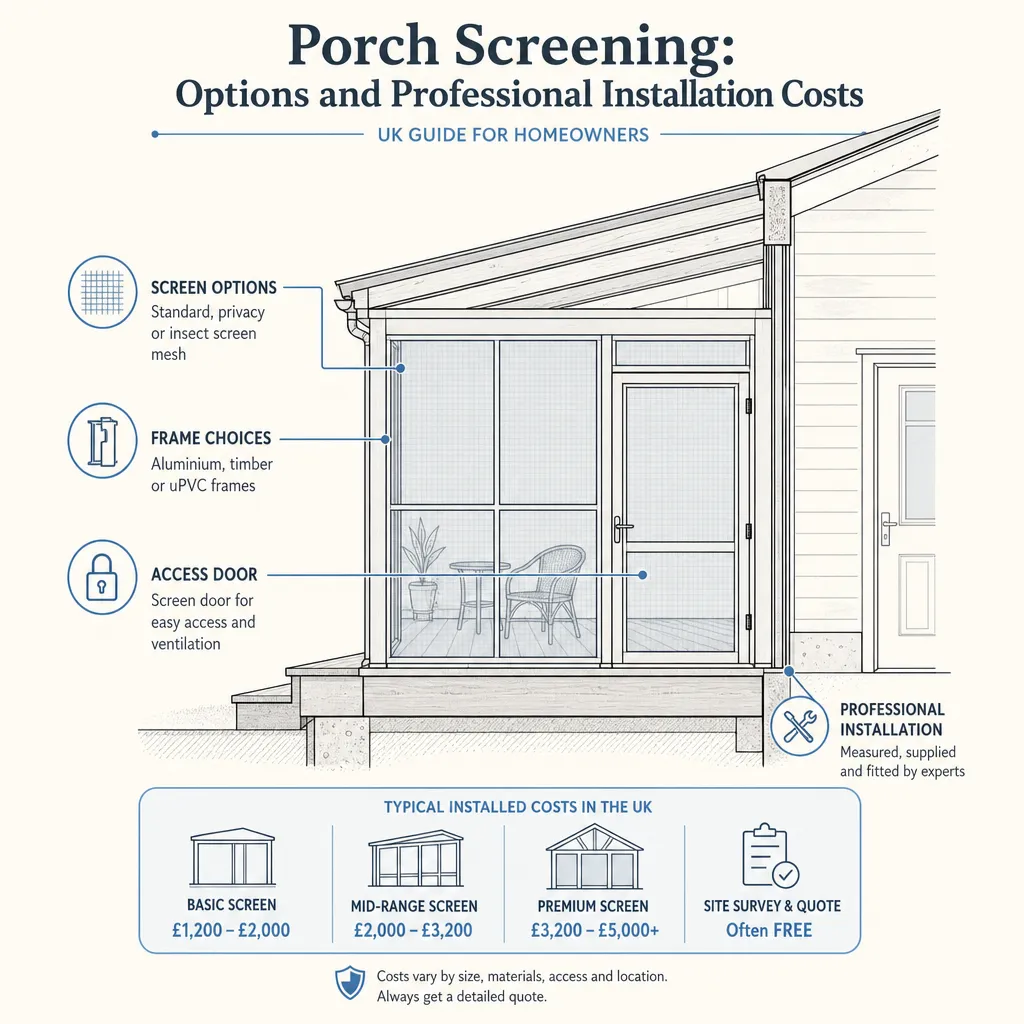
Porch Screening: Options and Professional Installation Costs
Porch screening ranges from simple insect mesh on a timber frame to bespoke aluminium-framed glazed enclosures.