Converting a Home to a Rental Property: Legal, Compliance, and Preparation Requirements
By Housey · Last reviewed 18th of May 2026
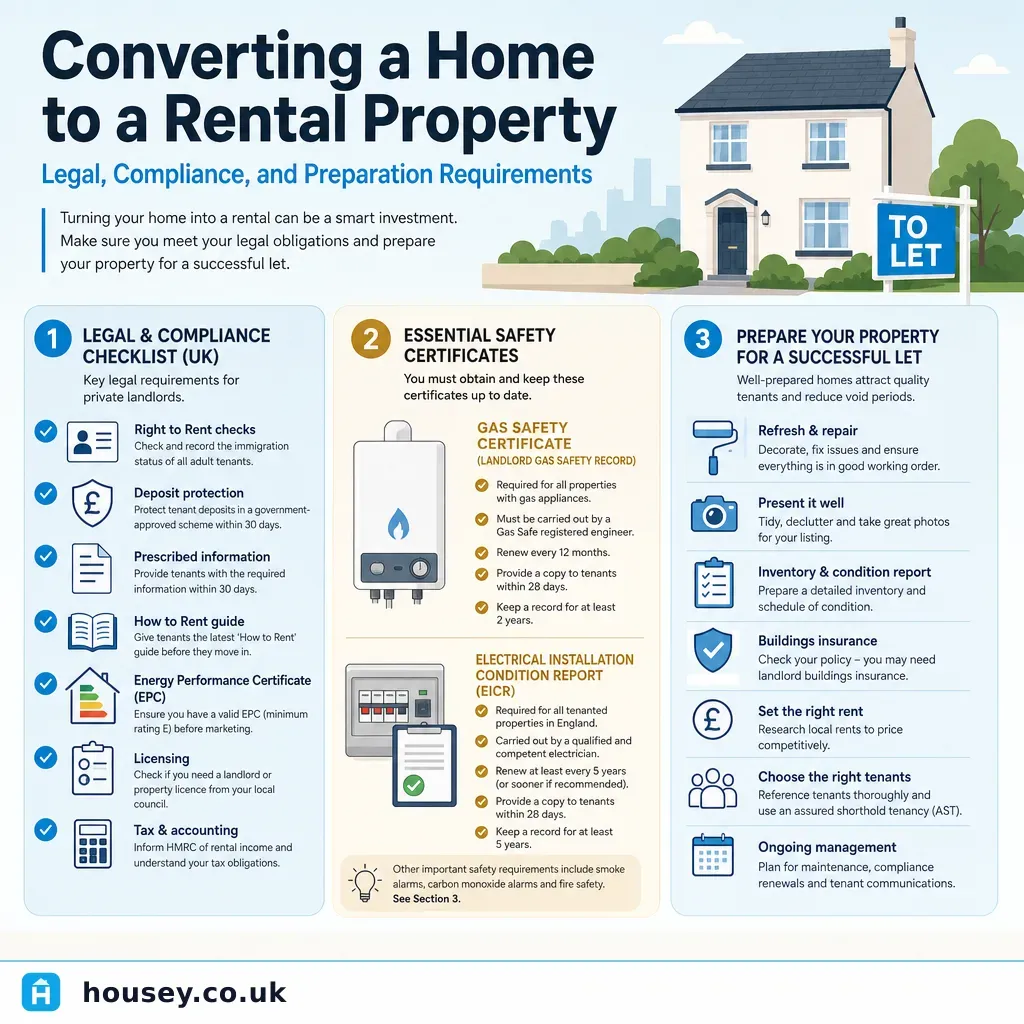
Converting a Home to a Rental Property: Legal, Compliance, and Preparation Requirements
Becoming a landlord for the first time — or letting a property you previously occupied — involves navigating a network of legal obligations that have expanded significantly over the past decade. The consequences of non-compliance range from civil penalties and rent repayment orders to criminal prosecution, and the regulatory requirements differ meaningfully across England, Scotland, and Wales. Understanding what must be in place before a tenant moves in is not optional: it is a legal baseline that protects both landlord and tenant.
Key points
- The Minimum Energy Efficiency Standards (MEES) prohibit letting a residential property in England and Wales with an EPC rating below E without a valid exemption registered on the PRS Exemptions Register.
- The Gas Safety (Installation and Use) Regulations 1998 require every gas appliance and flue in a let property to be checked by a Gas Safe registered engineer every 12 months; tenants must receive a copy of the Gas Safety Record within 28 days.
- The Electrical Safety Standards in the Private Rented Sector (England) Regulations 2020 require an Electrical Installation Condition Report (EICR) every five years, or at each change of tenancy, whichever is sooner.
- Smoke alarms must be installed on every storey used as living accommodation, and a carbon monoxide alarm in every room containing a solid fuel appliance, under the Smoke and Carbon Monoxide Alarm (Amendment) Regulations 2022.
- A mandatory HMO licence is required in England for properties occupied by five or more people from two or more separate households who share basic facilities.
Energy performance certificate requirements
Before advertising a property for rent in England or Wales, a valid EPC rated E or above must be in place. An EPC is valid for ten years, but if one was obtained when you occupied the property yourself, check the rating and expiry date on the national EPC register before assuming it remains current or adequate.
Properties rated F or G cannot legally be let without a registered exemption. Exemptions are available in limited circumstances — for example, where all cost-effective energy improvements have been completed or where improvement works would cost more than £3,500 — but must be registered on the government's PRS Exemptions Register before the tenancy begins.
Scotland has separate EPC requirements under Scottish Government regulations. Landlords must obtain a valid EPC before marketing and display the rating in any advertisement.
Gas and electrical safety obligations
Gas safety is among the most time-critical obligations. Any property with a gas supply requires an annual check by a Gas Safe registered engineer covering all gas appliances and flues. The resulting Gas Safety Record must be:
- Given to existing tenants within 28 days of the check.
- Given to new tenants before they move in.
- Retained by the landlord for at least two years.
Failing to provide a valid gas safety record is a criminal offence. Housey connects landlords with accredited engineers for gas safety certificates so you can meet this obligation before the tenancy begins.
Electrical safety must be assessed through an EICR carried out by a qualified electrician. In England, the EICR must be completed before new tenancies granted on or after 1 July 2020, and renewed every five years. A copy must be given to tenants before they move in and to local authorities within seven days of a request. Scotland has equivalent obligations under the Housing (Scotland) Act 2006 repairing standard requirements; Wales introduced similar rules from 1 December 2022.
Fire safety requirements
The Smoke and Carbon Monoxide Alarm (Amendment) Regulations 2022 (England) require:
- At least one smoke alarm on every storey used as living accommodation.
- A carbon monoxide alarm in every room containing a solid fuel burning appliance — such as a wood-burning stove, open fire, or biomass boiler.
- Alarms must be tested and confirmed working on the first day of each new tenancy.
HMO properties face additional requirements, including fire doors, emergency lighting, and a formal fire risk assessment for licensable HMOs. A written fire risk assessment is not mandatory for single-household lets in England, but it is considered good practice in larger or older properties.
HMO licensing: when it applies
A property is classed as a House in Multiple Occupation if it is occupied by three or more people forming more than one household who share basic amenities. A mandatory HMO licence is required in England where five or more occupants from two or more households share facilities such as a bathroom, kitchen, or toilet.
Many councils also operate additional licensing schemes that extend mandatory licensing to smaller HMOs of three or four occupants. Penalties for operating an unlicensed HMO can include unlimited fines and rent repayment orders covering up to 12 months of rent.
Standard let or HMO — which applies to your property?
- Choose a standard assured shorthold tenancy (AST) if letting to a single person, couple, or one family household.
- Choose HMO management arrangements if three or more unrelated people will share the property — including a couple plus a third party.
- Seek specialist HMO advice if you are converting a house into bedsits, adding en-suites, or creating separate self-contained units within one building.
- Check your local council's additional licensing register before proceeding if occupancy is close to the mandatory threshold or the property is in an area where additional licensing is known to apply.
- Contact your local planning authority if converting a family home to a shared house with six or more occupants — a change of use from C3 to C4 or Sui Generis may require planning permission.
Landlord registration and tenancy documentation
Scotland requires all private landlords to register with their local council under the Landlord Registration (Scotland) Act 2004. Unregistered landlords cannot lawfully let property and face fines of up to £50,000.
Wales requires landlords to register with Rent Smart Wales. Unless they appoint a licensed agent, they must also complete landlord training and hold a personal licence.
England has no national landlord register as of May 2026, though mandatory registration has been announced as part of the Renters' Rights Act reforms currently progressing through Parliament.
Regardless of location, prepare the following before any tenancy begins:
- A tenancy agreement (AST in England and Wales; Private Residential Tenancy in Scotland).
- A copy of the current How to Rent guide (England) — must be issued at the start of each tenancy.
- Copies of the EPC, Gas Safety Record, and EICR.
- Deposit protection information — deposits must be registered in a government-approved scheme within 30 days in England.
Pre-letting landlord compliance checklist
Important limitations
This article provides a general introduction to landlord compliance requirements in the UK as of May 2026. Regulations, licensing thresholds, and enforcement practices vary between England, Scotland, and Wales and can change when new legislation takes effect. The Renters' Rights Act (England) was progressing through Parliament at the time of writing and is expected to introduce further changes, including mandatory landlord registration and restrictions on tenancy types. Always verify current requirements with GOV.UK, your local authority, or a qualified letting agent or solicitor before letting a property.
What to ask a qualified professional
Before instructing a letting agent, compliance specialist, or solicitor, ask:
- Are you familiar with the specific HMO licensing requirements in this local authority area, including any additional licensing schemes in operation?
- Which regulations have changed most recently, and how do they affect my property and planned tenancy?
- What remedial works are needed to make the EICR or gas safety check satisfactory before the tenancy begins?
- Which tenancy agreement is appropriate for my property, tenure, and planned tenant type?
- Does the property's planned use or conversion require a change-of-use planning application?
- How will the Renters' Rights Act affect the tenancy type I should be using and my ability to regain possession?
When to get professional help
Seek advice from a qualified letting agent, solicitor, or housing compliance specialist if:
- Your property will have three or more unrelated tenants sharing facilities.
- You are converting a property with multiple rooms or creating self-contained units within one building.
- The EICR raises a Code C1 (danger present) or Code C2 (potentially dangerous) issue requiring immediate or urgent remediation.
- You are letting in Scotland or Wales, where licensing and registration obligations differ materially from England.
- You receive a notice from your local housing authority regarding compliance, licensing, or standards.
How Housey can help
Housey connects landlords with qualified professionals for gas safety certificates and fire risk assessments — two of the most time-critical compliance obligations before a tenant moves in. Compare quotes from accredited local engineers and assessors to ensure your property meets its legal obligations before the tenancy begins.
Frequently asked questions
Do I need a new gas safety certificate if I am renting out a property that already has one?
Gas safety certificates are valid for 12 months. If the existing certificate is less than 12 months old, it can be used for a new tenancy — but you must give the tenant a copy before they move in. A certificate issued more than 12 months ago is no longer valid regardless of the tenancy status.
Is a fire risk assessment legally required for a standard single-household rental property?
A formal written fire risk assessment is not required for single-household lets in England, but is mandatory for licensable HMOs. All landlords must install and test smoke alarms on every storey and carbon monoxide alarms where required by the Smoke and Carbon Monoxide Alarm (Amendment) Regulations 2022.
Can I let a property with an F-rated EPC in England?
No. In England and Wales, landlords cannot lawfully let a property rated F or G without registering a valid exemption on the government's PRS Exemptions Register. Exemptions apply in limited circumstances — for example, where improvement works would cost more than £3,500 and three contractor quotes have been obtained.
What happens if I do not protect a tenant's deposit in England?
Failure to protect a deposit in a government-approved tenancy deposit scheme within 30 days is a civil offence in England. Courts can order you to repay between one and three times the deposit amount to the tenant. It also prevents you from serving a valid Section 21 notice to end the tenancy.
Sources and further reading
- Private renting: landlord responsibilities — GOV.UK
- Gas Safety (Installation and Use) Regulations 1998 — legislation.gov.uk
- Electrical safety standards in the private rented sector — GOV.UK
- Smoke and Carbon Monoxide Alarm (Amendment) Regulations 2022 — legislation.gov.uk
- Houses in Multiple Occupation: licensing — GOV.UK
- Rent Smart Wales — Welsh Government
- Landlord registration — Scottish Government
Useful next reads
 Surveys & Inspections
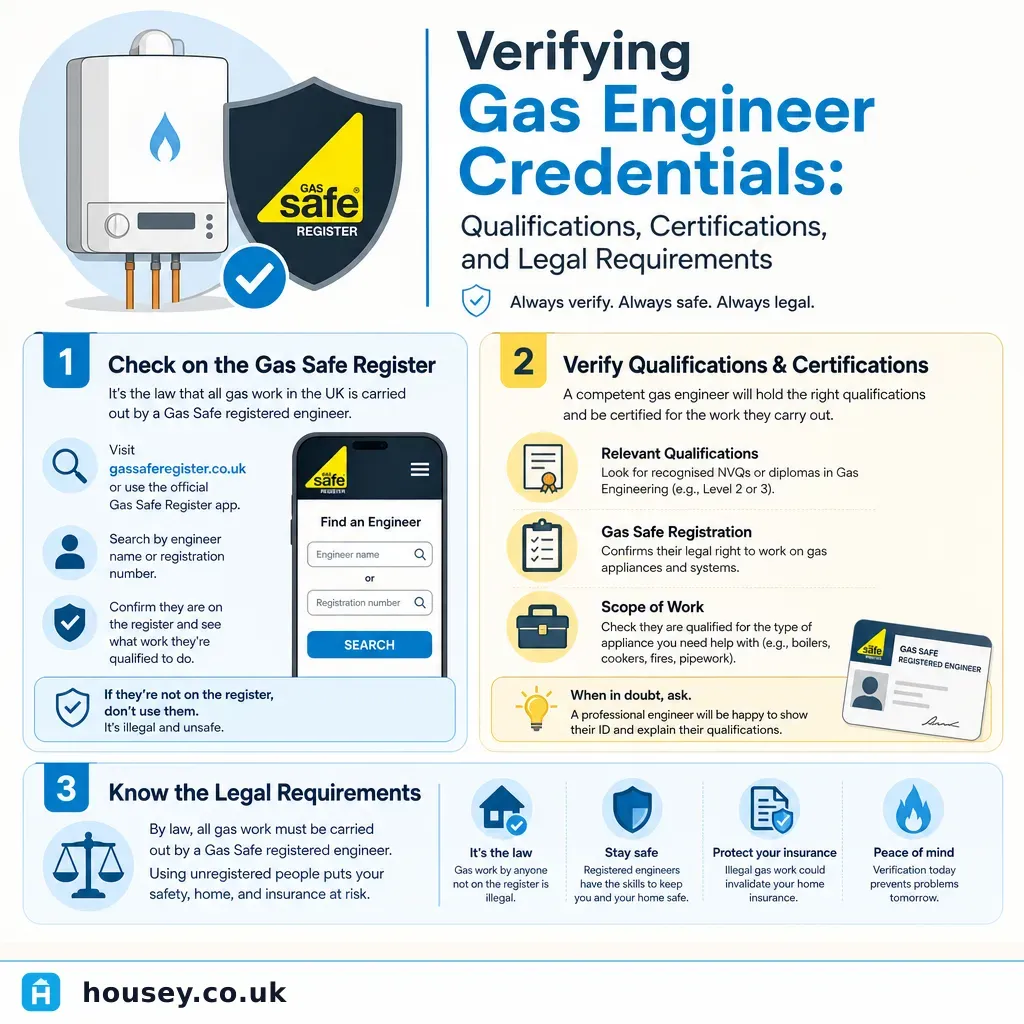
Verifying Gas Engineer Credentials: Qualifications, Certifications, and Legal Requirements
All gas engineers working on domestic properties in Great Britain must be Gas Safe registered — a legal requirement under the Gas Safety (Installation and Use) Regulations 1998.
 Surveys & Inspections
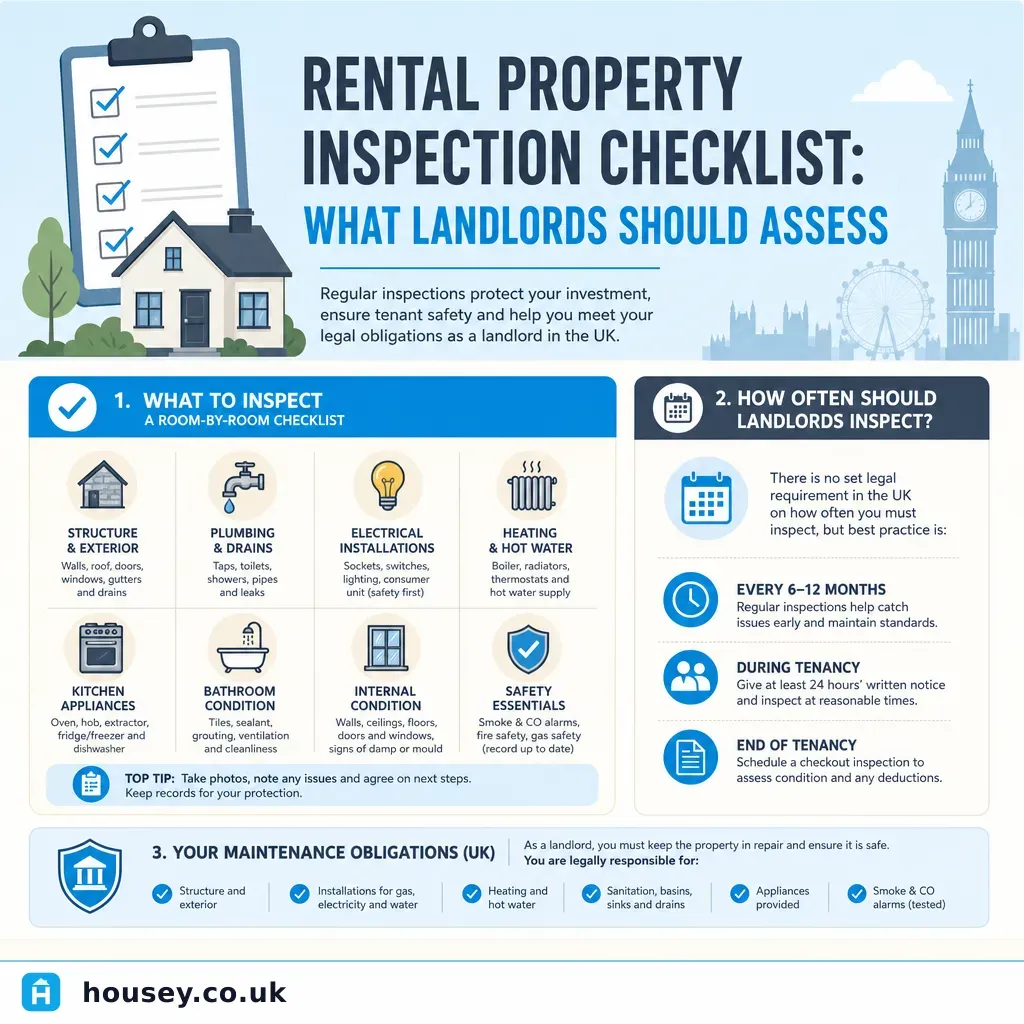
Rental Property Inspection Checklist: What Landlords Should Assess
A landlord inspection should cover statutory safety checks (gas, electrical, smoke alarms), structural condition, services, and interior fabric.
 Surveys & Inspections
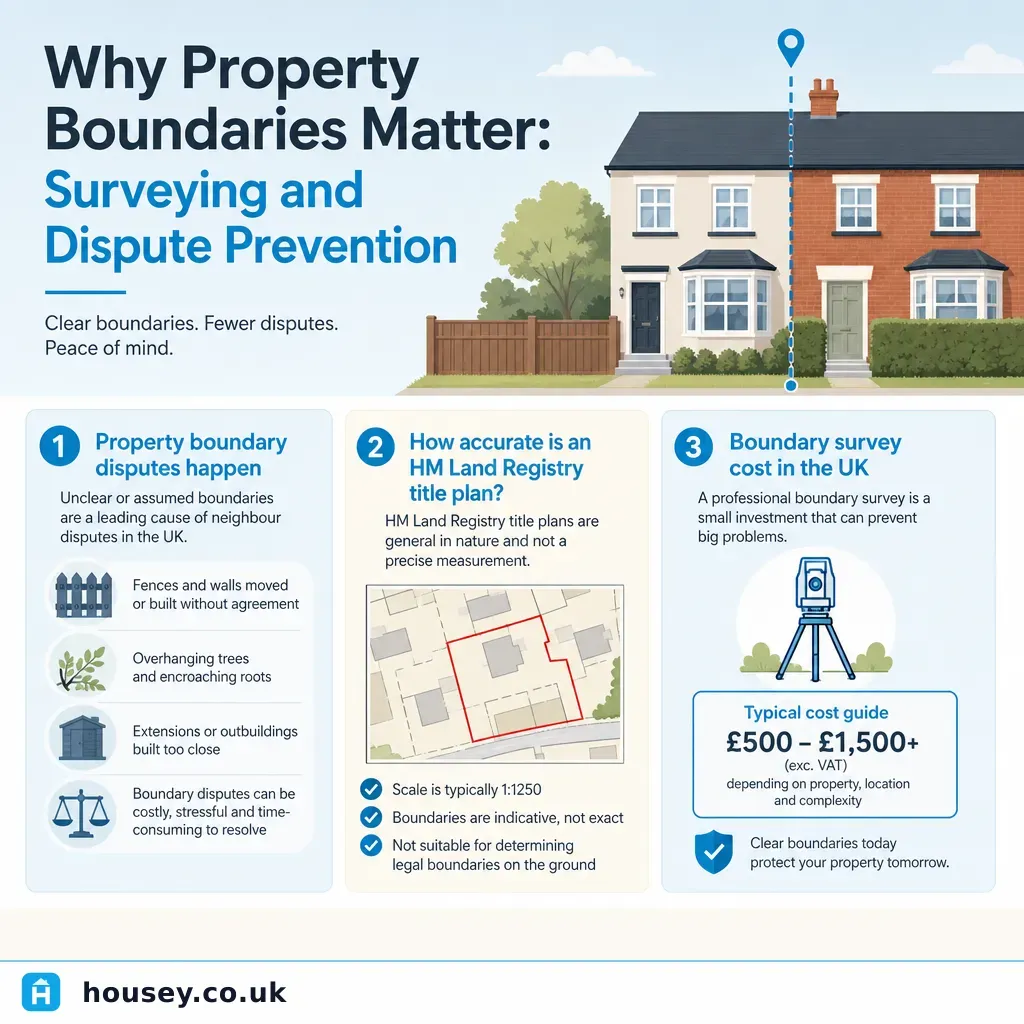
Why Property Boundaries Matter: Surveying and Dispute Prevention
Property boundaries in England and Wales are recorded as general boundaries by HM Land Registry — not precise measurements.
 Surveys & Inspections
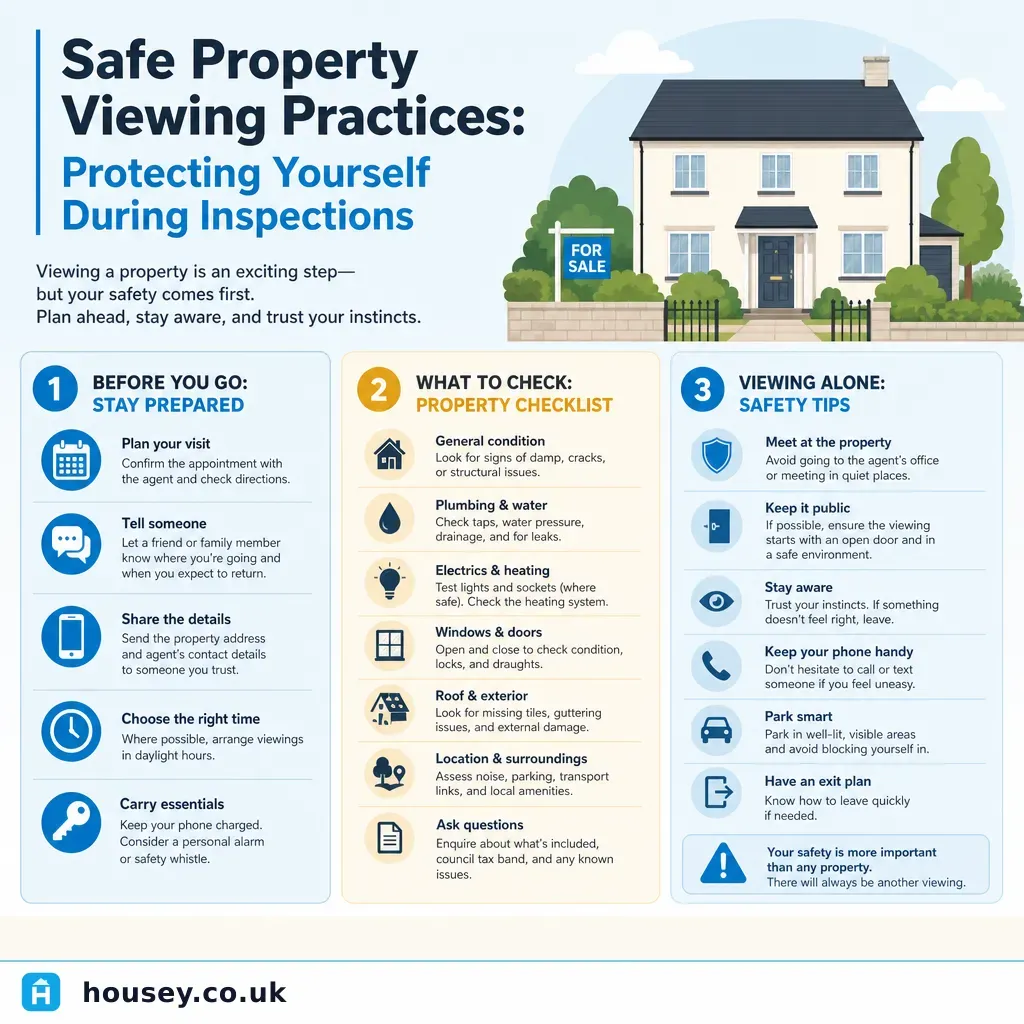
Safe Property Viewing Practices: Protecting Yourself During Inspections
When viewing a property in the UK, always tell someone where you are going and share the full address before you leave.
 Surveys & Inspections
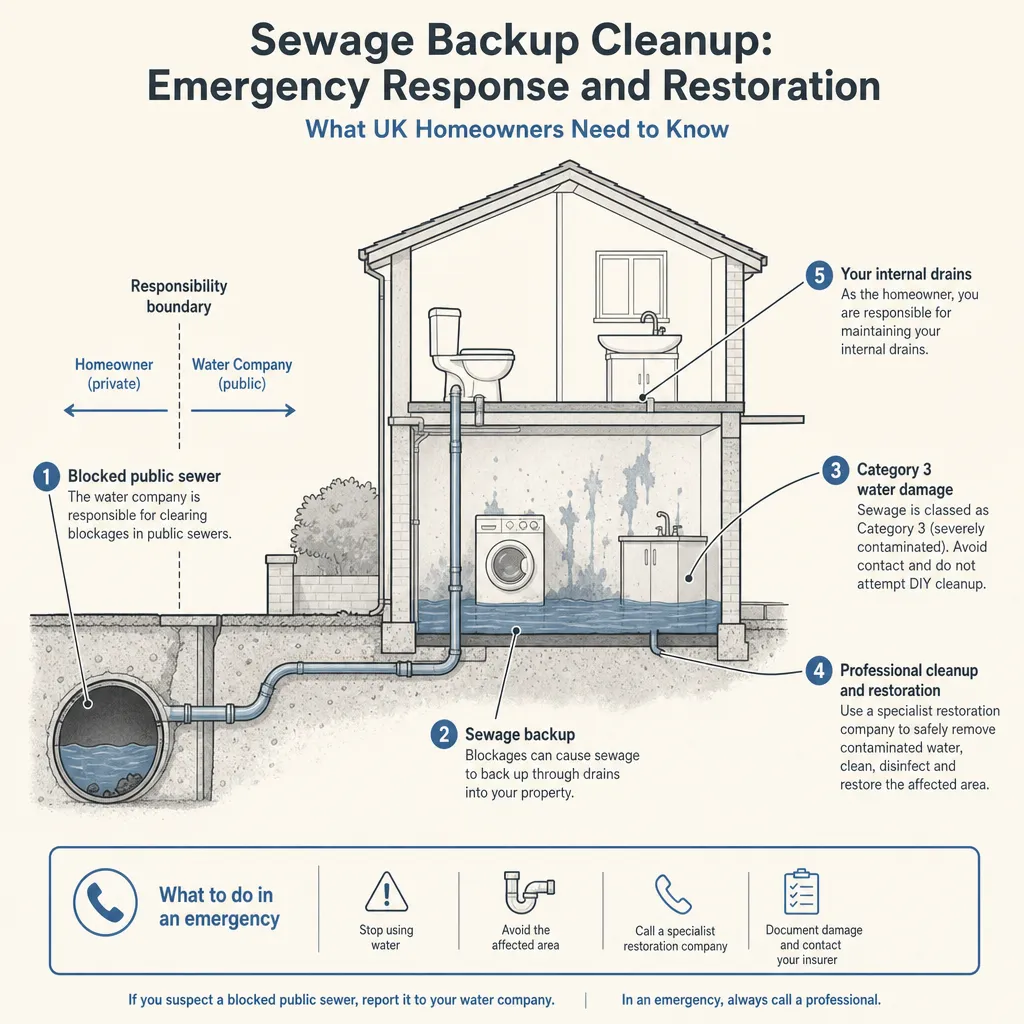
Sewage Backup Cleanup: Emergency Response and Restoration
A sewage backup should be treated as a Category 3 contamination event.