Converting Outbuildings: Space Creation and Feasibility
By Housey · Last reviewed 10th of May 2026
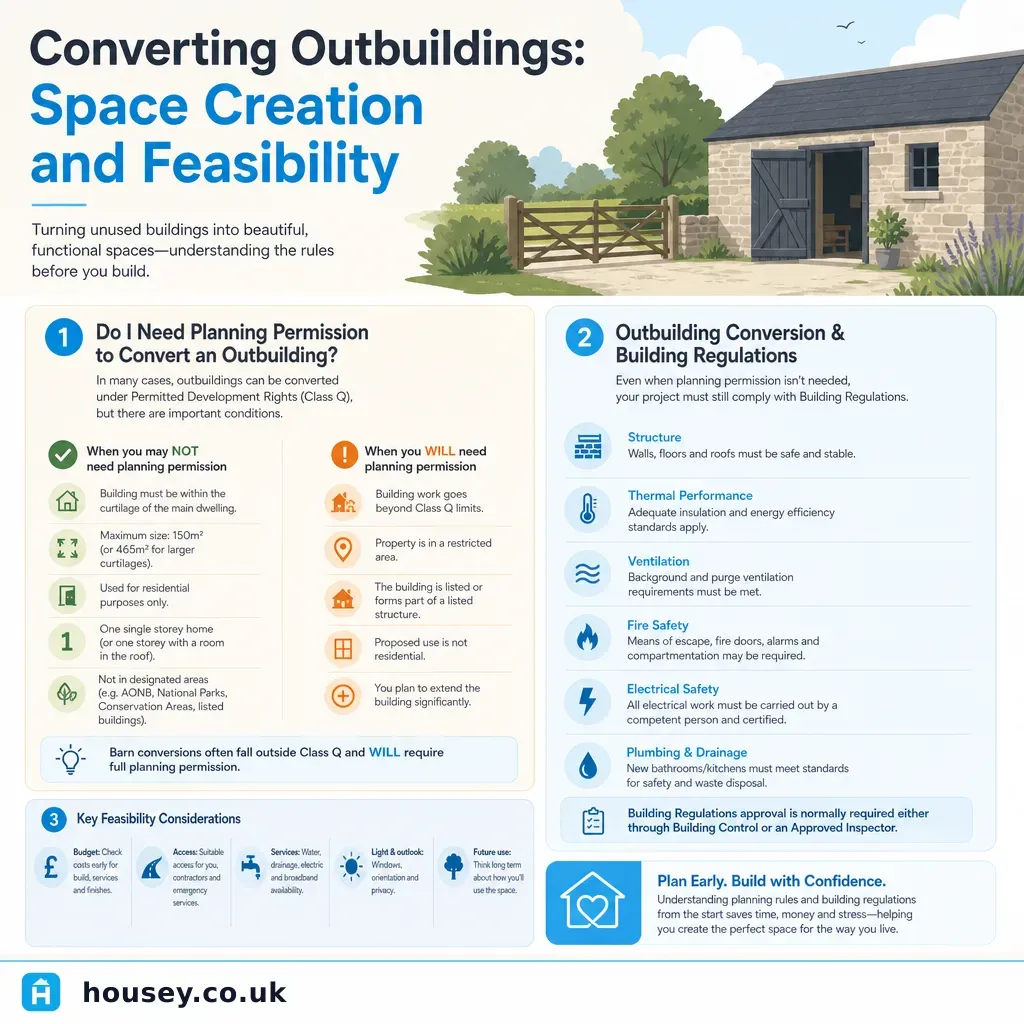
Converting Outbuildings: Space Creation and Feasibility
An outbuilding that already sits within your property boundary can seem like the most straightforward route to extra space — the structure is there, the land is yours, and the potential to gain a home office, annex, or habitable room without a full extension seems appealing. In practice, converting an outbuilding to any form of habitable or self-contained use in the UK involves planning law, building regulations, structural assessment, and often services infrastructure challenges that must be resolved before design work begins. Getting feasibility right before committing to professional fees prevents abortive costs and, in some cases, enforcement action requiring works to be reversed.
Key points
- A change of use from an outbuilding to residential accommodation almost always requires planning permission; permitted development rights under Schedule 2, Part 1 of the Town and Country Planning (General Permitted Development) Order 2015 do not generally cover residential change of use.
- Class Q of Part 3 of the GPDO allows certain agricultural buildings on agricultural land to be converted to dwellinghouses via a prior approval process rather than a full planning application, subject to strict conditions on size, prior agricultural use, location, and construction method.
- Building Regulations approval is required for any conversion creating habitable space, covering structural adequacy (Part A), fire safety (Part B), moisture resistance (Part C), ventilation (Part F), and energy efficiency (Part L) at minimum.
- Listed building consent is required for any works affecting the character of a listed building, including internal alterations — this is separate from planning permission and is required even where planning permission might not be.
- Outbuildings in conservation areas are subject to greater scrutiny; Article 4 directions may remove permitted development rights entirely, and works affecting external appearance may require planning consent.
Feasibility: what to establish before you design anything
Several factors determine whether a conversion project is viable, affordable, and likely to receive consent. Establishing these before instructing an architect or builder avoids abortive fees.
Planning history: Has the outbuilding had previous planning applications, conditions attached to a historic permission, or enforcement notices? Check your LPA's online planning portal by postcode before assuming any use is lawful.
Title and covenants: Confirm the outbuilding is included within your title at HM Land Registry, and check for restrictive covenants that may prevent change of use or specify approved construction methods.
Structural condition: Outbuildings are typically built to storage rather than habitable standards — often with no damp-proof course, minimal foundations, and a roof designed for dead loads only. A structural inspection before fixing a design brief can avoid abortive drawings.
Services: Can the outbuilding connect to mains water, foul drainage, and electricity? Routing services across a site adds cost, particularly when the outbuilding is remote from the house or the drainage run is long.
Access and parking: Does the conversion require separate vehicular or pedestrian access to a public highway? New access requires highway authority approval, and the LPA will assess parking provision as part of any planning application.
Decision tree: which approval route applies?
- Ancillary garden building with no sleeping or habitable use → May be permitted development under Part 1 if within size limits and not in a protected area; building regulations may not apply to minor single-storey structures, but check with your building control body before assuming this.
- Home office or hobby room ancillary to the main dwelling → Planning permission often not required for internal conversion if use is genuinely incidental; building regulations apply if the space is heated and regularly occupied.
- Annex for a dependent relative (not a separate planning unit) → Planning permission usually required; building regulations apply throughout; many LPAs require a planning condition preventing separate sale or letting.
- Self-contained dwelling on its own planning unit → Full planning permission required; access, parking, amenity space, and design all assessed; building regulations apply throughout.
- Agricultural barn on agricultural land → Class Q prior approval route may apply — check current eligibility conditions with your LPA before proceeding, as interpretation varies between authorities.
- Listed building or conservation area property → Seek pre-application advice from your LPA before any design; listed building consent is almost certainly required for any structural or material alteration.
Which Building Regulations apply?
Part | Subject | Typical requirement for outbuilding conversions |
|---|---|---|
Part A | Structure | Walls, roof, and floor must be structurally adequate for habitable loads; may require new or strengthened foundations |
Part B | Fire safety | Means of escape, fire detection, and structural fire resistance appropriate to the occupancy |
Part C | Moisture resistance | Damp-proof membrane to floor, DPC to walls, tanking if any part is at or below ground level |
Part F | Ventilation | Background ventilation via trickle vents, or mechanical ventilation with heat recovery (MVHR) |
Part L | Energy efficiency | Insulation U-values to meet the notional building specification; thermal bridging details required |
Part M | Access | Reasonable accessibility provisions required if a new self-contained dwelling is being created |
Part P | Electrical safety | All new electrical installation notified to building control or certified by a competent person scheme registrant |
Your building control body — either the local authority or a private approved inspector — can confirm which Parts apply and at what standard before work starts. Pre-application discussion with building control is worthwhile for more complex conversions.
Common structural challenges
Most UK outbuildings were not designed for habitable use. Common issues encountered during structural assessment include:
No damp-proof course: Many agricultural and older domestic outbuildings lack a DPC. Retrofitting a chemical injection DPC or installing a DPC on rebuilt sections is typically required before any habitable finishes are applied.
Shallow or absent foundations: Single-skin brick or stone walls may sit on minimal strip footings inadequate for habitable loads or for supporting the weight of additional insulation and linings. A structural engineer should assess load-bearing capacity before the design is fixed.
Roof structure designed for dead loads only: Agricultural and many domestic outbuilding roofs are not designed to carry insulation boards, rafter-level insulation, or habitable floor loads. Structural upgrades or partial rebuilding are common.
Single-skin walls: Many outbuildings have single-skin construction with very low thermal and weather resistance. Options include internal insulation (which reduces floor area), external insulation (with planning implications for external appearance), or rebuilding as cavity walls — all have cost implications.
Homeowner checklist: before you appoint a contractor
Indicative costs
Costs vary significantly by building type, structural condition, specification, and location.
Conversion type | Indicative cost range (UK, 2026) |
|---|---|
Garage to home office or habitable room | £15,000–£35,000 |
Detached workshop to self-contained annex | £40,000–£100,000+ |
Stone or brick barn to one-bedroom dwelling | £80,000–£200,000+ |
Agricultural outbuilding (basic residential fit-out) | £60,000–£150,000+ |
Indicative UK costs, last reviewed 2026-05-10. Costs vary widely by condition, specification, location, and whether listed building or conservation area constraints apply. Always obtain itemised quotes from at least three experienced contractors.
Planning application fees in England are currently £258 for a householder application; a full application for a new dwelling is charged at a higher rate. Building control fees depend on project value and the body used.
Important limitations
This article provides general information about outbuilding conversion in England. Planning and building regulations rules differ in Scotland, Wales, and Northern Ireland. Planning policy varies considerably at local authority level — what is acceptable to one LPA may be refused by another. The Class Q permitted development right has conditions that have changed over time and are interpreted differently across authorities; always check current GOV.UK Planning Practice Guidance and seek advice from your LPA or a planning consultant before relying on it. Nothing in this article constitutes planning, legal, or structural advice.
What to ask a qualified professional
- Does this outbuilding have an established lawful use, and does that affect what I can do with it?
- What is the most appropriate planning route — permitted development, prior approval, or full application?
- What structural works will the conversion require, and should I commission a structural engineer's report before fixing the design?
- Will the proposed conversion meet current Part L energy performance requirements, and what is the most cost-effective compliance route?
- What are the likely building control inspection stages and associated fees?
- If the building is listed or in a conservation area, what materials and methods are required, and which alterations need separate consent?
When to get professional help
Professional input is essential if:
- The outbuilding is a listed building or lies within the curtilage of one
- The property is in a conservation area, National Park, or Area of Outstanding Natural Beauty
- The outbuilding shows signs of structural movement, severe damp, or appears to have no foundations
- You are uncertain whether planning permission is required
- The conversion will create a self-contained dwelling separate from the main house
- Drainage, electricity, or water connections require significant new infrastructure across the site
An architect or planning consultant should advise on feasibility and the consent route before detailed design begins. A structural engineer should assess the building's condition before the brief is finalised.
How Housey can help
Housey connects you with experienced extension builders who can assess outbuilding conversion feasibility and provide detailed project quotes. For the regulatory side, our building control consultants can advise on which Parts of the Building Regulations apply to your conversion and help you prepare for inspection stages.
Frequently asked questions
Do I need planning permission to convert an outbuilding?
In most cases, yes — particularly for any residential use. Converting a detached garage, barn, or workshop to a habitable room or annex usually requires planning permission for change of use. Limited exceptions exist, including the Class Q prior approval route for certain agricultural buildings on agricultural land. Always check with your local planning authority before starting work or commissioning detailed design.
Can I use an outbuilding as a home office without planning permission?
Using an outbuilding as a home office incidental to the main dwelling is often possible without planning permission if the building already exists and use is genuinely ancillary to the home. However, if employees or clients visit regularly, or if the space will be rented out commercially, planning permission is likely needed. Building Regulations usually still apply if the space is to be occupied regularly and heated.
How much does it cost to convert an outbuilding?
Costs depend heavily on the building's current condition, construction type, the intended use, and the extent of structural, services, and insulation work required. A simple garage-to-room conversion might cost £15,000–£35,000, while a substantial barn conversion to a self-contained dwelling could reach £100,000–£200,000 or more. Obtain itemised quotes from at least three experienced contractors before committing.
What is Class Q permitted development?
Class Q is a permitted development right in England allowing certain agricultural buildings to be converted to dwellinghouses via a prior approval process rather than a full planning application. It applies only to buildings on agricultural land in qualifying agricultural use before a set date. Conditions cover size, location, and construction method; not all agricultural buildings qualify, and local planning authorities can refuse prior approval on design or highway grounds.
Sources and further reading
- Planning permission: when you need it — GOV.UK
- Permitted development rights for householders: technical guidance — Ministry of Housing, Communities and Local Government
- Building Regulations approved documents — GOV.UK
- Listed buildings: advice for owners — Historic England
- Planning Practice Guidance: when is permission required? — GOV.UK
Useful next reads
 Improvement & Build
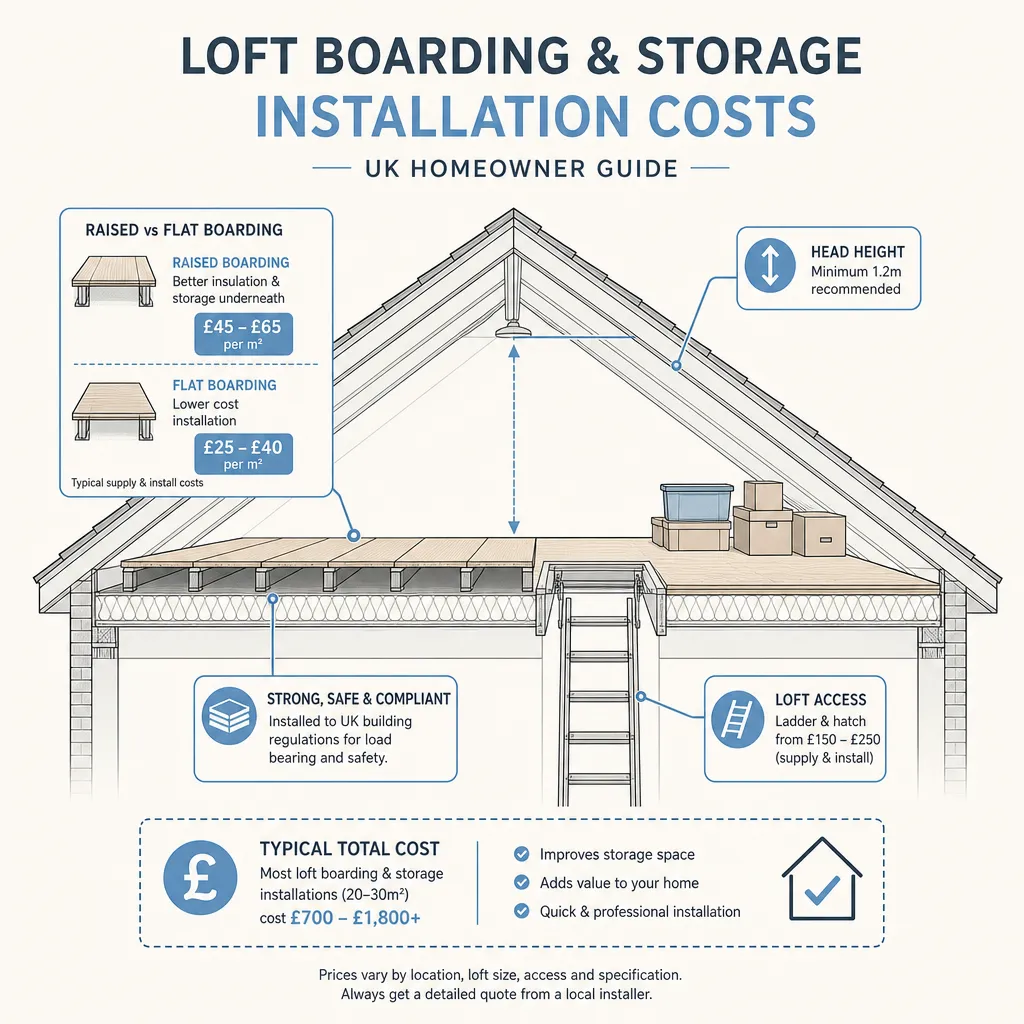
Loft Boarding and Storage Installation Costs
Basic loft boarding for an average semi-detached home costs £500–£1,500; a raised system that preserves insulation runs £800–£2,500.
 Improvement & Build
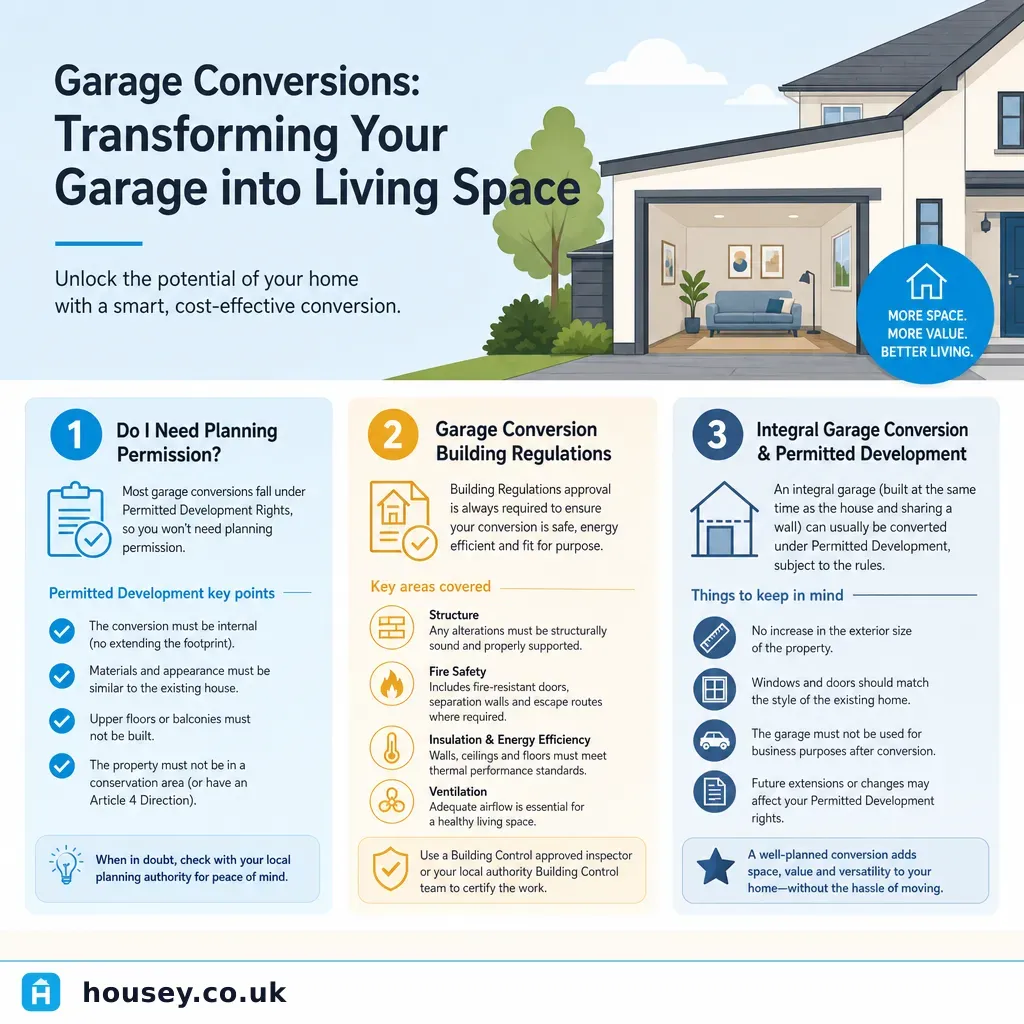
Garage Conversions: Transforming Your Garage into Living Space
Most integral garage conversions in England fall within permitted development and do not require a planning application, but Building Regulations approval is required in virtually all cases.
 Improvement & Build
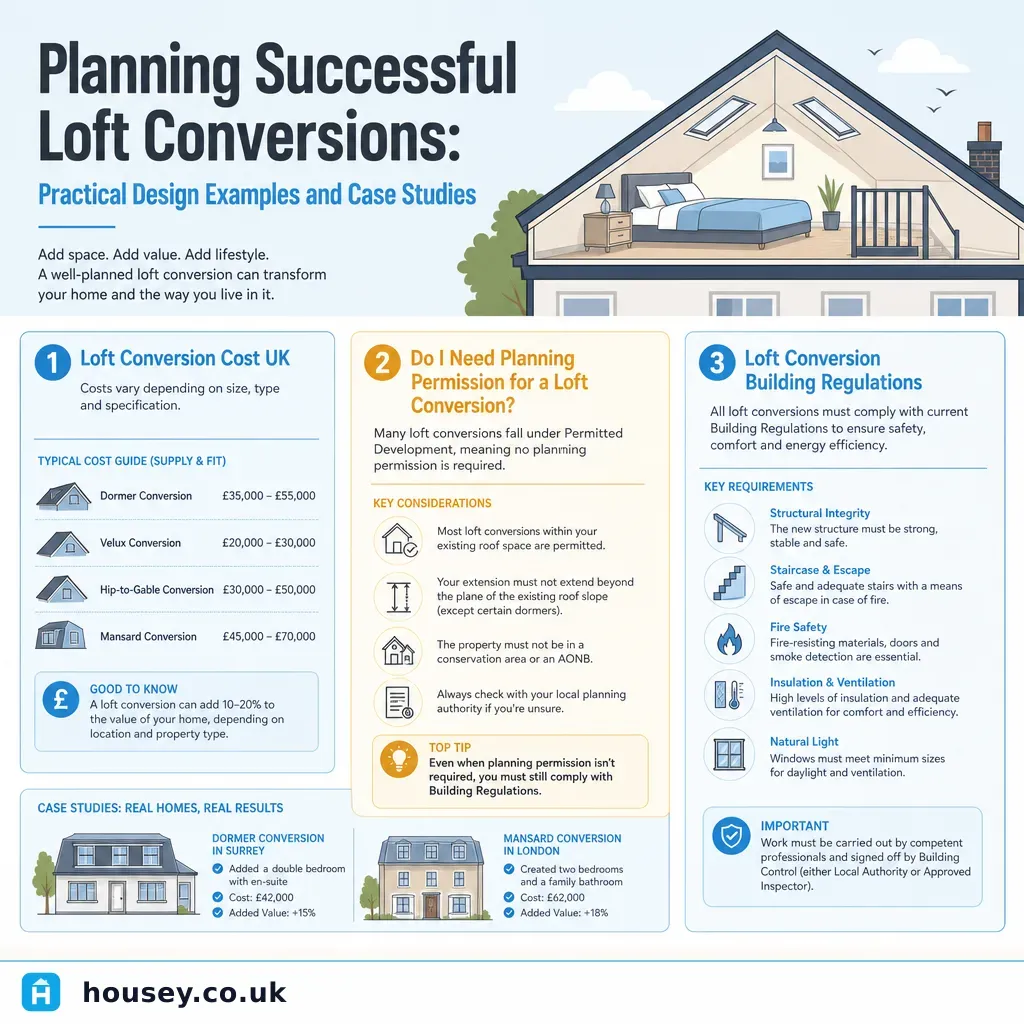
Planning Successful Loft Conversions: Practical Design Examples and Case Studies
Most UK loft conversions are permitted development and do not need planning permission, provided they remain within the volume allowances — 40 m³ for terraced houses and 50 m³ for detached or semi-detached properties.
 Improvement & Build
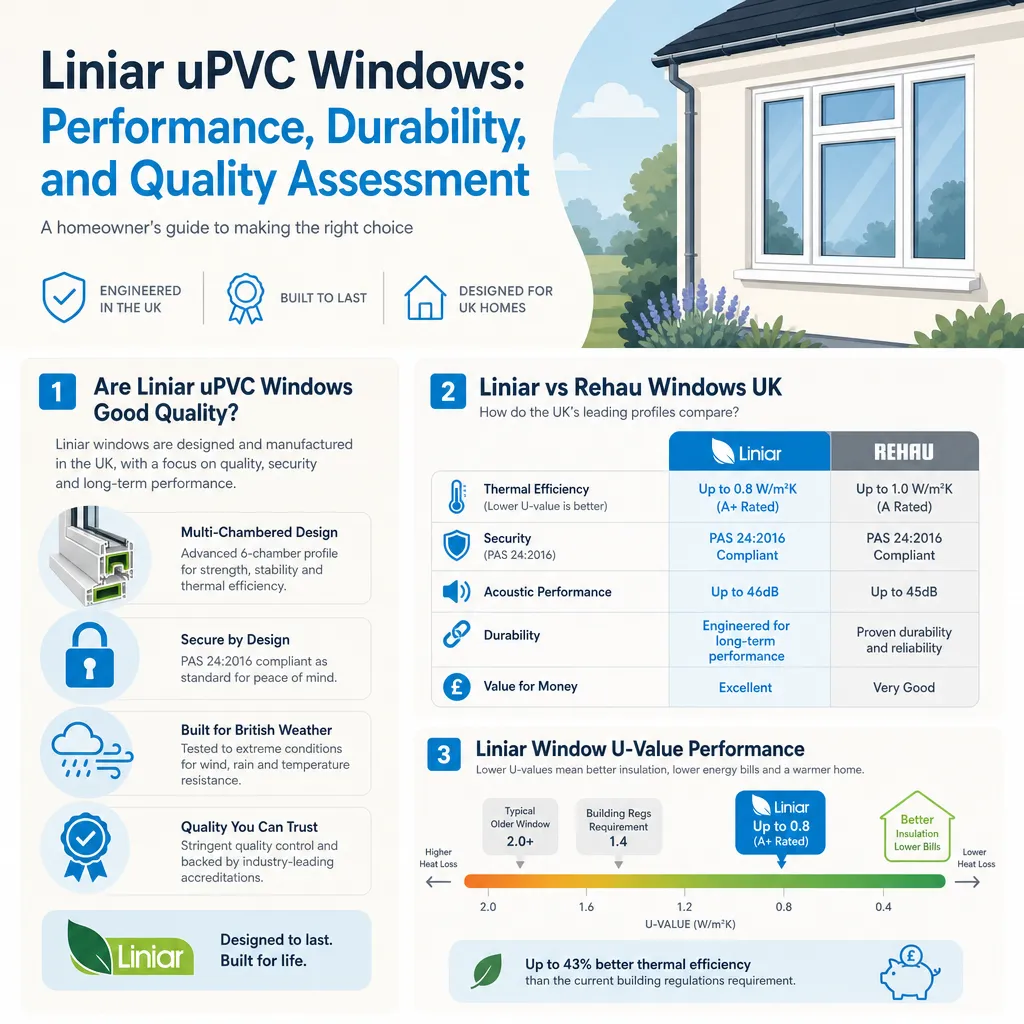
Liniar uPVC Windows: Performance, Durability, and Quality Assessment
Liniar uPVC window profiles are manufactured in the UK using multi-chambered, foamed frames.
 Improvement & Build
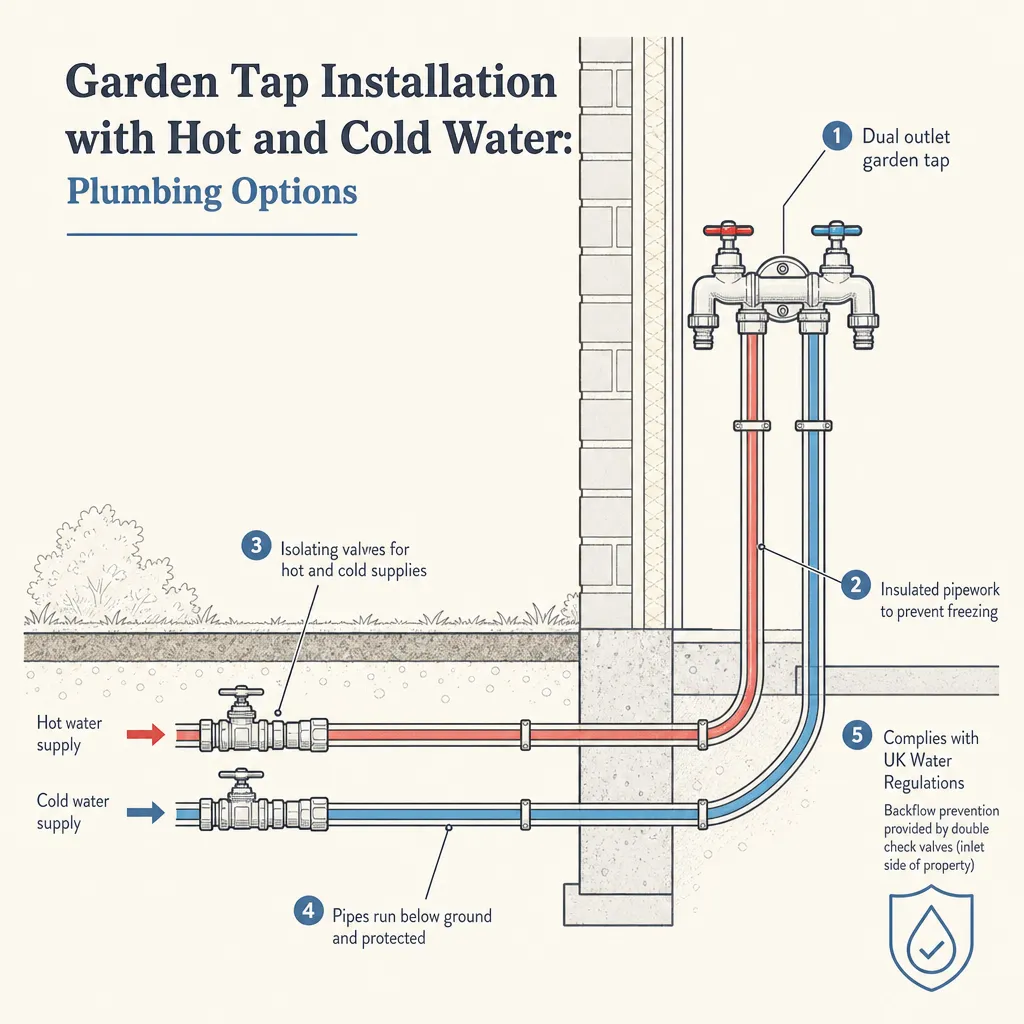
Garden Tap Installation with Hot and Cold Water: Plumbing Options
Adding a cold garden tap is a common DIY project, but routing hot water outdoors requires a plumber to connect to your domestic hot water system and comply with the Water Supply (Water Fittings) Regulations 1999.