Converting Space Into an Artist's Studio: Costs and Planning
By Housey · Last reviewed 4th of May 2026
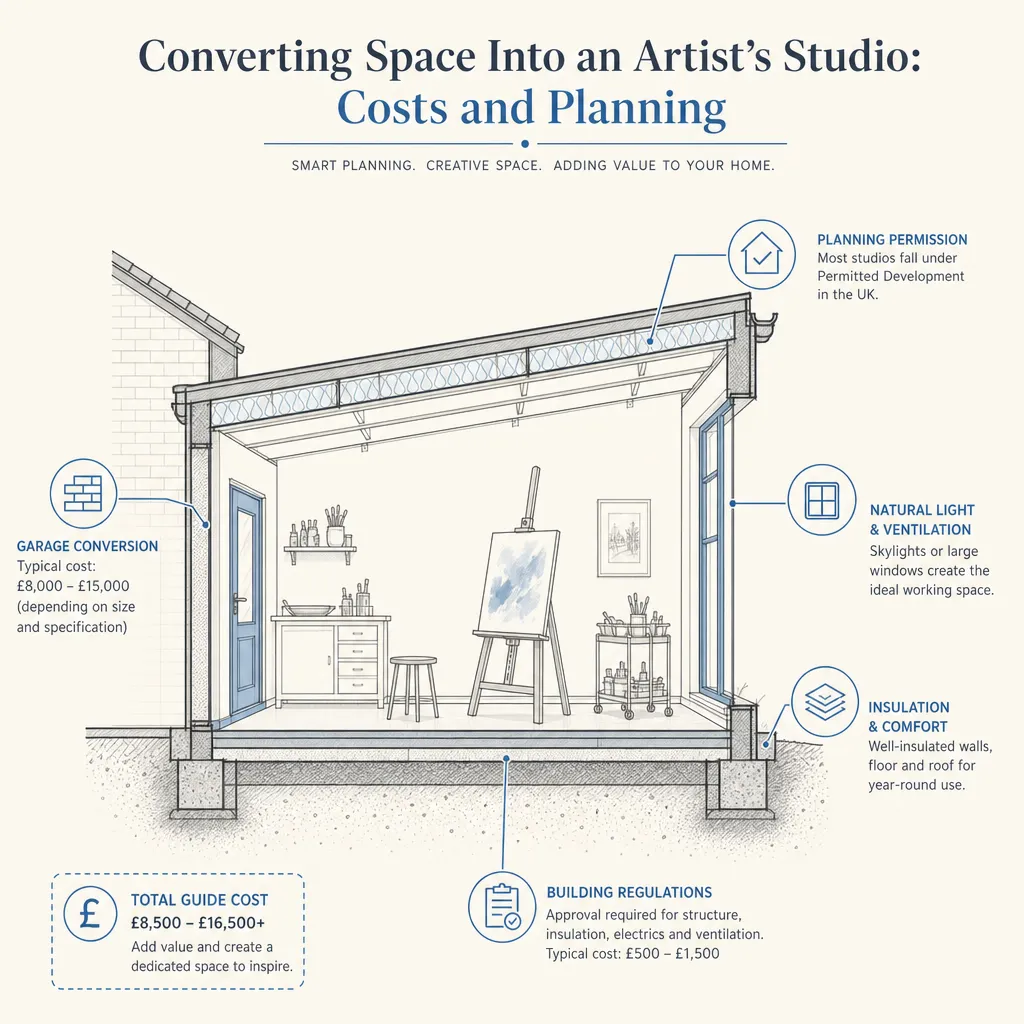
Converting Space Into an Artist's Studio: Costs and Planning
The demand for dedicated home studio space has grown steadily among UK artists and craftspeople, driven partly by the rising cost of commercial and shared studio rents and a broader shift towards home-based practice. Whether you are a painter needing consistent north light, a sculptor wanting robust flooring and proper ventilation, or a ceramicist requiring water access and kiln space, the UK planning and building regulations framework determines what you can do — and where. Both are frequently misunderstood, and conflating them is one of the most common early mistakes in studio conversion projects.
Key points
- A planning application is generally not required for converting an internal room to personal studio use in England, as this does not typically constitute a material change of use under the Town and Country Planning Act 1990.
- Garden studios or outbuildings for personal use that meet the permitted development conditions in Schedule 2, Class E of the Town and Country Planning (General Permitted Development) (England) Order 2015 can normally be erected without planning permission — subject to size, height, and location constraints.
- Using a converted space commercially — for teaching classes, client visits, or sales from the premises — may constitute a material change of use requiring a formal planning application; always check with your local planning authority if this applies to your situation.
- Part F of the Building Regulations 2010 requires adequate ventilation in any working space; for studios where solvents, aerosols, or chemical processes are used, mechanical extract ventilation is a health and safety requirement, not merely a comfort consideration.
- Standard domestic suspended timber floors are typically designed for 1.5 kN/m²; kilns, printing presses, and heavy stone can exceed this significantly, and a structural engineer should advise before installing heavy equipment.
Which space suits your studio needs?
The practical starting point is matching the available or buildable space to the demands of your practice. Each conversion type carries different cost, planning, and regulatory implications.
Space type | Indicative cost range* | Planning permission usually needed? | Building regs usually apply? | Best suited to |
|---|---|---|---|---|
Spare bedroom or study | £2,000–£8,000 | No (internal, same use class) | Possibly, if structural or electrical changes | Painting, drawing, small-scale craft |
Garage conversion | £8,000–£20,000 | Often no (permitted development in England) | Yes | Multi-use studio; larger equipment storage |
Loft conversion | £15,000–£45,000 | Depends on dormer or roof alteration type | Yes | Natural light; printmaking; textile work |
Garden studio or outbuilding | £10,000–£40,000+ | Often no, if PD conditions are met | Usually no (under 30 m²), but Part P for electrics | Year-round separate workspace; ceramics |
Agricultural outbuilding or barn | £20,000–£80,000+ | Class Q PD or full PP depending on works | Yes | Large-scale sculpture, ceramics, fabrication |
Indicative UK costs, last reviewed 2026-05-04. Costs vary significantly by location, specification, and contractor. Obtain detailed quotes specifying the same scope.
Planning permission: when you need it
For most internal conversions to personal studio use, no planning application is required in England. Changing how you use a room within the same dwelling does not constitute a material change of use under the Town and Country Planning Act 1990.
However, several circumstances do trigger a formal application.
Commercial activity from the premises. If the studio is regularly used for income-generating work that generates external impact — students arriving for lessons, regular client visits, or visible signage — this may constitute a material change of use. Note that HMRC's treatment of the space for tax purposes is entirely separate from planning law, so do not assume one determines the other.
New outbuildings or garden studios. Permitted development rights under Schedule 2, Class E of the GPDO 2015 allow outbuildings incidental to the enjoyment of the house without planning permission, subject to the following conditions:
- Maximum height 4 metres for a dual-pitched roof, or 3 metres for any other roof type
- Maximum eaves height 2.5 metres within 2 metres of a boundary
- Must not cover more than 50% of the total garden area, including any existing outbuildings
- Not permitted forward of the principal elevation (i.e. not in the front garden)
- Restricted or removed for listed buildings and within the curtilage of listed buildings, in National Parks, AONBs, World Heritage Sites, and in conservation areas for outbuildings over 20 m²
Article 4 Directions. Local planning authorities can remove permitted development rights through Article 4 Directions — particularly common in conservation areas and parts of some urban areas. Check with your LPA before starting work.
Flats and leasehold properties. Permitted development rights apply to dwellinghouses, not flats. Leasehold properties will usually require freeholder consent for structural or external works under the terms of the lease.
Building regulations: what typically applies
Building regulations govern construction quality and safety, not land use, and apply separately from planning permission. For studio conversions, the most commonly relevant Approved Documents are:
- Part A (Structure): If any loadbearing elements are altered or removed.
- Part B (Fire safety): Particularly if the studio is an integral room in the dwelling accessed via a single escape route.
- Part F (Ventilation): Critical where solvents, paints, resins, aerosols, or chemical processes are used. Mechanical extract ventilation discharging directly outside — not recirculating air — is likely required.
- Part L (Energy efficiency): If windows, rooflights, or insulation are added or substantially changed.
- Part P (Electrical safety): Any new circuits must be designed and installed by a registered electrician (NICEIC or NAPIT) or notified to a building control body.
A detached garden building under 30 m² with no sleeping accommodation is generally exempt from building regulations in England. However, if a fixed electrical installation is included, the electrical work is notifiable under Part P even if the building structure is exempt. Always confirm with a building control body before relying on an exemption.
Design decisions specific to artistic practice
A functional studio requires deliberate choices beyond a standard conversion.
Natural light. North-facing rooflights or clerestory glazing deliver consistent, diffuse light favoured by many painters. South-facing glass requires solar control glazing to avoid glare and excessive heat gain in summer.
Ventilation. Mechanical extract ventilation with direct external discharge is essential for oil paints with mediums, spray finishes, resins, etching chemicals, and solvent-based processes. A dedicated fume extraction point above spray or chemical work areas is prudent for regular use. HSE guidance on working safely with hazardous substances in art and design (INDG218) provides further detail.
Flooring. Sealed concrete screed, resin flooring, or sealed timber are practical and cleanable choices. A wet zone or sealed drainage point is worth building in if you regularly clean large canvases, ceramic pieces, or brushes at scale.
Electrical provision. Studios typically need more circuits than a standard room: general power, dedicated equipment circuits (kilns require a dedicated 32A or 40A circuit), lighting, and data. Under-specifying at the build stage is expensive to correct once the studio is in use.
Floor loading. Standard domestic suspended timber floors are typically designed for 1.5 kN/m². A structural engineer should assess before a kiln, printing press, stone, or other heavy equipment is installed — this is not a check to defer until after purchase.
Which professionals do you need?
- Choose an architect or architectural technologist if you are converting a garage, undertaking a loft conversion, building a substantial outbuilding, or making structural changes to the existing building.
- Choose a builder or extension specialist if the scope involves groundworks, new external walls, roofing, or a new-build garden structure.
- Appoint a structural engineer if floor loading is a concern or if any loadbearing elements are to be altered.
- Check with your local planning authority before starting if your property is listed, in a conservation area, or may be subject to an Article 4 Direction.
- Use an NICEIC or NAPIT-registered electrician for all new circuits — self-certification under Part P is available only to registered competent persons.
- Notify a building control body before starting any notifiable work, even if you believe an exemption applies.
Homeowner checklist before starting
When to get professional help
Most studio conversions benefit from professional design and construction input. The following situations make it essential:
- Any structural change to a loadbearing element — always appoint a structural engineer before work begins.
- Any outbuilding or conversion involving a listed building, within a conservation area, or in an AONB — seek planning advice before starting work.
- Symptoms of damp, rot, or subsidence in the target space — commission a specialist survey before conversion begins.
- Kiln, press, or any heavy equipment on a suspended timber floor — structural advice is not optional.
- Uncertainty about whether commercial use of the space triggers a change-of-use application — take planning advice rather than assuming it does not apply.
How Housey can help
If you are ready to move forward with a studio conversion, Housey can connect you with vetted builders and conversion specialists across the UK. Use our extension builders service to request and compare quotes from contractors with relevant experience in bespoke conversions and custom studio projects.
Frequently asked questions
Do I need planning permission for a garden studio in my back garden?
In most cases, a garden studio for personal use that meets permitted development conditions — maximum 4-metre height for a dual-pitched roof, no more than 50% garden coverage, not in a front garden — does not require planning permission in England. If the property is listed, in a conservation area, or subject to an Article 4 Direction, or if the studio will be used commercially, a planning application may be required. Always verify with your local planning authority.
Can I put a kiln in my home studio?
A kiln is feasible in a domestic studio but requires a dedicated electrical circuit (typically 32A or 40A), a structural floor loading assessment for heavier models, adequate ventilation for heat and fumes, and notification to your home insurer. A ground-floor location on a concrete slab is generally more practical than a suspended timber floor. Consult an NICEIC-registered electrician and a structural engineer before proceeding.
Will converting a room into a studio affect my council tax or business rates?
Using a room exclusively for business purposes can, in some circumstances, make that part of the property liable for business rates rather than council tax. For personal creative practice where work is not sold or taught from the premises, this is unlikely to arise in practice. If you operate commercially from the space, take advice from a chartered surveyor or contact the Valuation Office Agency.
Do I need building regulations approval for a garden room?
A detached garden room under 30 m² with no sleeping accommodation is generally exempt from building regulations in England. However, if a fixed electrical installation is included, that electrical work is notifiable under Part P even if the building structure itself is exempt. Confirm the position with a building control body before starting work rather than assuming an exemption applies.
How much does a garden studio cost?
Costs vary widely by size, specification, and construction method. A basic timber-framed garden studio of 15–20 m² might cost £10,000–£20,000 including basic electrics. A custom-designed studio with high-specification glazing, insulation, and full services could cost £30,000–£60,000 or more. Indicative UK costs, last reviewed 2026-05-04. Always obtain detailed, itemised quotes specifying the same scope before committing.
Sources and further reading
- Permitted development rights for householders: technical guidance — GOV.UK
- Building regulations: approved documents — GOV.UK
- Working safely with chemicals in art and design (INDG218) — Health and Safety Executive
- Part P: electrical safety in dwellings — NICEIC
- Common projects: outbuildings — Planning Portal
Useful next reads
 Improvement & Build
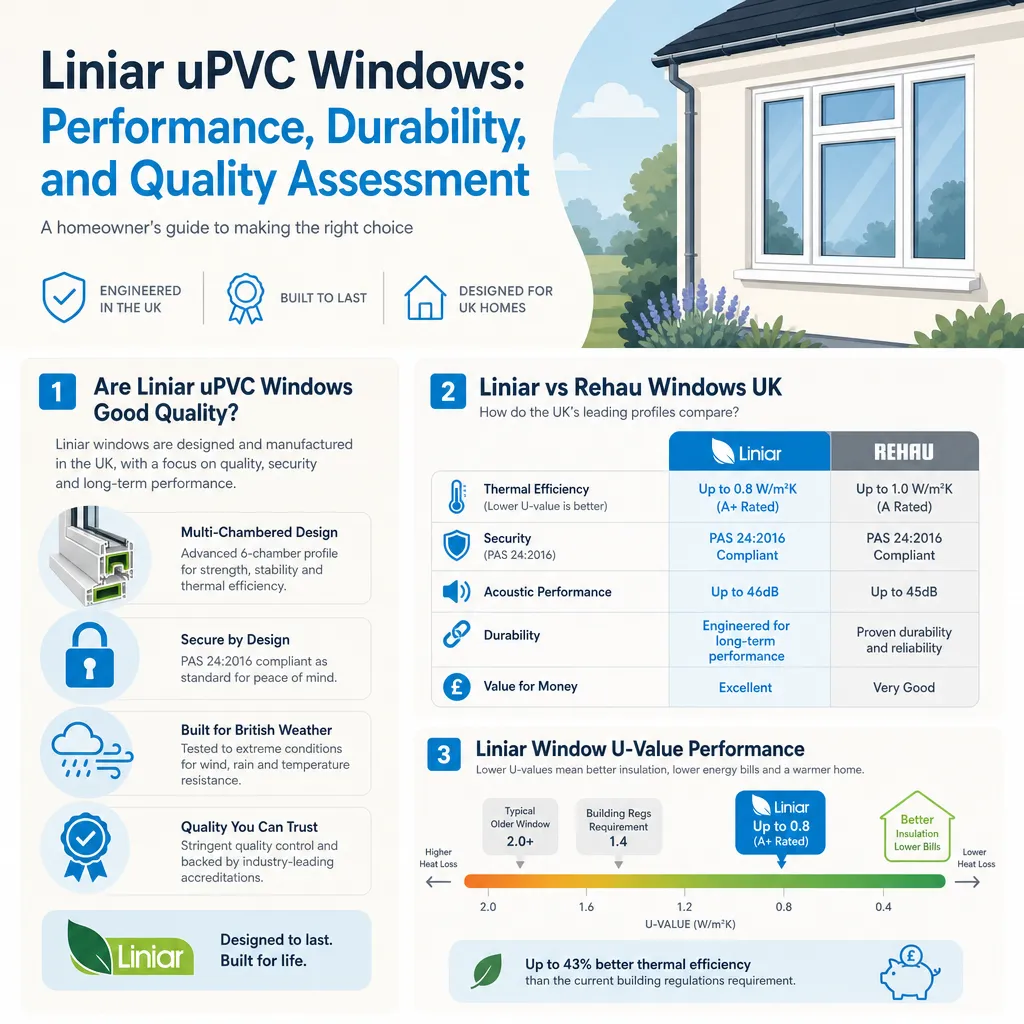
Liniar uPVC Windows: Performance, Durability, and Quality Assessment
Liniar uPVC window profiles are manufactured in the UK using multi-chambered, foamed frames.
 Improvement & Build
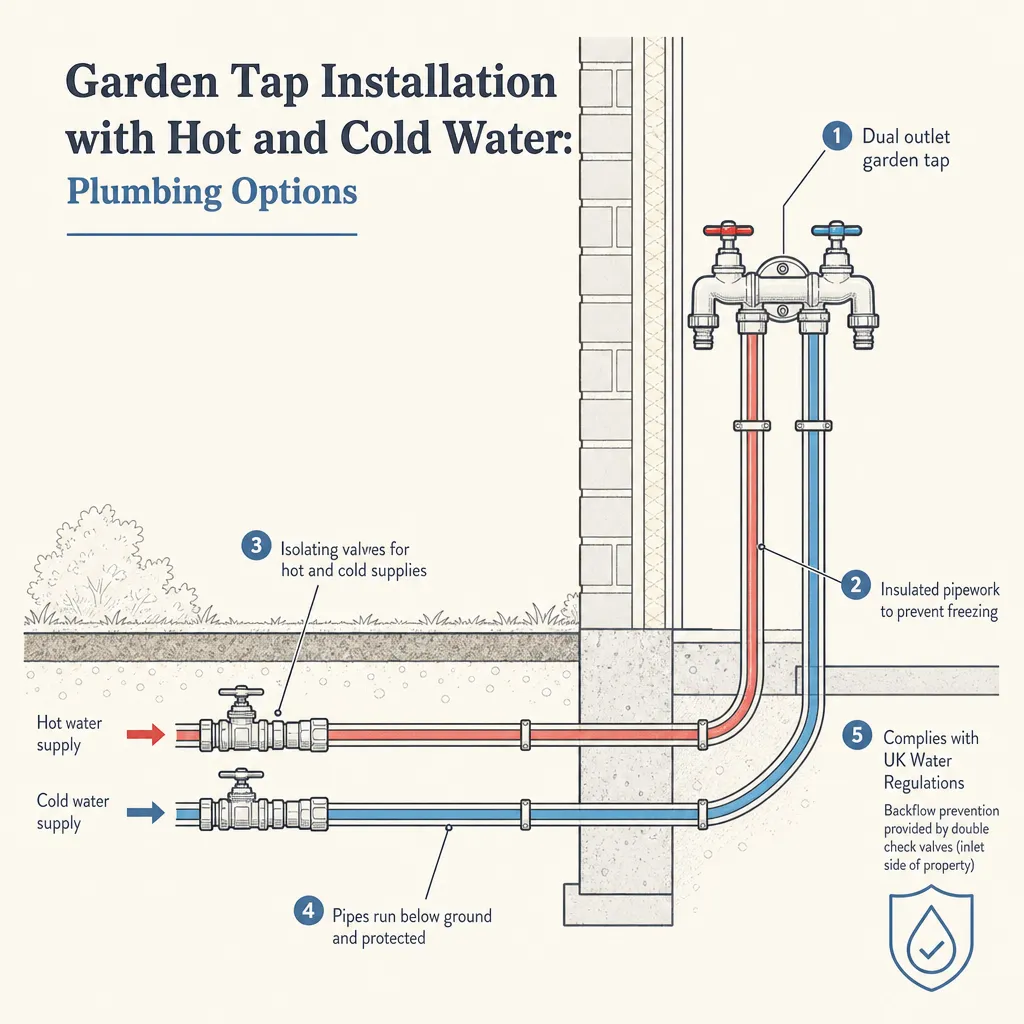
Garden Tap Installation with Hot and Cold Water: Plumbing Options
Adding a cold garden tap is a common DIY project, but routing hot water outdoors requires a plumber to connect to your domestic hot water system and comply with the Water Supply (Water Fittings) Regulations 1999.
 Improvement & Build
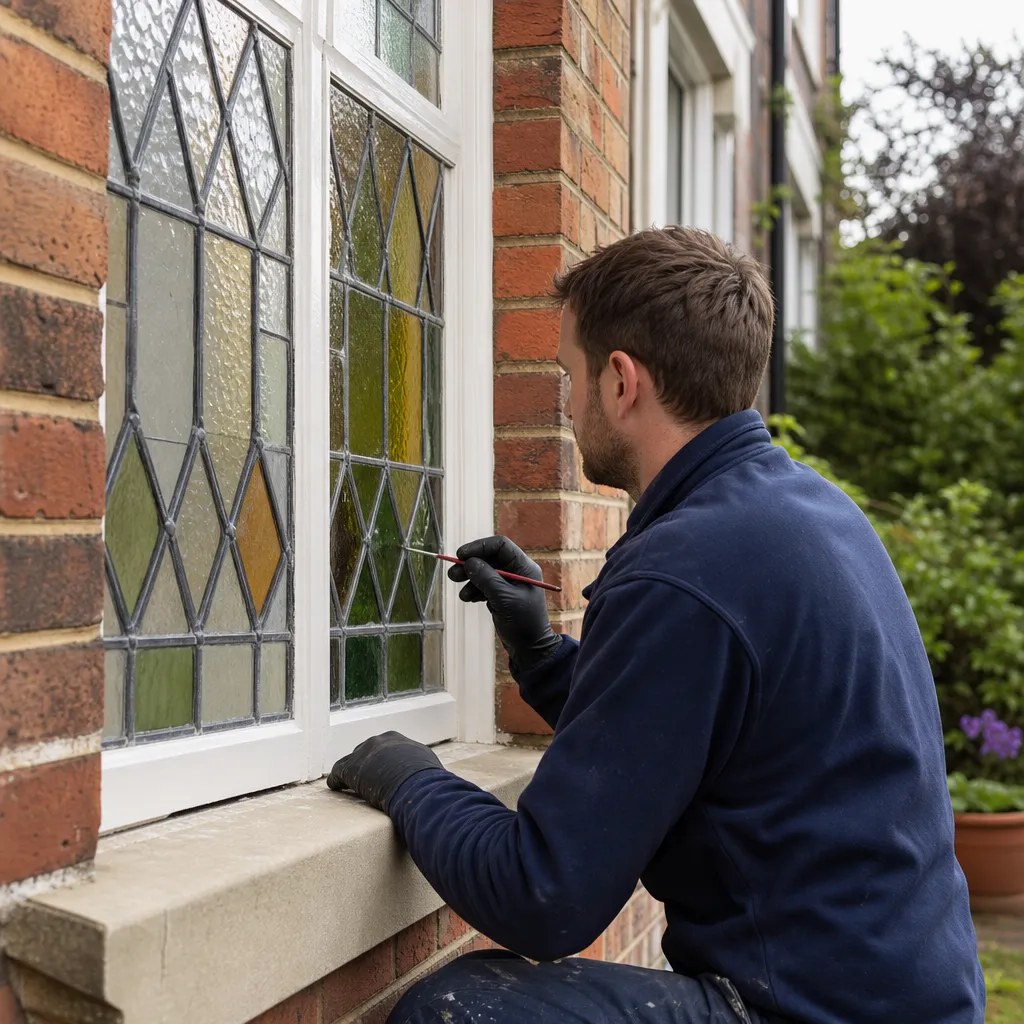
Sealing and Maintaining Historic Leaded Glass Windows: Preservation and Performance
Leaded glass windows are maintained using traditional linseed oil cement — not silicone or modern sealants, which prevent natural movement in the lead came.
 Improvement & Build
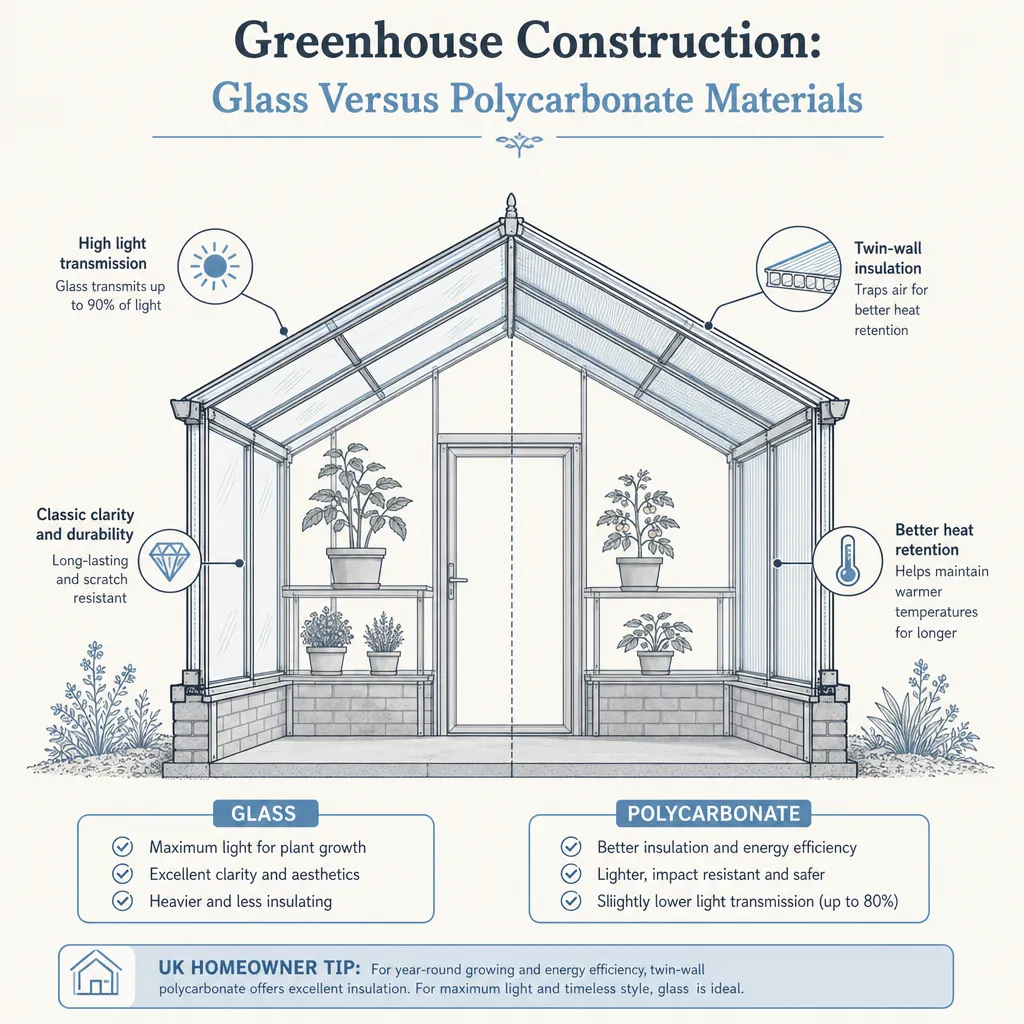
Greenhouse Construction: Glass Versus Polycarbonate Materials
Glass transmits around 90% of available light and lasts indefinitely if unbroken, but insulates poorly and shatters into sharp fragments.
 Improvement & Build
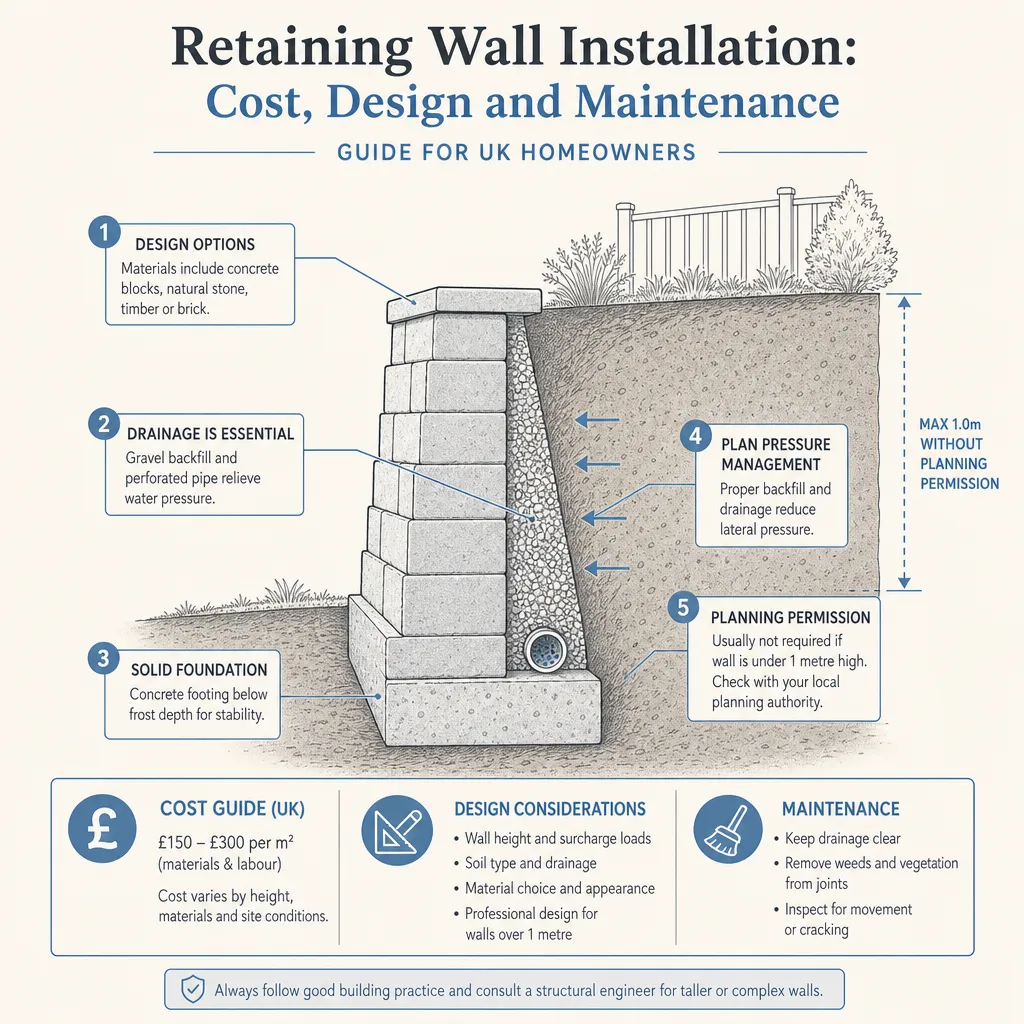
Retaining Wall Installation: Cost, Design and Maintenance
A retaining wall holds back soil on a sloped or banked site.