Conveyancing: Why Professional Legal Services Matter in Property Transactions
By Housey · Last reviewed 30th of May 2026
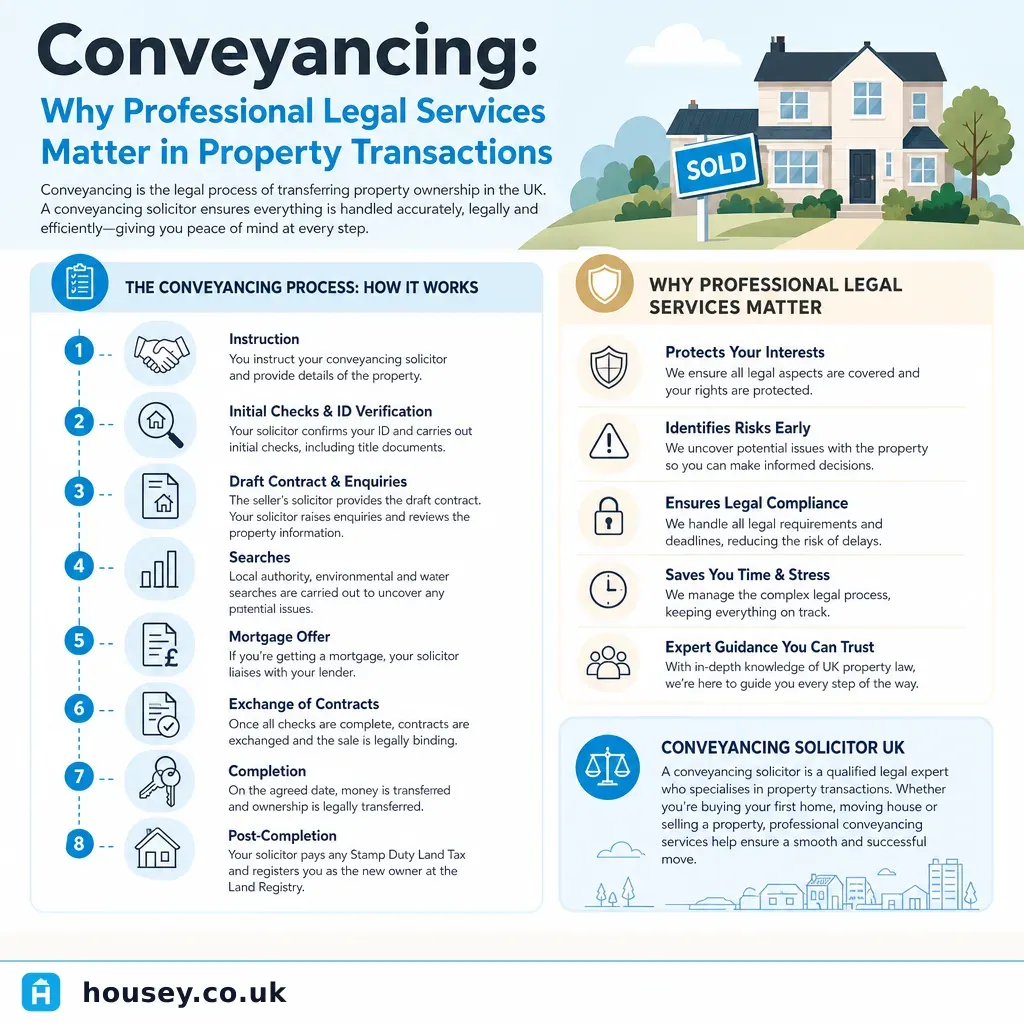
Conveyancing: Why Professional Legal Services Matter in Property Transactions
Buying or selling a home involves transferring legal ownership of one of your most significant financial assets. In England and Wales, this process — conveyancing — is a legally defined sequence of checks, searches, negotiations, and registrations that protects both buyer and seller. For most people, the question is not whether to use a conveyancer but how to choose the right one and understand what they are doing on your behalf. Getting it wrong can mean buying a property with hidden legal problems, missing a critical search result, or losing a buyer through avoidable delays.
Key points
- Conveyancing in England and Wales must be carried out by a solicitor regulated by the Solicitors Regulation Authority (SRA) or a licensed conveyancer regulated by the Council for Licensed Conveyancers (CLC).
- Standard conveyancing searches include a local authority search, a drainage and water search, and an environmental search — these reveal legal and infrastructure risks, not the physical condition of the property.
- Exchange of contracts is legally binding: once contracts are exchanged, either party who withdraws without contractual grounds is liable to the other for losses, typically including forfeiture of the 10% deposit.
- The average timescale from instruction to exchange is 8–12 weeks for a standard freehold purchase; leasehold transactions, chains, and title complications often take longer.
- HM Land Registry registration formally records your ownership — your property is not legally transferred until registration is completed.
What conveyancing actually involves
Conveyancing is the legal transfer of property ownership. It covers the period from when an offer is accepted to when the title is registered in the buyer's name at HM Land Registry, and it has two main stages.
Pre-exchange: The buyer's conveyancer carries out due diligence — ordering searches, reviewing the title deeds, raising written enquiries with the seller's conveyancer, checking planning history, reviewing the lease for leasehold properties, and satisfying any mortgage lender's requirements. The seller's conveyancer prepares the contract pack, answers enquiries, and obtains redemption figures for any existing mortgage.
Exchange to completion: Once all enquiries are resolved, searches received, and all parties ready, contracts are exchanged — making the transaction legally binding. A completion date is then set. On completion day, funds are transferred, keys are released, and the buyer's solicitor registers the title change at HM Land Registry.
Solicitor vs licensed conveyancer: which should you choose?
Both can legally carry out residential conveyancing in England and Wales, but there are important differences to consider.
Professional | Regulated by | Scope of work | Best for |
|---|---|---|---|
Solicitor (conveyancing specialist) | Solicitors Regulation Authority (SRA) | Full legal services — can handle disputes, litigation, lease extensions, complex title issues | Leasehold, complex title, disputes, chain transactions, probate sales |
Licensed conveyancer | Council for Licensed Conveyancers (CLC) | Residential conveyancing only — cannot litigate or handle unrelated legal matters | Standard freehold purchases and sales without complications |
Online conveyancing firm | SRA or CLC (check before instructing) | Varies; may use paralegal case handlers with solicitor oversight | Simple freehold transactions — check reviews and regulatory status carefully |
For leasehold purchases, older properties with complex title histories, or any transaction with unusual features, a solicitor with specific conveyancing expertise is usually preferable. For a straightforward freehold purchase or sale without complications, a CLC-regulated licensed conveyancer or reputable online firm may offer equivalent quality at a lower cost — but always verify their regulatory registration before instructing.
The conveyancing process: what to expect
1. Instruction and client care letter
Once you instruct a conveyancer, they send a client care letter setting out fees, scope, and terms of engagement. Read this carefully, particularly the sections on disbursements and what is excluded from the fixed fee.
2. Draft contract and enquiries
The seller's conveyancer prepares a contract pack including the title register, property information form (TA6), fittings and contents form (TA10), and — for leasehold — the leasehold information form (TA7). The buyer's conveyancer reviews these and raises written enquiries on anything unclear or concerning.
3. Searches
The buyer's conveyancer orders searches against official registers. Standard searches typically include:
- Local authority search: checks planning history, enforcement notices, road adoption, and any proposals affecting the property.
- Drainage and water search: confirms whether the property is connected to mains water and public sewer.
- Environmental search: checks for flood risk, contaminated land, and nearby industrial or landfill sites.
Additional searches — including chancel repair liability, coal or tin mining, or highway searches — may be recommended depending on the property's location.
4. Mortgage requirements
If you are buying with a mortgage, your lender's requirements must be satisfied before exchange. Lenders often instruct the same firm acting for the buyer to also act on their behalf, issuing formal requirements — such as a minimum unexpired lease term, or evidence of planning permission for any alterations.
5. Exchange of contracts
Once enquiries are answered, searches received, and both parties ready, contracts are exchanged. The buyer pays the deposit — typically 10% of the purchase price — to their solicitor, who holds it until completion. From this point, neither party can withdraw without serious financial consequences.
6. Completion
On completion day, the balance of the purchase price is transferred electronically. For buyers, this is the day keys are collected. For sellers, the solicitor receives the funds and redeems any outstanding mortgage.
7. Post-completion: SDLT and Land Registry registration
Within 14 days of completion, your solicitor must file a Stamp Duty Land Tax (SDLT) return with HMRC and pay any tax due. They will then register the title transfer at HM Land Registry. Registration can take several weeks or longer in busy periods, but the transfer of ownership is treated as effective from the completion date.
Document preparation list for buyers
Having these documents ready from the outset helps avoid delays:
What to ask before accepting a quote
- What does your fee include, and what are the disbursements — searches, Land Registry fees, SDLT filing charge?
- Will one named solicitor or conveyancer handle my case throughout, or will it be passed between team members?
- What is your typical timescale from instruction to exchange for a transaction like mine?
- Are you on my mortgage lender's approved solicitor panel?
- How do you communicate progress — online portal, email, or telephone?
- What happens if complications arise — such as title defects, missing planning consents, or a problematic lease?
- Is VAT included in your quoted fee?
Important limitations
This article provides general information about the conveyancing process in England and Wales only. The legal system in Scotland and Northern Ireland differs significantly — if you are buying or selling in either jurisdiction, seek advice from a solicitor qualified in that legal system. Conveyancing requirements vary considerably depending on whether the property is freehold or leasehold, newly built or existing, mortgaged or purchased with cash, and whether any alterations, disputes, restrictive covenants, or third-party rights apply. Nothing in this article constitutes legal advice. Always instruct a qualified, regulated professional for your specific transaction.
What to ask a qualified professional
Before instructing a conveyancer, consider asking:
- Are you regulated by the SRA or CLC, and can I look you up on the relevant register?
- Do you specialise in residential conveyancing, and have you handled transactions similar to mine — leasehold, new-build, probate, or otherwise?
- Based on what I have described, what complications do you foresee and how would you handle them?
- If this transaction involves a leasehold property, what additional checks will you carry out on the lease, service charges, and management company?
- What are the most common causes of delay in transactions like this, and how will you manage them?
When to get professional help
Conveyancing is not optional in England and Wales — a qualified, regulated professional must handle the legal transfer of title. Instruct a conveyancer as soon as an offer is accepted. Take particular care to engage a specialist promptly if:
- The property is leasehold, particularly if the lease is short (below 80 years), has escalating ground rent, or involves a complex service charge structure.
- The property has been extended, converted, or altered without clear evidence of planning permission or building regulations approval.
- The title register reveals restrictions, easements, or covenants that are not immediately clear.
- You are buying a new-build property with builder's incentives or a government-backed scheme.
- The sale involves probate, divorce proceedings, or any other legal complexity.
How Housey can help
Finding a conveyancer who is responsive, experienced, and fairly priced makes a measurable difference to how smoothly your property transaction progresses. Housey connects buyers and sellers with regulated conveyancing solicitors and licensed conveyancers who understand every stage of the process — from the first title check to Land Registry registration. Compare quotes from local professionals before you commit to a firm.
Frequently asked questions
Do I have to use a solicitor to buy or sell a house in England?
You are not legally required to use a solicitor specifically, but you must use a qualified, regulated professional — either an SRA-regulated solicitor or a CLC-regulated licensed conveyancer. DIY conveyancing is theoretically possible for cash purchases but carries significant legal risk and is not accepted by mortgage lenders, who require their interests to be represented by an approved professional.
How much does conveyancing cost in England and Wales?
Fees vary by firm, property value, and complexity. As a rough guide, solicitor or conveyancer fees for a straightforward freehold purchase typically range from around £800 to £1,800 plus VAT, with additional disbursements for searches (£250–£400), Land Registry fees (£20–£500 depending on value), and SDLT where applicable. Leasehold and new-build transactions usually cost more. Indicative UK costs, last reviewed 2026-05-30; always request an itemised quote.
What are conveyancing searches and are they compulsory?
Searches are checks against official registers that reveal legal or infrastructure issues not visible on physical inspection. If you are buying with a mortgage, your lender will require searches. For cash purchases, they are technically optional but strongly advisable — a local authority search, for example, could reveal a planning enforcement notice, proposed road scheme, or restriction that materially affects the property's value or usability.
What is the difference between exchange and completion?
Exchange is when both parties' solicitors agree and swap signed contracts — it is legally binding, and the buyer pays their deposit. Completion is when the balance of the purchase price is transferred and legal ownership passes to the buyer. The gap between exchange and completion is agreed by the parties and their solicitors, and can range from the same day to several weeks.
Sources and further reading
- Buying or selling your home — GOV.UK
- Find a licensed conveyancer — Council for Licensed Conveyancers (CLC)
- Find a solicitor — Solicitors Regulation Authority (SRA)
- Registering land or property with HM Land Registry — HM Land Registry
- Legal aspects of buying a home — Citizens Advice
Useful next reads
 Buying & Moving
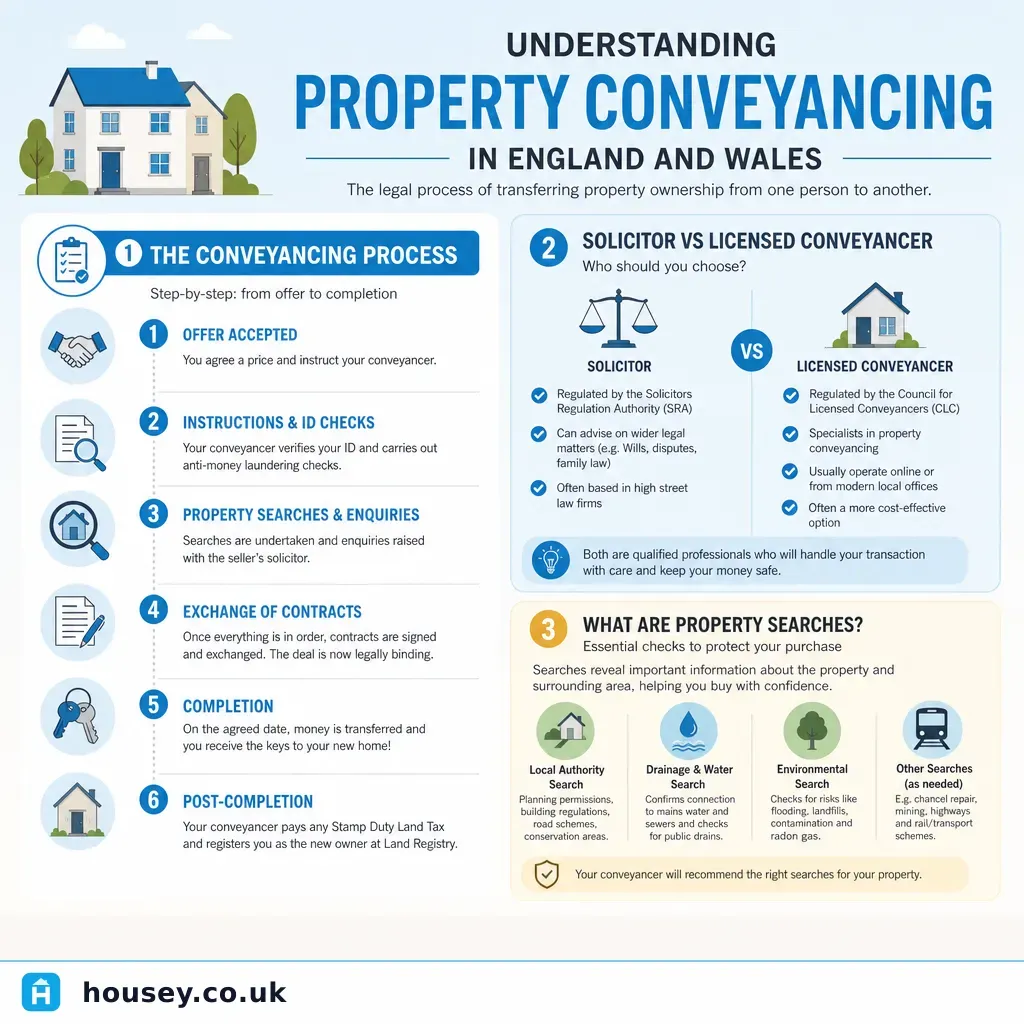
Understanding Property Conveyancing in England and Wales
Conveyancing is the legal process of transferring property ownership in England and Wales.
 Buying & Moving
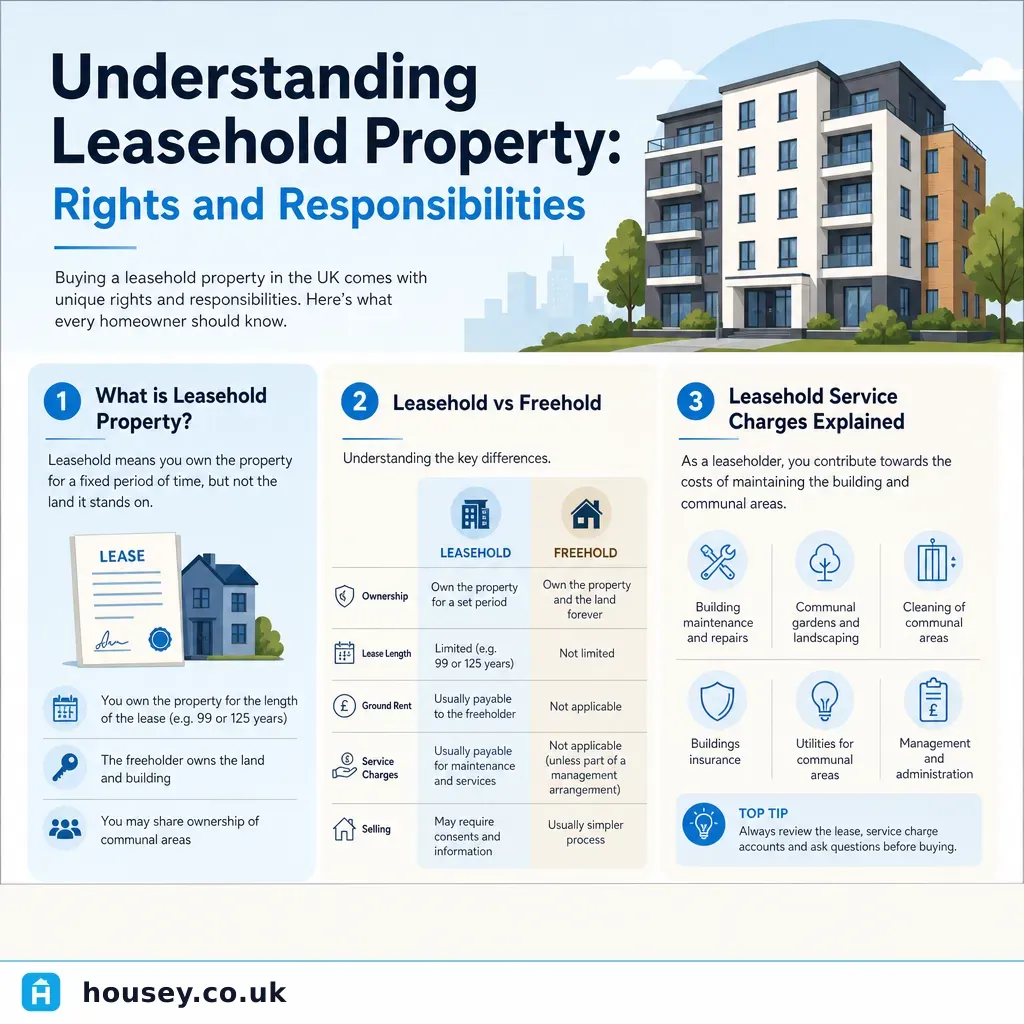
Understanding Leasehold Property: Rights and Responsibilities
Leasehold means you own a time-limited interest in a property while the freeholder owns the land and building.
 Buying & Moving
Navigating Simultaneous Purchase and Sale of Property
When buying and selling simultaneously in England and Wales, both sets of contracts are exchanged on the same day — this is called simultaneous exchange.
 Buying & Moving
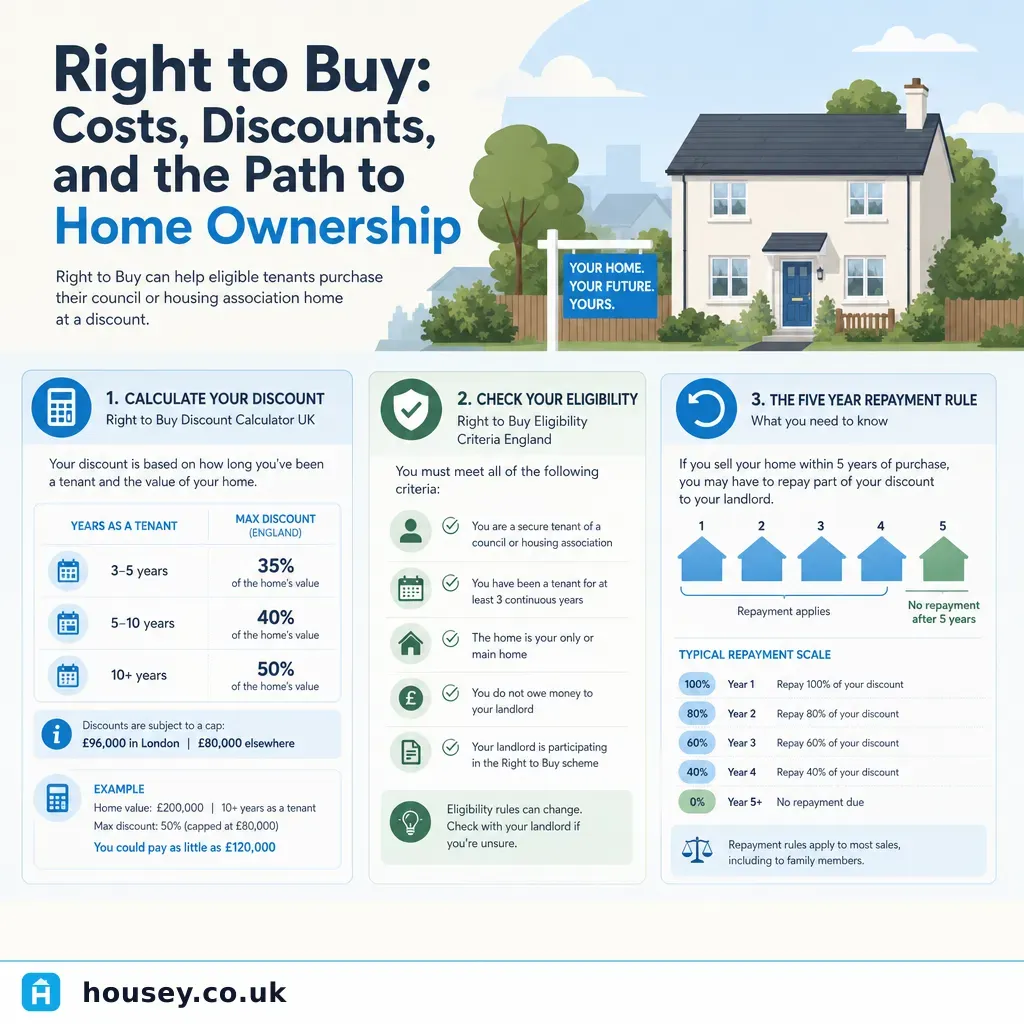
Right to Buy: Costs, Discounts, and the Path to Home Ownership
Right to Buy lets eligible council tenants in England buy their home at a government-funded discount — between 35% and 70% of its value, depending on tenancy length and property type.
 Buying & Moving
Essential Steps to Selling Your Home Successfully
Selling your home successfully in the UK involves obtaining a valid EPC, choosing an estate agent or alternative method, instructing a solicitor or conveyancer early, and completing the Seller's Property Information Form accurately.