Coordinating Between Your Roofer and Insurance Inspector After Roof Damage
By Housey · Last reviewed 1st of June 2026
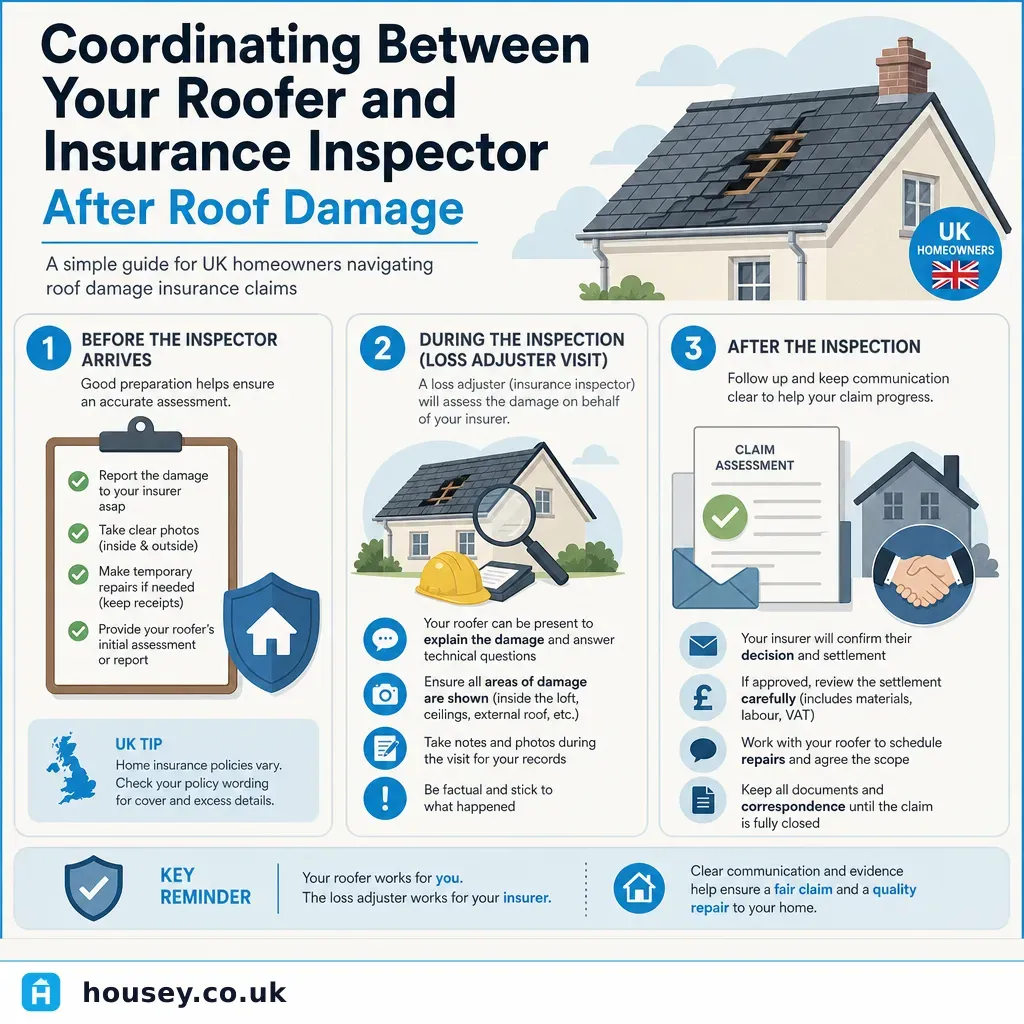
Coordinating Between Your Roofer and Insurance Inspector After Roof Damage
Roof damage claims arise unexpectedly — after a storm strips slates from a Victorian terrace, a fallen tree damages a 1930s semi, or hail splits concrete tiles on a new-build estate. The period between the damage occurring and repairs beginning involves two parties with different roles and sometimes conflicting assessments: your roofing contractor and your insurer's loss adjuster. Getting the coordination between them right can make the difference between a smooth, fully funded repair and a disputed, delayed, or underpaid claim.
Key points
- Buildings insurance typically covers sudden, accidental roof damage — storm, impact, fire — but not gradual deterioration or lack of maintenance under most standard UK home insurance policies.
- You must notify your insurer promptly after damage occurs; most policies require notification "as soon as reasonably practicable" and delays can jeopardise your claim.
- A loss adjuster is appointed by the insurer, not the policyholder — their assessment prioritises the insurer's liability, not the full scope of repairs your roofer may recommend.
- Under FCA rules, insurers must resolve formal complaints within 8 weeks or issue a final response letter; unresolved disputes can then be referred to the Financial Ombudsman Service (FOS) free of charge.
- You are entitled to appoint your own independent loss assessor to argue your case and negotiate a settlement — this is a separate role from the insurer's loss adjuster.
Understanding each party's role
Your insurer and the loss adjuster
When you make a buildings insurance claim for roof damage, your insurer may appoint a loss adjuster — an independent professional who assesses the extent of damage and estimated repair cost on the insurer's behalf. Loss adjusters are regulated by the Chartered Institute of Loss Adjusters (CILA) and are tasked with establishing:
- Whether the cause of damage is covered under your policy
- The scope of repairs reasonably required to restore the property
- Whether pre-existing damage or wear-and-tear contributed to the loss
- The appropriate claim settlement figure
Loss adjusters are contracted to act in the insurer's interest. Their assessment is not the same as an independent roofer's repair quote and may reflect a more limited scope of works.
Your roofing contractor
Your roofer's job is to identify all damage and specify the repairs needed to restore the roof to a watertight, structurally sound, and standards-compliant condition. A reputable roofing contractor will provide a written scope of works and fully itemised quote. This may exceed the loss adjuster's figure — particularly if the adjuster has limited the scope to like-for-like surface repairs and has not accounted for access costs, batten or felt replacement, or sourcing of matching materials on older properties.
Your independent loss assessor (optional)
If you dispute the insurer's settlement offer, you can appoint a loss assessor — not to be confused with the insurer's loss adjuster. A loss assessor works for you, argues your case to the insurer, and is typically paid on a percentage of the final settlement. The Institute of Public Loss Assessors (IPLA) and the British Damage Management Association (BDMA) hold directories of qualified practitioners.
Step-by-step: managing the claim process
1. Document the damage immediately
Before any repairs, photograph and video the damage thoroughly — the roof surface, any displaced tiles, internal ceiling staining, gutters, and debris on the ground. Note the date and weather conditions. This evidence is critical if the cause of damage is later disputed by your insurer.
2. Arrange emergency make-safe works only
Most policies allow emergency stabilisation — fitting a temporary tarpaulin or securing loose material — to prevent further damage or injury. Keep all receipts. Do not instruct full permanent repairs before the loss adjuster has visited unless your insurer gives written permission; proceeding prematurely can complicate or reduce your final settlement.
3. Notify your insurer promptly
Contact your insurer as soon as possible after the damage occurs. When notifying, provide:
- The date and apparent cause of damage
- Photographic or video evidence
- A description of any emergency make-safe works already carried out, with receipts
4. Request to be present when the loss adjuster visits
Ask your insurer for advance notice of the adjuster's visit. If possible, arrange for your roofing contractor to attend at the same time — both parties seeing the same damage simultaneously reduces the risk of the adjuster under-scoping the works or missing areas that require access equipment to inspect properly.
5. Obtain your roofer's independent written quote
Ensure your roofing contractor provides a fully itemised written quote covering all necessary repair works. Ask that it references relevant standards (BS 5534 for tiled or slated roofs), specifies materials and gauge, access method, waste disposal, and any associated works such as felt or batten replacement.
6. Compare the adjuster's report with your roofer's scope
Once the loss adjuster's report and the insurer's settlement figure are issued, compare them line by line against your roofer's quote. Common areas of divergence include:
- Scope of felt or batten replacement beneath tiles
- Extent of ridge, hip, or valley reinstatement
- Access and scaffolding costs
- Matching or sourcing period materials on older or listed properties
7. Challenge discrepancies in writing
If the insurer's settlement figure does not cover your roofer's scope, write to the insurer — rather than call — detailing the specific discrepancies and requesting a revised assessment. Under the FCA's Consumer Duty, insurers must treat customers fairly and handle claims promptly and transparently.
8. Escalate if the dispute is not resolved
- Raise a formal complaint with your insurer.
- If unresolved within 8 weeks (or you receive a final response letter before then), refer the case to the Financial Ombudsman Service — free of charge and without needing a solicitor.
- Consider appointing an independent loss assessor to negotiate a settlement on your behalf.
Homeowner checklist: documenting a roof damage claim
Red flags to watch for
- The loss adjuster visits without you or your roofer present and produces a report that significantly under-scopes the visible damage.
- Your insurer offers a cash settlement materially lower than your roofer's quote without a detailed, itemised explanation of the difference.
- Your insurer characterises storm or impact damage as "wear and tear" without supporting evidence — sudden damage from an identifiable weather event is generally a covered peril under standard buildings policies.
- A roofer contacts you unsolicited after a storm and pressures you to sign documents, assign insurance rights, or begin permanent repairs before an adjuster visits — these are recognised signs of fraudulent or high-pressure sales activity.
- Your roofer's quote includes scope or materials that appear unrelated to the claimed damage event.
Important limitations
This article provides general information about the insurance claim coordination process in the UK. Policy terms vary significantly between insurers and products. Whether a claim is valid, the scope of cover, and any settlement figure depend on your specific policy wording, the cause and extent of the damage, and your insurer's assessment. Nothing in this article constitutes insurance, legal, or financial advice. For disputed or complex claims, seek guidance from a regulated loss assessor, an FCA-authorised insurance broker, or the Financial Ombudsman Service.
What to ask a qualified professional
If you appoint a loss assessor, roofing contractor, or independent surveyor, ask:
- Does my policy wording cover this specific cause of damage, and are there any relevant exclusions I should know about?
- Is the loss adjuster's scope of works sufficient to restore the roof to a watertight and BS 5534-compliant condition?
- If materials need to match an older or listed property, how will sourcing or matching costs be addressed in the settlement?
- What documentation do I need to provide to support a challenge to the insurer's settlement figure?
- If I carry out emergency make-safe works before the adjuster visits, does this risk affecting my claim?
- Can you provide your CILA, IPLA, or BDMA registration details and confirm your fee structure in writing?
When to get professional help
Seek advice from a qualified loss assessor or solicitor if:
- Your insurer denies the claim or significantly limits the settlement without a clear, documented explanation
- The damage involves structural roof elements — rafters, purlins, or wall plates — rather than surface tiling alone
- Your property is listed or in a conservation area and material matching or repair method is in dispute
- You are a landlord and the damage affects your obligations under the Homes (Fitness for Human Habitation) Act 2018
- The disputed amount is large enough to justify the cost of a loss assessor, who typically charges 10–15% of the final settlement
How Housey can help
If you need an independent assessment of your roof's condition to support an insurance claim, document the extent of damage before instructing repairs, or verify the scope of a roofer's quote, Housey can connect you with qualified roof survey specialists who can provide a written condition report.
Frequently asked questions
Can I instruct a roofer before the loss adjuster visits after roof damage?
For emergency make-safe works — fitting a temporary tarpaulin or securing loose material — most policies allow this, but notify your insurer first and keep all receipts. Do not commission full permanent repairs before the adjuster has visited unless your insurer gives written permission; proceeding prematurely can complicate or reduce your final settlement.
What if my roofer's repair quote is higher than the insurer's settlement offer?
Challenge the discrepancy in writing, providing your roofer's fully itemised quote and identifying specific items the adjuster has omitted or undervalued. If the insurer does not revise the settlement following a formal complaint, refer the case to the Financial Ombudsman Service free of charge. You may also appoint an independent loss assessor to negotiate on your behalf.
Does UK home insurance cover gradual roof deterioration?
Generally no. Standard buildings insurance covers sudden, accidental damage — storm, impact, or fire — not gradual wear and tear or lack of maintenance. If a roofer identifies pre-existing issues alongside storm damage, the insurer may seek to apportion the settlement accordingly. An independent survey report can help establish clearly which damage is newly caused.
Can I choose my own roofer, or must I use the insurer's contractor?
Most home insurance policies allow you to choose your own contractor, though some operate a managed repair scheme using the insurer's approved network. Check your policy schedule carefully. If you use your own roofer, you may receive a cash settlement rather than a managed repair, which you then use to fund the works directly.
Sources and further reading
- Home insurance: making a claim — Association of British Insurers (ABI)
- Insurance complaints — Financial Ombudsman Service
- Consumer Duty guidance — Financial Conduct Authority
- Chartered Institute of Loss Adjusters (CILA) — CILA professional standards and practitioner directory
- Problems with an insurance company — Citizens Advice
Useful next reads
 Surveys & Inspections
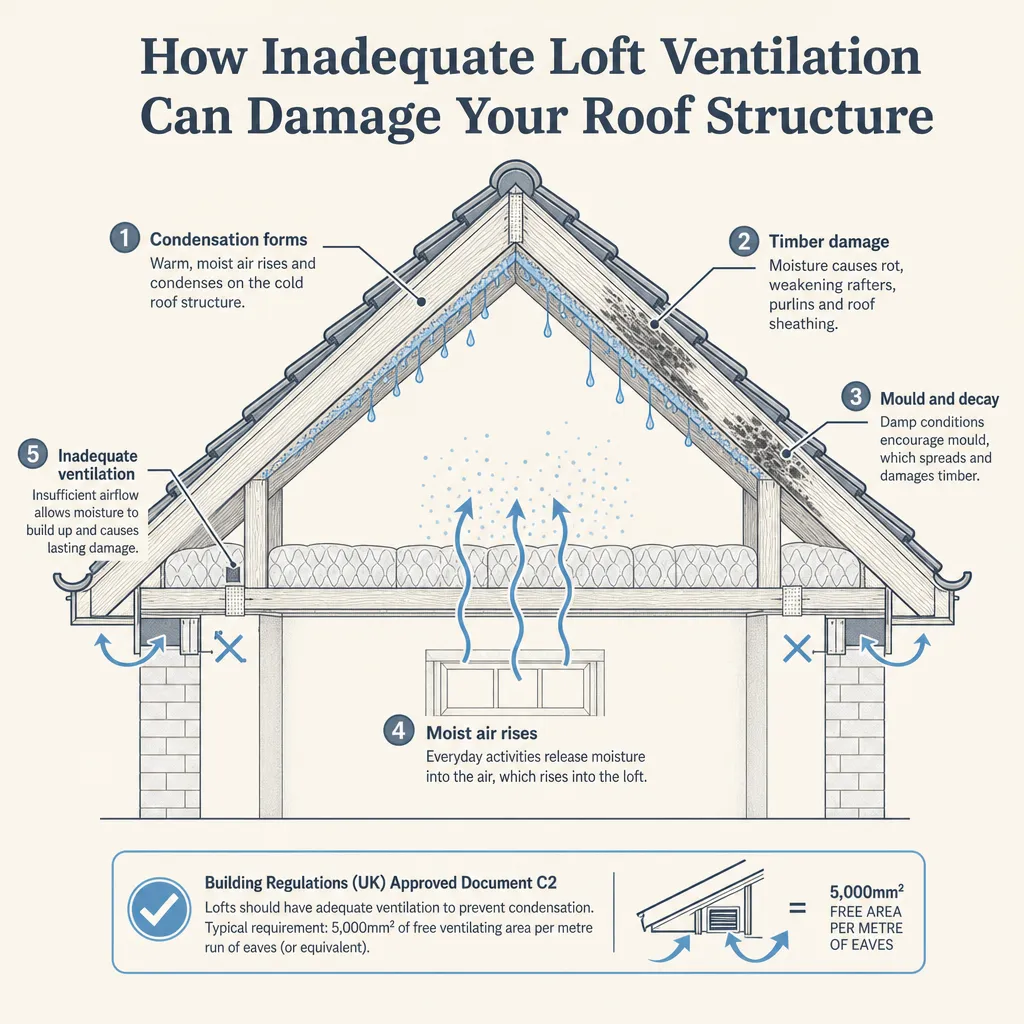
How Inadequate Loft Ventilation Can Damage Your Roof Structure
Inadequate loft ventilation allows warm, moist air to condense on cold roof timbers.
 Surveys & Inspections
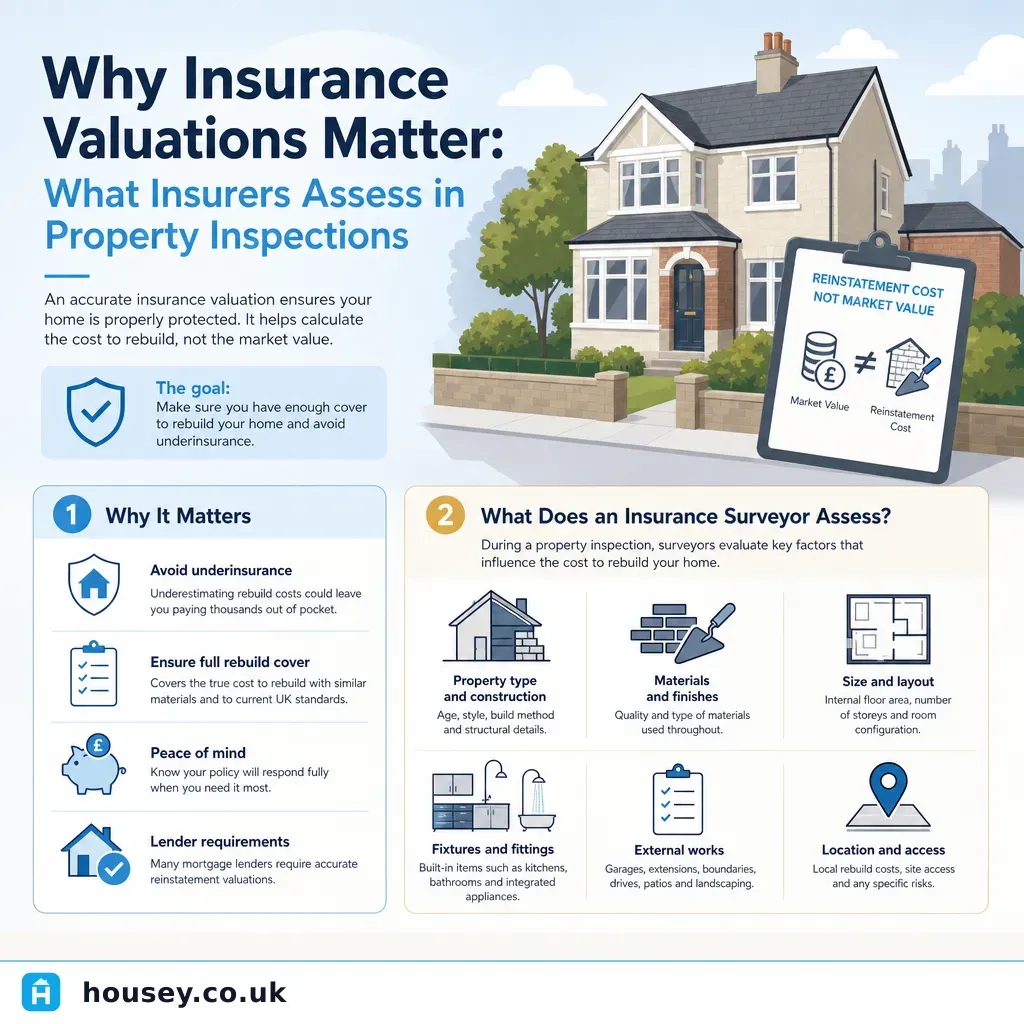
Why Insurance Valuations Matter: What Insurers Assess in Property Inspections
An insurance valuation establishes the reinstatement cost of your property — what it would cost to demolish and rebuild it — not its market value.
 Surveys & Inspections
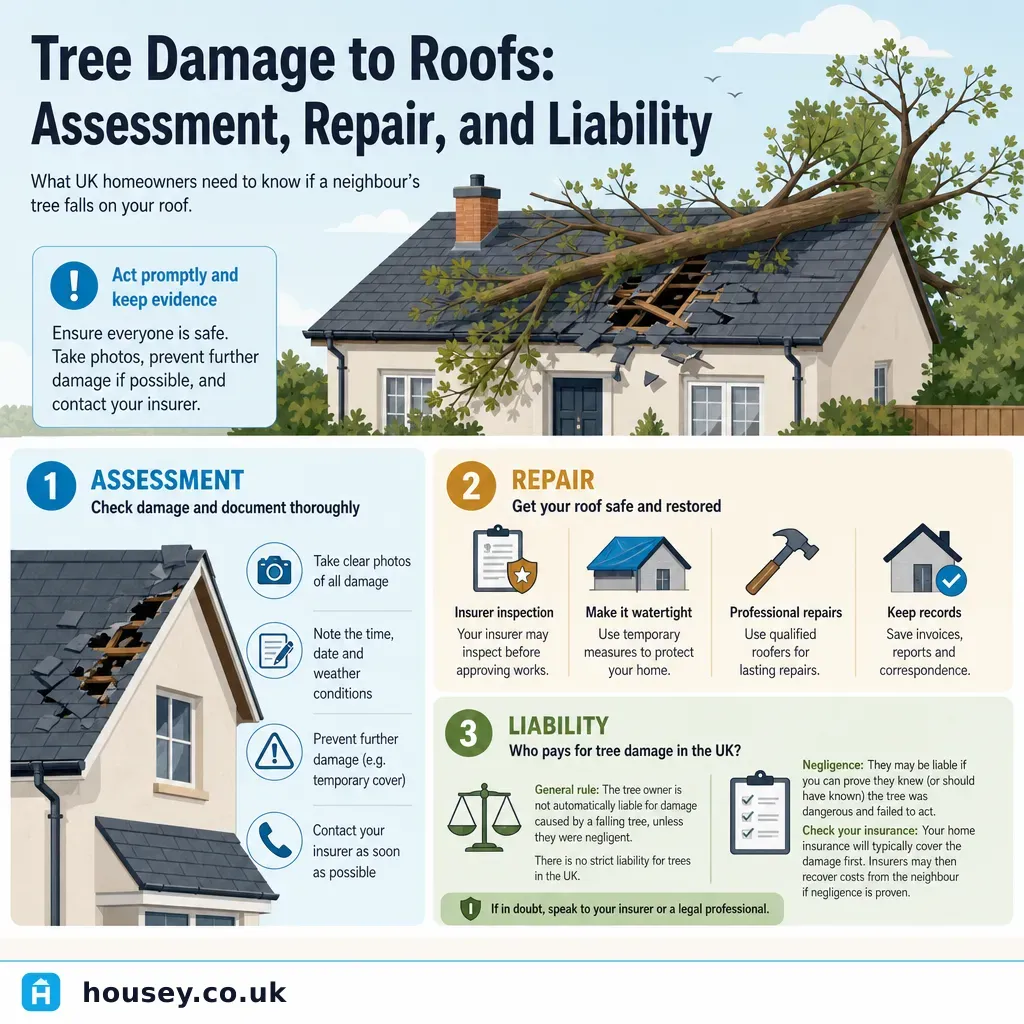
Tree Damage to Roofs: Assessment, Repair, and Liability
When a tree damages a roof in the UK, your own buildings insurance is usually the first port of call regardless of tree ownership.
 Surveys & Inspections
Wind Damage to Roof Tiles and Shingles: Inspection and Repair Guidance
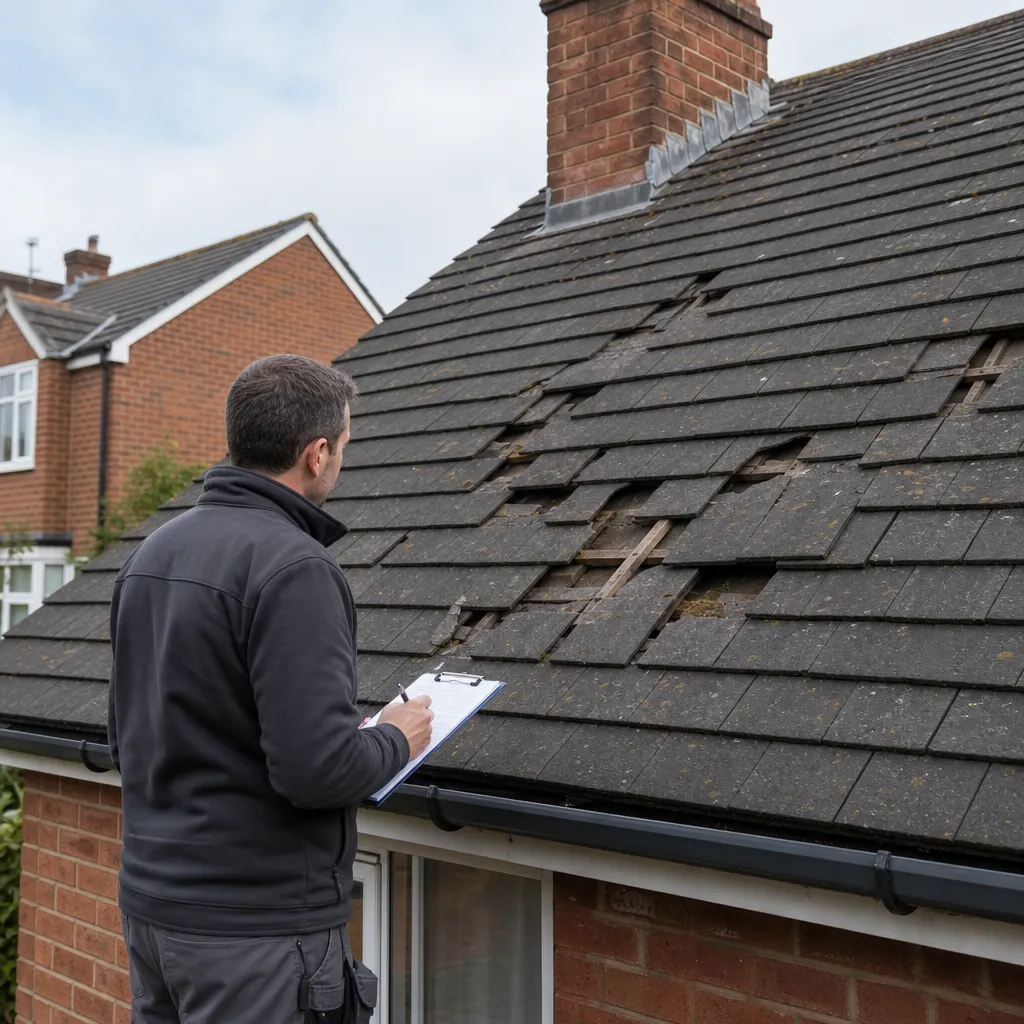
After a storm, inspect your roof from ground level using binoculars before attempting access.
 Surveys & Inspections
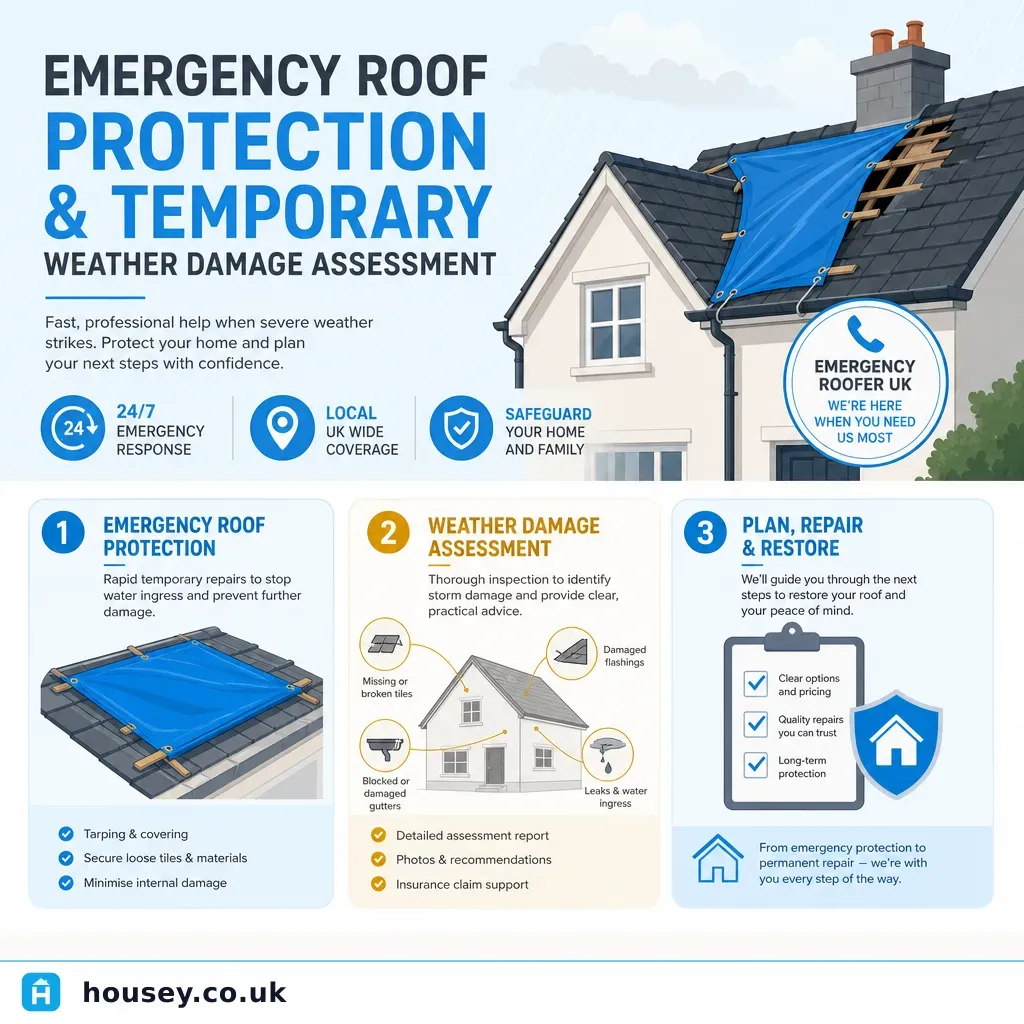
Emergency Roof Protection and Temporary Weather Damage Assessment
After roof damage, your priority is safe temporary protection — typically a tarpaulin secured by a roofer — followed by a professional inspection to assess structural impact.