Why Insurance Valuations Matter: What Insurers Assess in Property Inspections
By Housey · Last reviewed 11th of May 2026
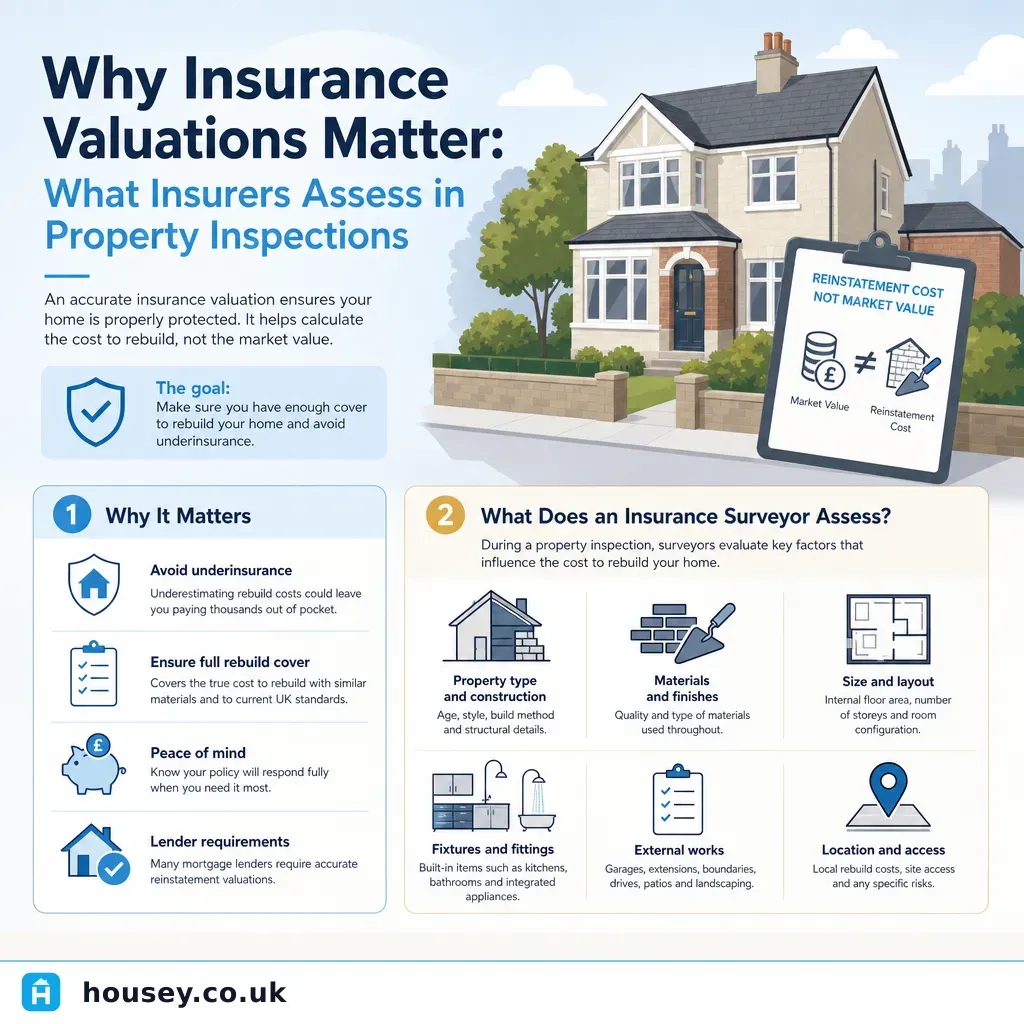
Why Insurance Valuations Matter: What Insurers Assess in Property Inspections
A home insurance valuation is one of the most widely misunderstood elements of property ownership in the UK. Many homeowners confuse the reinstatement cost of their property — the figure that should determine the sum insured on a buildings policy — with its market value, purchase price, or mortgage valuation figure. This confusion is one of the leading causes of underinsurance, which can result in a significantly reduced claim payout at precisely the moment a homeowner most needs full protection. Whether you are reviewing an existing policy, remortgaging, purchasing a period property, or managing a listed or non-standard-construction home, understanding what an insurance valuation actually assesses is essential.
Key points
- The Association of British Insurers (ABI) identifies underinsurance as a widespread problem for UK homeowners — where the sum insured falls below the true reinstatement cost, insurers may apply the average clause and pay only a proportionate share of any claim.
- Reinstatement cost is not the same as market value: it represents the full cost of demolishing and rebuilding a property to its current specification, including professional fees, site clearance, and VAT.
- RICS Building Cost Information Service (BCIS) publishes Rebuild Cost Assessment data used by many insurers and surveyors; a RICS-qualified professional can apply this data adjusted for your property type and location.
- Listed buildings, thatched properties, and homes built from non-standard materials (steel frame, in-situ concrete, timber frame) carry higher reinstatement costs per square metre and require specialist assessment.
- RICS recommends that a formal Reinstatement Cost Assessment (RCA) be undertaken every three to five years, or after any significant alteration or extension to the property.
What is a Reinstatement Cost Assessment?
A Reinstatement Cost Assessment (RCA) is the formal professional process that establishes the correct sum insured for a buildings insurance policy. Carried out by a chartered surveyor or specialist valuer, it calculates the total cost of reinstating your property in the event of total loss — typically assumed to be caused by fire, flood, or structural collapse.
The assessment typically includes:
- Gross internal floor area measurement across all floors
- Construction method and materials (brick and block, timber frame, stone, concrete)
- Roof type and covering (clay tile, concrete tile, natural slate, thatch, flat membrane)
- Architectural features (cornices, decorative ironwork, sash windows, stone mullions)
- Site clearance and demolition costs
- Professional fees (architect, structural engineer, planning consultant, building control)
- VAT at the rate applicable to the reinstatement scenario
- Local authority requirements and any planning constraints affecting reconstruction
What insurers and assessors look at during a property inspection
An RCA inspection typically involves a qualified surveyor visiting the property in person. The surveyor will:
- Measure the property using laser measurement tools to establish gross internal area across all floors, including outbuildings, garages, and conservatories.
- Identify the construction method — brick, stone, cavity or solid wall, timber or steel frame, reinforced concrete — each carries different rebuild costs per square metre.
- Inspect the roof — covering material, pitch, span, rooflights, and whether the structure is standard or requires specialist reconstruction.
- Note special features — period cornices, decorative plasterwork, bespoke joinery, stained glass, heritage-grade sash windows — all of which increase reinstatement costs significantly relative to a standard modern equivalent.
- Assess outbuildings and hard landscaping that would be affected by demolition and rebuild.
- Apply current BCIS data to produce a cost per square metre adjusted for property type, location, and construction complexity.
Worked UK property scenario
Property: A 1905 Victorian end-of-terrace in Bristol. Three bedrooms, solid-brick construction, original sash windows, decorative cornicing, cellar, and a rear single-storey extension built in 2018.
Market value: £380,000
Common mistake: The owner insures to £380,000 — the price paid at purchase — assuming this is the correct sum insured.
Actual reinstatement cost (illustrative): A RICS-qualified surveyor calculates the reinstatement cost at approximately £510,000. This reflects higher demolition costs for a dense urban terrace plot, solid-brick construction (more expensive per square metre than modern cavity wall), the cost of reinstating period features, professional fees of around 12–15% of build cost, and VAT on most elements of the rebuild.
Consequence of underinsurance: If the property is insured for £380,000 but the true RCA is £510,000, the insurer may apply the average clause — paying only approximately 74.5% of any valid claim. On a £100,000 partial-loss claim, the payout would be approximately £74,500 rather than the full amount.
Market value, mortgage valuation, and reinstatement cost: understanding the difference
Basis | What it reflects | Who uses it | Why it differs from reinstatement cost |
|---|---|---|---|
Market value | What a buyer would pay in the open market today | Estate agents, HMRC for Stamp Duty Land Tax | Includes land value; driven by location, demand, and comparable sales |
Reinstatement cost | Cost to demolish and rebuild to current specification | Buildings insurers, RCA surveyors | Excludes land value; includes demolition, professional fees, VAT, and current build costs |
Mortgage valuation | Minimum security value acceptable to the lender | Mortgage lenders | Focused on lender risk, not rebuild — unsuitable for insurance purposes |
Important limitations
This article provides general information about insurance valuations and Reinstatement Cost Assessments in England and Wales. Insurance policy terms, the application of the average clause, and reinstatement cost calculations vary between insurers, property types, locations, and individual circumstances. This is not financial or insurance advice. Commission a formal Reinstatement Cost Assessment from a RICS-qualified professional and review your buildings insurance policy terms with your insurer or a regulated insurance adviser before making any changes to your sum insured.
What to ask a qualified professional
Before instructing a surveyor to carry out a Reinstatement Cost Assessment, ask:
- Are you RICS-qualified, and is this assessment prepared in accordance with current RICS guidance?
- Does the assessment apply current BCIS data adjusted for my property type and region?
- Does the figure include professional fees such as architect, structural engineer, and planning consultant costs?
- Does it include VAT at the rate applicable to my reinstatement scenario?
- Does it cover all outbuildings, extensions, and hard landscaping within the curtilage?
- How often do you recommend the assessment should be reviewed?
- If my property is listed or uses non-standard construction, what specialist expertise do you bring to the assessment?
When to get professional help
An independent Reinstatement Cost Assessment is particularly important in the following situations:
- Your property was built before 1930 or uses non-standard construction methods.
- You have carried out significant extensions, loft conversions, or improvements since your last assessment.
- Your property is listed (Grade I, II*, or II in England; A or B in Scotland).
- Your buildings insurance has not been formally reviewed in more than five years.
- Your sum insured was set from a mortgage valuation or estate agent market value rather than a formal RCA.
- A major structural change or significant damage event has occurred since your last assessment.
Seek professional advice without delay if your insurer disputes a claim on the grounds of underinsurance. A RICS surveyor may be able to provide a retrospective RCA to support your position in the dispute.
How Housey can help
Housey connects UK homeowners with qualified professionals who carry out insurance valuations, including Reinstatement Cost Assessments for properties of all types and ages. You can also find RICS Home Survey professionals for broader condition inspections before purchase or remortgage, or commission a structural survey if condition concerns are affecting your insurability or your insurer requires evidence of structural integrity.
Frequently asked questions
Do I need a professional RCA, or can I use an online rebuild cost calculator?
Online rebuild cost calculators can provide a rough estimate for straightforward modern properties, but they are no substitute for a professional Reinstatement Cost Assessment on period, listed, non-standard-construction, or significantly altered homes. A RICS-qualified assessor applies site-specific data and current BCIS figures. The ABI and RICS both provide guidance on when a formal assessment is warranted.
How often should I update my buildings insurance sum insured?
RICS recommends a formal Reinstatement Cost Assessment every three to five years, or after any significant alteration or extension. Many insurers index-link sums insured annually, but this does not replace the need for a formal assessment — particularly after periods of significant build cost inflation or major property changes such as loft conversions or extensions.
What is the average clause in buildings insurance?
The average clause allows an insurer to reduce a claim payout proportionately if the sum insured is below the true reinstatement cost at the time of the claim. If a property is insured for 80% of its true reinstatement cost, the insurer may pay only 80% of any valid claim. This makes underinsurance a significant and often underestimated financial risk for UK homeowners.
Does a listed building need a specialist insurance assessment?
Yes. Listed buildings are subject to additional planning and consent requirements that significantly affect reinstatement costs — including like-for-like materials, specialist craftspeople, and potentially archaeological investigation before rebuilding begins. A standard BCIS-based calculator is unlikely to capture these costs accurately. Seek a specialist assessor with demonstrable experience of historic and listed properties.
Sources and further reading
- Association of British Insurers: home insurance guidance — ABI
- RICS guidance on Reinstatement Cost Assessments of Buildings — RICS
- BCIS Rebuild Cost Assessment data — BCIS (RICS subsidiary)
- Listed buildings and planning guidance — Historic England
- Buildings insurance overview — Citizens Advice
Useful next reads
 Surveys & Inspections
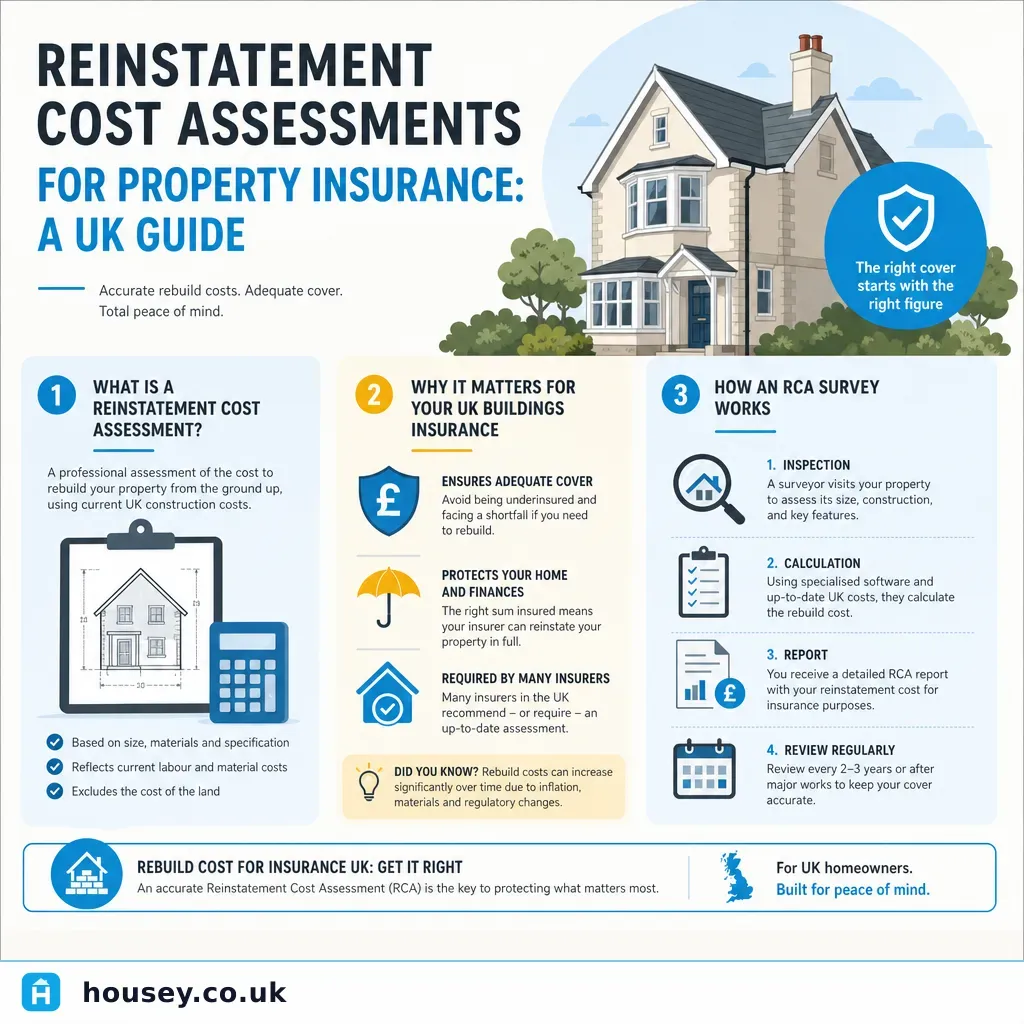
Reinstatement Cost Assessments for Property Insurance: A UK Guide
A reinstatement cost assessment (RCA) estimates what it would cost to completely rebuild your property if it were destroyed.
 Surveys & Inspections
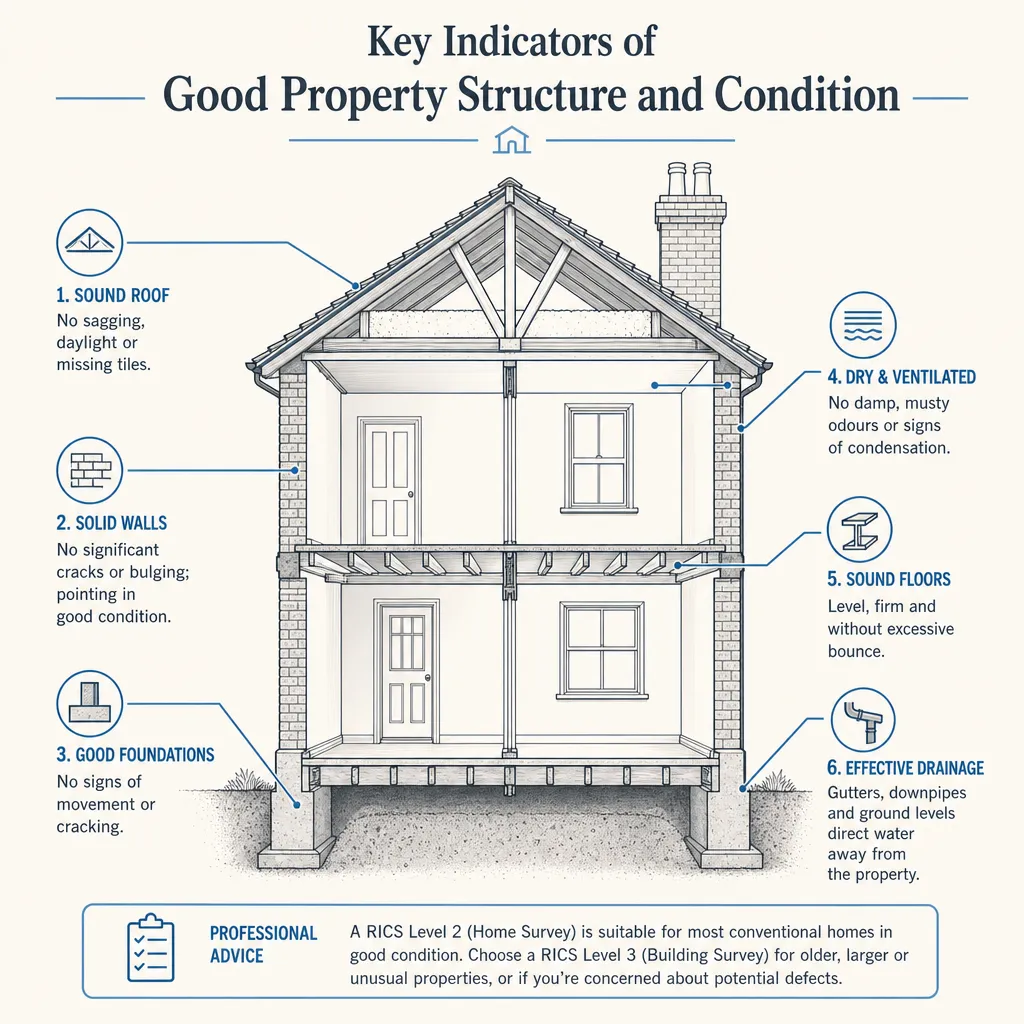
Key Indicators of Good Property Structure and Condition
Good property structure is indicated by plumb walls, level floors, crack-free masonry at corners and above openings, an intact roof covering, and dry internal surfaces.
 Surveys & Inspections
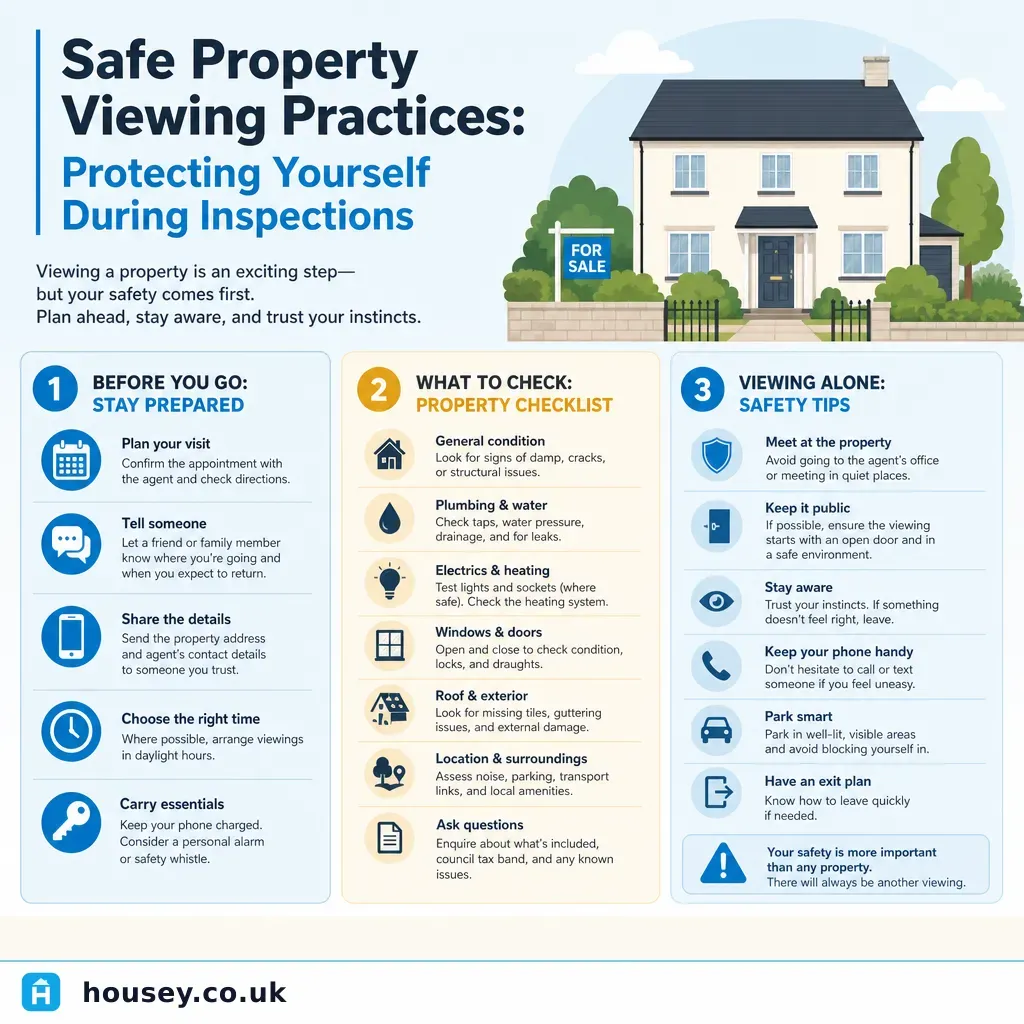
Safe Property Viewing Practices: Protecting Yourself During Inspections
When viewing a property in the UK, always tell someone where you are going and share the full address before you leave.
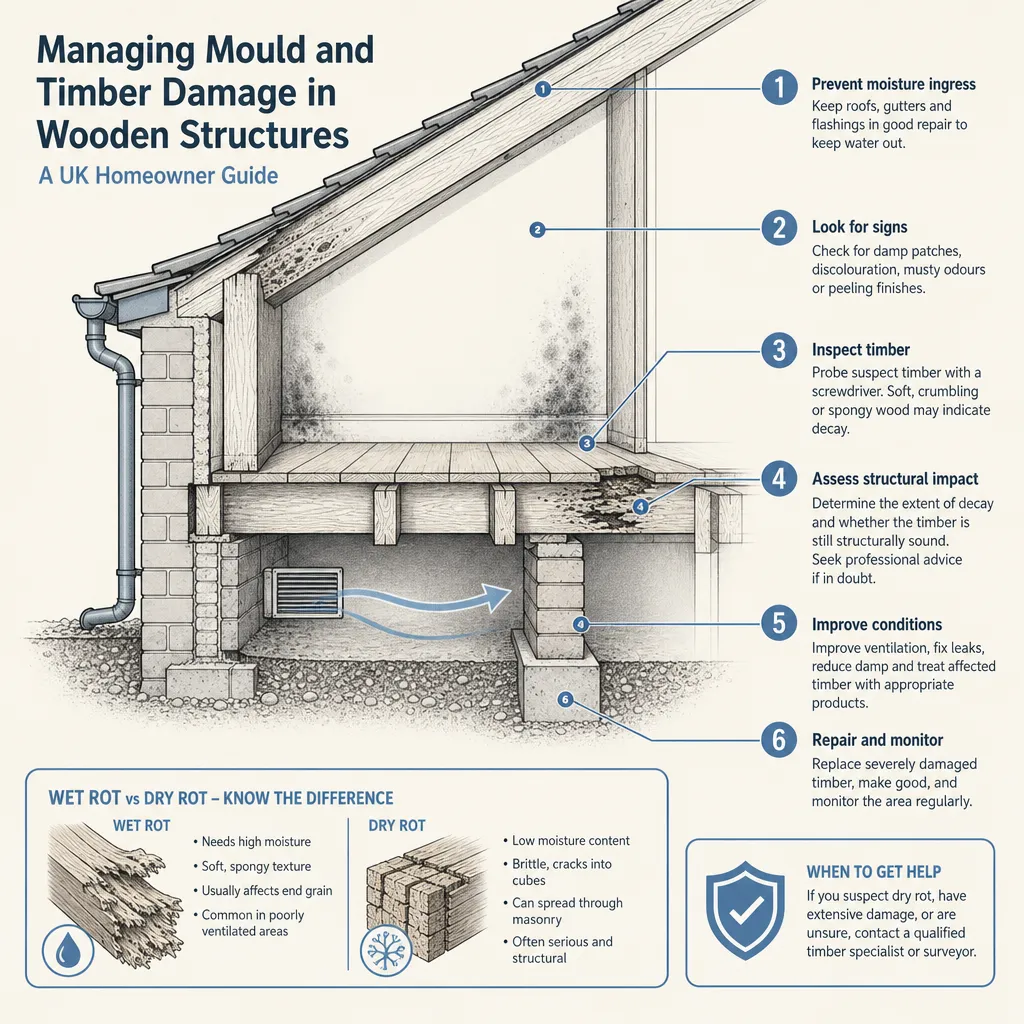 Surveys & Inspections
Managing Mould and Timber Damage in Wooden Structures
Mould and timber decay in wooden structures are usually symptoms of excess moisture rather than standalone problems.
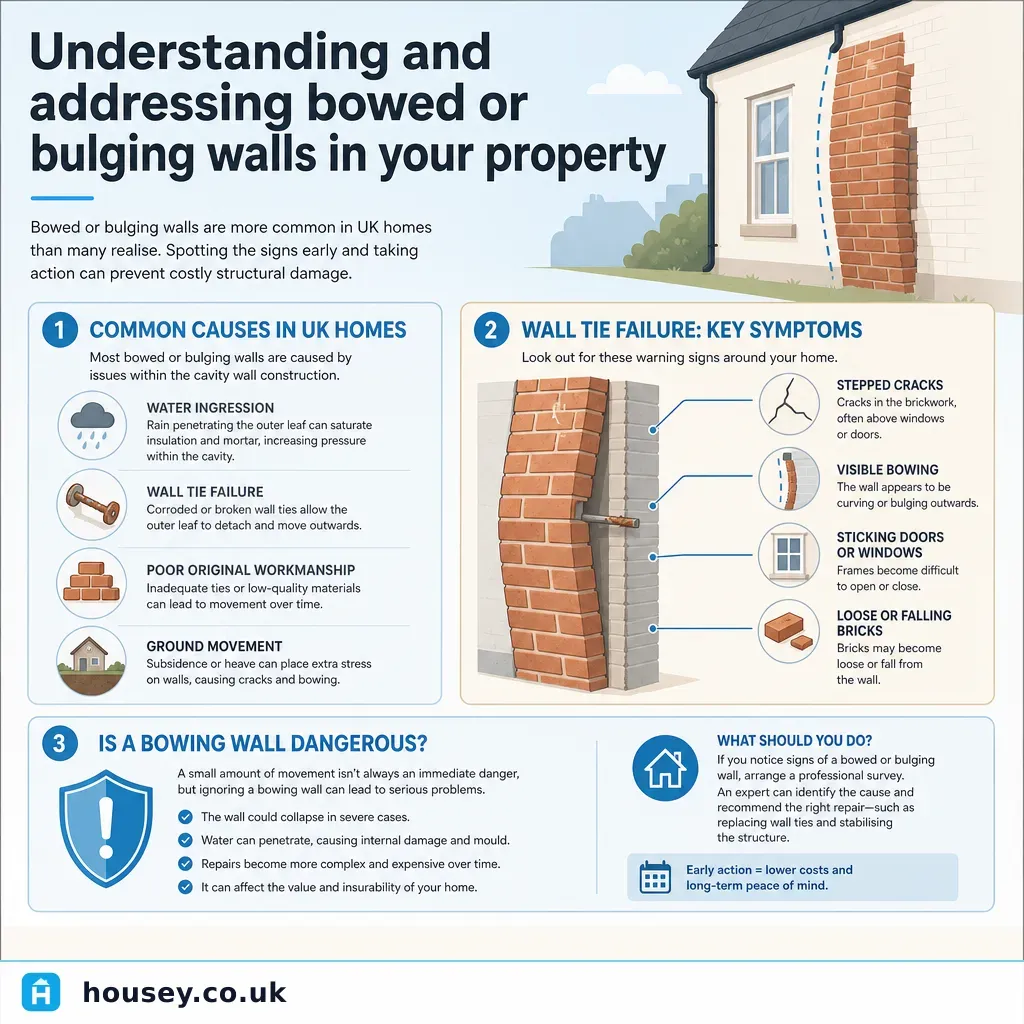 Surveys & Inspections
Understanding and addressing bowed or bulging walls in your property
A bowed or bulging wall may indicate wall tie failure, foundation movement, or overloading.