How Inadequate Loft Ventilation Can Damage Your Roof Structure
By Housey · Last reviewed 26th of May 2026
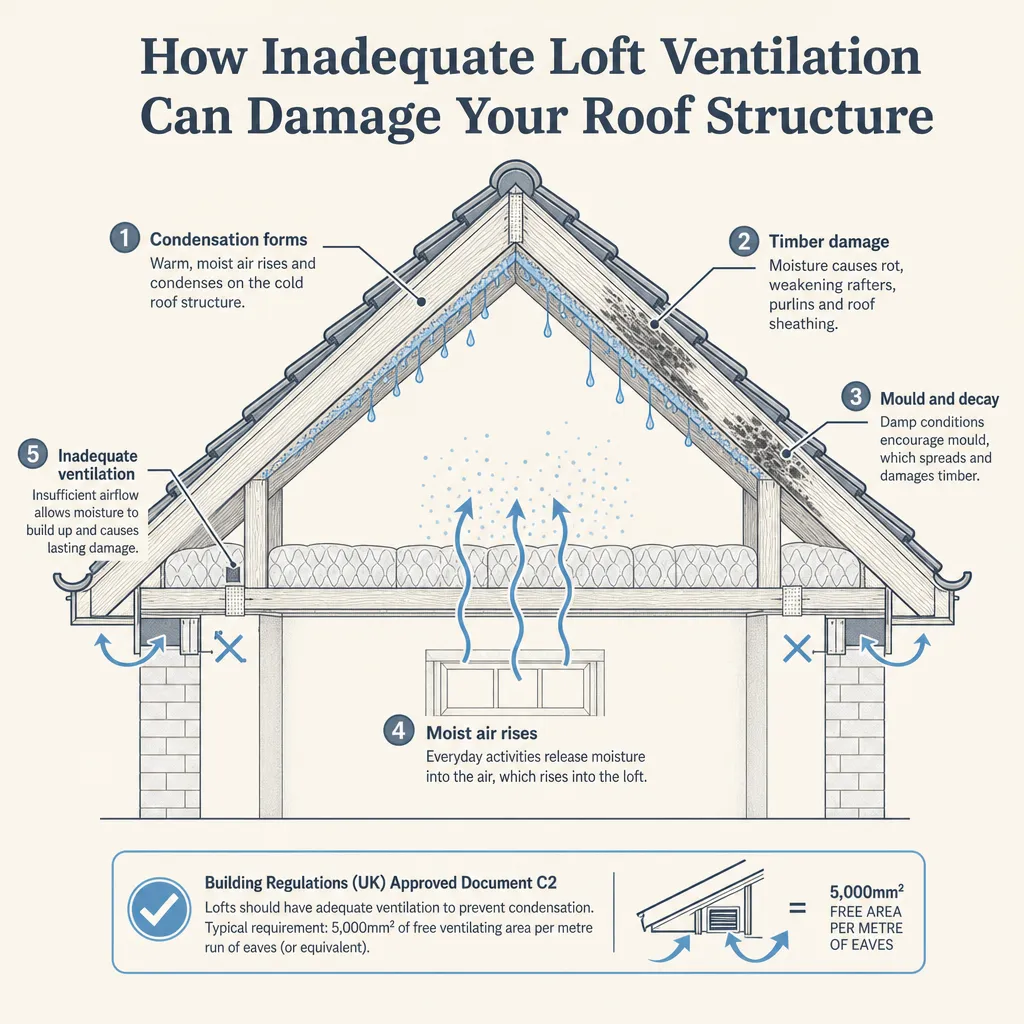
How Inadequate Loft Ventilation Can Damage Your Roof Structure
Poor loft ventilation is one of the most commonly overlooked causes of premature roof failure in UK homes — and one that a standard home survey often flags only after significant damage has already developed. Whether you have noticed dark staining on rafters, wet or compacted insulation, or a musty smell when opening the loft hatch, understanding the link between restricted airflow and roof structural condition is important before commissioning repairs, planning a loft conversion, or putting your property on the market.
Key points
- BS 5250:2021 (Code of Practice for Control of Condensation in Buildings) and Building Regulations Approved Document C set the standards for condensation control and roof ventilation in UK homes.
- Cold-deck pitched roofs require a continuous air path from eaves to ridge; Approved Document C specifies minimum ventilation equivalent to a 25 mm continuous gap at eaves for pitches below 15°, and 10 mm for pitches at or above 15°.
- Wet or compressed loft insulation typically loses 50% or more of its thermal resistance, directly undermining the benefit of any previous energy-efficiency upgrade.
- Timber roof structure becomes vulnerable to fungal decay once moisture content exceeds approximately 20%, according to BRE guidance on timber in buildings.
- A RICS Level 3 Home Survey or specialist roof survey is the appropriate starting point if you suspect ventilation-related structural damage — do not attempt to assess structural timber decay without professional inspection.
Why loft ventilation matters for your roof
UK roofs are predominantly cold-roof constructions: insulation sits at ceiling level and the roof void above is unheated, relying on airflow through ventilation gaps to remove moisture. This design works only when ventilation is maintained continuously along the full length of each slope.
When ventilation is blocked — by loft insulation pushed to the eaves, by a poorly designed loft conversion that seals off roof voids, or by an original construction that omitted ventilation gaps entirely — warm moist air from the living spaces below condenses on cold roof surfaces. The condensate wets insulation, saturates timber, and in severe cases causes structural decay requiring partial or complete roof rebuilding.
This problem became more common after the UK government's push to increase loft insulation depth from around 100 mm to 270 mm or more. Many insulation upgrades blocked eaves ventilation without adding compensating grille or soffit ventilation, leaving roofs more vulnerable to condensation damage than before the works were carried out.
How condensation damages roof timber
Moisture damage in a poorly ventilated loft follows a predictable sequence:
- Warm humid air from bedrooms and bathrooms migrates into the loft through ceiling gaps, light fittings, and poorly sealed loft hatches.
- The air cools against the cold underside of roof tiles and rafters, depositing condensate on structural surfaces.
- Condensate wets the timber. At moisture content above approximately 20%, conditions are favourable for wood-rotting fungi.
- Wet rot (most commonly Coniophora puteana) and in severe cases dry rot (Serpula lacrymans) progressively degrade structural timber.
- Rafters become spongy or cracked; roof tiles begin to sag or slip as their support is compromised.
- In the most advanced cases, purlin and ridge board decay may require the replacement of the entire roof structure.
Insulation becomes saturated during this process, losing most of its thermal performance while simultaneously adding load to ceiling joists.
Red flags: signs your loft ventilation may be inadequate
Inspect your loft on a cold morning, ideally after a period of rain. Look for:
- Black or dark staining on rafters or sarking felt — often the first visible sign of repeated condensate deposit and early fungal growth.
- Wet, compacted, or discoloured insulation, particularly near the eaves where ventilation is most commonly blocked.
- Rust staining on nail heads where roofing nails penetrate the sarking felt — indicates repeated wetting and drying cycles.
- Blocked or absent eaves vents — insulation pushed right to the eaves with no maintained air gap visible.
- Condensation droplets on cold surfaces in the loft on cold mornings.
- Soft or spongy timber when pressed firmly with a screwdriver or sharp implement — indicates active decay.
- Musty or earthy smell in the loft, even in the absence of visible mould.
- Tile slippage or sagging along a roof slope — may indicate progressive rafter softening.
Any of these signs warrants professional inspection before further works are planned.
What type of survey do you need?
Situation | Appropriate professional | What you receive |
|---|---|---|
Buying a property with suspected loft condensation | RICS chartered surveyor — Level 3 Home Survey | Structural assessment and recommended further investigations |
Loft showing staining or wet insulation | Specialist roof surveyor or building surveyor | Detailed moisture assessment and ventilation adequacy report |
Active timber decay suspected | Structural engineer or timber specialist (BWPDA member) | Extent of decay, structural implications, remediation specification |
Post-installation check after loft insulation upgrade | Ventilation and condensation assessor | Ventilation calculation to BS 5250:2021 and upgrade recommendations |
Loft conversion planned or recently completed | Chartered surveyor and building control | Compliance check against Approved Document C and Part L |
How to improve loft ventilation
This section provides general orientation only — a qualified professional should assess your specific roof before any remediation begins.
Common approaches include:
- Eaves and soffit vents: inserting continuous or individual soffit vents to allow cold external air to enter at eaves level. Rigid insulation baffles maintain the required 50 mm air path above the insulation without reducing insulation depth.
- Ridge ventilation: adding a ventilated ridge unit or individual tile vents at or near the ridge allows warm air to exit the loft. Continuous ventilated ridge systems are standard on most roofs built after 2000.
- Tile vents and over-fascia vents: intermittent ventilation products that can be retrofitted without stripping the full roof covering, useful for improving cross-ventilation in older properties.
- Full ventilation recalculation to BS 5250:2021: confirming that the cross-sectional area of inlet and outlet vents meets requirements for the specific roof pitch, span, and insulation specification.
Ventilation improvements alone will not reverse active timber decay. If rot is confirmed, structural repairs must precede or accompany any ventilation works.
Important limitations
This article provides general information about the relationship between loft ventilation and roof structural damage in UK homes. It is not a substitute for a professional inspection of your property. The extent of any damage, the appropriate remediation method, and compliance with Building Regulations will depend on your specific roof construction, property history, and local authority requirements. Minimum ventilation specifications vary for flat roofs, mansard roofs, warm-deck constructions, and converted loft spaces — rules applicable to cold-deck pitched roofs do not translate directly to other roof types.
When this becomes urgent
Stop relying on general guidance and arrange a professional inspection without delay if:
- You can see daylight through the roof structure from inside the loft.
- Roof tiles are visibly displaced, sagging, or missing along a slope.
- There is a strong smell of decay or you can see fruiting bodies (mushroom-like growths) on roof timber.
- A ceiling in the room below shows water staining, is bowed, or appears to be sagging.
- Any roof timber feels soft, crumbles, or yields under firm hand pressure.
- You are planning a loft conversion — building control will require ventilation adequacy and any structural defects to be addressed before work proceeds.
What to ask a qualified professional
Before instructing a roof surveyor, building surveyor, or timber specialist:
- Are you RICS-accredited, a Chartered Building Surveyor, or a member of the British Wood Preserving and Damp-proofing Association (BWPDA) where timber assessment is involved?
- Will your inspection include a moisture meter survey of roof timbers and sarking felt?
- Will you calculate ventilation adequacy to BS 5250:2021 and confirm whether current provision meets the required standard for this specific roof type?
- Will the report distinguish between wet rot and dry rot and set out the structural implications of each?
- Will the report be suitable for insurance purposes or for a mortgage valuation if I am buying or selling the property?
- If Building Regulations compliance is needed for remediation works, will you confirm which notifications are required?
How Housey can help
If you are concerned about loft ventilation or roof condition, Housey can connect you with professionals for a roof survey to assess structural timber and covering condition, or a ventilation and condensation assessment to calculate compliance with BS 5250:2021 and recommend specific remediation works. Both services provide a written report you can act on or use when planning further works or conveyancing.
Frequently asked questions
Can inadequate loft ventilation cause structural failure?
Yes, in severe cases. When condensation repeatedly wets roof timbers, moisture content can rise above the approximately 20% threshold at which wood-rotting fungi become active. Prolonged decay can make rafters, purlins, and ridge boards structurally unsound, potentially requiring a full or partial re-roof. A RICS Level 3 survey or specialist roof survey should be commissioned if active decay is suspected.
Does adding more loft insulation cause ventilation problems?
It can. Increasing insulation depth — a common retrofit measure — often inadvertently blocks the eaves air path. Current guidance requires a minimum 50 mm clear air space between the top of the insulation and the underside of the roof covering. Insulation baffles and additional soffit ventilation are typically needed when insulation depth is significantly increased above its original level.
Is loft ventilation covered by Building Regulations?
Yes. Approved Document C and British Standard BS 5250:2021 set requirements for ventilation in UK roof spaces. Any notifiable building work — including most loft conversions and significant roof replacements — must comply and will be assessed by a building control body.
How do I know if my loft has enough ventilation?
The most visible signs of under-ventilation are condensation staining on rafters, wet insulation near the eaves, and soft or discoloured timber. A ventilation and condensation assessment carried out to BS 5250:2021 will calculate whether your current provision meets the required standard and identify exactly what additional vents are needed for your roof geometry.
Sources and further reading
- Approved Document C — site preparation and resistance to moisture — GOV.UK
- BS 5250:2021 — Code of Practice for Control of Condensation in Buildings — BSI Group
- BRE — condensation and moisture in buildings — Building Research Establishment
- RICS Home Survey Standard — RICS
- Energy Saving Trust — loft insulation — Energy Saving Trust
Useful next reads
 Surveys & Inspections
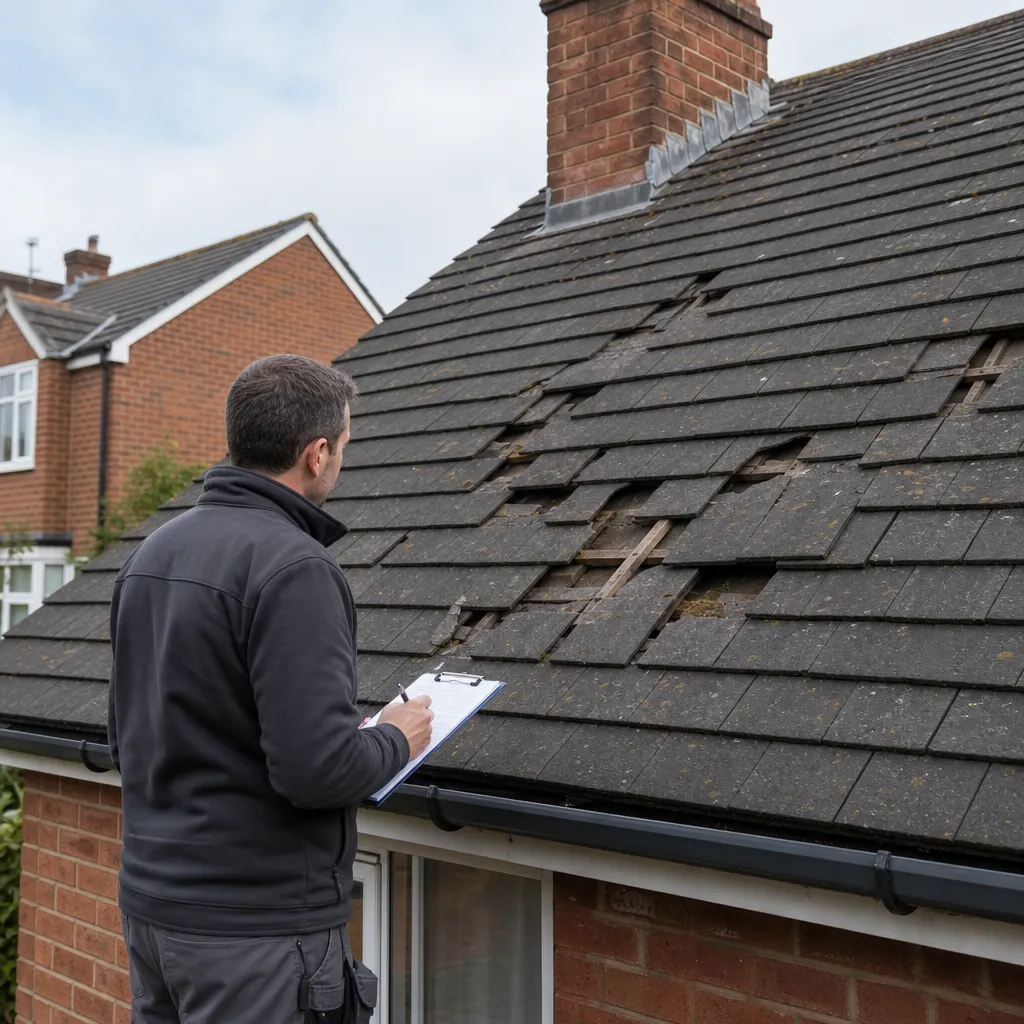
Wind Damage to Roof Tiles and Shingles: Inspection and Repair Guidance
After a storm, inspect your roof from ground level using binoculars before attempting access.
 Surveys & Inspections
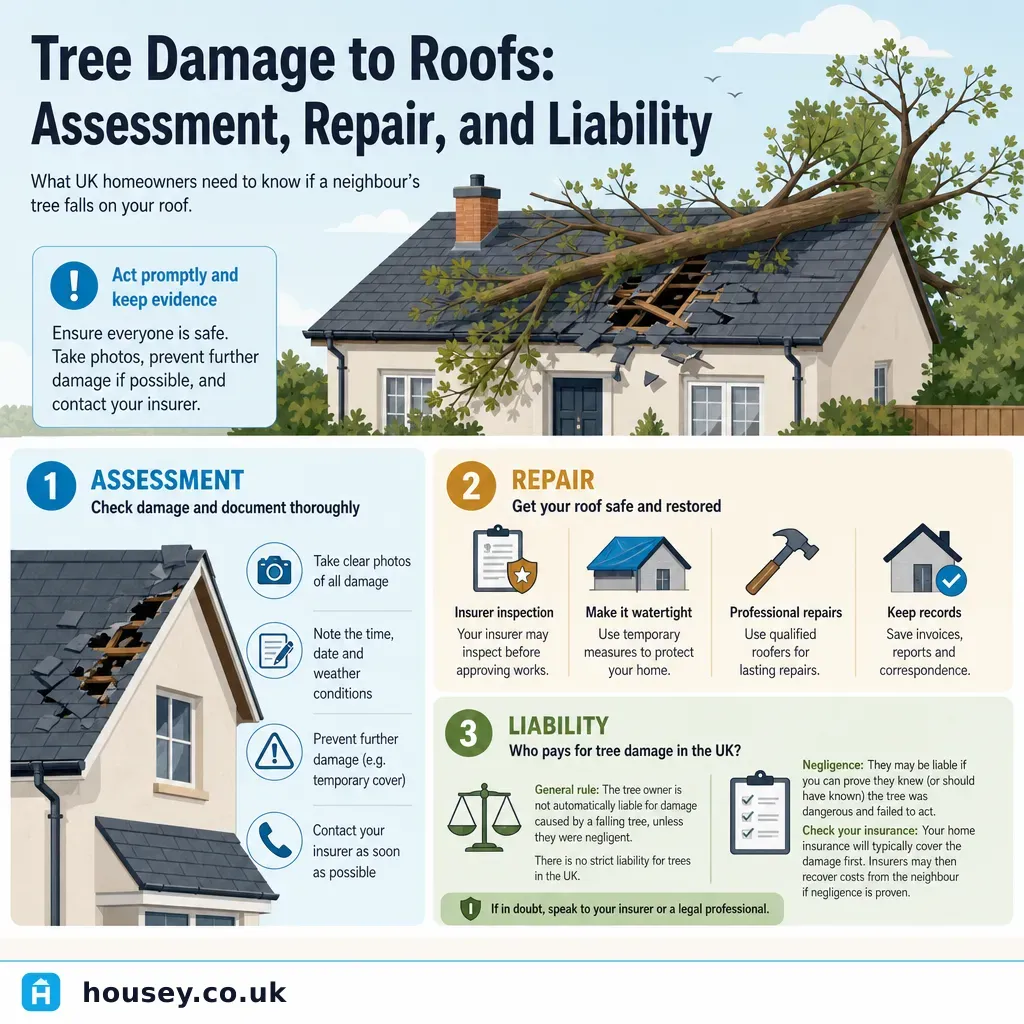
Tree Damage to Roofs: Assessment, Repair, and Liability
When a tree damages a roof in the UK, your own buildings insurance is usually the first port of call regardless of tree ownership.
 Surveys & Inspections
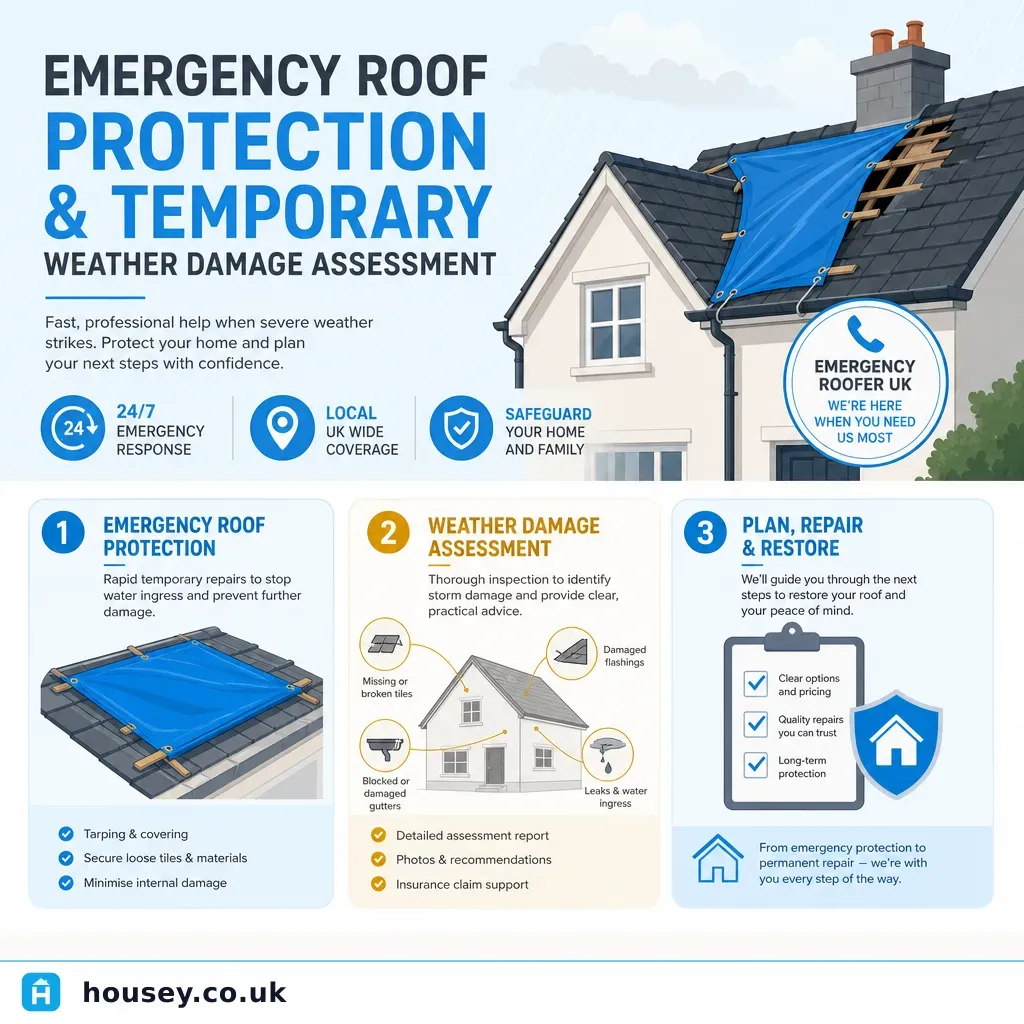
Emergency Roof Protection and Temporary Weather Damage Assessment
After roof damage, your priority is safe temporary protection — typically a tarpaulin secured by a roofer — followed by a professional inspection to assess structural impact.
 Surveys & Inspections
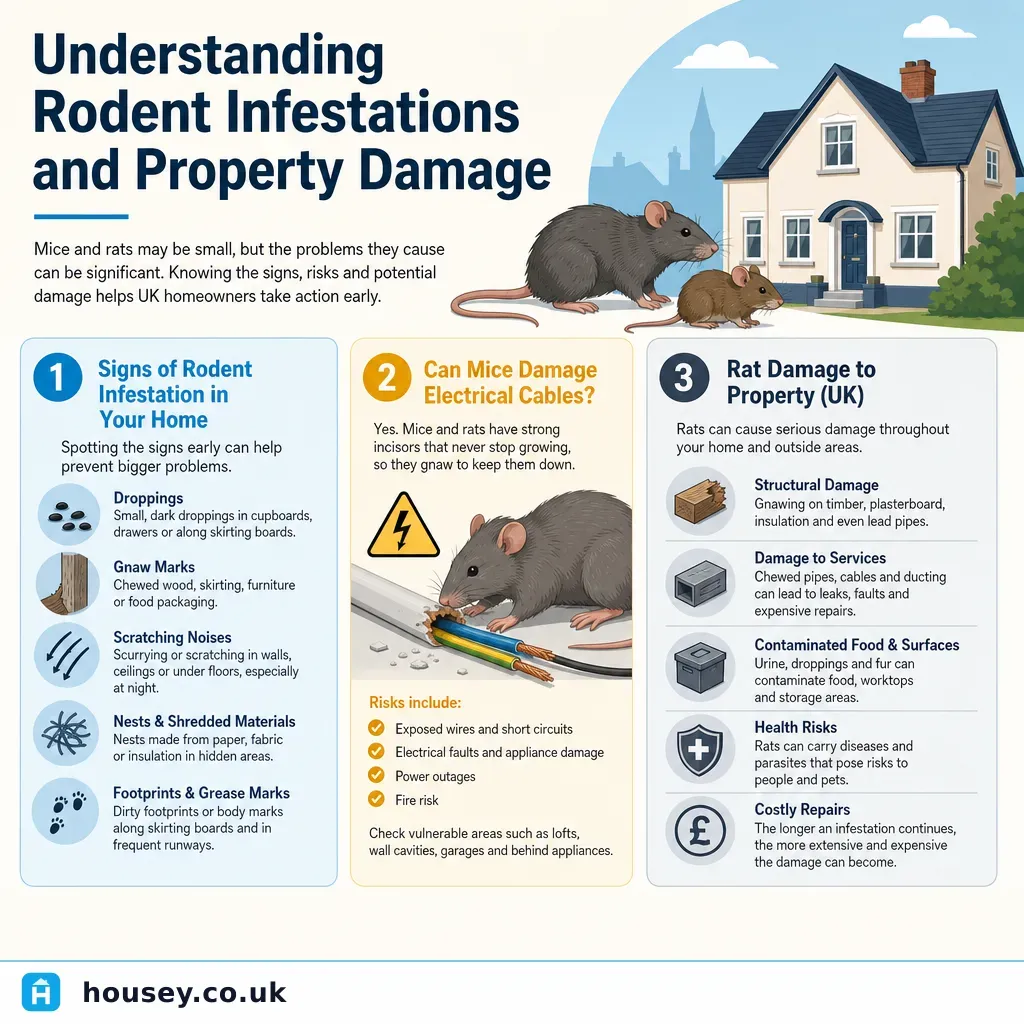
Understanding Rodent Infestations and Property Damage
Rats and mice can cause significant property damage in UK homes, including gnawed electrical cables that create fire risk, damaged pipework causing hidden leaks, and burrowing near foundations in older properties.
 Surveys & Inspections
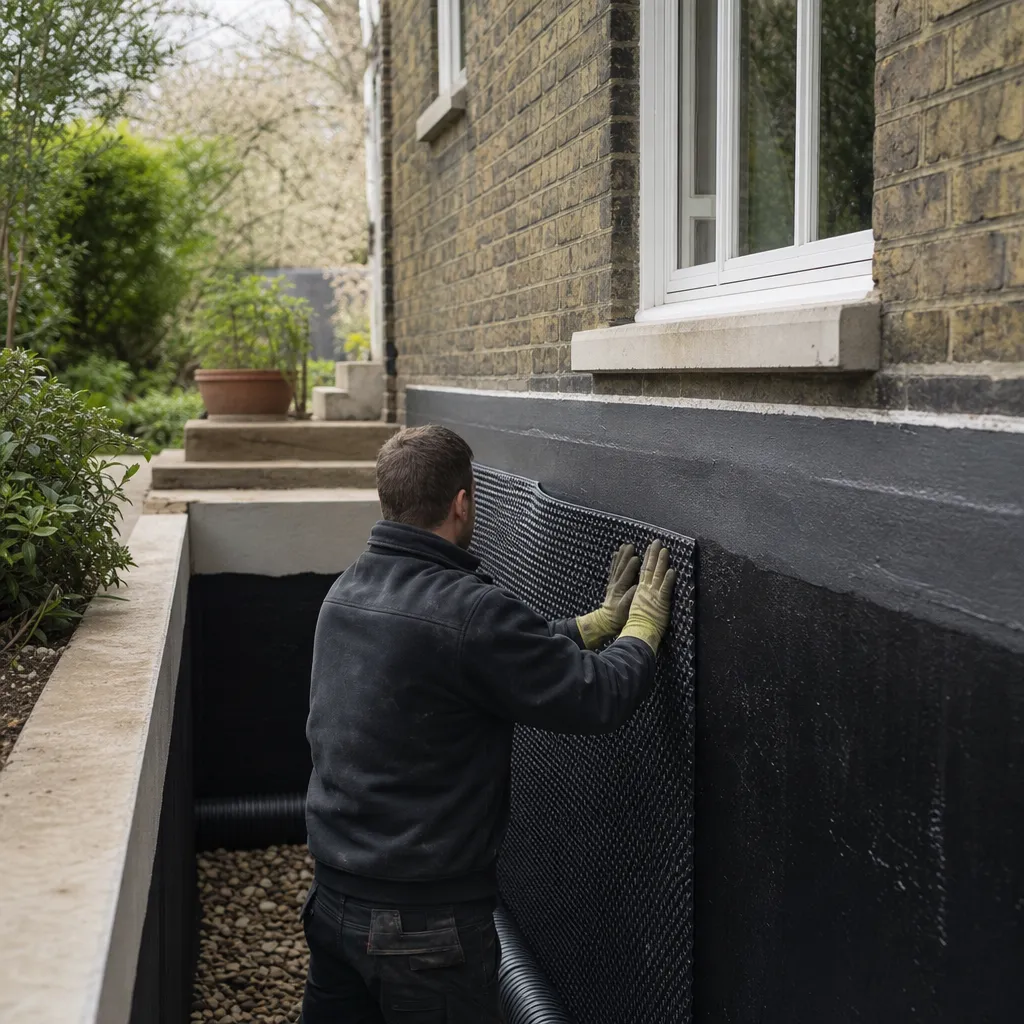
Basement Waterproofing Solutions for Damp Prevention
Basement waterproofing in the UK is governed by BS 8102:2022, which defines three system types: Type A (barrier coatings), Type B (structurally integral concrete), and Type C (cavity drain membrane with sump pump).