Wind Damage to Roof Tiles and Shingles: Inspection and Repair Guidance
By Housey · Last reviewed 19th of May 2026
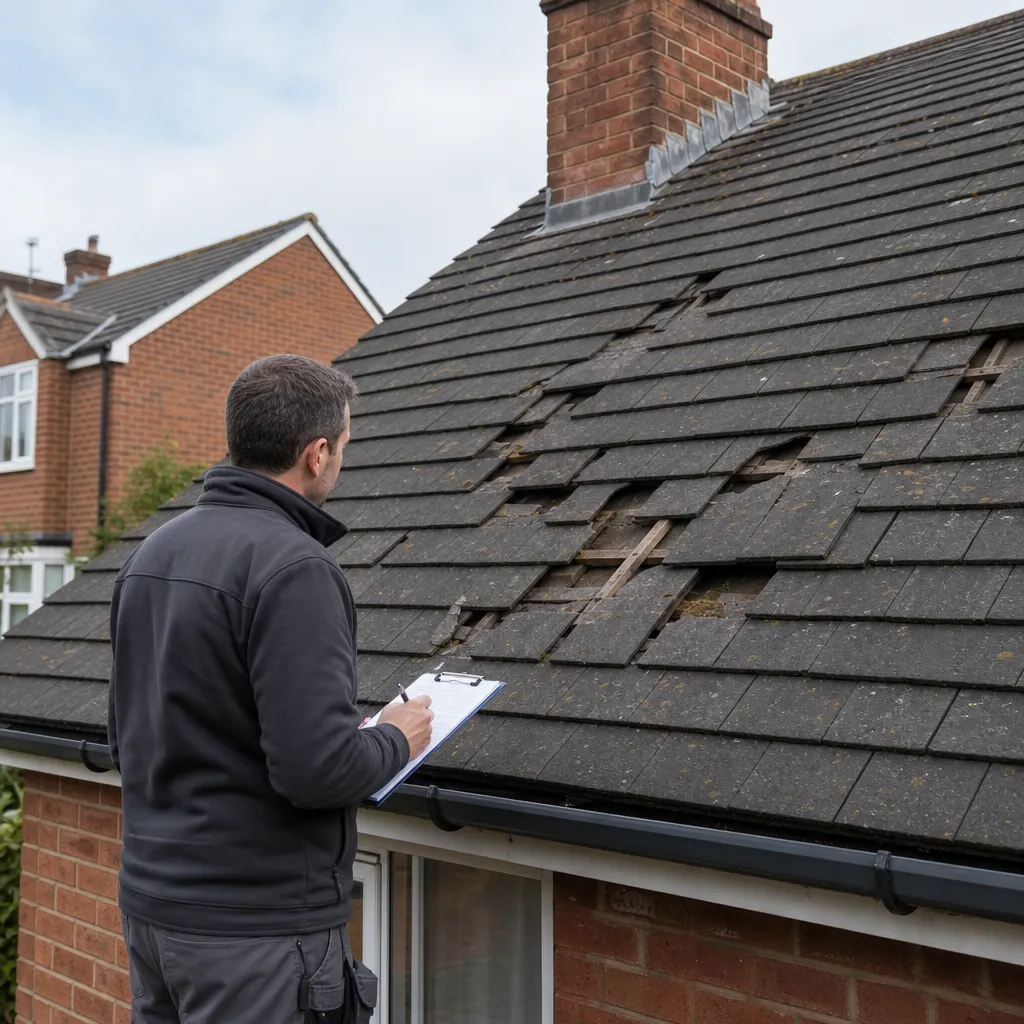
Wind Damage to Roof Tiles and Shingles: Inspection and Repair Guidance
UK storm seasons, typically running from October through March, routinely bring high winds capable of displacing roof coverings, cracking flashings, and opening gaps in the weatherproof envelope of a home. Properties across the country carry a wide variety of coverings — concrete interlocking tiles on post-war estates, natural slate on Victorian terraces, clay pantiles in East Anglia, and bitumen shingles on dormer cheeks — and each behaves differently under wind loading. Acting quickly and safely after a storm can prevent a manageable repair from escalating into structural damage or a disputed insurance claim.
Key points
- Ridge and hip tiles are mortar-bedded at exposed roof edges and are among the most common casualties of UK storms; a displaced ridge tile poses a falling hazard and should be inspected promptly after any named storm.
- Building Regulations Approved Document A (Structure) requires roofing to be structurally adequate; where wind damage may have reached roof timbers or the chimney structure, a RICS-qualified surveyor or structural engineer — not just a roofer — should assess the property.
- The Association of British Insurers (ABI) recommends photographing all visible damage before undertaking temporary repairs, to support any subsequent home insurance claim.
- The Work at Height Regulations 2005 apply to homeowners as well as tradespeople; working on a pitched roof without fall-arrest equipment carries a serious risk of fatal injury.
- Roofing contractors should be vetted through the National Federation of Roofing Contractors (NFRC) or the Competent Roofer scheme to confirm minimum competency standards.
How to check for damage safely from ground level
A ground-level check using binoculars or a smartphone zoom lens gives useful evidence before any contractor is called. Look for:
- Missing or shifted tiles or slates — gaps in the covering plane, or tiles at an angle.
- Displaced or cracked ridge tiles — the mortar-bedded tiles along the roof apex; cracked joints are visible from street level on most two-storey homes.
- Lifted hip tiles or detached valley pieces — at diagonal junctions on hipped roofs.
- Damaged lead, felt, or EPDM flashings — around chimney stacks, skylights, and wall abutments.
- Sagging or depression in the roof plane — may indicate batten or rafter damage beneath.
- Debris in gutters — tile fragments, mortar dust, or granules from bitumen shingles.
A drone survey by a qualified operator can provide photographic evidence without any roof access and is increasingly used by surveyors and loss adjusters before a claim is submitted.
Types of wind damage and their urgency
Damage type | Typical cause | Urgency | Professional needed |
|---|---|---|---|
1–4 missing concrete or clay tiles | Wind uplift, clip failure | Moderate — repair within days | NFRC-registered roofer |
Displaced or cracked ridge tiles | Mortar failure under load | High — falling hazard | NFRC-registered roofer |
Lifted chimney or skylight flashing | Wind uplift on lead or felt | High — active water ingress | Specialist roofer |
Sagging or deflected roof plane | Batten or rafter damage | Urgent — structural concern | RICS surveyor and roofer |
Widespread tile loss | Severe storm event | Urgent — emergency stabilisation | Roofer and structural surveyor |
Cracked or granulating bitumen shingles | UV and wind degradation | Moderate | Flat-roof or dormer specialist |
When does wind damage become structural?
Most wind damage to coverings is a weatherproofing problem, not a structural one. However, prolonged water ingress can progress to structural decay:
- Rafters and ceiling joists may develop wet rot if tiles have been missing for weeks.
- Sarking boards or ply roof decking on timber-frame homes can delaminate with sustained saturation.
- Chimney stacks with failed flaunching or struck by debris may be structurally unstable.
- Ceiling plasterboard and supporting joists can fail without warning where a saturated roof goes untreated.
If you see a sagging roofline, stepped cracking in brickwork near the eaves, or bulging ceilings below the affected area, arrange a structural survey rather than relying on a roofer's opinion alone.
Making a home insurance claim for storm damage
- Document all visible damage with dated photographs before any repair work begins.
- Notify your insurer promptly — most policies require notification within a reasonable period.
- Authorise only emergency temporary measures (tarpaulin, emergency sealant) before a full inspection — permanent repairs made first can complicate a claim.
- Obtain a written inspection report — a professional roof survey provides the documented evidence many insurers require.
- Keep all receipts, contractor correspondence, and Met Office storm records for your claim file.
An insurance valuation confirms whether your sum-insured reflects current rebuild costs before a claim arises.
Red flags: seek immediate help if you observe these
- A chimney stack has visibly leaned, cracked through, or shed brickwork onto the roof slope.
- An internal ceiling has collapsed, is heavily bulging, or shows sudden widespread water staining.
- The roofline appears to have dropped or distorted when viewed from across the street.
- You can see open sky from the loft hatch, or loft timbers are visibly saturated.
- Multiple roof sections are stripped and further bad weather is imminent.
In any of these circumstances, contact a RICS-registered surveyor or structural engineer rather than waiting for a roofer's availability.
Important limitations
This article provides general information for UK homeowners and does not constitute structural, insurance, or legal advice. Every property is different — the age of the roof structure, type of covering, underlying construction, and severity of the event all affect what action is appropriate. A qualified professional must inspect your specific property before permanent repairs are authorised. Insurance policy terms vary significantly between providers; always refer to your own policy wording.
What to ask a qualified professional
Before instructing a roofer or surveyor after wind damage, ask:
- Are you a member of the NFRC, Competent Roofer scheme, or a RICS-registered practice?
- Will you provide a written inspection report suitable for an insurance claim?
- Can you confirm whether damage is limited to the covering, or whether roof timbers or structural elements are affected?
- Is scaffolding required, and is that cost included in your quote?
- Is VAT included, and what assumptions does the quote make about hidden damage?
- What is your current public liability insurance level?
- How long will any temporary weatherproofing last before permanent repair is needed?
When to get professional help
Any inspection requiring pitched roof access must be carried out by a competent professional with appropriate fall-arrest or scaffolding equipment. Seek professional help if:
- Tiles or ridge components are visibly displaced and rain is forecast within 24 hours.
- The damage follows a named storm or sustained Beaufort Scale 8 winds (gusts of 39 mph or above).
- Water staining is visible on internal ceilings or walls below the affected area.
- The property is listed — consult Historic England and your local planning authority, as even like-for-like reinstatement may require listed building consent.
- The roof is approaching the end of its typical service life: 50–80 years for natural slate, 30–50 years for concrete interlocking tiles, 20–30 years for bitumen shingles.
How Housey can help
Housey connects UK homeowners with vetted local professionals for roof surveys that document covering condition and underlying structure after a storm, structural surveys where roof timbers or chimney integrity is in doubt, and insurance valuations to ensure your sum-insured is adequate before a claim is needed.
Frequently asked questions
Does my home insurer require a professional survey report before paying a storm damage claim?
Most UK insurers do not make a survey report a strict contractual condition, but they will typically send a loss adjuster for significant claims. Obtaining an independent inspection report before permanent repairs begin documents the cause and scope of damage, supporting your claim and protecting you if the insurer later queries whether damage was pre-existing.
Is it safe to go onto my roof to inspect or repair wind damage myself?
Working on a pitched roof without appropriate fall-arrest equipment carries a serious risk of fatal injury. The Work at Height Regulations 2005 apply to homeowners doing their own DIY as well as tradespeople. A qualified roofer with proper scaffolding or fall-arrest equipment should carry out any inspection requiring roof access.
What does storm damage mean under a UK home insurance policy?
Most policies cover damage caused by high winds, heavy rain, lightning, hail, or snow, but the exact definition varies between providers. Some policies exclude gradual deterioration, even if a storm event reveals it. Always request clarification from your insurer in writing before authorising permanent repairs, and check whether a loss adjuster visit is required.
How quickly should I arrange roof repairs after wind damage?
Minor tile replacement can typically be completed within one to three working days by an available contractor. Larger repairs requiring scaffolding or insurance approval may take several weeks. In the interim, a roofer can apply temporary weatherproofing — a tarpaulin or emergency lead repair — to prevent ongoing water ingress.
Sources and further reading
- Storm and Flood Guidance for Homeowners — Association of British Insurers
- Working at Height: A Brief Guide — Health and Safety Executive
- Approved Document A — Structure — GOV.UK
- UK Storm Centre — Met Office
- National Federation of Roofing Contractors — NFRC
Useful next reads
 Surveys & Inspections
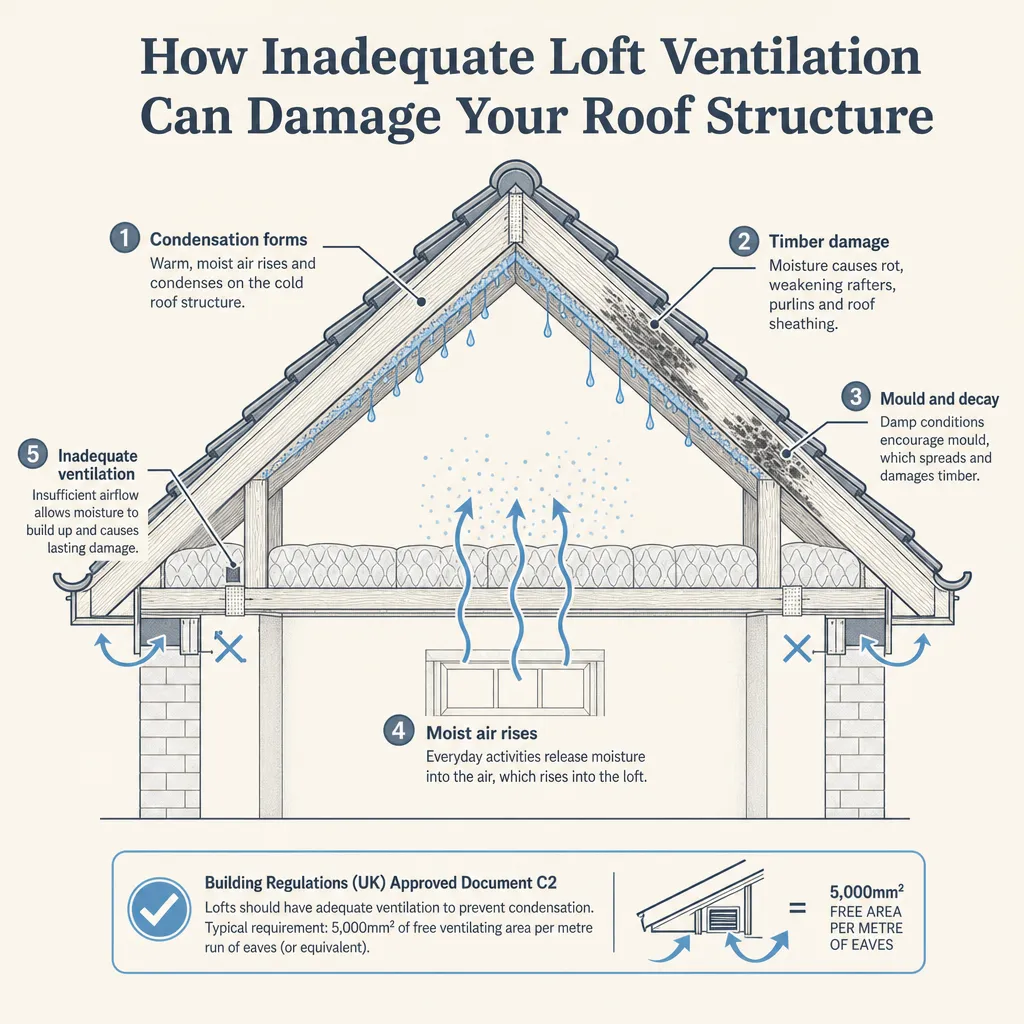
How Inadequate Loft Ventilation Can Damage Your Roof Structure
Inadequate loft ventilation allows warm, moist air to condense on cold roof timbers.
 Surveys & Inspections
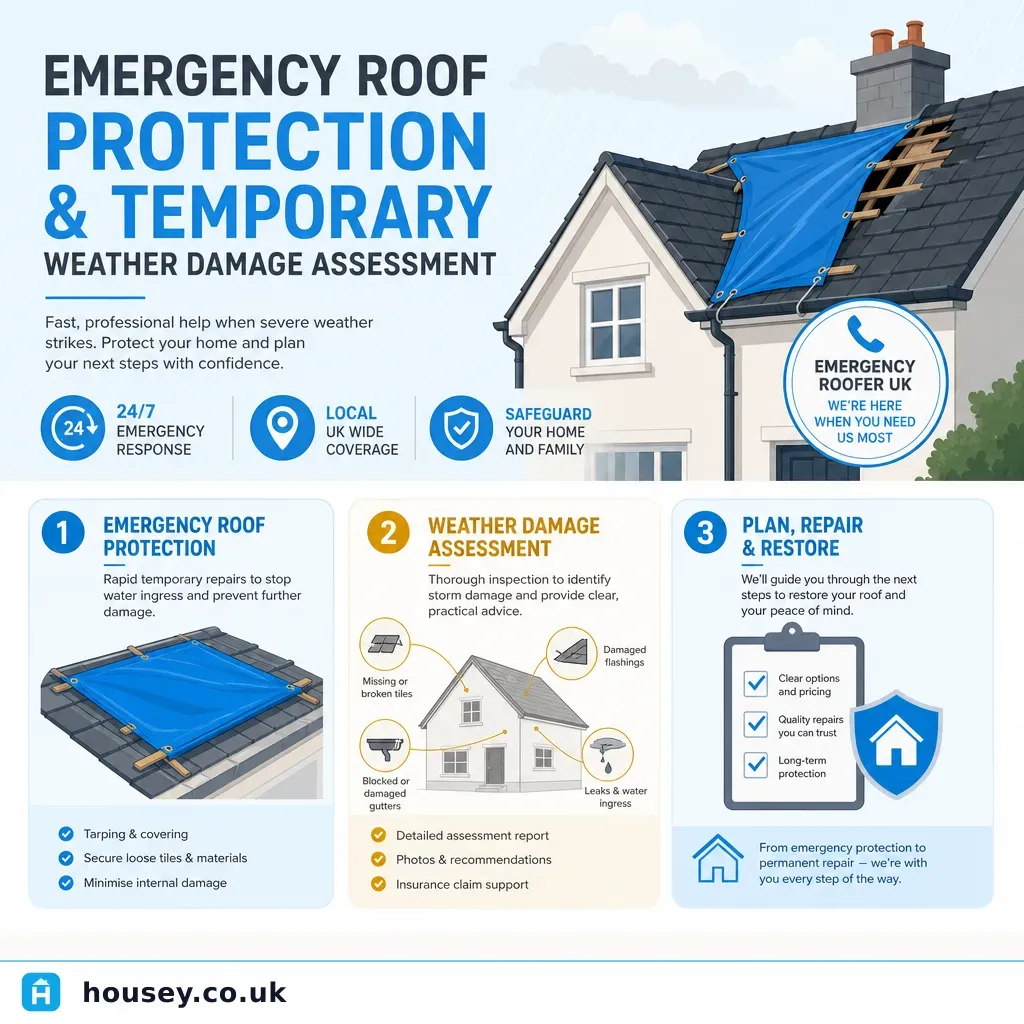
Emergency Roof Protection and Temporary Weather Damage Assessment
After roof damage, your priority is safe temporary protection — typically a tarpaulin secured by a roofer — followed by a professional inspection to assess structural impact.
 Surveys & Inspections
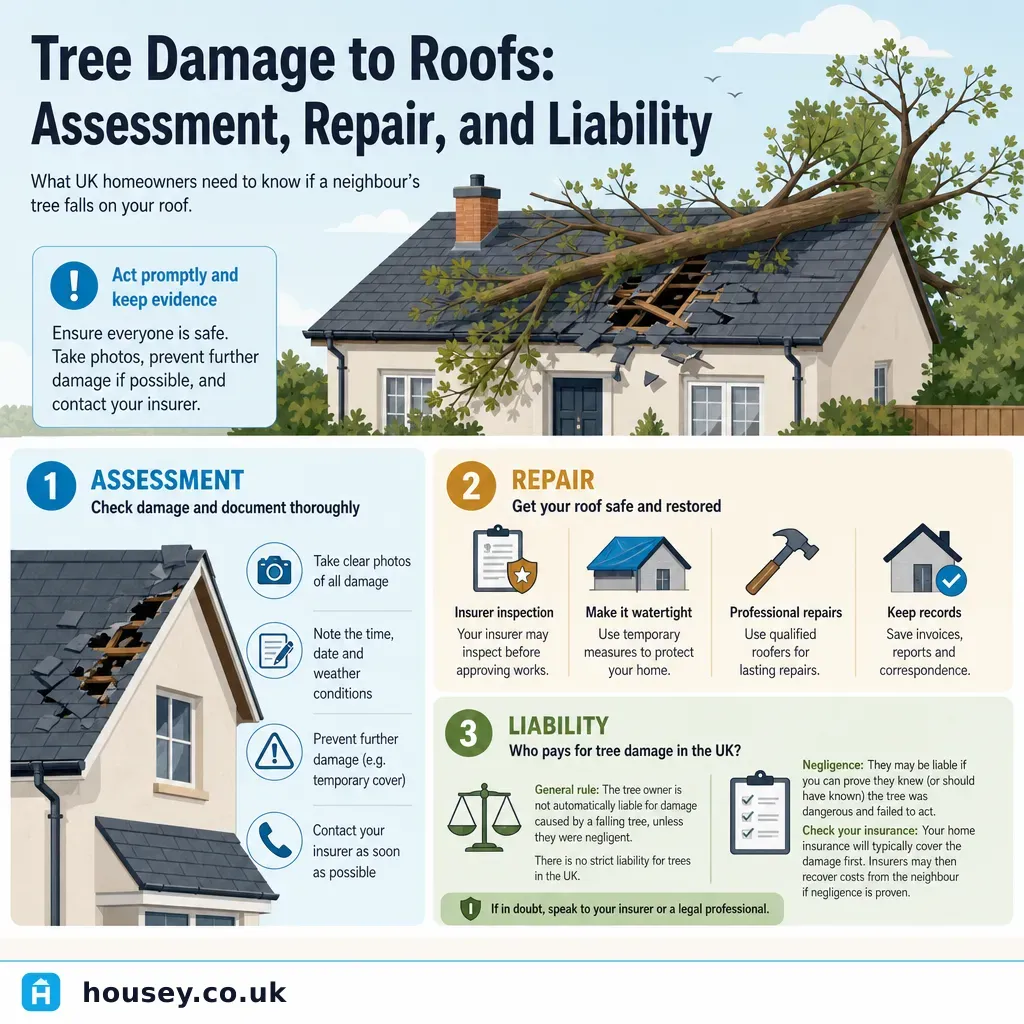
Tree Damage to Roofs: Assessment, Repair, and Liability
When a tree damages a roof in the UK, your own buildings insurance is usually the first port of call regardless of tree ownership.
 Surveys & Inspections
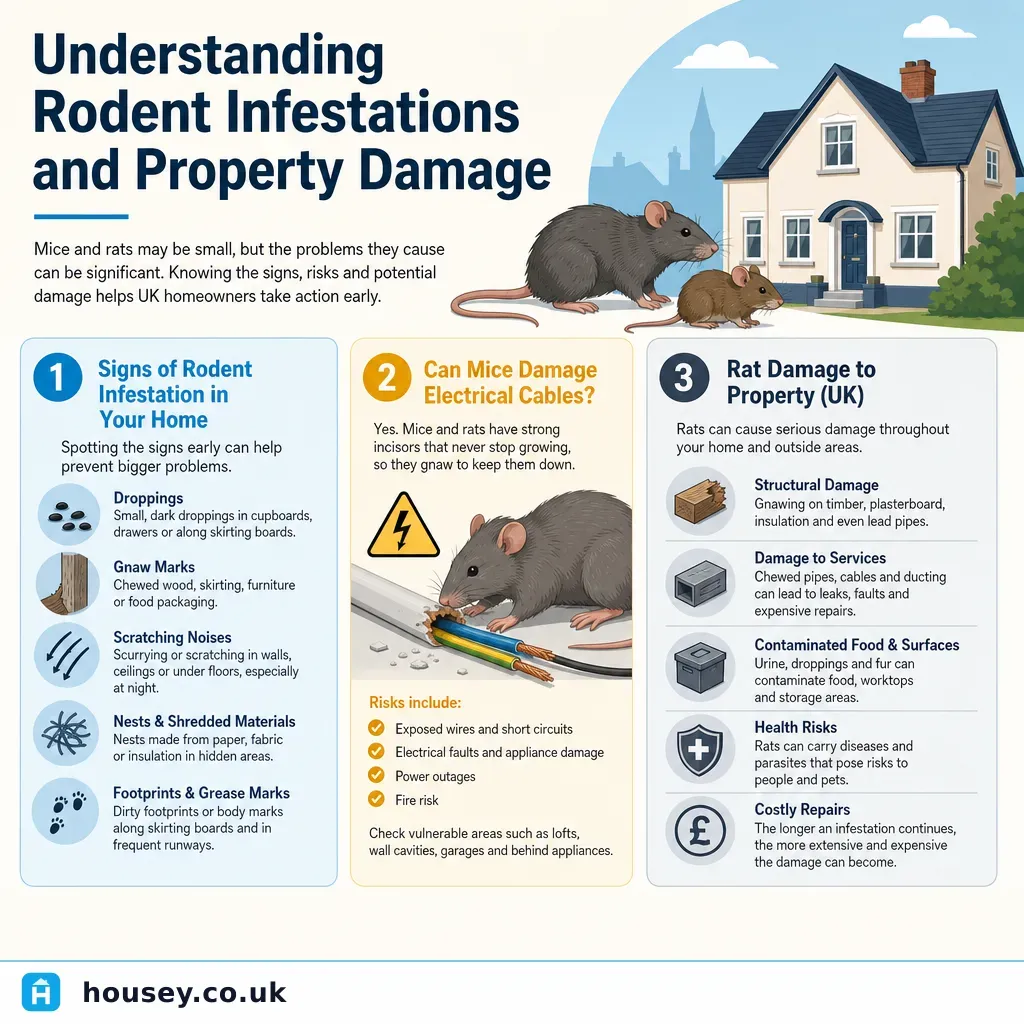
Understanding Rodent Infestations and Property Damage
Rats and mice can cause significant property damage in UK homes, including gnawed electrical cables that create fire risk, damaged pipework causing hidden leaks, and burrowing near foundations in older properties.
 Surveys & Inspections
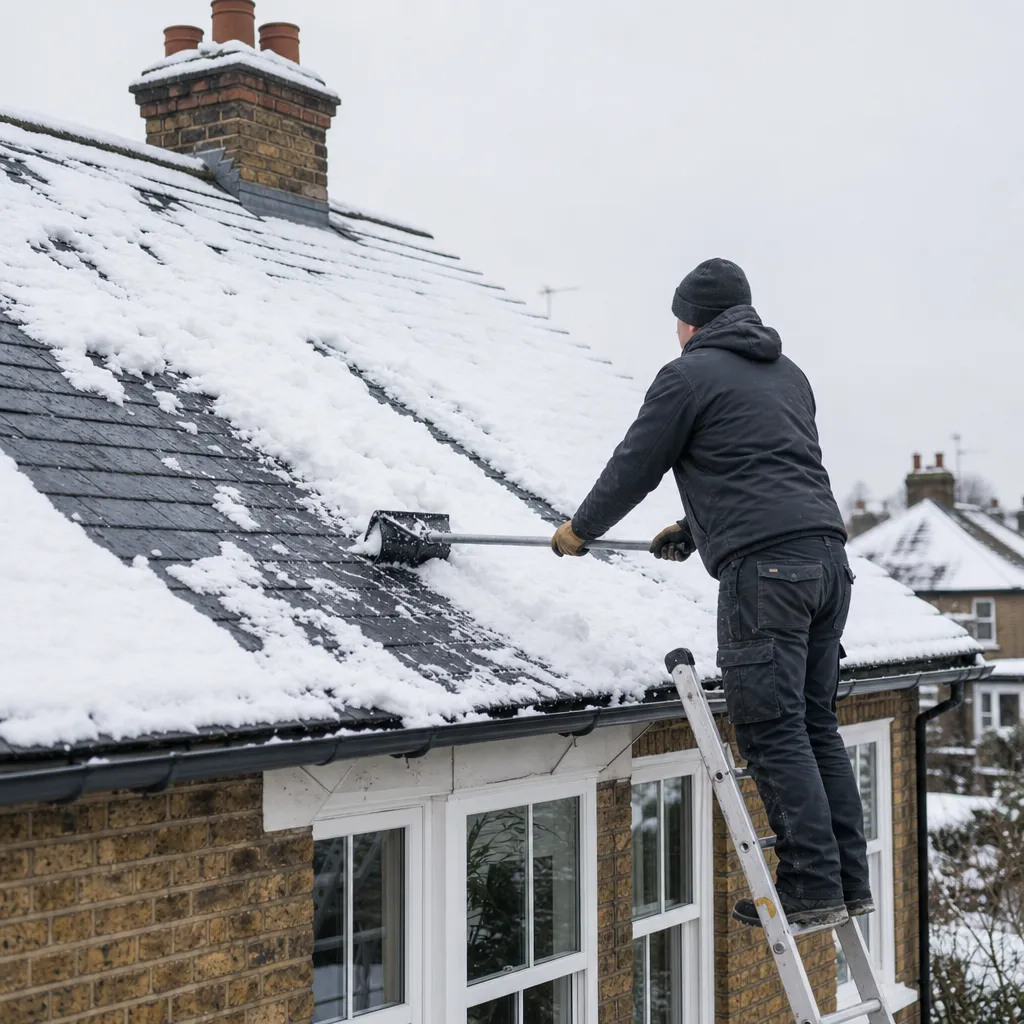
Roof Snow Removal: Safety and Structural Considerations
In the UK, most pitched roofs in good condition can tolerate typical snowfall without intervention.