Cost-Effective Self-Build and Construction Money-Saving Strategies
By Housey · Last reviewed 30th of May 2026
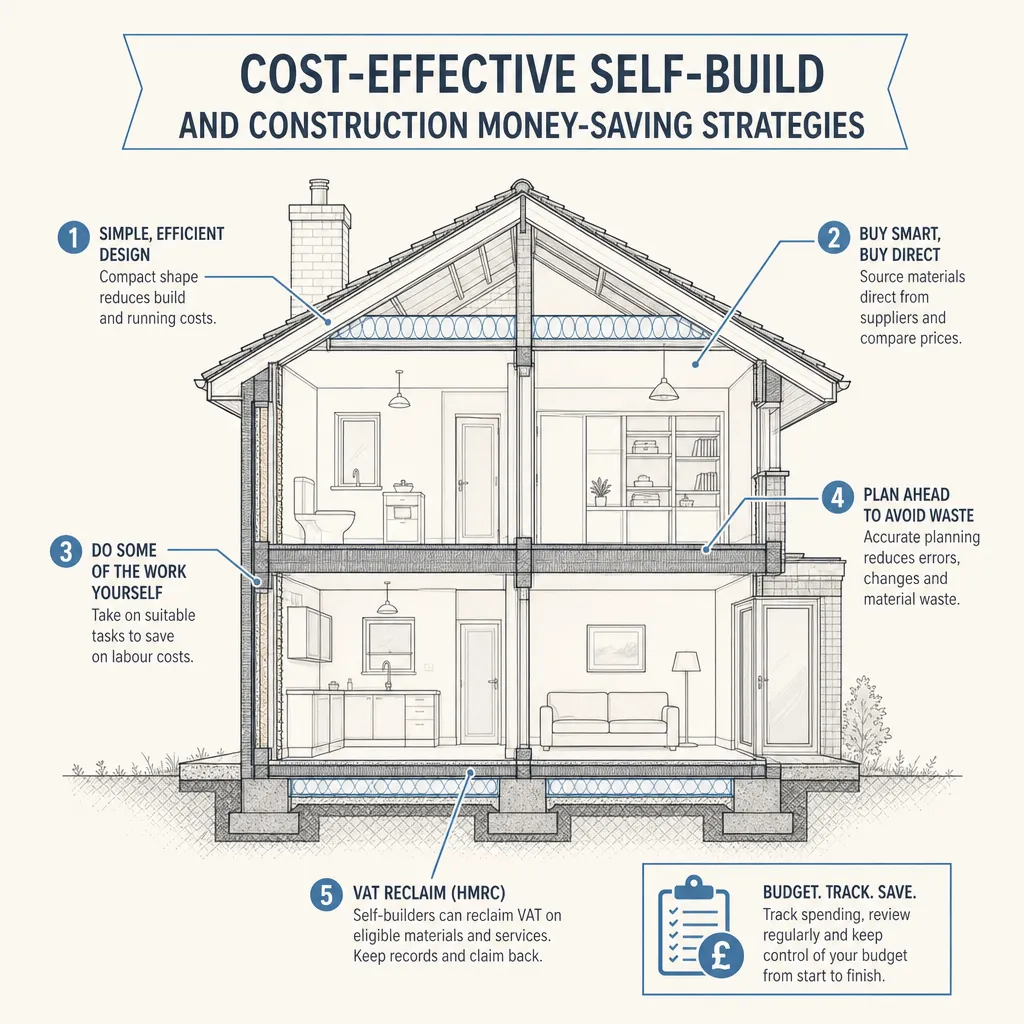
Cost-Effective Self-Build and Construction Money-Saving Strategies
Undertaking a self-build in the UK is one of the most financially significant decisions a homeowner can make — and one where the gap between a tight, well-managed budget and a costly overrun is often determined before a single spade enters the ground. Whether you are building a modest family home in rural England or a contemporary replacement dwelling on a suburban plot, understanding where the real savings lie — and where false economies can hurt you — is essential to a successful project.
Key points
- HMRC's VAT431NB scheme allows self-builders to reclaim VAT on eligible new-build materials; the claim must be submitted within 3 months of the date on the Building Regulations completion certificate.
- Timber frame and structural insulated panels (SIPs) typically reduce on-site labour time compared to traditional masonry, cutting wet-weather delays and site preliminaries costs.
- Design changes made after construction begins typically cost two to three times more than equivalent changes resolved at the design stage.
- Self-builders who act as their own main contractor can save 10–20% on contractor management margins but take on full programme, health and safety, and insurance responsibility.
- The average UK self-build costs between £1,500 and £3,000 per m² depending on specification, location, and procurement route (Indicative UK costs, last reviewed 2026-05-30; BuildStore/NSBRC data).
Where the biggest savings are made
The most impactful savings in a self-build come from decisions made at the briefing and design stage, not from negotiating harder at tender. Once your drawings are developed and structural calculations are issued, the scope is largely fixed; savings thereafter tend to be cosmetic.
Highest-impact stages for cost reduction:
- Brief and design: Reducing gross internal floor area by even 10 m² can save £15,000–£30,000 at mid-range specification. A compact, well-designed home almost always performs better financially than a sprawling one.
- Procurement route: Using a design-and-build firm, a main contractor, or managing subcontractors yourself each carry different risk profiles and cost implications. Subcontract management offers the greatest saving potential but requires significant time and competence.
- Structural system: Timber frame and SIPs systems are typically erected in days rather than weeks, reducing the need for wet trades on site and shortening the preliminaries period.
- Specification choices: Engaging a build cost estimating service at RIBA Stage 2 (concept design) allows you to stress-test specifications before they are committed to drawings.
Areas where false economies often backfire:
- Choosing the cheapest groundworks contractor without fixed-price terms — groundworks overruns are among the most common causes of self-build budget failure.
- Cutting contingency below 15% of the build budget; most professionals advise 15–20% for a first-time self-build.
- Deferring decisions on kitchens, bathrooms, and finishes until late in the build, which causes delays and last-minute premium pricing.
VAT reclaim: the HMRC VAT431NB scheme
One of the most significant financial benefits available to self-builders is the ability to reclaim VAT on eligible materials under HMRC's VAT Notice 431NB. This is a one-off DIY reclaim — not an ongoing relief — and the rules are specific:
- The property must be a new residential building used as your main home.
- The claim covers VAT paid on building materials incorporated into the structure — not services or labour.
- The claim must be submitted to HMRC within 3 months of the date on the completion certificate.
- Keep all VAT receipts throughout the build; retrospective reclaim without receipts is not possible.
For a self-build with £80,000 of eligible materials at 20% VAT, the reclaim could be worth £16,000 — a substantial sum worth careful administration.
Which procurement route suits your project?
Choosing how to organise your build is one of the earliest and most consequential decisions. The table below summarises the main options.
Procurement route | Typical saving vs. main contractor | Hands-on time required | Main risk | Best for |
|---|---|---|---|---|
Main contractor (turnkey) | Baseline | Low | Programme delays; limited cost control | First-time self-builders with limited time |
Broadly similar to main contractor | Low–medium | Specification locked early | Those wanting single-point responsibility | |
Self-manage subcontractors | 10–20% | High (30–40 hrs/week) | Programme management; CDM compliance | Experienced project managers or full-time commitments |
Package home supplier (timber frame) | 5–15% on structure | Medium | Quality of erection team | Those wanting speed and predictability of structure |
A worked UK self-build scenario
Scenario: A family in the East Midlands is building a 150 m² four-bedroom detached home on a serviced plot, with a gross build budget of £300,000.
- At £2,000/m², a 150 m² home costs an estimated £300,000 — the full budget, with no contingency.
- Reducing the footprint to 135 m² through a more efficient layout frees approximately £30,000 — a 10% contingency buffer.
- Choosing a timber frame package reduces the structural programme by an estimated 6 weeks, cutting preliminaries and supervision costs by approximately £4,000–£8,000.
- The VAT431NB reclaim on £60,000 of eligible materials recovers approximately £12,000 post-completion.
- Net result: a leaner programme, a 10% contingency buffer, and a meaningful post-completion windfall — without cutting specification quality.
Self-build cost-saving checklist
Before committing to a build contract, work through this checklist:
When to get professional help
Budget management for a self-build is rarely straightforward without professional support. Seek advice if:
- Your build budget exceeds £200,000 — at this scale, a project manager typically recovers their fee through programme savings and contractor accountability.
- You are considering managing subcontractors yourself for the first time without prior construction knowledge.
- Your plot or design involves complex groundworks — made ground, high water table, or significant gradients.
- You are unsure whether your design qualifies for VAT zero-rating, as some conversion or mixed-use projects are treated differently by HMRC.
How Housey can help
Whether you need an independent build cost estimate to pressure-test your budget before tender, a project manager to oversee subcontractors and programme, or a design-and-build firm for single-point responsibility, Housey connects you with vetted professionals across the UK. Compare quotes and find the right fit for your project's scale and complexity.
Frequently asked questions
Can I save money by being my own main contractor on a self-build?
Yes, self-managing subcontractors can save 10–20% compared to appointing a main contractor — but it requires significant time, construction knowledge, and familiarity with the Construction Design and Management Regulations 2015. Most first-time self-builders underestimate the management burden. A quantity surveyor or project manager can help you assess whether self-management is realistic for your project.
Is the HMRC VAT431NB reclaim automatic?
No. You must submit a completed VAT431NB form to HMRC within 3 months of receiving your Building Regulations completion certificate, along with all original VAT receipts. There is no extension to this deadline. Missing it means losing the reclaim entirely — so plan your paperwork as carefully as your build programme.
How much contingency should I hold for a self-build?
Most self-build professionals recommend 15–20% of the build-only budget as contingency for a first-time project, rising to 20–25% for projects with complex groundworks, difficult sites, or significant planning conditions. Contingency is not a budget line to spend speculatively — it exists for genuine unknowns that arise during construction.
Does a timber frame self-build actually cost less than masonry?
Not always in materials cost, but often in total programme cost. Timber frame structures are typically erected in days, reducing weather exposure risk and shortening the period during which you pay site preliminaries. In areas where bricklaying labour is expensive or scarce, the saving can be meaningful. Obtain comparative quotes for both systems before committing.
Sources and further reading
Useful next reads
 Planning & Pre-Build
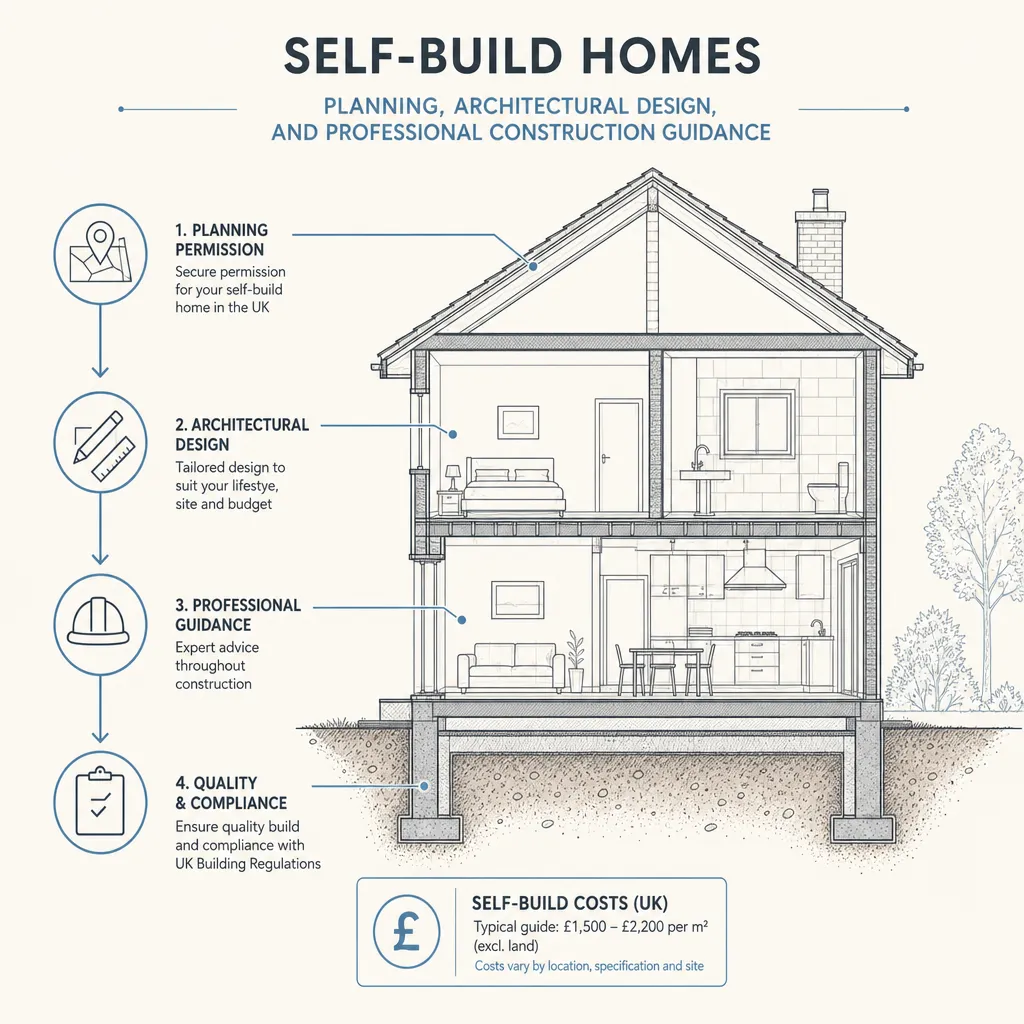
Self-build homes: planning, architectural design, and professional construction guidance
A UK self-build requires planning permission, separate building regulations approval, and a professional team typically including an architect, structural engineer, and building control body.
 Planning & Pre-Build
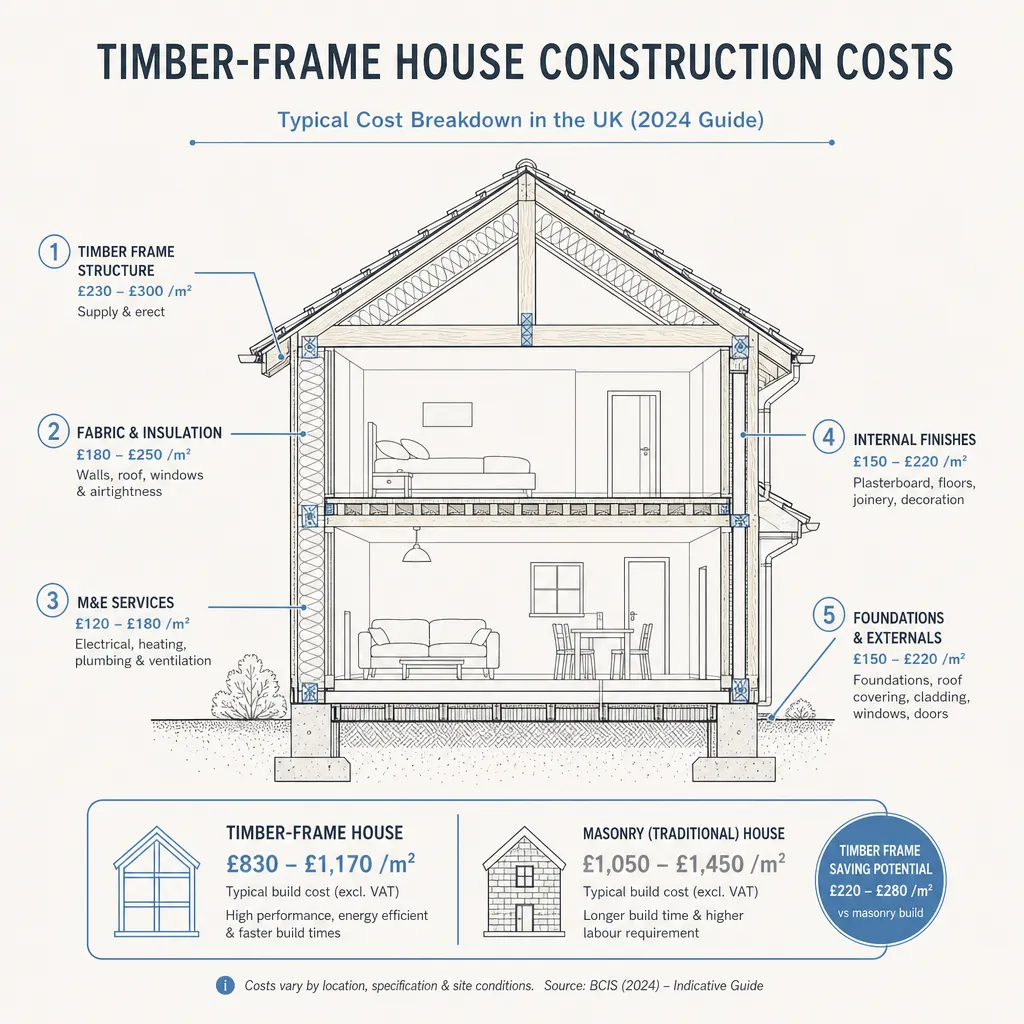
Timber-Frame House Construction Costs
Building a timber-frame house in the UK typically costs £2,000–£3,500 per m² of floor area, depending on system type, specification, and location.
 Planning & Pre-Build
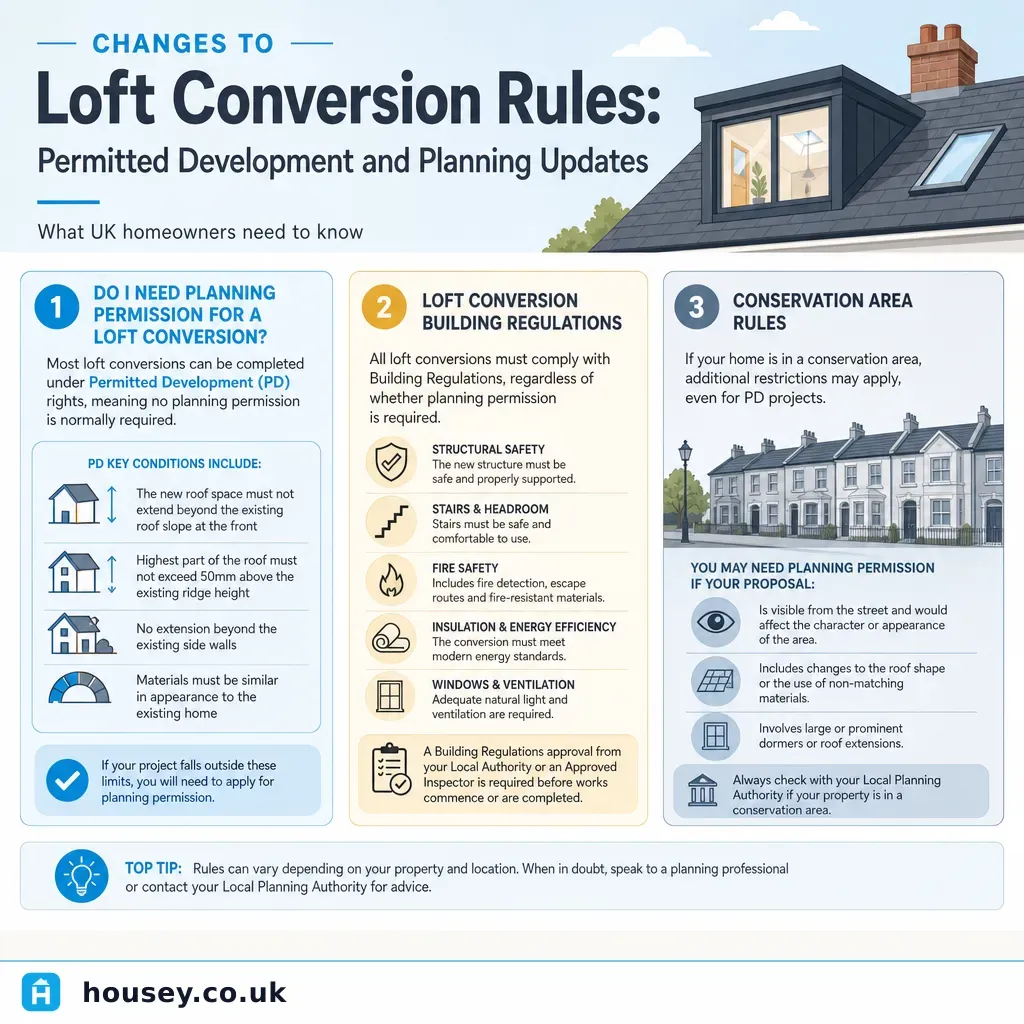
Changes to Loft Conversion Rules: Permitted Development and Planning Updates
In England, most loft conversions on standard houses qualify as Permitted Development under Class B of the GPDO 2015, allowing up to 40 cubic metres (terraced) or 50 cubic metres (detached or semi-detached) without a planning application — if conditions are met.
 Planning & Pre-Build
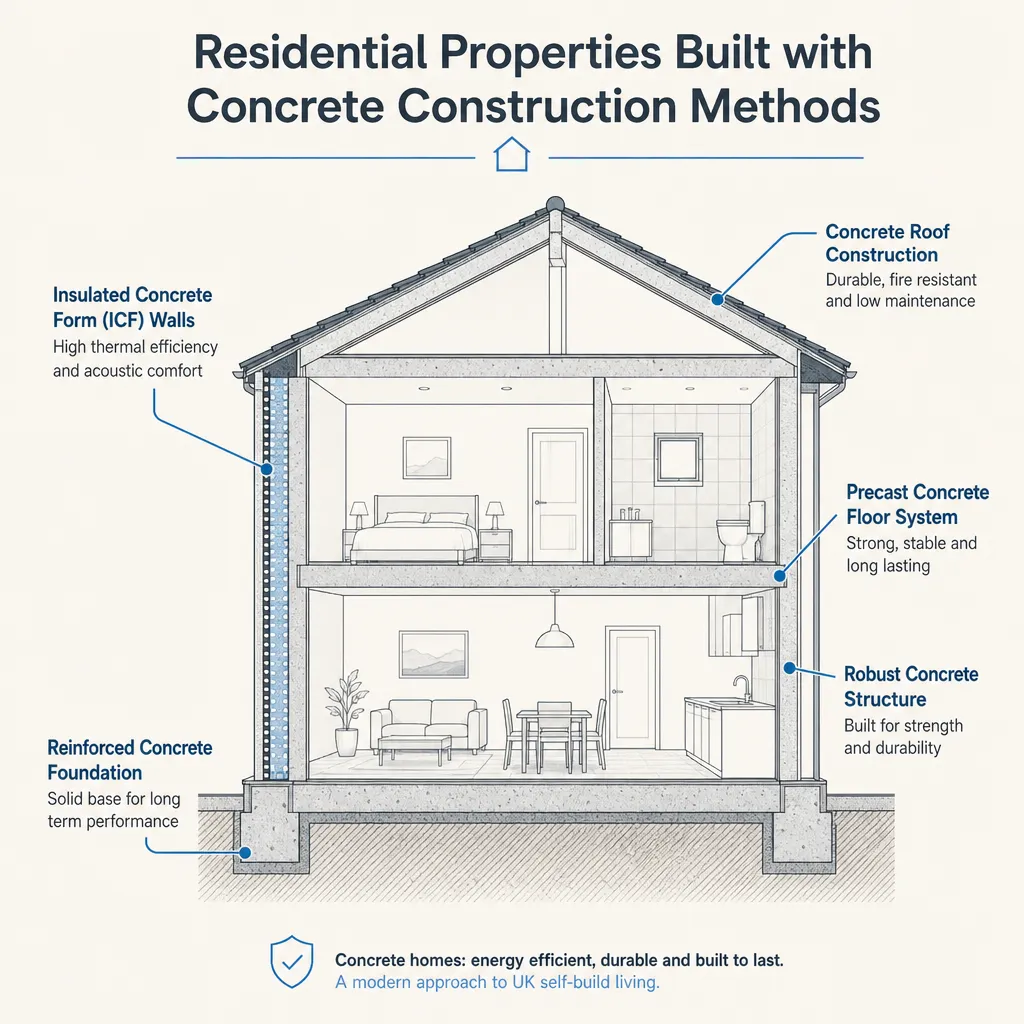
Residential Properties Built with Concrete Construction Methods
UK homes are built using several concrete methods: in-situ cast concrete, precast panel systems, insulating concrete formwork (ICF), and older non-traditional types such as Wimpey No-Fines and Laing Easiform.
 Planning & Pre-Build
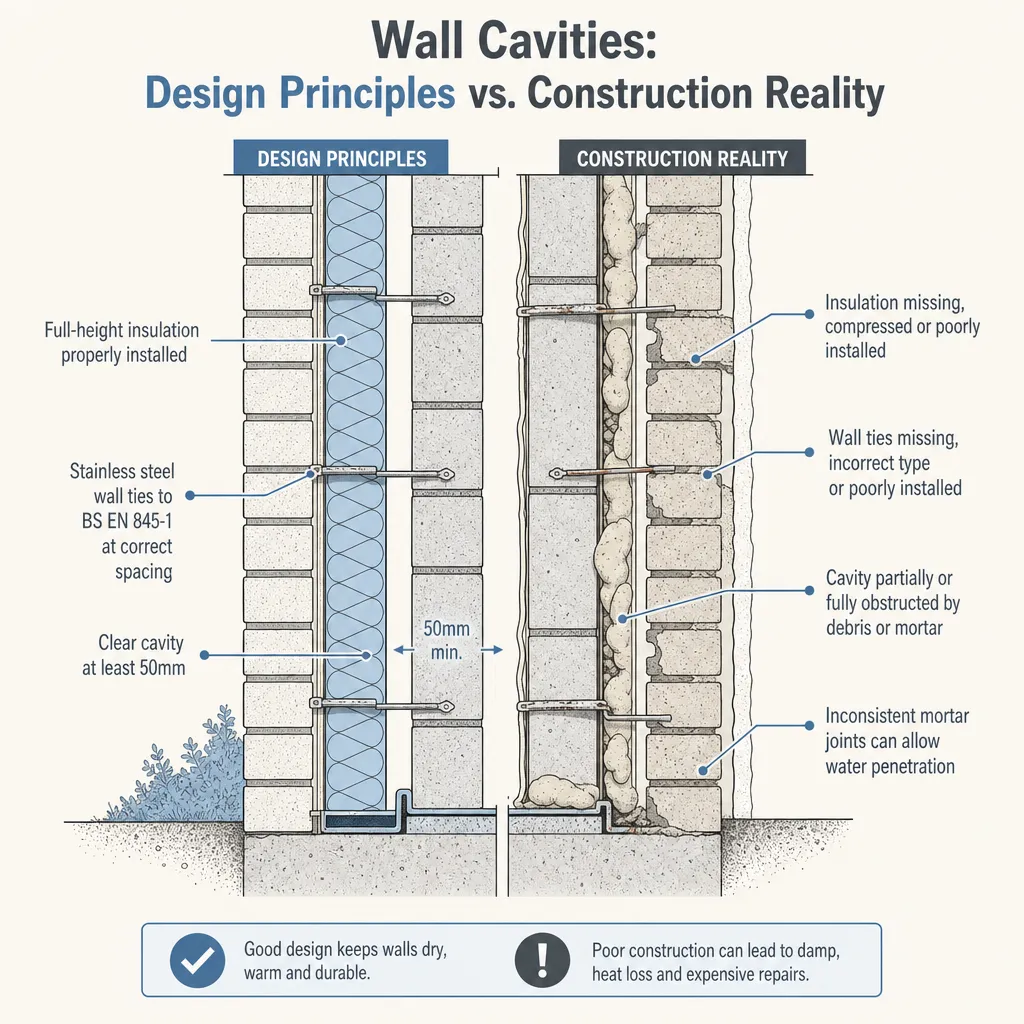
Wall Cavities: Design Principles vs. Construction Reality
A UK cavity wall is designed to resist weather, control heat loss, and structurally link two masonry leaves.