Self-build homes: planning, architectural design, and professional construction guidance
By Housey · Last reviewed 7th of May 2026
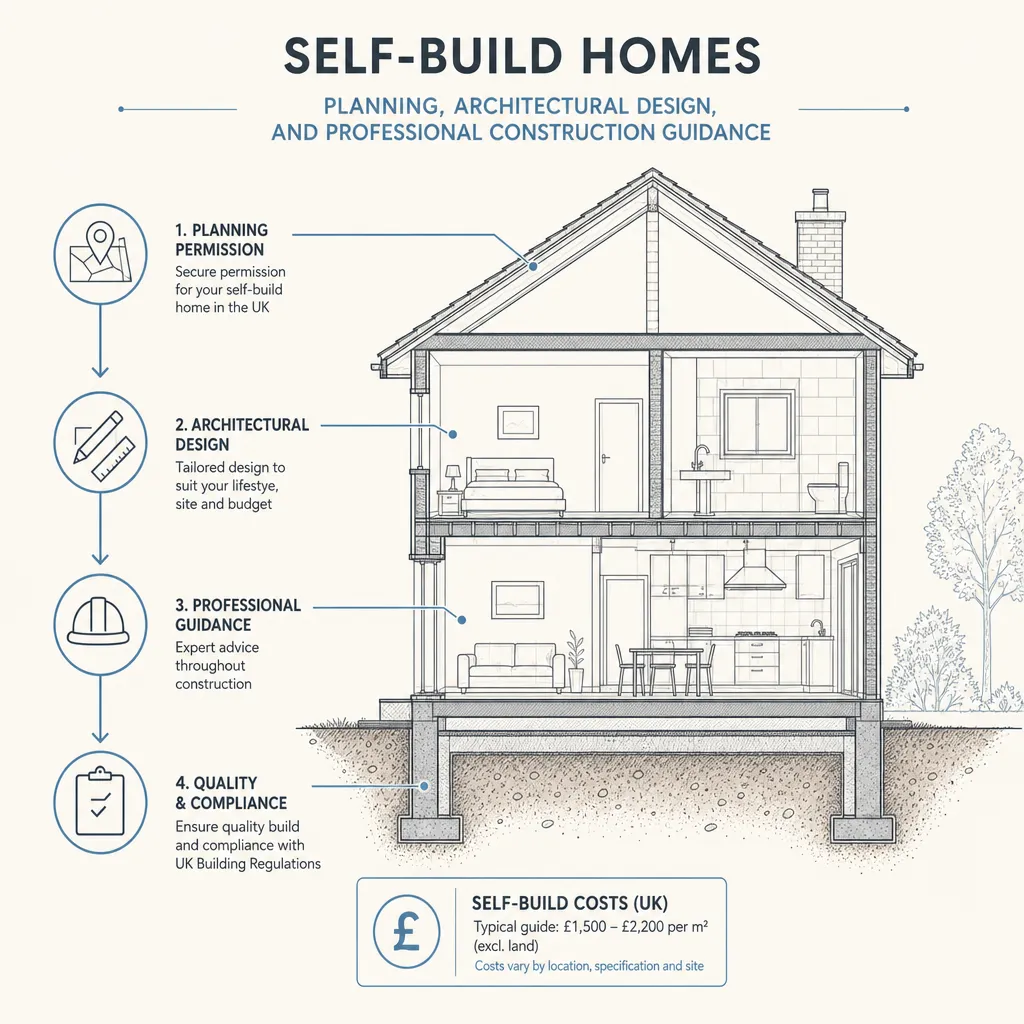
Self-build homes: planning, architectural design, and professional construction guidance
Building your own home in the UK is one of the most ambitious property projects a homeowner can undertake. It typically arises when buyers cannot find an existing property that meets their needs, or when land becomes available — whether purchased on the open market, inherited, or identified through a council's Self-Build Register. What is at stake is significant: a poorly managed self-build can run 20–30% over budget, stall at planning, or fail building regulations inspections that are difficult and costly to remedy retrospectively.
Key points
- The Self-Build and Custom Housebuilding Act 2015 places a legal duty on councils in England to maintain a register of people seeking self-build plots and to grant sufficient development permissions to meet that demand within three years.
- Self-build projects in England and Wales require full planning permission before any material operations begin — outline planning consent is not sufficient to start building.
- Building Regulations approval is separate from planning permission and covers structural integrity, fire safety, thermal performance (Part L), ventilation (Part F), and drainage (Part H); a registered building inspector or local authority building control body must sign off each stage.
- Indicative build costs range from approximately £1,500 to £3,000+ per square metre, excluding land and professional fees — a 150 m² home could therefore cost £225,000–£450,000 in construction costs alone. Indicative UK costs, last reviewed 2026-05-07.
- Self-builders in England can reclaim VAT on eligible new-build construction costs under HMRC's DIY Housebuilders Scheme (VAT431NB), potentially saving tens of thousands of pounds.
What is a self-build and what types exist?
A self-build is any project where the owner plays a significant role in commissioning, designing, and/or building their own home. It does not necessarily mean physically laying bricks — most self-builders hire contractors. The National Custom and Self Build Association (NaSBA) recognises several distinct routes:
Route | Description | Best for | Typical professionals needed |
|---|---|---|---|
Full self-build | Owner manages every aspect, often using sub-contractors directly | Experienced project managers and tradespeople | Architect, structural engineer, building control, project manager |
Design and build | Package company provides design, build, and often finance | First-time self-builders wanting a single point of contact | Package company (verify credentials), architect for bespoke elements |
Custom build | Developer provides a serviced plot; owner designs the home | Buyers wanting support with land and infrastructure | Architect or architectural technologist, building control |
Contractor-led | Owner appoints a main contractor who manages sub-contractors | Owners who want less day-to-day site involvement | Architect, main contractor, structural engineer |
Most self-builds in the UK fall into the full self-build or contractor-led category.
Planning permission for a self-build
Almost all self-build homes in England require full planning permission from the local planning authority (LPA). Outline planning permission establishes whether a site is acceptable in principle but does not permit you to build; reserved matters approval is still required before starting.
Key planning considerations:
- Greenfield vs brownfield: Planning authorities generally favour brownfield (previously developed) sites. Greenfield sites, particularly in the Green Belt, face significantly higher scrutiny.
- Design and materials: Many LPAs publish design guides or character assessments. An architect or planning consultant familiar with the local authority can substantially improve approval prospects.
- Ecology and drainage: If the site has any ecological interest — ponds, hedgerows, bat roosts — a pre-application ecology survey may be required before submission. Sustainable drainage systems (SuDS) are increasingly required by planning conditions.
- Community Infrastructure Levy (CIL): Self-build projects may be eligible for CIL exemption. Submit the exemption form to your LPA before commencing development — it cannot be applied retrospectively.
An architectural technologist can prepare technical planning drawings for more straightforward projects; a full architect or planning consultant is advisable where site constraints, design complexity, or local policy make approval uncertain.
Building regulations: a separate process
Planning permission and building regulations approval are entirely different consents. You need both before building can lawfully proceed.
Building regulations cover:
- Structure (Part A): Foundation design, wall and roof structure — requires input from a structural engineer.
- Fire safety (Part B): Means of escape and fire resistance of structural elements.
- Thermal performance (Part L): Insulation levels, air permeability, and the SAP energy calculation.
- Ventilation (Part F): Background ventilation and mechanical extract systems.
- Drainage and waste (Part H): Foul and surface water disposal.
Under the Building Safety Act 2022, building control professionals must be registered with the Building Safety Regulator (BSR). A building control consultant or registered building inspector will carry out stage inspections — foundations, damp-proof course, floor and roof structure, and final sign-off. Never cover up structural or drainage work before a stage inspection has been completed.
The professional team you will need
Most self-builds require some combination of the following professionals. The exact team depends on project complexity, procurement route, and your own involvement.
Which professional do I need? A decision guide:
- Appoint an architect if your project involves complex design, unusual site constraints, a conservation area or listed building setting, or if you want comprehensive design and contract administration services throughout the project.
- Appoint an architectural technologist if you need detailed technical drawings for planning and building regulations on a more straightforward new build, without full architectural design services.
- Appoint a structural engineer if your project involves any loadbearing elements, retaining walls, unusual foundation conditions, or sloped sites — which covers virtually all new-build homes.
- Appoint a building control consultant or registered building inspector to manage your building regulations application and carry out stage inspections throughout the build.
- Appoint a project manager if you are procuring directly using sub-contractors rather than a design-and-build package company and want professional oversight of programme, cost, and quality.
- Appoint a civil engineer if your site has significant drainage challenges, requires road access adoption, involves substantial earthworks, or has known contamination.
Self-build costs: what to budget for
Self-build costs are highly variable. The table below provides a simplified breakdown; always obtain itemised quotes for every package.
Cost category | Typical proportion of total | Notes |
|---|---|---|
Land purchase | 30–50% of total project cost | Varies enormously by region |
Professional fees | 10–15% of build cost | Higher for complex or unusual sites |
Planning and statutory fees | 1–3% | Includes application fees, ecology, drainage strategy reports |
Build cost (structure to watertight) | 40–55% | Per-m² rates vary by specification and region |
Fit-out (kitchens, bathrooms, finishes) | 15–25% | High variation by specification choice |
Contingency | Minimum 15–20% | Essential; most self-builds encounter unforeseen costs |
Indicative UK costs, last reviewed 2026-05-07. All figures are approximate and vary significantly by location, specification, and prevailing market conditions. Obtain at least three itemised quotes for all major packages before committing.
Homeowner checklist: before you appoint professionals
Important limitations
This article provides general information about the self-build process in England and Wales. Planning policy, building regulations, and local authority requirements vary considerably by site, location, and project type. Nothing in this article constitutes planning advice, structural engineering advice, legal advice, or a substitute for professional assessment of your specific site and circumstances.
Self-build projects involving listed buildings, conservation areas, Sites of Special Scientific Interest (SSSIs), Green Belt land, or sites with known contamination or structural complications require specialist professional input that goes beyond the scope of this guide.
What to ask a qualified professional
Before appointing any professional for your self-build, ask:
- What is your experience with self-build projects of a similar scale and construction type?
- Are you a member of RIBA, CIAT, CIOB, or another recognised professional body, and do you carry professional indemnity insurance?
- What is included in your fee — does it cover the planning application, building regulations drawings, and site stage inspections?
- How do you charge: fixed fee, percentage of build cost, or hourly rate, and what does each project phase cost?
- Who will personally carry out the work — will you delegate to junior staff or a sub-consultant?
- What happens if planning permission is refused — is a revision or appeal fee included in your scope?
- Can you provide references from previous self-build clients with a comparable project type and scale?
When to get professional help
Involve a qualified professional before any of the following:
- Purchasing a plot: Get a structural engineer's opinion on ground conditions and an architect's view on planning prospects before exchanging contracts.
- Submitting a planning application: Applications without professional drawings have significantly lower approval rates for new-build dwellings.
- Beginning any construction: No groundworks, demolition, or construction should start without an approved planning permission and a building regulations application in place.
- Encountering unexpected site conditions: Contaminated land, underground water, unexpected existing foundations, or archaeological remains all require specialist assessment before proceeding.
Red flags requiring immediate professional attention:
- Cracks appearing in neighbouring buildings or boundary walls following any groundworks.
- Signs of waterlogging or standing water emerging on site.
- A planning enforcement notice served by the LPA.
- A building control stage inspection that is failed or deferred.
How Housey can help
Whether you are at the very start of a self-build project or ready to appoint your professional team, Housey can connect you with qualified architects, structural engineers, architectural technologists, project managers, building control consultants, and civil engineers with experience in UK self-build projects. Request quotes from multiple professionals to compare approach and fees before committing.
Frequently asked questions
Do I always need planning permission for a self-build?
Almost always, yes. New dwellings in England require full planning permission from the local planning authority. Permitted development rights apply to extensions and alterations to existing buildings, not to the construction of new homes. A small number of exceptions exist, such as some agricultural conversions, but these require their own consents. Always check with your LPA before starting any work.
How long does a typical self-build take from start to finish?
A realistic timeline in the UK — from securing a plot to moving in — is typically two to four years. Pre-application work and planning can take 6–12 months; building regulations approval 4–8 weeks; construction 9–18 months depending on size and specification. Custom build routes via a developer-provided serviced plot can be faster and are worth considering if timeline is a priority.
Can I get a mortgage for a self-build?
Yes, specialist self-build mortgages are available from a number of UK lenders. Unlike standard mortgages, funds are typically released in stages tied to construction milestones rather than as a lump sum. You will usually need a larger deposit — often 20–25% — and an agreed build cost schedule. Speak to a mortgage broker experienced in self-build finance before committing to land purchase.
What is the Self-Build Register and do I need to join it?
Under the Self-Build and Custom Housebuilding Act 2015, every local authority in England must maintain a register of individuals seeking self-build plots and grant sufficient planning permissions to meet demand within three years. Joining is free and signals demand to the council. It does not guarantee a plot, but is worth registering if you are actively seeking land in a particular area.
Can I reclaim VAT on self-build construction costs?
Self-builders in England, Scotland, and Wales constructing a new home may reclaim VAT on eligible materials and services under HMRC's DIY Housebuilders Scheme (form VAT431NB). The claim must be submitted within three months of the building control completion certificate being issued. VAT cannot be reclaimed on professional fees or on items not permanently incorporated into the building.
Sources and further reading
- Self-build and custom housebuilding: local authority duties — GOV.UK
- Planning Portal: planning permission for new dwellings — Planning Portal
- VAT431NB: VAT refunds for DIY housebuilders — HMRC / GOV.UK
- Approved Documents: Building Regulations guidance — GOV.UK / MHCLG
- Building Safety Act 2022: overview — GOV.UK
- National Custom and Self Build Association (NaSBA) — NaSBA
Useful next reads
 Planning & Pre-Build
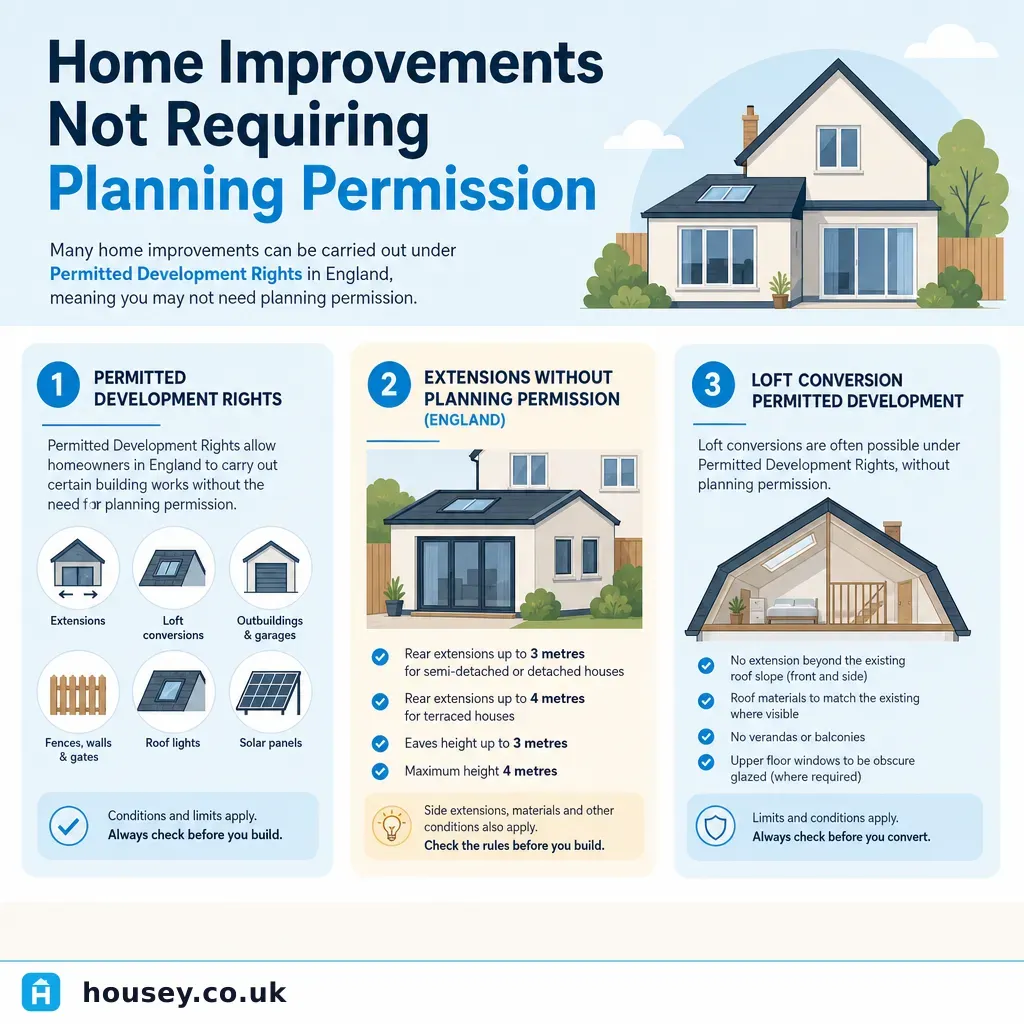
Home Improvements Not Requiring Planning Permission
Many common home improvements in England fall under Permitted Development Rights and do not require a planning application.
 Planning & Pre-Build
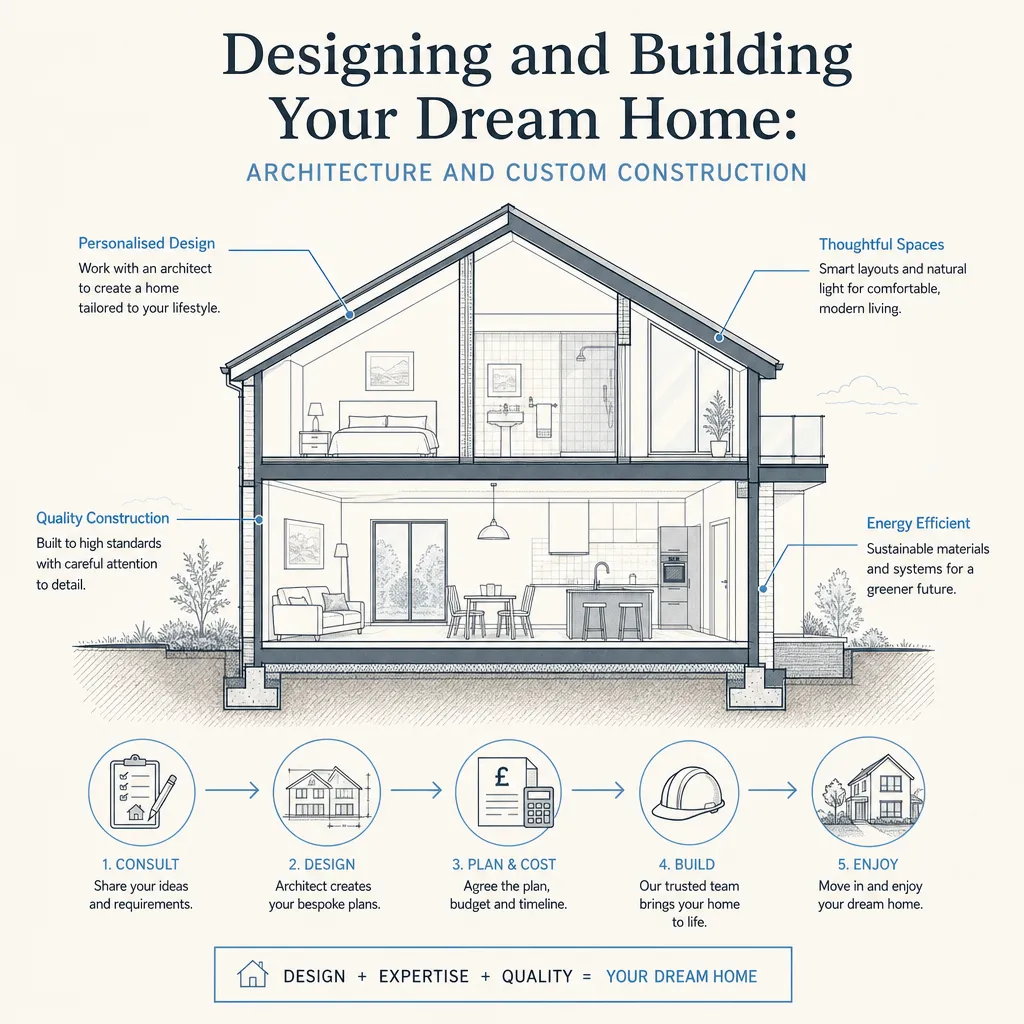
Designing and Building Your Dream Home: Architecture and Custom Construction
Building a custom home in the UK involves a RIBA eight-stage design process, full planning permission — permitted development does not apply to new dwellings — and a team that typically includes an architect, architectural technologist, structural engineer, and project manager.
 Planning & Pre-Build
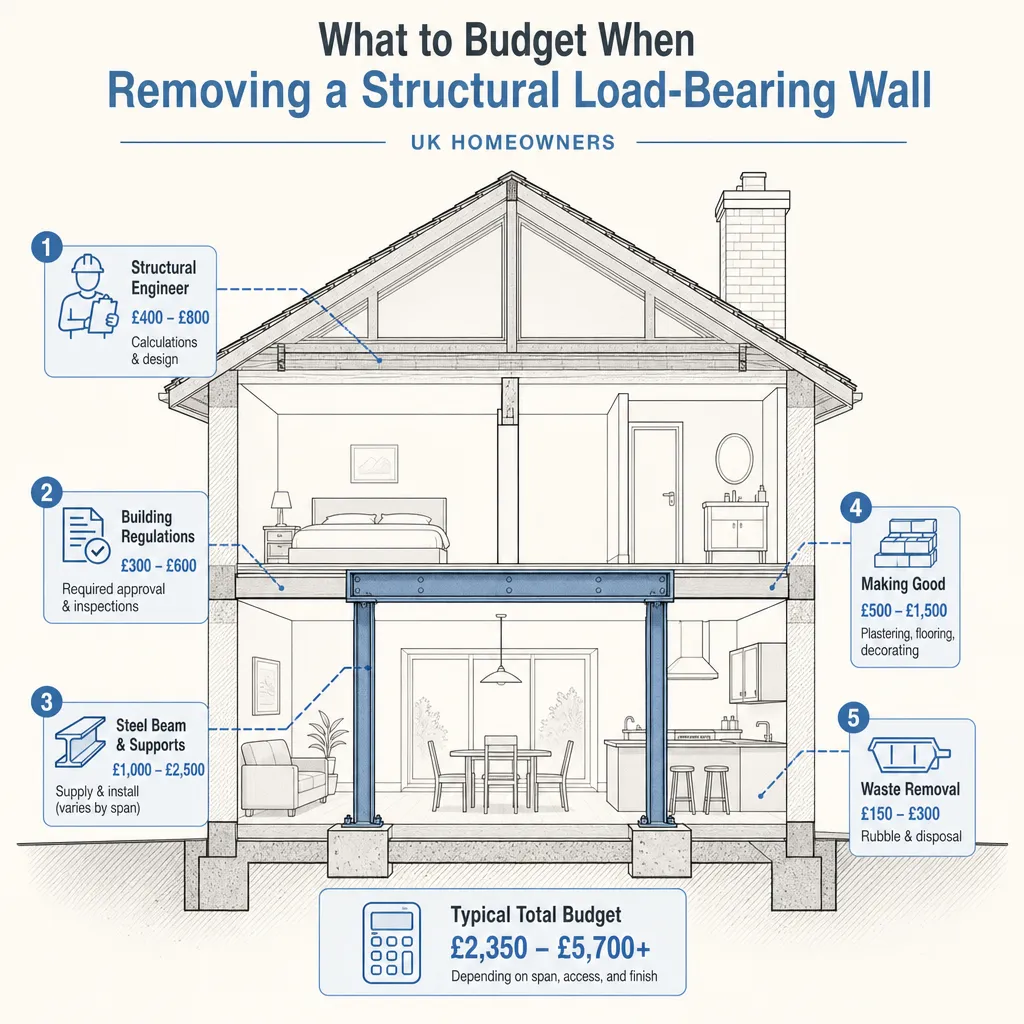
What to Budget When Removing a Structural Load-Bearing Wall
Removing a load-bearing wall in a typical UK home costs £2,500–£8,000 or more in total, covering a structural engineer's calculations, Building Regulations approval, the steel beam, builder's labour, and replastering.
 Planning & Pre-Build
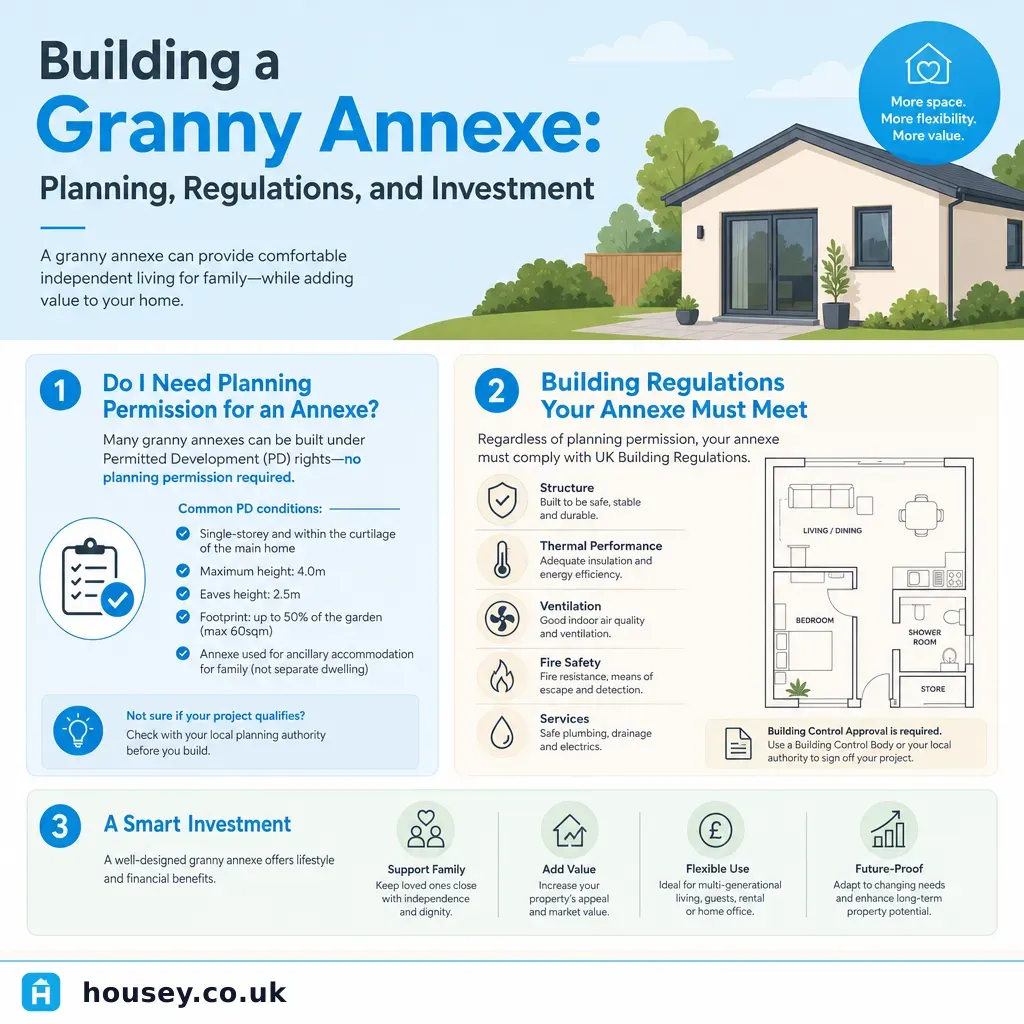
Building a Granny Annexe: Planning, Regulations, and Investment
A granny annexe in the UK may or may not need planning permission depending on whether it is classed as incidental to the main house or as a separate dwelling.
 Planning & Pre-Build
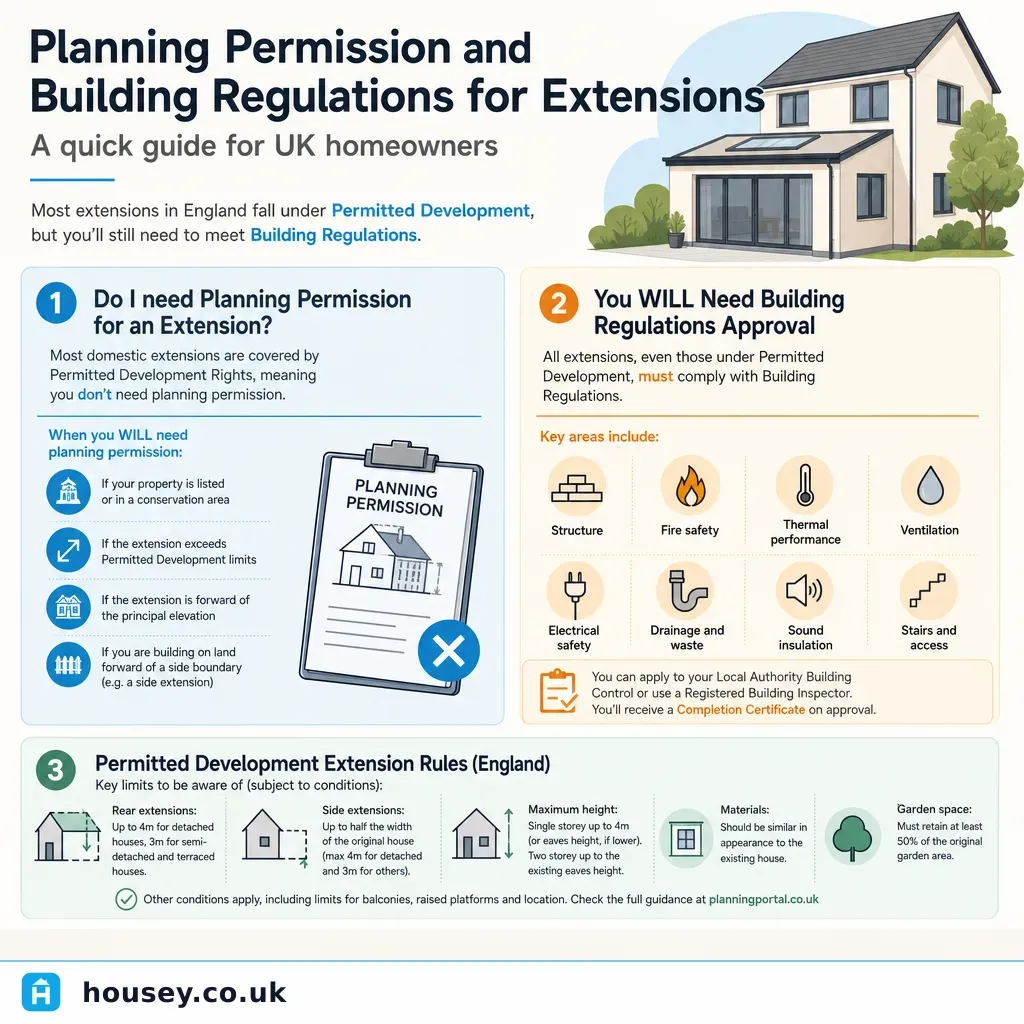
Planning Permission and Building Regulations for Extensions
UK home extensions usually require both planning permission and Building Regulations approval, though most smaller rear extensions qualify as Permitted Development under the GPDO 2015 and need no planning application.