Cost of Building a Wrap-Around Porch Extension in the UK
By Housey · Last reviewed 19th of May 2026
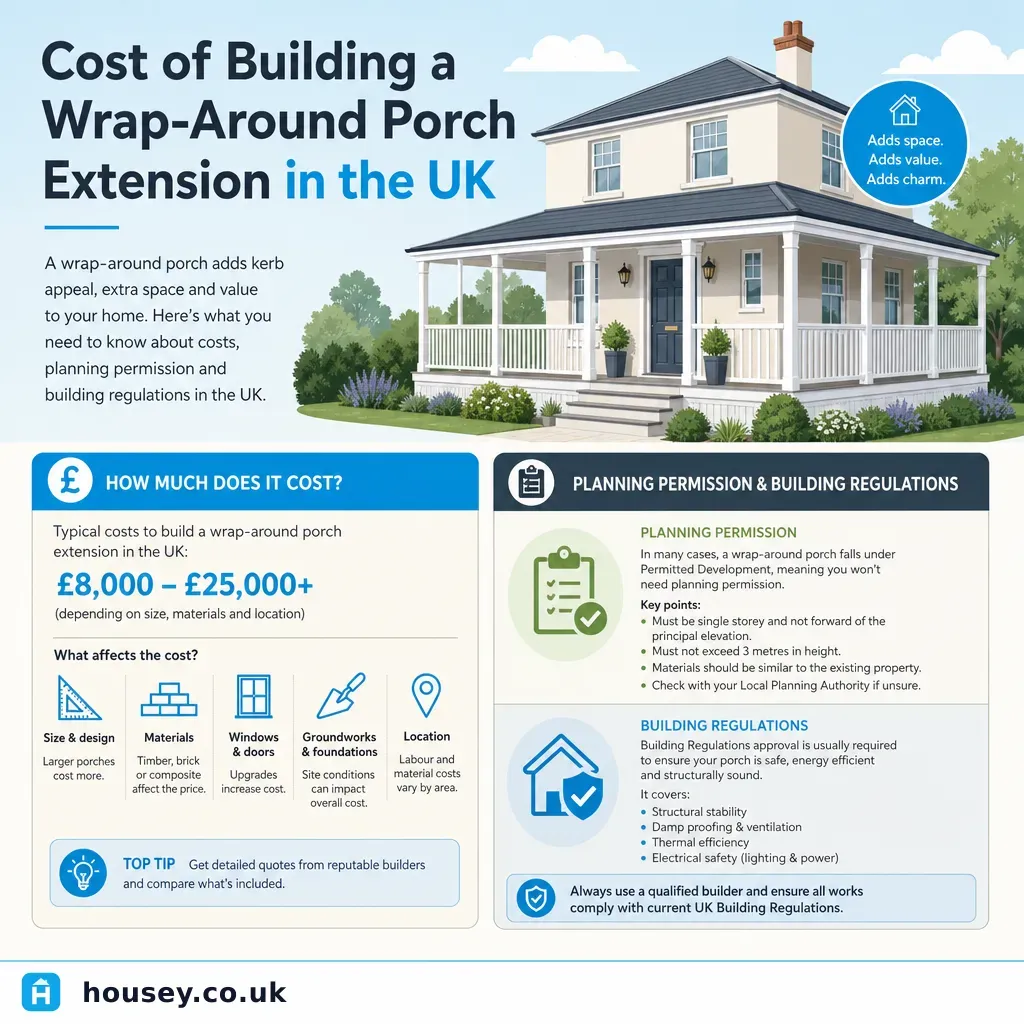
Cost of Building a Wrap-Around Porch Extension in the UK
A wrap-around porch is one of the more ambitious additions to a UK home — extending across the front elevation and along at least one side, it significantly changes the character and usable footprint of a property. Homeowners typically explore this option when renovating a detached or semi-detached house, adding covered outdoor living space, or improving weather protection at the main entrance. Getting the cost and regulatory picture clear before approaching builders avoids expensive redesigns and programme overruns.
Key points
- Indicative costs for a wrap-around porch extension range from £15,000 to £50,000+, depending on size, materials, and regional labour rates; indicative UK costs, last reviewed 2026-05-19.
- Most wrap-around porch designs exceed the 3m² floor area limit for porch permitted development rights under Class D of the Town and Country Planning (General Permitted Development) (England) Order 2015, making a full householder planning application likely.
- Building Regulations Part A (structure), Part C (moisture), and Part L (energy efficiency) typically apply to new porch extensions; approval must be obtained before work starts.
- On a listed building or in a conservation area, additional consents — listed building consent or satisfaction of conservation area policies — may be required alongside planning permission.
- A structural engineer is often needed where the porch design involves alterations to the existing wall, lintel, or roof junction at the connection point with the main building.
What does a wrap-around porch actually involve?
Unlike a simple entrance canopy, a wrap-around design covers the front elevation and extends along one or both sides of the house. In UK residential construction this typically includes:
- A concrete slab or timber suspended floor structure, usually with a damp-proof membrane
- A timber or steel frame with glazed or solid infill panels
- A lean-to, flat, or pitched roof tied into the existing building at eaves or wall level
- Guttering, downpipes, and drainage connections
- New electrical circuits for lighting and sockets if specified
- Possible alteration of existing windows, doors, or masonry openings
The combination of roofline connections, structural ties to the existing building, and potential drainage alterations makes this significantly more complex than a standard front-door porch.
How much does a wrap-around porch extension cost?
Costs vary considerably by size, materials, ground conditions, and region. The following are indicative ranges; obtain at least three detailed quotes from qualified builders before committing.
Specification | Indicative cost range | Notes |
|---|---|---|
Timber frame, flat EPDM roof, basic glazing | £15,000–£25,000 | Modest specification; typically 15–25m² footprint |
Timber or steel frame, pitched tiled roof, quality glazing | £25,000–£40,000 | Matches main house roofline; 20–35m² footprint |
Full brick or rendered blockwork, pitched roof | £35,000–£55,000+ | Permanent construction; heavier build |
Listed building or conservation area specification | Add 20–40% | Traditional materials, specialist joinery, additional consents |
Indicative UK costs, last reviewed 2026-05-19. Excludes planning application fees (currently £258 for a householder application in England), Building Regulations fees (varies by local authority), structural engineering fees (typically £500–£1,500 for a residential project), and VAT at 20%.
Key cost drivers include:
- Size: more floor area and roofline length directly increases materials and labour.
- Roof type: a pitched tiled roof matching the main house costs more than a flat or lean-to roof but typically adds longevity and character.
- Glazing specification: bespoke timber-framed glazing costs significantly more than standard uPVC or aluminium systems.
- Ground conditions: poor bearing capacity or a sloping site may require deeper or more complex foundations.
- Region: labour rates in London and the South East are typically 20–40% higher than in other parts of England and Wales.
Planning permission and Building Regulations
Permitted development limits
Under Class D of the Town and Country Planning (General Permitted Development) (England) Order 2015, porches may be built without planning permission only if:
- The ground floor area (measured externally) does not exceed 3m²
- The structure is no more than 3m in height
- No part of the porch is within 2m of a boundary forming part of a highway
A wrap-around design almost always exceeds 3m², making a householder planning application necessary. The current fee in England is £258 (as of 2026); fees differ in Wales, Scotland, and Northern Ireland.
Building Regulations
Building Regulations approval is required for most porch extensions. Parts that typically apply:
- Part A: structural stability of the new structure and any alterations to the existing building
- Part C: resistance to moisture, including damp-proof course continuity and roof drainage
- Part L: thermal performance of new walls, roof, and glazing
- Part P: electrical safety where new circuits are installed
Submit a full plans application or building notice to your local authority building control (LABC) or an approved inspector before work begins.
Listed buildings and conservation areas
If your property is listed, listed building consent is required for any external alteration, in addition to planning permission. In a conservation area, the local planning authority will scrutinise materials and design carefully; clay tiles, painted hardwood, and traditional glazing bars are more likely to gain consent than modern uPVC alternatives.
Worked UK property scenario
Scenario: A homeowner in a 1930s semi-detached property in a Midlands market town wants a wrap-around porch across the front and left-side elevation. The proposed structure is 28m², timber frame with a pitched clay-tiled roof to match the existing house and part-glazed painted hardwood panels.
- Planning: the 28m² footprint exceeds the 3m² permitted development limit; a householder application is submitted. The conservation area designation means the local planning authority scrutinises materials — clay tiles and painted hardwood are specified accordingly.
- Building Regulations: a full plans application is submitted. A structural engineer confirms the roof tie-in detail and specifies a new lintel over the widened door opening.
- Cost: three quotes range from £31,000 to £42,000 excluding VAT. The lowest quote omits the conservation-area joinery specification. The middle quote (£36,000 ex-VAT) meets the full specification and is accepted.
- Timeline: eight weeks from planning approval to practical completion.
What to ask before accepting a quote
- Does the quote include planning application preparation and fees, or is this priced separately?
- Who will submit the Building Regulations application, and is this included in the price?
- Is VAT included? Standard-rated at 20% for most residential construction work.
- What foundation specification is assumed, and what happens if ground conditions differ on site?
- What warranty is provided for the roof structure and weatherproofing?
- Who is responsible for making good internal finishes at the junction with the existing building?
- What qualifications and accreditations does the contractor hold, and can references be provided?
Important limitations
This article provides general information about wrap-around porch extensions in England. Planning rules, Building Regulations requirements, and associated fees vary by property type, local authority, and individual design. Rules for listed buildings and conservation areas are particularly site-specific. A qualified architect, planning consultant, or experienced builder should review your proposed design before any work is commissioned.
What to ask a qualified professional
Before instructing a builder or architect:
- Does this design fall within permitted development, or is a full planning application needed for my specific property and location?
- Is a structural engineer required for the roof connection, foundation specification, or any alteration to existing openings?
- Which Building Regulations applications are needed, and will you manage the submission process?
- Are there any Article 4 Directions, conservation area policies, or listed building constraints that affect the proposed design?
- What is your experience with comparable projects in this area and property type, and can you provide references?
When to get professional help
Seek professional input — from an architect, planning consultant, or qualified builder — before committing to any design or accepting quotes if:
- Your property is listed or in a conservation area.
- The proposed structure shares or adjoins a party wall (the Party Wall etc. Act 1996 may apply).
- The roofline connection requires removing or altering structural elements of the existing building.
- You are uncertain whether permitted development applies to your specific property.
How Housey can help
Housey can connect you with experienced extension builders who regularly work on porch additions and understand the planning and Building Regulations process in your area. Getting the specification and consent pathway right from the outset helps avoid costly redesigns and programme delays.
Frequently asked questions
Does a wrap-around porch need planning permission?
In most cases, yes. Permitted development rights for porches are limited to structures of 3m² or less, no more than 3m in height, and not within 2m of a highway boundary. A wrap-around design almost always exceeds the 3m² limit, so a householder planning application will typically be required. Check with your local planning authority if you are uncertain about your specific property.
How long does it take to build a wrap-around porch?
Once planning permission and Building Regulations approval are in place, construction of a timber-frame or brick wrap-around porch typically takes 4–10 weeks depending on size and specification. Allow 8–13 weeks for the planning process if a householder application is needed, though timescales vary by local authority.
What materials are commonly used for a wrap-around porch in the UK?
Common choices include timber framing with clay or concrete tile roofing to match the main house, uPVC or aluminium glazing systems, and brick or rendered blockwork for the base. Conservation area properties often require traditional materials — painted hardwood joinery, clay plain tiles, and heritage-style glazing bars — to gain planning consent.
Do I need Building Regulations approval for a porch extension?
Yes, in almost all cases. Building Regulations Part A (structure), Part C (moisture), Part L (energy efficiency), and Part P (electrical work, if applicable) are likely to apply to a wrap-around porch. Submit a full plans application or building notice to your local authority building control before work starts.
Sources and further reading
- Planning permission: when you need it — GOV.UK
- Permitted development rights for householders: technical guidance — GOV.UK / DLUHC
- Building regulations approval — GOV.UK
- Party Wall etc. Act 1996: guidance — GOV.UK
Useful next reads
 Improvement & Build
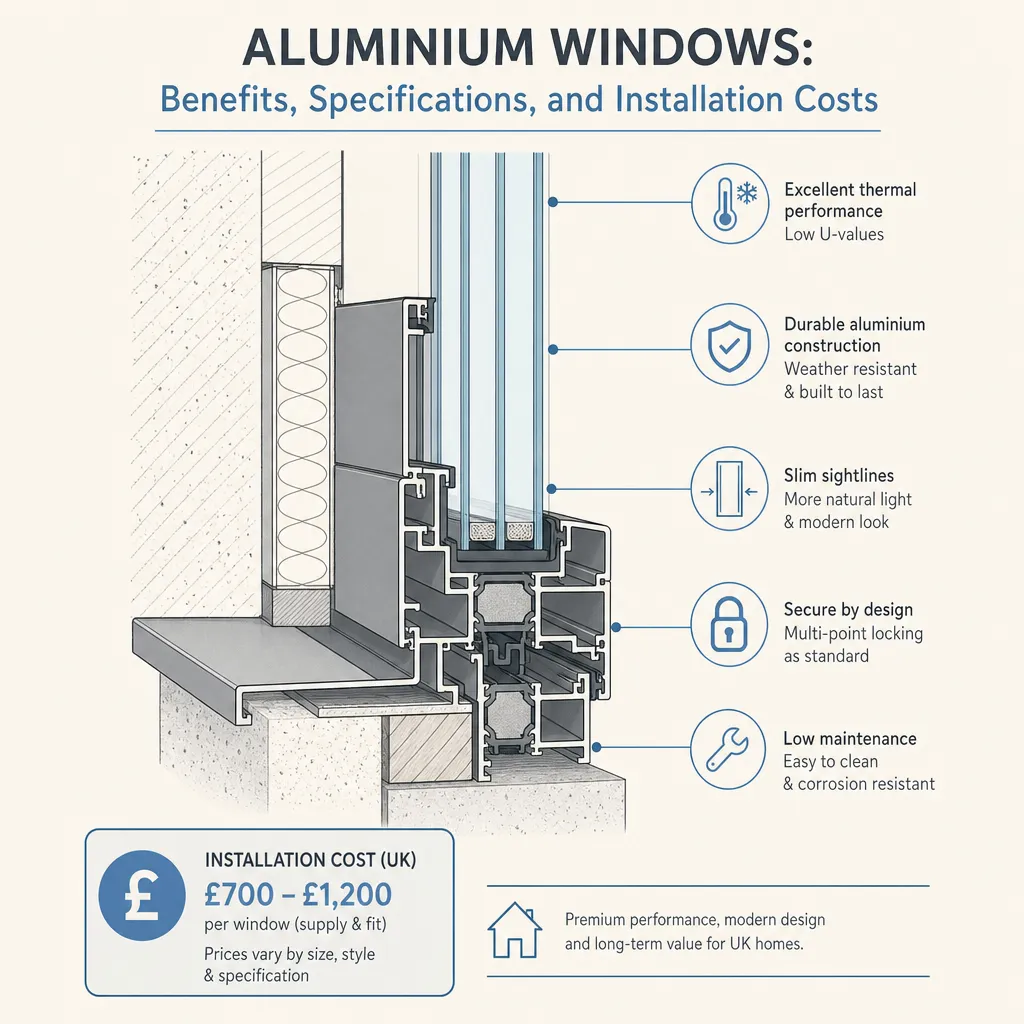
Aluminium Windows: Benefits, Specifications, and Installation Costs
Aluminium windows typically cost £600–£1,800 per window installed in the UK, depending on size and specification.
 Improvement & Build
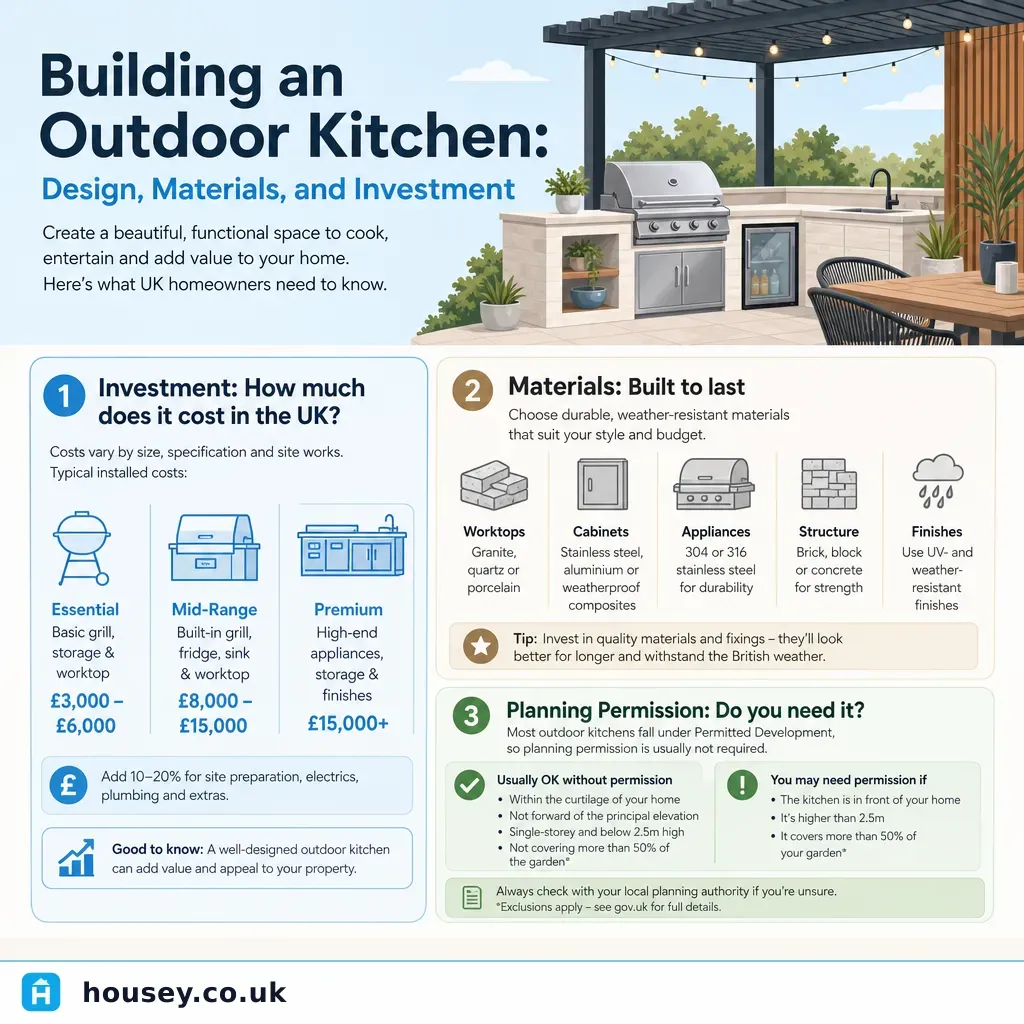
Building an Outdoor Kitchen: Design, Materials, and Investment
Building an outdoor kitchen in the UK costs roughly £3,000–£25,000 depending on size and materials.
 Improvement & Build
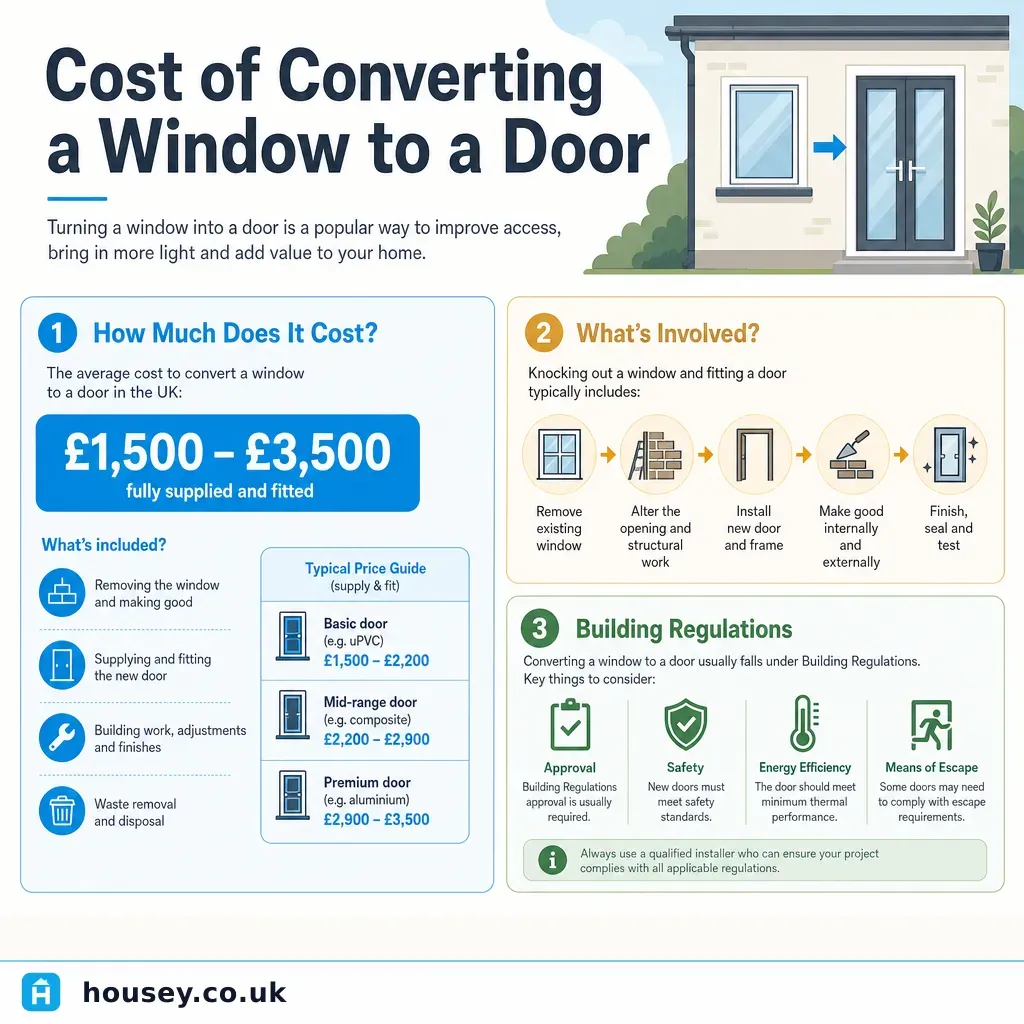
Cost of converting a window to a door
Converting a window to a door in the UK typically costs £1,500–£5,000 or more, depending on wall construction (cavity, solid, or timber frame), the type of door fitted, and whether a new or enlarged lintel is required.
 Improvement & Build
Cost of Wire Fence Installation in the UK
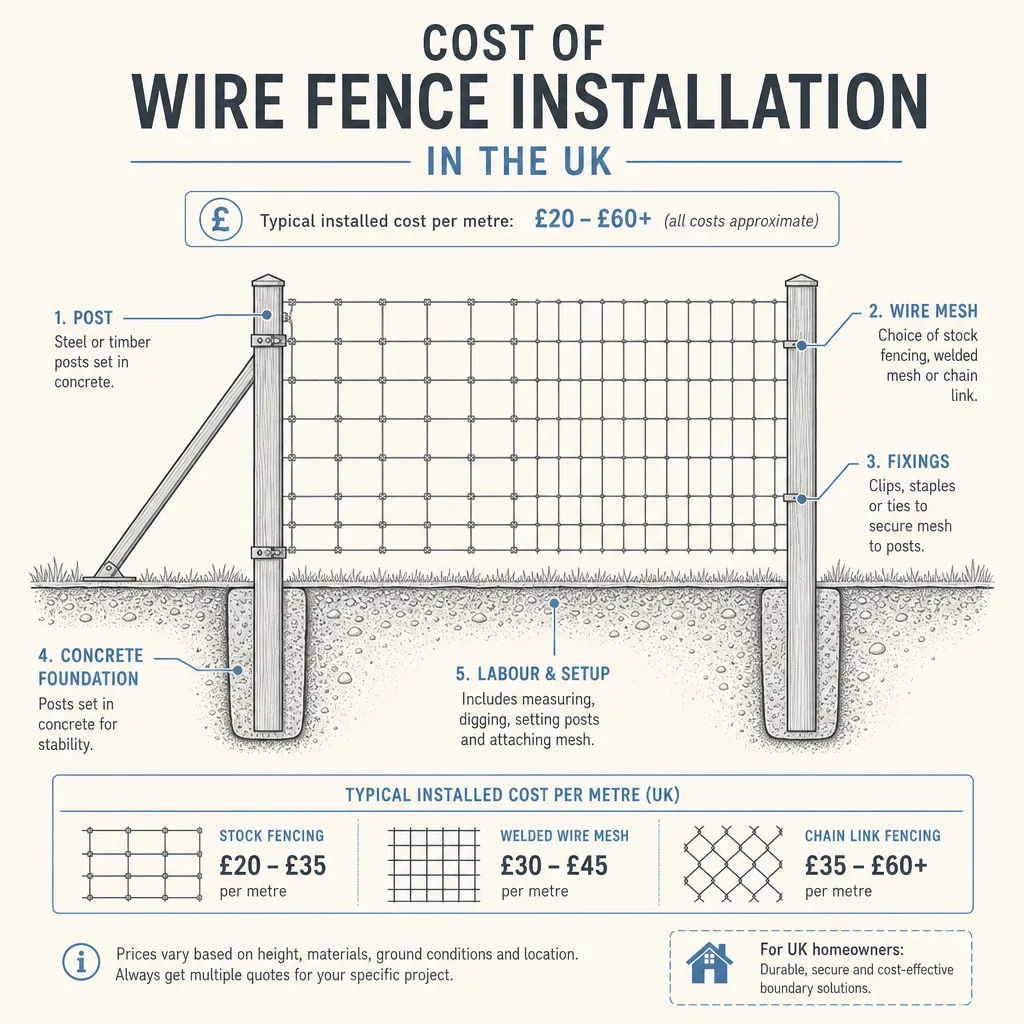
Wire fence installation in the UK typically costs £8–18 per metre for stock fencing, £15–35 per metre for chain-link, and £20–45 per metre for welded wire mesh panels, all installed.
 Improvement & Build
Laundry Room Renovation and Fitting Costs
A basic UK laundry room fit-out typically costs £2,000–£6,000 where plumbing and electrics are already in place, rising to £8,000–£15,000 or more when structural work, new drainage connections, or new electrical circuits are needed.