Fireplace Installation: Types, Costs and What UK Homeowners Need to Know
By Housey · Last reviewed 1st of June 2026
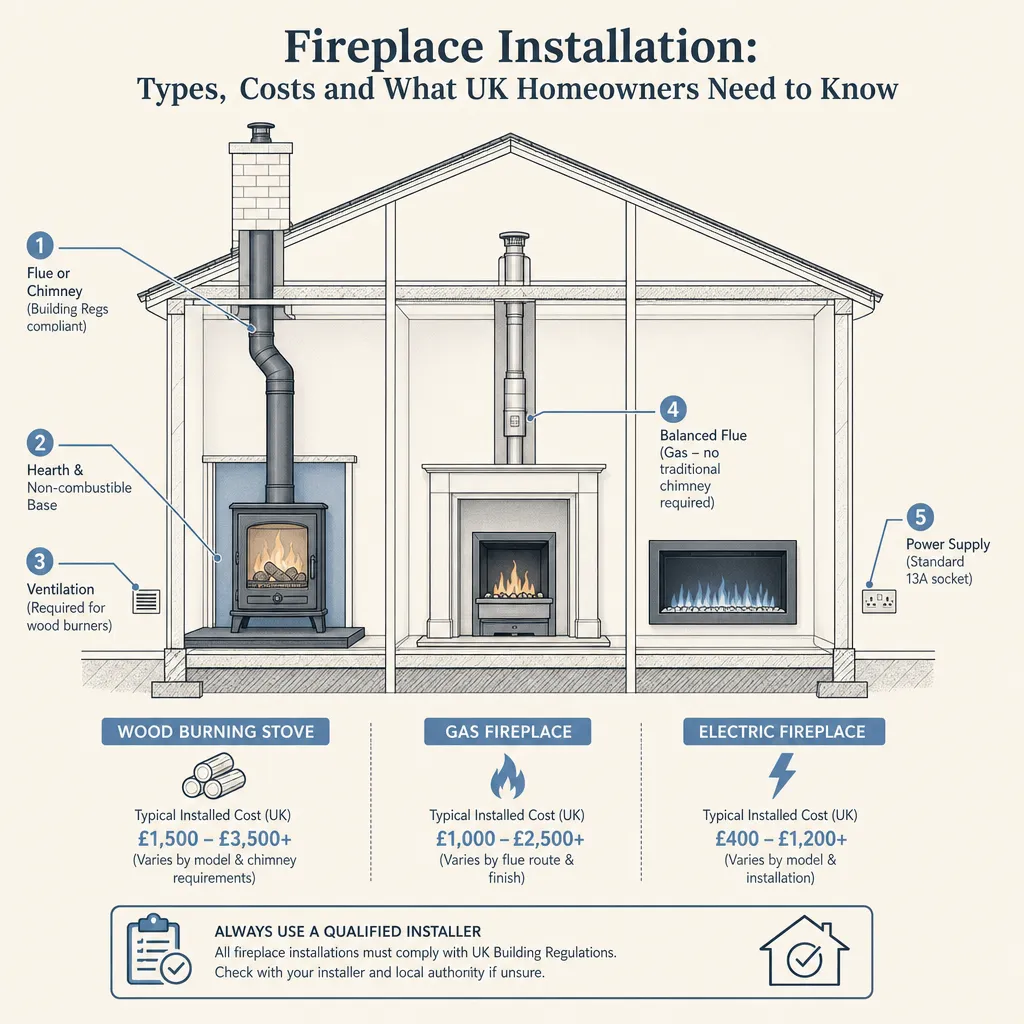
Fireplace Installation: Types, Costs and What UK Homeowners Need to Know
A fireplace or stove can add warmth, character, and supplementary heating to a UK home, but the installation process is subject to significant regulation — particularly for gas and solid fuel appliances. The right choice of appliance, installer, and compliance route depends on your property's chimney status, location, and any planning designations; an uncertificated installation can affect your home insurance and create problems at conveyancing.
Key points
- Gas fireplace installation must be carried out exclusively by a Gas Safe registered engineer; it is illegal for anyone else to install or commission a gas appliance in a UK home.
- Wood burning stoves and solid fuel appliances are governed by Building Regulations Part J (Combustion Appliances and Fuel Storage Systems); HETAS registered installers can self-certify, removing the need for a separate building control application.
- Smoke control areas (designated under the Clean Air Act 1993, extended by the Environment Act 2021) restrict which appliances and fuels may be used — you must use a Defra-exempt appliance or an authorised fuel.
- All solid fuel stoves sold as new in England must meet Ecodesign 2022 particle emission and thermal efficiency standards.
- A stainless steel chimney liner may be required for existing chimneys — typically adding £500–£1,500 to overall installation costs.
Which type of fireplace is right for your property?
- Choose an electric fireplace if your property has no chimney or flue, you live in a flat where flue installation is impractical, the property is listed and structural alterations are restricted, or you want a decorative feature with minimal regulatory involvement.
- Choose a gas fire (inset, balanced flue, or flueless) if you have a mains gas supply and want efficient supplementary heating. Balanced flue and flueless models can be installed where no chimney exists. Always instruct a Gas Safe registered engineer.
- Choose a wood burning or multi-fuel stove if you have a suitable chimney (or can install a flexible liner or twin-wall flue system), want an Ecodesign-compliant appliance, and are either outside a smoke control area or have selected a Defra-exempt stove for use within one.
- Choose open fireplace reinstatement if a blocked fireplace opening is to be restored; this requires a swept and inspected chimney, a new or extended hearth, and possibly a register plate or throat restrictor.
- Ask a HETAS or Gas Safe registered professional if you are unsure whether your chimney or flue is structurally sound, correctly dimensioned, or suitable for your intended appliance before purchasing anything.
- Check with your local planning authority if the property is listed or in a conservation area — external flue exits or chimney alterations may require listed building consent or planning permission.
Comparison of fireplace types
Type | Chimney required | Regulatory body | Self-certifiable | Indicative installed cost |
|---|---|---|---|---|
Electric fire or suite | No | None specific | N/A | £200–£1,800 |
Gas fire (existing class 1 or 2 flue) | Yes | Gas Safe Register | Yes (via Gas Safe) | £800–£3,500 |
Gas fire (balanced flue or flueless) | No | Gas Safe Register | Yes (via Gas Safe) | £800–£4,000 |
Wood burning stove (existing chimney) | Yes — may need liner | HETAS | Yes (via HETAS) | £2,000–£5,000 |
Wood burning stove (new twin-wall flue) | No — new system built | HETAS | Yes (via HETAS) | £3,500–£7,000+ |
Open fireplace reinstatement | Yes — needs survey | Building control or HETAS | Varies | £1,500–£6,000+ |
Indicative UK costs, last reviewed 2026-06-01. Costs vary significantly by property, region, and specification. Obtain at least three itemised quotes.
Building Regulations and compliance routes
Fireplace and stove installations in England and Wales are notifiable work under Building Regulations. Approved Document J sets out requirements for hearths, air supply, flues, and chimney construction. Part L (Conservation of Fuel and Power) also applies — replacement heating appliances must meet minimum efficiency standards.
Two routes to compliance:
- Registered competent-person scheme — HETAS (solid fuel, biomass), Gas Safe (gas), or OFTEC (oil). The installer self-certifies the work and notifies the local authority on your behalf. You receive a certificate of compliance, which is required at conveyancing.
- Local authority building control — submit a building notice or full plans application before work begins. An inspector verifies compliance after installation. This route is typically slower and more expensive.
An uncertificated installation can affect home insurance, complicate a mortgage application, and delay a sale. Buyers' solicitors routinely request Part J certificates.
Smoke control areas and Ecodesign 2022
If your property is in a smoke control area — covering most urban areas in England — you may only burn fuels authorised under the Clean Air Act 1993 (listed on GOV.UK), or use a Defra-exempt appliance certified for use in a smoke control area. Check the Defra smoke control area map or contact your local council to confirm whether your property is affected.
All solid fuel stoves sold as new in England since 2022 must meet Ecodesign 2022 standards for particle emissions and thermal efficiency. Second-hand appliances may not comply — your HETAS installer can advise whether a specific model is suitable for your area and location.
Chimney condition and lining
Before any solid fuel or gas appliance is connected to an existing chimney:
- A chimney sweep should clear and inspect the flue
- A CCTV flue survey may be recommended for older, longer, or suspect chimneys
- The flue must be correctly sized — cross-sectional area and height both affect draw and combustion safety
- A stainless steel flexible liner (typically 125 mm or 150 mm diameter for stoves) may be required if the existing flue is too large, deteriorated, or unlined
Chimney liner installation typically costs £500–£1,500 for a standard straight run; more for longer or complex routes. Quality stainless steel liners usually carry a 10-year manufacturer's warranty.
Red flags to watch for
- An installer not registered with Gas Safe, HETAS, or OFTEC for the relevant appliance type — gas installation by an unregistered person is illegal
- No mention of Building Regulations compliance in a quote for a gas fire or solid fuel stove
- A quote that omits a chimney survey — never accept an installation quote for a gas or solid fuel appliance without a confirmed flue inspection
- An appliance marketed as new in England without Ecodesign 2022 approval
- A hearth proposed below minimum dimensions — Part J specifies minimum hearth sizes depending on appliance output and type; ask your installer to confirm the specification before ordering materials
- No carbon monoxide alarm included — from 1 October 2022, Building Regulations Part J (England) requires a CO alarm in any room with a new or replacement fixed combustion appliance other than a gas cooker
Important limitations
This article provides general information about fireplace and stove installation in England and Wales. Regulations, planning requirements, and permitted chimney configurations vary by property type, local authority, conservation area designation, and listed building status. Nothing in this article constitutes legal, structural, or safety advice. A Gas Safe registered engineer must assess any gas appliance installation; a HETAS registered installer should survey your chimney before any solid fuel installation. Verify all regulatory requirements with your local authority building control or a registered competent person before committing to works.
When this becomes urgent
Seek immediate professional attention if:
- You smell gas near a fireplace or gas fire — ventilate the room, leave the building, and call the National Gas Emergency line: 0800 111 999
- Cracks in a chimney breast or stack are widening, or doors and windows nearby have started sticking — instruct a structural engineer before any fireplace work begins
- You suspect carbon monoxide poisoning (symptoms include headache, nausea, or confusion in a room with a combustion appliance) — call 999, evacuate, and do not re-enter until declared safe
- Your chimney has suffered a chimney fire (roaring sound, intense heat, or burning debris) — have the flue inspected by a registered sweep before the appliance is used again
What to ask a qualified professional
Before instructing any installer:
- Are you Gas Safe registered (for gas) or HETAS registered (for solid fuel)? May I verify your registration number on the scheme's public register?
- Will you carry out a full chimney or flue survey before providing a final quote?
- Is the appliance you are recommending Ecodesign 2022 compliant?
- Is my property in a smoke control area, and if so, is the appliance Defra-exempt?
- Will you self-certify the installation, or must I notify building control separately?
- Will I receive a certificate of compliance on completion?
- Is a carbon monoxide alarm included in your quote, and does it comply with Part J?
- What is included and excluded — hearth, surround, liner, register plate, flue collar, and completion certificate?
- Is VAT included?
- What could change the price or timeline once work begins?
When to get professional help
Beyond emergency situations, instruct a qualified professional before starting any fireplace project if:
- Your property is listed or in a conservation area — works may require listed building consent or planning permission in addition to building control compliance
- A chimney breast has been partially or fully removed in a previous renovation — structural assessment is essential before any reinstatement work
- You are buying a property with an existing stove or gas fire and have no compliance documentation — ask a HETAS or Gas Safe engineer to inspect before exchange of contracts
- You are unsure whether your room volume or air supply can safely support a solid fuel stove — Part J sets minimum requirements for air provision depending on appliance type and output
How Housey can help
Housey connects UK homeowners with vetted tradespeople for improvement and build projects. Submit a quote request on Housey to compare proposals from qualified fireplace installers, stove fitters, and chimney specialists in your area.
Frequently asked questions
Do I need planning permission to install a fireplace?
In most cases, installing a fireplace inside an existing property does not require planning permission. However, if the installation involves a new external flue or alterations to a chimney on a listed building or in a conservation area, listed building consent or planning permission may be required. Check with your local planning authority before work begins.
Can I install an electric fireplace myself?
Electric fireplaces typically do not require specialist installation — many plug directly into a standard 13A socket. Wall-mounted or inset models requiring a hardwired connection or dedicated spur need a Part P compliant electrician. No flue, chimney survey, or Building Regulations notification is required for a purely electric appliance.
What is a HETAS certificate and why do I need it?
A HETAS certificate confirms that a solid fuel or biomass appliance was installed by a HETAS registered installer and complies with Building Regulations Part J. Mortgage lenders and buyers' solicitors routinely request this certificate at conveyancing. Without one, you may need a retrospective building control inspection, which can be more costly and time-consuming to arrange.
How long does fireplace installation take?
An electric fire installation may take a few hours. A gas fire installation typically takes half a day to a full day. A wood burning stove installation with chimney lining usually takes one to two days, depending on the complexity of the flue run. Allow additional time if a new hearth needs to be built or extended.
Is a carbon monoxide alarm required by law for a new fireplace?
Yes, for new installations in England. Since 1 October 2022, Building Regulations Part J requires a carbon monoxide alarm in any room where a new or replacement fixed combustion appliance is installed, except gas cookers. Landlords have had additional CO alarm duties since 2015, extended in 2022 to cover gas as well as solid fuel appliances.
Sources and further reading
Useful next reads
 Improvement & Build
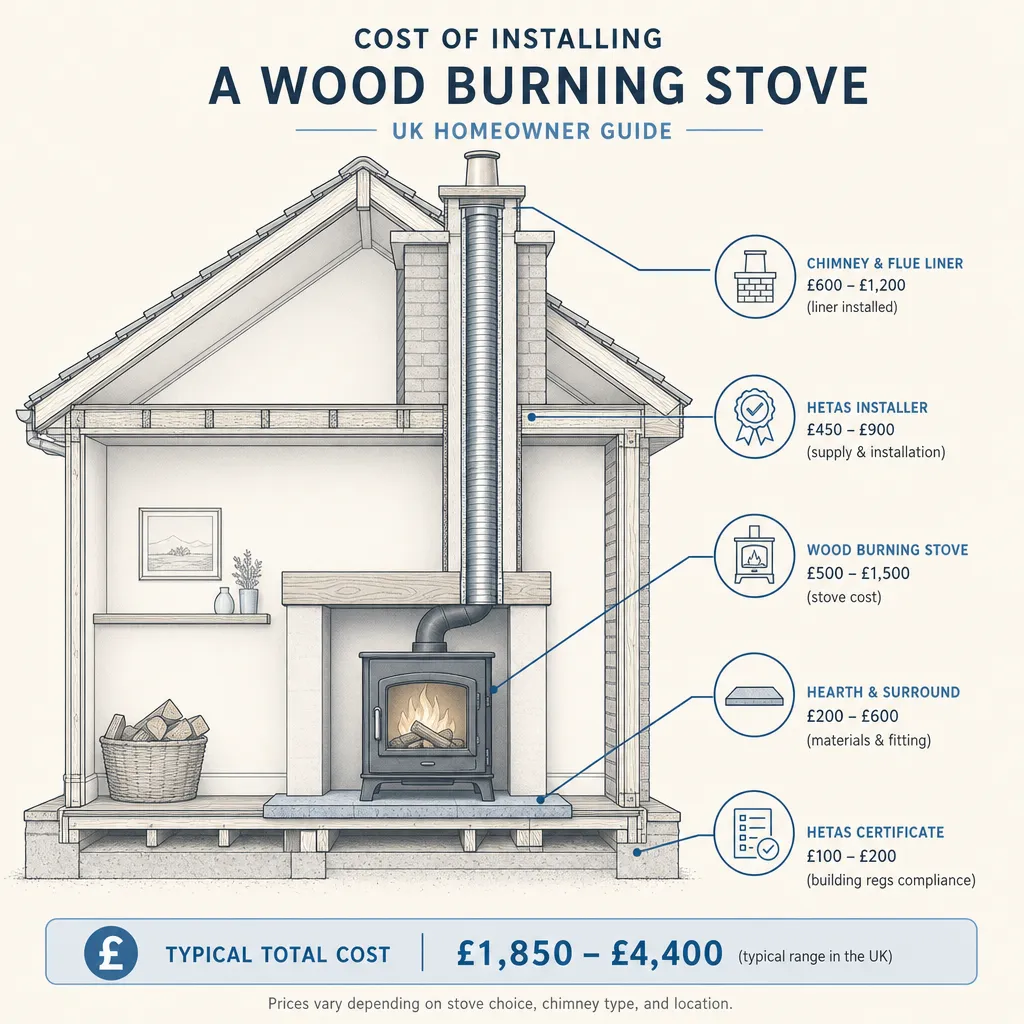
Cost of installing a wood burning stove
Installing a wood burning stove in the UK typically costs £2,000–£5,500 in total, covering the stove, flue liner, hearth, and HETAS-registered installation.
 Improvement & Build
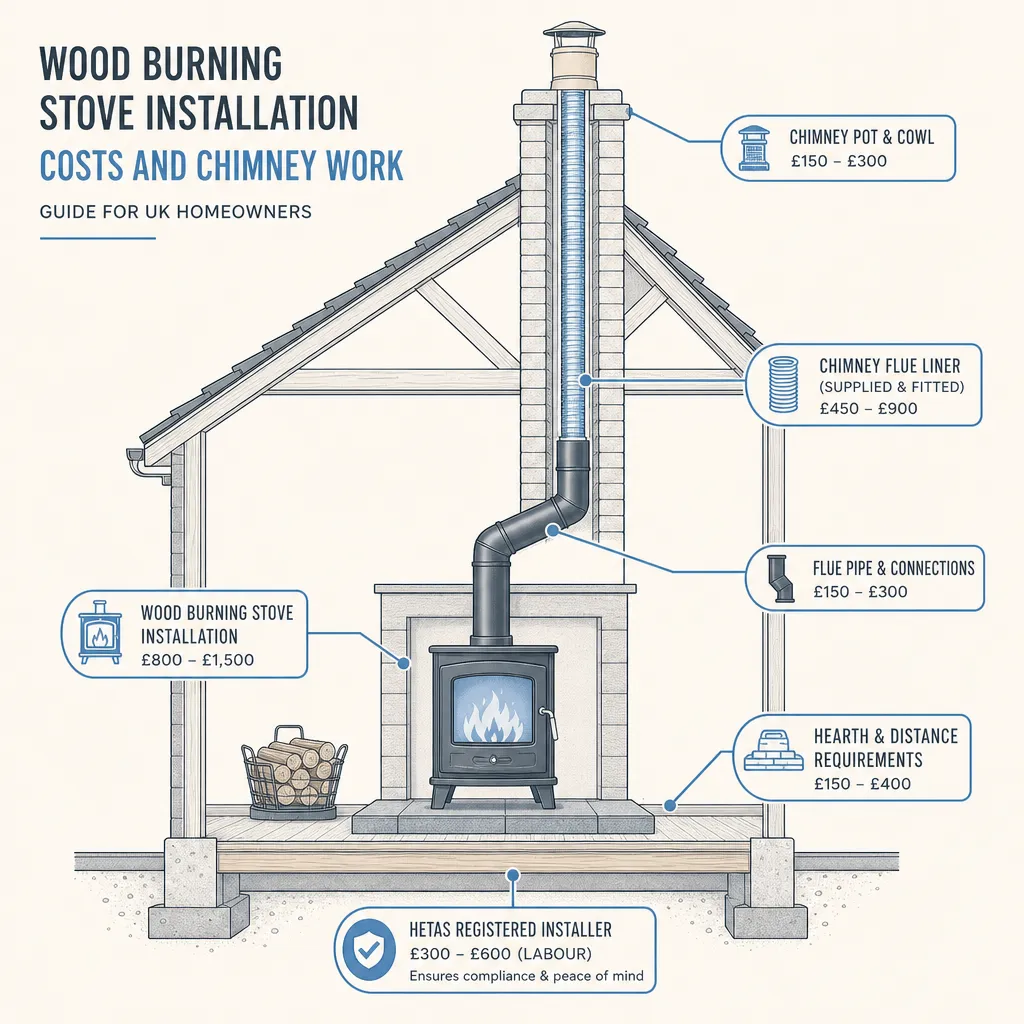
Wood Burning Stove Installation Costs and Chimney Work
Installing a wood burning stove in the UK typically costs £1,200–£3,500 all-in for an existing chimney — covering the stove, flexible liner, installation, and HETAS certificate — or £2,500–£6,000 or more where a new twin-wall flue is required.
 Improvement & Build
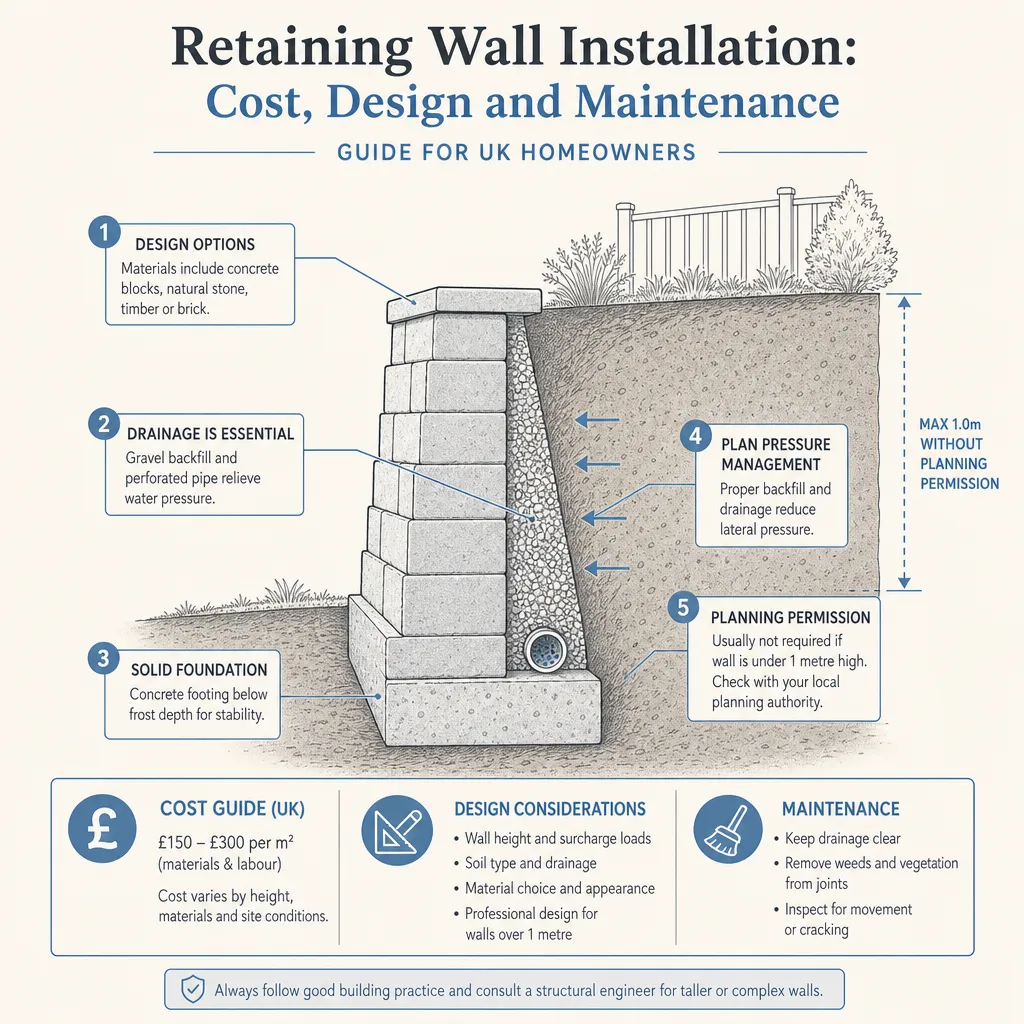
Retaining Wall Installation: Cost, Design and Maintenance
A retaining wall holds back soil on a sloped or banked site.
 Improvement & Build
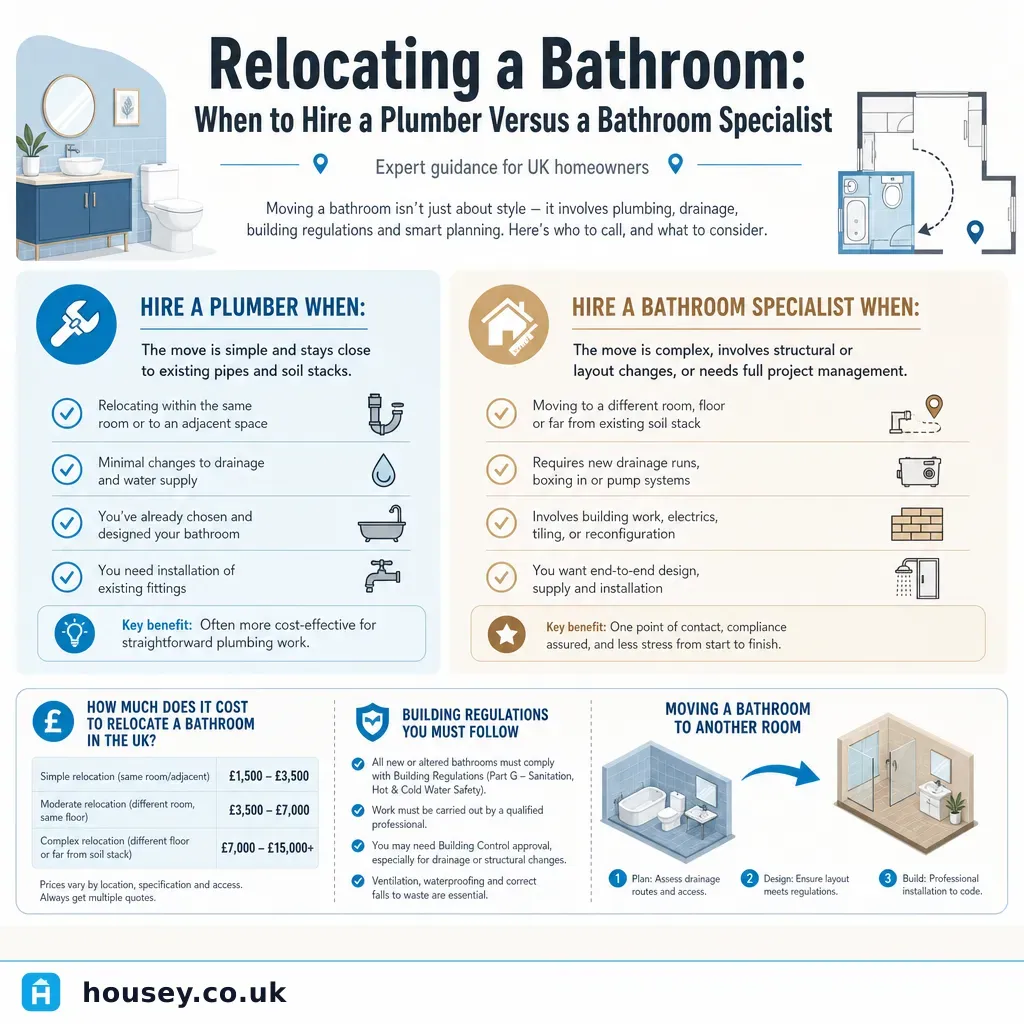
Relocating a Bathroom: When to Hire a Plumber Versus a Bathroom Specialist
Relocating a bathroom usually requires both a qualified plumber for pipework and drainage and other specialist trades for electrics, tiling, and finishes.
 Improvement & Build
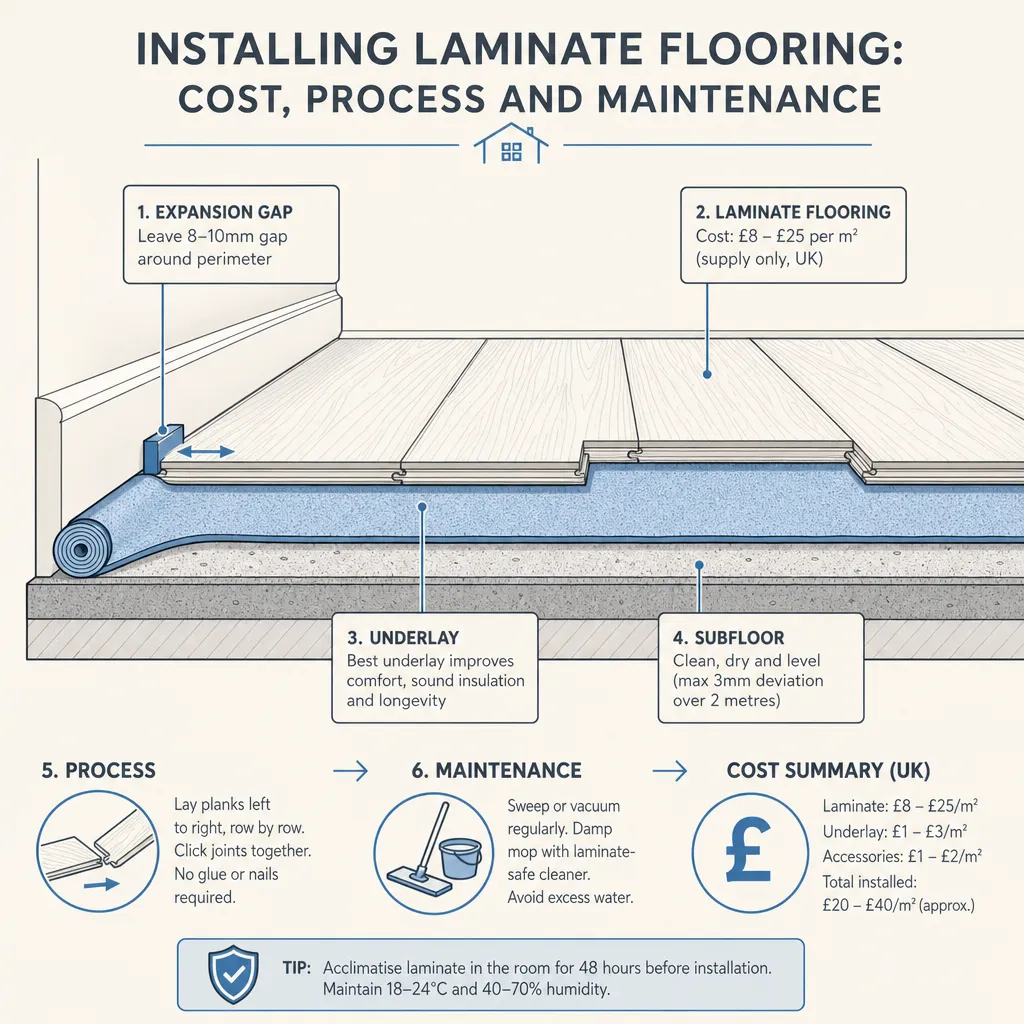
Installing Laminate Flooring: Cost, Process and Maintenance
Laminate flooring in the UK typically costs £15–40 per square metre for materials, plus £8–15 per square metre for professional fitting.