What is the Cost of Installing a Wrought Iron Fence?
By Housey · Last reviewed 11th of May 2026
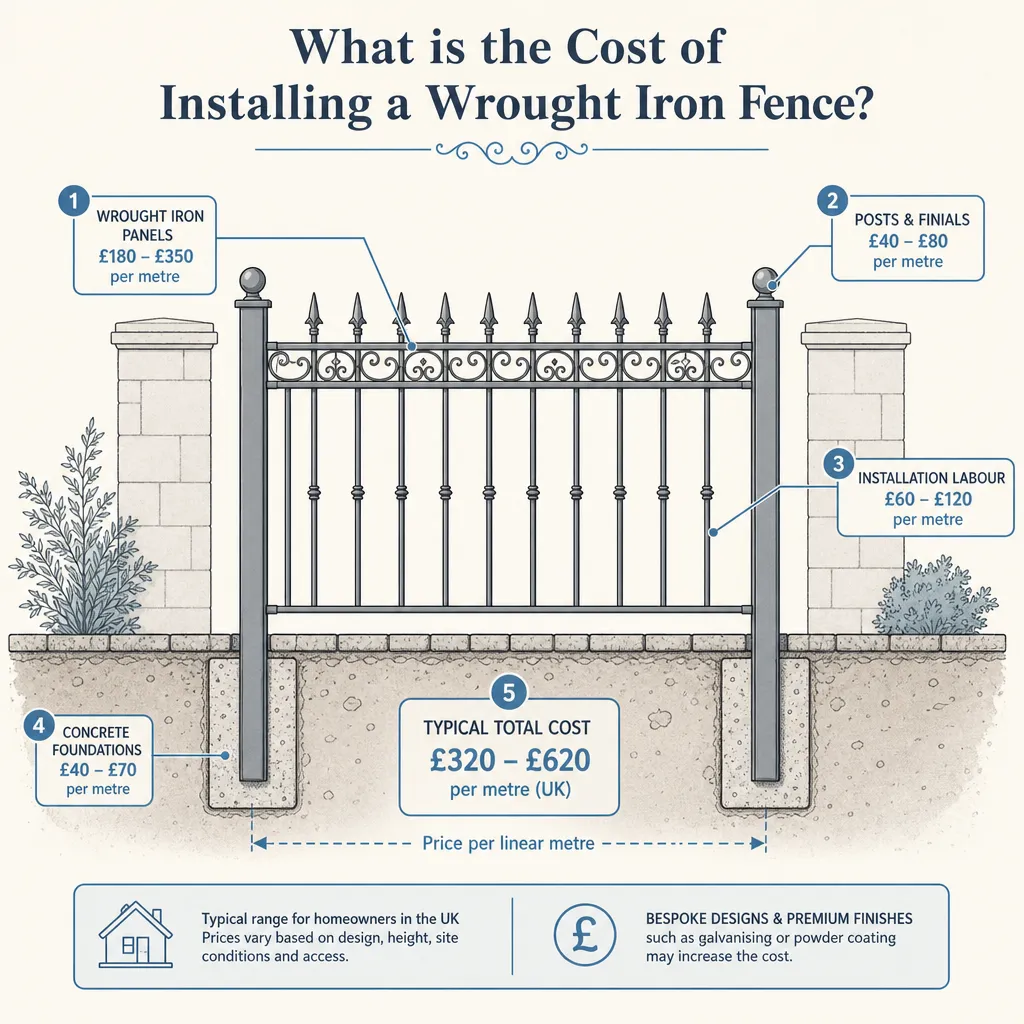
What is the Cost of Installing a Wrought Iron Fence?
Homeowners often turn to wrought iron fencing when they want a boundary treatment that combines longevity, visual impact, and security. Whether you're replacing rotted timber panels on a 1930s semi, enclosing a front garden on a Victorian terrace, or adding decorative railings to a period property, understanding the likely costs before approaching suppliers helps you evaluate quotes and plan your budget accurately.
Key points
- Wrought iron-style fencing typically costs between £100 and £400 per metre installed in the UK, depending on design complexity, material specification, and regional labour rates (Indicative UK costs, last reviewed 2026-05-11).
- True wrought iron is rarely manufactured today; most modern "wrought iron" fencing is fabricated from mild steel or cast iron — the material choice affects both upfront price and long-term maintenance requirements.
- Boundary fences over 1 metre adjacent to a highway, or over 2 metres elsewhere, may require planning permission under the Town and Country Planning Act 1990.
- Gates are costed separately from fencing runs and can add £300–£3,000 or more depending on size, style, and whether automation is included.
- Hot-dip galvanising before powder coating adds 15–25% to supply costs but dramatically extends service life and reduces long-term maintenance expense.
What does "wrought iron" actually mean in the UK market?
The term "wrought iron" is used loosely. Genuine wrought iron — a fibrous iron alloy historically worked by hand — is rarely produced today. Most contemporary products sold as wrought iron fencing are fabricated from:
Material | Properties | Typical use | Relative cost |
|---|---|---|---|
Mild steel (tube or flat bar) | Strong, weldable, heavier than aluminium | Most common for ornamental residential railings | Mid-range |
Cast iron | Brittle but highly detailed; period-accurate | Heritage and conservation projects | Higher |
Powder-coated aluminium | Lightweight, corrosion-resistant, low maintenance | Lower-maintenance modern alternative | Mid to high |
Reclaimed wrought iron | Authentic; variable condition and availability | Listed buildings and purist restorations | Variable |
For most residential properties, mild steel fabricated to a traditional design is the practical and cost-effective choice. For listed buildings or conservation areas, checking with your local planning authority or historic environment officer before specifying materials is advisable.
How much does wrought iron fencing cost in the UK?
Indicative UK costs, last reviewed 2026-05-11. Actual quotes will vary by region, design complexity, and ground conditions.
Fence type | Supply only (per metre) | Installed (per metre) | Notes |
|---|---|---|---|
Standard panel (off the shelf) | £40–£100 | £100–£200 | Basic vertical bar style; widely stocked |
Mid-range ornamental | £80–£180 | £150–£300 | More decorative scrollwork; custom spear tops |
Bespoke fabricated | £150–£350+ | £280–£500+ | Custom profiles; heritage designs |
Estate or period-replica | £200–£500+ | £350–£700+ | Complex casting or hand-forged elements |
Gates are priced separately. A single pedestrian gate typically adds £300–£800; a pair of driveway gates can add £800–£3,000 or more depending on size and whether automation is specified.
Post foundations add cost where the ground requires concrete footings or posts are being set into an existing wall. Budget for £30–£80 per post for concrete work.
Labour day rates for a skilled metal fencing installer range from approximately £180 to £350 per day in most UK regions; specialist metalwork fabricators may charge more.
Indicative ranges based on published data from Checkatrade and Rated People cost guides, last reviewed 2026-05-11. Always obtain at least three itemised quotes.
What affects the price?
Several factors can push a quote above or below these indicative ranges:
- Design complexity. Simple vertical bars cost less to fabricate than scrollwork, finials, or historical profiles requiring additional welding time and skills.
- Linear metres and number of posts. Longer runs generally achieve a lower cost per metre once setup and delivery are absorbed across the project.
- Ground conditions. Rocky, waterlogged, or unstable ground increases post-setting time and may require deeper or wider footings.
- Access. Rear gardens with limited access for machinery or material delivery often carry an access premium.
- Surface treatment. Hot-dip galvanising before powder coating adds upfront cost but provides the most durable protection and reduces long-term maintenance significantly.
- Regional labour rates. London and the South East typically carry 20–30% higher labour costs than the UK average.
- Listed building or conservation area. Additional design consultation, materials approval, and potentially listed building consent add time and professional fees to any project.
Do you need planning permission for a wrought iron fence?
Planning permission is not usually required for a boundary fence under 2 metres in height — or under 1 metre where it adjoins a highway — provided the property has not had permitted development rights removed. Rules change if:
- The property is a listed building — listed building consent is likely required for any new boundary structure.
- The property is within a conservation area — permitted development rights may be curtailed.
- The property is a new-build with planning conditions — a condition may have removed permitted development rights.
- The fence exceeds the height thresholds above.
Always check with your local planning authority before starting work. GOV.UK provides guidance on planning permission for fences, gates and garden walls.
Which professional do you need?
Situation | Professional to contact | What to check |
|---|---|---|
Off-the-shelf panels, straightforward installation | Local fencing contractor or landscaper | Public liability insurance; references from recent comparable jobs |
Custom fabricated railings | Specialist metalwork fabricator | Portfolio of comparable projects; material and finish specification |
Listed or conservation area property | Conservation-approved contractor | Consult local historic environment officer first |
Automated driveway gates with electrical supply | Gates specialist plus electrical sub-contractor | NICEIC or NAPIT-registered electrician for gate motor wiring |
What to ask before accepting a quote
- What material is being used — mild steel, cast iron, or aluminium?
- What surface treatment is included — galvanising, primer only, or powder coat?
- Who will carry out the work, and what trade body membership or accreditation do they hold?
- Is the price per metre or a fixed project price, and what does it exclude?
- What happens if ground conditions are worse than anticipated?
- What post specification and footing depth is being used?
- Is VAT included?
- What warranty is offered on fabrication and finish?
When to get professional help
Wrought iron fencing is a relatively safe home improvement, but professional input is important in these situations:
- You are in a conservation area or listed building — engage a contractor experienced with historic materials and seek any required consent before starting.
- There is a boundary dispute — consult HM Land Registry title plans and seek legal advice before erecting any new boundary structure.
- The fence will adjoin a public highway — local authority requirements for highway boundary structures may apply.
- Automated gates are involved — electrical work must be carried out by a competent electrician registered with NICEIC or NAPIT.
How Housey can help
If you're considering wrought iron fencing as part of a wider outdoor project, find a local landscaper through Housey who can coordinate fencing alongside hard landscaping, or connect with a garden designer if you'd like a cohesive scheme for your outdoor space.
Frequently asked questions
Is wrought iron fencing more expensive than timber?
Yes, in most cases. Timber panel fencing typically costs £30–£80 per metre installed, while ornamental metal fencing usually starts at £100–£200 per metre. Metal fencing has a significantly longer lifespan and lower replacement frequency, which may offset the higher upfront cost over the life of the fence.
Does wrought iron fencing require planning permission?
Planning permission is not usually required for a fence under 2 metres in height — or 1 metre where it adjoins a highway — provided permitted development rights have not been removed. Listed buildings and conservation areas may have additional restrictions. Always check with your local planning authority before starting work.
How long does wrought iron fencing last?
Hot-dip galvanised and powder-coated steel fencing, properly maintained, can last 40–60 years. Annual inspection and periodic repainting are necessary. Neglected steel corrodes at any breach in the protective coating, so prompt touch-up painting is essential to prevent rust from spreading.
Can I install wrought iron fencing myself?
Simple off-the-shelf panel systems can be installed by a competent DIYer with the right tools. Bespoke fabricated railings require specialist knowledge to set out and fix correctly. For listed buildings, conservation areas, or automated gates with electrical components, professional installation is strongly advisable.
Sources and further reading
- Planning permission: fences, gates and garden walls — GOV.UK
- Town and Country Planning Act 1990 — legislation.gov.uk
- Wrought iron fencing cost guide — Checkatrade
- Guidance for homeowners: historic buildings — Historic England
Useful next reads
 Improvement & Build
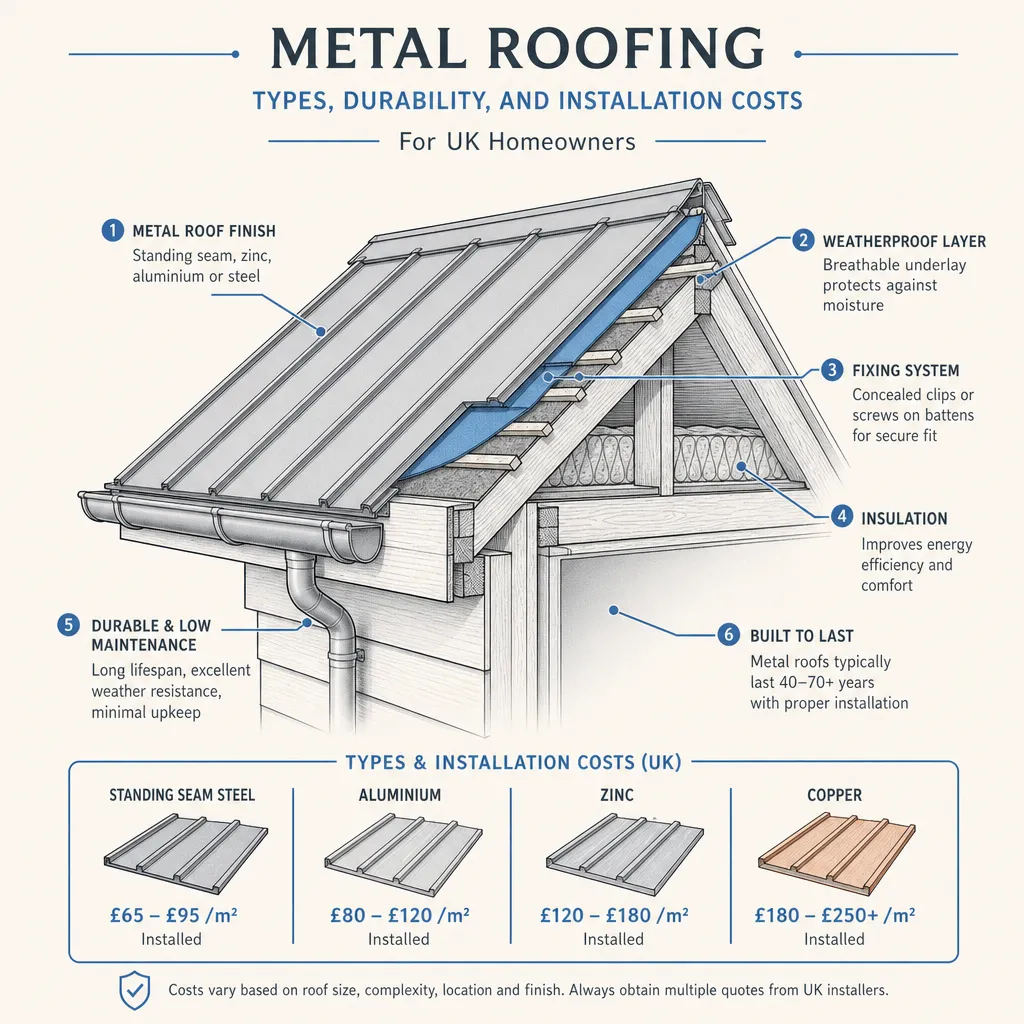
Metal Roofing: Types, Durability, and Installation Costs
Metal roofing in the UK includes standing seam, corrugated sheet, and metal tile systems in steel, aluminium, zinc, or copper.
 Improvement & Build
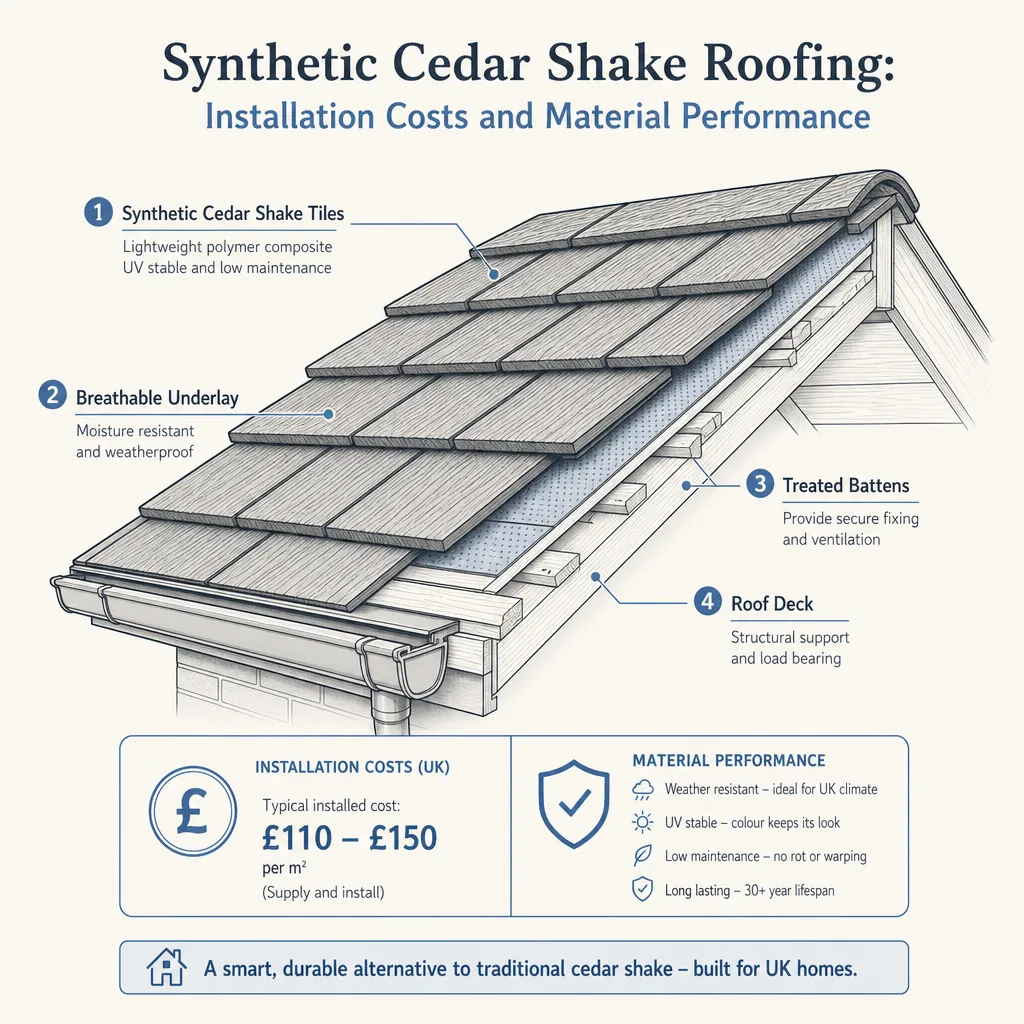
Synthetic Cedar Shake Roofing: Installation Costs and Material Performance
Synthetic cedar shake roofing uses polymer composite, rubber, or fibre-cement tiles to replicate the look of natural cedar wood shingles.
 Improvement & Build
Designing an outdoor kitchen for entertaining and garden living
An outdoor kitchen in a UK garden needs a stable, level base — typically a concrete slab or quality paving — with weather-rated materials such as stainless steel grade 316 or frost-rated porcelain.
 Improvement & Build
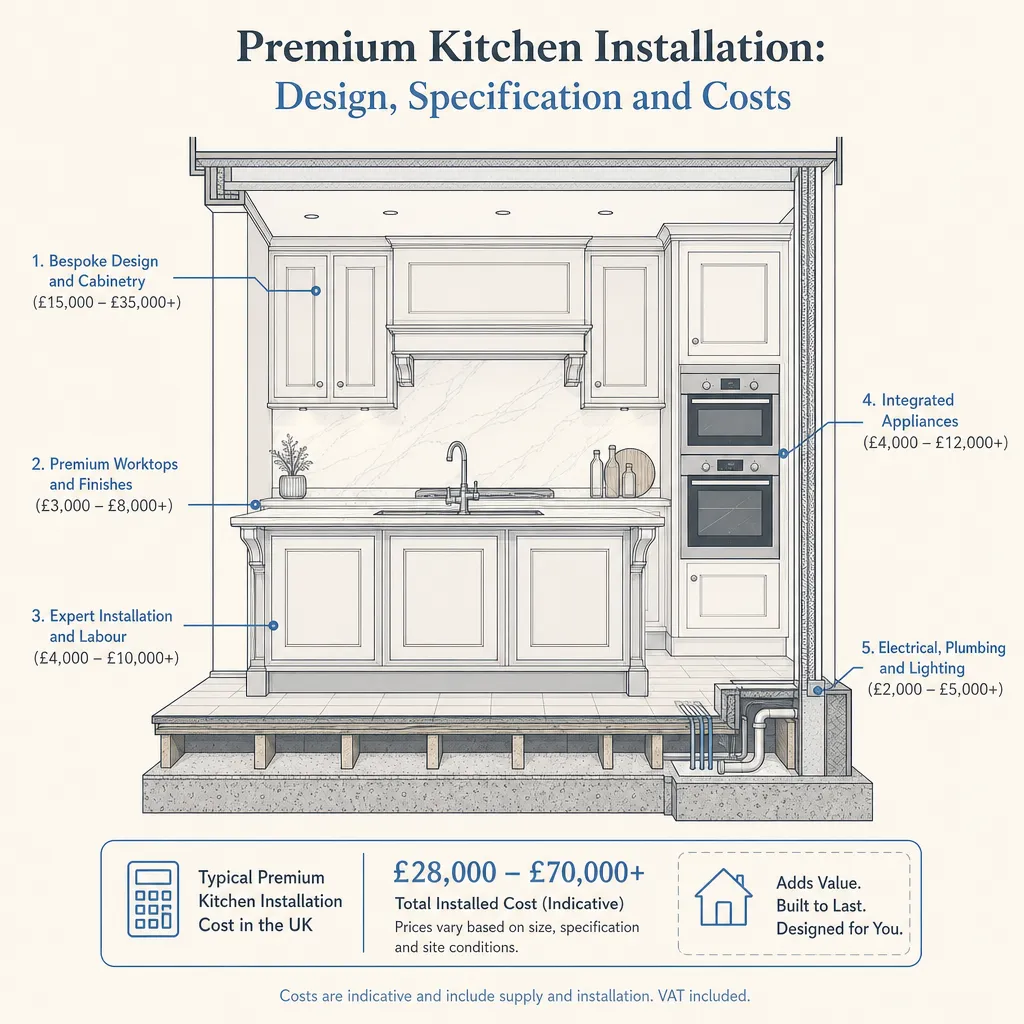
Premium Kitchen Installation: Design, Specification and Costs
A premium kitchen in the UK typically costs £20,000–£80,000 or more installed, depending on cabinetry specification, worktop material, appliance brands, and whether structural changes are needed.
 Improvement & Build
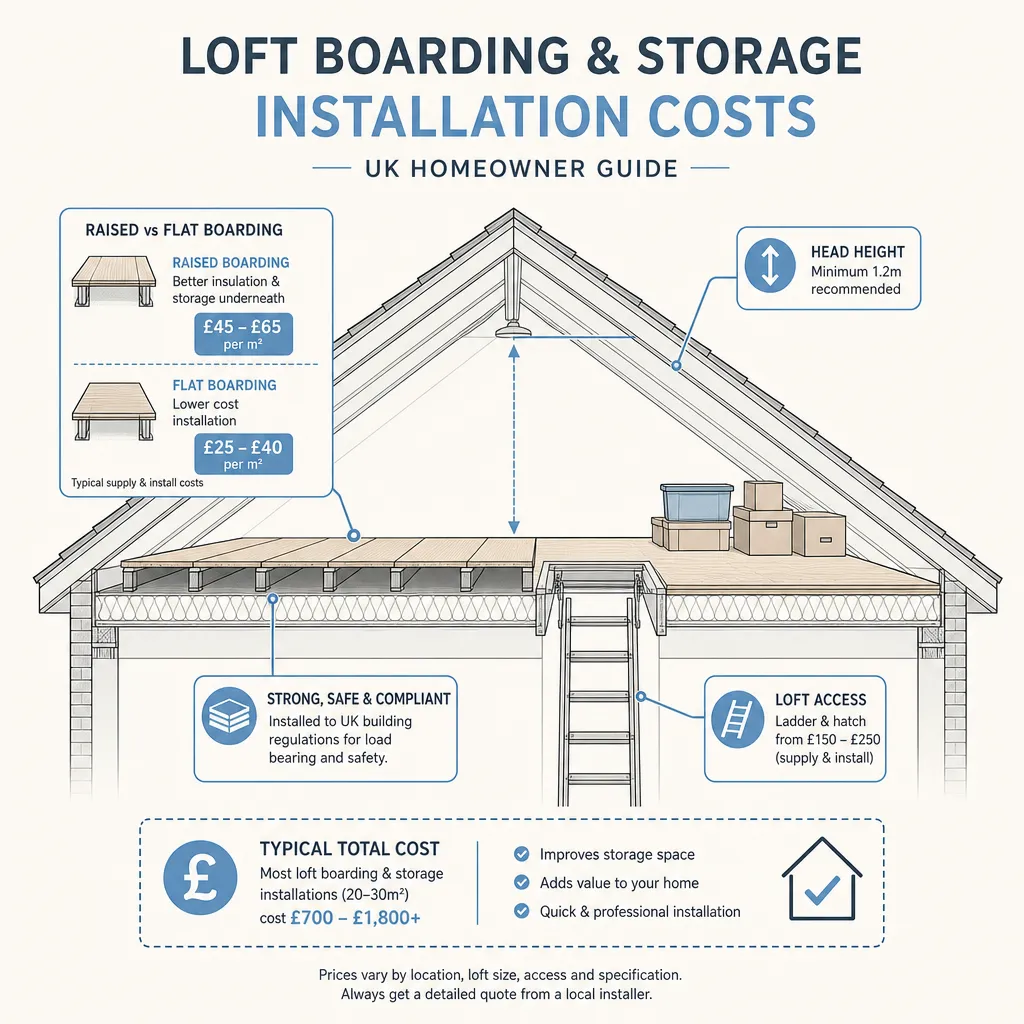
Loft Boarding and Storage Installation Costs
Basic loft boarding for an average semi-detached home costs £500–£1,500; a raised system that preserves insulation runs £800–£2,500.