Cost of Repairing Wrought Iron Railings in the UK
By Housey · Last reviewed 19th of May 2026
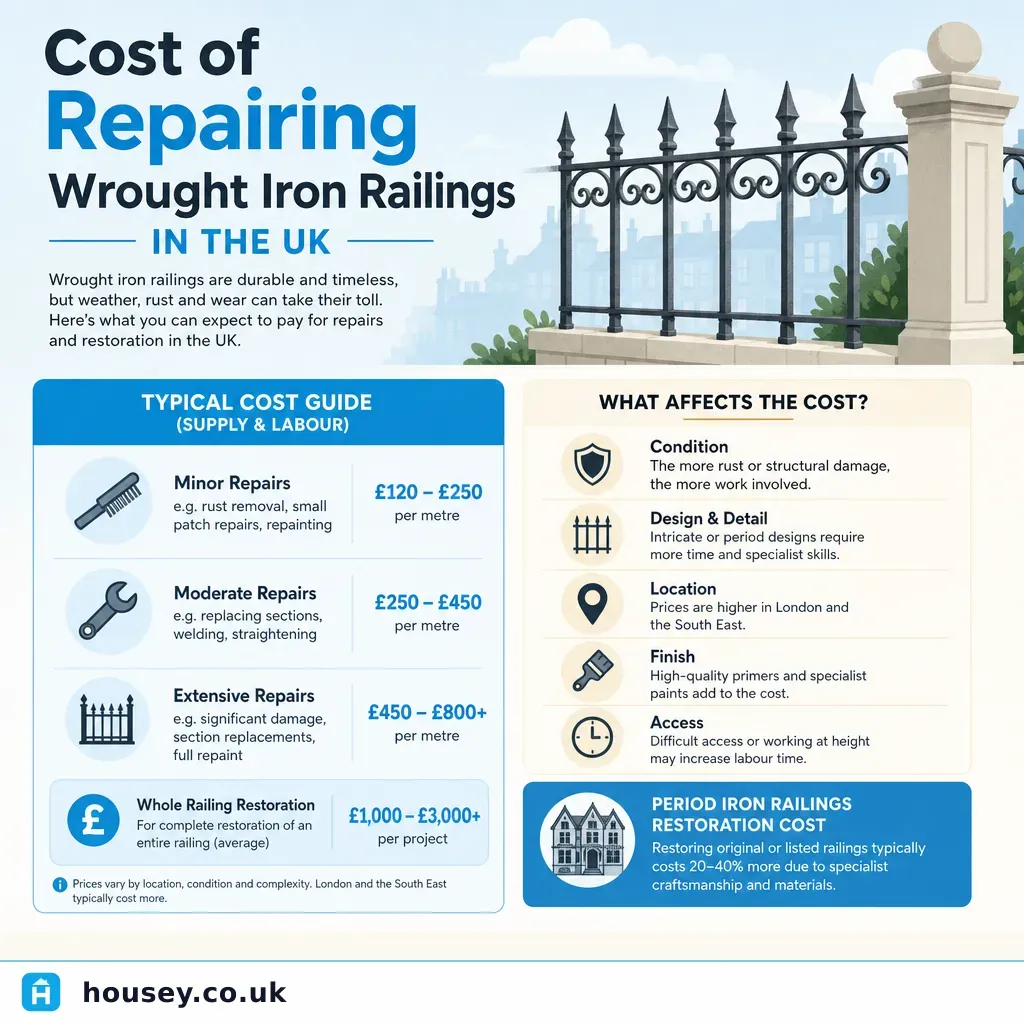
Cost of Repairing Wrought Iron Railings in the UK
Wrought iron railings are a defining feature of many Victorian, Edwardian, and Georgian properties across the UK — from front-garden boundary treatments to period staircases and balcony balustrades. When they corrode, crack, or lose sections, the cost of repair depends on the extent of damage, the type of metalwork, access conditions, and whether the property is subject to heritage or planning constraints. Understanding what the work involves helps you compare quotes accurately and avoid unnecessary full replacement.
Key points
- Surface rust treatment and repainting typically costs £50–£150 per linear metre; structural welding or section replacement ranges from £400–£900 per linear metre or more. Indicative UK costs, last reviewed 2026-05-19.
- True wrought iron — a low-carbon material with slag fibres — has not been commercially produced in the UK since the 1970s; most Victorian and Edwardian railings are genuine wrought iron, while post-war replacements are typically mild steel.
- Pre-1970s railings often carry layers of lead paint beneath later coatings; removal by sanding, grinding, or heat stripping requires specific precautions under HSE lead-at-work guidance.
- Repairs to railings on a listed building require listed building consent; railings in a conservation area may require consent if the repair is not strictly like-for-like in material and design.
- Hot-dip galvanising before repainting is one of the most durable protective treatments, significantly extending service life compared to paint-only systems.
Wrought iron or mild steel? Why it matters
The distinction affects the repair approach, the skill level required, and — for heritage properties — compliance with conservation requirements.
Feature | Wrought iron | Mild steel |
|---|---|---|
Era typically used | Pre-1970s (Victorian/Edwardian) | Post-war to present |
Cut surface appearance | Fibrous, layered texture from slag | Uniform, smooth |
Rust pattern | Surface rust; rarely deep pitting | Can pit, flake, and scale |
Weldability | Difficult; requires skilled blacksmith | Standard MIG/TIG welding |
Reproduction availability | Specialist ironwork foundries only | Widely available in standard sections |
Repair approach | Traditional forging, riveting, or skilled TIG | Standard fabrication and welding |
If you are unsure of the material, a specialist metalwork contractor or conservation architect can assess on site before any repair is specified.
What does wrought iron railing repair involve?
The scope of work typically falls into one of three categories:
Surface repair and repainting
Remove loose paint and surface rust by hand tool, mechanical wire brush, or media blasting; apply a zinc-rich or red oxide primer, then a quality topcoat. Suitable where railings are structurally sound with no cracks or missing sections.
Structural repair
Weld cracked or broken sections — wrought iron is notoriously difficult to weld, so a skilled blacksmith or specialist TIG welder is needed; fabricate and fit replacement sections to match the original profile; re-fix posts to stonework or brickwork using lead run-in or resin anchors; prime and repaint throughout.
Full restoration
Strip back to bare metal (often by media blasting); repair or replace all damaged components; hot-dip galvanise the entire structure before priming and repainting; re-set posts and reinstate the original configuration.
Indicative cost guide for wrought iron railing repair
Scope of work | Indicative cost per linear metre |
|---|---|
Surface clean, prime, and repaint (no structural work) | £50–£150 |
Minor welding (one or two cracks per section) plus repaint | £200–£400 |
Section replacement plus repaint | £400–£700 |
Full restoration with hot-dip galvanising | £600–£1,200 |
Replica railing fabrication (complex period profile) | £800–£2,000+ |
Indicative UK costs, last reviewed 2026-05-19. Access equipment (scaffold or mobile elevated platform), lead paint testing and removal, and any planning or listed building consent fees are not included.
Lead paint: Pre-1970s railings frequently carry layers of lead paint beneath later coatings. HSE guidance requires specific precautions if paint is to be removed by dry sanding, grinding, or heat stripping. Ask your contractor whether lead testing is included in their initial survey, and how any lead paint will be managed and disposed of safely.
Red flags: when repair becomes replacement
Consider full or partial replacement rather than repair where:
- More than 30–40% of the railing is missing, structurally compromised, or beyond economical welding.
- Posts are corroded at or below ground level, or within masonry, to the point where they cannot be stabilised. Embedded corrosion is often invisible until posts are extracted.
- The original profile or decorative pattern is no longer available from a specialist founder, and fabricating accurate replicas would be disproportionately costly.
- A listed building officer or conservation body has required replacement in a specific traditional material that differs substantially from the existing structure.
Heritage and planning considerations
For properties in a conservation area, boundary treatments including railings may be subject to Article 4 Directions that remove permitted development rights. Replacing railings with a different design or material could require planning consent. Check with your local planning authority before committing to a design change or material substitution.
For listed buildings, listed building consent is required before any external alteration to railings that form part of the listed structure. "Like-for-like" repairs in the same material and profile may not require consent, but confirm this with your local planning authority or a conservation architect before work begins.
Historic England provides guidance on the repair of historic metal structures and can advise on appropriate materials and methods where traditional techniques are needed.
What to ask before accepting a quote
- Will you carry out a lead paint test before starting, and how will any lead paint be managed and disposed of safely?
- Can you match the existing profile and decorative detail, or will some sections differ visibly from the original?
- Does the quote include hot-dip galvanising, or paint-only protection?
- What primer system will you use, and what is the expected service life before repainting is needed?
- Who is responsible for establishing whether planning permission or listed building consent is needed?
- Is access equipment included in the price, or costed separately?
- What guarantee do you provide on the metalwork and the protective finish?
When to get professional help
Contact a qualified metalwork specialist or blacksmith if:
- Any posts appear loose or heavily corroded at the base — this may indicate a structural risk, particularly for balustrading at height.
- The railings are on or close to a listed building or in a conservation area and you are unsure about consent requirements.
- Lead paint removal is needed on a pre-1970s property.
- Large sections are missing and need accurate fabrication to match an original period profile.
How Housey can help
Housey can connect you with trusted builders and property specialists who have experience with heritage metalwork, period properties, and the planning requirements that apply in conservation areas and on listed buildings. Getting a proper assessment and multiple specialist quotes is the most reliable way to protect the quality of the repair and your compliance position.
Frequently asked questions
How do I know if my railings are wrought iron or mild steel?
The most reliable method is a visual inspection of a cut or broken surface: wrought iron shows a fibrous, layered texture from its slag content, while mild steel has a uniform, smooth appearance. If in doubt, a blacksmith or specialist metalwork contractor can assess on site. Most Victorian and Edwardian period railings are genuine wrought iron; post-war replacements are generally mild steel.
Can I repair wrought iron railings myself?
Surface rust treatment and repainting on ground-level railings is within the capability of a competent DIYer using zinc-rich primers and quality topcoats. Any structural welding, replacement of missing sections, or work on balustrading at height should be carried out by a qualified metalwork specialist. If you suspect lead paint, follow HSE guidance before undertaking any stripping work.
Do I need planning permission to repair railings?
Like-for-like repairs in the same material and design generally do not require planning permission or listed building consent. However, if the property is listed you should confirm with your local planning authority before starting. In conservation areas, Article 4 Directions may restrict alterations to boundary treatments — check locally before changing materials or design, even for a repair.
How long do repaired wrought iron railings last before needing attention again?
A well-executed repair with quality primer and topcoat should last 8–15 years before repainting is needed. Hot-dip galvanising before painting substantially extends this — galvanised steel typically provides 25–40 years of corrosion protection in a moderate UK environment. Coastal or high-pollution locations shorten these intervals considerably.
Sources and further reading
- Lead paint: working safely — Health and Safety Executive (HSE)
- Metalwork: repair and maintenance of historic metal structures — Historic England
- Listed buildings — Historic England
- Hot dip galvanizing technical guidance — Galvanizers Association
Useful next reads
 Improvement & Build
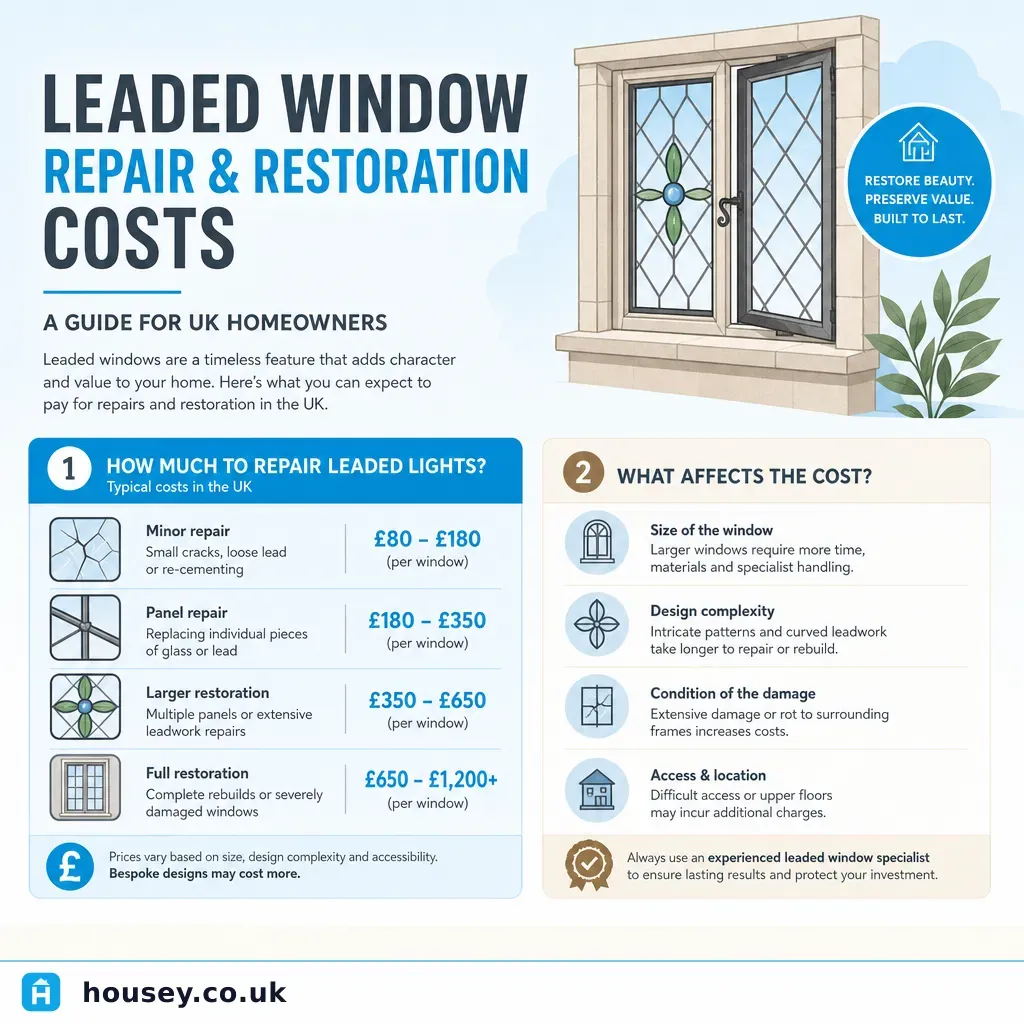
Leaded Window Repair and Restoration Costs
Leaded window repair in the UK typically costs £150–£600 for minor re-soldering or resealing, rising to £800–£2,500+ for full panel removal and restoration.
 Improvement & Build
Guide to Replacing Timber Sash Windows with Authentic Restoration
Restoring a timber sash window typically costs £150–£400 per window; full replacement costs £800–£2,500.
 Improvement & Build
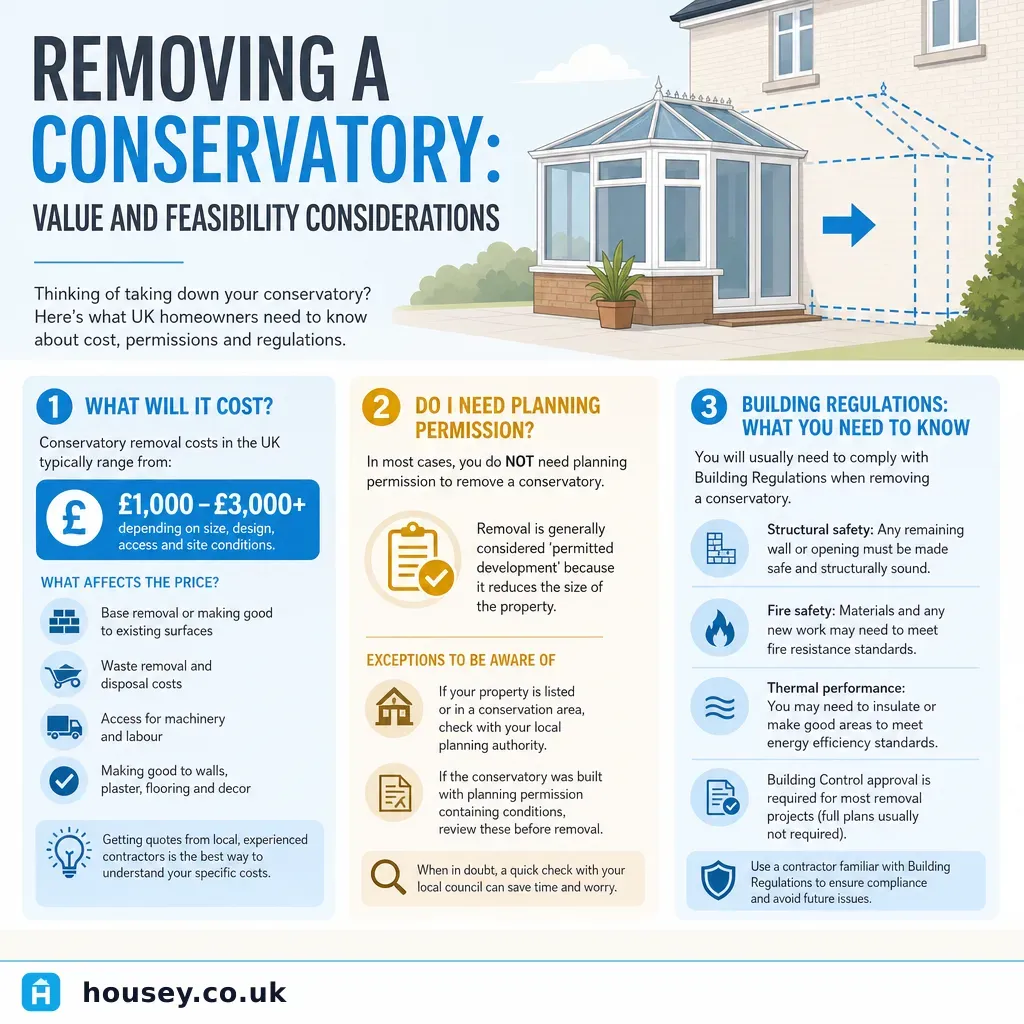
Removing a Conservatory: Value and Feasibility Considerations
Removing a conservatory in England usually does not need planning permission if the original structure was permitted development, but reinstating the original wall almost always requires a building regulations application covering structural, thermal, and moisture elements.
 Improvement & Build
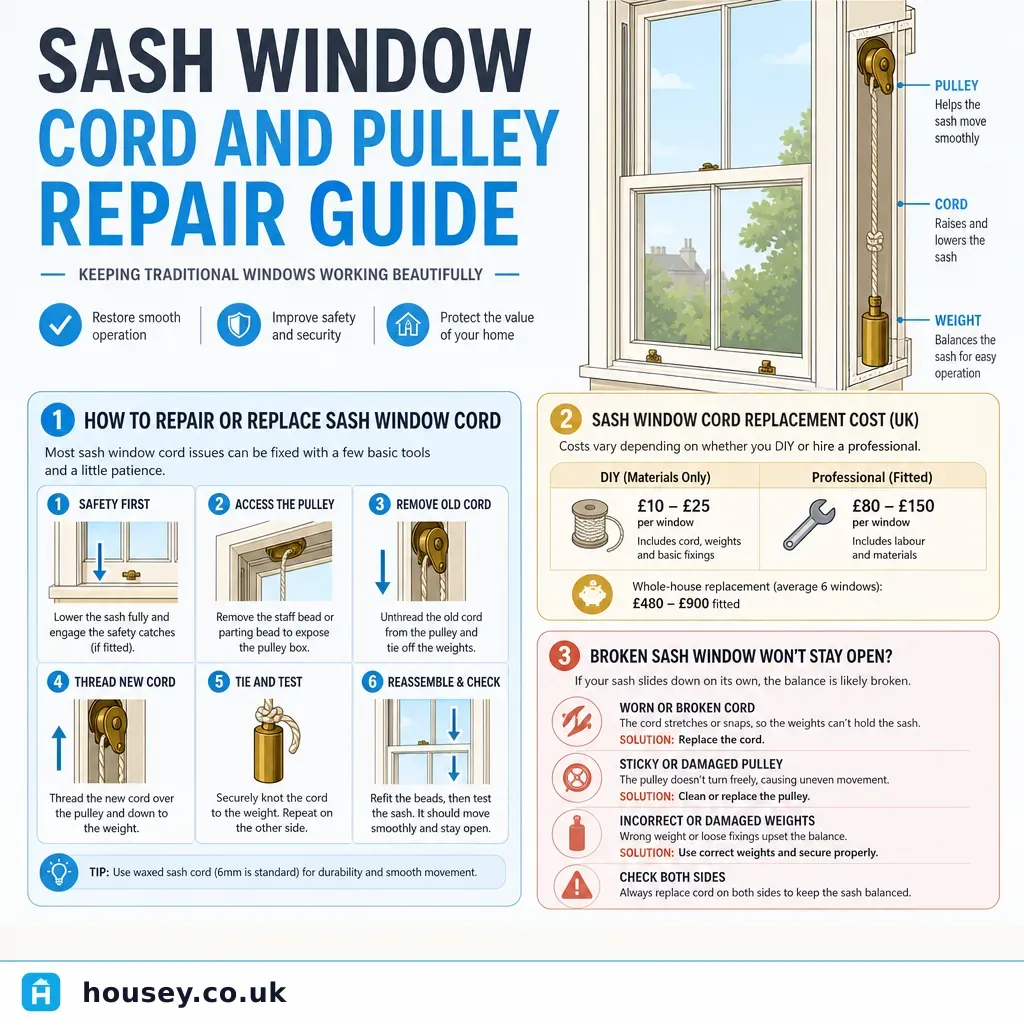
Sash Window Cord and Pulley Repair Guide
Repairing a broken sash window cord involves removing the staff bead, lifting out the lower sash, threading new wax-coated cord through the pulley, and tying it securely to the sash weight.
 Improvement & Build
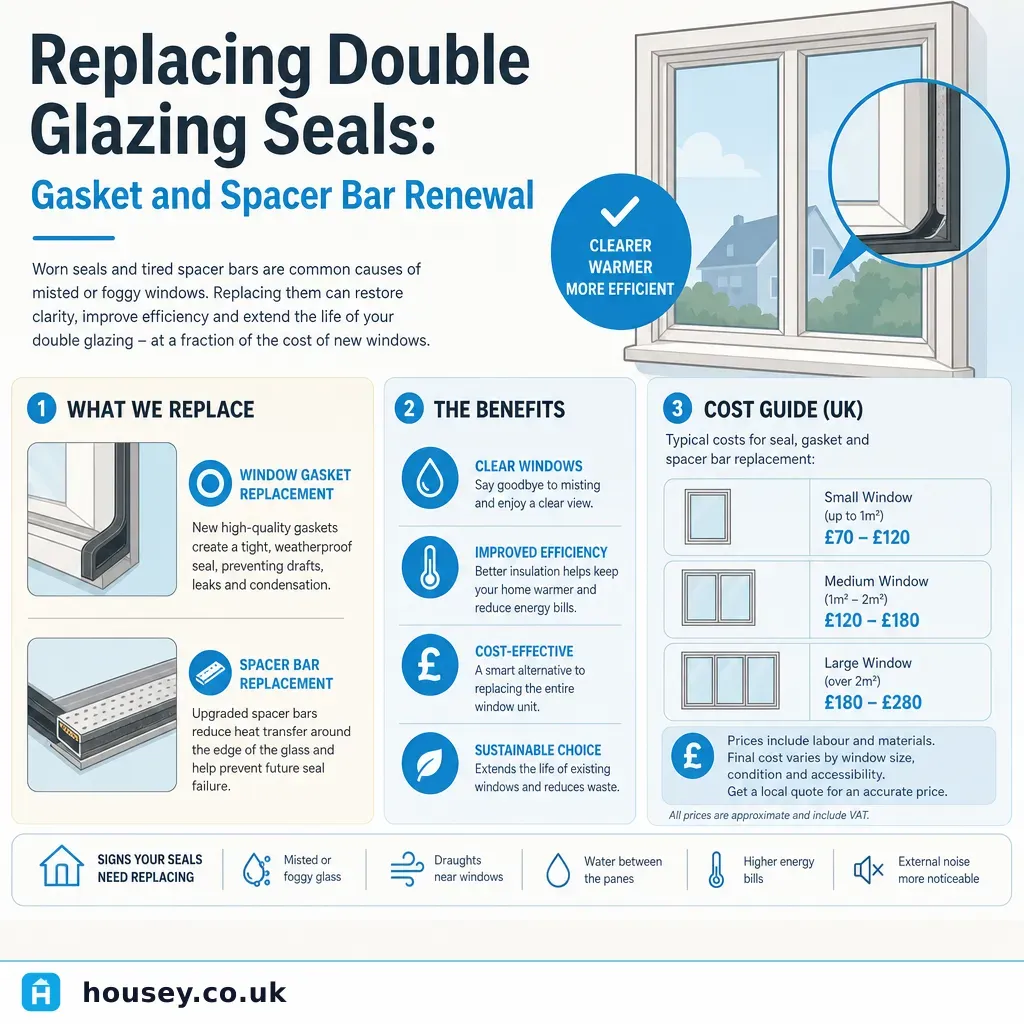
Replacing Double Glazing Seals: Gasket and Spacer Bar Renewal
Double glazing seals fail in two distinct ways: worn perimeter gaskets (which may be replaceable in situ) or failed internal spacer bar seals (which require the entire sealed unit to be replaced).