Cost of wood siding for exterior cladding
By Housey · Last reviewed 19th of May 2026
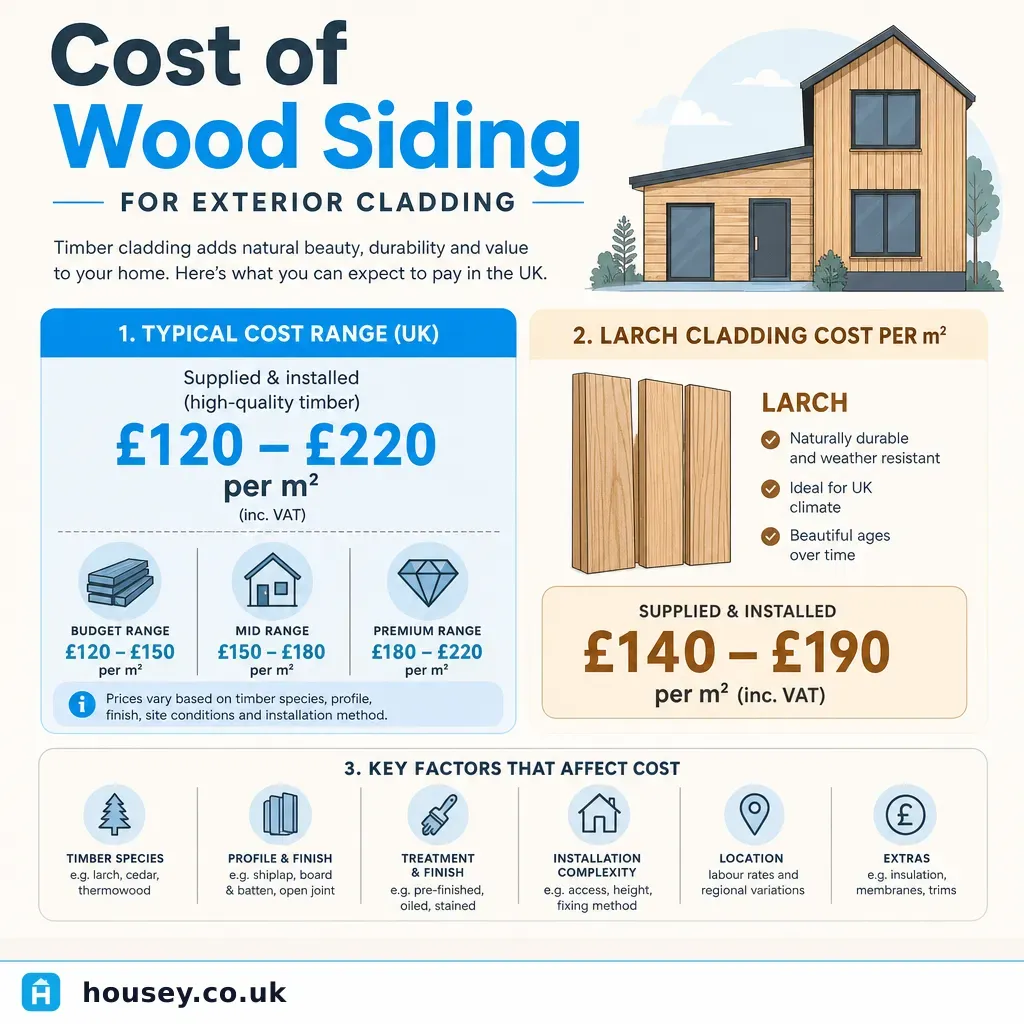
Cost of wood siding for exterior cladding
External timber cladding — the UK term for what is widely called wood siding in North American contexts — has become a common specification on new builds, extensions, and whole-house refurbishments, driven by the appeal of natural materials and the growing availability of UK-grown durable softwoods and hardwoods. The decision to clad a property's exterior involves more variables than most homeowners initially anticipate: species selection, ventilation detailing, building regulations compliance, and planning rules all affect whether the result performs well for decades or fails within a few years.
Key points
- Installed costs for external timber cladding in the UK typically range from £80–£200 per m², depending on timber species, profile, and access requirements (indicative UK costs, last reviewed 2026-05-19).
- Timber cladding must be installed with a minimum 38 mm ventilated cavity behind it per TRADA and NHBC guidance — omitting or blocking this cavity is the single most common cause of premature cladding failure.
- External cladding on buildings above 11 m is subject to significant restrictions under Building Regulations Approved Document B (fire safety) and the Building Safety Act 2022; specialist fire engineering assessment is required for combustible cladding at this height.
- Cladding a listed building or a property within a conservation area requires planning permission or listed building consent from the local planning authority, regardless of height or material.
- UK-grown larch and Douglas fir are widely specified for external cladding and carry lower embodied carbon than many imported alternatives; both weather naturally to silver-grey without any applied coating.
How much does external timber cladding cost?
Costs depend on species, profile, and project complexity. The table below compares the most common UK-specified cladding timbers by typical installed cost, natural durability, and maintenance requirement.
Timber type | Typical profile | Indicative installed cost per m² | Durability class | Maintenance |
|---|---|---|---|---|
European / Siberian larch | Shiplap or feather-edge | £80–£130 | Class 3–4 | Low — oil every 5–7 years if colour retained |
Western red cedar | Shiplap or tongue-and-groove | £110–£160 | Class 3–4 | Low — oil every 3–5 years |
Home-grown Douglas fir | Board-on-board or feather-edge | £80–£120 | Class 3–4 | Moderate — preservative oil every 3–5 years |
Thermowood (heat-treated) | Various | £120–£180 | Class 2 (enhanced) | Low — oil every 5 years |
Oak (air-dried or green) | Feather-edge or sawn | £150–£200+ | Class 2 | Very low — weathers naturally |
Accoya (acetylated wood) | Various | £160–£220+ | Class 1 | Very low — suited to exposed elevations |
Indicative UK costs, last reviewed 2026-05-19. Per m² installed on a standard single-storey elevation with reasonable access. Scaffold, breather membrane, battens, and fixings are generally included; fascia boards, soffit cladding, and lead flashings may be priced separately.
What drives the cost?
Timber species and source have the biggest influence. UK-grown larch is typically the most cost-effective naturally durable option; imported cedar and modified timbers command a premium reflecting transportation and processing costs.
Profile complexity affects installation speed. Simple shiplap is faster to fix than board-on-board with staggered joints or complex mitred corners at reveals and openings.
Scaffold and access add a significant fixed cost for cladding above single-storey height — typically £1,500–£5,000 or more depending on building height and the duration of hire.
Substrate condition is a hidden variable. Re-cladding over existing render, failing insulation boards, or a damaged masonry face adds preparation time and cost.
Batten and membrane specification must not be treated as optional cost reductions. Correct installation requires a vapour-permeable breather membrane and counter-battens to create the ventilated cavity. Any contractor who proposes to omit these elements should not be instructed.
Choosing the right timber cladding for your project
- Choose larch or Douglas fir if you want a cost-effective, UK-grown option that weathers naturally to silver-grey with minimal maintenance and a low embodied carbon footprint.
- Choose cedar or thermowood if you want a warmer initial tone and are willing to pay a premium for enhanced durability and a more stable colour over time.
- Choose Accoya if the elevation is particularly exposed — coastal, high-wind, north-facing, or heavily shadowed — and longevity beyond 40 years is a priority.
- Ask a structural engineer or building surveyor if you are adding cladding over external insulation, if wall ties are of unknown condition, or if the existing façade shows signs of moisture ingress.
- Check with your local planning authority before ordering any materials if the building is listed or in a conservation area.
- Consult your building control officer or a fire engineer if the building is above 11 m, or if you are unsure whether the specified cladding system holds an appropriate BBA or ETA certificate for the application.
Building regulations and planning considerations
External cladding in England is subject to Building Regulations Approved Document B (fire safety) and Approved Document C (site preparation and moisture resistance). Following the Grenfell Tower fire and the subsequent Building Safety Act 2022, the use of combustible materials on the external walls of buildings above 11 m is heavily restricted. Timber cladding at these heights requires specialist fire engineering assessment and is permissible only with specific fire-retardant treatment or approved system certification.
For single-storey extensions and buildings under 11 m, naturally durable or pressure-treated timber cladding installed on a ventilated system is generally acceptable under building control. Building control approval is still required for the overall works — do not treat cladding as exempt simply because the species is naturally durable.
Re-cladding an existing house does not usually require planning permission under permitted development rights. However, consent is always required if the building is listed, in a conservation area, or in a designated Area of Outstanding Natural Beauty. Contact your local planning authority before starting any work if there is any doubt.
When to get professional help
- If the building is above 11 m, instruct a façade engineer or fire consultant before specifying any cladding system or commencing work.
- If the building is listed or in a conservation area, apply for the relevant consent before ordering any materials — carrying out unauthorised works to a listed building is a criminal offence.
- If the existing substrate or internal wall shows signs of damp, mould, or water ingress, engage a surveyor or moisture specialist before re-cladding — sealing over a damp wall accelerates decay and can cause significant internal damage.
- For cladding that is fixed through or abuts a party wall, review your obligations under the Party Wall etc. Act 1996.
How Housey can help
Housey connects homeowners and self-builders with trusted extension builders and cladding specialists who can assess your project, advise on timber specification, and provide clear, itemised quotes. For projects involving roof-line detailing, leadwork, or fascia and soffit cladding, Housey also connects you with experienced roofers with external envelope experience.
Frequently asked questions
Do I need planning permission to clad my house in timber?
In most cases, re-cladding an existing house does not require planning permission under permitted development rights in England. However, if the building is listed, in a conservation area, or in an Area of Outstanding Natural Beauty, you need consent from your local planning authority before starting any work. All new extension works, including cladding, require building control approval regardless of planning status.
Is timber cladding suitable for a north-facing wall?
Timber cladding can be used on north-facing elevations but requires more careful specification. North-facing walls dry more slowly, increasing the risk of algal growth and surface mould. Specify a naturally durable or thermowood-treated species, ensure the ventilated cavity is correctly detailed and kept clear, and plan for more frequent maintenance — typically cleaning and re-oiling every three to four years rather than every five to seven.
How long does external timber cladding last?
With correct specification and a ventilated cavity, naturally durable species such as larch and cedar typically last 20–40 years before replacement is needed. Thermowood and Accoya can extend serviceable life to 30–50 years or more. The most common cause of premature failure is moisture entrapment due to a missing or blocked ventilation cavity, or inadequately treated end-grain at board terminations.
What is the difference between shiplap and feather-edge cladding?
Shiplap boards have a rebated overlap profile that creates a flush, weather-tight joint with a narrow horizontal shadow line. Feather-edge boards taper from thick at the bottom to thin at the top and are lapped, producing a more pronounced textured relief. Both profiles suit the UK climate; feather-edge is generally slightly more cost-effective to supply, while shiplap is often preferred for a contemporary finish.
Sources and further reading
- Building Regulations Approved Document B — fire safety — GOV.UK
- Re-cladding of houses — permitted development guidance — Planning Portal
- Timber cladding: design, performance and installation guidance — TRADA (Timber Research and Development Association)
- Guidance on alterations to listed buildings — Historic England
- Building Safety Act 2022 — guidance for building owners — GOV.UK
Useful next reads
 Improvement & Build
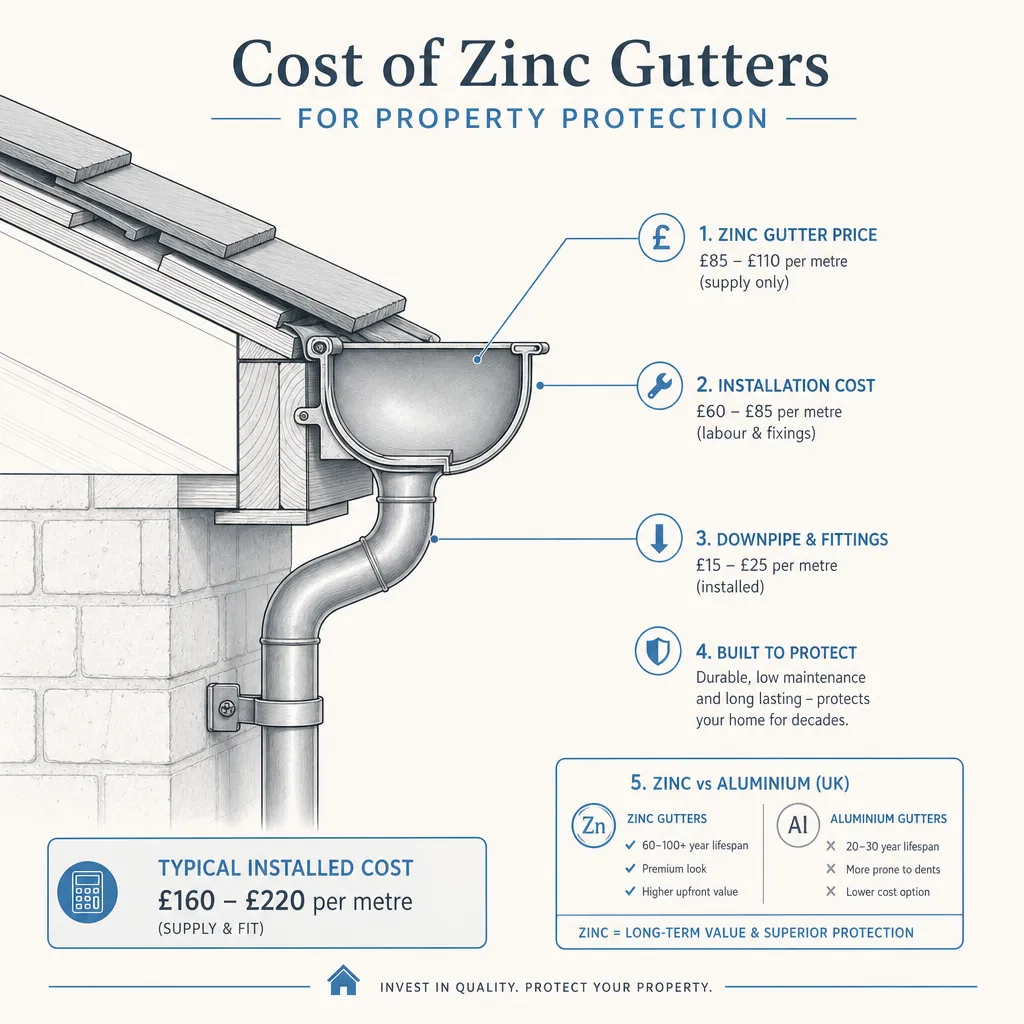
Cost of Zinc Gutters for Property Protection
Zinc gutters cost around £60–£120 per metre installed in the UK, depending on profile complexity, property type, and scaffolding requirements.
 Improvement & Build
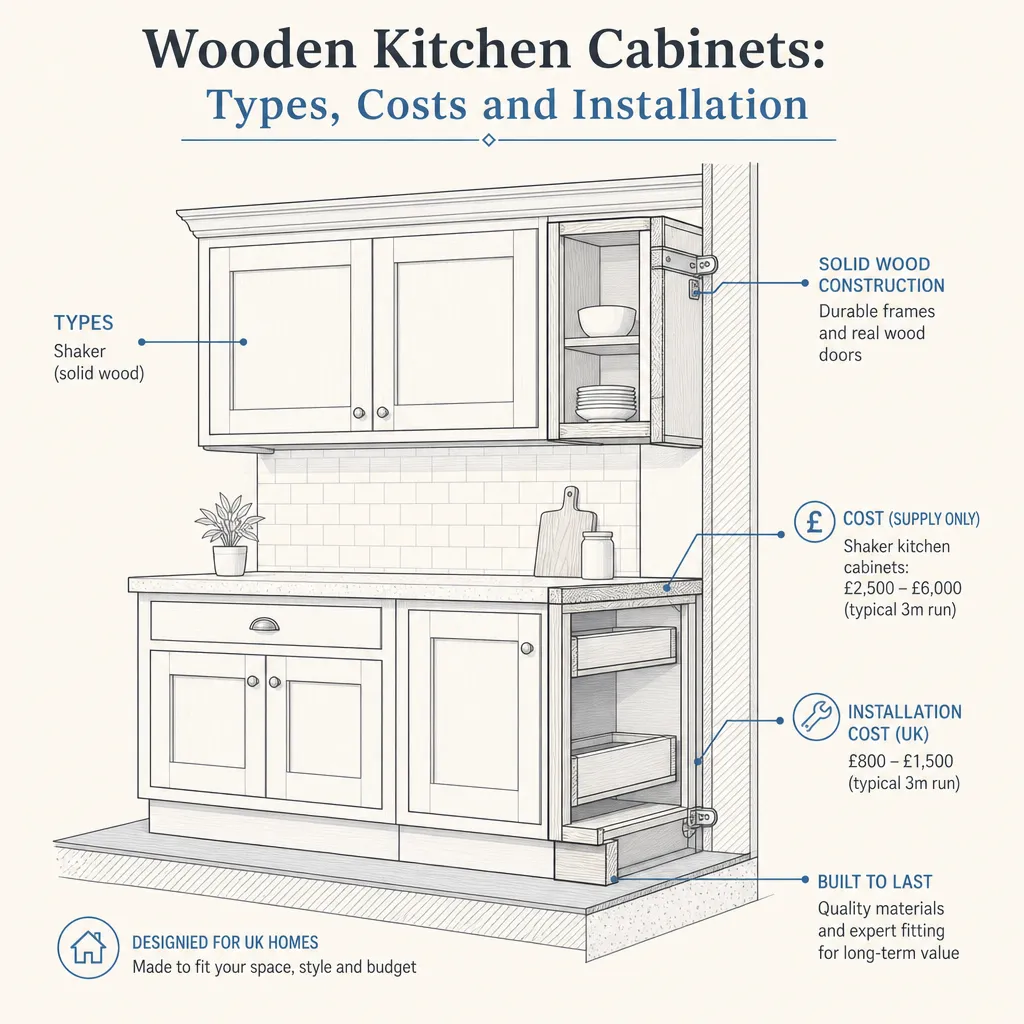
Wooden kitchen cabinets: types, costs and installation
Wooden kitchen cabinets in the UK range from around £4,000–£12,000 installed for mid-range painted shaker units to £10,000–£25,000 or more for solid hardwood kitchens.
 Improvement & Build
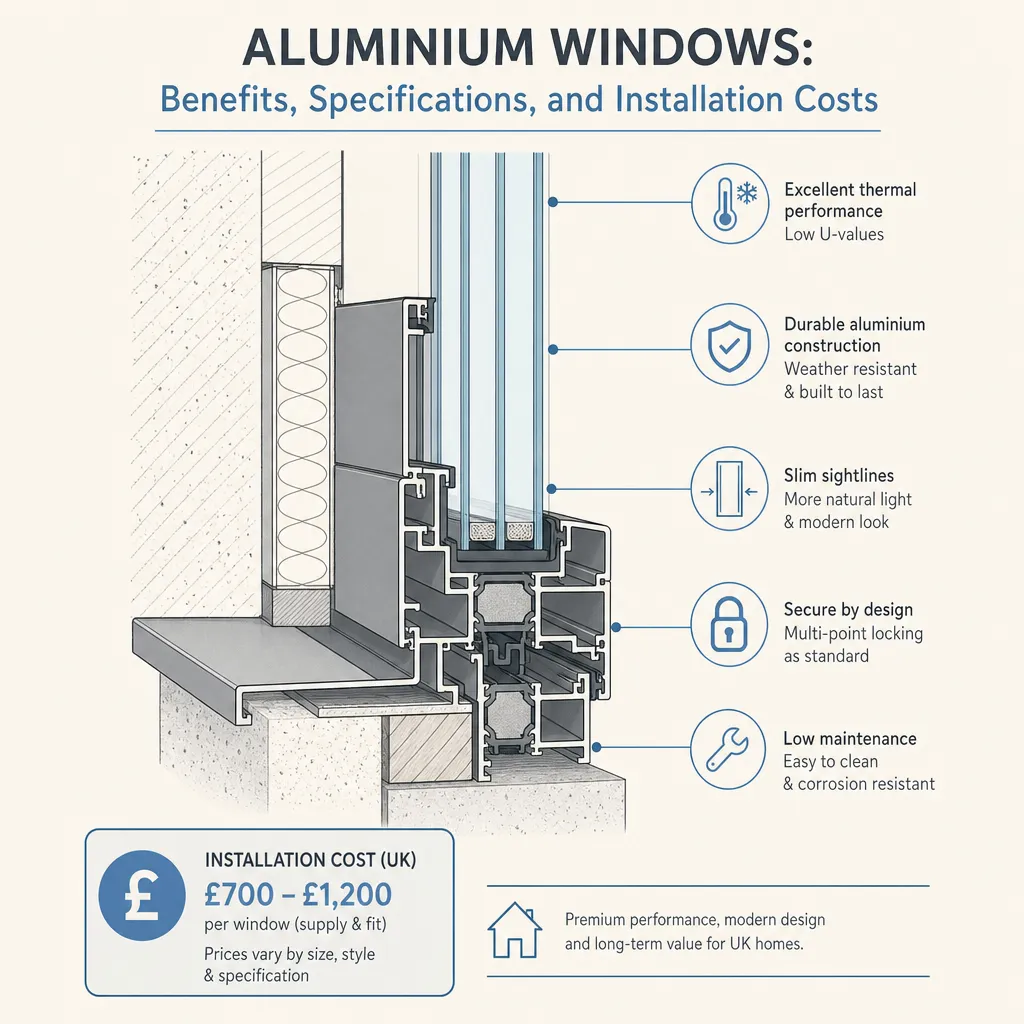
Aluminium Windows: Benefits, Specifications, and Installation Costs
Aluminium windows typically cost £600–£1,800 per window installed in the UK, depending on size and specification.
 Improvement & Build
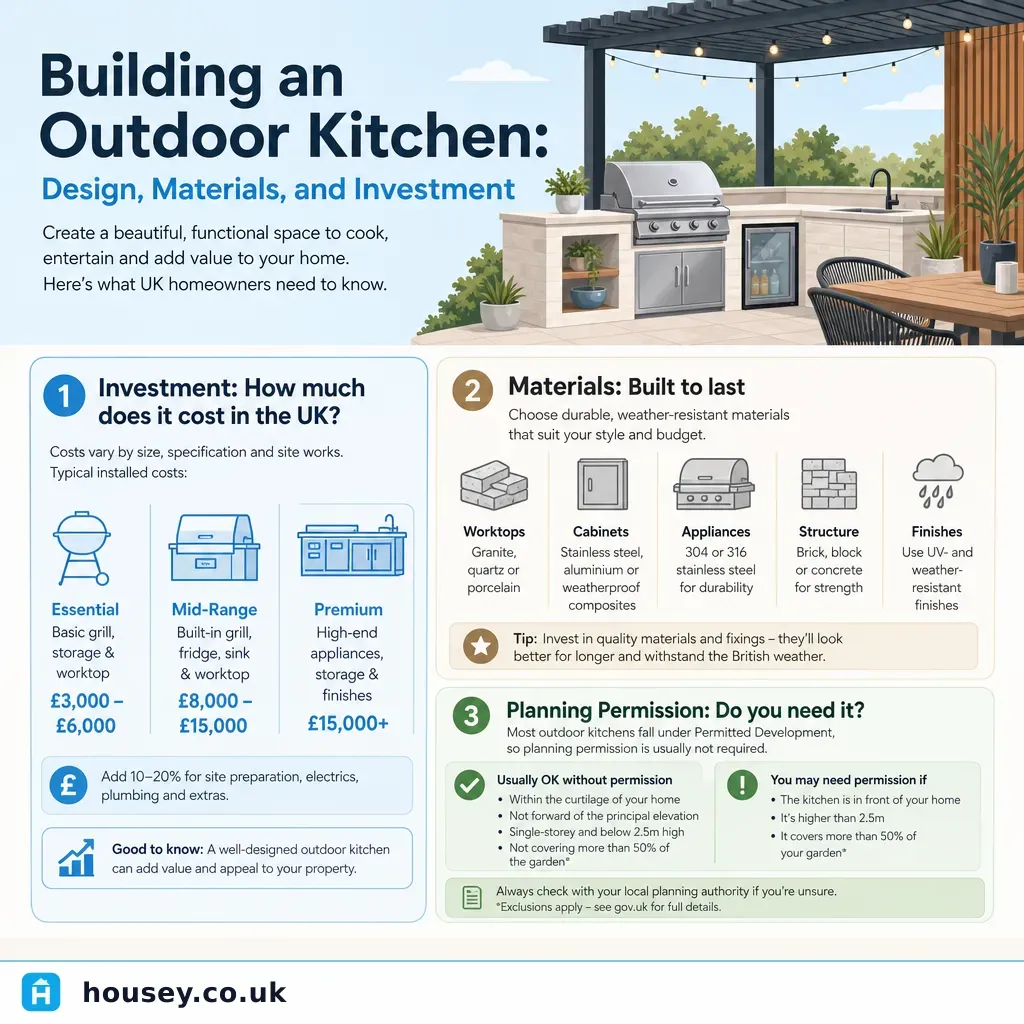
Building an Outdoor Kitchen: Design, Materials, and Investment
Building an outdoor kitchen in the UK costs roughly £3,000–£25,000 depending on size and materials.
 Improvement & Build
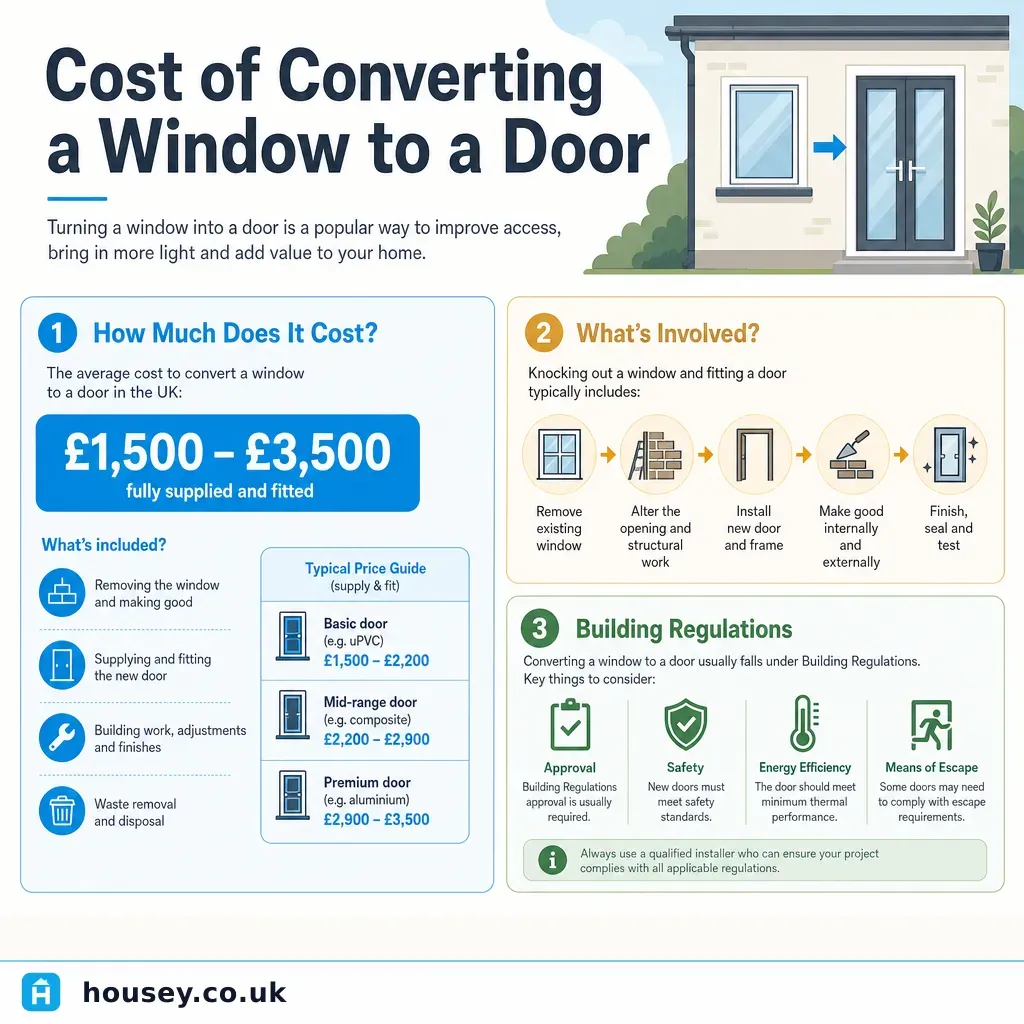
Cost of converting a window to a door
Converting a window to a door in the UK typically costs £1,500–£5,000 or more, depending on wall construction (cavity, solid, or timber frame), the type of door fitted, and whether a new or enlarged lintel is required.