Cost of Zinc Gutters for Property Protection
By Housey · Last reviewed 31st of May 2026
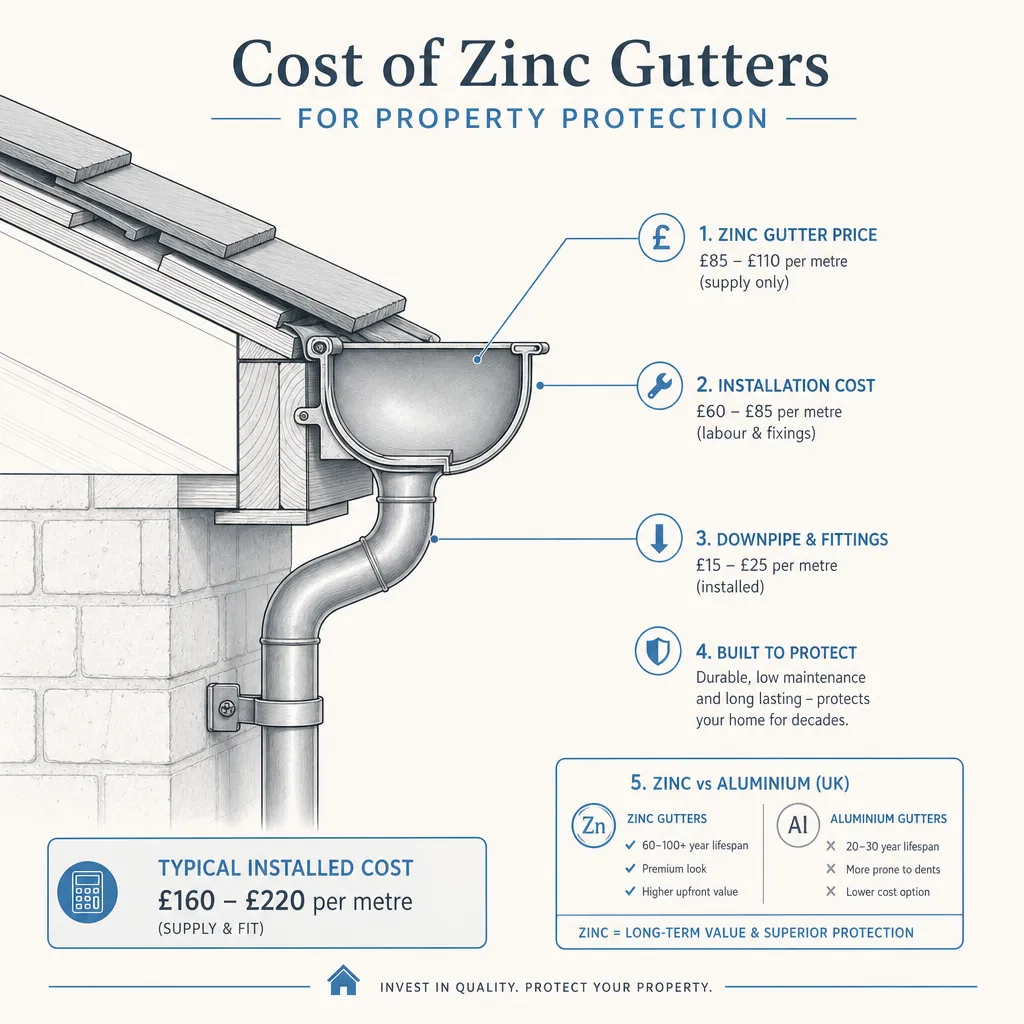
Cost of Zinc Gutters for Property Protection
Zinc gutters are a premium rainwater management choice increasingly specified on heritage restorations, self-build projects, and high-end refurbishments across the UK. Deciding whether to invest in zinc — rather than uPVC, aluminium, or cast iron — usually comes up during a roof replacement or when an existing gutter system has reached the end of its life. The material choice affects not only upfront cost but maintenance obligations, property aesthetics, and how long before you will need to revisit the work.
Key points
- Zinc gutters typically cost £60–£120 per metre installed (supply and fit, excluding scaffolding); indicative UK costs, last reviewed 2026-05-31.
- Zinc for architectural applications must comply with BS EN 988 (specification for rolled zinc products for building).
- Installed correctly, zinc gutters can last 50–100 years — significantly longer than uPVC (20–30 years) or aluminium (30–40 years).
- Zinc develops a natural patina (zinc carbonate layer) within 2–5 years that provides ongoing corrosion resistance without painting or coating.
- Scaffolding is usually a separate cost and can add £500–£2,000+ depending on property height and access; always request it as a named line item in your quote.
What does zinc guttering cost in the UK?
Zinc gutter pricing breaks down into materials, fabrication, and installation. Unlike uPVC sold off the shelf, zinc guttering is typically cut to measure or roll-formed on site by a specialist.
Indicative UK costs, last reviewed 2026-05-31:
Cost component | Approximate range |
|---|---|
Zinc gutter section (supply only, per metre) | £30–£70 |
Installation labour (per metre) | £25–£55 |
Downpipes (supply and fit, per pipe run) | £150–£400 each |
Specialist fabrication (bespoke profiles) | £50–£150+ per m |
Scaffolding (typical two-storey) | £600–£1,800 |
Prices vary significantly by region, profile complexity, and installer. Obtain at least three itemised quotes.
The main cost drivers are:
- Gutter profile: Half-round, box, and ogee profiles vary in material cost; bespoke profiles for listed buildings or unusual property types carry a further premium.
- Zinc grade: Pure zinc (Z1) costs more than zinc-titanium alloys (ZnCuTi), though alloys offer improved workability and comparable long-term performance.
- Access: Two-storey or complex roof lines require more scaffolding time and equipment, adding materially to the total project cost.
- Installer experience: Zinc work requires a contractor experienced with soft metal fabrication — not all roofers or general builders have this skill.
For a standard semi-detached house with approximately 20 metres of gutter run, a zinc installation might cost £1,200–£2,400 for materials and labour, before scaffolding. A comparable uPVC reclad would typically cost £300–£700.
Zinc gutters compared with other materials
Material | Typical lifespan | Supply-and-fit cost (per m) | Maintenance | Best for |
|---|---|---|---|---|
uPVC | 20–30 years | £15–£35 | Low (clean annually) | Budget, modern housing |
Aluminium | 30–40 years | £25–£55 | Low–medium | Contemporary and standard residential |
Cast iron | 50–100 years | £60–£130 | Medium (repaint every 5–10 years) | Victorian and Edwardian period restoration |
Zinc | 50–100 years | £60–£120 | Very low (self-patinating) | Heritage, self-build, premium specification |
Copper | 80–100+ years | £100–£200+ | Negligible | High-end heritage and architectural projects |
Indicative UK costs, last reviewed 2026-05-31. Costs vary by region and installer.
Is zinc worth the premium?
The case for zinc usually rests on three factors:
- Lifecycle cost: A 75-year lifespan can outperform two or three full uPVC replacements once you factor in repeat labour and scaffolding costs. The lifecycle economics often favour zinc on properties expected to be held long-term.
- Aesthetics and planning constraints: In conservation areas or on listed buildings, planning authorities may require materials consistent with the original construction. Zinc and cast iron are generally acceptable where uPVC is not.
- Maintenance reduction: Once patinated, zinc is essentially maintenance-free. Cast iron requires periodic repainting; uPVC can yellow, crack, or sag over time.
The main argument against zinc is the higher upfront cost and the need for a specialist installer who understands thermal expansion, jointing, and compatible fixings. For a 1960s estate house that will be resold in five years, uPVC or aluminium may make more financial sense.
Checklist: before getting quotes for zinc gutters
When to get professional help
Any gutter installation on a two-storey or taller property, or on a roof with complex geometry, should be carried out by a qualified contractor with appropriate access equipment and public liability insurance. Do not attempt to work at height beyond 2 metres without proper scaffolding or working platforms.
If your property is listed or in a conservation area, consult your local planning authority before specifying materials — some replacement works may require Listed Building Consent or conservation area consent even when they appear routine.
If you notice overflowing gutters after rain, damp patches on external walls below the roofline, or staining on fascia boards, arrange an inspection promptly. Blocked or failing gutters can cause masonry saturation and persistent damp penetration if left unaddressed.
How Housey can help
Housey connects you with vetted local roofers experienced with zinc guttering who can assess your existing rainwater system, advise on profile and material options, and provide itemised quotes covering supply, installation, and scaffolding. Compare credentials and quotes before committing to the work.
Frequently asked questions
How long do zinc gutters last?
Zinc gutters installed correctly and with appropriate expansion joints typically last 50–100 years. The self-forming zinc carbonate patina provides corrosion resistance without painting or chemical treatment, which is the primary reason the lifespan so greatly exceeds uPVC (20–30 years) or standard aluminium (30–40 years).
Do I need planning permission to replace gutters with zinc?
In most cases, replacing gutters is routine maintenance and does not require planning permission. However, if your property is listed or in a conservation area, you may need Listed Building Consent or conservation area consent — especially if you are changing the material or profile. Always check with your local planning authority first.
Can I mix zinc gutters with other metals?
Direct contact between zinc and copper or unprotected steel can cause galvanic corrosion. Zinc is generally compatible with aluminium, but fixings should be stainless steel or zinc-coated. Copper pipes or copper-bearing water should not drain directly onto zinc surfaces. Your installer should advise on compatible flashing and downpipe materials.
Are zinc gutters suitable for flat roofs?
Yes. Zinc gutters are used on both pitched and flat-roofed buildings. On flat roofs, zinc is also commonly used as a covering material, and integrating zinc box gutters or parapet gutters with a zinc roof deck can create a unified, long-lasting weathering system with minimal maintenance.
Sources and further reading
- Working at height: a brief guide — Health and Safety Executive
- Listed buildings guidance — GOV.UK
- Home improvement: planning permission — Planning Portal
- BS EN 988: specification for rolled flat products for building — BSI Group
Useful next reads
 Improvement & Build
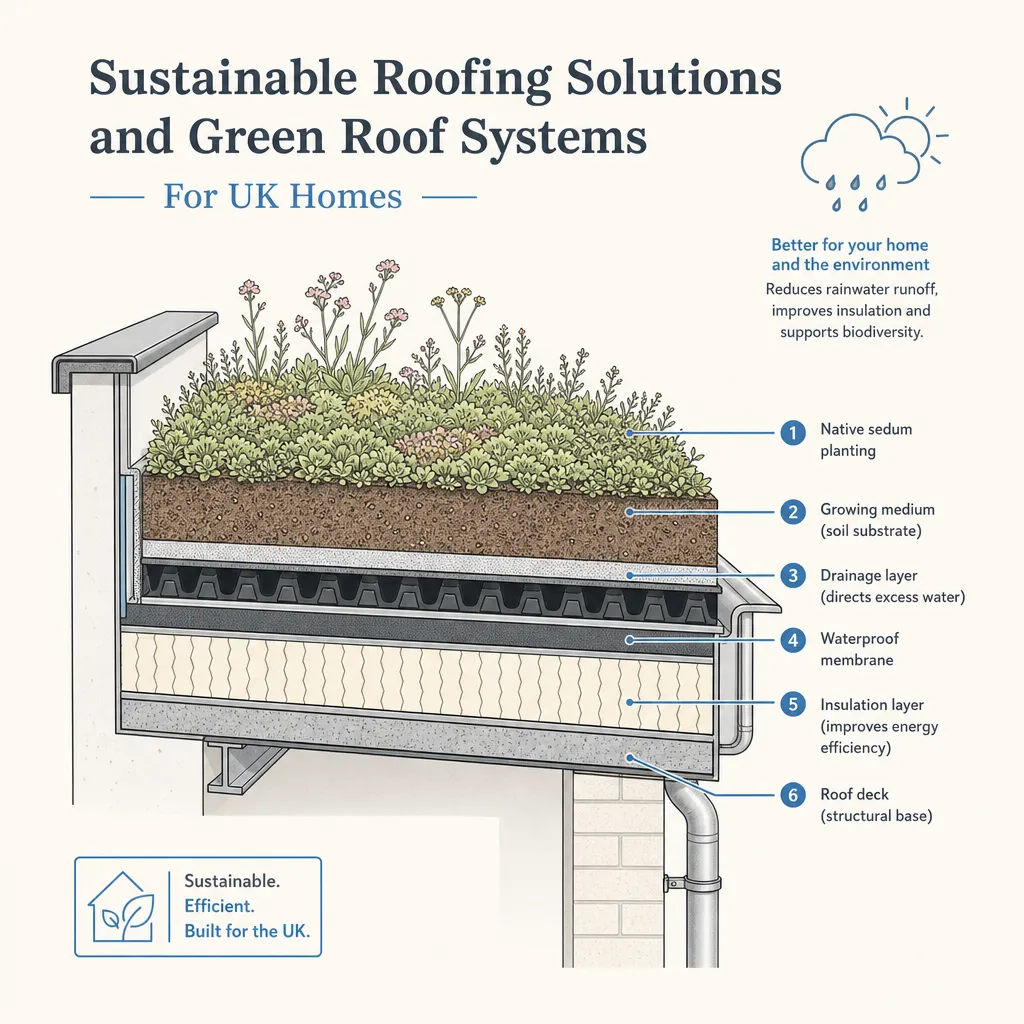
Sustainable Roofing Solutions and Green Roof Systems
Sustainable roofing in the UK covers several options: sedum or living roofs, recycled-content tiles, reclaimed slate, and solar-integrated roofing.
 Improvement & Build
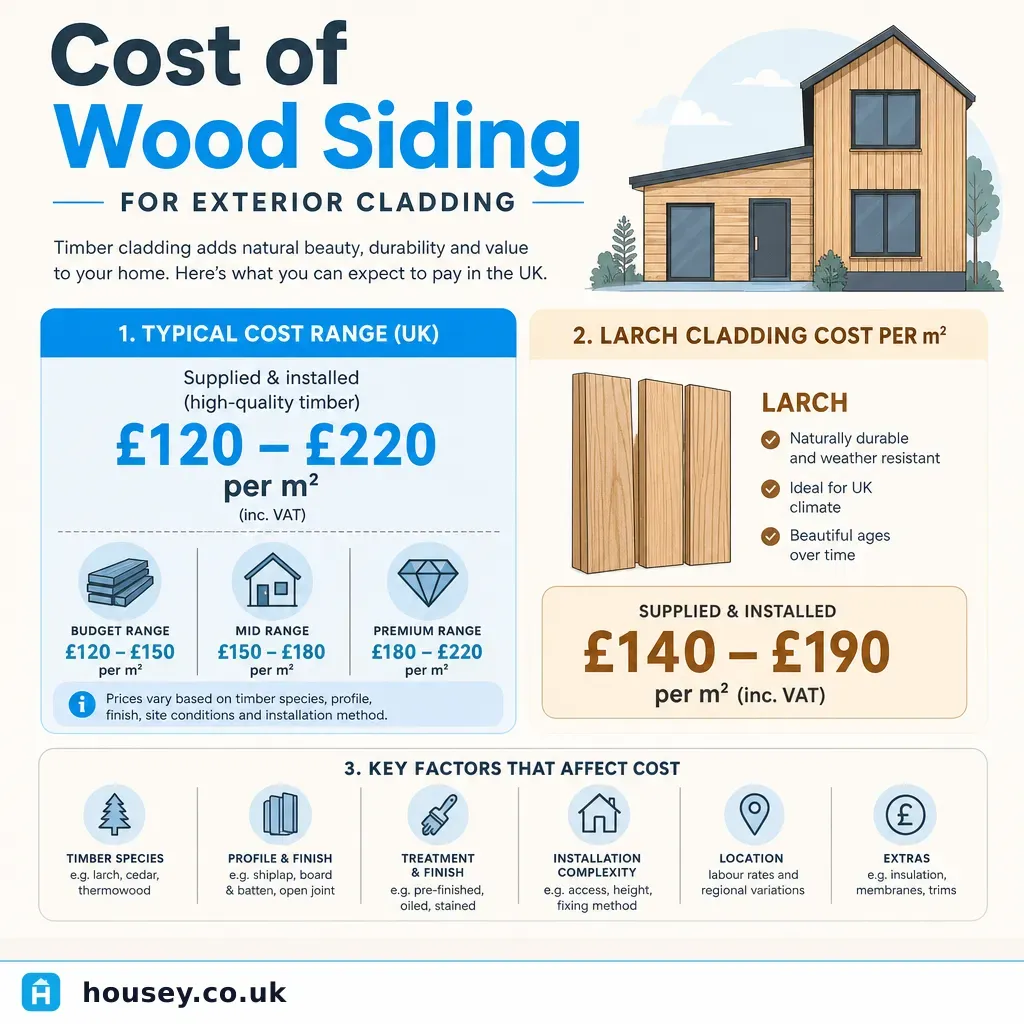
Cost of wood siding for exterior cladding
External timber cladding in the UK typically costs £80–£200 per m² installed, depending on species, profile, and access.
 Improvement & Build
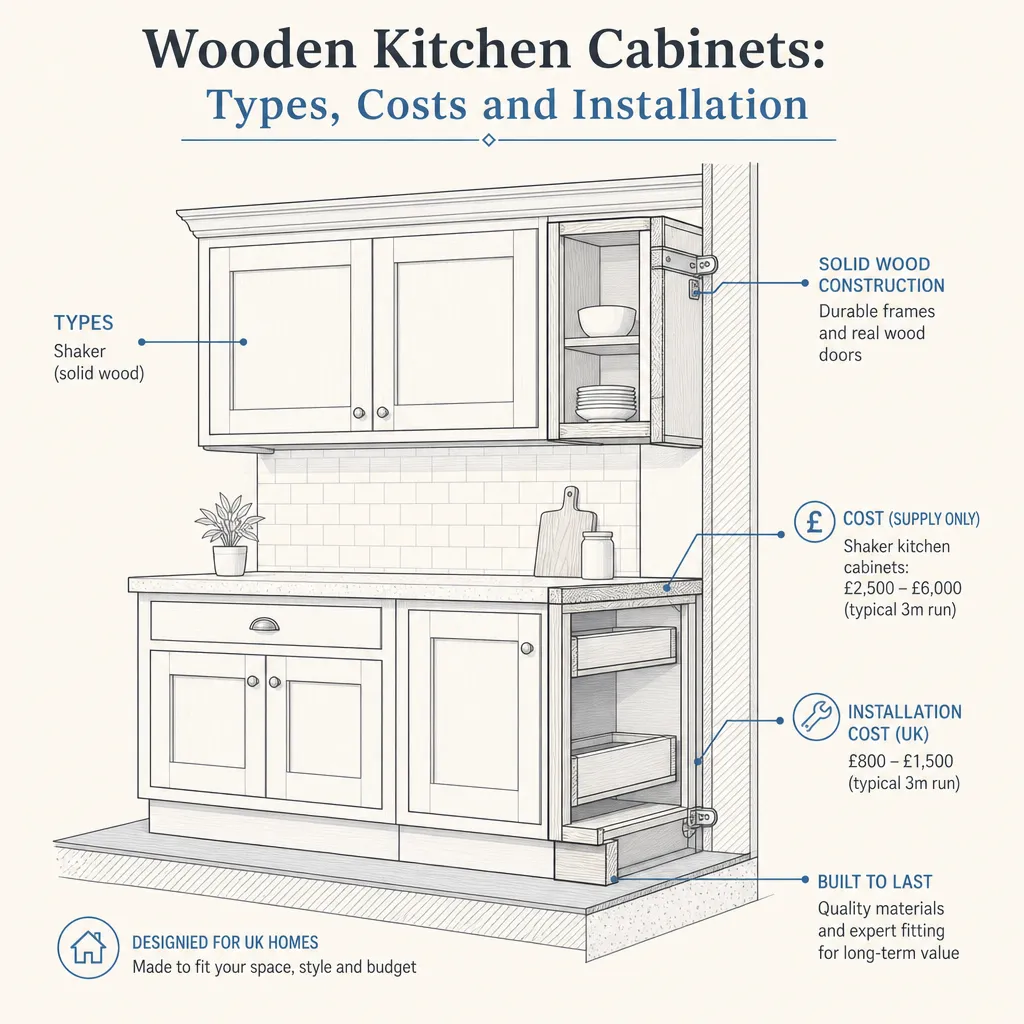
Wooden kitchen cabinets: types, costs and installation
Wooden kitchen cabinets in the UK range from around £4,000–£12,000 installed for mid-range painted shaker units to £10,000–£25,000 or more for solid hardwood kitchens.
 Improvement & Build
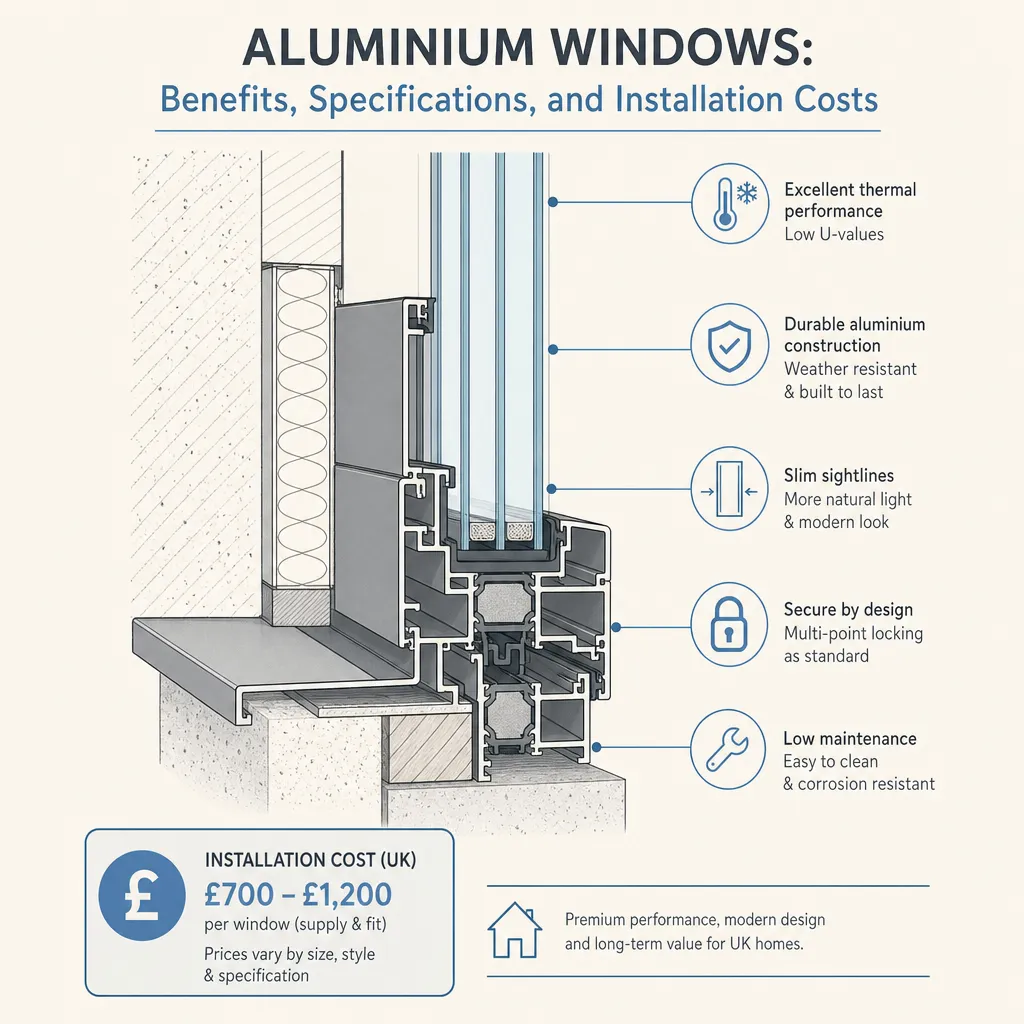
Aluminium Windows: Benefits, Specifications, and Installation Costs
Aluminium windows typically cost £600–£1,800 per window installed in the UK, depending on size and specification.
 Improvement & Build
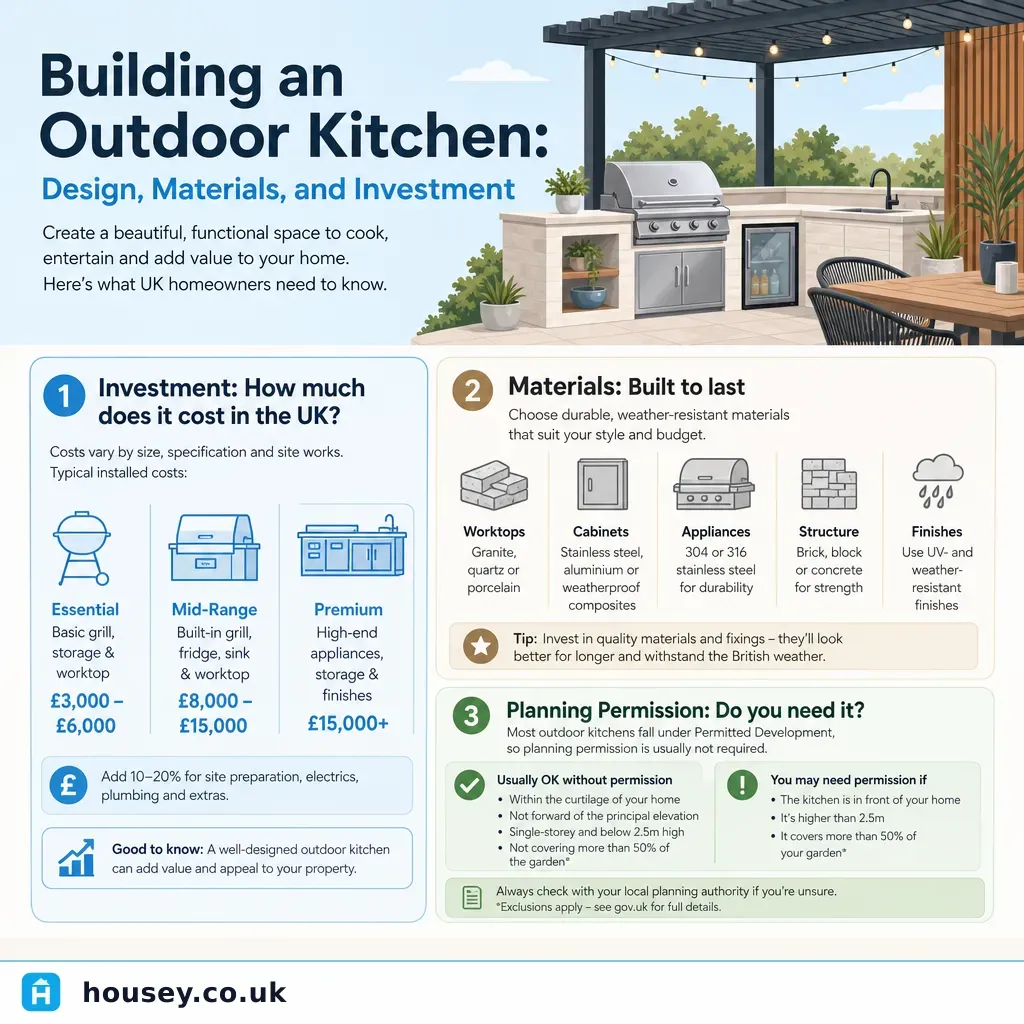
Building an Outdoor Kitchen: Design, Materials, and Investment
Building an outdoor kitchen in the UK costs roughly £3,000–£25,000 depending on size and materials.