Cost of Replacing Failed Sealed Units in Double-Glazed Windows
By Housey · Last reviewed 6th of May 2026
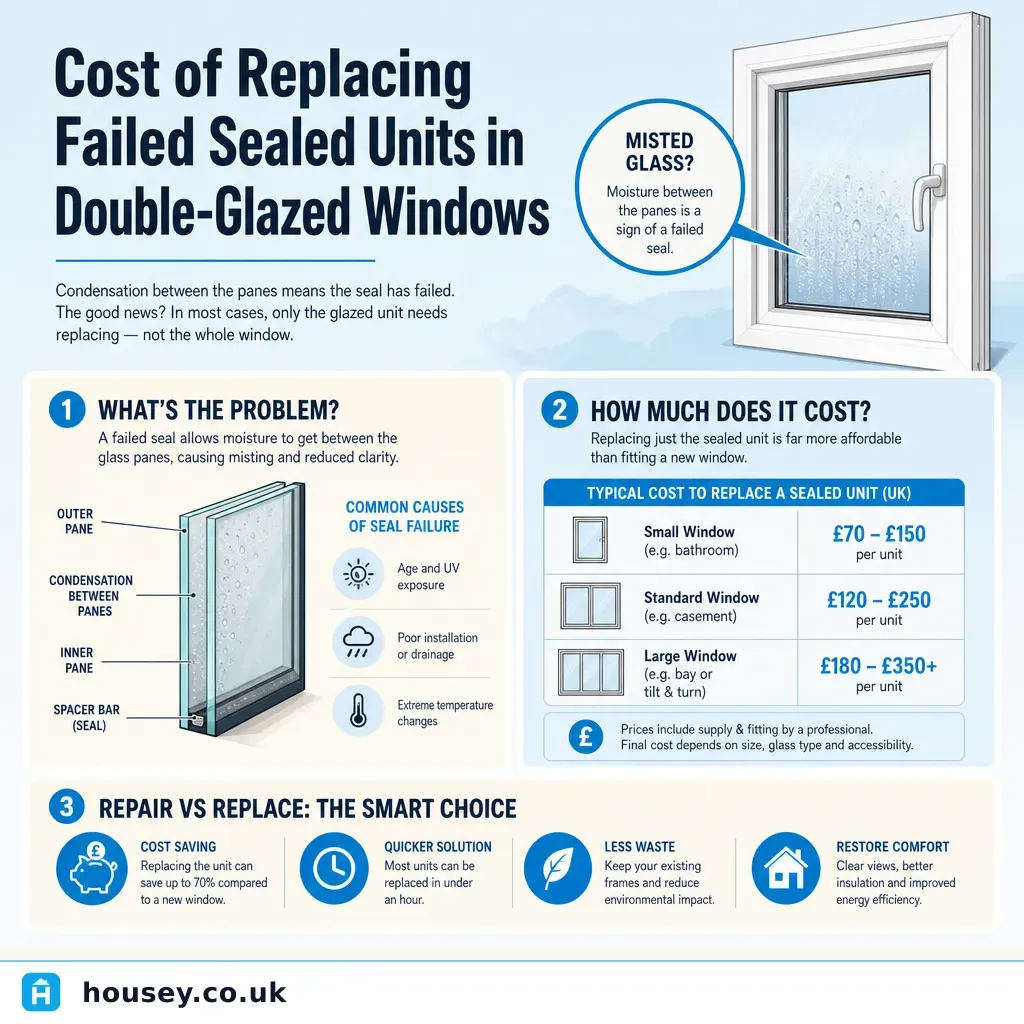
Cost of Replacing Failed Sealed Units in Double-Glazed Windows
Double-glazed windows rely on a sealed, gas-filled cavity between two panes to deliver their thermal and acoustic performance — and once that seal fails, misting, draughts, and heat loss follow. The decision of whether to swap the unit or replace the whole window is one most UK homeowners face eventually, particularly with glazing installed before 2010 when quality and installation standards varied widely.
Key points
- Sealed unit replacement typically costs £75–£200 per unit in the UK, depending on size, glass type, and location (Indicative UK costs, last reviewed 2026-05-06).
- Condensation between the two panes — not on the interior surface — is the definitive sign of seal failure; inner-surface condensation is a ventilation issue, not a glazing fault.
- Replacing sealed units in England and Wales constitutes controlled work under Building Regulations Part L; most glaziers self-certify compliance through FENSA or CERTASS registration.
- Upgrading to low-emissivity (low-e) glass during replacement can improve U-values from around 2.8 W/m²K to below 1.6 W/m²K.
- Sealed units typically carry a manufacturer's warranty of 5–10 years; premature failure may constitute a claim against the original installer.
What causes sealed unit failure?
The hermetic seal keeps inert gas in and moisture out. Thermal cycling — repeated expansion and contraction of the frame and glass — stresses the sealant over time, particularly at corners. Once the desiccant strip inside the spacer bar becomes saturated, condensation forms between the panes and the unit must be replaced.
Accelerated failure is often linked to poor original installation, cracked edge beads, blocked drainage slots, or UV degradation of older polysulphide sealants on south-facing elevations.
How much does sealed unit replacement cost in the UK?
Indicative UK costs, last reviewed 2026-05-06. Always request at least two itemised quotes.
Unit type | Supply only | Installed (per unit) |
|---|---|---|
Standard double-glazed unit (600 × 900 mm) | £40–£70 | £75–£130 |
Large double-glazed unit (1200 × 1200 mm) | £70–£130 | £120–£200 |
Low-e or solar-control unit | £80–£150 | £130–£220 |
Triple-glazed unit (equivalent size) | £120–£220 | £180–£300 |
Georgian bar or leaded unit | £90–£180 | £150–£250 |
Costs exclude VAT at 20%. Upper-floor access typically adds a scaffold or ladder surcharge of £100–£400 per visit. London and South East rates run 15–25% above the national average.
Sealed unit replacement vs full window replacement
Replacing only the unit inside an existing frame is cheaper — but not always appropriate. Use this comparison to decide.
Scenario | Sealed unit replacement | Full window replacement |
|---|---|---|
PVCu frame in good condition | Usually preferred | Not normally needed |
Timber frame with minor rot | Possible after frame repairs | Consider if frame repairs exceed 50% of window cost |
Multiple units failed in same window | Can replace all units | Consider if frames are also degraded |
Frame warped or poorly fitting | Not recommended | Replace frame and unit together |
Significant thermal upgrade wanted | Limited by existing frame spec | New A-rated frame and unit |
Listed building or conservation area | Check local planning authority | Check local planning authority |
Window under 10 years old | Check manufacturer warranty first | Rarely appropriate |
Signs your sealed unit has failed: homeowner checklist
Does sealed unit replacement need building regulations approval?
Yes, in most cases. Replacing a sealed unit in England and Wales is controlled work under Part L of the Building Regulations. The simplest compliance route is using a FENSA- or CERTASS-registered installer, who will issue a certificate of compliance — which a solicitor or buyer will ask for on any sale of the property.
If your glazier is not registered with either scheme, apply to your local authority building control department before work begins. Toughened safety glass is also required in certain locations — near doors, at low level, and in bathrooms — under Approved Document N.
What to ask a glazier before accepting a quote
- Are you FENSA or CERTASS registered, and will you provide a certificate of compliance?
- Is the glass toughened where Building Regulations require it?
- What spacer bar are you using — warm-edge or aluminium?
- What is the U-value and argon fill percentage of the replacement unit?
- Does the quote include disposal of the failed unit?
- Is VAT included?
- What warranty covers the unit and your workmanship?
- Are frame repairs or drainage issues likely to change the final cost?
When to get professional help
Sealed unit replacement is routine for a qualified glazier. Wider professional advice is worthwhile if:
- Multiple windows across the property are failing simultaneously — a RICS-accredited building surveyor can assess whether a latent defect or installer warranty claim applies.
- Timber frames show rot, distortion, or significant draught gaps — a joiner or specialist window contractor should assess frame condition first.
- The property is listed or in a conservation area — contact your local planning authority before replacing any unit, as permitted development rights for glazing changes may be restricted.
- You are unsure whether current or replacement glass meets safety requirements under Approved Document N.
How Housey can help
Housey connects you with vetted local window and door installers who hold current FENSA or CERTASS registration. Submit your details once and compare quotes from up to four providers in your postcode area.
Frequently asked questions
How long does it take to replace a sealed unit?
A single unit in a ground-floor window typically takes a skilled glazier one to two hours. Multiple units in the same visit can be completed in a half or full day. Access difficulties — upper floors, dormer windows, or conservatory roofs — will extend the time and add to cost.
Can I claim on my home insurance for failed sealed units?
Seal failure caused by age or thermal stress is treated as wear and tear by most insurers and is not covered under standard buildings or contents policies. Accidental damage cover may apply if an impact caused the failure. Check your policy schedule and speak to your insurer before assuming you have cover.
Will replacing sealed units improve my EPC rating?
Replacing failed units with current-specification double or triple glazing can improve window thermal performance and may contribute to a better Energy Performance Certificate rating. EPC assessors consider the whole building fabric, however — if other elements are poorly insulated, the improvement to your overall rating may be modest.
What is a warm-edge spacer bar and should I ask for one?
The spacer bar separates the two panes around the perimeter of the unit. Traditional aluminium bars conduct heat and create a cold bridge at the glass edge. Warm-edge spacers made from polymer or stainless steel composites reduce this effect and improve unit performance. Most reputable glaziers now use warm-edge bars as standard.
How do I know if my glazier is FENSA registered?
You can search the FENSA database at fensa.org.uk by company name or postcode. Registration must be current — a lapsed registration means the installer cannot self-certify compliance with building regulations, and you would need separate local authority building control approval before work begins.
Sources and further reading
- Building Regulations Approved Document L: Conservation of fuel and power — GOV.UK
- FENSA: Fenestration Self-Assessment Scheme — FENSA
- CERTASS Trade Association — CERTASS
- Building Regulations Approved Document N: Glazing safety — GOV.UK
- Windows and glazing advice — Energy Saving Trust
Useful next reads
 Improvement & Build
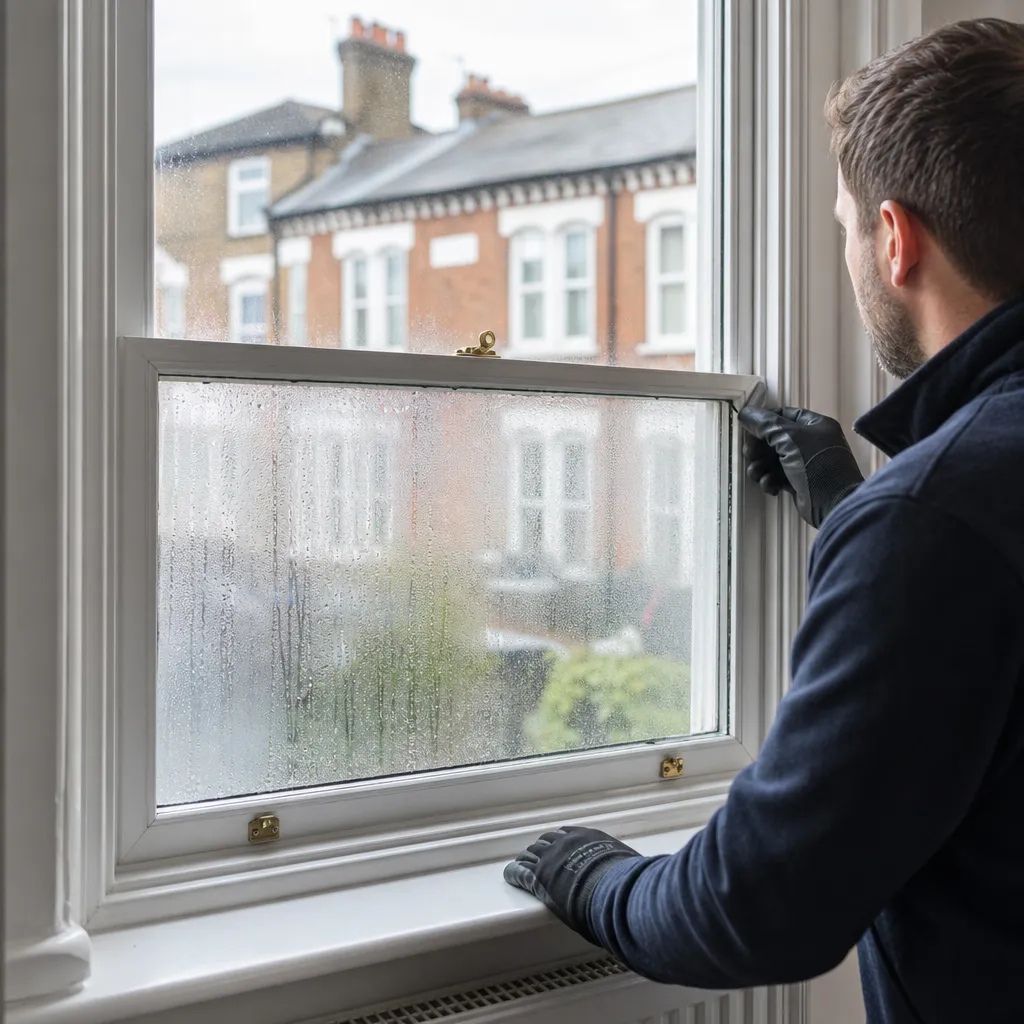
Repairing Failed Window Seals and Condensation Issues
Condensation between double-glazed panes means the hermetic seal on the insulated glass unit has failed.
 Improvement & Build
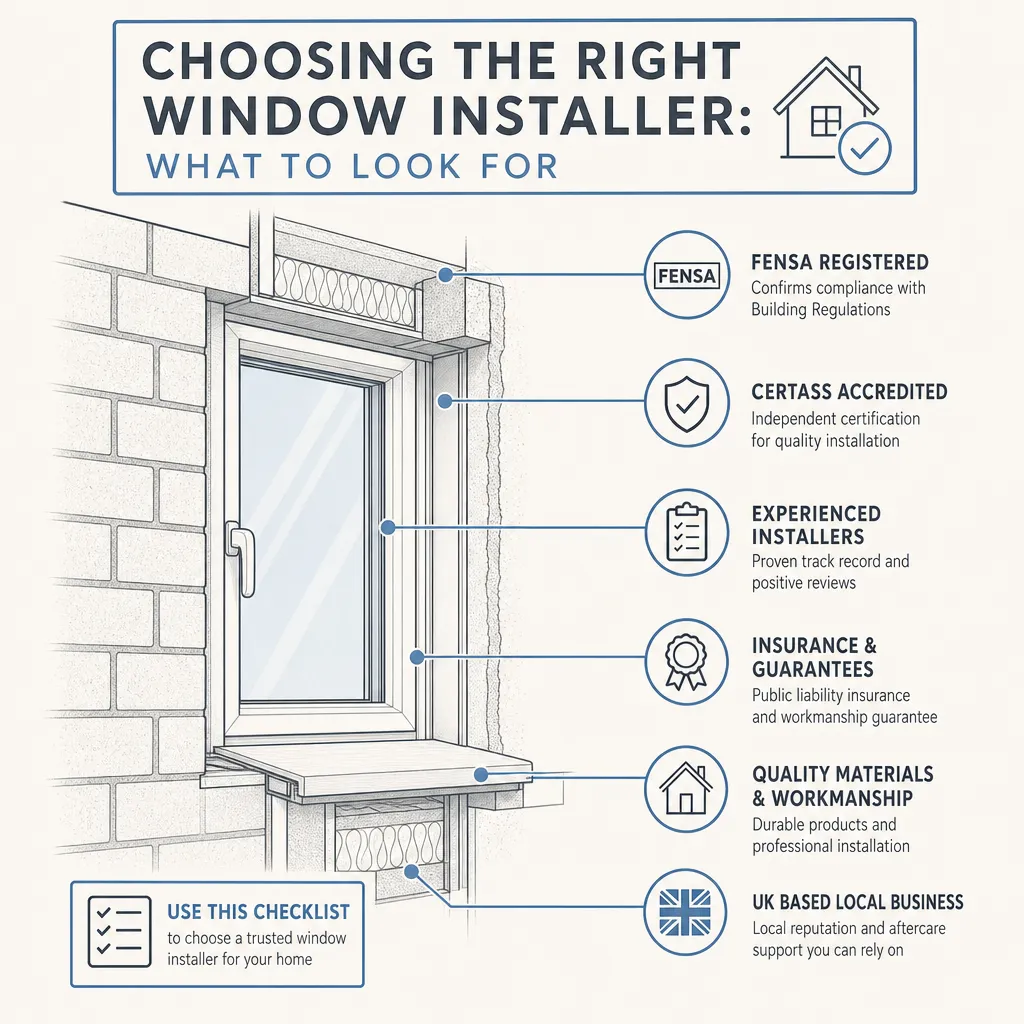
Choosing the Right Window Installer: What to Look For
When choosing a window installer in the UK, verify FENSA or CERTASS registration first — these schemes allow installers to self-certify Building Regulations compliance and issue the completion certificate you will need at resale.
 Improvement & Build
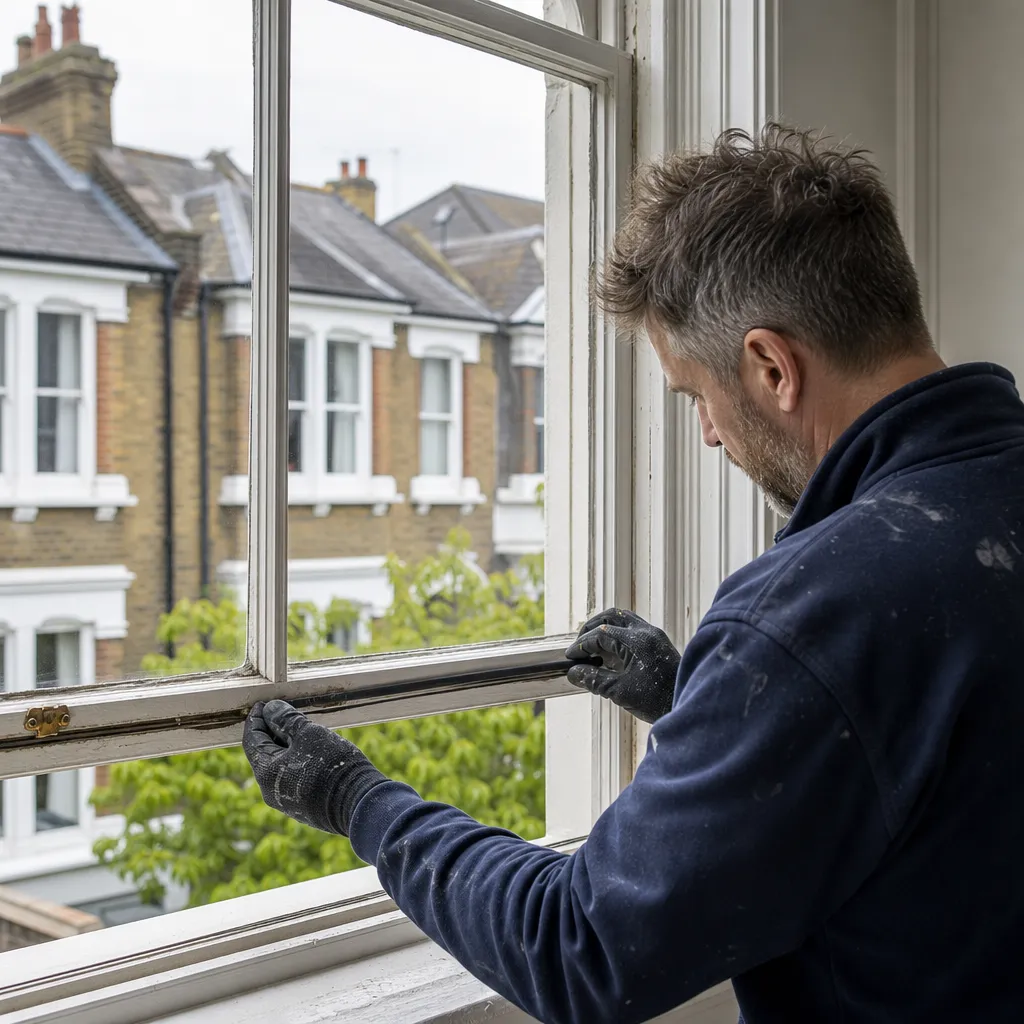
Restoring Window Seals: When Repair Is Possible and When Replacement Is Needed
Window seal failure takes two main forms: the hermetic seal of the insulated glass unit (IGU), which causes misting between panes and cannot be fixed without replacing the glass, and the perimeter draught seal, which can usually be replaced without disturbing the glazing.
 Improvement & Build
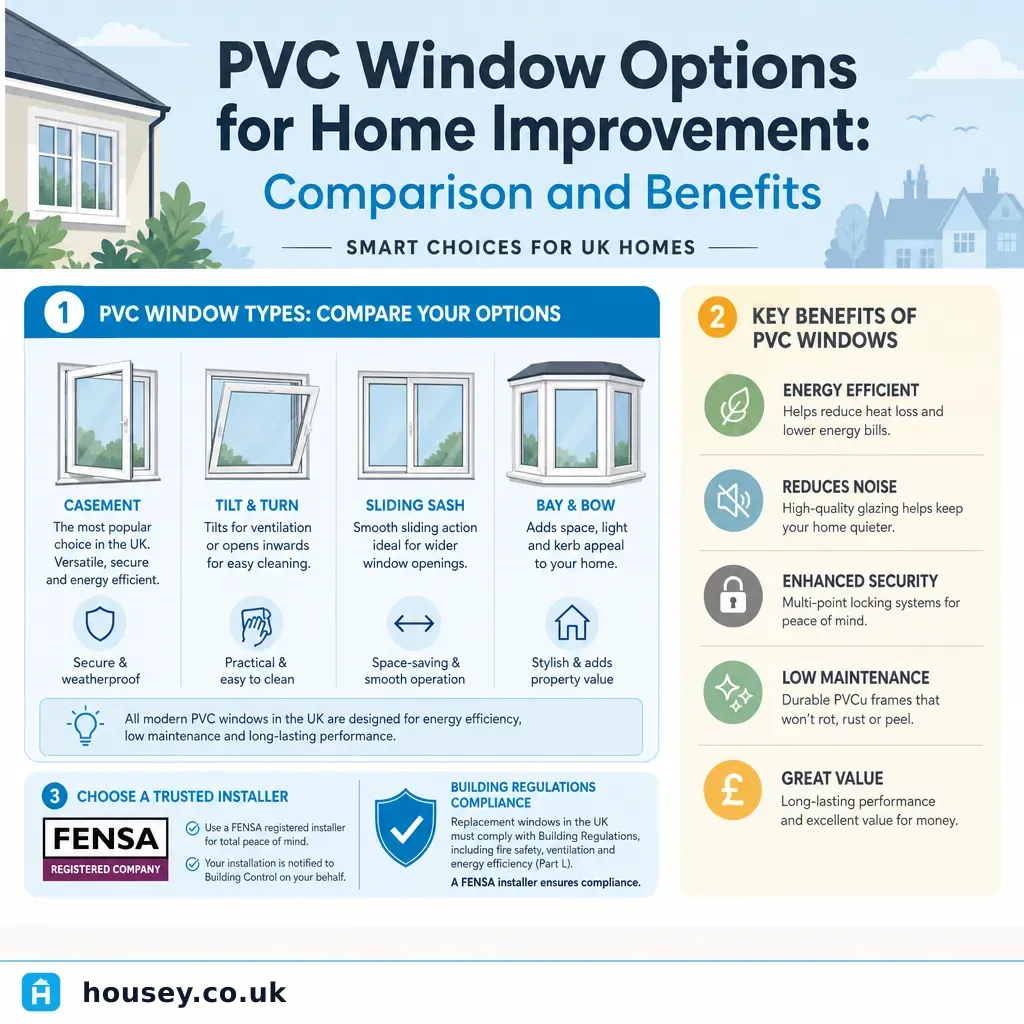
PVC Window Options for Home Improvement: Comparison and Benefits
uPVC (unplasticised PVC) is the most widely fitted material for replacement windows in UK homes, combining low maintenance with good thermal performance.
 Improvement & Build
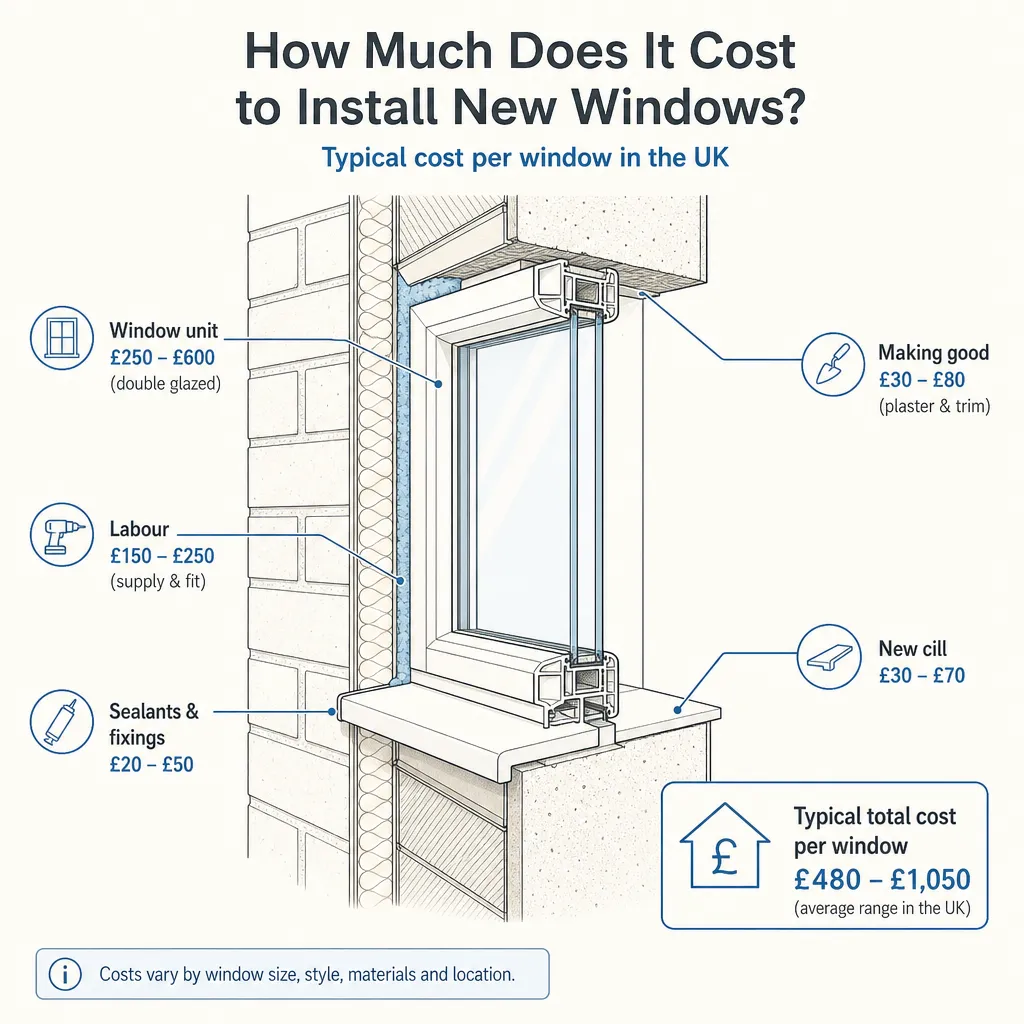
How Much Does It Cost to Install New Windows?
New window installation in the UK typically costs £300–£700 per uPVC double-glazed window (supply and fit), rising to £800–£2,500 for timber or sash windows.