How Much Does It Cost to Install New Windows?
By Housey · Last reviewed 11th of May 2026
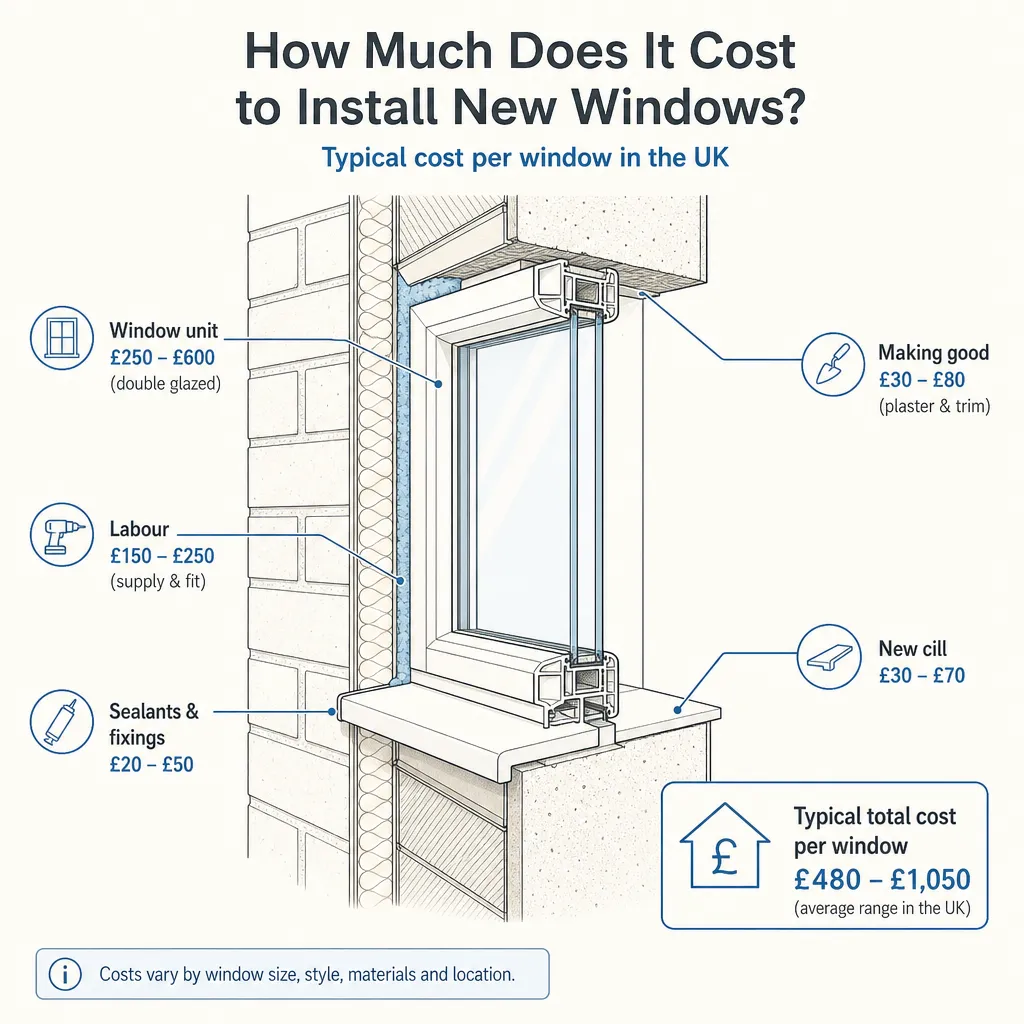
How Much Does It Cost to Install New Windows?
Replacing windows is one of the most common home improvement projects in the UK — it comes up during full renovations, energy upgrades before a sale, or when old units fail their thermal function or start letting in draughts. The cost range is wide, from a few hundred pounds for a single standard uPVC casement to several thousand for a full house of timber sash windows, so understanding what drives the cost helps you budget accurately and compare quotes with confidence.
Key points
- Replacement windows in England and Wales must meet a minimum whole-window U-value of 1.4 W/m²K under Building Regulations Approved Document L (2021 edition).
- Installers must be registered with a government-authorised competent person scheme — FENSA or CERTASS — or you must apply separately for building control approval, which adds time and cost.
- Listed buildings and conservation area properties often need listed building consent or planning permission before windows can be changed; check with your local planning authority before ordering.
- uPVC remains the most widely installed frame material in the UK; timber and aluminium frames carry a higher upfront cost but are often required on heritage or higher-specification properties.
- Regional labour rates vary: expect a 20–30% premium over the national average in London and the South East.
Window installation costs by frame material
The frame material is the single biggest driver of installed price. The table below shows indicative supply-and-fit costs per window for a standard casement of approximately 1,200 × 1,050 mm. Prices vary by supplier, region, and specification.
Indicative UK costs, last reviewed 2026-05-11. Obtain at least three quotes for your specific property.
Frame material | Indicative cost per window (supply and fit) | Best for | Not ideal for |
|---|---|---|---|
uPVC double glazed | £300–£700 | Most modern and post-war homes; best value | Heritage properties, conservation areas |
uPVC triple glazed | £450–£900 | Noise-sensitive locations, exposed elevations | Budget-constrained projects |
Timber double glazed | £800–£1,500 | Period properties, conservation areas, aesthetics | Low-maintenance priorities |
Aluminium double glazed | £700–£1,200 | Contemporary homes, large glazed areas, slim sightlines | Budget projects |
Timber sash (sliding) | £1,000–£2,500 | Victorian and Edwardian terraces, listed buildings | Modern or post-war homes |
Secondary glazing | £200–£600 | Listed buildings where primary glazing must stay | Where full replacement is permitted |
What else affects the price?
Beyond frame material, several other factors push costs up or down.
Number and size of windows. Larger panes and non-standard sizes cost more to manufacture. Bay windows, curved frames, and arched heads attract a premium. Most installers apply a reduced per-unit rate when replacing multiple windows in a single visit.
Floor level and access. Ground-floor windows are straightforward. Upper-floor work may require scaffolding or an access tower — scaffold erection typically adds £300–£700 to a job.
Glazing specification. Energy-rated glass (BFRC Window Energy Rating A++ to C), acoustic glass, self-cleaning coatings, and obscured or tinted glass all affect unit cost. Low-emissivity coatings are now standard in most double-glazed units and are usually included in quoted prices.
Disposal of old frames. Responsible disposal of old uPVC, timber, or aluminium frames may be included or charged separately. Confirm this before accepting a quote.
Decorating and making good. Internal plastering around the frame reveal is usually the homeowner's responsibility unless specifically included in the scope of work.
Worked example: replacing windows in a 1930s semi-detached house
A typical three-bedroom 1930s semi in the East Midlands might have ten windows: six standard casements on the front and rear elevations, two bathroom casements with obscured glass, and two larger lounge windows at the front. Replacing all ten with white uPVC A-rated double glazing might look like this:
- 8 standard casements at £450 each: £3,600
- 2 larger lounge windows at £650 each: £1,300
- Scaffolding for upper-floor rear bedroom access: £400
- Old frame disposal: included in the installer's price
- Estimated total: approximately £5,300 (indicative, 2026)
The same job specified in timber would approximately double in price. The same job in London might carry a 25% regional labour premium, bringing the estimate closer to £6,600.
Which window type should you choose?
- Choose uPVC if your property is post-war, not in a conservation area, and you want low maintenance and good thermal performance at the lowest upfront cost.
- Choose timber if the property is listed or in a conservation area, if planning conditions specify timber frames, or if you prefer the aesthetics and are prepared to redecorate periodically.
- Choose aluminium if you want slim sightlines, a contemporary look, or need large-format glazing such as picture windows.
- Consider secondary glazing if the property is listed and the local authority requires the original primary frames to be retained.
- Consult your local planning authority or Historic England if the property is a listed building or within a designated conservation area, before committing to any frame material or style.
Do I need planning permission or building control sign-off?
For most homes in England, replacing windows on a like-for-like basis is permitted development — no planning application is needed. You still must comply with Building Regulations Part L (U-value ≤ 1.4 W/m²K for the whole window unit). A FENSA or CERTASS-registered installer self-certifies compliance and issues a certificate, which you should retain for future property sales.
Planning consent may be required if:
- The property is a listed building (any grade) — listed building consent is usually needed.
- The property is in a conservation area — consent may be required where changes alter the external character, particularly on front elevations.
- The property is a flat — permitted development rights differ from those for houses; check with your local planning authority before ordering.
What to ask before accepting a quote
When to get professional help
Window installation is a regulated trade. Always use a FENSA or CERTASS-registered installer for replacement windows in England and Wales — this ensures Building Regulations compliance is self-certified without a separate building control application.
Seek additional advice if:
- The property is listed or in a conservation area — you may need an architect or heritage consultant's input before specifying frames.
- Windows show signs of structural movement in the surrounding masonry (cracked lintels, stepped cracking above reveals) — a structural engineer or chartered surveyor should assess this before new windows are fitted.
- You plan to alter window openings (enlarge or add new windows) — this is likely to require planning permission and structural input.
How Housey can help
Housey connects you with vetted window and door installers who can provide fixed-price quotes tailored to your property. Compare up to four quotes in one place, with installer credentials and reviews visible before you decide.
Frequently asked questions
Do I need planning permission to replace windows?
In most cases, replacing like-for-like windows in England is permitted development and does not require planning permission. If your property is listed or in a conservation area, you may need listed building consent or planning permission. Always check with your local planning authority before ordering.
How long does window installation take?
A typical installation for a two or three-bedroom home usually takes one to two days. Larger properties, complex styles such as sash windows, or hard-to-access upper floors may take two to three days. Your installer should provide an estimated timeline before work begins.
What is FENSA and why does it matter?
FENSA is a government-authorised competent person scheme for window and door installers. A FENSA-registered company self-certifies that replacement windows comply with Building Regulations, saving you the cost of a separate building control application. Ensure your installer is FENSA or CERTASS registered before agreeing to work.
Is triple glazing worth the extra cost?
Triple glazing typically adds 20–40% to the cost over equivalent double glazing but offers better sound insulation and lower U-values. For most UK homes, high-specification A-rated double glazing delivers good thermal performance at a lower upfront cost. Compare the whole-window U-value rather than just the centre-pane glass figure when assessing specifications.
Sources and further reading
- Approved Document L: Conservation of fuel and power — GOV.UK
- FENSA: competent person scheme for windows and doors — FENSA
- Energy efficient windows — Energy Saving Trust
- Listed buildings and planning consent — Historic England
Useful next reads
 Improvement & Build
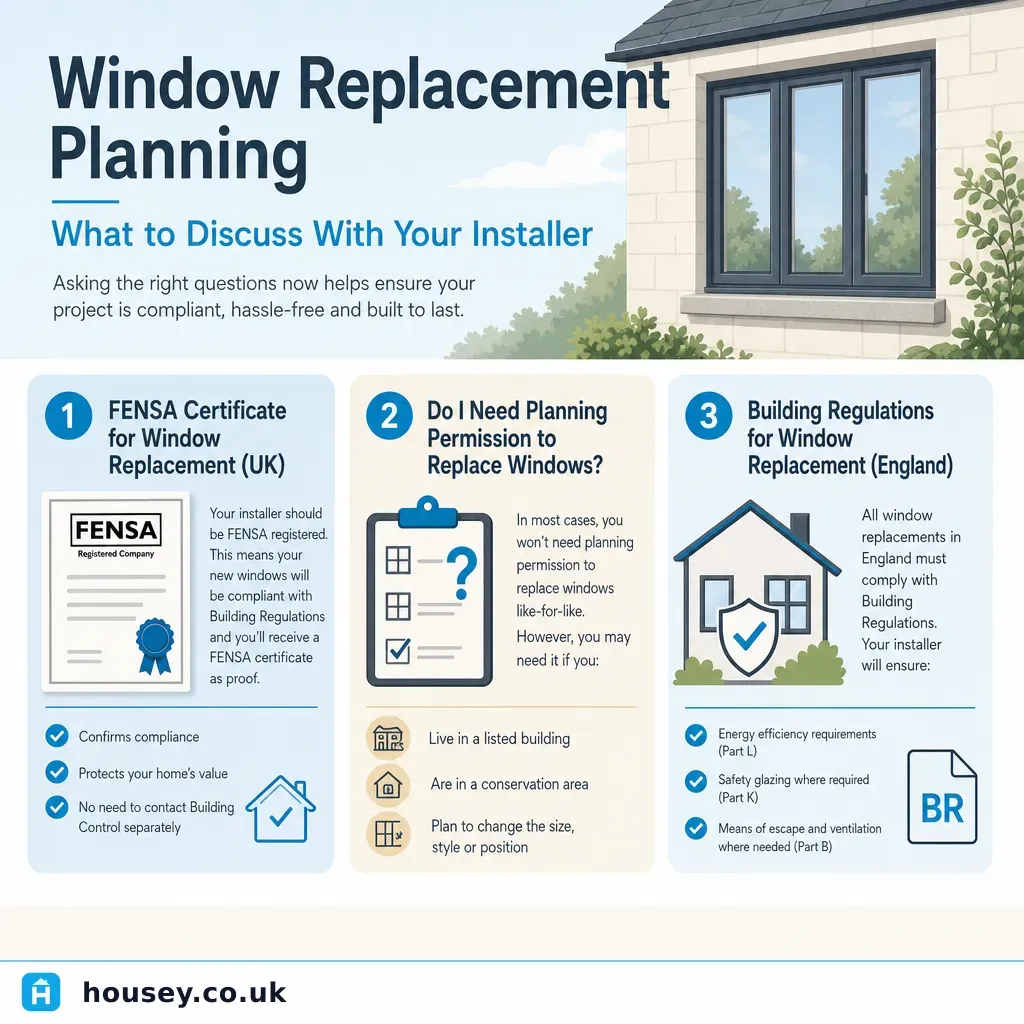
Window Replacement Planning: What to Discuss With Your Installer
Most window replacements in England fall under permitted development rights and do not require planning permission, but they must comply with Building Regulations Part L and Part K.
 Improvement & Build
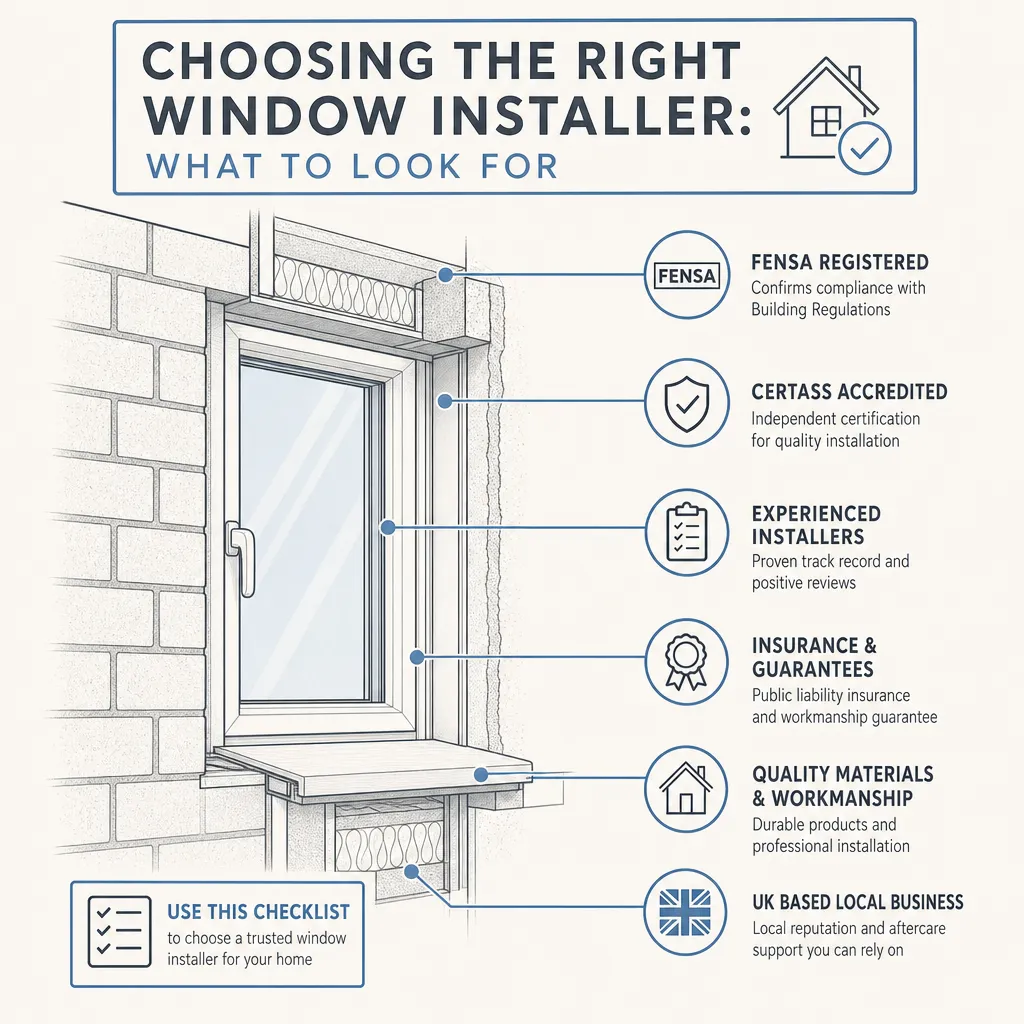
Choosing the Right Window Installer: What to Look For
When choosing a window installer in the UK, verify FENSA or CERTASS registration first — these schemes allow installers to self-certify Building Regulations compliance and issue the completion certificate you will need at resale.
 Improvement & Build
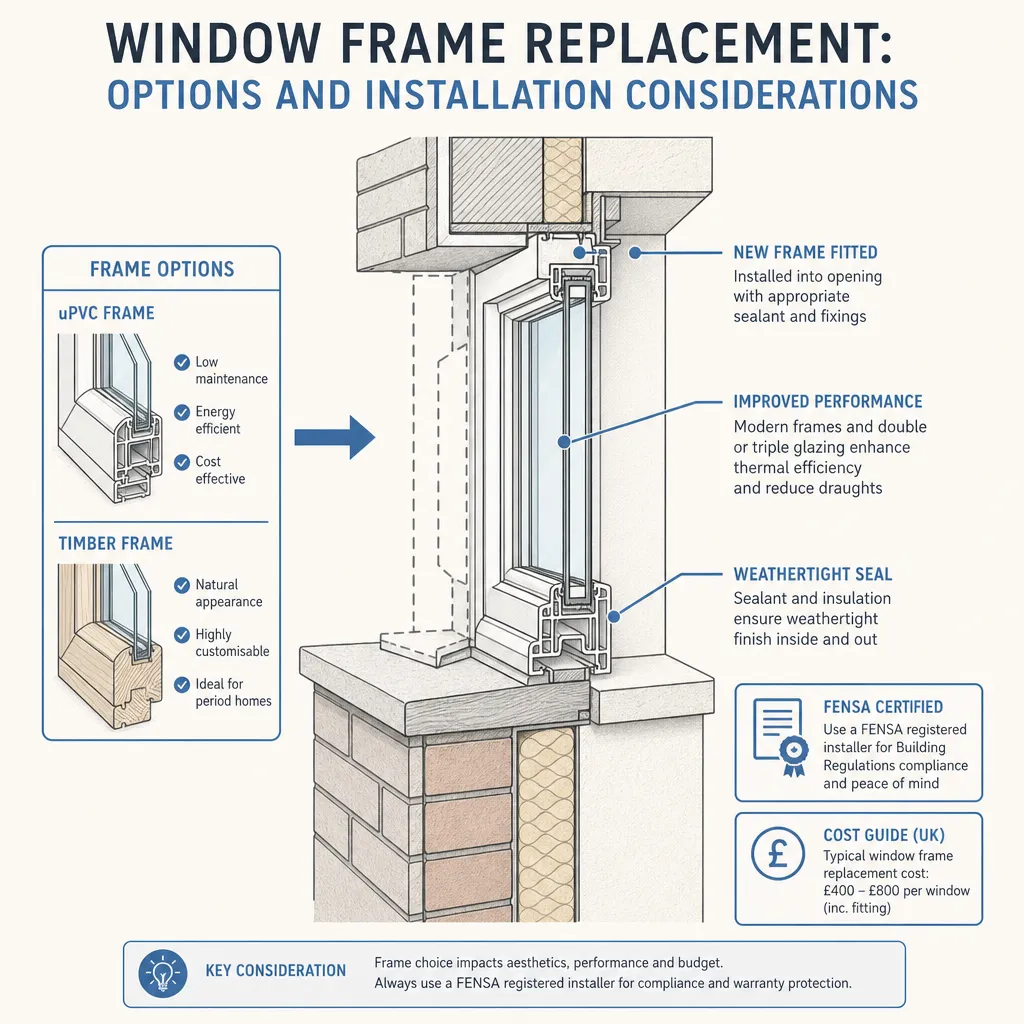
Window Frame Replacement: Options and Installation Considerations
Replacing window frames in the UK requires compliance with Part L of the Building Regulations and, in most cases, a FENSA or Certass certificate.
 Improvement & Build
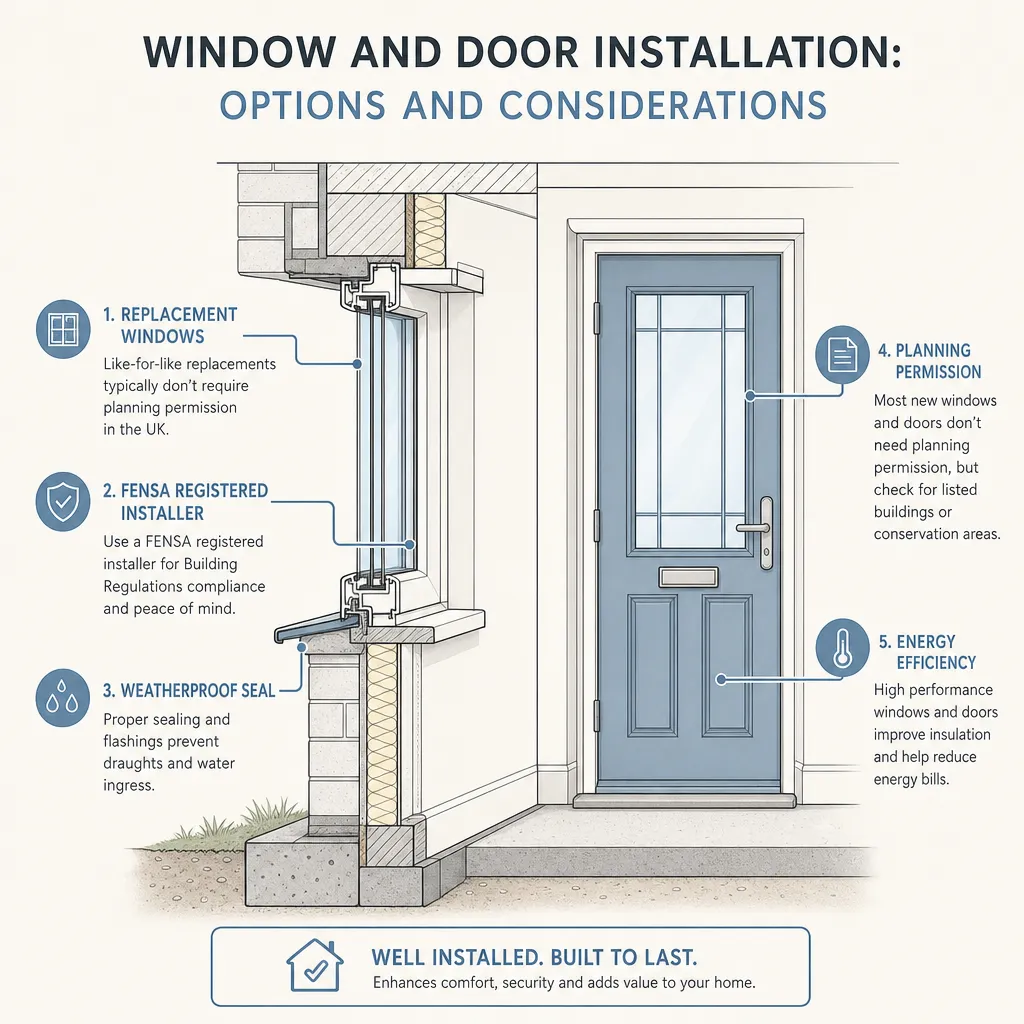
Window and Door Installation: Options and Considerations
Replacing windows and external doors in the UK requires compliance with Building Regulations Part L (thermal performance) and Part K (safety glazing).
 Improvement & Build
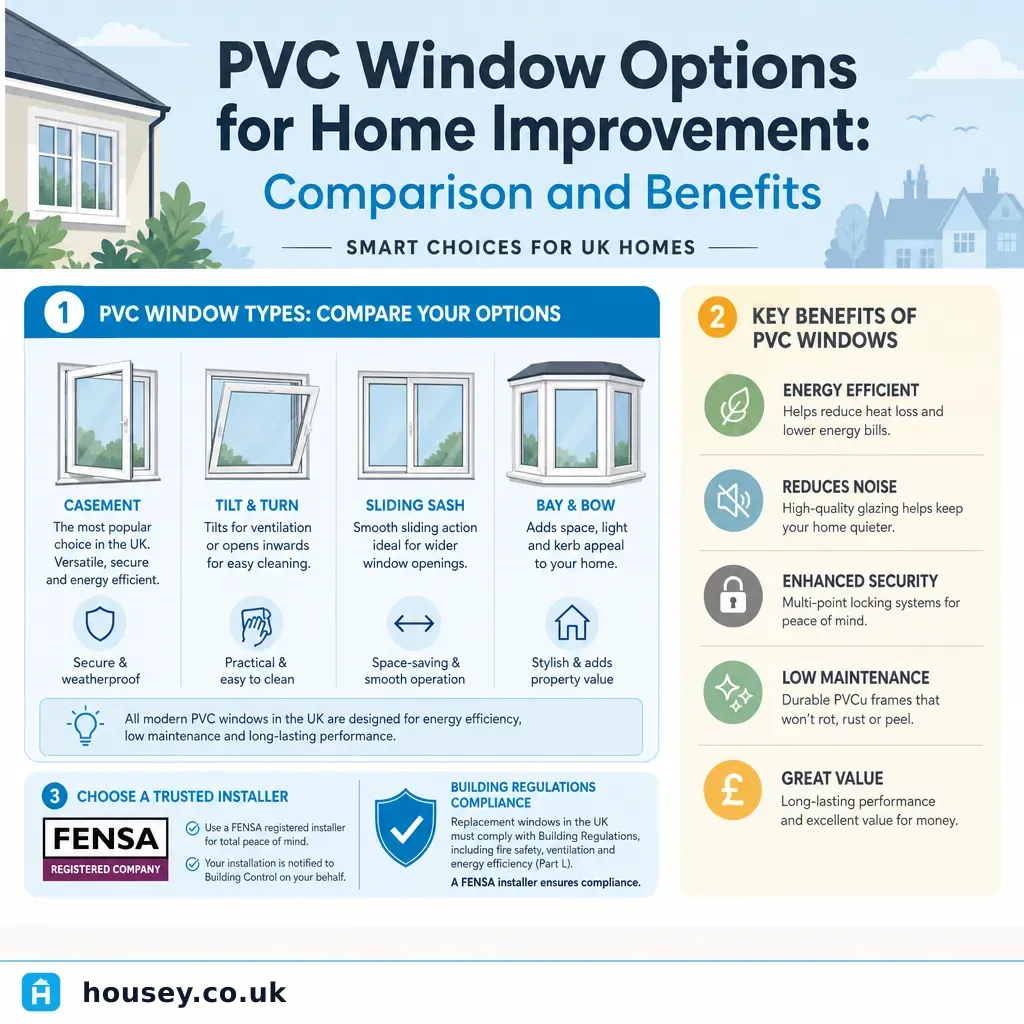
PVC Window Options for Home Improvement: Comparison and Benefits
uPVC (unplasticised PVC) is the most widely fitted material for replacement windows in UK homes, combining low maintenance with good thermal performance.