Roof Tile Replacement: Process and Pricing
By Housey · Last reviewed 10th of May 2026
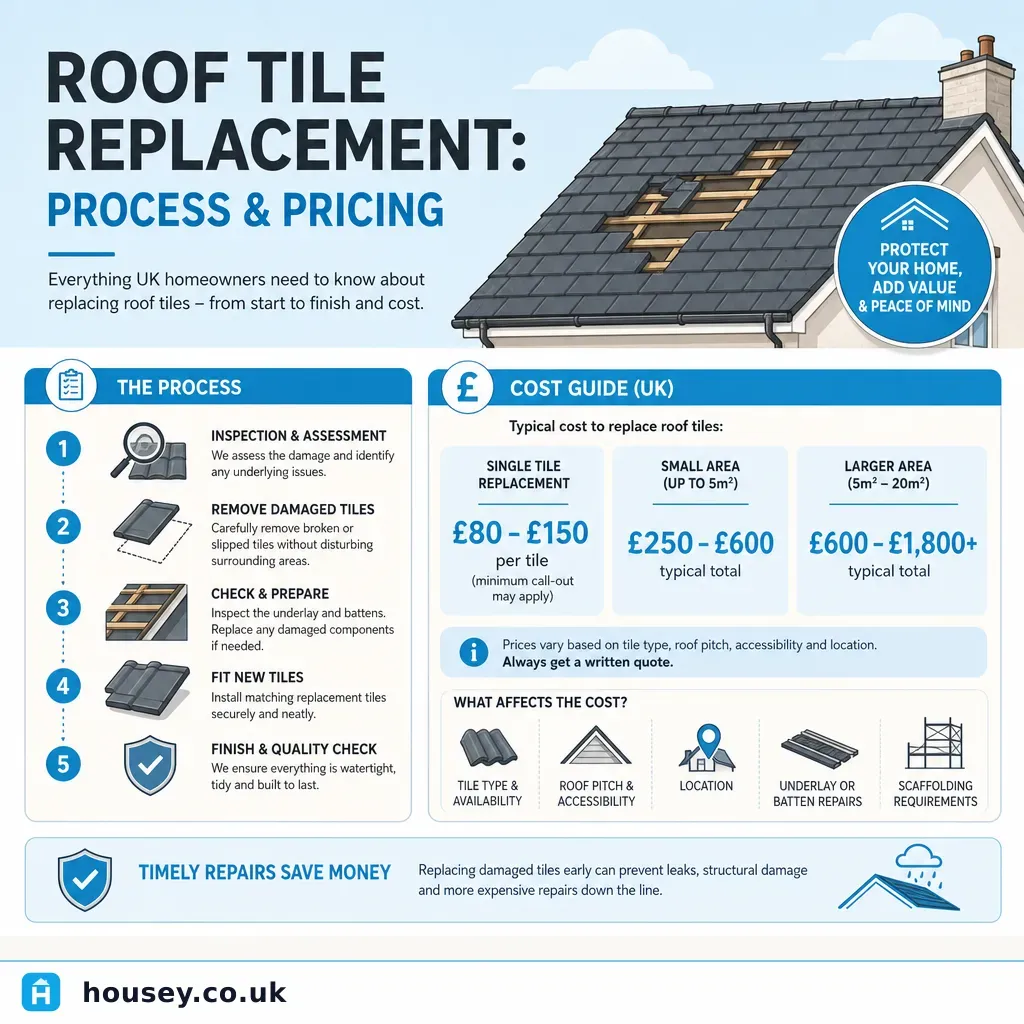
Roof Tile Replacement: Process and Pricing
Damaged or missing roof tiles are one of the most common maintenance issues facing UK homeowners, and addressing them promptly is essential to prevent water ingress, rot to roof timbers, and damage to ceilings and insulation below. The decision between repairing a handful of individual tiles and investing in a more substantial re-roofing project often hinges on the age of the roof, the type of tiles, and the extent of underlying damage — all of which are easier to assess once you understand how the replacement process works and what drives the cost.
Key points
- Replacing fewer than 15–20% of tiles is generally treated as repair rather than a notifiable re-roofing job under Building Regulations, though local building control requirements vary.
- Mortar-bedded ridge tiles are a common failure point on post-1950s roofs; dry-fix ridge systems are now the standard replacement per BS 5534:2014+A2:2018 (Code of Practice for Slating and Tiling).
- Indicative costs for individual tile replacement are £150–£350 per visit; a full re-tile of an average three-bedroom semi-detached roof costs £5,000–£12,000 (Indicative UK costs, last reviewed 2026-05-10).
- Many UK homes built before 1970 use clay plain tiles or natural slate; matching originals is often more expensive and time-consuming than standard concrete tile replacement.
- A roof survey is the most reliable way to determine whether isolated repairs will suffice before committing to a contractor's quote.
Understanding your roof tile type
Different tile types have different lifespans, failure modes, and replacement considerations. Identifying what you have is the first step to planning repairs correctly.
Tile type | Typical UK era | Approximate lifespan | Common failure mode |
|---|---|---|---|
Natural slate | Pre-1950s, ongoing | 80–150 years | Nail sickness; delamination; snapped slates |
Clay plain tiles | Pre-1960s, ongoing | 60–100 years | Frost spalling; nail fatigue; mortar failure at ridge |
Concrete plain tiles | 1960s–present | 40–60 years | Surface erosion; algae growth; breakage |
Concrete profiled tiles (e.g. Marley Mendip) | 1970s–present | 40–60 years | Breakage; fixing failure; ridge mortar deterioration |
Interlocking clay tiles | 1980s–present | 50–80 years | Edge chipping; slipping due to fixing failure |
Matching tile type, colour, and profile matters both aesthetically and structurally. Salvage yards and specialist tile merchants can often source reclaimed clay or natural slate for older properties where matching new stock is unavailable.
The replacement process
Initial assessment
A professional roofer or roof surveyor should assess the roof to determine the number and location of defective tiles, whether the underlying battens, felt underlay, or timber structure are damaged, and whether ridge, hip, or valley repairs are also required. A roof survey is particularly valuable where multiple defects are visible, the roof is over 20 years old, or a property is being bought or sold.
Access and safety
For work on a pitched domestic roof, scaffolding or a tower scaffold is normally required to comply with the Work at Height Regulations 2005. Loft-access ladder work is not safe or adequate for tile replacement work. Always confirm what access provision is included in a quote — scaffold is often a significant additional cost if not itemised upfront.
Individual tile replacement
For isolated repairs, the process is broadly:
- Surrounding tiles are carefully lifted to create access to the damaged tile.
- The defective tile is removed without disturbing the underlay beneath.
- A matching replacement tile is fixed using a correct clip or nail, following BS 5534 recommendations for the tile type.
- Surrounding tiles are re-laid and checked for correct lap and alignment before the area is left.
Ridge and mortar repairs
Mortar-bedded ridge tiles should be inspected as part of any tile-replacement visit. Where mortar has cracked, detached, or ridge tiles have slipped, the appropriate modern repair under BS 5534:2014+A2:2018 is a dry-fix mechanical fixing system rather than re-pointing with mortar. Dry-fix ridge systems are more durable and do not fail through freeze-thaw cycles, which is a common cause of mortar failure in UK winters.
What does roof tile replacement cost?
Indicative UK costs, last reviewed 2026-05-10. Prices vary by region, access, tile type, and scaffold requirements.
Scope of work | Indicative cost range |
|---|---|
Single tile replacement (including call-out) | £150–£300 |
5–15 tile replacements (small repair visit) | £250–£600 |
Ridge tile dry-fix repair (per section) | £300–£700 |
Roof survey (drone or scaffold-access) | £150–£400 |
Full re-tile — average 3-bed semi-detached | £5,000–£10,000 |
Full re-tile — detached house, complex hips/valleys | £10,000–£18,000+ |
Scaffold hire (if separately quoted) | £600–£1,500 |
Cost drivers include roof accessibility, structure height and complexity, tile matching requirements, the extent of batten or felt replacement needed, and local labour rates.
Repair or full re-tile: which should you choose?
- Choose individual tile replacement if fewer than 15–20 tiles are defective and batten and felt condition is confirmed sound by loft inspection.
- Choose a full re-tile if the roof is over 30–40 years old, multiple tile courses are slipping or broken, the underlay is failing, or the cumulative cost of repeated repair visits is approaching the cost of a full job.
- Get a roof survey first if you are unsure of the overall condition, have recently purchased the property, or a RICS survey has flagged roof defects requiring specialist investigation.
- Check with your local planning authority if the property is listed or in a conservation area and you are considering a change of tile material.
Planning permission and building control
Like-for-like tile repairs — replacing the same tile type in the same position — do not generally require planning permission or building control approval. However:
- If the property is listed, listed building consent is required even for routine repairs to the external fabric.
- In conservation areas, replacing natural slate with concrete tiles (or vice versa) may require planning permission where the change affects the area's character.
- A full re-roofing project with a change of material can trigger building control notification and may require planning approval in sensitive locations.
A building control consultant can advise on whether notification is needed for your specific project and manage the application process.
What to ask before accepting a quote
- Is scaffolding or access equipment included in the quoted price, or is it an additional provisional sum?
- What tile has been specified — can you provide a product reference or sample for approval?
- What happens if additional damage is found once tiling work begins — how are variations agreed and priced?
- Is the work guaranteed, and for how long? What specifically does the guarantee cover?
- Are you a member of the NFRC (National Federation of Roofing Contractors) or another recognised body?
- Will a completion record or building control sign-off be provided where required?
- Is VAT included in the quoted price?
When to get professional help
Roof tile work always requires a qualified roofer. Contact a professional promptly if:
- tiles are missing and internal water ingress has already occurred — arrange repair within days, not weeks, to limit secondary damage,
- the roof sags, has a visible dip, or timbers appear to be moving — this may indicate structural rafter damage beyond a standard tiling issue,
- you notice crumbling or fibrous grey material around old roof flashings or ridge sections in a pre-2000 property — this may indicate asbestos-containing material. Do not disturb; arrange an asbestos survey before any stripping work begins.
How Housey can help
Housey connects you with vetted roofers who can carry out thorough inspections and tile replacement works to BS 5534 standards, and with specialist roof survey providers if you need an independent condition report before committing to repair or re-tiling. For projects where building control sign-off is required, our building control consultants are available to guide you through the notification process.
Frequently asked questions
How long does a roof tile repair take?
A small repair of one to ten tiles typically takes half a day to a full day once the contractor is on site. The main delay is usually scaffold erection and removal; some contractors carry out minor repairs using a cherry picker or roof ladder for single tiles. A full re-tile of an average semi-detached roof typically takes three to five working days.
Can I replace roof tiles myself?
Replacing a tile is not technically complex, but any work on a pitched roof above 2 m requires safe working-at-height equipment. The Work at Height Regulations 2005 apply to all work situations, including domestic DIY. Unless you have the correct access equipment and training, roof tile replacement should be carried out by a qualified roofer.
What is nail sickness on a slate roof?
Nail sickness refers to corrosion of the original iron nails used to fix natural slates to battens. As nails rust away, slates begin to slip or fall. It is common on Victorian and Edwardian roofs and is usually a sign that a full re-slate with new stainless-steel or copper fixing nails is more cost-effective than repeated individual tile repairs.
Will home insurance cover roof tile damage?
Storm damage — wind-lifted or impact-broken tiles — is usually covered under standard home insurance policies, subject to excess. Gradual deterioration and wear and tear are generally excluded. Check your policy wording and photograph the damage before repairs begin if you intend to make a claim, as insurers may require evidence of the cause.
Sources and further reading
- Work at Height Regulations 2005 — legislation.gov.uk
- Find a Registered Roofing Contractor — National Federation of Roofing Contractors
- Building Regulations Approved Document C — GOV.UK
- Listed Buildings and Conservation Areas — Historic England
Useful next reads
 Improvement & Build
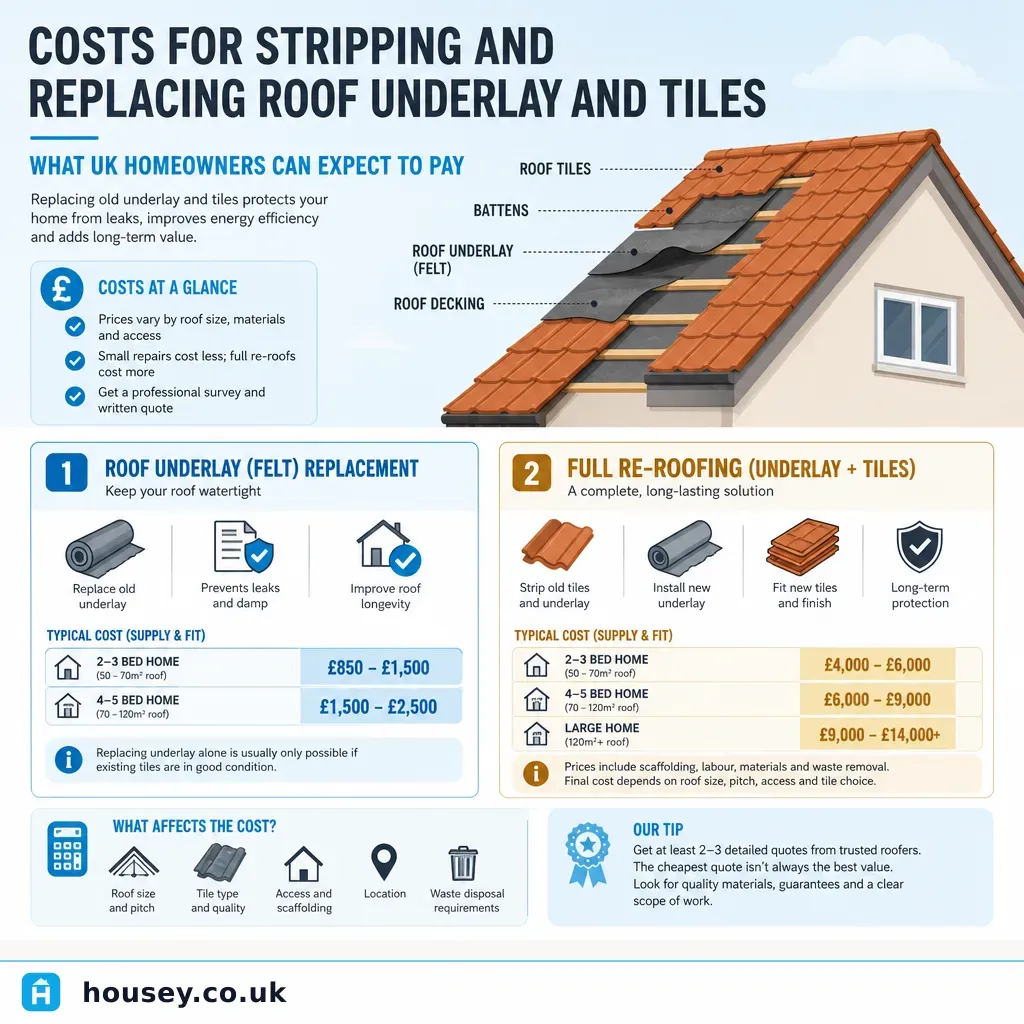
Costs for Stripping and Replacing Roof Underlay and Tiles
Stripping and replacing roof underlay and tiles on a typical UK semi-detached house costs £5,000–£12,000, depending on roof size, tile type, and access.
 Improvement & Build
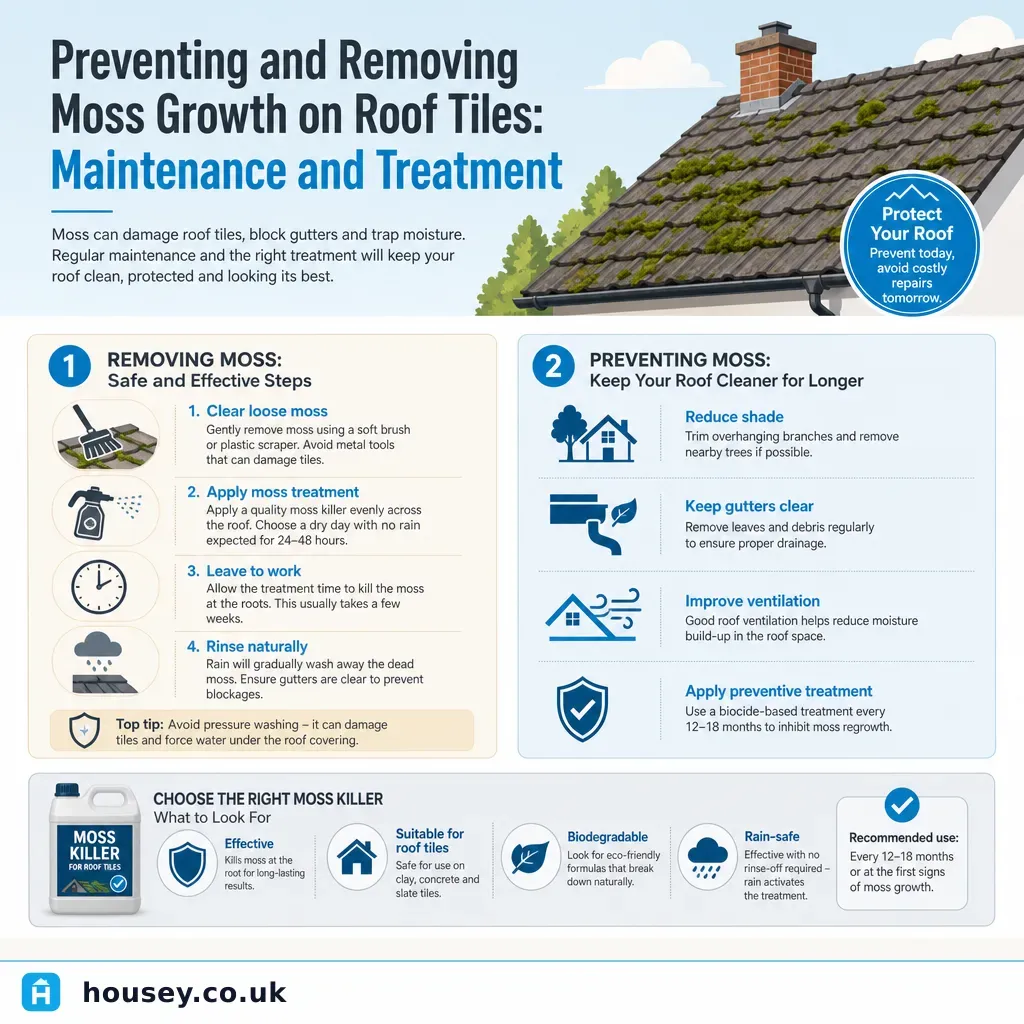
Preventing and Removing Moss Growth on Roof Tiles: Maintenance and Treatment
Moss on roof tiles is best treated with a proprietary biocide spray, left to die back over several weeks, then carefully cleared.
 Improvement & Build
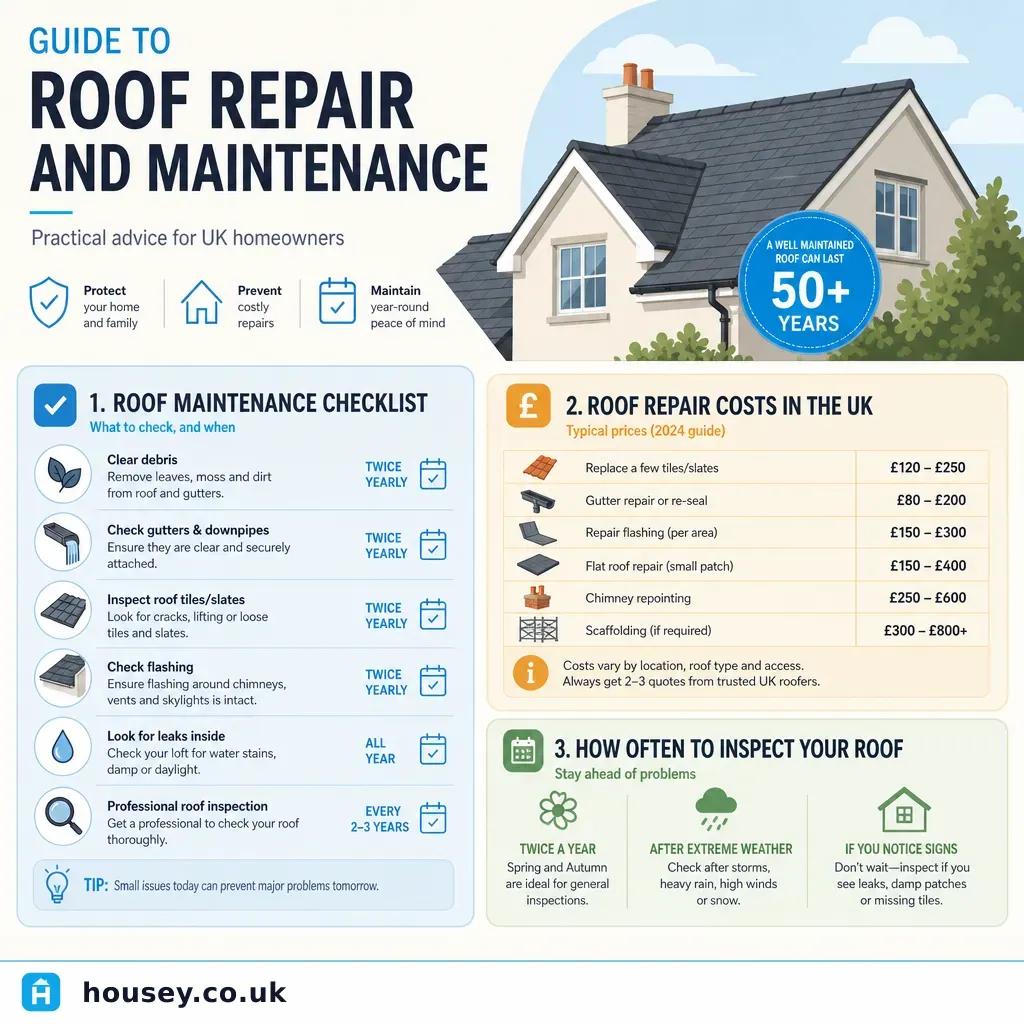
Guide to Roof Repair and Maintenance
Regular roof inspections every 3–5 years, prompt repair of damaged tiles and failed flashings, and annual gutter clearance are the core of effective UK roof maintenance.
 Improvement & Build
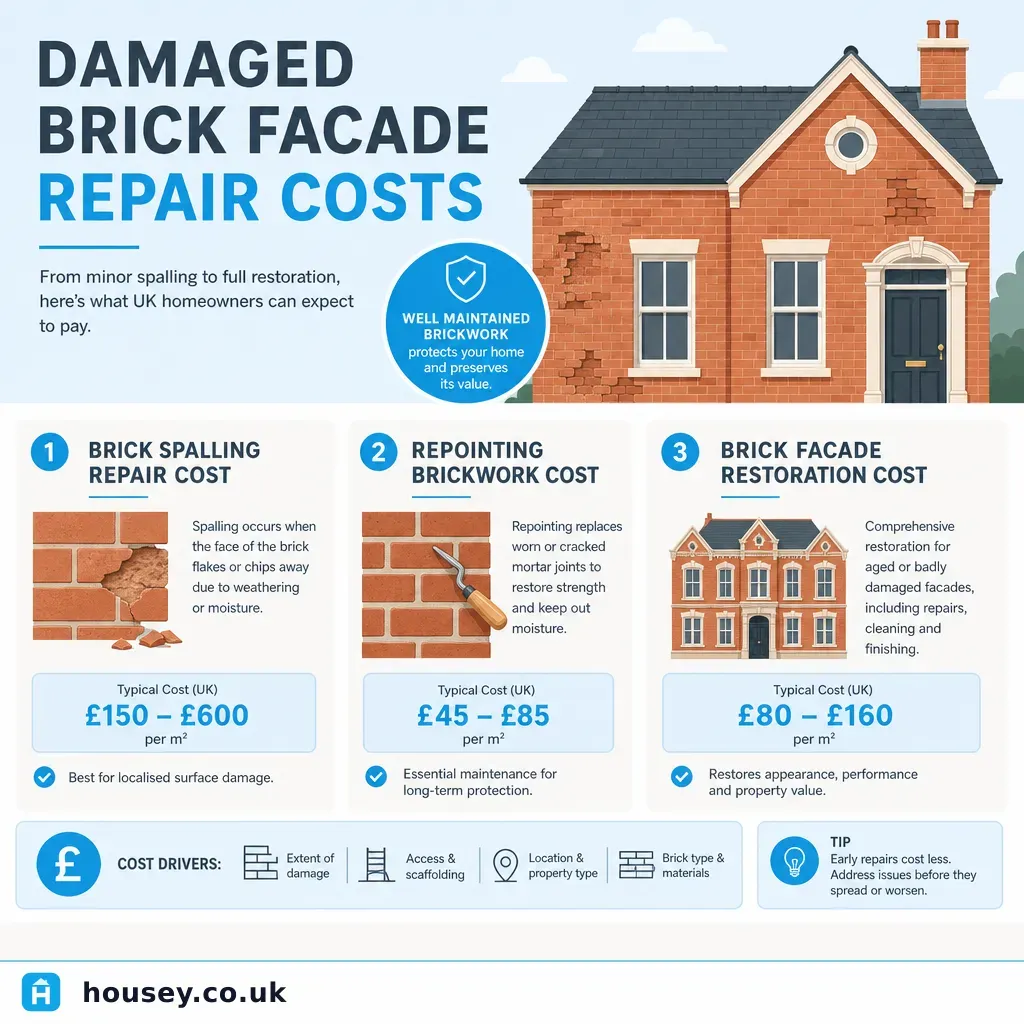
Damaged Brick Facade Repair Costs
Repairing a damaged brick facade in the UK typically involves repointing mortar joints, replacing spalled bricks, or full masonry restoration.
 Improvement & Build
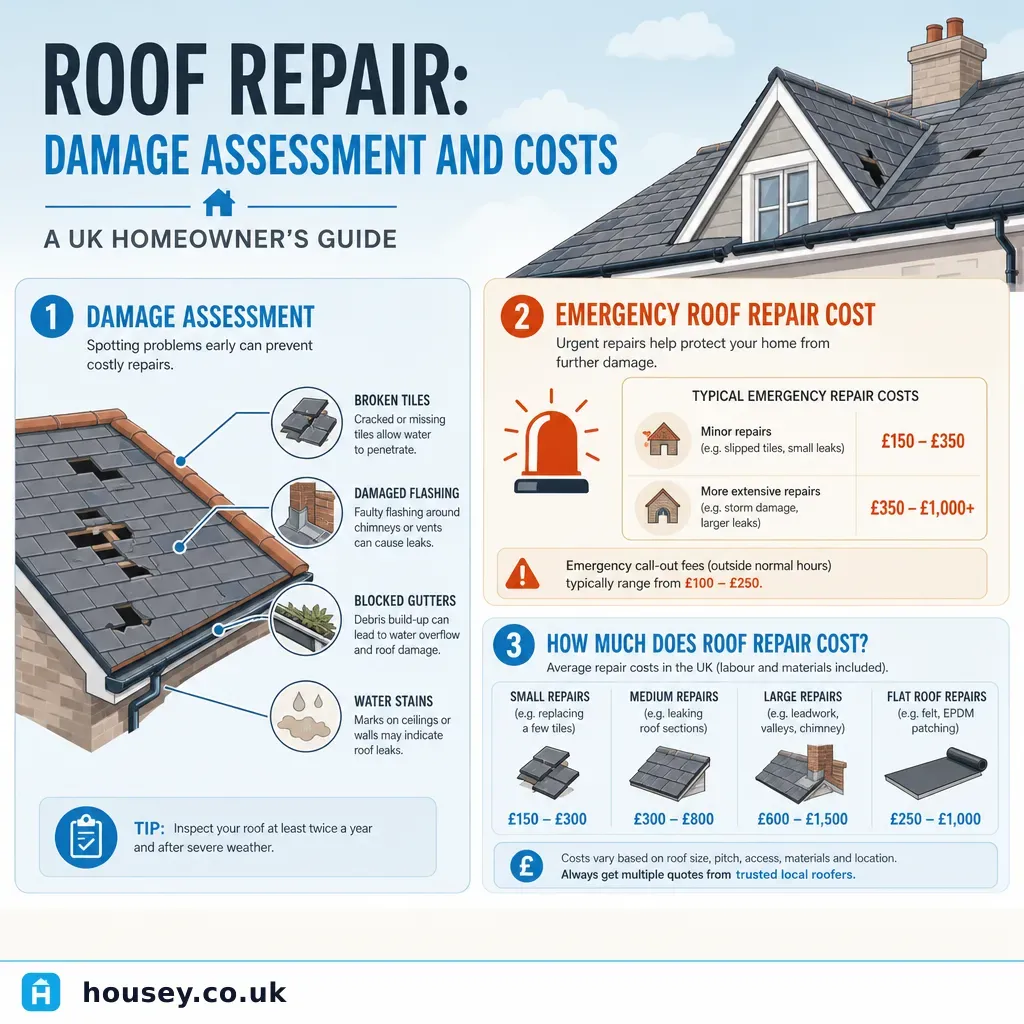
Roof Repair: Damage Assessment and Costs
Most roof repairs — replacing slipped tiles, re-bedding ridge tiles, or patching flashing — are straightforward maintenance jobs that do not require planning permission.