Preventing and Removing Moss Growth on Roof Tiles: Maintenance and Treatment
By Housey · Last reviewed 18th of May 2026
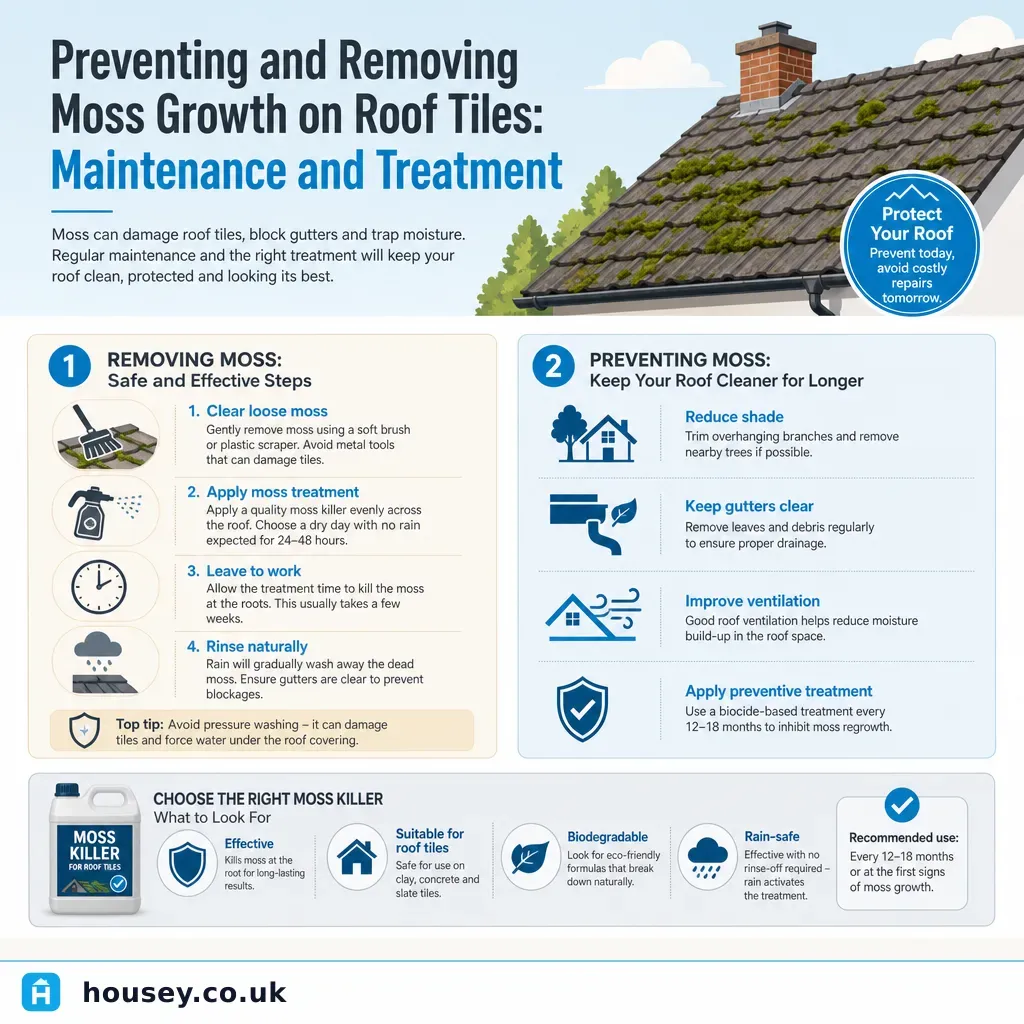
Preventing and Removing Moss Growth on Roof Tiles: Maintenance and Treatment
Moss and algae establish themselves on UK roofs gradually — often unnoticed until a thick green layer is visible from the street or a gutter clearance reveals heavy growth overhead. The problem is especially common on north-facing slopes, shaded pitches, and older clay or concrete tiles that have lost their original smooth surface. Left unchecked, moss can lift tile edges, obstruct drainage channels, and accelerate freeze-thaw deterioration, making timely treatment a practical investment rather than a cosmetic concern.
Key points
- Zinc and copper strips fixed along the ridge line leach metal ions downslope, suppressing moss and algae growth across a 3–5 metre zone beneath them.
- Proprietary biocide treatments — typically sodium hypochlorite or quaternary ammonium compounds — kill and soften moss without the mechanical stress of pressure washing.
- Pressure washing tiles above roughly 50–80 bar can erode concrete tile surfaces, crack brittle clay tiles, and force water beneath overlapping laps, causing post-cleaning leaks.
- Most biocide sprays require 3–8 weeks of dwell time before dead moss can be safely brushed or blown clear — rushing this risks incomplete treatment and re-growth within a year.
- North-facing pitches and those shaded by trees are most vulnerable because reduced UV exposure and prolonged surface moisture create ideal conditions for spore germination.
Why moss grows on UK roofs — and why it matters
Moss and algae (including the grey-green lichen often mistaken for general grime) spread via airborne spores. They colonise roof surfaces where moisture lingers and sunlight is limited — typically north- or east-facing slopes, valley areas, and pitches overhung by mature trees. In the UK's mild, damp climate, even well-maintained roofs can develop significant growth within five to ten years of installation.
The structural concern is that moss rhizoids (root-like structures) can prise apart tile overlaps and mortar joints. During freeze-thaw cycles, water drawn beneath a tile expands and can crack both the tile and its bedding mortar. Gutters and downpipes blocked by dislodged moss can overflow and saturate fascia boards, soffits, and rafters over time — damage that is expensive to reverse and is typically excluded from standard home insurance policies, which treat biological growth as gradual deterioration rather than a sudden insured event.
Treatment methods compared
Method | How it works | Best for | Key risk |
|---|---|---|---|
Biocide spray (sodium hypochlorite) | Kills biological growth chemically | Most pitched roofs; ongoing maintenance cycles | Runoff can harm plants and watercourses if unmanaged |
Biocide spray (quaternary ammonium) | Slower-acting, often longer-lasting | Sensitive surroundings or regular re-application programmes | Higher cost per litre |
Manual brushing (soft bristle) | Physically dislodges dead or loose moss | Post-biocide clear-up only | Risk of dislodging or cracking tiles; working-at-height risk |
Pressure washing | High-pressure water removes surface growth | Rarely recommended on pitched roofs | Erodes tile surfaces, forces water under laps, can void tile warranties |
Zinc or copper strip (passive prevention) | Metal ion wash on each rainfall | Long-term prevention after initial biocide treatment | Does not treat existing moss; must be correctly fixed to ridge |
Pressure washing is frequently offered as a quick fix but is not recommended by most roofing professionals or clay and concrete tile manufacturers. If a contractor proposes pressure washing as their primary method, ask them to confirm the tile manufacturer's written guidelines before agreeing.
How to prevent regrowth
Once the roof has been treated and cleared, a few measures can extend the period before moss returns:
- Install zinc or copper strips along the ridge and, where relevant, hip lines. Each rainfall washes metal ions down the slope, inhibiting new spore germination.
- Keep trees trimmed so that branches do not overhang the roof — leaf debris retains moisture and accelerates biological growth.
- Clear gutters and valleys at least twice a year — in autumn after leaf fall and in spring after winter debris — to prevent standing water wicking back onto tile surfaces.
- Consider a breathable roof sealant on tiles that have become visibly porous, but only after cleaning and only on structurally sound tiles. Sealants are not a remedy for cracked or delaminating tiles.
- Schedule biocide re-treatment every 3–5 years, or sooner on particularly shaded pitches.
Homeowner checklist: before instructing a roofer
Red flags when getting roof moss treatment quotes
Watch out for contractors who:
- Propose pressure washing without being able to cite tile manufacturer approval for that method.
- Cannot provide evidence of current public liability insurance before starting work.
- Offer only a verbal quote with no breakdown of materials, method, or access equipment.
- Claim a single treatment will permanently eliminate moss — no treatment provides permanent results on a UK roof.
- Suggest re-coating or sealing the entire roof as the first intervention, before addressing the biological growth itself.
- Cannot explain what happens to biocide runoff during and after treatment.
When to get professional help
Moss treatment on a single-storey flat roof may be manageable for a confident DIYer using a proprietary biocide and proper ladder safety precautions. However, pitched roofs — particularly those above single-storey height — involve real working-at-height risk. The Working at Height Regulations 2005 apply to homeowners undertaking their own maintenance just as they do to contractors.
Arrange a professional inspection if any of the following apply:
- Tiles are visibly cracked, slipped, or lifting at the edges.
- Ridge tiles or hip mortar appear loose, open-jointed, or have visible gaps.
- You can see daylight through the roof from inside the loft, or there is staining on loft timbers after rainfall.
- Gutters are pulling away from the fascia or overflowing at the joints despite being recently cleared.
- Moss coverage extends to the valleys, flat roof sections, or around the chimney stack.
How Housey can help
Housey connects homeowners with vetted local specialists who can assess the extent of moss growth and recommend the right treatment method. Use our roof surveys service to get an independent condition report before committing to treatment costs, or find a qualified roofer to carry out biocide treatment, clearance, and zinc strip installation with a written quote and appropriate insurance.
Frequently asked questions
Is it safe to remove moss from a roof yourself?
On a low-pitch or flat roof safely reachable from a ladder, a homeowner can apply a proprietary biocide following product instructions. On any pitched roof above single-storey height, professional access equipment is required. The HSE's Working at Height Regulations 2005 set a duty to avoid unnecessary risk; falls from pitched roofs are among the most common causes of fatal DIY accidents in the UK.
How long does roof moss treatment take to work?
Most biocide treatments require 3–8 weeks of dwell time before the moss is fully dead and can be removed without excessive force. The moss typically turns brown or orange as it dies. Rushing the clearance phase often leaves live rhizoids that accelerate re-growth, meaning you may need to retreat the roof sooner than expected.
Will zinc strips really stop moss growing on my roof?
Zinc and copper strips are broadly effective but work passively through rainfall — metal ions only travel roughly 3–5 metres downslope per strip. On a long roof slope, multiple strips may be needed. They will not eliminate existing growth; biocide treatment should be carried out first, with strips installed as part of a longer-term prevention strategy.
How much does professional roof moss treatment cost?
Indicative UK costs, last reviewed 2026-05-18: a typical semi-detached house with moderate moss coverage might expect to pay £300–£700 for biocide treatment and clearance, depending on roof size, access equipment needed, and regional labour rates. Zinc strip installation typically adds £150–£300. Always obtain at least three written quotes; prices vary considerably by location and roof complexity.
Sources and further reading
- Working at Height Regulations 2005 — legislation.gov.uk
- Working at height: A brief guide (INDG401) — Health and Safety Executive (HSE)
- Roofs: general maintenance and repair — Historic England
Useful next reads
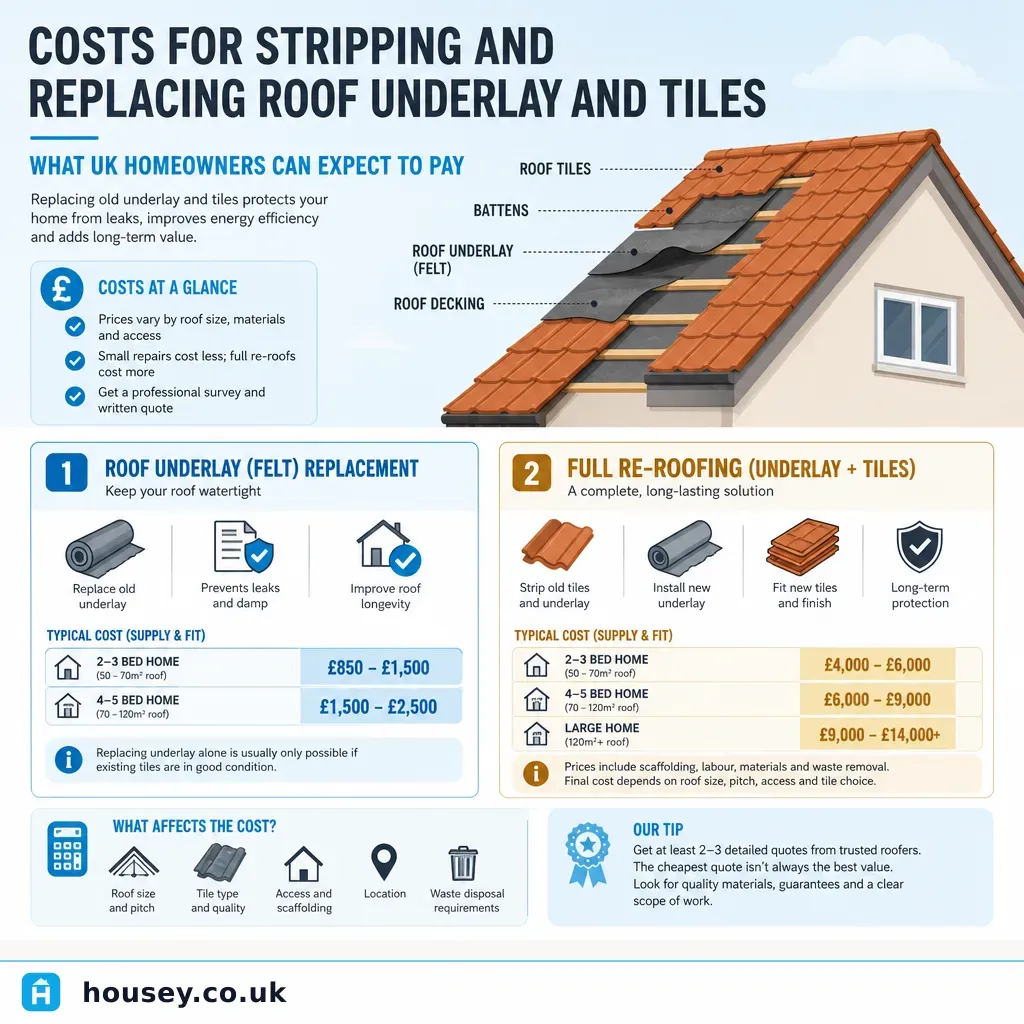 Improvement & Build
Costs for Stripping and Replacing Roof Underlay and Tiles
Stripping and replacing roof underlay and tiles on a typical UK semi-detached house costs £5,000–£12,000, depending on roof size, tile type, and access.
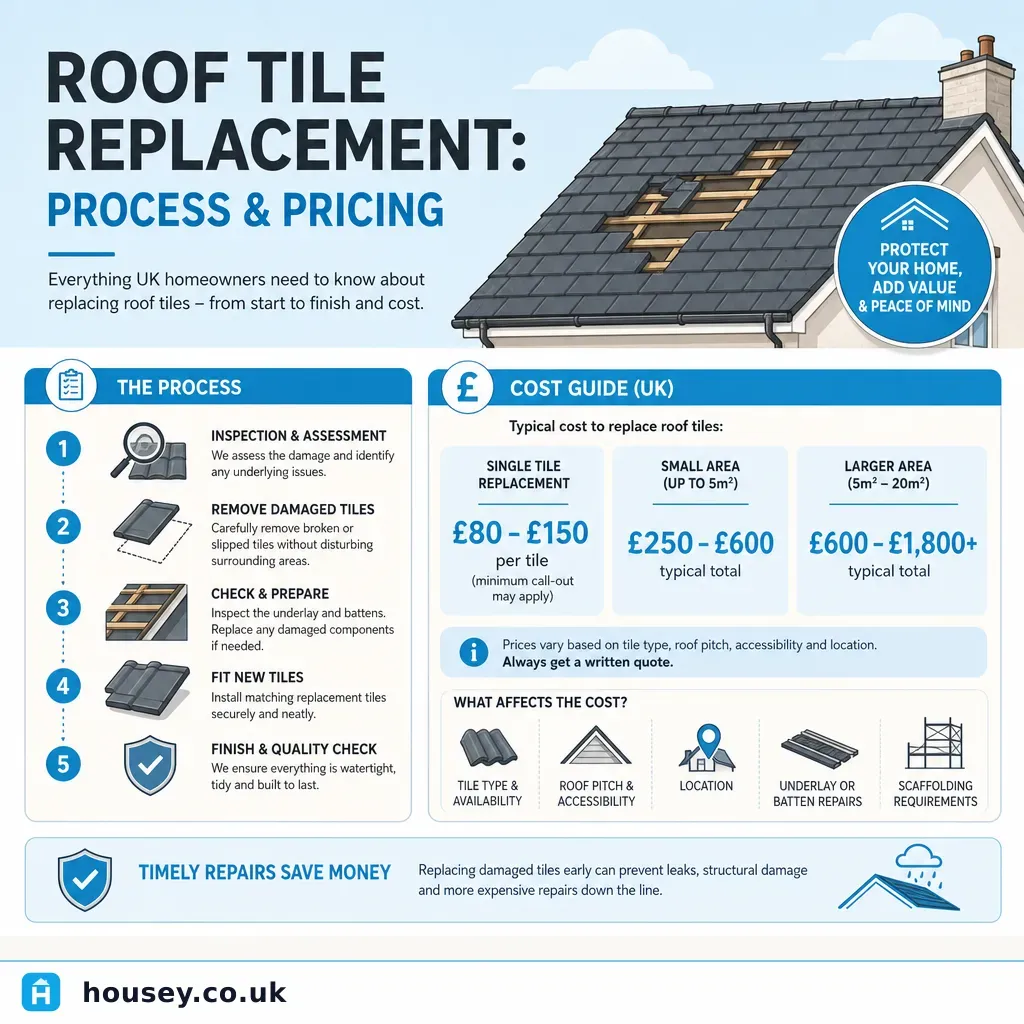 Improvement & Build
Roof Tile Replacement: Process and Pricing
Roof tile replacement in the UK ranges from a single cracked tile to a full re-tile.
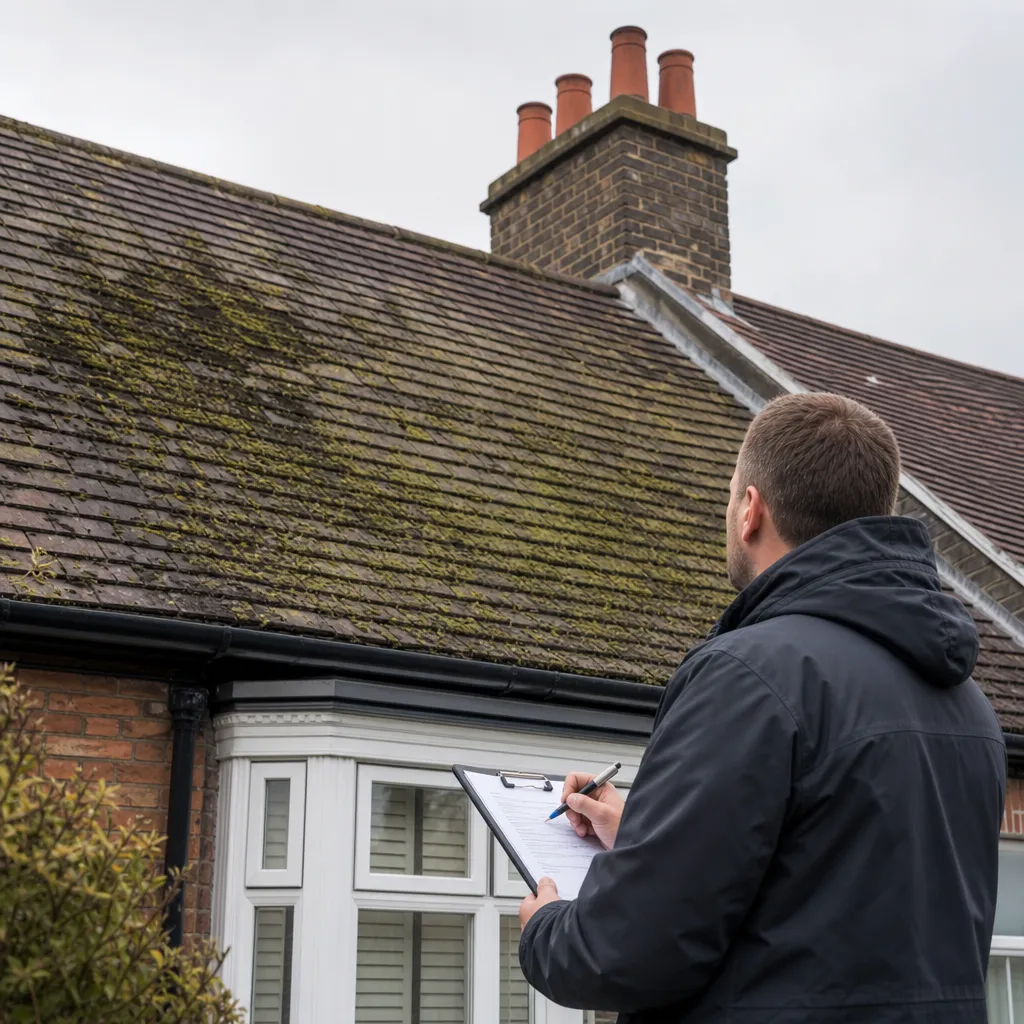 Improvement & Build
Roof Discolouration and Algae Growth: Prevention and Treatment Options
Roof discolouration in the UK is almost always caused by algae, moss, lichen, or liverworts.
 Improvement & Build
Complete Guide to Stripping and Re-felting Roof Coverings
Stripping and re-felting a roof involves removing the old covering, inspecting the deck and structural timbers, then applying a new membrane such as traditional felt, EPDM rubber, or GRP fibreglass.
 Improvement & Build
Sealing and Maintaining Historic Leaded Glass Windows: Preservation and Performance
Leaded glass windows are maintained using traditional linseed oil cement — not silicone or modern sealants, which prevent natural movement in the lead came.