Metal Roof Repairs: When to Fix vs. Replace
By Housey · Last reviewed 18th of May 2026
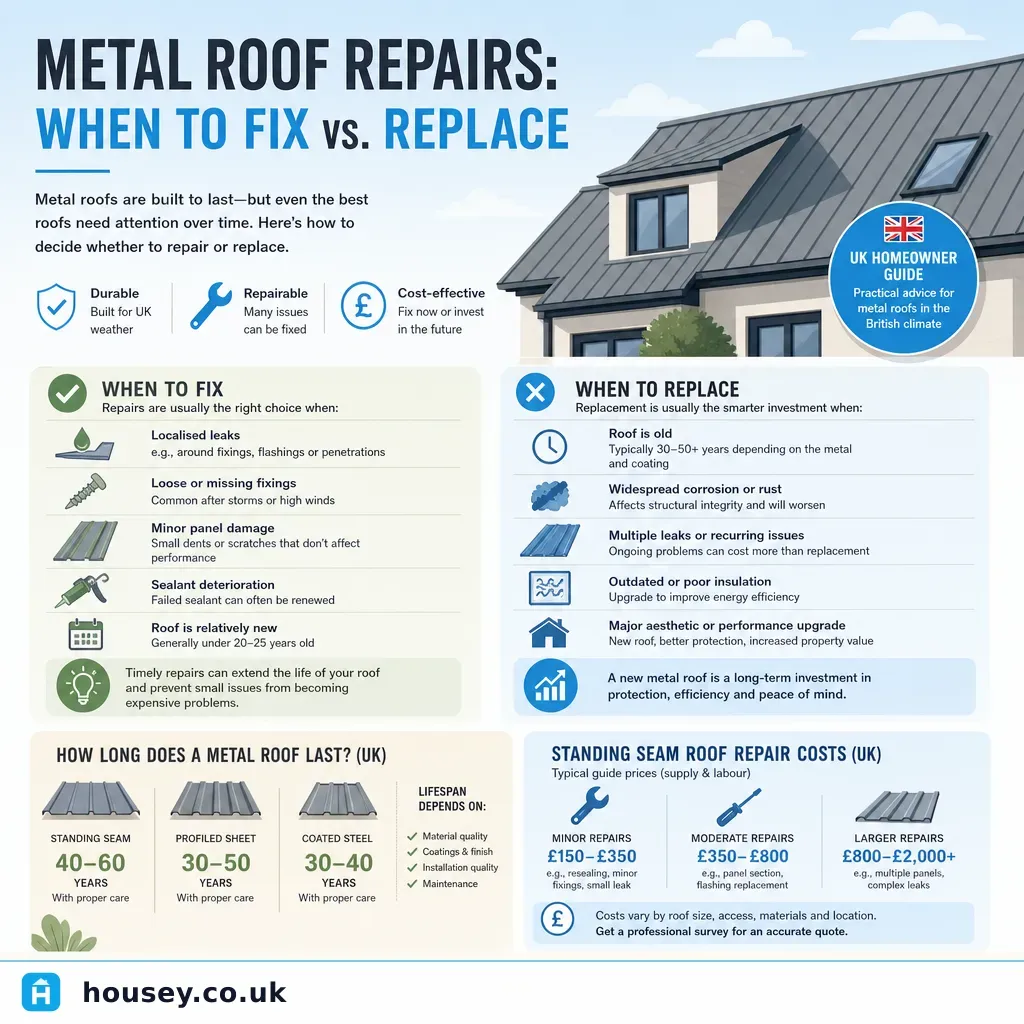
Metal Roof Repairs: When to Fix vs. Replace
Metal roofing covers everything from the standing seam zinc on an architect-designed contemporary home to the corrugated steel sheets on a traditional British garage or outbuilding. When leaks or deterioration appear, deciding whether to repair or replace is a financial and technical judgement — one that depends on the metal type, the roof's age, the extent of damage, and the condition of the underlying structure.
Key points
- Common UK metal roofing materials include standing seam steel, zinc, copper, aluminium, and corrugated or profile steel sheet; each has different maintenance needs and service lives.
- Zinc and copper roofs can last over 100 years; galvanised steel and aluminium systems typically offer 40–60 years before full replacement becomes necessary.
- Like-for-like repairs to an existing metal roof generally do not require planning permission, but changes to the roof's appearance in a conservation area or on a listed building almost always do.
- Building Regulations approval is required for full or substantial roof replacements, as these affect the thermal envelope (Part L) and potentially structural loading (Part A).
- All metal roof work involves working at height — always use a competent, insured roofing contractor; never attempt to access a pitched metal roof without proper equipment and training.
Common metal roof problems and what they mean
Identifying the fault type helps you frame the right question when speaking to a contractor.
Leaks and water ingress
Most metal roof leaks originate at:
- Fixings and fasteners: exposed fasteners on older corrugated steel can corrode, allowing water in around the washer seal.
- Seams and joints: on standing seam systems, failed or poorly formed seams at ridges, hips, or valleys are common failure points.
- Flashings: lead, zinc, or aluminium flashings around chimney stacks, skylights, and abutments deteriorate faster than the main covering.
- Penetrations: around pipes, soil vent stacks, or cables passing through the metal deck.
A single localised leak is almost always a repair job. Multiple or migrating leak points on an older roof often indicate the roof is approaching end of life.
Corrosion
Galvanised steel and some aluminium alloys can show rust staining or pitting after 20–30 years if the protective coating breaks down. Surface corrosion that has not yet perforated the metal may be arrestable with specialist treatments, but through-rust means the affected sheet or panel must be replaced. Zinc and copper are self-protecting through patination; corrosion is rare unless they are in contact with dissimilar metals, which can cause galvanic corrosion.
Physical damage
Hail impact, fallen branches, and trade foot traffic are the main causes. Dents alone are usually cosmetic unless the surface coating is broken. Perforations, bent standing seams, and deformed panels need repair or replacement of the affected section.
Thermal movement
Metal expands and contracts significantly with temperature changes. Click and creak noises are normal, but can become pronounced if fixings are over-tightened or expansion gaps are insufficient. Noise alone is not a reason to replace a roof, but loose fixings should be re-secured by a contractor.
Fix vs. replace: decision guide
- Repair if: the roof is under 25 years old, damage is localised to one or two panels or flashings, no through-corrosion is present, and the underlying structure is sound.
- Repair if: a flashing or gutter component has failed independently of the main covering — these can usually be replaced in isolation.
- Consider partial re-roof if: corrosion, seam failure, or storm damage affects 20–30% or more of the roof area while the remainder is sound.
- Replace if: the roof is past its expected service life, through-corrosion is widespread, seams are failing systematically, or the same repair area has been re-done more than once.
- Replace if: insulation below the metal deck is insufficient and you are upgrading to meet current Part L standards — this is usually best done at the same time as re-roofing.
- Ask a structural engineer if: you see deflection or sagging in the roof plane, sticking doors or windows below the roof line, or any sign of rafter or purlin failure.
Repair vs. full replacement: comparison
Factor | Repair | Full replacement |
|---|---|---|
Best for | Localised damage, failed flashings, isolated corrosion | End-of-life roofs, widespread corrosion, systematic seam failure |
Typical timescale | Hours to 1–2 days | 3–10 days depending on area and complexity |
Indicative cost | £150–£1,500+ depending on scope | £5,000–£30,000+ depending on material, area, and specification |
Planning permission | Rarely required for like-for-like | May be required if material or appearance changes; always check in conservation areas |
Building Regulations | Not usually required for minor repairs | Required for full replacement (Part L thermal; Part A structural loading) |
Disruption | Low | Significant — potential weather-exposure period during works |
Indicative UK costs, last reviewed 2026-05-18. Costs vary by roof area, access difficulty, material specification, and region. Always obtain at least three quotes.
What affects repair and replacement cost?
Key cost drivers for metal roof work:
- Material type: copper and zinc cost significantly more per m² than galvanised steel or coated aluminium.
- Roof pitch and access: steep pitches or difficult access — town-centre terrace, multi-storey building — increase scaffolding and labour costs.
- Underlying damage: if rafters, purlins, or decking have been compromised by long-term water ingress, structural timber repairs add substantially to the total.
- Location: labour rates in London and the South East are generally higher than in the Midlands or the North.
- Emergency vs. planned work: emergency call-outs typically attract a premium rate.
What to ask a roofing contractor
Before accepting any quote:
- What is included and excluded in the price?
- Will you carry out a full roof inspection before quoting, or is the estimate made from the ground?
- Are the flashings being replaced as part of the job, or is only the main covering being patched?
- What qualifications or trade memberships do you hold — for example, NFRC membership or registration with the CompetentRoofer scheme?
- What guarantee do you offer on the repair or installation, and is it backed by insurance?
- Is VAT included?
- What will you do if you discover underlying structural or timber damage once work starts?
- Are all workers appropriately insured, and are working-at-height protocols in place?
Red flags requiring urgent attention
Some findings mean immediate professional involvement rather than a planned quote:
- Water actively entering through the ceiling or structural elements — cumulative damage to timber and plasterwork accelerates quickly; arrange a professional inspection without delay.
- Visible sagging or deflection in the roof plane when viewed from ground level — may indicate rafter or purlin failure; instruct a structural engineer before any repair work begins.
- The roof is on a listed building or in a conservation area — seek planning and conservation advice before any repair, replacement, or temporary covering is applied.
- An insurer or mortgage lender has flagged the roof condition and requires a surveyor's report before proceeding.
When to get professional help
Metal roof work should always be carried out by a qualified contractor. Do not attempt to access or repair a metal roof yourself — working at height carries serious risk of injury or fatality, and poor workmanship can void warranties and cause further water damage. If you are uncertain about the condition of your roof, commission a professional assessment before inviting repair quotes.
How Housey can help
Housey can connect you with qualified local roofers experienced in metal roofing systems, and arrange a roof survey to assess the condition of your roof before you commit to repair or replacement. An objective survey report helps you scope works accurately and compare quotes on a like-for-like basis.
Frequently asked questions
How long does a metal roof last in the UK?
It depends on the material. Copper and zinc roofs can last over 100 years with minimal maintenance. Aluminium and pre-coated steel systems typically offer 40–60 years; galvanised corrugated steel in exposed conditions may need attention after 20–30 years if the protective coating deteriorates. Local weather, maintenance history, and installation quality all affect longevity.
Can I repair a metal roof myself?
Metal roof repairs should be carried out by a competent contractor. Working at height beyond 2 metres without proper equipment and training is dangerous. DIY repairs on standing seam or zinc systems also require specialist tools — poor workmanship can cause further water ingress and void any existing warranty on the roof covering.
Does replacing a metal roof require planning permission?
Like-for-like repair or replacement on a property that is neither listed nor in a conservation area generally does not need planning permission. Changing the material or appearance, or any work on a listed building or in a conservation area, is likely to require planning consent or listed building consent. Always check with your local planning authority before starting.
How much does metal roof repair cost in the UK?
Minor repairs — replacing a flashing, re-sealing fasteners, or patching a small corroded area — may cost £150–£500. Larger repairs involving multiple panels or significant flashing renewal typically run to £500–£1,500 or more. Full replacement depends heavily on material, area, and specification. Indicative UK costs, last reviewed 2026-05-18. Always obtain multiple quotes before proceeding.
Sources and further reading
- Building Regulations Approved Document L: Conservation of fuel and power — GOV.UK
- Planning Portal — Roofs and permitted development — Planning Portal
- National Federation of Roofing Contractors — NFRC
- Working at height: A brief guide (INDG401) — HSE
- Historic England — Roofing materials guidance — Historic England
Useful next reads
 Improvement & Build
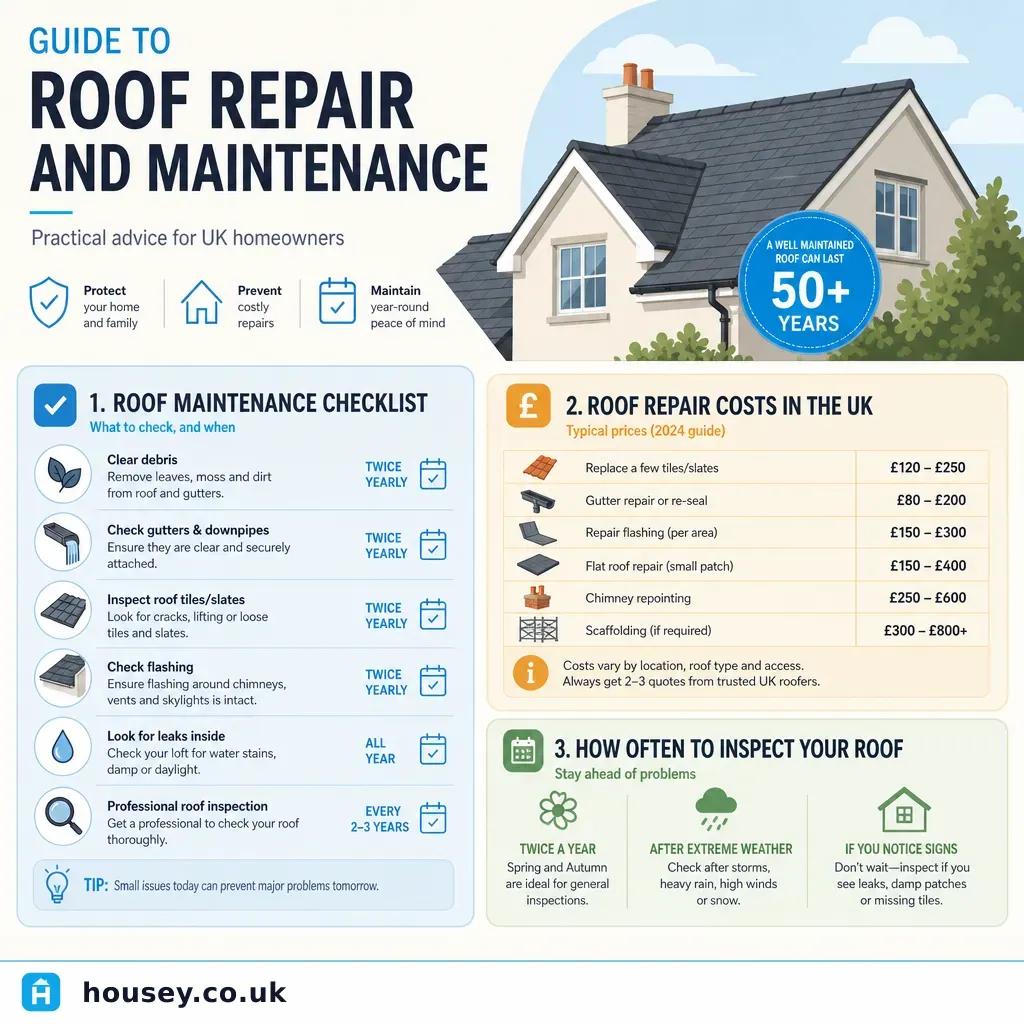
Guide to Roof Repair and Maintenance
Regular roof inspections every 3–5 years, prompt repair of damaged tiles and failed flashings, and annual gutter clearance are the core of effective UK roof maintenance.
 Improvement & Build
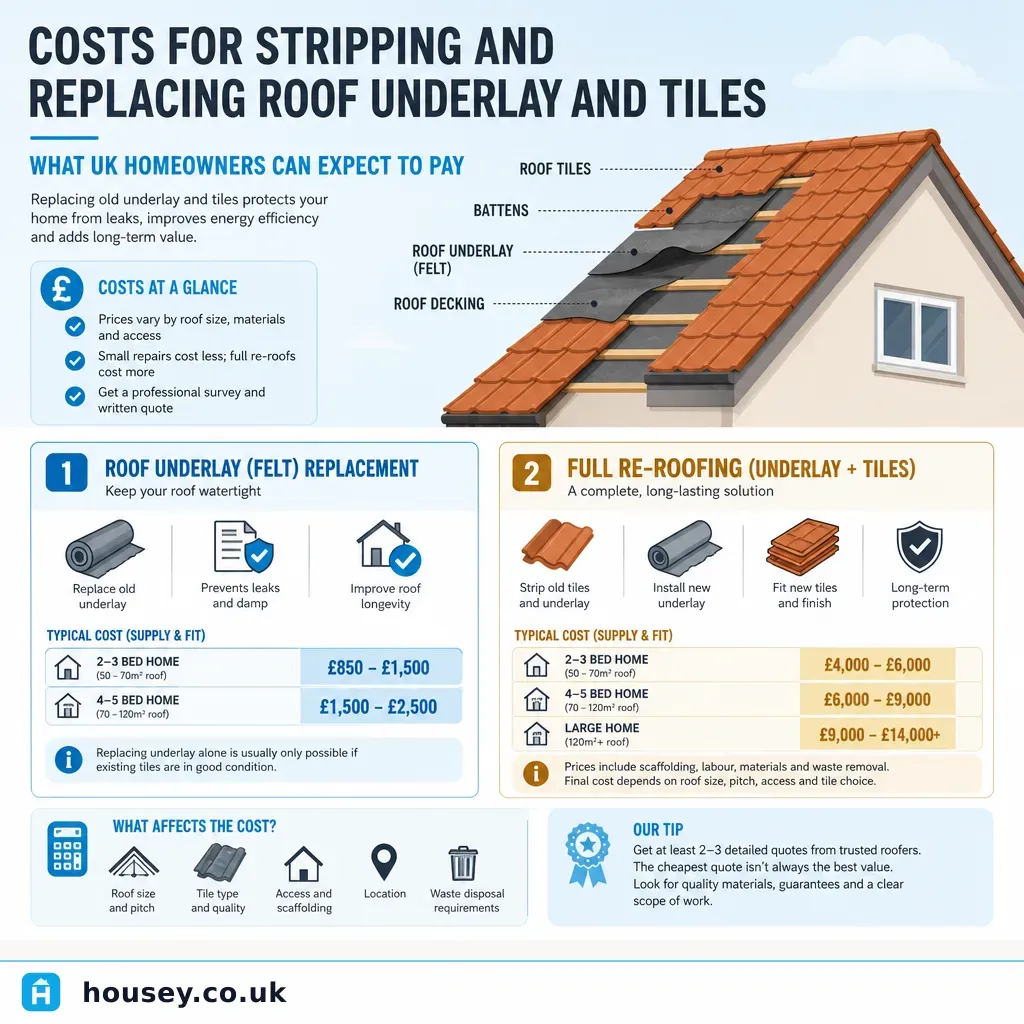
Costs for Stripping and Replacing Roof Underlay and Tiles
Stripping and replacing roof underlay and tiles on a typical UK semi-detached house costs £5,000–£12,000, depending on roof size, tile type, and access.
 Improvement & Build
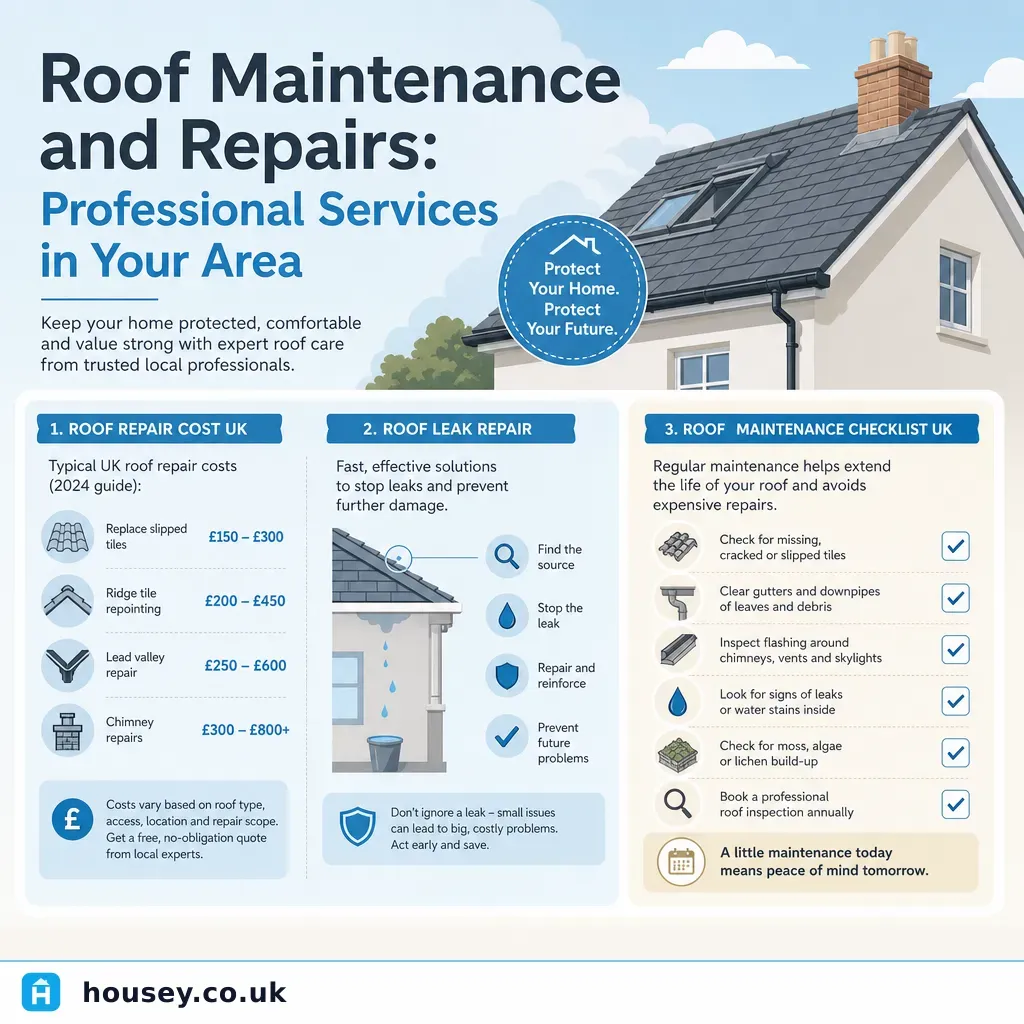
Roof Maintenance and Repairs: Professional Services in Your Area
Roof maintenance in the UK involves regular inspection of tiles or slates, flashings, gutters, and mortar work.
 Improvement & Build
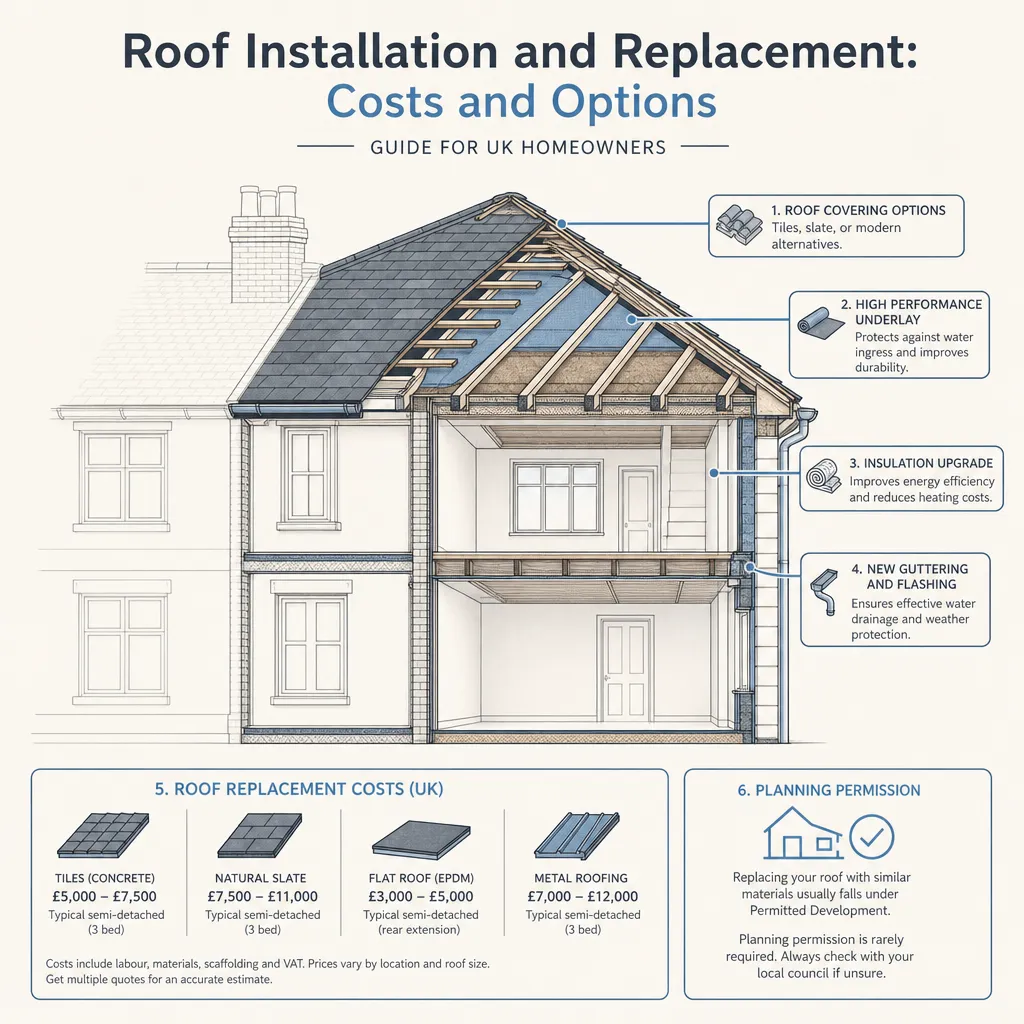
Roof Installation and Replacement: Costs and Options
A full pitched roof replacement on a UK semi-detached house typically costs £5,000–£12,000 depending on materials, roof complexity, and structural condition.
 Improvement & Build
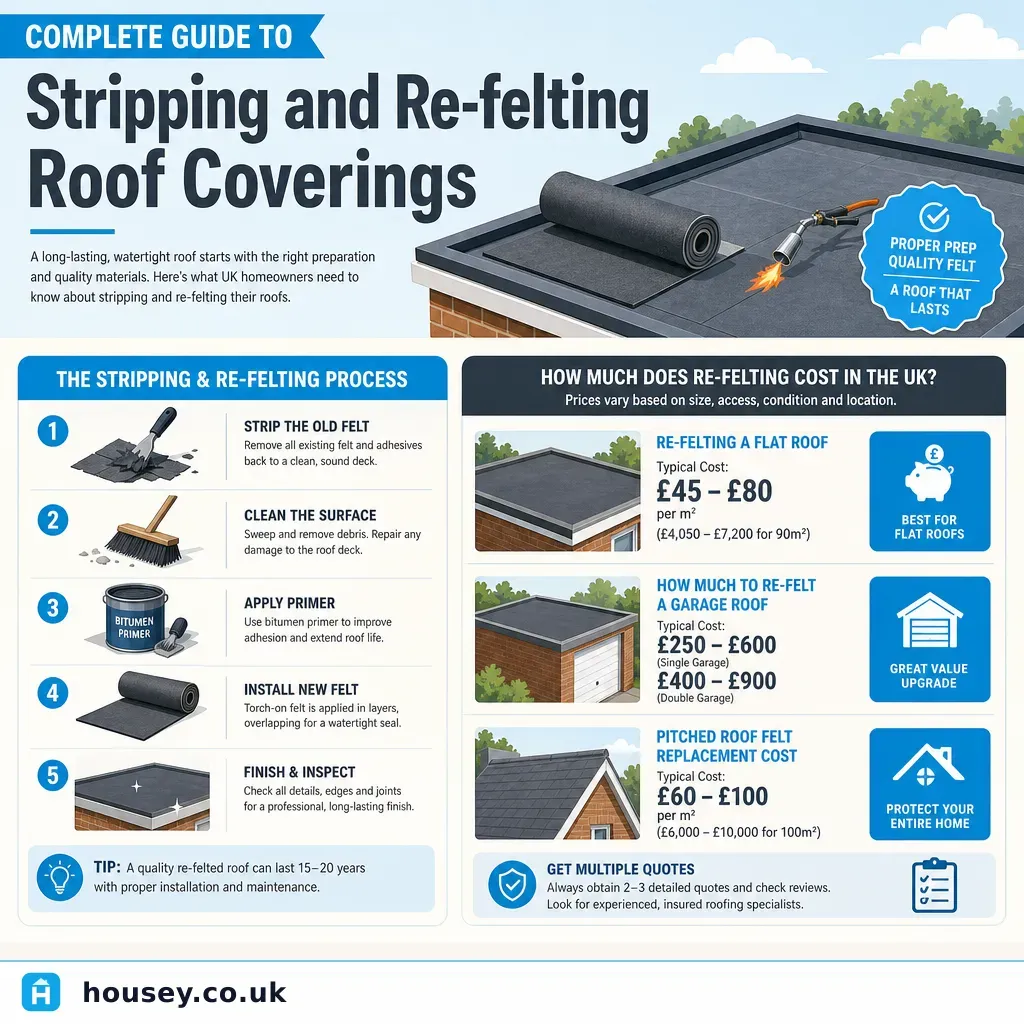
Complete Guide to Stripping and Re-felting Roof Coverings
Stripping and re-felting a roof involves removing the old covering, inspecting the deck and structural timbers, then applying a new membrane such as traditional felt, EPDM rubber, or GRP fibreglass.