What to Budget for Painting Interior and Exterior Doors
By Housey · Last reviewed 6th of May 2026
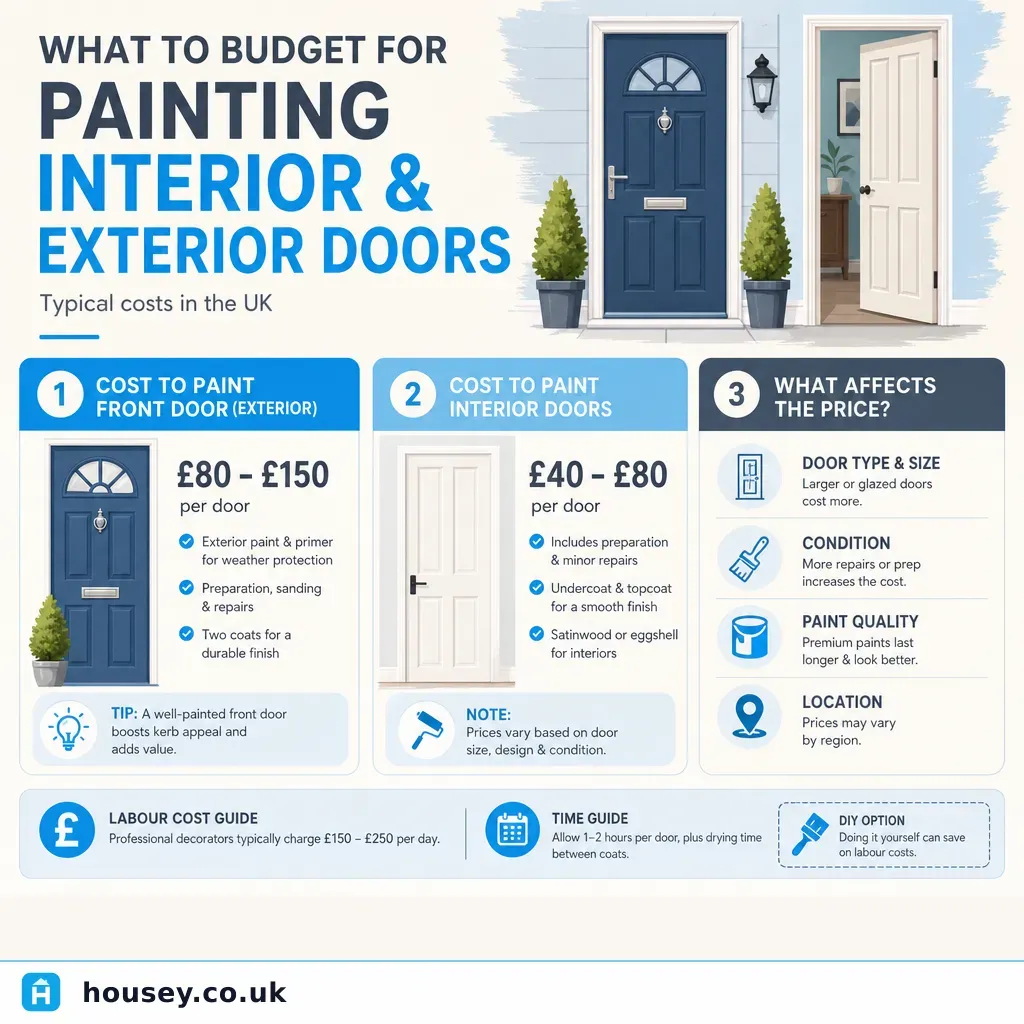
What to Budget for Painting Interior and Exterior Doors
Painting doors is one of the more frequent decorating jobs in a UK home — whether you are refreshing tired woodwork before a sale, repainting after building work, or simply updating the colour scheme. The cost can vary more than most homeowners expect, depending on the number of doors, the condition of existing paintwork, and whether you hire a decorator or do the work yourself.
Key points
- A professional decorator in the UK typically charges £30–£80 per interior door (both sides, including frame and architrave), with heavily panelled or moulded doors at the higher end. Indicative UK costs, last reviewed 2026-05-06.
- Exterior doors cost more to paint professionally — typically £80–£250 per door — due to greater preparation requirements, primer use, and the need for more durable, weather-resistant paint.
- Preparation is the largest cost driver for any door painting job: stripping old paint, filling, sanding, and priming can account for half the time and cost on a poorly maintained door.
- Always check whether a decorator's quote covers both sides, the frame, the architrave, and glass masking — these items are commonly excluded from headline per-door prices.
- Composite, UPVC, or leaded doors require specialist paint products; confirm the decorator has experience with the specific material before instructing them.
What affects the cost of painting doors?
The final price depends on several variables:
Number of doors: Most decorators offer a lower per-door rate for larger volumes. A whole-house job of 10–15 internal doors will usually cost less per door than a single one.
Condition of existing paintwork: If the existing paint is sound, preparation is quicker. Heavily flaking, chipped, or previously gloss-painted doors often require sanding back to bare wood, filling, and two coats of primer before any topcoat — adding significant time and cost.
Door type and complexity: A simple flat flush door takes far less time than a six-panel Victorian door with intricate mouldings, or a glazed door that requires glass panes to be masked.
Paint quality: Trade-grade satinwood or eggshell paints from brands such as Little Greene, Farrow & Ball, or Dulux Trade cost more than standard retail alternatives, but typically provide better coverage and durability.
Location: Decorator day rates are higher in London and the South East. Expect to pay more in urban areas than in rural regions.
Typical costs for painting interior doors
The following ranges are indicative estimates for hiring a professional decorator in the UK, assuming the door is in reasonable condition with no stripping required.
Indicative UK costs, last reviewed 2026-05-06. Quotes will vary based on location, condition, and specification.
Door type | Estimated professional cost per door |
|---|---|
Flush door (both sides, frame + architrave) | £35–£70 |
4-panel or 6-panel door (both sides, frame + architrave) | £50–£90 |
Glazed interior door (with glass masking) | £55–£100 |
Victorian or heavily moulded door (both sides) | £70–£120 |
A typical three-bedroom house with 8–12 interior doors might cost £400–£1,000 in decorator labour, depending on condition, paint specification, and location.
Typical costs for painting exterior doors
Exterior doors require more durable paint, thorough preparation, and often two or three topcoats to ensure weather resistance.
Indicative UK costs, last reviewed 2026-05-06. Quotes will vary.
Door type | Estimated professional cost |
|---|---|
Standard timber front door (external face only) | £100–£180 |
Timber front door (both sides, frame, and threshold) | £150–£250 |
Side or rear timber door | £80–£160 |
Composite or UPVC door (specialist paint required) | £120–£220 |
For period properties with decorative external joinery or larger double front doors, costs may exceed £300 per unit.
DIY vs hiring a professional decorator
Factor | DIY | Professional decorator |
|---|---|---|
Cost | Materials only (£20–£60 per door) | Labour + materials (£50–£250 per door) |
Time | Half a day to a full day per door | 1–3 hours per door for an experienced decorator |
Finish quality | Variable; brush marks common without experience | Typically smooth, consistent finish |
Preparation | Risk of inadequate prep leading to early peeling | Professional prep usually included |
Best for | Simple flush doors in good condition | All door types, especially exterior or poor condition |
Not ideal for | Exterior doors, heritage properties, composite/UPVC | When budget is very tight and door condition is good |
What to check before accepting a quote
Use this checklist when comparing decorator quotes for door painting:
A worked UK scenario
Scenario: 1930s semi-detached in the East Midlands >A homeowner preparing to sell wants all internal doors repainted in an off-white satinwood, plus the original timber front door refinished in a dark navy exterior gloss. There are 9 internal doors (six-panel, in reasonable condition) and one front door (both sides, frame, and letterbox area). >A local decorator quoted:- 9 internal doors (both sides, frames, architraves): £540- Front door (both sides, frame, specialist exterior paint): £190- Materials (trade satinwood and exterior primer): £85- Total: £815 including VAT >This is an illustrative example only. Actual costs vary by location, condition, and specification. Obtain at least three quotes.
When to get professional help
Most door painting is low-risk, but consider hiring a professional decorator if:
- The exterior door is heavily weathered, rotting at the base, or has cracked glazing — a decorator can advise whether painting is sufficient or whether repair or replacement is needed first.
- The existing paint may be lead-based (possible in pre-1970s homes) — professional assessment is advisable before sanding, as disturbing lead paint carries health risks.
- You are working on a listed building — there may be restrictions on paint colours or finishes; check with your local planning authority or consult Historic England guidance before proceeding.
- Previous paint is peeling badly across large areas — correct preparation is critical to a durable finish, and inadequate prep is the most common cause of early failure.
How Housey can help
Housey helps UK homeowners find and compare quotes from vetted local decorators. Describe your door painting project and receive quotes from experienced painters who can assess the condition of your doors before pricing the work.
Frequently asked questions
How long does it take to paint a door?
A professional decorator typically spends 1–3 hours on an interior door (both sides, frame, and architrave), depending on door type and preparation needed. Exterior doors often take 2–4 hours. Drying time between coats adds to the overall duration — oil-based paints may require 8–24 hours between coats; water-based satinwood typically 2–4 hours.
Can UPVC or composite doors be painted?
Yes, but specialist paints designed for non-porous surfaces are required. Standard gloss or satinwood will not adhere reliably to UPVC. Products such as a Zinsser Bulls Eye primer followed by a specialist topcoat are commonly used. Always check the door manufacturer's guidance — painting a composite door may affect any remaining warranty.
Is it worth painting a front door before selling?
A freshly painted front door can improve kerb appeal at relatively low cost. Estate agents generally consider it one of the higher-return cosmetic improvements before a sale. A neutral or period-appropriate colour is usually advisable for the broadest buyer appeal.
How often should exterior doors be repainted?
A well-prepared and properly painted timber exterior door should need repainting every 3–5 years, depending on weather exposure, direct sunlight, and paint quality used. Doors facing south or west typically need more frequent attention due to greater UV and rain exposure.
Should I sand between coats when painting a door?
Yes. A light sand with fine-grit paper (180–240 grit) between coats improves adhesion and helps achieve a smoother finish. This applies to both oil-based and water-based paints and is especially important when applying a topcoat over a primer or undercoat.
Sources and further reading
- Dulux Trade: Wood and joinery coating guidance — Dulux Trade
- Working safely at height — Health and Safety Executive
- Practical Building Conservation — Decorative Surfaces — Historic England
- How to find and hire a decorator — Which?
Useful next reads
 General property advice
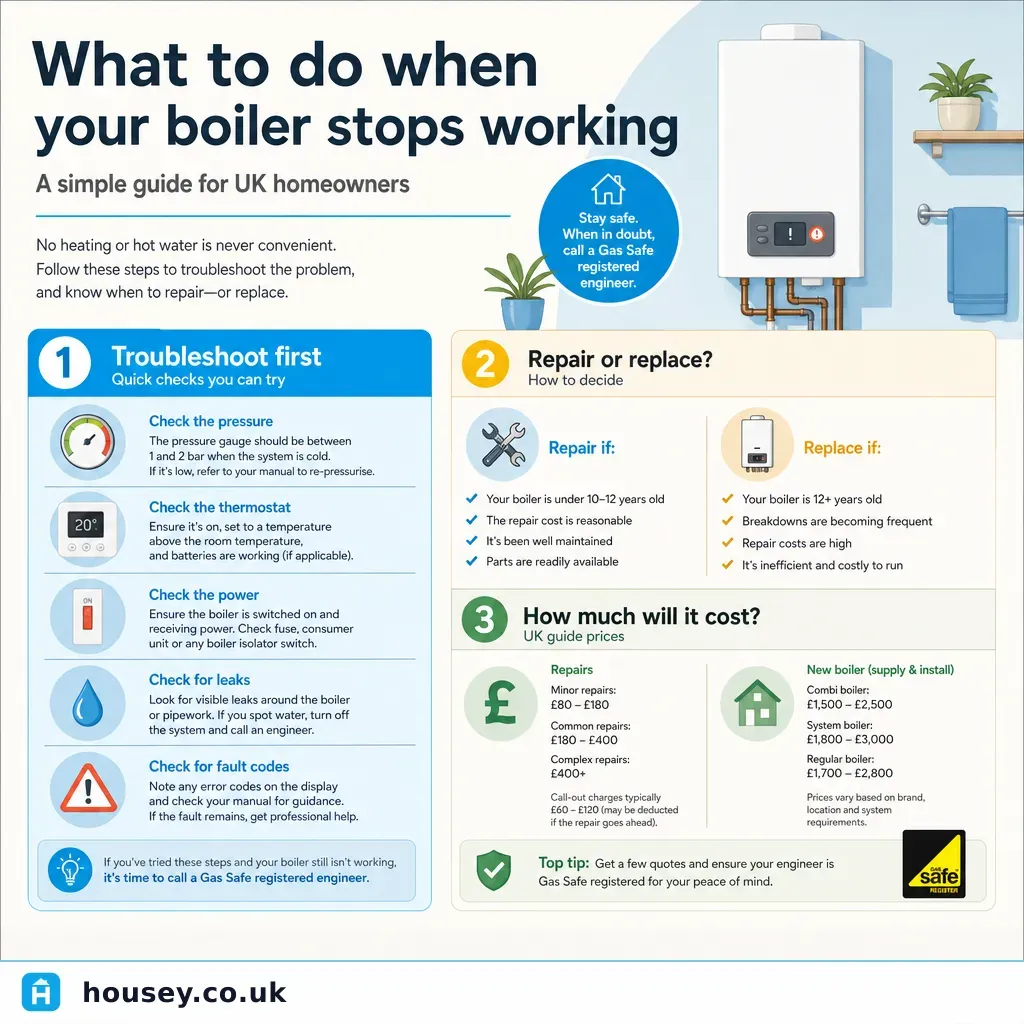
What to do when your boiler stops working
When your boiler stops working, check the pressure gauge (should read 1–1.
 General property advice
Property Market Trends: Activity Growth and Price Movements
UK property market activity is measured through completed sale registrations (HM Land Registry), lender mortgage data, and transaction volumes from HMRC.
 General property advice
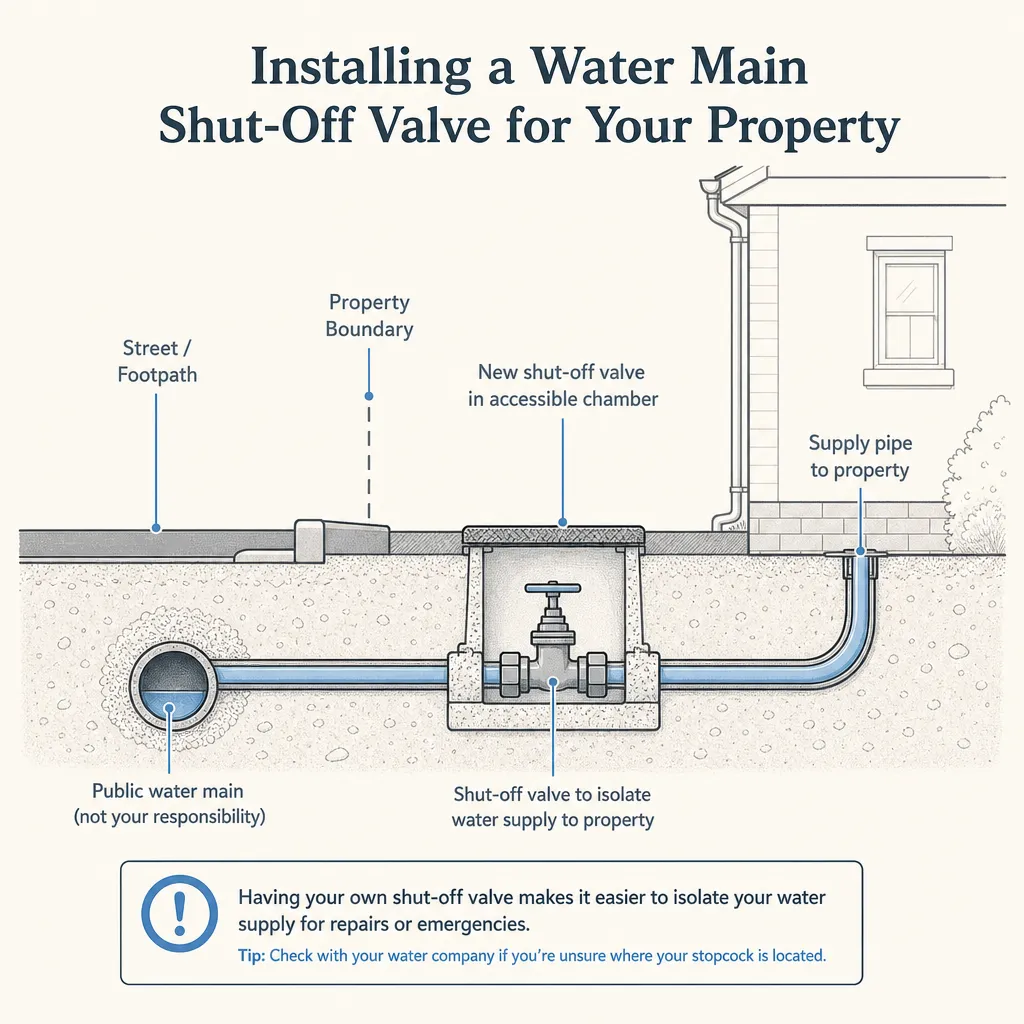
Installing a water main shut-off valve for your property
A water main shut-off valve — commonly called a stopcock — controls all water entering your home from the mains.
 General property advice
Monthly House Price Index: August Market Report and Analysis
The UK House Price Index is published monthly using completed Land Registry transaction data, meaning August figures typically reflect sales agreed months earlier.
 General property advice
Scottish Property Market: Activity and Regional Trends
Scotland's property market operates under distinct legal rules: sellers must provide a Home Report before marketing, transactions become legally binding at conclusion of missives rather than exchange of contracts, and Land and Buildings Transaction Tax replaces Stamp Duty.