Costs for Replastering Walls and Ceilings During Renovation
By Housey · Last reviewed 6th of May 2026
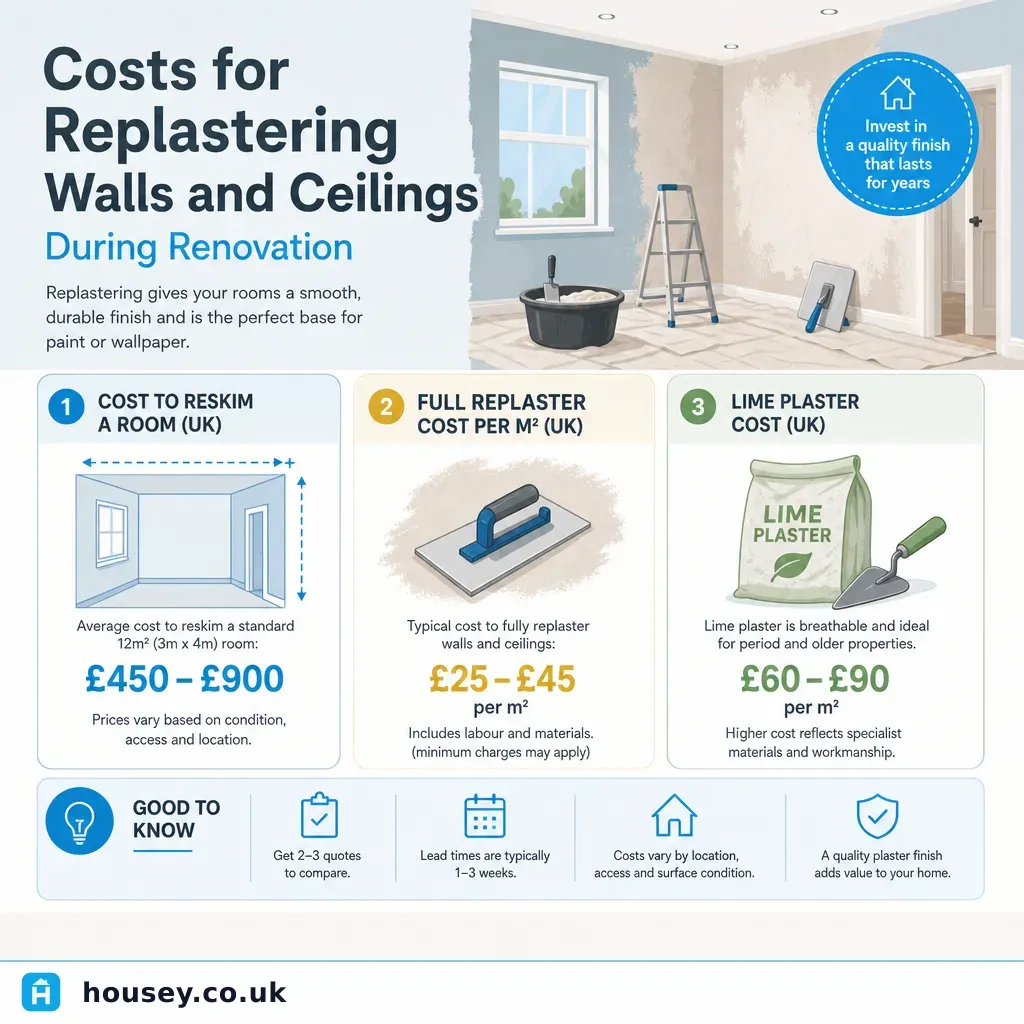
Costs for Replastering Walls and Ceilings During Renovation
Replastering is one of the most consistent costs in a UK home renovation — whether you are refreshing a tired Victorian terrace, repairing walls after a resolved damp problem, or preparing surfaces for decoration following wallpaper stripping. Without a realistic budget set early, replastering costs have a habit of expanding mid-project, particularly in older properties where the full extent of loose or failing plaster only becomes visible once the first areas are opened up.
Key points
- A full skim coat for an average UK bedroom — walls only — typically costs £400–£700, including labour and materials.
- Full replastering, involving hacking off old plaster back to the substrate and applying backing and finishing coats, typically costs £800–£1,500 for one room and £1,200–£2,000+ for a large living room.
- Lime plaster, appropriate for pre-1919 buildings and required for some listed properties, typically costs £30–£60 per square metre — roughly double the cost of standard gypsum specification.
- Pre-2000 Artex and textured ceiling coatings may contain chrysotile (white) asbestos; the Health and Safety Executive (HSE) advises against disturbing these surfaces without a prior asbestos assessment.
- British Gypsum recommends allowing approximately one day per millimetre of plaster depth before painting — meaning four to six weeks for a full-depth coat before decoration can begin.
What are the main types of plastering work?
Skim coat (re-skimming)
A skim coat applies a thin layer of finish plaster — typically 2–3 mm — over sound existing plasterboard or solid backing plaster. This is the least disruptive and least expensive option, suited to walls that are structurally sound but visually tired, cracked at the surface, or rough after wallpaper removal.
Full replaster
Full replastering involves hacking off old plaster back to the substrate — brick, block, or lath — applying a bonding or scratch coat, allowing it to cure, then applying a finishing coat. This is necessary when existing plaster is loose, hollow, contaminated with hygroscopic salts (common after a damp problem is resolved), or too uneven to skim over directly.
Patch repair
Small areas of damaged plaster — around pipe chases, behind removed radiators, or following minor water damage — can be repaired in isolation. A tradesperson will typically charge a half-day or full-day rate for patch visits, often £150–£350 depending on the number and size of areas involved.
Plasterboard dry-lining
When walls are too uneven or badly deteriorated to replaster directly, dry-lining with plasterboard (dot-and-dab or studwork) followed by skimming can be more cost-effective overall. Boarding adds material cost but can speed up the programme and improve the thermal and acoustic performance of the wall at the same time.
How much does replastering cost in the UK?
Work type | Typical area | Indicative professional cost |
|---|---|---|
Skim coat, single wall | 10–15 m² | £150–£300 |
Skim coat, average bedroom (walls only) | 30–40 m² | £350–£600 |
Skim coat, walls and ceiling, average room | 40–55 m² | £450–£800 |
Full replaster, average bedroom | 30–40 m² | £700–£1,200 |
Full replaster, large living room | 50–70 m² | £1,200–£2,000 |
Ceiling skim only, average room | 10–15 m² | £200–£400 |
Patch repairs (per contractor visit) | Various | £150–£350 |
Lime plaster (per m²) | Any | £30–£60 |
Indicative UK costs, last reviewed 2026-05-06. Prices exclude VAT unless stated. London and South East typically 20–35% higher than the national average. Always obtain at least three itemised quotes.
What drives the cost of replastering?
Extent of work: Skimming over sound plasterboard is much faster and cheaper than full replastering. The number of rooms, whether ceilings are included, and whether chimney breasts, alcoves, or bay windows add complexity all affect the total figure.
Substrate condition: Loose, contaminated, or cracked plaster requiring hacking off adds significant labour time. Period properties with lath-and-plaster ceilings are more involved to strip and re-line than modern blockwork or plasterboard walls.
Plaster specification: Standard gypsum plasters — such as British Gypsum Thistle Board Finish or Multi-Finish — are widely available and quick to work with. Lime plaster requires multiple thinner coats, more drying time between coats, and a specialist plasterer who commands a higher day rate.
Access and working conditions: High ceilings, stairwells, or rooms requiring scaffold or hop-up boards add time and cost. Protecting existing floors, fitted furniture, or joinery before work starts also affects programme.
Location: Labour costs in London and the South East are generally 20–35% higher than in the Midlands, North, and Wales.
Worked example: replastering a Victorian two-bedroom terrace
A buyer acquires a two-bedroom Victorian terrace and plans to replaster throughout before moving in. The living room has partially failed plaster; the bedrooms are tired but mostly sound; the bathroom needs patching after the old suite was removed.
Area | Work type | Indicative cost |
|---|---|---|
2 bedrooms | Skim coat, walls and ceilings | £700–£1,200 |
Living room | Full replaster, walls and ceiling | £1,200–£2,000 |
Hallway and landing | Skim coat, walls | £300–£500 |
Bathroom | Patch repairs, 3 areas | £200–£350 |
Total |
| £2,400–£4,050 |
This excludes VAT, any asbestos survey costs (recommended for pre-2000 textured ceilings), and all subsequent decoration. Allow a contingency of at least 10–15% — the full extent of loose or failing plaster is often only revealed once the first sections are opened.
Indicative UK costs, last reviewed 2026-05-06.
Lime plaster in period properties
Properties built before approximately 1919 — and some inter-war buildings — typically have lime-mortar masonry and original lime plaster. Applying modern gypsum plaster directly over lime substrates or lime-mortar brickwork can trap moisture, causing rapid deterioration, cracking, and ongoing internal dampness.
In a conservation area or listed building, the local planning authority may require or recommend like-for-like lime repairs. Confirm this before instructing a plasterer on the specification.
Lime plasterers are a specialist trade; not all general plasterers have the required experience or access to appropriate materials. Expect longer drying times between coats — lime plaster should not be painted for at least four to eight weeks — and higher day rates than equivalent gypsum work.
Artex and textured ceilings: asbestos risk
Textured coatings — including Artex — applied before 2000 may contain chrysotile (white) asbestos. The HSE advises that Artex in good condition can remain in place, as it only poses a risk if disturbed. If a textured ceiling requires removal or significant repair work, commission an asbestos management survey before any contractor begins work.
Options where immediate removal is not planned:
- Skim directly over the Artex if it is firmly bonded and the ceiling is sound.
- Line with plasterboard before skimming.
- Encapsulate and overpaint with a specialist encapsulating coating.
Do not allow any contractor to dry-scrape, sand, or mechanically remove pre-2000 textured coatings without prior asbestos testing.
When to get professional help
Replastering is generally work for an experienced tradesperson rather than a DIY project, particularly in the following situations:
- Plaster failure that coincides with a history of damp — the underlying cause must be fully investigated and resolved before replastering, or the new work will fail prematurely.
- Lime plaster work in period or listed properties, where incorrect specification can cause long-term structural and moisture damage.
- Any pre-2000 textured ceiling that needs to be disturbed, which requires professional asbestos assessment first.
- Lath-and-plaster ceilings that may be structurally compromised, where a surveyor should assess before a plasterer starts.
Red flags when choosing a plasterer:
- Contractor quoting without visiting the property or inspecting the existing plaster condition.
- Quote that makes no mention of substrate preparation, condition assumptions, or drying time between coats.
- Proposal to use modern gypsum plaster on lime-masonry walls without any discussion of compatibility.
- Any contractor who proposes to hack off or abrade a pre-2000 textured ceiling without first requesting evidence of asbestos testing.
- No written scope document or quote before work begins.
How Housey can help
Housey helps UK homeowners connect with plastering contractors and renovation tradespeople. Describe your replastering project on Housey and receive quotes from relevant local professionals who work in your area.
Frequently asked questions
How long does replastering take?
A single-room skim coat typically takes one to two days: one day to apply and initial set, then a final trowel the following morning. Full replastering — with scratch coat, drying time, and finish coat — may take three to five days for a single room. Whole-house projects covering multiple rooms can take two to four weeks depending on scope and drying conditions.
How long should I wait before painting after replastering?
British Gypsum recommends allowing approximately one day per millimetre of plaster depth before painting. A skim coat of 2–3 mm may be paintable in around a week in warm, ventilated conditions. A full-depth coat of 13–20 mm may need four to six weeks to dry sufficiently. Painting too early traps moisture, causes flaking paint, and can void manufacturer guarantees.
Can I plaster over existing plasterboard?
Yes — skimming over sound plasterboard is one of the most common and cost-effective wall finishes. The board must be dry, firmly fixed, and all joints and screw heads filled before skimming. Most plasterers apply a PVA bonding agent or specialist primer to reduce suction in the board surface and improve adhesion of the finish plaster coat.
Does replastering add value to a property?
Freshly plastered walls and ceilings are generally expected by UK buyers and affect saleability rather than headline price. A property where replastering is clearly overdue — with visible cracks, patches, or poorly repaired areas — may attract lower offers or be noted as a maintenance item in a RICS survey. It is typically a maintenance cost rather than a value-adding improvement in isolation.
Should I use lime plaster or gypsum in a Victorian terrace?
Where original lime plaster is sound, it is usually best left in place and repaired in kind. Where full replastering is needed, lime plaster on lime-masonry walls helps manage moisture movement and is sometimes required for listed buildings or conservation area properties. Consult a specialist lime plasterer or a RICS-accredited surveyor if you are unsure which specification to use.
Sources and further reading
- British Gypsum — technical guidance on plastering systems and drying times — British Gypsum
- HSE — asbestos in textured coatings including Artex — Health and Safety Executive
- Historic England — traditional building materials and methods — Historic England
- GOV.UK — listed buildings and planning permission — GOV.UK
Useful next reads
 General property advice
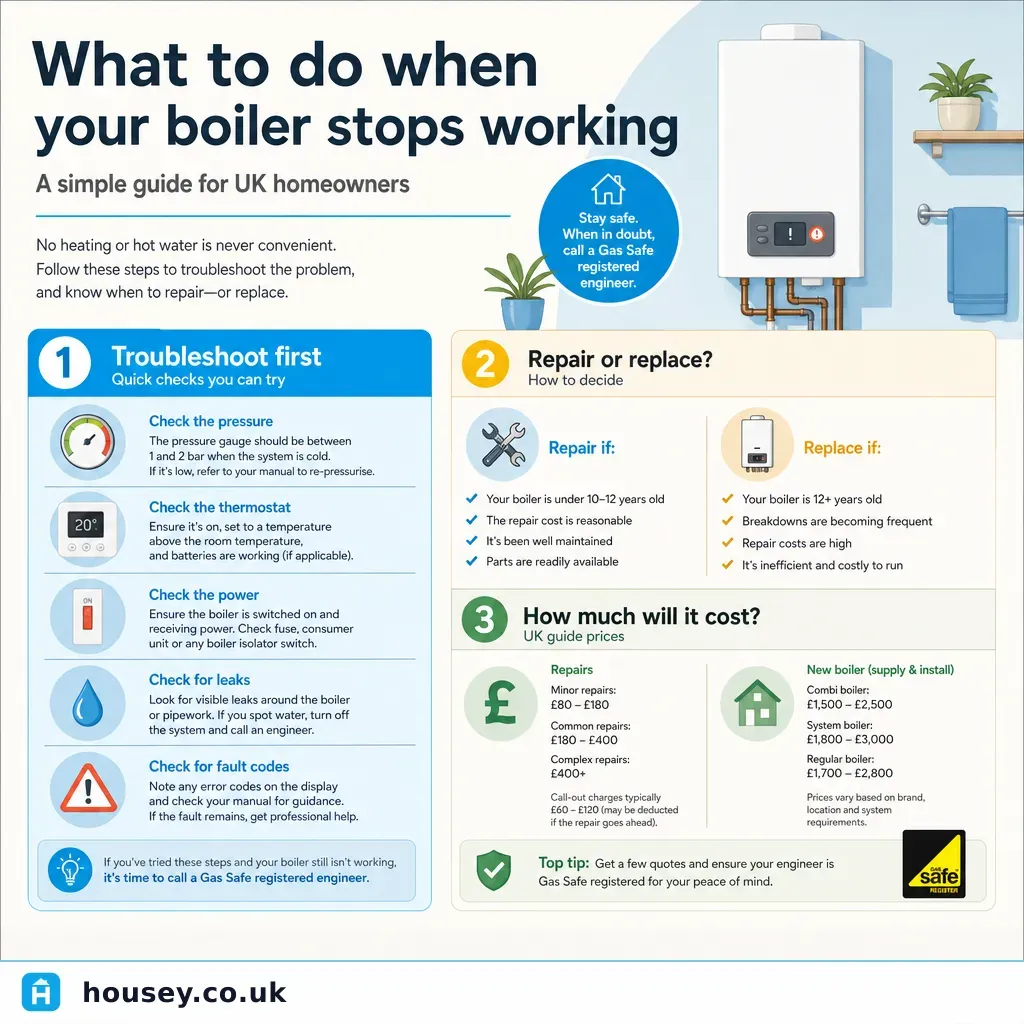
What to do when your boiler stops working
When your boiler stops working, check the pressure gauge (should read 1–1.
 General property advice
Property Market Trends: Activity Growth and Price Movements
UK property market activity is measured through completed sale registrations (HM Land Registry), lender mortgage data, and transaction volumes from HMRC.
 General property advice
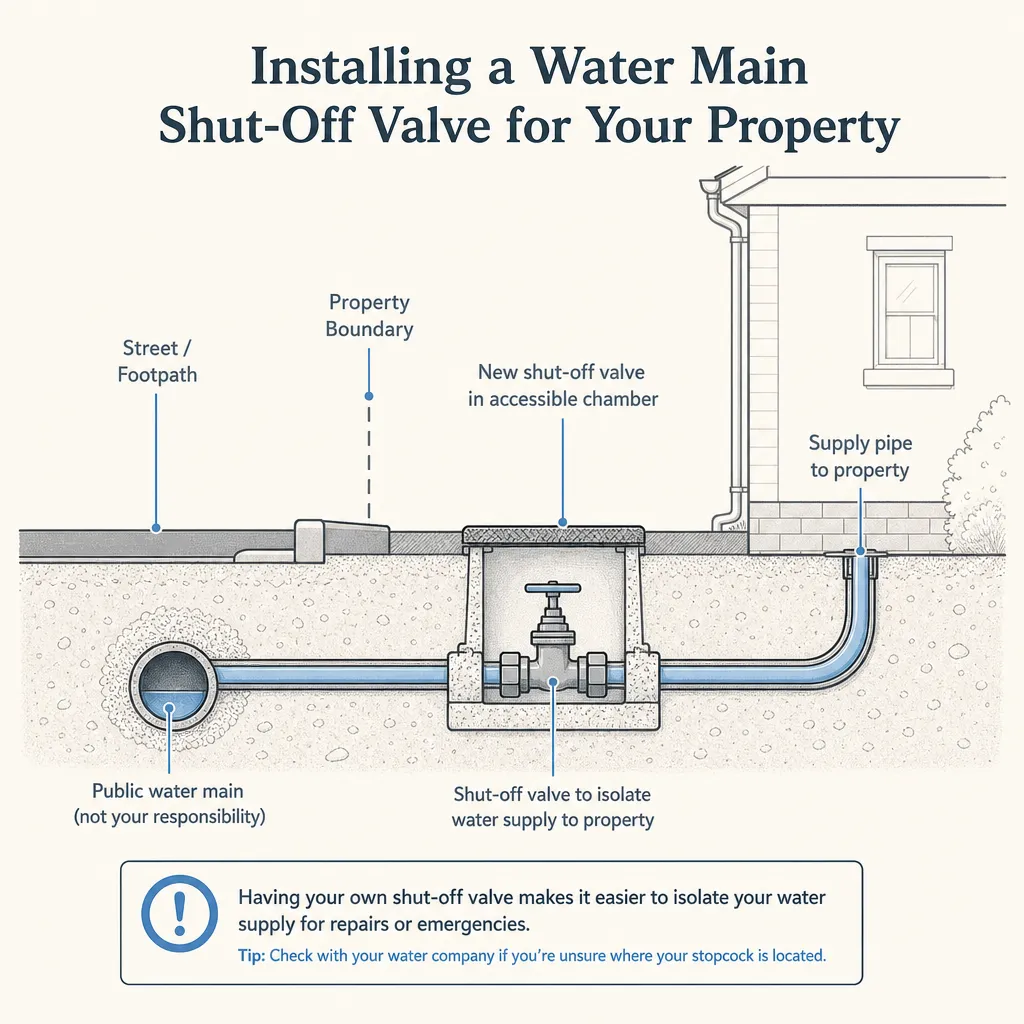
Installing a water main shut-off valve for your property
A water main shut-off valve — commonly called a stopcock — controls all water entering your home from the mains.
 General property advice
Monthly House Price Index: August Market Report and Analysis
The UK House Price Index is published monthly using completed Land Registry transaction data, meaning August figures typically reflect sales agreed months earlier.
 General property advice
Scottish Property Market: Activity and Regional Trends
Scotland's property market operates under distinct legal rules: sellers must provide a Home Report before marketing, transactions become legally binding at conclusion of missives rather than exchange of contracts, and Land and Buildings Transaction Tax replaces Stamp Duty.