Cracks in Driveways: What's Normal and When Should You Worry?
By Housey · Last reviewed 25th of May 2026

Cracks in Driveways: What's Normal and When Should You Worry?
Driveway cracks are among the most common maintenance concerns raised by UK homeowners, whether they have just moved in or are watching an existing surface age. The same crack pattern that is purely cosmetic on one driveway can indicate a significant underlying problem on another, depending on cause, width, pattern, and whether the crack is moving. Getting the assessment right matters because inappropriate patching can mask serious issues, while unnecessary full replacement is expensive and disruptive.
Key points
- Hairline cracks under 1 mm wide in concrete driveways are almost always caused by normal shrinkage during curing and are cosmetic in most circumstances.
- Cracks wider than 5 mm, stepped cracks where one side is higher than the other, or cracks that visibly widen over weeks are signs of ground movement, root damage, or drainage failure and require investigation before repair.
- Block-paved driveways rarely crack individual blocks; widespread sinking, rocking blocks, or displaced edging courses typically indicate sub-base failure or drainage problems beneath the surface.
- A driveway surface that drains toward the property rather than away, or toward the highway without a channel drain, may indicate both a maintenance risk and a drainage compliance issue.
- Planning permission is not usually required to resurface an existing driveway, but replacing with a non-permeable surface over more than 5 m² requires a permeable alternative or drainage provision, in line with GOV.UK guidance on paving front gardens.
Types of driveway crack and what they usually mean
Hairline cracks (under 1 mm)
Hairline cracks in concrete surfaces are almost unavoidable. Concrete shrinks as it cures, and without adequate control joints — pre-formed grooves that direct shrinkage cracking into predictable lines — random fine cracks form across the slab. These are generally cosmetic and do not compromise structural performance. Sealing them with a flexible concrete sealant is optional but helps prevent water ingress and frost damage from gradually widening them over winter.
Asphalt (tarmac) surfaces can develop fine surface crazing after several years of UV exposure and freeze-thaw cycling. Minor crazing without loss of adhesion between the surface course and sub-base is normal ageing.
Alligator or map cracking
A network of interconnecting cracks resembling crocodile skin in an asphalt surface is known as alligator cracking. It usually indicates that the sub-base — the compacted aggregate layer beneath the surface course — has weakened, become saturated, or shifted. Patching the surface alone will not fix alligator cracking; the sub-base needs investigation and likely reinstatement or improved drainage before any new surface is laid.
Single linear cracks wider than 5 mm
A single crack that is wide, stepped, or running perpendicular to the house usually warrants investigation. Possible causes include:
- Tree root penetration lifting one side of the slab.
- Settlement of fill material if the driveway covers a former excavation or service trench.
- Frost heave in areas with clay-heavy, moisture-retentive subsoils.
- Failure of an underlying drainage run or gully, creating a void beneath the surface.
Edge crumbling or break-up near kerbs and channels
Break-up along the edges of a concrete or tarmac driveway often indicates inadequate edge restraint during installation, or erosion of the bedding material from water tracking under the edge over time. This is usually a maintenance issue rather than a structural failure of the main slab.
Crack assessment: which type do you have?
Crack type | Typical cause | Urgency | Likely action |
|---|---|---|---|
Hairline (under 1 mm), no step or offset | Normal concrete shrinkage | Low — cosmetic only | Seal with flexible crack sealant if desired |
Surface crazing on tarmac | Normal UV and freeze-thaw ageing | Low | No action needed unless sub-base is affected |
Map or alligator cracking | Sub-base failure or saturation | Medium | Sub-base investigation; surface patch alone will not last |
Single crack 1–5 mm, no step | Minor movement or isolated damage | Low–medium | Monitor for widening; seal to prevent water ingress |
Single crack over 5 mm, stepped | Ground movement, root, or drainage failure | High | Identify cause before repair; patching alone will fail |
Crack widening over weeks | Active movement underway | High | Do not fill — investigate cause immediately |
Sinking or dipping area | Sub-base voids or drainage failure | Medium–high | Drainage check; possible relay of affected section |
Edge crumbling | Poor edge restraint or water ingress | Low–medium | Re-bed edging or install flexible edge restraint |
Assessment is indicative. A qualified driveway contractor should inspect if you are uncertain about the cause.
Red flags: when the crack signals a serious problem
Stop treating a driveway crack as routine maintenance if any of the following apply:
- The crack is widening. Photograph it alongside a ruler and recheck in two weeks. Active movement is always worth investigating before filling.
- One side of the crack is higher than the other. Stepped or offset cracks indicate differential ground movement or settlement beneath the surface.
- Water seeps up through the crack or pools at its base. This points to a drainage failure or void beneath the surface.
- The driveway is sinking near a manhole cover, inspection chamber, or downpipe gully. Failed underground drainage is a common cause of driveway collapse in UK properties, particularly in older terraced housing.
- The damage appeared after heavy rain or a prolonged freeze. This often indicates water has found its way beneath the surface and is eroding or displacing the sub-base.
- The driveway was recently installed and has cracked significantly. New surfaces should not crack substantially within the first two years — this is likely a workmanship or specification defect.
How driveways are typically repaired
The appropriate repair depends on the cause and extent of damage:
- Crack sealant or joint filler — suitable for isolated hairline cracks in concrete or tarmac; prevents water ingress and frost widening. Low cost and appropriate for DIY on cosmetic cracks.
- Flexible or resin filler — for wider but stable, non-moving cracks without sub-base failure; more durable than basic sealant.
- Patch repair — for isolated surface break-up where the sub-base is confirmed as sound. A contractor should assess before patching; poorly specified patches fail quickly.
- Overlay or resurfacing — a fresh surface layer over a worn but sound base. Not appropriate if sub-base failure is present.
- Full relay — required when the sub-base is saturated, settled, or when drainage has failed. The most expensive option but the only durable solution for structural failure.
Indicative UK costs, last reviewed 2026-05-25. Prices vary by region, surface type, area, and contractor. Obtain at least two written, itemised quotes.
Homeowner checklist: assessing your driveway before calling a contractor
Working through these observations before speaking to a specialist helps them give a more accurate diagnosis and quote:
When to get professional help
DIY sealant is appropriate for isolated hairline cracks in an otherwise sound concrete or tarmac surface. Engage a qualified driveway contractor if the crack is wider than 5 mm, stepped, or visibly widening; if cracking covers a large area or follows an alligator pattern; if there is sinking or water pooling near a drain or inspection chamber; or if the driveway was recently installed and has cracked or settled significantly. For suspected drainage failure beneath the surface, a drainage surveyor may also be needed to locate and address the root cause before any surface relay.
How Housey can help
Housey connects homeowners with vetted driveway installers who can assess crack patterns and sub-base issues, confirm whether repair or relay is the appropriate scope, and provide written, itemised quotes for the right work.
Frequently asked questions
Are hairline cracks in a new concrete driveway a defect?
A small number of hairline shrinkage cracks are normal in a newly laid concrete driveway, particularly where control joints were not fully adequate. However, cracks wider than 1 mm, cracks appearing within weeks of laying, or any sinking alongside cracking suggests a workmanship or specification issue. Contact the contractor and request a written assessment; if the work carries a workmanship guarantee, this should be activated promptly.
Can I fill a driveway crack myself?
Hairline cracks can be sealed with a proprietary concrete crack sealant or flexible polyurethane filler to prevent frost damage widening them — this is a low-risk DIY task. However, filling a crack caused by sub-base failure, drainage problems, or root damage will not fix the underlying issue and may conceal it until the surface fails more extensively. Identify the cause before deciding whether DIY sealant is sufficient.
Does planning permission affect driveway repairs or replacement?
Routine repair and maintenance of an existing driveway does not require planning permission. If you are replacing the surface with a non-permeable material — such as solid concrete or standard tarmac — and the driveway covers more than 5 m² and drains toward the highway, you may need to use a permeable surface or provide a drainage channel under permitted development rules. Check with your local planning authority if in doubt.
How long should a tarmac driveway last before cracking?
A well-installed asphalt driveway should last 15–25 years before significant surface deterioration, depending on sub-base quality, traffic loading, drainage, and maintenance. Surface crazing and minor edge deterioration from around year 10–15 is normal ageing. Significant cracking, sinking, or alligator cracking before this suggests a workmanship or specification issue, or drainage failure beneath the surface.
Sources and further reading
- Paving your front garden: guidance on permeable surfaces — GOV.UK / DLUHC
- CIRIA SuDS Manual (C753) — CIRIA
- Problems with building work and contractors — Citizens Advice
Useful next reads
 Improvement & Build
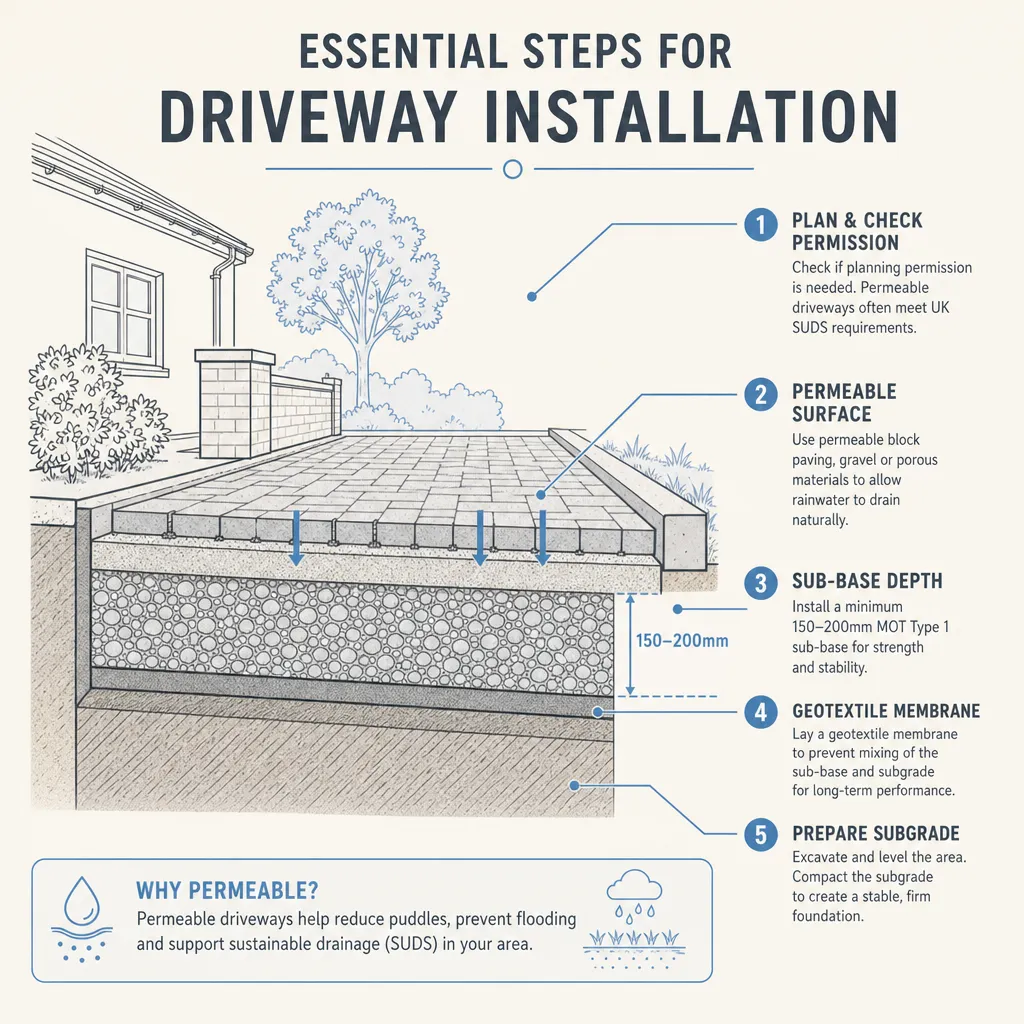
Essential Steps for Driveway Installation
Installing a driveway in England requires planning permission only when using an impermeable surface (standard tarmac, concrete, or block paving) on a front garden area over 5 m².
 Improvement & Build
Preparing Walls for Patching: Surface Preparation Best Practice
Durable wall patching starts with removing all loose material, cutting back to a clean and stable edge, cleaning the substrate, and priming with a construction-grade PVA bonding agent before applying any filler or plaster.
 Improvement & Build
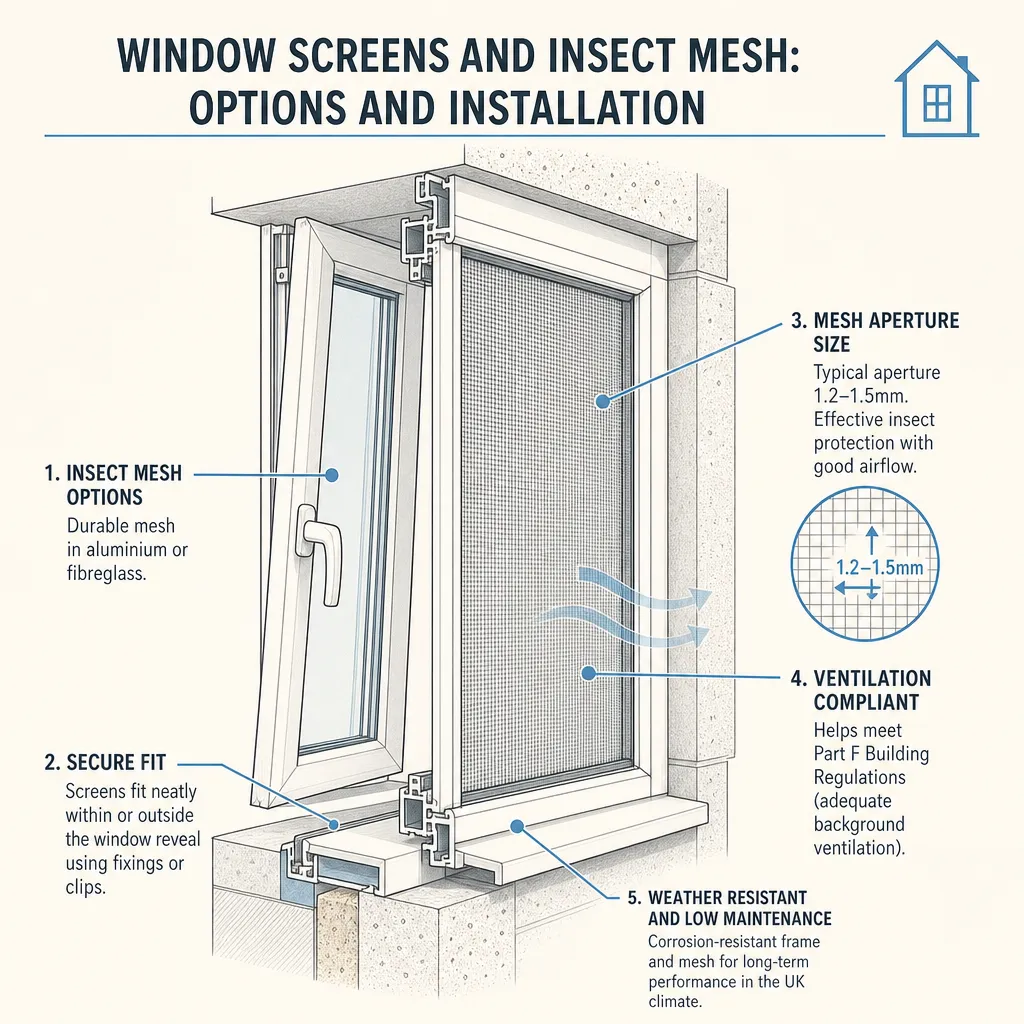
Window Screens and Insect Mesh: Options and Installation
UK window screens fall into four main types: fixed frame, roller retractable, pleated folding, and magnetic snap-fit.
 Improvement & Build
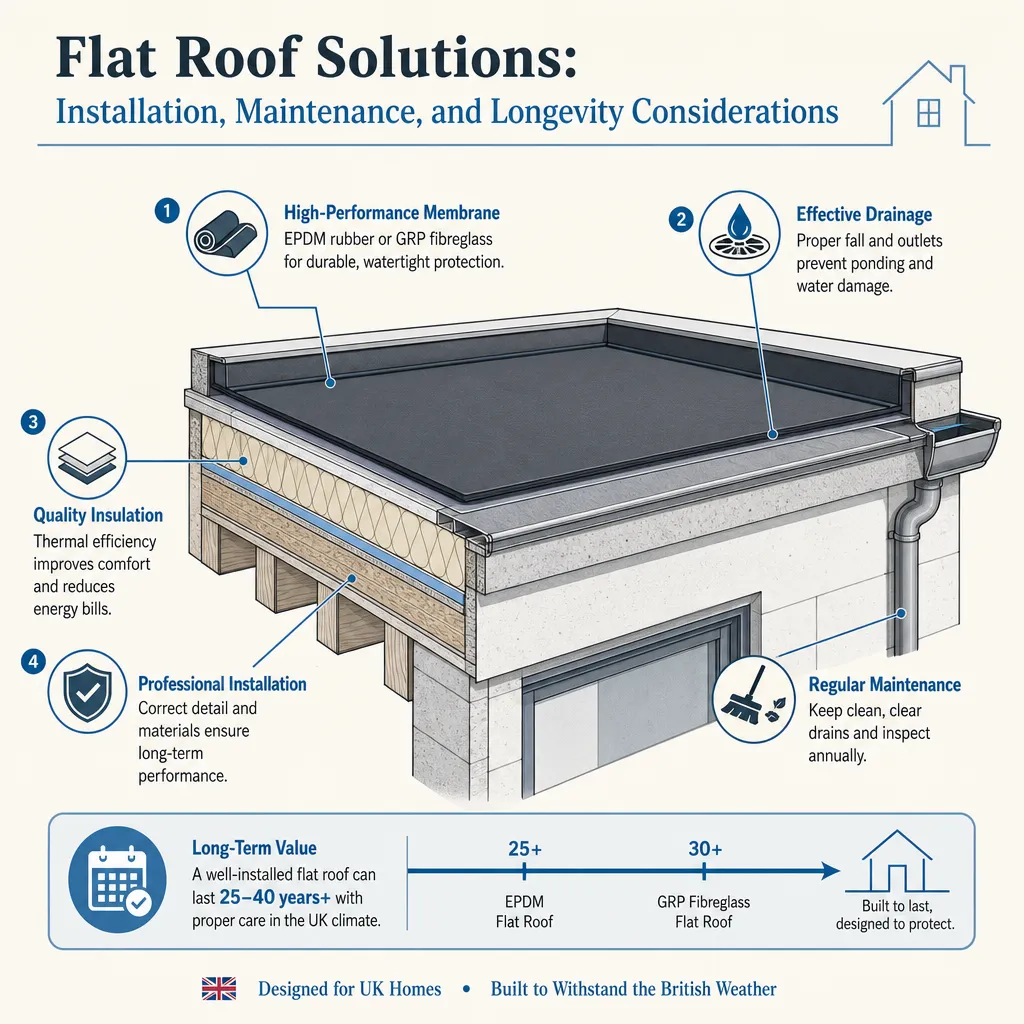
Flat Roof Solutions: Installation, Maintenance, and Longevity Considerations
Flat roofs use several waterproofing systems — EPDM rubber, GRP fibreglass, liquid-applied coatings, modified bitumen felt, lead, and zinc — each with different lifespans and installation requirements.
 Improvement & Build
Comparing Vinyl and Aluminium Windows: Material Performance and Durability
uPVC (vinyl) and aluminium windows both meet UK Building Regulations Part L when properly specified.