Crane Hire Costs for Construction and Renovation Projects
By Housey · Last reviewed 6th of May 2026
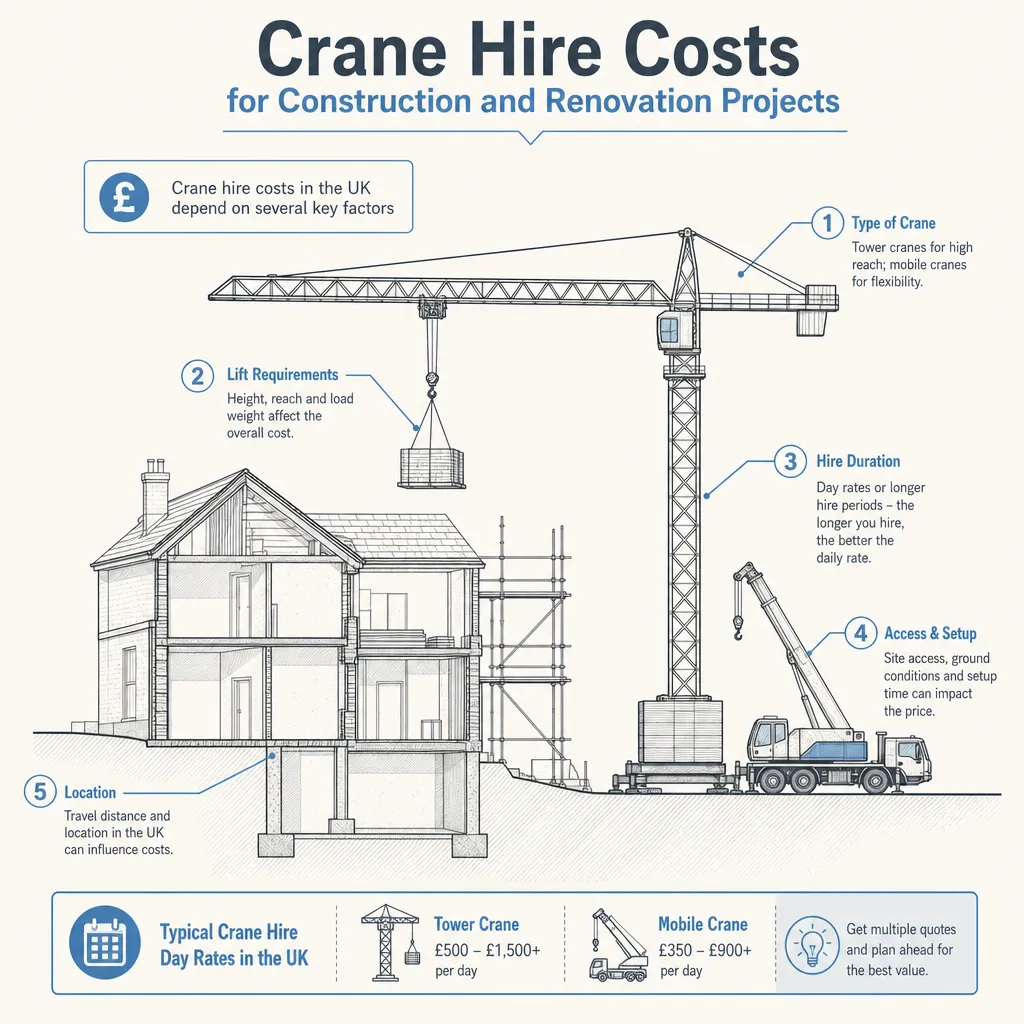
Crane Hire Costs for Construction and Renovation Projects
Crane hire becomes necessary when a project involves loads that cannot be safely moved by hand or standard plant equipment — whether lifting structural steelwork onto a roof extension, positioning a dormer module, or hoisting materials over an obstruction on a tight urban site. For UK homeowners and project managers costing a build or renovation, understanding what drives crane hire charges helps avoid budget surprises and ensures the right equipment is specified before work begins.
Key points
- Mobile crane day rates in the UK typically range from around £500 to £5,000+ depending on lift capacity and reach, excluding transport and set-up charges.
- All crane lifting operations on UK sites must comply with the Lifting Operations and Lifting Equipment Regulations 1998 (LOLER), which requires a formal lift plan prepared by a competent person.
- Most mobile crane hire contracts include a trained operator; always confirm this when comparing quotes.
- Ground bearing capacity must be assessed before positioning a crane — soft or unstable ground requires outrigger mats or engineering input.
- Road closures or pavement licences from the local authority add lead time of typically four to eight weeks when site access requires the highway.
What type of crane do you need?
The crane type is the single largest cost driver for most projects. For domestic renovation and extension work, the most common choices are:
Crane type | Typical use | Indicative day rate (operator included) | Key limitations |
|---|---|---|---|
Mini crawler crane | Restricted-access gardens, tight urban sites | £400–£900 | Limited capacity (usually up to 10 t) |
Mobile hydraulic crane (10–30 t) | Roof lifts, steelwork, dormer modules | £700–£2,000 | Requires road transport; outrigger spread needed |
Mobile hydraulic crane (30–100 t) | Large structural lifts, commercial refurb | £1,500–£5,000 | Larger footprint; higher transport cost |
Tower crane (static) | Multi-storey new build or major refurb | £3,000–£10,000+ per week (erected) | Requires foundation, building control, longer hire period |
Spider/pick-and-carry crane | Indoor lifts, conservatories, tight spaces | £500–£1,500 | Low capacity; specialist use only |
Indicative UK costs, last reviewed 2026-05-06. Rates vary significantly by region, hire company, and season. Always obtain at least three quotes.
For most domestic extensions, loft conversions, and roof replacements, a small to medium mobile hydraulic crane is the most common choice.
How crane hire is priced
Crane hire companies typically quote across several cost elements:
- Day rate or half-day rate: most charge a minimum half-day; multi-day discounts are sometimes available for longer projects.
- Transport: larger cranes travel on low-loaders, adding £200–£800 depending on distance and crane size.
- Erection and dismantling: for static tower cranes, often £5,000–£20,000 on top of the weekly hire rate.
- Operator and banks man: most mobile hire includes an operator; a banks man (slinger/signaller) may be extra at around £200–£350 per day.
- Lift planning: legally required under LOLER; included in some contracts, or £300–£800 from a third-party lifting engineer for complex operations.
- Ground protection: outrigger mats or engineered protection for soft ground, charged separately.
Legal requirements for crane operations in the UK
All crane operations are governed by the Lifting Operations and Lifting Equipment Regulations 1998 (LOLER). Key requirements include:
- Every lifting operation must be properly planned by a competent person, adequately supervised, and carried out safely.
- A written lift plan is required for all but the most straightforward single-lift operations.
- Lifting equipment must be thoroughly examined at intervals no greater than six months, with records retained.
- The appointed person (AP) — the competent individual responsible for planning and directing the lift — is an industry-standard role, often provided by larger hire companies.
The HSE publishes the Safe Use of Lifting Equipment Approved Code of Practice (LOLER ACOP L113), which gives practical compliance guidance.
Homeowner checklist: before you hire a crane
What to ask before accepting a crane hire quote
- What is the crane's rated capacity and maximum radius at that capacity?
- Is an operator and banks man included in the day rate?
- Who is the appointed person for the lift, and what are their qualifications?
- Is a lift plan included, and will it be provided in writing before the day?
- What are the transport, fuel, and erection charges (if applicable)?
- Is VAT included in the quoted rate?
- What is the cancellation or weather delay policy?
- Is the crane LOLER-certified and when was the last thorough examination?
Why quotes vary so much
- Crane age and specification: newer equipment with greater reach and capacity commands a higher rate.
- Region: rates in London and the South East tend to run 15–30% higher than in the Midlands or North.
- Seasonality: peak construction periods (typically spring and early summer) push rates up.
- Lift complexity: a multi-lift day with detailed engineering input costs more than a straightforward single lift.
- Access constraints: urban sites with restricted access often require specialist smaller cranes that carry a premium.
When to get professional help
Crane operations should always involve qualified lifting professionals. Engage a specialist or structural engineer before hiring if:
- The project involves lifts over occupied or adjacent properties.
- Overhead power lines or underground utilities are near the lift zone.
- Ground conditions are uncertain — particularly on clay soils, made ground, or near basements.
- The load weight or centre of gravity is not clearly defined.
- The project involves tandem lifts (two cranes working in coordination).
The Lifting Equipment Engineers Association (LEEA) can help identify qualified appointed persons and engineers in your area.
How Housey can help
Housey connects UK homeowners and project managers with verified contractors across a range of construction and renovation services. If your project involves specialist plant, lifting, or construction support, Housey can help you request and compare quotes from relevant providers.
Frequently asked questions
Do I need planning permission to use a crane on my property?
You generally do not need planning permission simply to use a mobile crane on a private site during construction. However, if the jib will oversail a neighbouring property, the neighbour's consent is needed. If a road closure or pavement licence is required, you must apply to the local authority — typically four to eight weeks' lead time.
Is crane hire subject to VAT?
Yes. Crane hire in the UK is subject to VAT at the standard rate of 20%. Always check whether a quote is inclusive or exclusive of VAT before comparing figures from different hire companies. Confirm whether transport, fuel, and operator costs are all within the VAT-bearing price.
Who is responsible if something goes wrong during a lift?
With a fully operated crane, the hire company typically retains responsibility for the lift. With a bare-hire arrangement where the contractor supplies their own operator, the contractor bears more responsibility. The lift plan, LOLER documentation, and insurance cover are critical factors in any dispute.
How far in advance should I book a crane?
For smaller mobile cranes in quieter periods, one week may suffice. For larger cranes, tower cranes, or lifts requiring road closures, allow four to eight weeks. Road closure traffic management orders typically require at least four weeks' notice to the local authority.
Can a crane oversail a neighbouring property?
Oversailing — where a crane's jib or load passes over a neighbouring property — requires the neighbour's permission. If refused, the crane must be repositioned or an alternative method found. Some hire companies can assist with indemnity-backed oversailing licences as part of a managed service.
Sources and further reading
- Lifting Operations and Lifting Equipment Regulations 1998 (LOLER) — legislation.gov.uk
- HSE: Safe use of lifting equipment — LOLER ACOP L113 — Health and Safety Executive
- HSE: Lifting operations in construction — Health and Safety Executive
- Lifting Equipment Engineers Association (LEEA) — LEEA
Useful next reads
 Improvement & Build
Dehumidifier Hire for Damp and Moisture Control
Hiring an industrial dehumidifier in the UK typically costs £25–£60 per day or £100–£250 per week for a standard 50-litre-per-day unit.
 Improvement & Build
Guide to aerating and scarifying your lawn
Aeration relieves soil compaction by creating channels for air, water, and nutrients; scarification removes the thatch layer that blocks grass growth.
 Improvement & Build
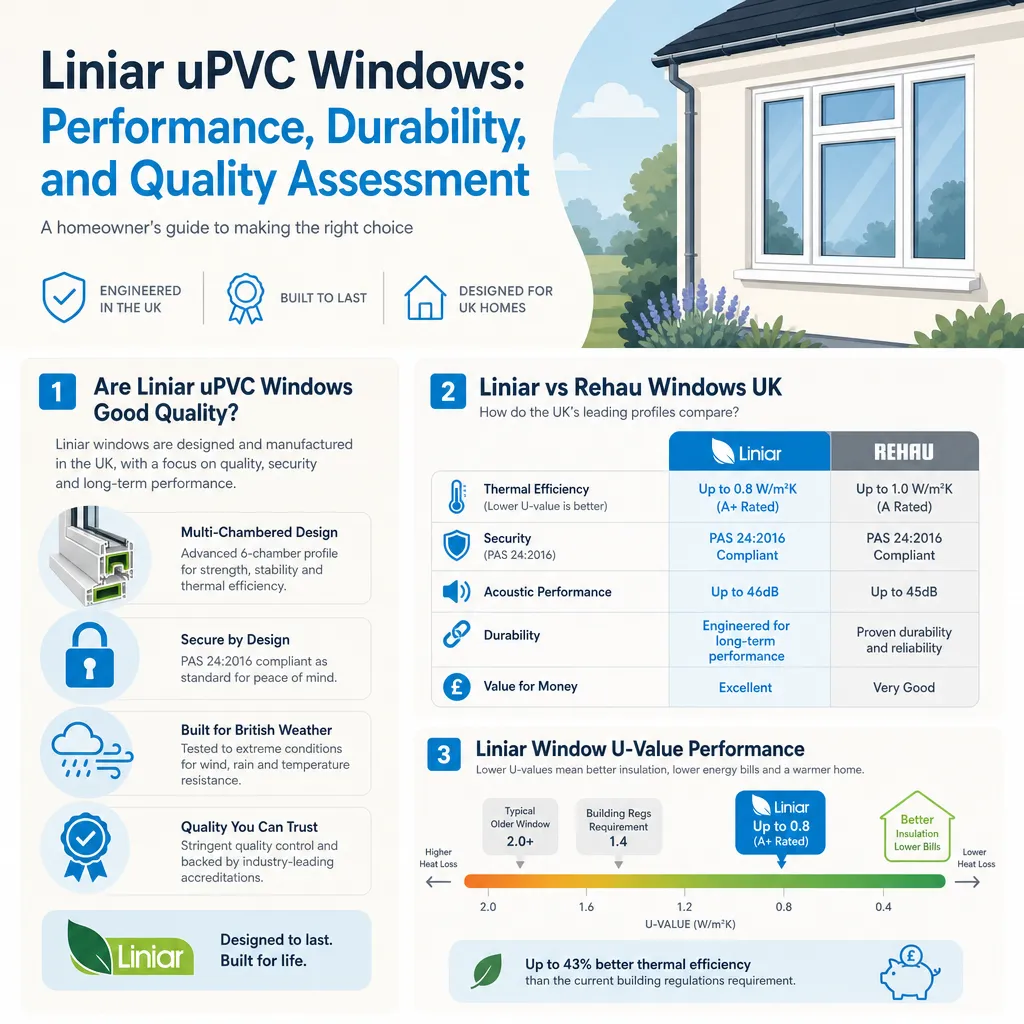
Liniar uPVC Windows: Performance, Durability, and Quality Assessment
Liniar uPVC window profiles are manufactured in the UK using multi-chambered, foamed frames.
 Improvement & Build
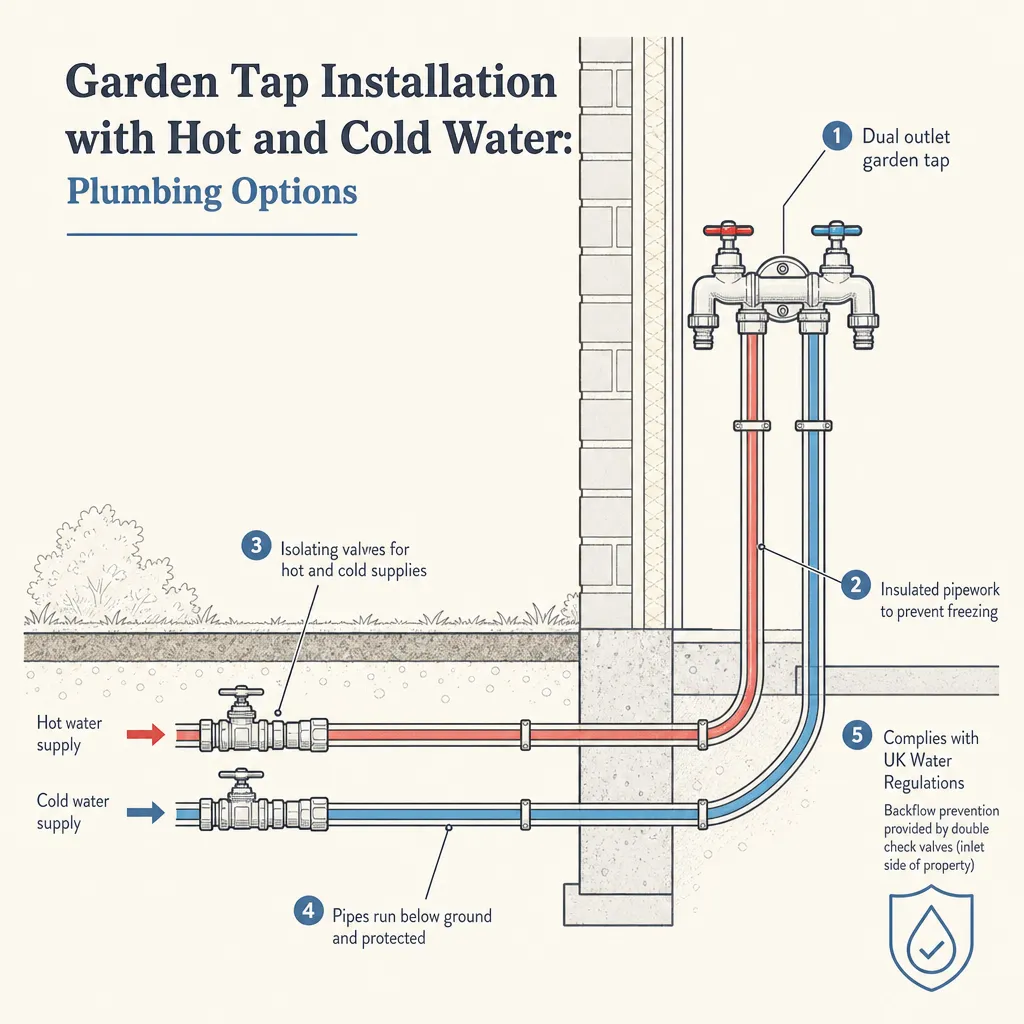
Garden Tap Installation with Hot and Cold Water: Plumbing Options
Adding a cold garden tap is a common DIY project, but routing hot water outdoors requires a plumber to connect to your domestic hot water system and comply with the Water Supply (Water Fittings) Regulations 1999.
 Improvement & Build
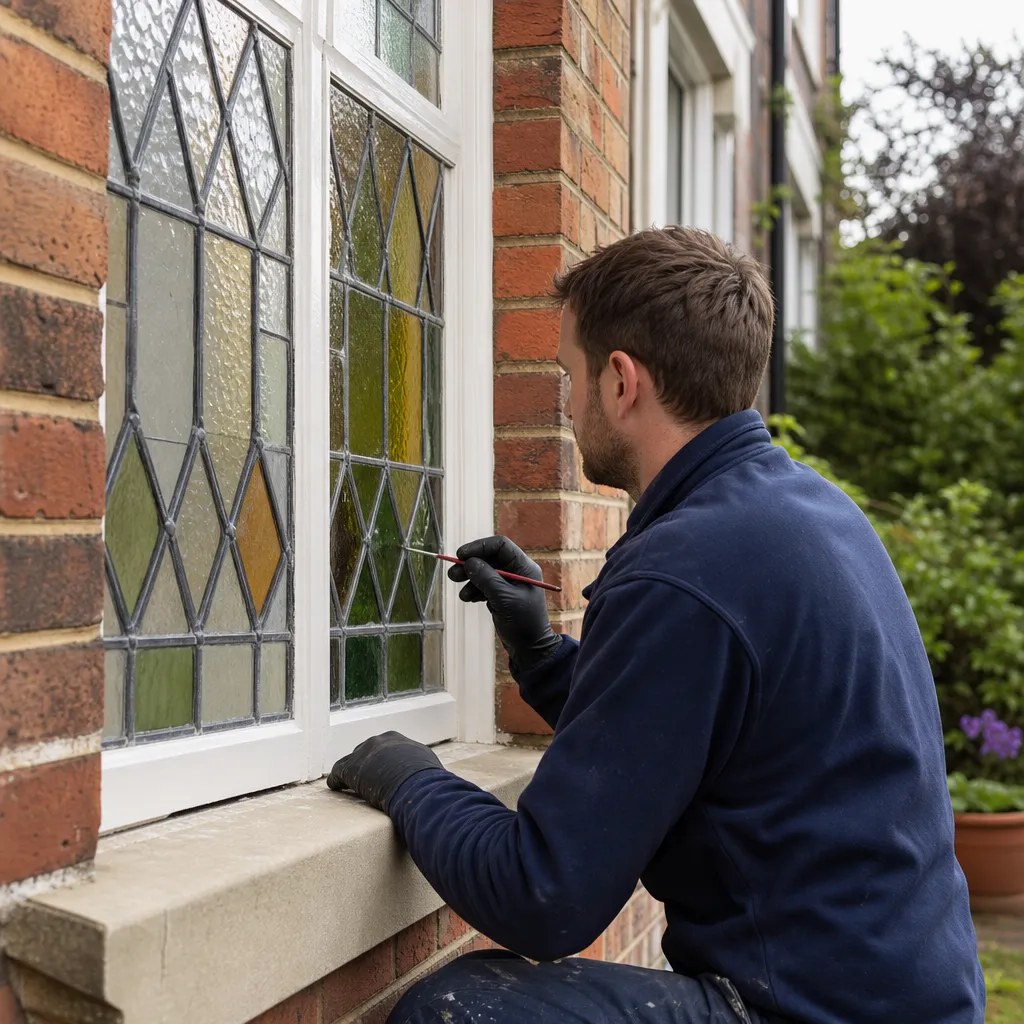
Sealing and Maintaining Historic Leaded Glass Windows: Preservation and Performance
Leaded glass windows are maintained using traditional linseed oil cement — not silicone or modern sealants, which prevent natural movement in the lead came.