Guide to aerating and scarifying your lawn
By Housey · Last reviewed 8th of May 2026
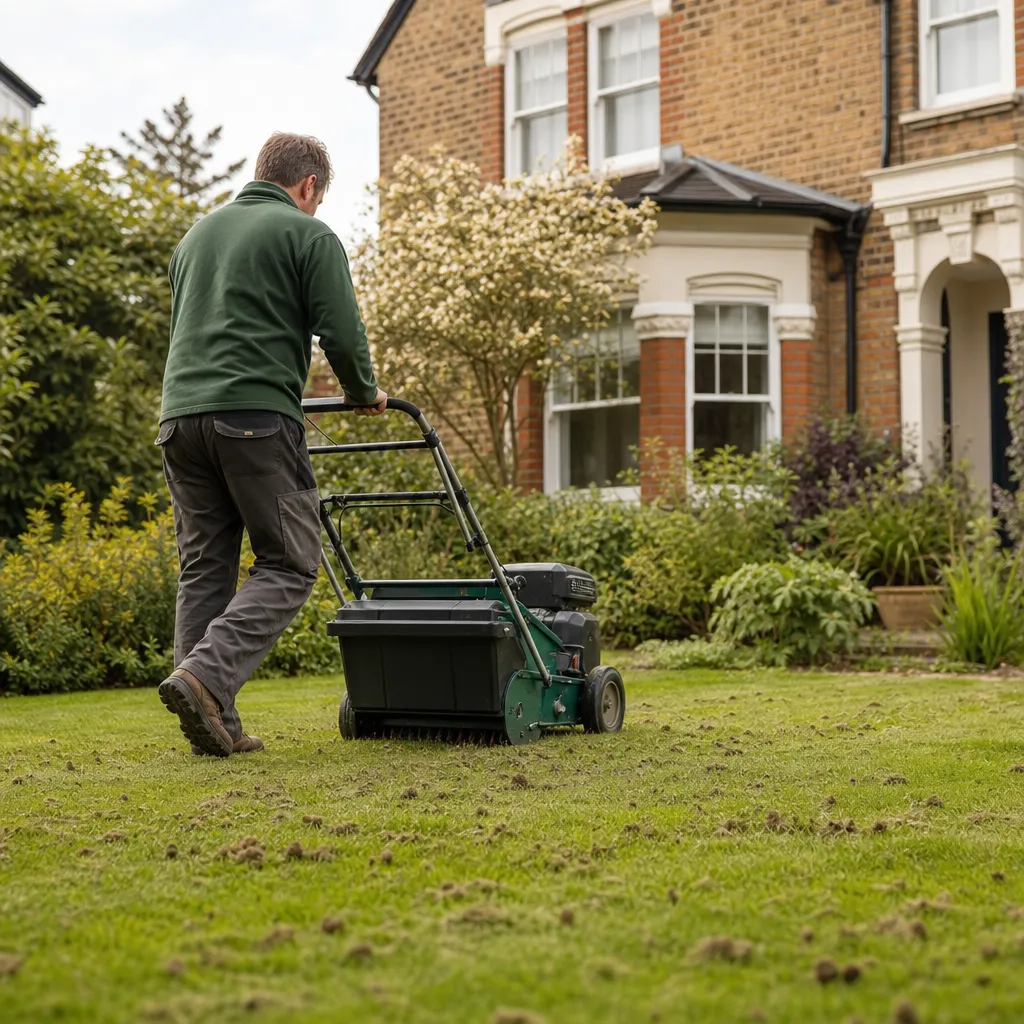
Guide to aerating and scarifying your lawn
Patchy grass, waterlogged areas after rain, and a spongy underfoot feeling are common signs that a UK lawn has developed thatch or compaction problems. Both issues are widespread — clay-heavy soils across much of England and Wales are particularly prone to compaction, and a wet British climate encourages the moss and organic debris that form thatch. Understanding when and how to address each problem, and whether to do it yourself or hire a professional, can make a significant difference to your lawn's health year-round.
Key points
- Scarification removes the thatch layer — the mat of dead grass, moss, and organic debris that accumulates between grass blades and the soil surface; a thatch layer deeper than 10 mm is widely considered problematic and warrants treatment.
- Hollow-tine aeration extracts plugs of soil typically 10–15 mm in diameter and up to 100 mm deep, offering more lasting compaction relief than solid-tine aeration, which simply pierces the surface without removing material.
- The recommended treatment windows in the UK are autumn (mid-September to late October) and spring (late March to mid-April), when grass is actively growing and can recover; avoid treatment in mid-summer heat or frozen winter conditions.
- After hollow-tine aeration, top-dressing with a sharp sand or sand/loam mix brushed into the channels helps keep them open and progressively improves drainage over successive seasons.
- Aggressive autumn scarification should be followed by overseeding within one to two weeks to fill bare patches before soil temperatures drop and germination slows.
Aeration vs scarification: what is the difference?
The two treatments address different problems and use different tools, though they are often combined in an autumn renovation programme.
Treatment | What it addresses | Method | Typical tools | Best timing |
|---|---|---|---|---|
Scarification | Thatch accumulation (dead grass, moss, debris) | Blades or tines cut through the surface layer | Powered scarifier, spring-tine rake | Autumn (main) or light spring pass |
Solid-tine aeration | Mild surface compaction; improved water and air penetration | Solid spikes pierce the soil without removing material | Garden fork, solid-tine aerator | Spring or autumn |
Hollow-tine aeration | Moderate to severe compaction | Hollow tines extract soil cores; channels left open or top-dressed | Hollow-tine aerator (hire or contractor) | Autumn preferred |
Slit aeration | High-traffic or sports turf | Rotating blades cut narrow vertical slits | Slit aerator | Autumn or spring |
For most UK domestic lawns, the most useful combination is scarification followed by hollow-tine aeration in early-to-mid autumn, with overseeding and top-dressing to finish.
Does your lawn need treatment?
Signs your lawn needs scarification
- A thick, spongy layer underfoot — probe with a pencil or spike; if the thatch is more than 10 mm deep, it is worth addressing.
- Moss that keeps returning despite repeated treatment; moss thrives in the low-oxygen, high-moisture conditions that a thatch mat creates.
- Water pooling briefly on the surface rather than draining, combined with pale green colour even after fertilising.
- Grass that appears to sit loosely on the surface rather than being firmly anchored in soil.
Signs your lawn needs aeration
- Water sitting on the surface for several hours after moderate rain, particularly on clay-heavy soils.
- Soil that resists a garden fork pushed in by hand to more than about 5 cm.
- Regular use by children, pets, or foot traffic — these compact soil quickly over a single growing season.
- Grass that goes brown and patchy in dry spells despite adequate rainfall, as compacted soil holds less available water.
Which treatment do you need? A decision guide
- Choose scarification alone if the lawn has visible thatch or moss but the soil still accepts a fork to 10 cm without difficulty.
- Choose solid-tine aeration alone if the soil feels mildly compacted but there is little thatch and grass is growing reasonably well across the whole lawn.
- Combine scarification then hollow-tine aeration if the lawn has both significant thatch and noticeable compaction — this is common for lawns on clay soils that have not been maintained for several years.
- Add overseeding and top-dressing whenever scarification leaves bare or thin areas, particularly in autumn when germination conditions are good.
- Ask a landscaper or lawn specialist to assess the lawn if bare areas are larger than 30 cm across, if compaction extends well below 15 cm, or if there are signs of lawn disease or soil structural damage.
- Investigate drainage before treating if water sits on the surface for more than 12 hours after heavy rain — aeration may not be sufficient and a drainage assessment may be needed.
When is the best time of year in the UK?
Autumn (mid-September to late October) is the primary treatment window. Soil is still warm enough for grass to recover, there is usually adequate moisture, and growth continues long enough for overseeding to establish before winter.
Spring (late March to mid-April) is suitable for lighter aeration and a gentle scarification pass. Avoid scarifying aggressively in spring, as the grass may not have sufficient time to recover before dry summer conditions arrive.
Avoid treating in July or August when the lawn is heat-stressed, or in waterlogged or frozen winter conditions. Disturbing frozen or saturated turf can cause lasting damage to the root zone.
DIY, hire, or contract out?
Approach | Best for | Typical cost indication | Key limitation |
|---|---|---|---|
DIY with hand tools | Small gardens under 30 m², mild thatch | Tool cost only | Physically demanding; impractical for large areas |
Hire a powered scarifier or aerator | Medium gardens 30–150 m², moderate thatch or compaction | Typically £50–£100 per day for tool hire — indicative, verify locally | Correct machine selection matters; risk of over-scarifying on a thin lawn |
Hire a professional landscaper | Large gardens, severe compaction, full renovation programme | Varies by contractor and area; obtain at least three quotes | Higher cost; requires planning around contractor availability |
Indicative UK costs, last reviewed 2026-05-08. Tool hire prices vary by supplier and region.
Powered hollow-tine aerators are available from most tool hire centres. When hiring, check that the tine spacing suits your soil type — 75–100 mm spacing is typical for general lawn use.
What to do after treatment: a checklist
When to get professional help
Most lawn aeration and scarification can be handled by a confident DIY gardener or a general landscaper. Consider bringing in a specialist if:
- The lawn has persistent waterlogging even after repeated aeration — this may indicate a deeper drainage problem unrelated to compaction.
- Thatch removal reveals a disease-damaged or structurally poor lawn base that needs regrading or returfing.
- The soil is very heavy clay and previous aeration attempts have produced no lasting improvement.
- The area exceeds 200 m² and the scale requires commercial equipment for a practical result.
How Housey can help
If your lawn needs more than routine maintenance — or you would like a professional to assess the soil, advise on a full renovation programme, and carry out the work — Housey can connect you with qualified landscapers and garden designers in your area. Request quotes and compare them in one place.
Frequently asked questions
How often should you aerate and scarify a UK lawn?
Most UK lawns benefit from aeration once a year, ideally in autumn. Scarification is often done annually for lawns with persistent thatch, or every two to three years for well-maintained lawns. Overtreatment can stress the grass, so it is worth assessing conditions each season rather than following a fixed schedule regardless of the lawn's actual state.
Can you scarify and aerate on the same day?
Yes — for an autumn renovation programme this is the recommended approach. Scarify first to remove the thatch mat, then aerate to relieve compaction, then top-dress and overseed. Doing both in one session reduces the number of times the lawn is disturbed and makes overseeding more effective because seed falls directly into open channels.
Does scarifying kill the lawn?
A newly scarified lawn often looks thin and patchy, which can be alarming. This is a normal short-term response. Provided the grass is healthy and the work is done at the right time of year — early autumn or spring — the lawn typically recovers within two to six weeks, especially if overseeded promptly after treatment.
What is the difference between a scarifier and a lawn rake?
A spring-tine lawn rake is a hand tool for light thatch removal and general tidying. A powered scarifier uses rotating blades or flails to cut through thatch more aggressively and at greater depth. For significant thatch accumulation, a powered scarifier is considerably more effective than a hand rake and covers large areas far more quickly.
Should I water the lawn before aerating?
Lightly moist soil aerates more effectively than bone-dry or waterlogged ground. Ideally, aerate 24 to 48 hours after light rain or irrigation so the soil is workable but not saturated. Very dry soil causes tines to bounce rather than penetrate cleanly, producing shallower and less effective channels.
Sources and further reading
- Lawn care overview — Royal Horticultural Society
- Lawn aeration and top-dressing — Royal Horticultural Society
- Lawn renovation — Royal Horticultural Society
Useful next reads
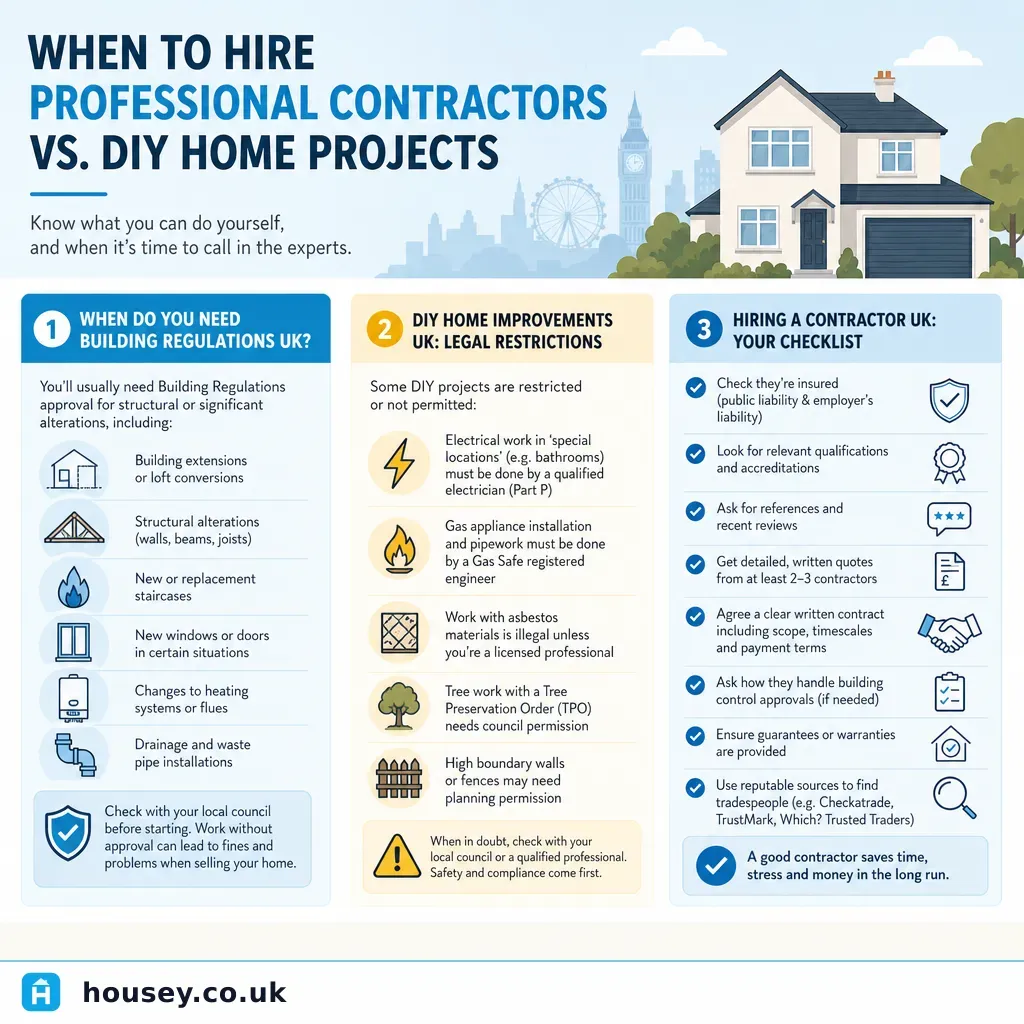 Improvement & Build
When to Hire Professional Contractors vs. DIY Home Projects
Some home improvement work — including gas fitting, consumer-unit electrical work, structural alterations, and asbestos removal — is legally restricted to qualified professionals in the UK.
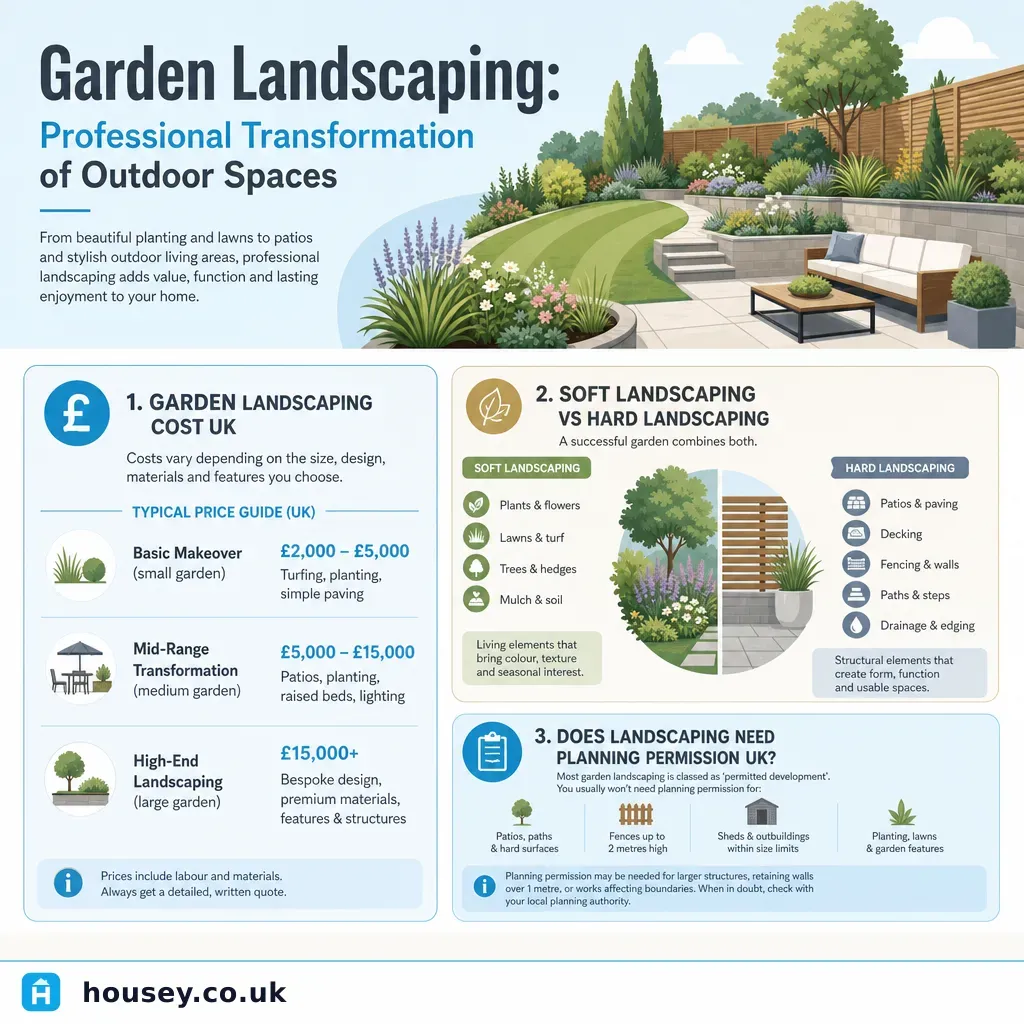 Improvement & Build
Garden Landscaping: Professional Transformation of Outdoor Spaces
Garden landscaping covers all physical works to reshape and improve an outdoor space, from earthworks and hard landscaping such as patios, paths, and walls, to planting, drainage, and lawn installation.
 Improvement & Build
Garden Design Services: What Designers Charge
UK garden designers typically charge £50–200+ per hour, or fixed fees from around £200 for an initial consultation to £3,000–5,000+ for a full design package on a medium garden.
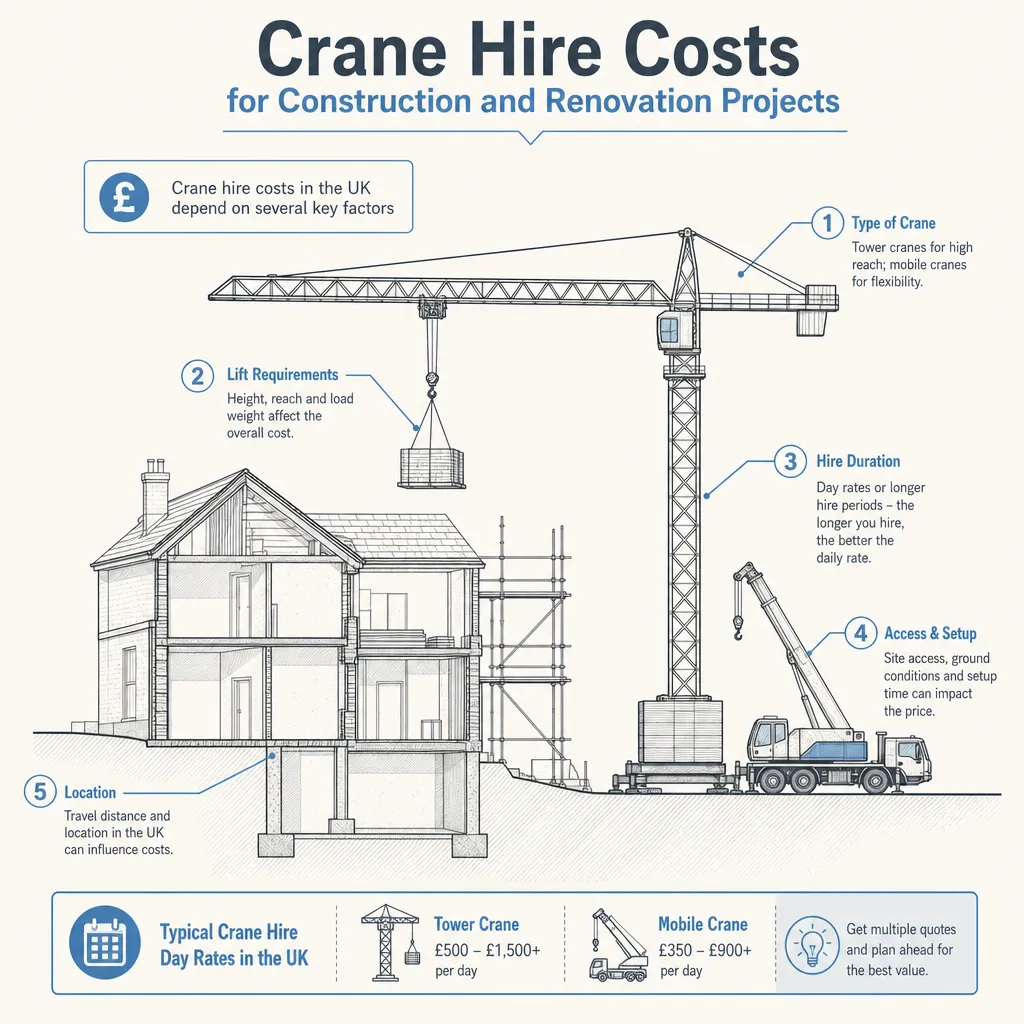 Improvement & Build
Crane Hire Costs for Construction and Renovation Projects
Mobile crane hire in the UK typically costs between £500 and £5,000 per day depending on lift capacity, reach, and whether an operator is included.
 Improvement & Build
How to Find and Vet Professional Roofing Contractors
Professional roofing contractors should carry public liability insurance of at least £2m, provide a written workmanship guarantee, and hold accreditation from a recognised body such as the NFRC or the Competent Roofer scheme.