Ventless Gas Fireplaces: UK Considerations for Modern Home Heating
By Housey · Last reviewed 18th of May 2026
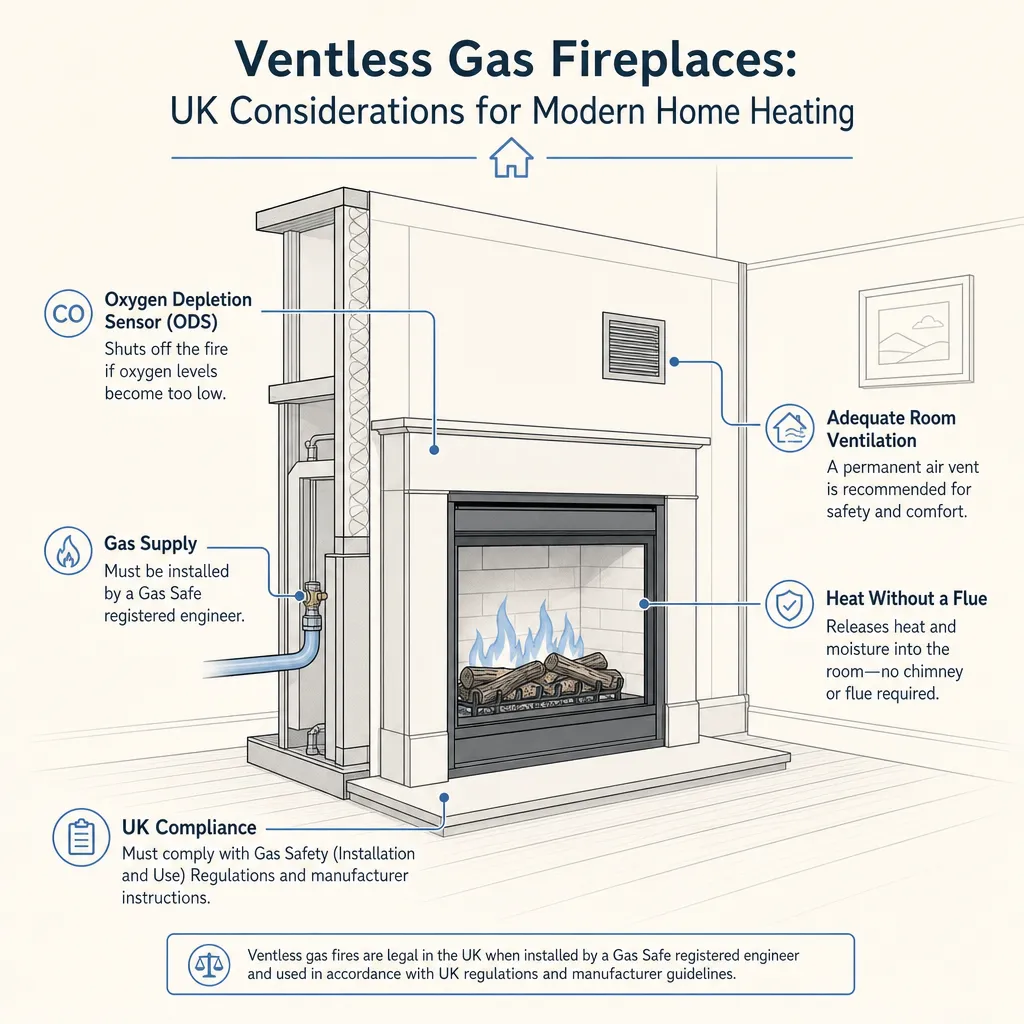
Ventless Gas Fireplaces: UK Considerations for Modern Home Heating
Homeowners researching "ventless" or "vent-free" gas fireplaces — a product category familiar from North American home improvement retailers — frequently encounter advice that does not map directly onto UK building regulations or safety legislation. In the UK, the closest equivalent product is the flueless gas fire, governed by the Gas Safety (Installation and Use) Regulations 1998 and Building Regulations Approved Document J. Understanding this regulatory context before purchasing or installing any such appliance is essential for safety, legal compliance, and insurance coverage.
Key points
- "Ventless" gas fires are not a UK regulatory category; the equivalent product is the flueless gas fire, governed by Building Regulations Approved Document J and BS 5258-4.
- All gas appliance installations in the UK — including flueless fires — must be carried out by a Gas Safe registered engineer; it is a criminal offence under the Gas Safety (Installation and Use) Regulations 1998 for an unregistered person to install a gas fitting.
- Flueless gas fires require a minimum room volume (typically 30 m³) and often a permanent ventilation opening; they are absolutely prohibited in bedrooms and bathrooms.
- Every flueless gas fire installed in the UK must incorporate an Oxygen Depletion System (ODS), a safety device that automatically cuts the gas supply if room oxygen concentration falls to an unsafe level.
- Gas appliances certified only for the US or Canadian market (AGA or CSA approval) are not valid for UK use and cannot be legally installed under UK Building Regulations.
What is a flueless gas fire?
A flueless gas fire burns natural gas or LPG without a chimney, flue pipe, or balanced-flue system to discharge combustion products outside the building. Products of combustion — primarily carbon dioxide and water vapour, plus trace amounts of carbon monoxide — are released directly into the room. UK-approved appliances are designed to burn with sufficient efficiency that emissions remain within safe limits, provided the room meets minimum size and ventilation requirements specified in Approved Document J.
Flueless gas fires are a small and tightly regulated niche in the UK market. They are fundamentally different from:
- Conventional gas fires with an open flue or chimney, which discharge combustion products externally.
- Balanced-flue gas fires, which draw combustion air from outside and discharge products through a sealed co-axial through-wall flue — a widely used option for rooms without a chimney.
- Decorative gas effect fires designed for use in a working fireplace opening.
If you are considering a gas fire for a room without a chimney, a balanced-flue fire is a more broadly suitable alternative for most UK homes. Discuss the options with a Gas Safe registered engineer before making any purchase.
Flueless versus flued gas fires: a comparison
Feature | Flueless gas fire | Conventional flued gas fire | Balanced-flue gas fire |
|---|---|---|---|
Flue or chimney required | No | Yes (open flue or lined chimney) | No (through-wall flue) |
Minimum room volume | ~30 m³ (verify per appliance) | No room volume minimum | No room volume minimum |
ODS safety device | Required by regulation | Not required | Not required |
CO and CO₂ risk profile | Higher if ventilation inadequate | Low (products vented externally) | Low (sealed combustion) |
Permitted in bedrooms | No — absolutely prohibited | Generally yes, subject to flue condition | Yes |
Installation requirement | Gas Safe engineer | Gas Safe engineer | Gas Safe engineer |
Best for | Modern open-plan rooms meeting volume and ventilation spec | Homes with a suitable existing chimney or flue liner | Rooms without chimney where through-wall flue is feasible |
Not ideal for | Small rooms, bedrooms, well-sealed or draught-proofed rooms | Properties without a chimney or approved liner | Where external wall penetration is not feasible |
Room size, ventilation, and prohibited locations
Approved Document J specifies the conditions under which flueless gas appliances may be installed in UK dwellings. Key requirements include:
Minimum room volume: The installation room must have a minimum volume of 30 m³ for most UK-approved flueless gas fires. This equates approximately to a room of 12 m² floor area with a 2.5 m ceiling height. Some appliances specify a higher minimum; always check the manufacturer's data sheet and confirm with your Gas Safe engineer before any purchase.
Permanent ventilation: Many flueless fires require a permanent air brick or ventilation opening in the installation room to ensure a continuous supply of fresh air for combustion and dilution of combustion products. Rooms that have been heavily draught-proofed or have had windows replaced with sealed units may not comply without additional ventilation being installed.
Prohibited locations: Approved Document J explicitly prohibits the installation of flueless gas fires in bedrooms, bathrooms, and any room used for sleeping. This is an absolute restriction, not a matter of professional judgement or appliance specification.
Red flags when purchasing or installing a flueless gas fire
Treat the following warning signs with caution:
- Any supplier or installer claiming that Gas Safe registration is not required for installation.
- Products carrying only AGA (American Gas Association) or CSA (Canadian Standards Association) certification — these are not valid for UK use under Building Regulations.
- Second-hand appliances without an ODS certificate, installation documentation, or evidence of Gas Safe commissioning.
- Claims that a flueless fire is suitable for any room size or requires no permanent ventilation.
- Unusually low installation quotes from unverified tradespeople — always check Gas Safe registration at gassaferegister.co.uk before any work begins.
Important limitations
This article provides general information about flueless gas fires and the UK regulatory framework applicable at the time of publication. It does not constitute gas safety or installation advice for any specific property or appliance. Room specifications, ventilation requirements, and appliance approvals vary between products and between properties. Only a Gas Safe registered engineer who has assessed your specific property and the particular appliance can confirm whether installation is safe and compliant with current regulations. Do not rely on product marketing material as a substitute for a professional assessment.
When this becomes urgent
Stop using a flueless gas fire and seek immediate professional advice — contact a Gas Safe registered engineer and, in an emergency, call the National Gas Emergency Service on 0800 111 999 — if:
- A carbon monoxide alarm sounds in the room where the appliance is installed.
- You or others experience symptoms consistent with CO exposure: persistent headache, nausea, dizziness, or confusion that eases when you leave the room.
- The appliance flame is orange or yellow rather than predominantly blue, indicating incomplete combustion.
- The ODS safety device has activated or the pilot light extinguishes repeatedly without obvious cause.
- The room has been subsequently draught-proofed, had sealed replacement windows fitted, or has had its ventilation altered since the appliance was installed.
What to ask a qualified professional
Before instructing a Gas Safe registered engineer to supply or install a flueless gas fire, ask:
- Is this specific appliance certified for installation under UK Building Regulations and the Gas Safety Regulations? Can you show me the UKCA or CE certification documentation?
- Does my room meet the minimum volume requirement for this appliance model?
- Will I need a permanent air brick or ventilation opening, and will you install one as part of this job?
- Will a carbon monoxide alarm be fitted in this room as part of the installation?
- What commissioning documentation and Gas Safe certificate will I receive on completion?
- Are you registered with Gas Safe for the gas type involved — natural gas or LPG?
- Can I verify your registration number on the Gas Safe Register website before work begins?
When to get professional help
Every element of flueless gas fire installation — from assessing room suitability and appliance certification to commissioning and issuing the Gas Safe certificate — must involve a Gas Safe registered engineer. There is no element of this process that falls within safe DIY scope. If you have an existing flueless gas fire that was installed before you purchased the property and you have no installation certificate, commissioning record, or evidence of Gas Safe registration, arrange a gas safety inspection before using the appliance.
How Housey can help
Gas appliance installation requires careful verification of credentials and compliance with safety legislation. While Housey does not currently list flueless gas fire installation as a dedicated service category, our home improvement guides can help you understand what to look for when engaging a Gas Safe registered professional, what questions to ask before any work starts, and how to approach your heating project safely. Always verify Gas Safe registration independently at gassaferegister.co.uk before instructing any installer.
Frequently asked questions
Are ventless gas fires legal in the UK?
Flueless gas fires — the UK equivalent of ventless fires — are legal when installed in a suitably sized and ventilated room by a Gas Safe registered engineer using a UK-certified appliance. They are prohibited in bedrooms and bathrooms. Appliances approved only for the US or Canadian market are not certified for UK use and cannot be legally installed.
Do flueless gas fires produce carbon monoxide?
All gas combustion produces carbon monoxide as a by-product. A properly commissioned flueless gas fire with a functioning ODS and adequate room ventilation should remain within safe limits under normal operation. If ventilation is inadequate, oxygen levels fall, combustion becomes incomplete, and CO levels rise — which is why correct room sizing, permanent ventilation, and a working CO alarm are non-negotiable.
Can I install a flueless gas fire myself?
No. Under the Gas Safety (Installation and Use) Regulations 1998, installation of any gas fitting — including a flueless gas fire — must be carried out by a Gas Safe registered engineer. DIY installation is a criminal offence and, given the carbon monoxide risk inherent to flueless appliances, potentially life-threatening.
What is an Oxygen Depletion System?
An Oxygen Depletion System (ODS) is a safety device built into every UK-approved flueless gas fire. It monitors room oxygen concentration via a specially designed pilot assembly. If oxygen falls below a safe threshold, the ODS automatically cuts the gas supply to prevent incomplete combustion and carbon monoxide build-up. UK Building Regulations require an ODS in every flueless gas fire installation.
Sources and further reading
- Gas Safety (Installation and Use) Regulations 1998 — legislation.gov.uk
- Approved Document J: Combustion appliances and fuel storage systems — GOV.UK
- Gas Safe Register: verify an engineer or find a registered business — Gas Safe Register
- Carbon monoxide poisoning: HSE guidance for domestic premises — HSE
- Smoke and carbon monoxide alarms: guidance for landlords and homeowners — GOV.UK
Useful next reads
 Improvement & Build
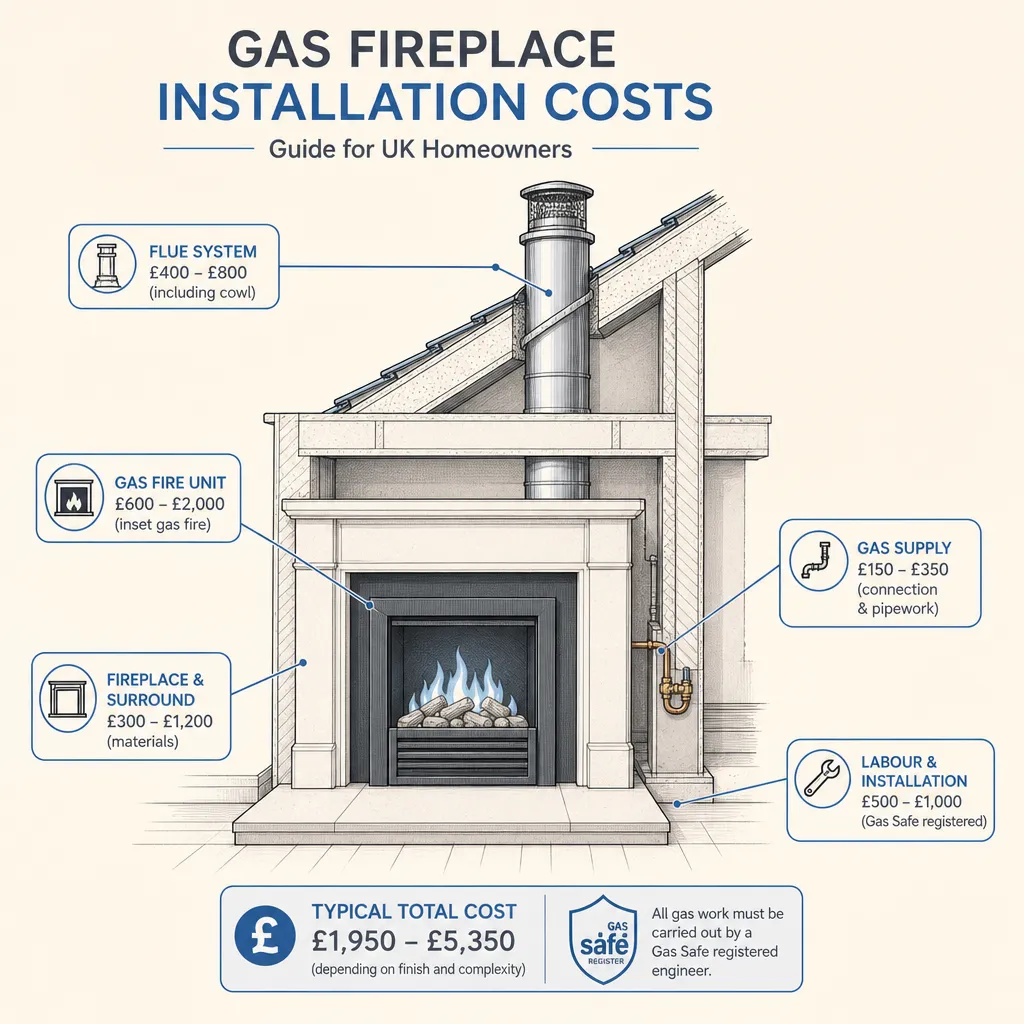
Gas Fireplace Installation Costs
Gas fireplace installation in the UK typically costs between £600 and £3,500 or more, depending on appliance type, flue requirements, and the complexity of the work.
 Improvement & Build
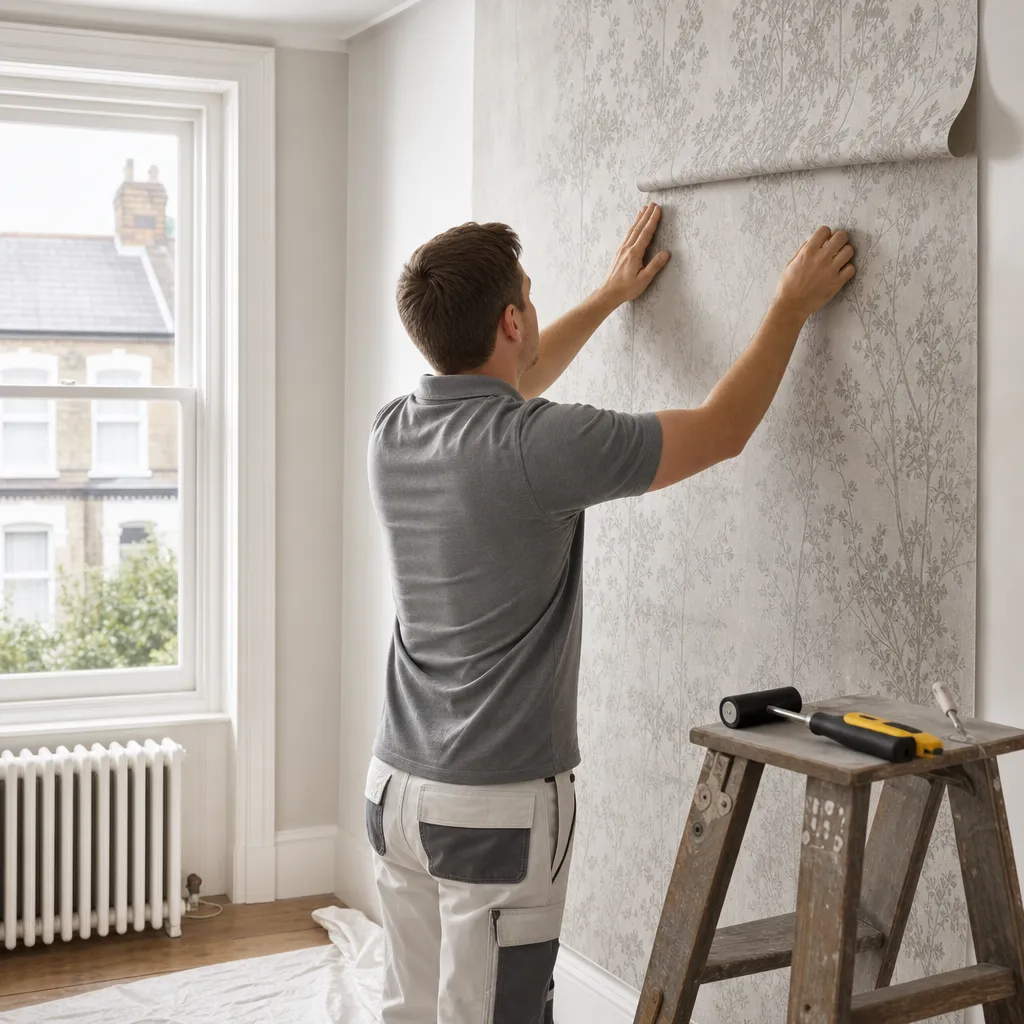
Installing Peel-And-Stick Wallpaper: Application Techniques
Peel-and-stick wallpaper works best on smooth, emulsion-painted walls cured for at least 30 days, in rooms between 13°C and 30°C.
 Improvement & Build
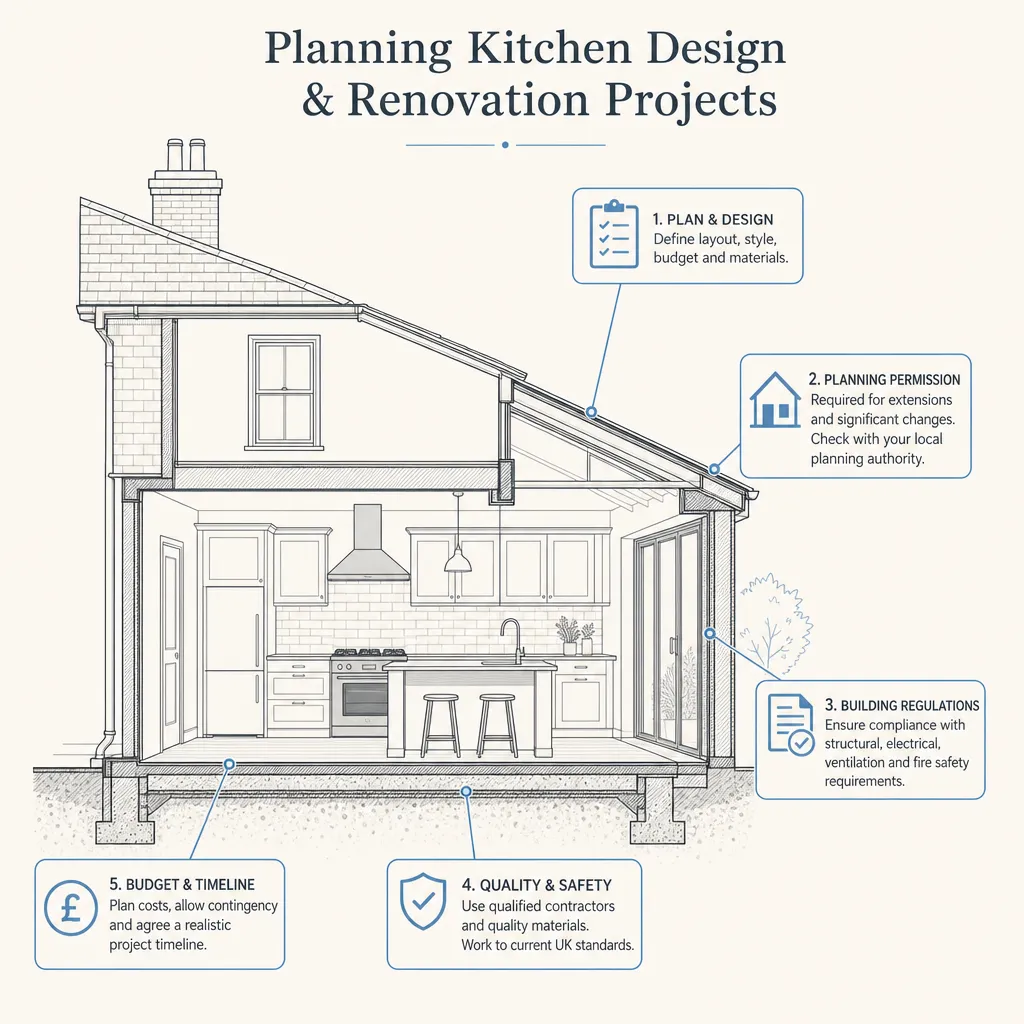
Planning kitchen design and renovation projects
Planning a kitchen renovation in the UK typically involves choosing a layout, setting a budget, deciding which contractors you need, and understanding which regulations apply.
 Improvement & Build
Creating Your Home Sanctuary: Design and Comfort Principles
Creating a home sanctuary is about balancing sensory comfort, functional layout, and personal aesthetic.
 Improvement & Build
Professional Advice on Home Interior Design and Decoration
In the UK, interior designers typically handle space planning, material specification, and contractor coordination, while decorators focus on surface finishes and styling.