Creating a Home Bar: Design, Installation, and Project Budget
By Housey · Last reviewed 5th of May 2026
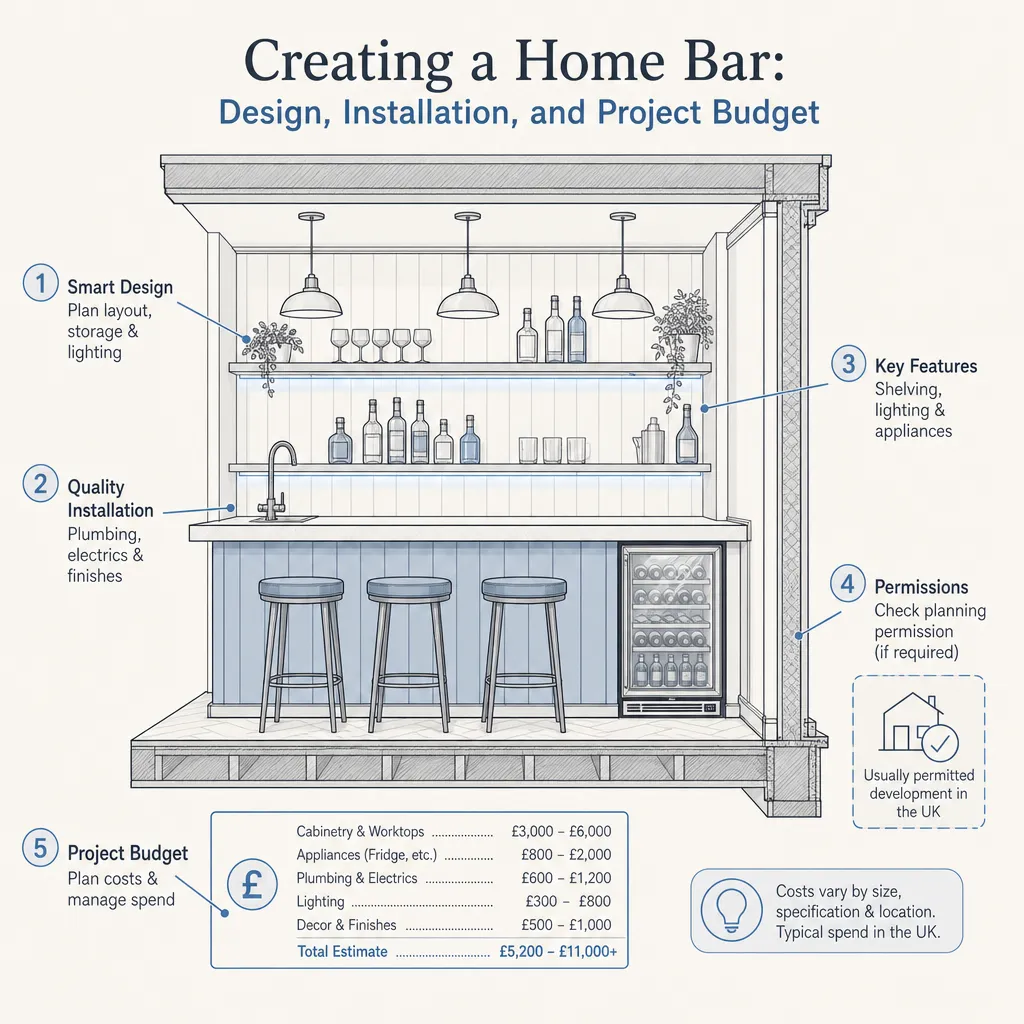
Creating a Home Bar: Design, Installation, and Project Budget
A dedicated home bar has become one of the more popular home improvement projects for UK homeowners with a spare room, an underused dining space, or a converted outbuilding. The appeal is practical: a purpose-built bar area consolidates entertainment facilities and makes the most of rooms that might otherwise serve no clear function. The complexity of the project — and the tradespeople needed — depends significantly on whether plumbing is involved, whether structural changes are required, and what level of finish is expected.
Key points
- A home bar created within the existing footprint of a house generally requires no planning permission, as it does not constitute a material change of use of the property.
- Any new electrical circuits, dedicated sockets, or appliance supplies must comply with Part P of the Building Regulations — work should be carried out by an NICEIC or NAPIT-registered electrician who can self-certify.
- Removing or modifying a load-bearing wall to create space for a bar area requires building regulations approval and a structural engineer's calculations before work starts.
- Adding a sink or bar tap is feasible in most rooms with drain access, but must comply with the Water Supply (Water Fittings) Regulations 1999; notify your water supplier if adding a new supply point.
- UK licensing law does not apply to a private home bar — no personal licence or premises licence is required to serve drinks to guests in your own home.
What kind of home bar suits your space?
The right approach depends on available space, budget, and how permanent you want the result to be.
Bar type | Best for | Not ideal for | Typical cost range | Key consideration |
|---|---|---|---|---|
Freestanding bar unit or cabinet | Rented homes, limited budget, flexible layouts | Architectural permanence or bespoke fit | £400–£2,000 | No building works needed |
Built-in joinery bar (no plumbing) | Alcoves, under-stairs spaces, spare rooms | Rooms without a suitable wall or recess | £2,500–£7,000 | Requires a carpenter or joiner |
Full bar with sink and plumbing | Basement conversions, garden rooms, extensions | Small rooms without accessible drain | £6,000–£15,000 | Needs a plumber and Part P electrician |
Garden room or outbuilding bar | Larger gardens, dedicated entertainment spaces | Small gardens, listed buildings | £10,000–£30,000+ | May require planning permission |
Indicative UK costs, last reviewed 2026-05-05. Figures vary substantially by size, specification, finishes, and regional labour rates. Obtain at least three quotes for any fixed installation.
Planning and building regulations: what applies?
For most home bars created within the existing internal footprint of a house, no planning permission is required. Altering the interior of a single residential dwelling for domestic use does not constitute a material change of use.
Building Regulations may apply in the following situations:
- Structural alterations: removing or modifying a load-bearing wall requires building regulations approval and a structural engineer's calculations. Do not assume a wall is non-structural without professional assessment.
- Electrical work: adding new circuits, sockets, or appliance supplies must comply with Part P. An NICEIC or NAPIT-registered electrician can self-certify domestic electrical work under a competent person scheme, avoiding the need for a separate local authority inspection.
- Plumbing: adding a sink or bar tap requires compliance with the Water Supply (Water Fittings) Regulations 1999. Notify your water supplier of any new supply draw-off point.
- Ventilation: if the bar is located in a basement or poorly ventilated room, consider mechanical ventilation to manage moisture and condensation, particularly if the space will be used regularly.
If your property is listed, even internal alterations may require Listed Building Consent — check with your local planning authority before starting any works, including cosmetic changes to historic fabric.
A worked UK property scenario
Scenario: 1970s semi-detached house, East Midlands — spare dining room, £6,000 budget >A homeowner wants to convert half of their underused dining room into a home bar with a built-in unit, open shelving for bottles, bar stools, an undercounter fridge, and mood lighting on a separate circuit. No wall removal is needed and no plumbing is required. >Trades needed: A joiner to build the bar unit and shelving (approximately £2,500–£3,500); a Part P-registered electrician to add a dedicated circuit for the undercounter fridge and LED lighting (approximately £400–£800); a decorator for final finishing (approximately £300–£600). >Estimated total: £3,200–£4,900 — well within budget. The remainder could go towards equipment, glassware, and seating. >This scenario is illustrative. Costs are indicative, last reviewed 2026-05-05, and will vary by property and region.
Designing your home bar: key decisions
Before approaching tradespeople or purchasing materials, work through these design decisions.
Counter height and depth
Standard bar counter height is 1,050–1,100mm; allow 450–500mm knee clearance below the counter for bar stool seating. A counter depth of 500–600mm is typical for a working bar surface with under-counter storage.
Storage and equipment
Under-counter fridges and wine coolers are common choices; check ventilation clearances in the manufacturer's specifications before finalising the unit design. Open shelving works well for bottles; glass storage is best on fixed racking or overhead rails. For bars with plumbing, small integrated glasswashers or dishwasher drawers are available from specialist suppliers.
Lighting
LED strip lighting behind shelving and under-counter mood lighting is energy-efficient and straightforward to install on a dedicated circuit. A separate circuit allows lighting to be controlled independently of the room's main switch.
Materials and finishes
Natural timber, painted MDF, and tiled surfaces are all popular choices. Quartz worktops are low-maintenance and durable; solid timber looks premium but requires periodic oiling or treatment. Choose finishes that are easy to wipe clean — a bar surface will take regular use.
Homeowner planning checklist
Red flags to watch for
Watch out for these warning signs when commissioning a home bar project:
- No mention of Part P self-certification in quotes covering electrical work — without a building regulations completion certificate you will have no evidence of compliance for future buyers or insurers.
- A joiner offering to run the electrics unless they hold the correct electrical qualification and are registered with a competent person scheme. Notifiable electrical work carried out without proper certification is a future liability.
- No written specification before work starts — verbal agreements on built-in joinery frequently lead to disputes over finish, included items, and snagging responsibilities.
- A very low plumbing quote that makes no mention of supply isolation valves, a properly trapped waste, or compliance with the Water Fittings Regulations.
- No stage payment structure on larger jobs — a reputable tradesperson will agree milestones tied to defined stages of work rather than requesting a large deposit up front.
When to get professional help
For a simple freestanding bar unit, professional help is not usually necessary. Involve qualified tradespeople for:
- Fixed joinery: a carpenter or joiner with domestic fitout experience will produce a far more durable and finished result than site-built MDF work for a permanent bar installation.
- Electrical work: any new circuit, socket, or dedicated appliance supply requires a Part P-registered electrician.
- Plumbing: supply pipework, waste connections, and compliance with the Water Fittings Regulations should be handled by a qualified plumber.
- Structural changes: if any wall removal is contemplated, a structural engineer must assess the wall and provide calculations; building regulations approval must be obtained from your local authority building control or an approved inspector.
If your home bar is part of a larger project — such as a basement conversion, single-storey rear extension, or major internal reconfiguration — an experienced extension builder can manage multi-trade coordination from a single point of contact, reducing the risk of gaps between contractors.
How Housey can help
If your home bar forms part of a wider improvement or conversion project, Housey can connect you with experienced extension builders who coordinate joinery, plumbing, and electrical trades for domestic projects across the UK. Request and compare quotes through Housey to find providers working in your area.
Frequently asked questions
Do I need planning permission for a home bar in my house?
No, in most cases. Creating a home bar within the existing internal space of a residential property does not constitute a material change of use requiring planning permission. Exceptions include listed buildings, where Listed Building Consent may be required for internal alterations, and cases where a separate outbuilding is being constructed. Always check with your local planning authority if you are uncertain.
Do I need a licence to have a bar in my home?
No. UK licensing law under the Licensing Act 2003 applies to premises that sell alcohol to the public. A private home bar for personal and guest use does not require a personal licence or premises licence. You can serve alcohol to guests in your own home without any licence, provided there is no commercial sale or transaction involved.
How much does a home bar cost to build in the UK?
Costs range from around £400 for a basic freestanding unit to over £15,000 for a fully fitted bar with plumbing, bespoke joinery, and dedicated electrical work. A mid-range built-in bar without plumbing typically costs £3,000 to £7,000 including joinery and electrical work. Costs vary considerably by size, specification, materials, and regional labour rates. Indicative UK costs, last reviewed 2026-05-05.
Can I add a sink to a home bar?
Yes, provided a nearby drain and water supply connection are accessible. The work must comply with the Water Supply (Water Fittings) Regulations 1999, and you should notify your water supplier if adding a new draw-off point. Use a qualified plumber and budget for waste pipework to reach the nearest soil stack or drain. Adding a sink typically adds £500 to £1,500 to the overall project cost.
Will a home bar affect my home insurance?
Possibly. Adding a significant built-in fixture increases the reinstatement value of your property, which may affect your buildings insurance sum insured. Notify your insurer before and after the works. A private home bar for personal use is generally not treated differently from any other domestic improvement, but confirm this with your insurer, particularly if plumbing or significant electrical work is involved.
Sources and further reading
- Approved Document P: Electrical safety in dwellings — GOV.UK
- Water Supply (Water Fittings) Regulations 1999 — legislation.gov.uk
- Find a registered electrician — NICEIC
- Listed buildings and curtilage — Planning Portal
- Home improvements and planning permission — Citizens Advice
Useful next reads
 Improvement & Build
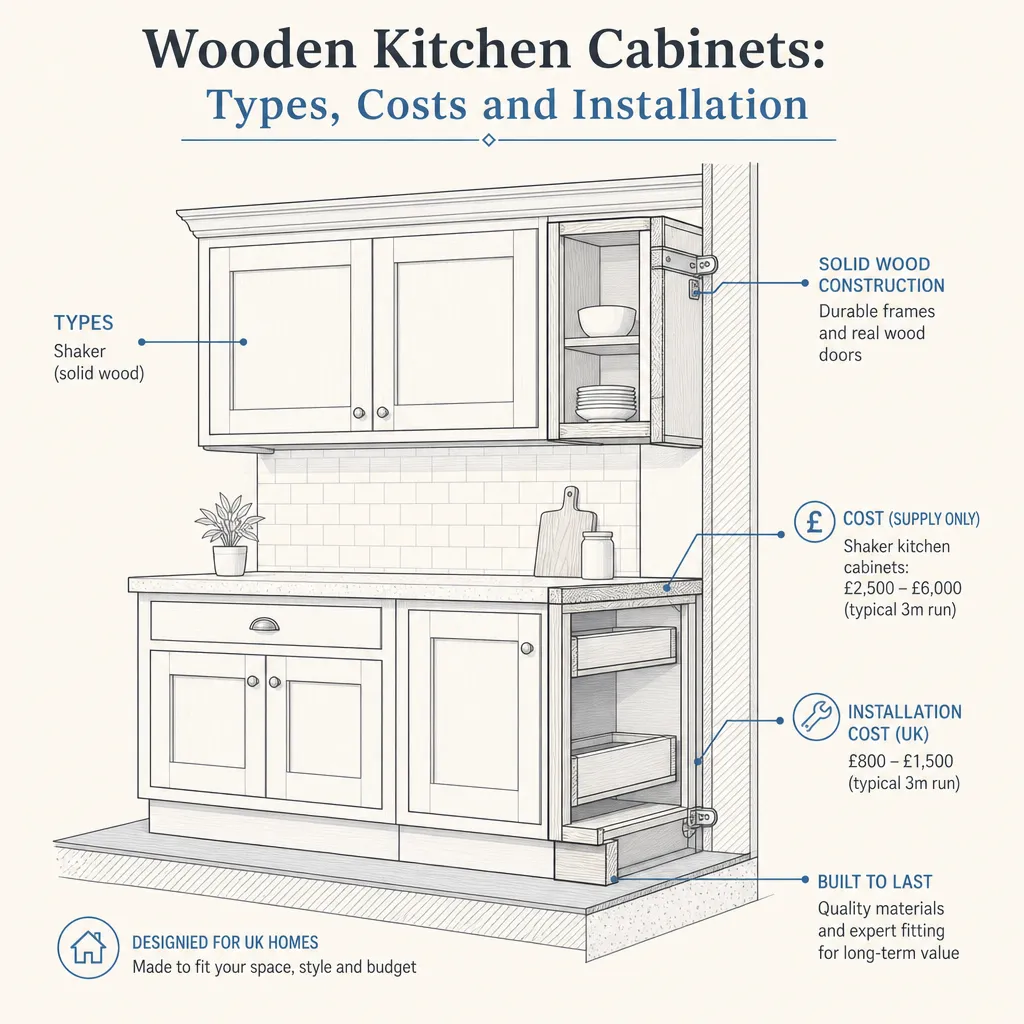
Wooden kitchen cabinets: types, costs and installation
Wooden kitchen cabinets in the UK range from around £4,000–£12,000 installed for mid-range painted shaker units to £10,000–£25,000 or more for solid hardwood kitchens.
 Improvement & Build
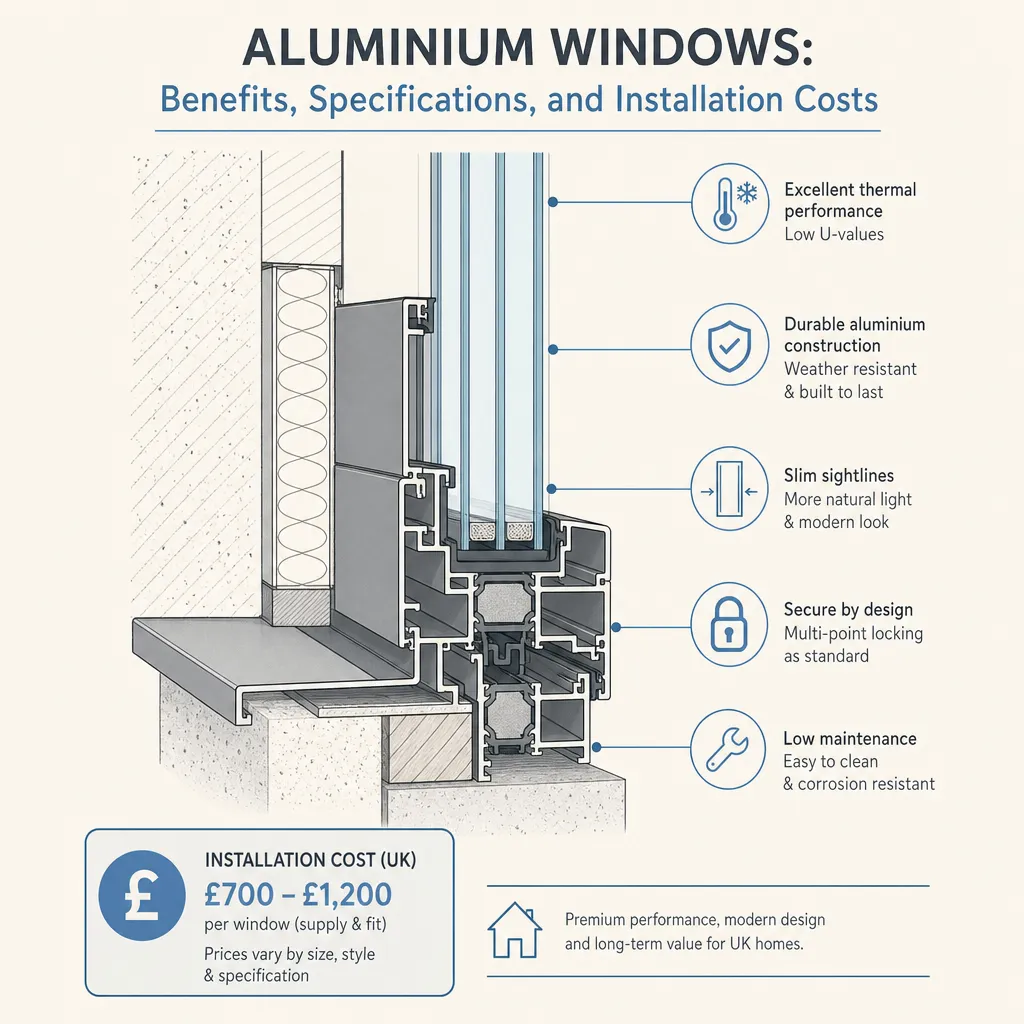
Aluminium Windows: Benefits, Specifications, and Installation Costs
Aluminium windows typically cost £600–£1,800 per window installed in the UK, depending on size and specification.
 Improvement & Build
Building an Outdoor Kitchen: Design, Materials, and Investment
Building an outdoor kitchen in the UK costs roughly £3,000–£25,000 depending on size and materials.
 Improvement & Build
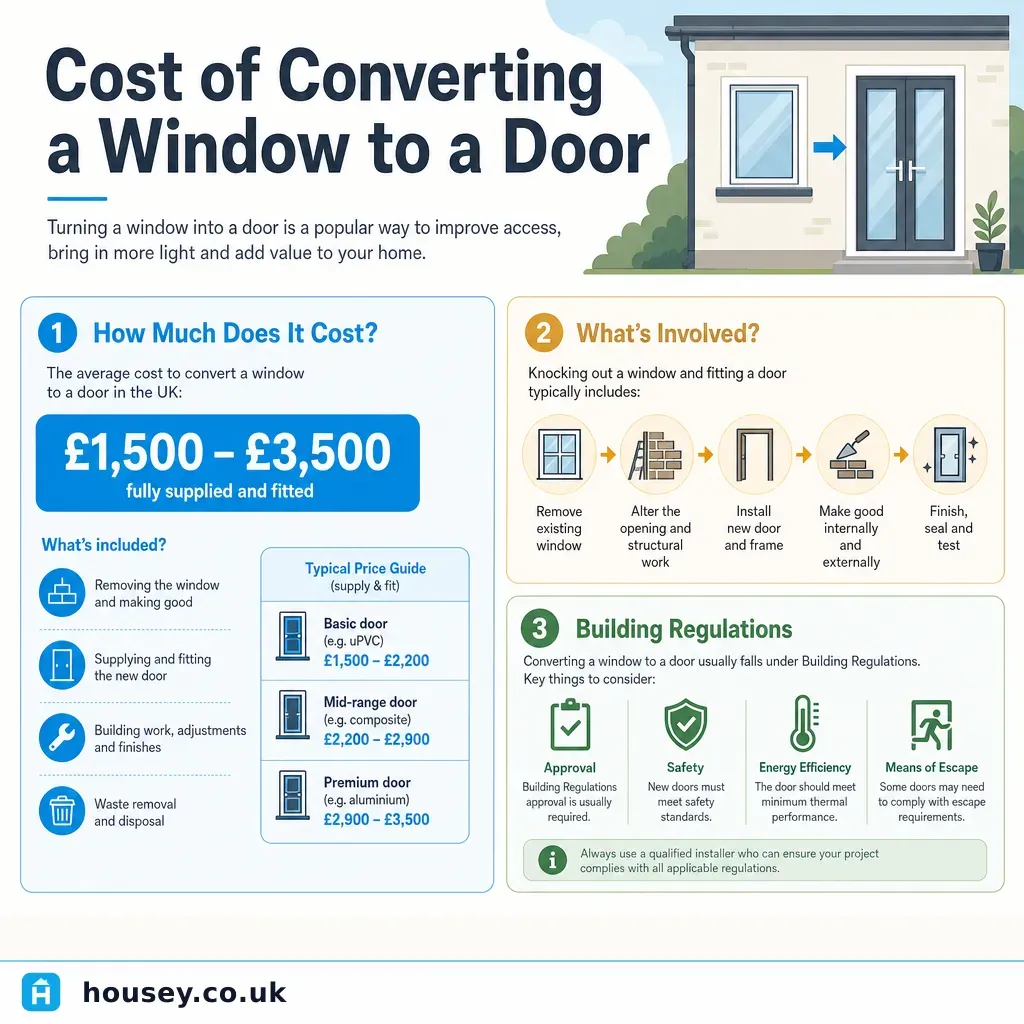
Cost of converting a window to a door
Converting a window to a door in the UK typically costs £1,500–£5,000 or more, depending on wall construction (cavity, solid, or timber frame), the type of door fitted, and whether a new or enlarged lintel is required.
 Improvement & Build
Cost of Wire Fence Installation in the UK
Wire fence installation in the UK typically costs £8–18 per metre for stock fencing, £15–35 per metre for chain-link, and £20–45 per metre for welded wire mesh panels, all installed.