Engaging a Landscape Designer: Key Reasons and Benefits
By Housey · Last reviewed 11th of May 2026
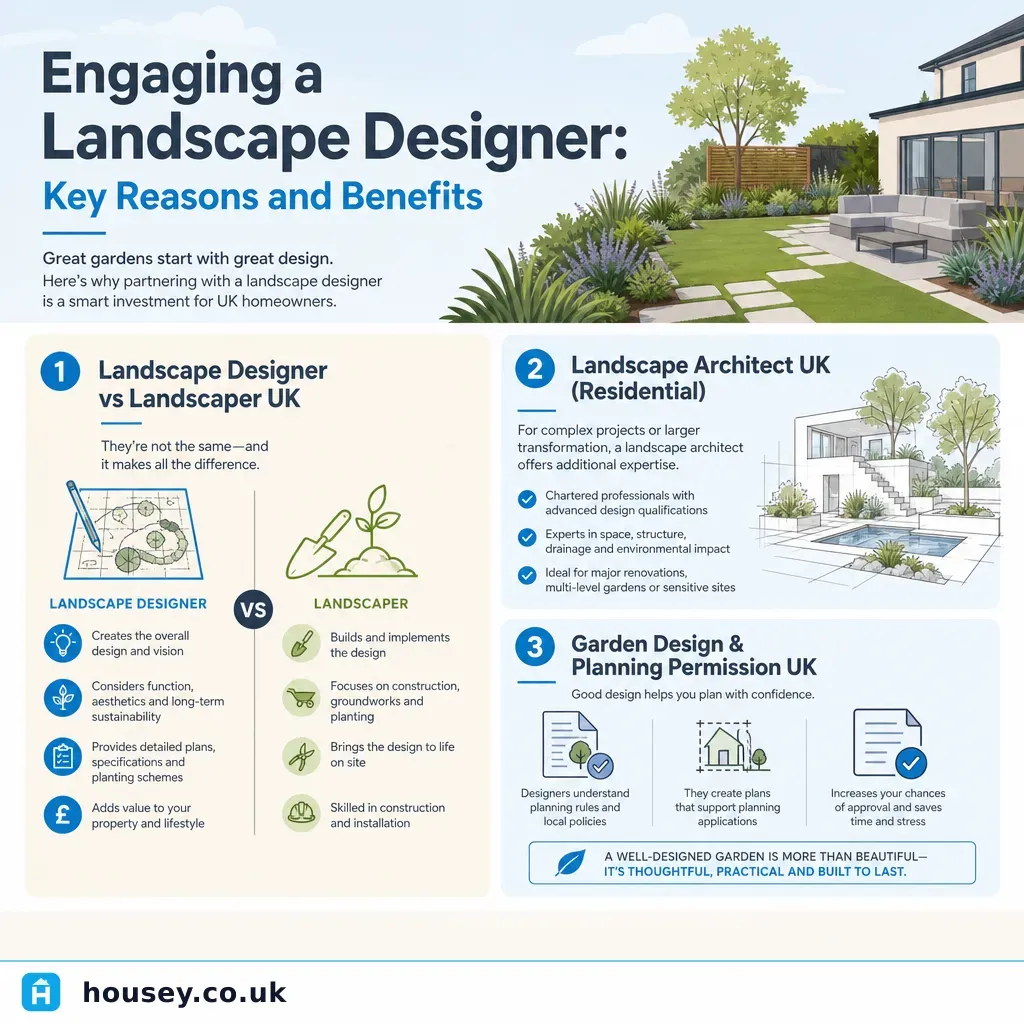
Engaging a Landscape Designer: Key Reasons and Benefits
Outdoor space in the UK — from a compact urban courtyard to a quarter-acre suburban garden — is increasingly valued both for daily use and as a component of a property's market appeal. Homeowners often reach a point where an off-the-shelf planting scheme or a weekend of DIY paving is no longer equal to the space's potential, and where the decisions involved — drainage, levels, materials, planning compliance, long-term maintenance — start to carry real consequences.
Key points
- A landscape designer differs from a landscaper: the designer plans and specifies; the landscaper typically builds. Many projects benefit from both, working in sequence.
- Impermeable paving of more than 5m² to the front of a property requires planning permission under permitted development rules in England unless it drains to a lawn or permeable border.
- Sustainable Drainage Systems (SuDS) are a legal requirement for new drainage in Wales (since 2018) and are strongly encouraged by planning authorities in England; a landscape designer can specify compliant solutions.
- The Landscape Institute is the professional body for landscape architects in the UK; members hold professional indemnity insurance and must demonstrate competence through accredited qualifications.
- Trees subject to a Tree Preservation Order (TPO) or within a conservation area may not be pruned or removed without consent from the local planning authority under the Town and Country Planning Act 1990.
What a landscape designer does — and when you need one
A landscape designer assesses your site, understands how you want to use the space, and produces drawings, specifications, and often a planting plan that a landscaping contractor can price and build from. In more complex projects, they may manage the contractor, carry out site visits during construction, and handle planning or building control applications.
The distinction between a landscape architect (typically Landscape Institute-accredited, with formal training) and a landscape designer (a broader term with no regulated entry) matters when:
- Planning applications are involved — a landscape architect's supporting documentation carries professional credibility with local planning authorities.
- Drainage, retaining walls, or significant level changes are required — these involve structural and engineering considerations.
- The project forms part of a listed building application or a larger development scheme.
For smaller residential gardens — patio design, planting schemes, kitchen garden layout — a skilled landscape designer without full Landscape Institute membership may be entirely appropriate, provided they carry adequate insurance.
Key benefits of professional landscape design
Site analysis and problem-solving — A designer will assess drainage patterns, soil type, aspect, shade, and existing structures before specifying anything. Many homeowner DIY projects fail because these factors were not accounted for: paving that floods, plants suited to the wrong aspect, or a lawn on compacted clay that never establishes properly.
Planning and regulatory compliance — Not all hard landscaping is permitted development. A designer familiar with local authority requirements will identify what requires consent before work starts, avoiding enforcement action and the cost of retrospective applications.
Material and plant specification — A professionally specified scheme will include materials suited to the site's drainage and microclimate, and plants with appropriate RHS hardiness ratings, seasonal interest, and realistic maintenance demands. This reduces long-term replacement costs.
Contractor co-ordination — A designer who manages the build process ensures the contractor follows the specification, catches errors early, and provides a single point of contact for queries and variations.
Long-term cost reduction — A well-designed garden tends to need less reactive maintenance. Correct drainage prevents waterlogging, appropriate plants reduce annual replacement, and durable materials reduce the frequency of surface repairs.
Which professional should you engage?
Situation | Best-fit professional | Why |
|---|---|---|
Small patio or planting scheme, no planning issues | Landscape designer (any suitable experience) | Proportionate to project complexity |
Large garden redesign with significant level changes | Landscape architect or experienced designer with civil engineering input | Drainage and retaining wall design |
Front garden with impermeable paving | Landscape designer familiar with permitted development rules | Planning compliance is critical |
Planning application for outbuilding, pool, or hard standing | Landscape architect | Professional supporting documentation |
Listed property or conservation area | Landscape architect with heritage experience | Consent conditions affect materials and planting |
Larger development or commercial scheme | Landscape architect (Landscape Institute member) | Professional liability and regulatory requirements |
What to ask a landscape designer before hiring
- What qualifications and professional memberships do you hold?
- Do you carry professional indemnity and public liability insurance, and to what level?
- Can you identify which elements of this project may require planning permission or building control approval?
- Will you produce a detailed specification the contractor can price from, or just a concept drawing?
- Do you manage contractors during the build, or is your service design-only?
- Can you provide references or visits to completed projects of a similar scale and budget?
- Are your fees fixed or based on a percentage of build cost?
- Is VAT included in your quote?
Homeowner checklist: preparing for a landscape design consultation
Before your first meeting, gather the following so the designer can give you accurate, tailored advice:
When to get professional help
Engaging a landscape designer is itself a professional service, but specific situations call for additional specialist input:
- If drainage works will connect to a public sewer — approval from your water company may be required under the Water Industry Act 1991.
- If significant trees on or near the boundary are involved — a tree survey to BS 5837:2012 may be required, and Tree Preservation Orders or conservation area conditions may restrict or prohibit work.
- If a retaining wall above approximately 1m in height is planned — structural calculations may be needed and building control may need to be notified.
- If the property is listed — any material change to curtilage features, including hard and soft landscaping, may require Listed Building Consent in addition to planning permission.
How Housey can help
Housey connects homeowners with experienced garden designers and landscapers across the UK. Whether you need a design-only service, help managing a contractor through the build, or a full design-and-build package, describe your project and receive comparable quotes from local professionals with verified credentials.
Frequently asked questions
Do I need planning permission for garden landscaping?
Most garden landscaping — patios, planting, and lawn works — is permitted development and does not need planning permission. However, impermeable front garden paving over 5m², boundary walls over 1m adjacent to a highway, outbuildings, and swimming pools may require consent. Listed buildings and conservation areas face additional restrictions. Check with your local planning authority before starting significant hard landscaping.
What is the difference between a landscape architect and a landscape designer?
A landscape architect is typically a Landscape Institute-accredited professional with formal education and a requirement to hold professional indemnity insurance. The title landscape designer is unregulated and may describe anyone from a trained professional to a self-taught practitioner. For projects involving planning applications, engineering works, or listed buildings, Landscape Institute membership is a useful marker of accountability.
How much does a landscape designer cost in the UK?
Fees vary significantly by experience, project complexity, and scope. A concept design for a typical suburban garden might cost £500–£2,000; a full design-and-management service for a larger project could run to several thousand pounds, sometimes plus a percentage of build cost. Always request an itemised quote specifying what drawings, specifications, and site visits are included. Indicative UK costs, last reviewed 2026-05-11.
Can good landscape design add value to my property?
Well-designed outdoor space is generally viewed positively by buyers and estate agents, particularly in suburban and rural markets. The impact varies by location, property type, and scheme — a low-maintenance, well-specified design tends to have broader appeal than a high-maintenance specialist scheme. Specific value uplift figures are not reliably quantifiable and depend on local market conditions.
Sources and further reading
- Landscape Institute — find a member — Landscape Institute
- Planning permission — householder guide — GOV.UK
- Permitted development rights for householders — technical guidance — GOV.UK
- Sustainable drainage (SuDS) guidance for Wales — Welsh Government
- Tree surveys and arboricultural reports — BS 5837 — Arboricultural Association
- RHS hardiness ratings for plants — Royal Horticultural Society
Useful next reads
 Improvement & Build
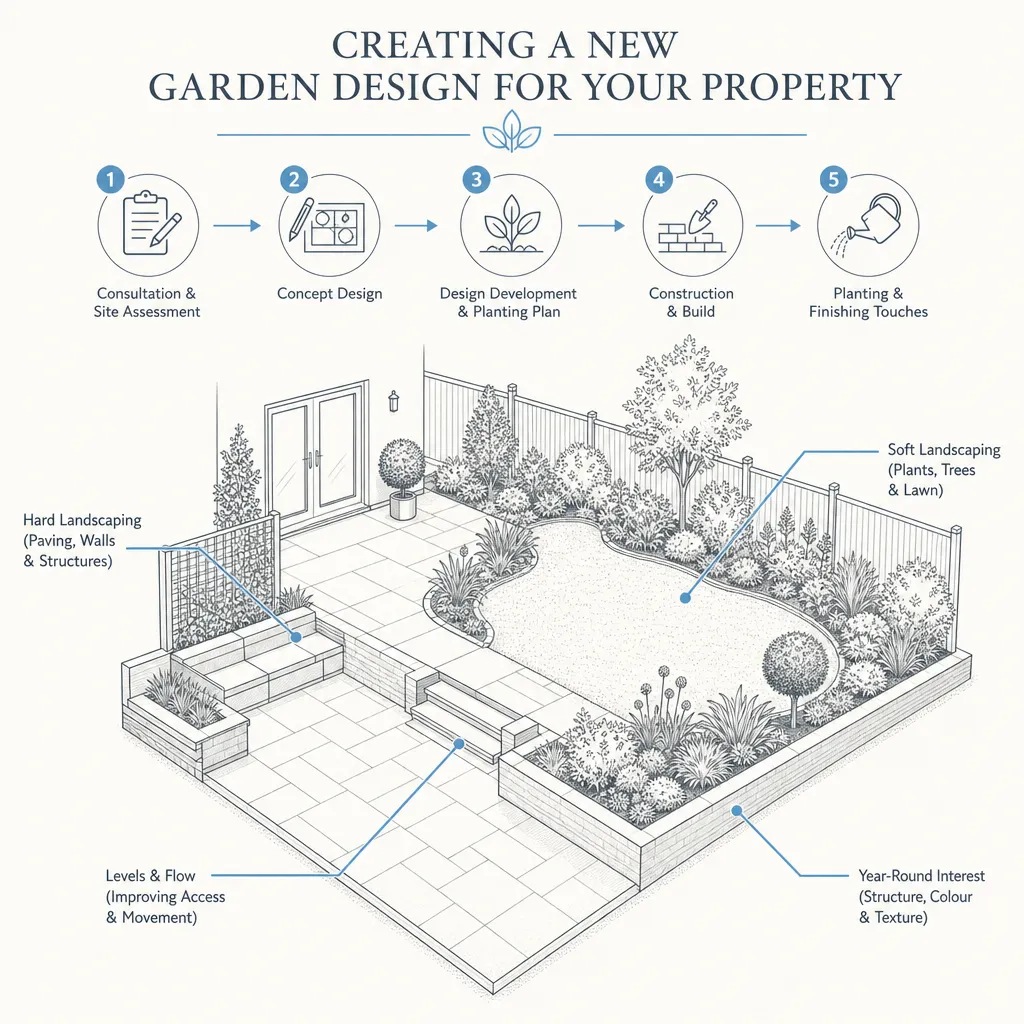
Creating a New Garden Design for Your Property
Creating a new garden design involves assessing your space, setting a realistic budget, deciding on hard and soft landscaping, and choosing a planting scheme suited to your soil and aspect.
 Improvement & Build
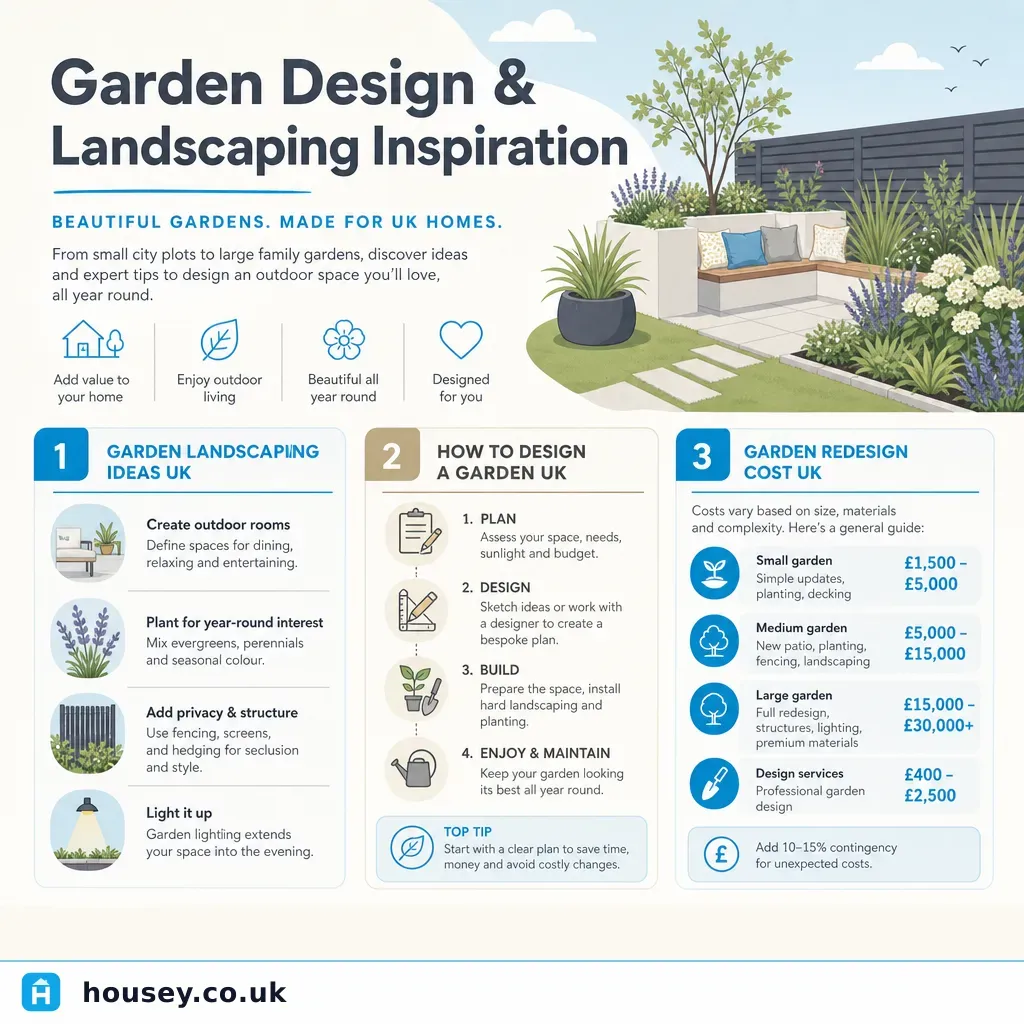
Garden Design and Landscaping Inspiration
Effective garden design starts with assessing your aspect, soil type, and existing features before commissioning any planting or hard landscaping.
 Improvement & Build
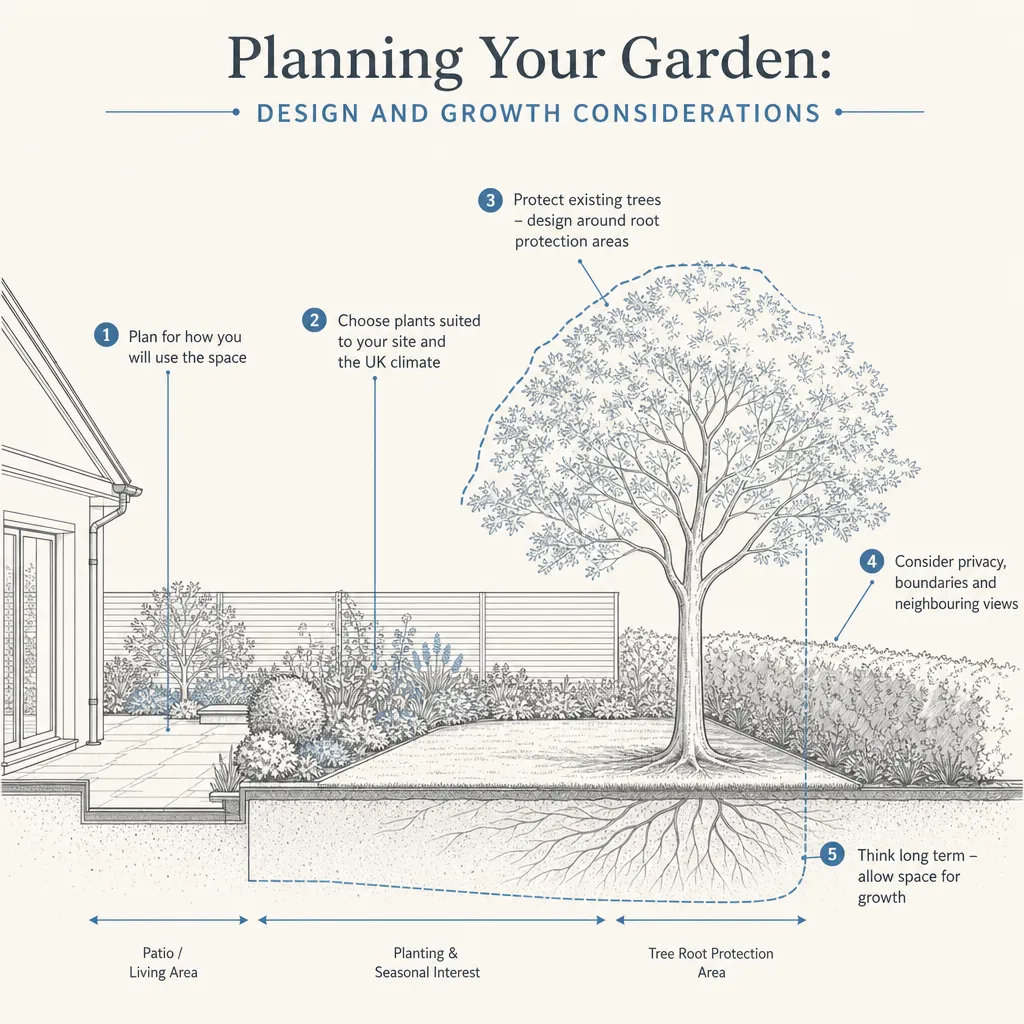
Planning Your Garden: Design and Growth Considerations
Effective garden planning starts with assessing soil type, pH, and sun exposure before choosing plants or hard landscaping.
 Improvement & Build
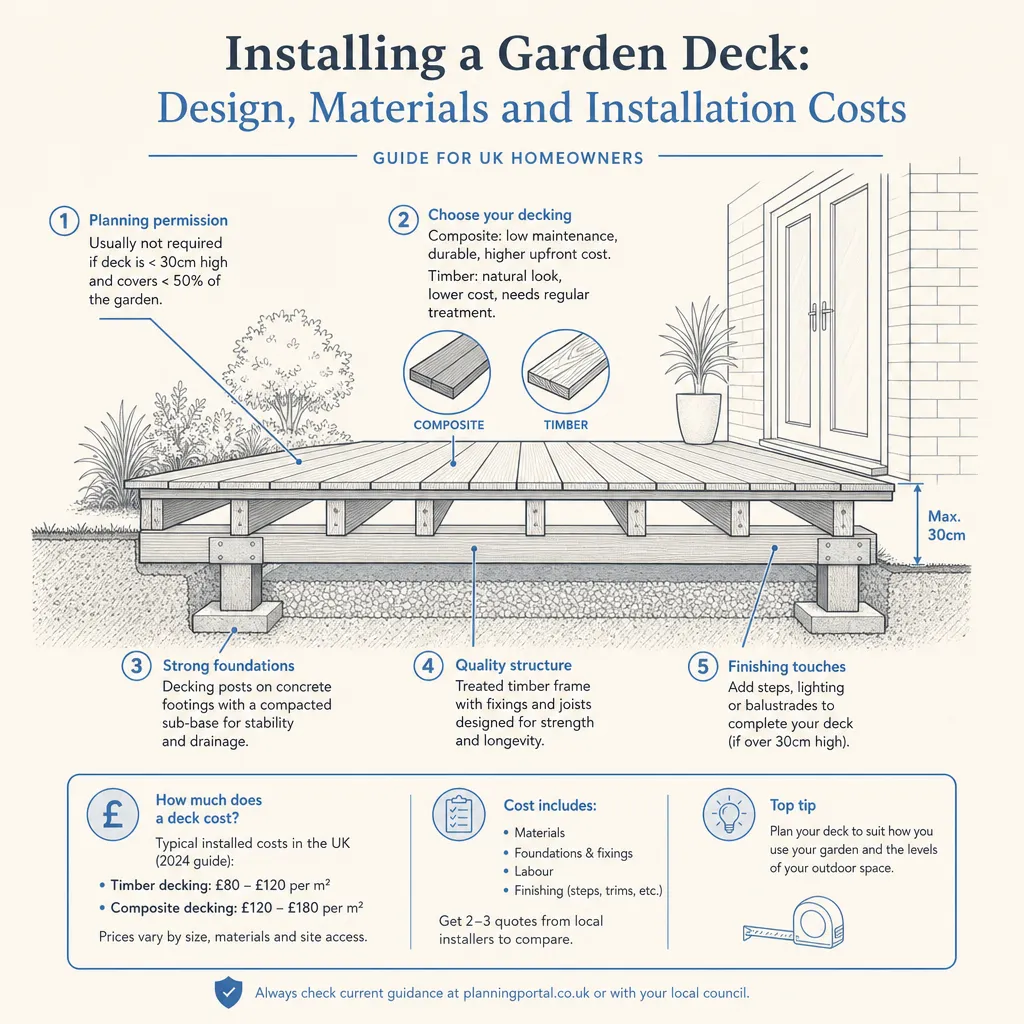
Installing a Garden Deck: Design, Materials and Installation Costs
Garden decking costs £80–250 per m² installed in the UK depending on material — softwood is cheapest, composite the most durable.
 Improvement & Build
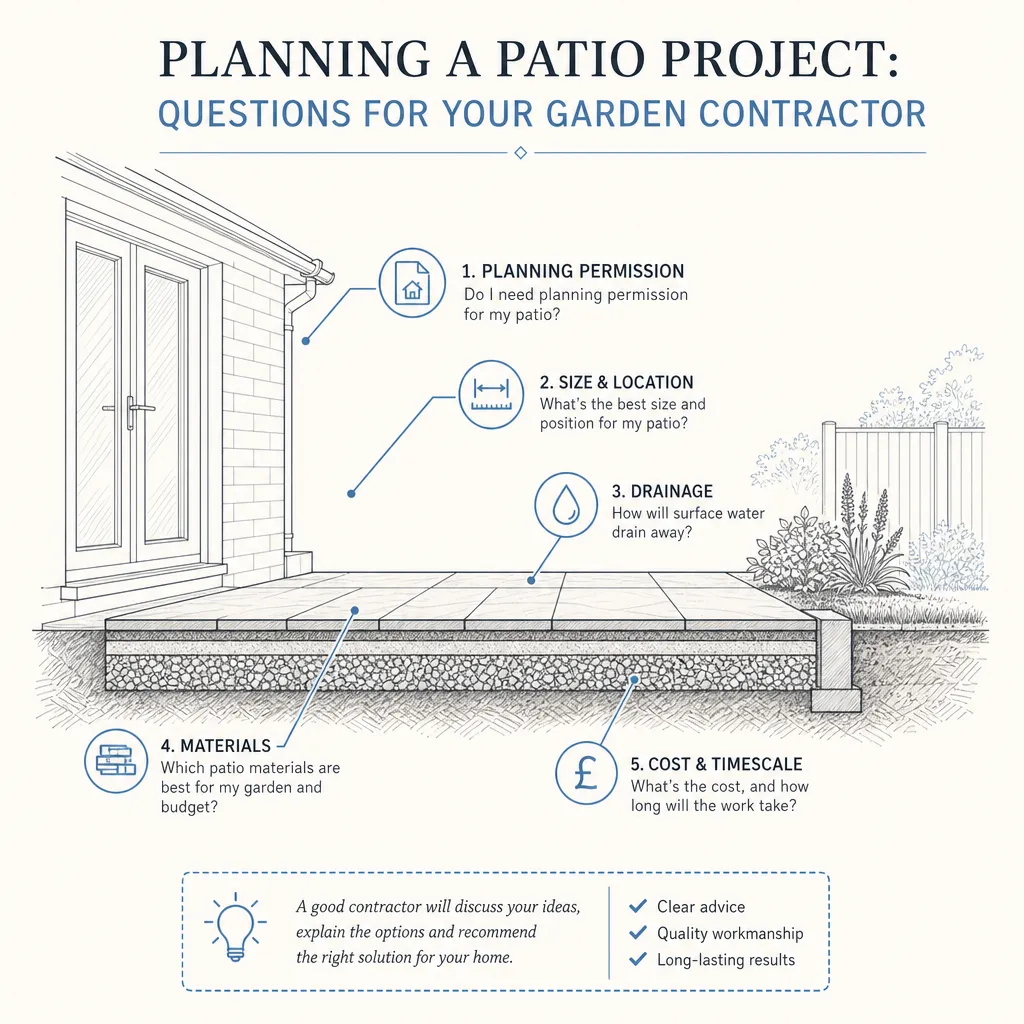
Planning a Patio Project: Questions for Your Garden Contractor
When planning a patio, ask your contractor about sub-base depth, bedding method, drainage gradient (typically 1:60 away from the house), and the frost-resistance rating of the paving.