Creating a Pocket Garden: Design Ideas for Small Spaces
By Housey · Last reviewed 30th of May 2026
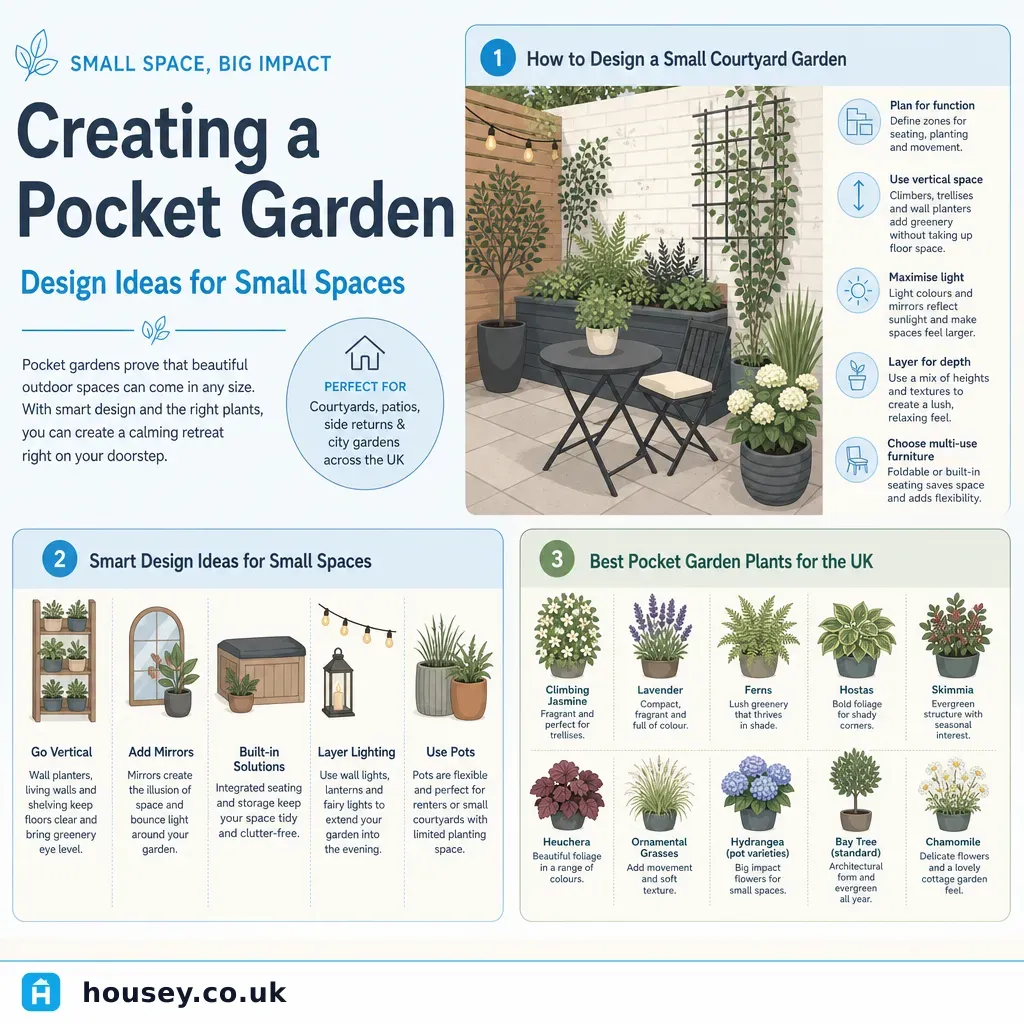
Creating a Pocket Garden: Design Ideas for Small Spaces
Urban homeowners with a courtyard, side return, or narrow strip of outdoor space face a particular challenge: how to create something usable and attractive when the total area is under 15 square metres. Pocket gardens are increasingly common in the UK, driven by new-build homes with smaller plots, converted flats, and terraced houses where the only outdoor space is a passage or paved yard. Getting the design right can meaningfully change how much you use the space — and may contribute to the property's kerb appeal and value.
Key points
- Pocket gardens are typically defined as outdoor spaces under 15 sq m and are common in UK new-build and terraced properties built since the 1980s.
- Vertical planting structures such as living walls, trellis panels, and trained climbers can increase usable planting area by 60–80% without reducing ground-level space.
- Hard landscaping (paving, decking) typically costs £50–£150 per sq m in the UK depending on materials and groundwork required. (Indicative UK costs, last reviewed 2026-05-30.)
- Planning permission is not usually required for garden landscaping, but listed buildings, conservation areas, and works affecting trees with preservation orders (TPOs) require separate consent from the local planning authority.
- Light-coloured materials and a diagonal layout are established landscape architecture techniques for making small enclosed spaces feel significantly larger.
How to approach pocket garden design
Before choosing plants or materials, decide what the space needs to do. A seating area for two people, a productive kitchen garden, and a play zone for young children all have different spatial requirements — and trying to include all three in a 10 sq m plot rarely works well. Most professional garden designers recommend prioritising one or two primary uses and building the entire design around them.
Useful questions to settle before starting:
- Is the predominant condition shade or sunlight?
- Is privacy screening from neighbours or the street a priority?
- Does the garden need to work as a view from inside the house during winter as well as summer?
- Are there fixed constraints — manholes, party walls, mature trees, or existing drainage runs?
Answering these questions before purchasing materials avoids costly rework.
Design approaches compared
Different design styles suit different pocket garden constraints. The table below outlines the most practical options for small UK outdoor spaces.
Design style | Best for | Limitations | Typical cost range (per sq m) |
|---|---|---|---|
Contemporary paved courtyard | Low maintenance, year-round use, urban settings | Can feel hard without planting to soften it | £80–£150 (hard landscaping) |
Raised-bed kitchen garden | Poor existing soil, north-facing plots, growing vegetables or herbs | Less space for seating; ongoing maintenance required | £30–£80 (beds and compost) |
Gravel and planting garden | South-facing, drought-prone sites; minimal maintenance priority | Can look sparse in winter without structure planting | £40–£90 |
Decked seating garden | Sloped plots, timber-clad properties | Drainage management required; timber needs periodic treatment | £60–£130 |
Living-wall or vertical garden | Very small plots under 8 sq m; balconies with no ground space | Irrigation system often required; higher upfront cost | £100–£250 per sq m of structure |
Indicative UK costs, last reviewed 2026-05-30. Quotes vary by region, access, and contractor.
Which design approach suits your space?
- Choose a paved courtyard if seating and outdoor dining are your primary use and low maintenance is a priority.
- Choose raised beds or a vertical garden if you have very limited ground space (under 8 sq m) or poor existing soil quality.
- Choose a gravel and planting scheme if the garden faces south, dries out quickly, and year-round low maintenance matters most.
- Choose decking if your plot has a significant slope that would require expensive levelling groundworks to resolve.
- Consult a garden designer if the plot has unusual constraints such as a party wall boundary, drainage problems, or access-only strips — or if you want a bespoke planting plan with professional guidance on plant selection.
- Check with your local planning authority if the property is listed, in a conservation area, or if work involves removing or working near a tree with a preservation order.
Maximising the sense of space
Small garden design has several well-established spatial techniques that professional landscapers apply routinely.
Light and colour: Pale paving materials — limestone, light sandstone, off-white porcelain — reflect more light and reduce the sense of enclosure. Painting boundary walls in soft white or pale grey creates an impression of depth that darker colours do not.
Diagonal layout: Laying paving or decking boards at 45 degrees to the longest boundary draws the eye across the space rather than straight to the end wall, creating the impression of more room.
Mirrors: Outdoor-rated garden mirrors placed on a fence or wall behind a planting bed can convincingly double the apparent depth of a small courtyard. Use stainless-steel-framed versions designed for external use.
Focal points: A single statement element — a water feature, an architectural plant such as Fatsia japonica, or a sculptural container — gives the eye somewhere to rest and prevents the space feeling cluttered.
Boundary consistency: Uniform treatment at boundaries (consistent fence paint, continuous trellis) simplifies the visual field and makes a small garden feel more considered.
Planting for year-round interest in a pocket garden
Plant selection matters more in a small space because every plant is visible at all times. Focus on:
- Year-round structure: Evergreen shrubs such as Sarcococca (sweet box), Pittosporum, and Osmanthus provide form and interest through winter when deciduous plants are bare.
- Vertical interest: Climbers trained against walls — Clematis, Hydrangea petiolaris, Trachelospermum jasminoides — add height and seasonal colour without consuming floor space.
- Seasonal layers: Bulbs in spring, perennials in summer, grasses and seed heads in autumn. Even a 10 sq m garden can have something of interest in every season with considered planting.
- Scale: Avoid very large-leaved plants such as Gunnera or oversized Phormium in a small space — they overwhelm and visually close the garden in.
A useful design rule of thumb: in a pocket garden, no single plant should occupy more than 10–15% of the total planting area at full maturity.
What to ask before hiring a garden designer or landscaper
Before accepting any quote, ask:
- Is this design only, or design and build?
- Do you provide a full planting plan with plant names and approximate maturity sizes?
- What professional qualifications or memberships do you hold — for example, SGD (Society of Garden Designers) membership?
- How will drainage be managed in the finished scheme?
- What happens if unexpected groundwork issues are found (buried concrete, drainage runs)?
- Is VAT included in the quote?
- How long will installation take, and how will access to the garden be managed throughout?
- Do you offer an aftercare visit once plants are established?
When to get professional help
For a straightforward small garden, a confident homeowner can design and install a pocket garden without professional help. However, commissioning a designer or landscaper is likely to add real value if:
- The plot has unusual constraints such as shared party-wall boundaries, a significant slope, or drainage problems.
- You want a bespoke scheme with a considered planting plan rather than an off-the-shelf solution.
- The garden is prominently visible from the main living space and its appearance matters to the property's overall feel.
- You want a low-maintenance garden that performs well year-round with minimal intervention.
Red flags when evaluating contractors:
- No written specification of exactly what is included
- No mention of drainage or groundwork contingency allowance
- Unwilling to provide professional membership details or proof of liability insurance on request
How Housey can help
Housey connects homeowners with vetted garden designers and landscapers who work in your area. Submit a brief describing your space, priorities, and budget to receive comparable quotes from local specialists.
Frequently asked questions
Do I need planning permission for a pocket garden in the UK?
Planning permission is not usually required for standard garden landscaping in England and Wales. However, consent may be needed if the property is listed, in a conservation area, or if you plan to remove or work near a tree with a tree preservation order (TPO). Always check with your local planning authority before removing trees or making significant changes to a listed property.
What is the cheapest way to improve a small garden?
Painting boundary fences and walls in a consistent colour, adding a simple gravel bed with architectural plants, and installing a compact seating area with affordable porcelain paving are often the most cost-effective options. These elements can collectively cost £500–£2,000 depending on plot size and materials. Indicative UK costs, last reviewed 2026-05-30.
Can I have a lawn in a pocket garden?
A lawn under 6 sq m is usually more trouble than it is worth — difficult to mow evenly, prone to wear, and less attractive than alternatives. Gravel, paving, or ground-cover plants such as Chamomile or Thyme typically perform better in confined spaces. Artificial grass is an option but carries sustainability trade-offs.
How much does a garden designer cost in the UK?
Design fees vary widely. A consultation and basic planting plan typically costs £200–£600; a full design-and-build service for a pocket garden may cost £2,000–£10,000 or more depending on materials, scope, and region. Always obtain at least three quotes. Indicative UK costs, last reviewed 2026-05-30.
Sources and further reading
- Society of Garden Designers: Find a Designer — Society of Garden Designers
- RHS: Small Garden Design — Royal Horticultural Society
- Planning Portal: Do I need planning permission? — Planning Portal
- Historic England: Listed Buildings and Curtilage — Historic England
Useful next reads
 Improvement & Build
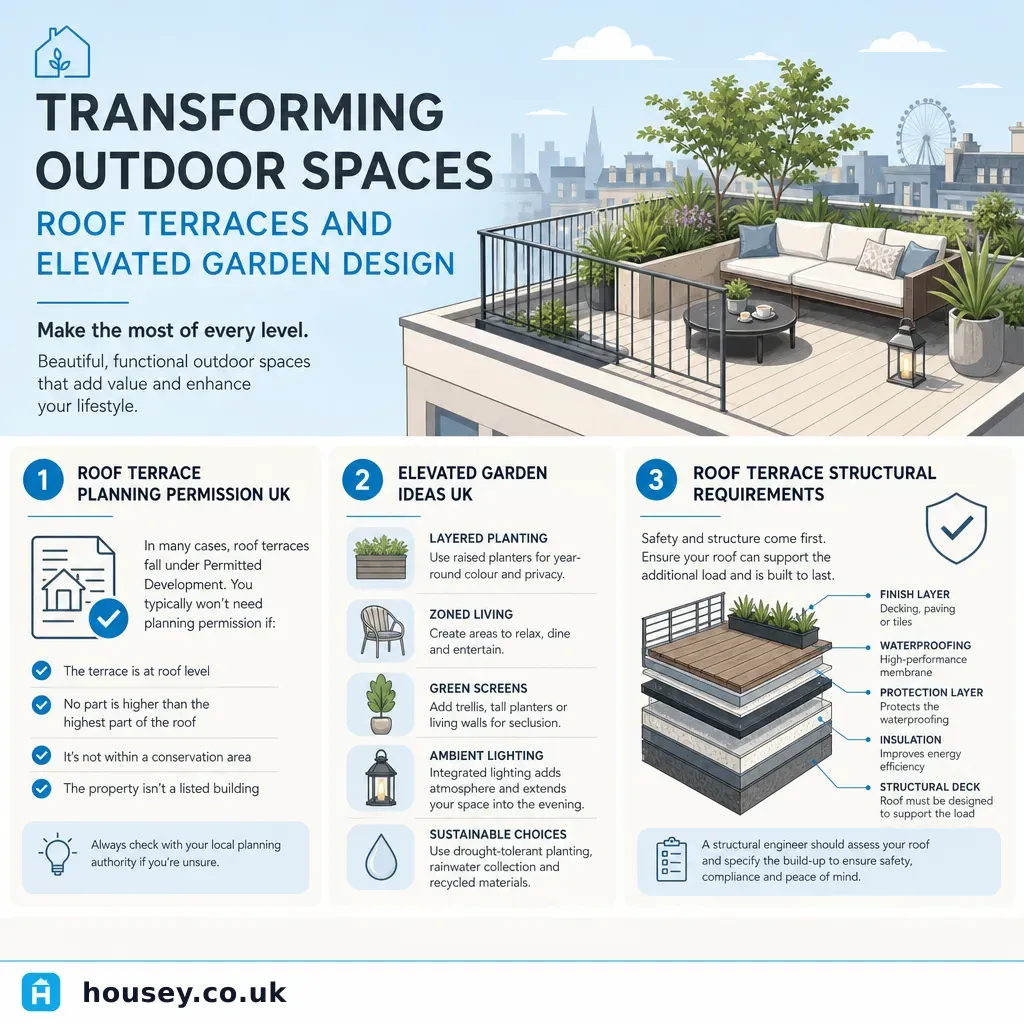
Transforming Outdoor Spaces: Roof Terraces and Elevated Garden Design
Roof terraces in the UK almost always need planning permission and a structural engineer's load capacity assessment before design work begins.
 Improvement & Build
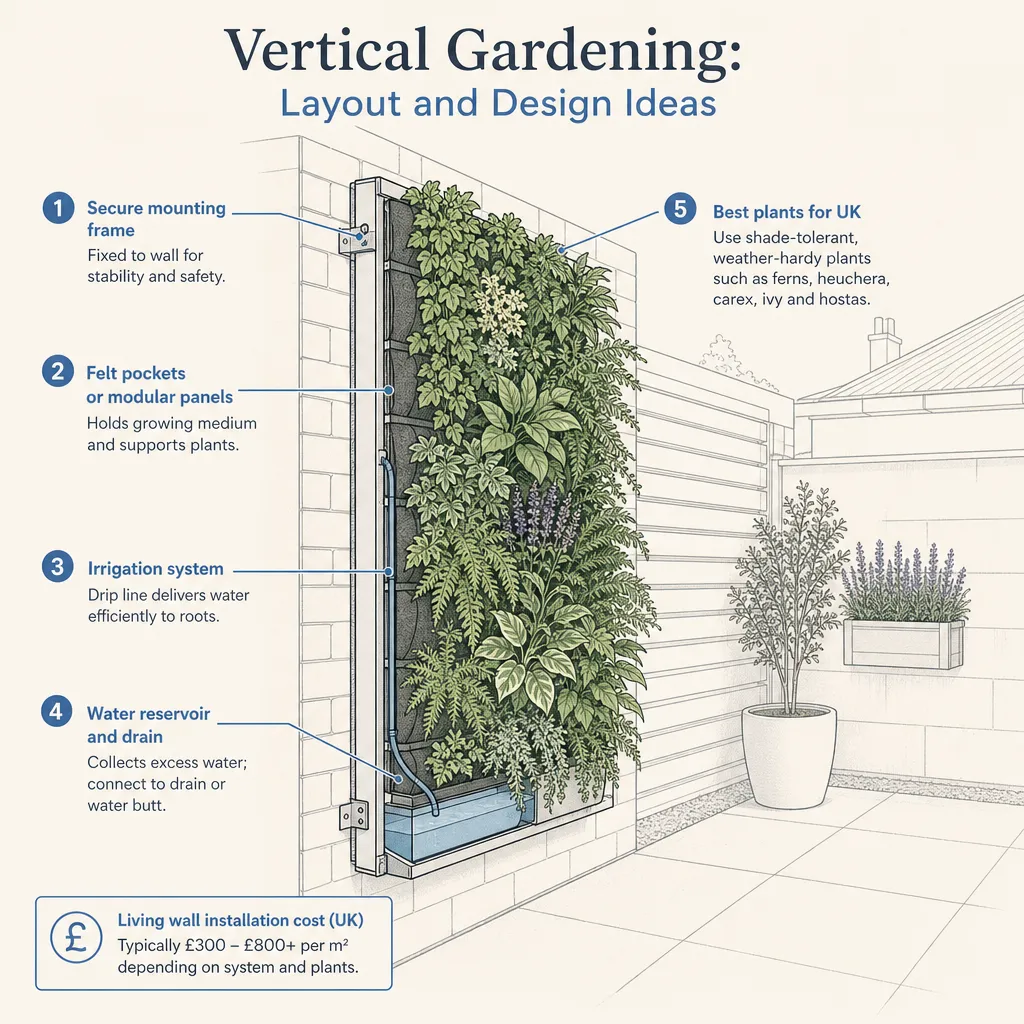
Vertical Gardening: Layout and Design Ideas
Vertical gardening uses wall-mounted planters, trellis systems, and modular panels to grow plants upwards rather than outwards.
 Improvement & Build
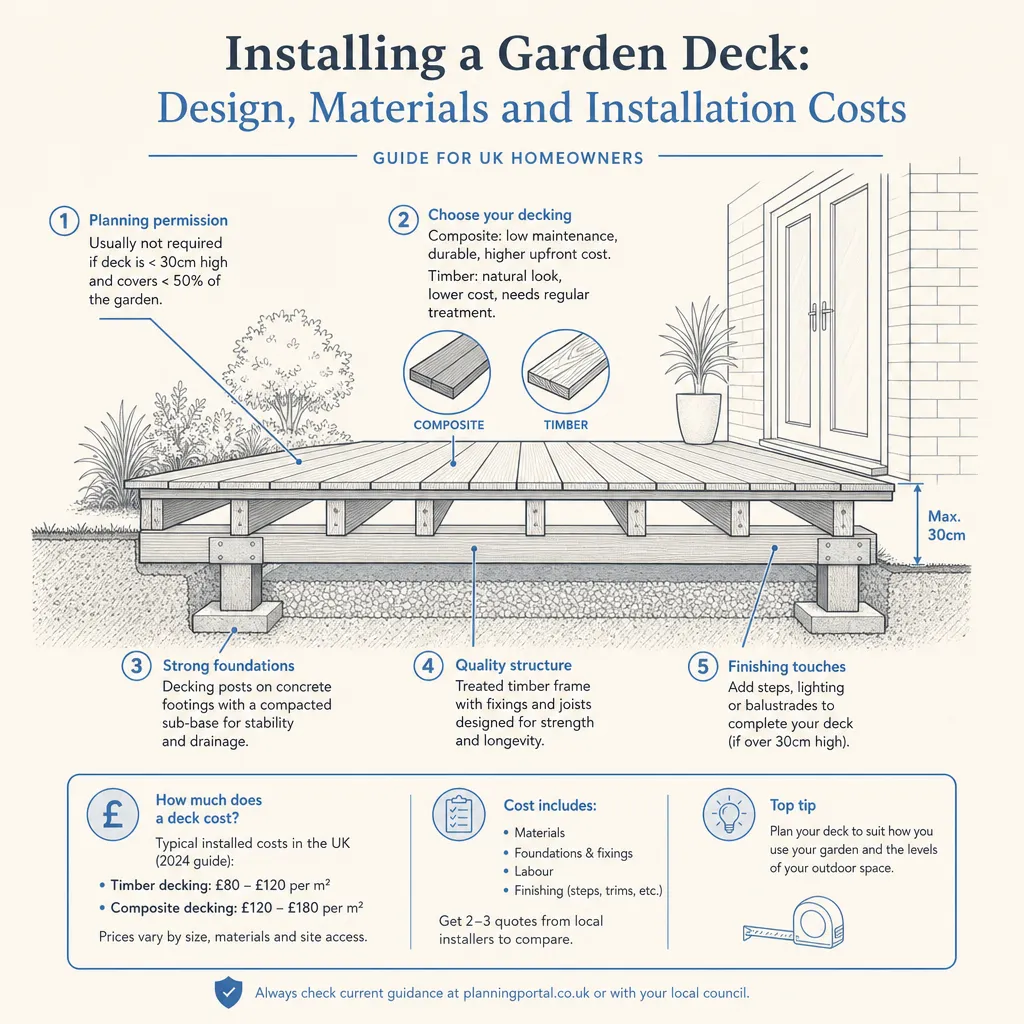
Installing a Garden Deck: Design, Materials and Installation Costs
Garden decking costs £80–250 per m² installed in the UK depending on material — softwood is cheapest, composite the most durable.
 Improvement & Build
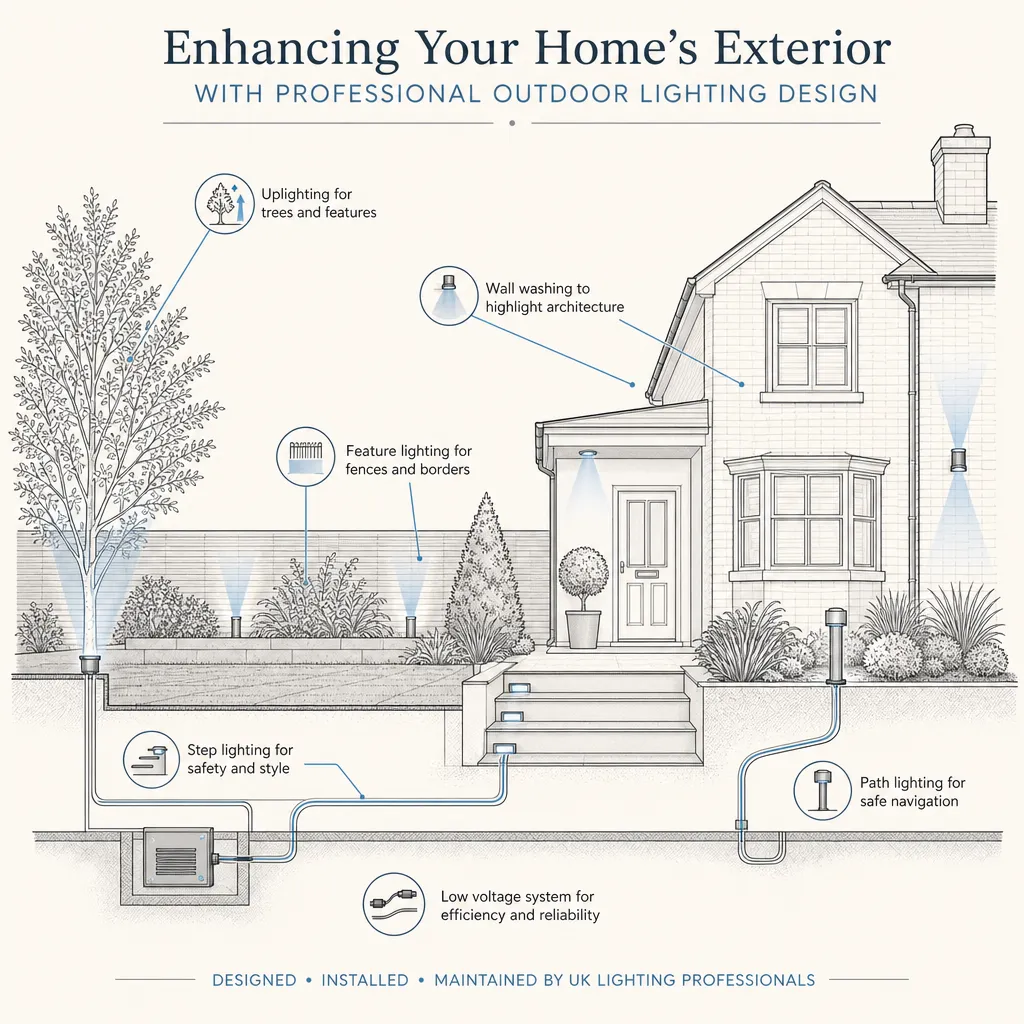
Enhancing Your Home's Exterior with Professional Outdoor Lighting Design
Professional outdoor lighting design improves kerb appeal, extends garden use after dark, and deters intruders.
 Improvement & Build
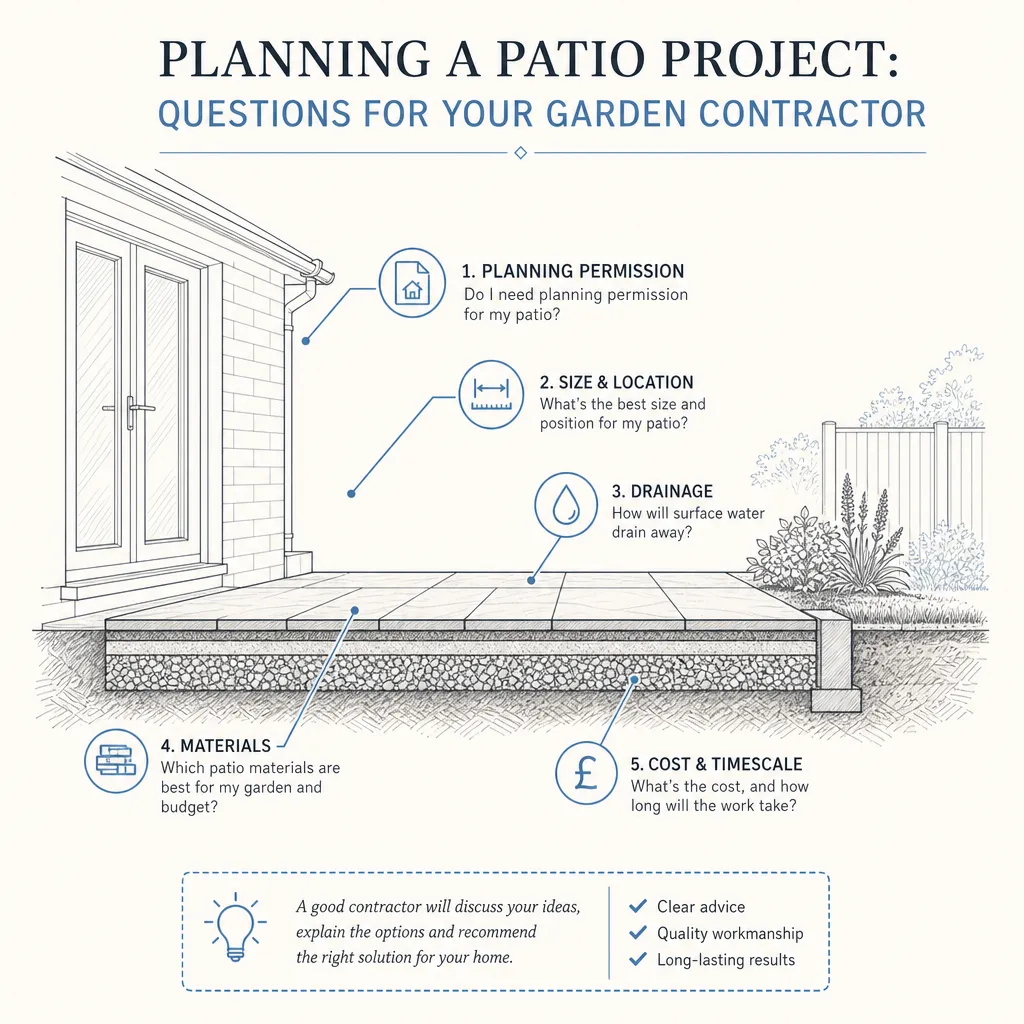
Planning a Patio Project: Questions for Your Garden Contractor
When planning a patio, ask your contractor about sub-base depth, bedding method, drainage gradient (typically 1:60 away from the house), and the frost-resistance rating of the paving.