Enhancing Your Home's Exterior with Professional Outdoor Lighting Design
By Housey · Last reviewed 19th of May 2026
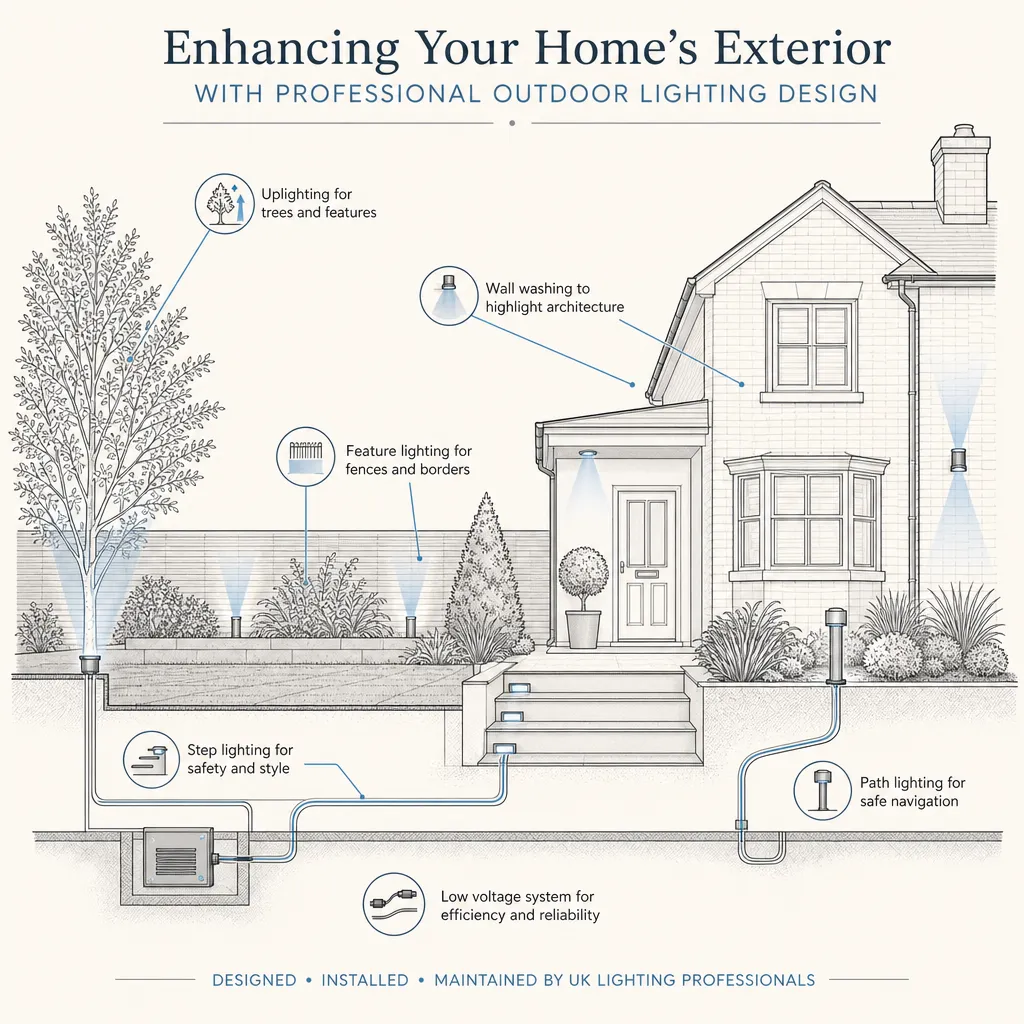
Enhancing Your Home's Exterior with Professional Outdoor Lighting Design
After dark, an unlit UK garden or driveway loses its character entirely — and a poorly lit exterior can undermine kerb appeal, reduce security, and limit how long you actually use an outdoor space. Homeowners typically begin thinking about exterior lighting when planning a garden redesign, preparing a property for sale, or moving into a home where existing provision is inadequate. Getting it right involves more than choosing attractive fittings; it requires a considered design approach, an understanding of UK electrical regulations, and the right professionals.
Key points
- Mains-voltage (230 V) outdoor electrical installations must comply with BS 7671 (the IET Wiring Regulations 18th Edition) and Part P of the Building Regulations; work must be carried out or certified by a Part P-registered electrician or through local authority building control.
- IP (Ingress Protection) ratings are mandatory for all outdoor fittings: general garden use requires at least IP44; within 0.6 m of a water feature, IP65 minimum; submerged fittings require IP68 and a SELV (Separated Extra-Low Voltage) transformer system only.
- Low-voltage LED systems (12 V or 24 V DC) are energy-efficient, cooler-running, and safer in garden settings than mains-voltage equivalents — and the low-voltage wiring side does not require Part P certification, though mains wiring to the transformer still does.
- Conservation area and listed building properties may require planning permission or Listed Building Consent before installing external lighting — confirm with your local planning authority before finalising any design.
- Light spillage onto neighbouring land or the public highway can constitute a statutory nuisance under the Environmental Protection Act 1990; professional design significantly reduces this risk.
What professional outdoor lighting design involves
Professional garden lighting design extends well beyond fixture selection. A qualified garden lighting designer or experienced landscape designer will assess the property's orientation, existing planting structure, architectural character, and the homeowner's primary goals — security, ambience, extended usability, or kerb appeal — before producing a detailed lighting plan.
The typical process includes:
- Site survey — measuring distances, mapping existing power outlets, identifying surface types and underground utility routes.
- Zone mapping — dividing the garden into functional areas: entrance, paths, planting beds, water features, entertainment areas, and boundary.
- Fitting specification — selecting IP-rated luminaires appropriate for each zone, with the correct beam angle, colour temperature, and lumen output.
- Control strategy — choosing between manual switching, dusk-to-dawn photocells, motion detection, timer controls, or smart home integration (Zigbee, Z-Wave, or Wi-Fi platforms) to suit the household's routine.
- Cable routing plan — specifying armoured cable (SWA), conduit requirements, and junction box positions to BS 7671 standards.
- Installation coordination — working with a Part P-registered electrician for all mains wiring; low-voltage transformer-fed systems may not require separate certification for the low-voltage side.
Comparing outdoor lighting systems
System | Best for | Not ideal for | Typical colour temp | Professional needed |
|---|---|---|---|---|
Mains-voltage (230 V) LED | Powerful uplights, large gardens, permanent installs | Zones near water without SELV; DIY installation | 2700–4000 K | Part P electrician |
Low-voltage (12/24 V DC) LED | Flexible, extendable path and planting schemes | Very long cable runs (voltage drop risk) | 2700–3000 K | Landscape designer + electrician |
Solar LED | Low-maintenance path markers, accent lighting | Shaded or north-facing gardens; consistent brightness | Often 4000 K+ | Garden designer or self-install |
Smart/connected systems | App or voice-controlled ambience and security | Older properties with limited Wi-Fi coverage | Variable | Specialist lighting designer |
Lighting zones and design principles
Entrance and pathway lighting is the most common starting point for UK properties. A typical terraced or semi-detached front path of 6–12 metres suits low-level bollard lights or recessed flush deck lights spaced 1.5–2 m apart. Colour temperatures around 2700 K produce a warm, welcoming tone well-suited to brick, stone, or rendered exteriors.
Uplighting mature trees and planting creates depth and structure after dark. A 10 W LED spotlight with a 20° beam angle placed at the base of a specimen tree provides a striking focal point without excessive light spillage. The beam should be directed upward and inward, away from neighbouring windows and the public highway.
Security lighting benefits from motion-activated floodlights mounted at least 2 m above ground, angled away from public footpaths, and set to a 30–60 second dwell time. PIR sensitivity should be calibrated to reduce false triggering from small animals — a common frustration in gardens close to hedgerows or woodland.
Water feature lighting requires SELV systems (Separated Extra-Low Voltage, usually 12 V) under BS 7671 zone requirements. Mains-voltage fittings must never be installed in or immediately adjacent to ponds, fountains, or paddling areas — regardless of the IP rating.
Homeowner checklist before commissioning outdoor lighting
What to ask before accepting a quote
- Is the electrician Part P registered, and will a Building Regulations completion certificate be issued for any mains wiring?
- What specification of armoured cable (SWA) and conduit will be used for buried cable runs?
- What transformer capacity is included, and can additional fittings be added later without replacing it?
- Are the specified fittings from a continuing range with replacements available in future years?
- Does the quote include trenching, backfilling, and surface reinstatement?
- What is the IP rating and manufacturer warranty period for each fitting?
- Is VAT included in the quoted price?
When to get professional help
Any mains-voltage outdoor installation requires a Part P-registered electrician or building control notification — this is not discretionary. Seek professional input promptly when:
- An existing outdoor socket or fitting shows signs of moisture ingress, corrosion, or is tripping the RCD.
- The property has no dedicated outdoor circuit and the consumer unit has no spare ways.
- The property is listed or in a conservation area and you have not yet confirmed the planning position.
- A water feature is involved and the existing lighting has no visible SELV transformer or IP68 markings.
How Housey can help
Housey connects homeowners with vetted garden designers and experienced landscapers who can specify, plan, and manage outdoor lighting projects from initial concept through to installation sign-off. Submit your project details to compare quotes from local professionals.
Frequently asked questions
Do I need planning permission for outdoor garden lights in the UK?
Planning permission is not usually required for standard domestic garden lighting. However, listed buildings, conservation areas, and Areas of Outstanding Natural Beauty may face restrictions on external fittings, including brightness and positioning. Always confirm with your local planning authority before installing lighting visible from the highway or on a protected property.
What IP rating do I need for outdoor garden lights?
General garden use requires a minimum IP44 rating. Fittings installed within 0.6 m of a water feature must be rated IP65 or higher. Submerged or fountain fittings must be IP68 and used only within a SELV (Separated Extra-Low Voltage) 12 V or 24 V transformer system, as required by BS 7671.
Can I install outdoor mains lighting myself in the UK?
Mains-voltage (230 V) outdoor wiring must comply with Part P of the Building Regulations. Work must be carried out by a Part P-registered electrician or notified to local authority building control before installation. Low-voltage solar and transformer-fed 12 V or 24 V systems generally do not require formal certification, though professional installation remains advisable.
How much does professional outdoor lighting design cost in the UK?
Indicative UK costs, last reviewed 2026-05-19: professional outdoor lighting design typically costs £500–£2,000 depending on garden size and complexity, separate from fittings and installation. A basic mains outdoor circuit with 6–10 fittings typically costs £800–£2,500 including materials and electrician fees. Costs vary by region and specification — obtain at least three comparable quotes.
Sources and further reading
- Building Regulations Approved Document P: Electrical Safety — GOV.UK
- BS 7671: Requirements for Electrical Installations (IET Wiring Regulations 18th Edition) — The IET
- Find a Part P Registered Electrician — NICEIC
- Guidance on Light Pollution — GOV.UK / Environment Agency
Useful next reads
 Improvement & Build
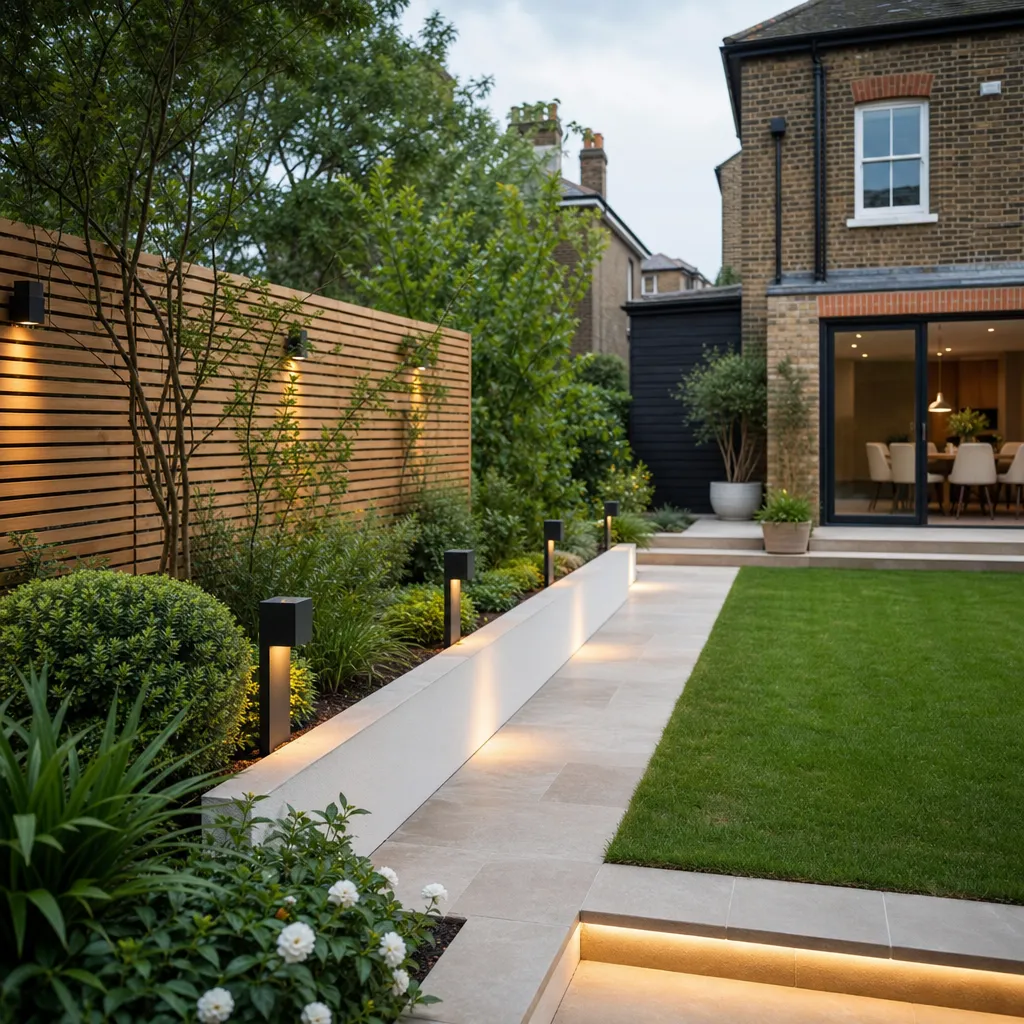
Landscape Lighting Design Ideas for Gardens
Effective garden lighting combines task lighting for paths and entrances, accent lighting to highlight trees and borders, and ambient lighting for entertaining areas.
 Improvement & Build
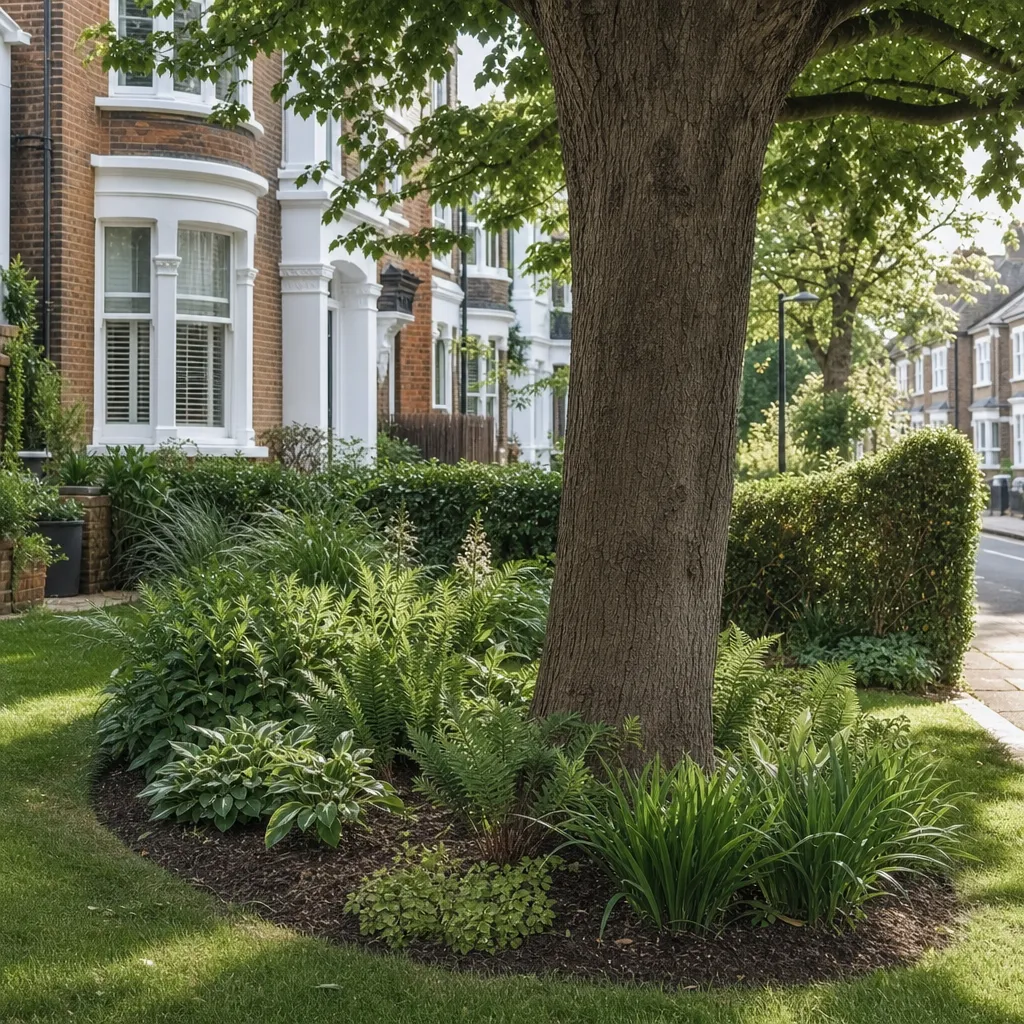
Landscaping Around Trees: Design and Planting Guide
The key to landscaping around trees is working with the tree's conditions rather than against them.
 Improvement & Build
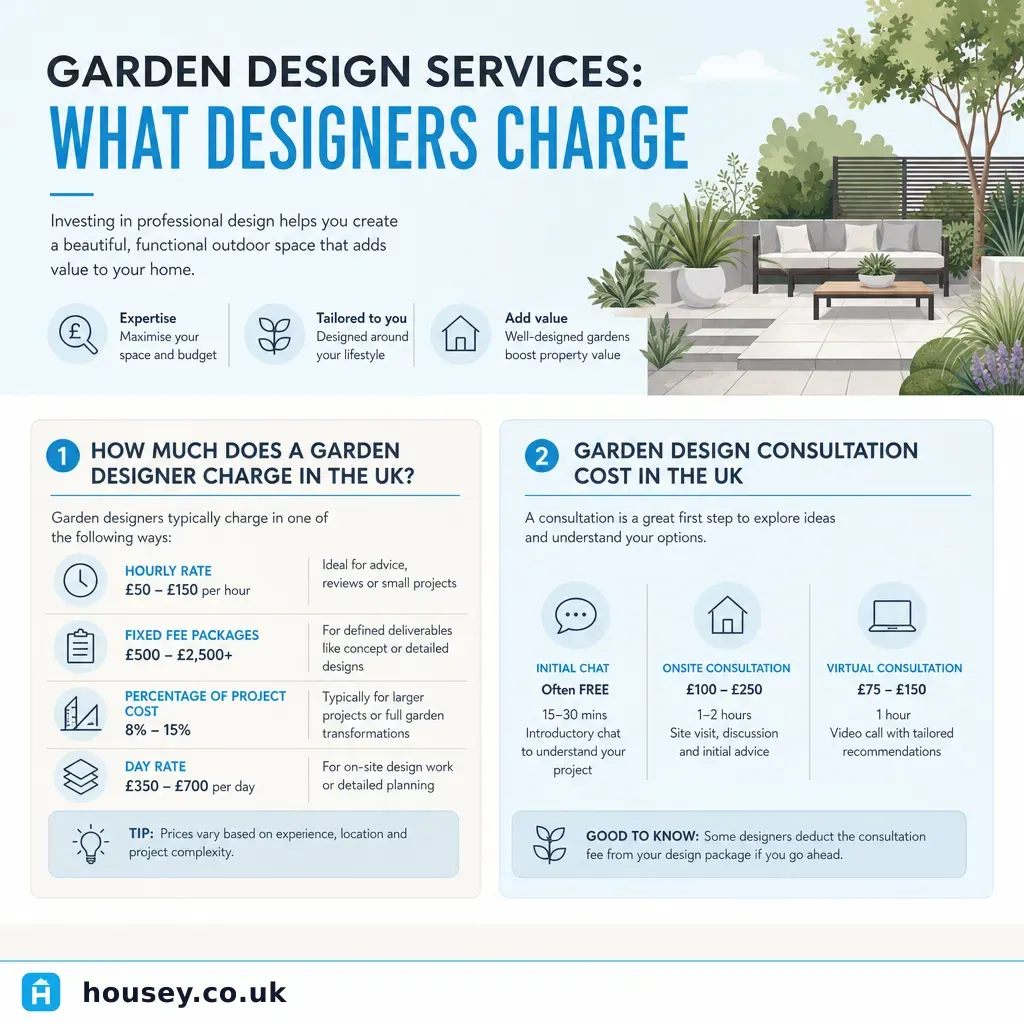
Garden Design Services: What Designers Charge
UK garden designers typically charge £50–200+ per hour, or fixed fees from around £200 for an initial consultation to £3,000–5,000+ for a full design package on a medium garden.
 Improvement & Build
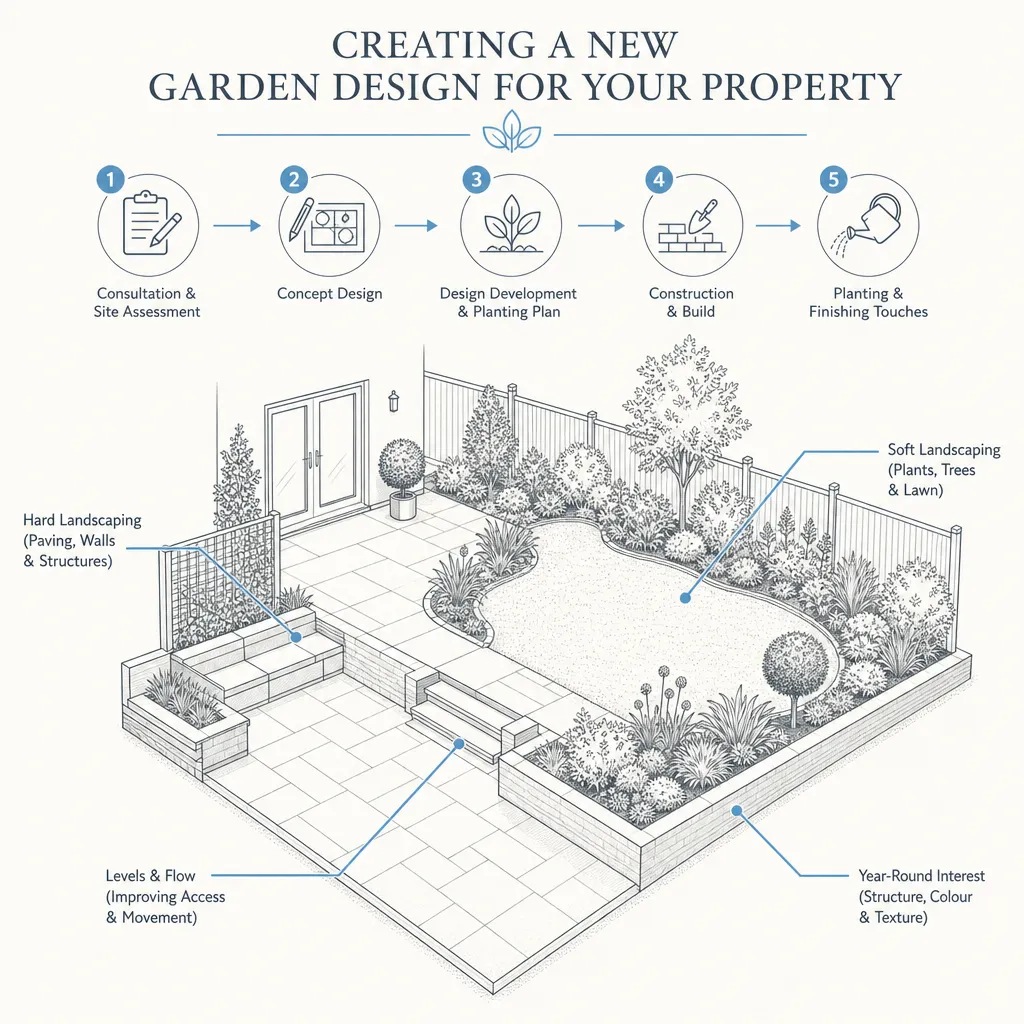
Creating a New Garden Design for Your Property
Creating a new garden design involves assessing your space, setting a realistic budget, deciding on hard and soft landscaping, and choosing a planting scheme suited to your soil and aspect.
 Improvement & Build
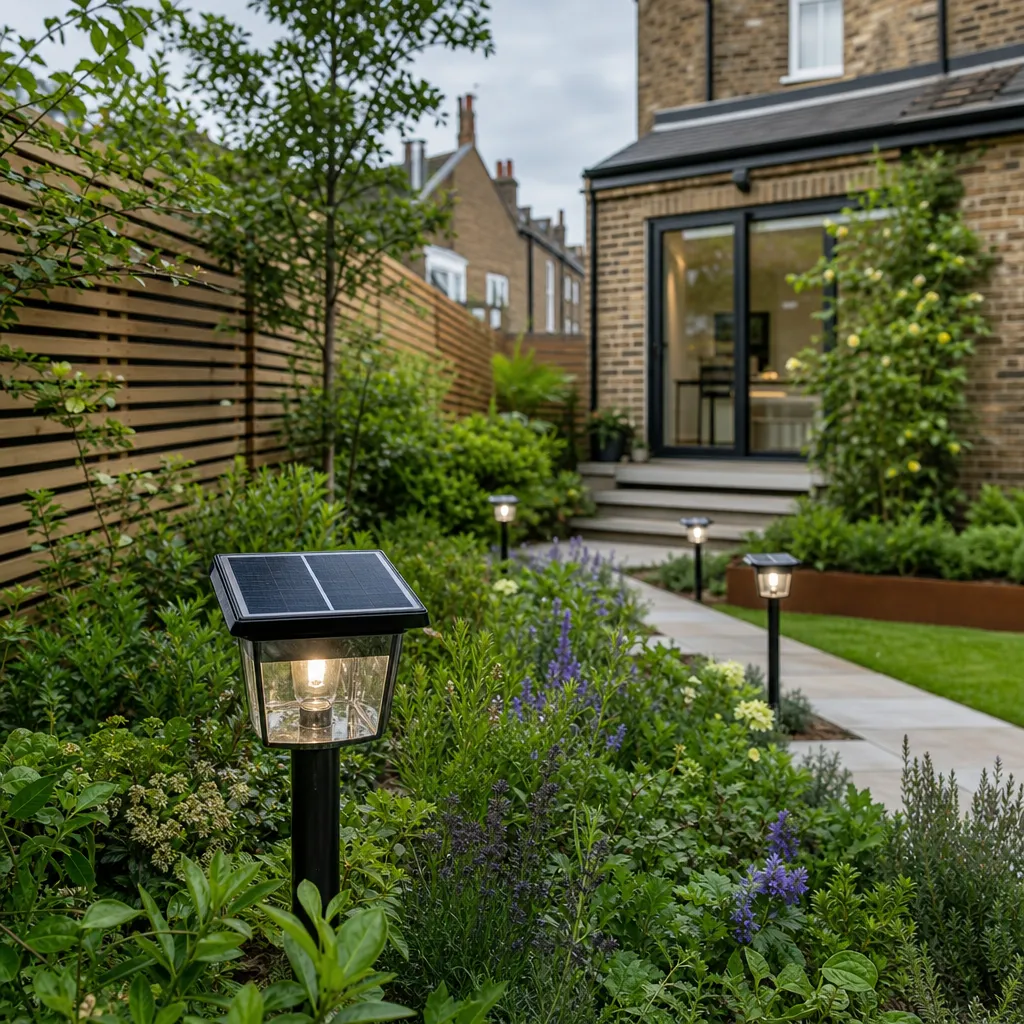
Solar-powered outdoor lighting: designing efficient garden illumination
Solar-powered outdoor lighting suits most UK gardens and requires no mains wiring, making it a practical, low-disruption option for paths, borders, and security.