Creating a Sustainable Garden Landscape
By Housey · Last reviewed 11th of May 2026
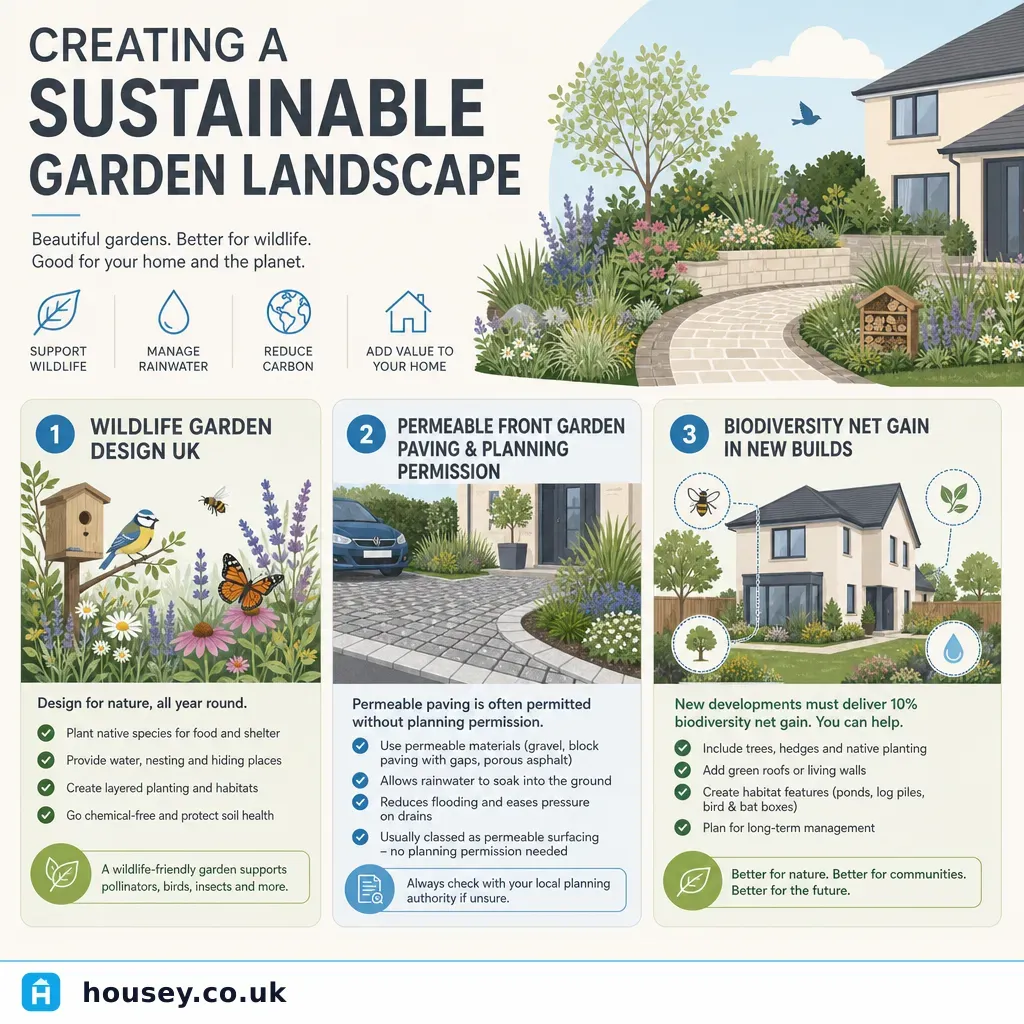
Creating a Sustainable Garden Landscape
Garden design decisions have moved well beyond aesthetics in recent years. UK homeowners are increasingly weighing their outdoor spaces against water use, biodiversity loss, and the evidence that gardens contribute meaningfully to urban cooling and flood attenuation. Whether you are redesigning an existing plot, working with a new-build garden, or tackling a challenging aspect — north-facing slope, heavy clay, or urban courtyard — a sustainable approach typically produces a garden that is cheaper to maintain and more resilient over time than a conventional one.
Key points
- Paving more than 5 m² of a front garden with an impermeable surface requires planning permission in England under the Town and Country Planning (General Permitted Development) (Amendment) (No.2) (England) Order 2008.
- The Wildlife and Countryside Act 1981 makes it an offence to intentionally disturb the nest of any wild bird in use or being built — vegetation clearance should avoid the main nesting season (broadly March to August) wherever possible.
- The retail sale of peat-based compost for horticulture has been banned in England; sustainable alternatives such as composted bark, coir, and woodchip should be specified for any new planting scheme.
- Rainwater harvesting systems using a mains top-up supply must comply with the Water Supply (Water Fittings) Regulations 1999, including notification to the water undertaker and a backflow prevention device.
- Biodiversity Net Gain (BNG) — mandatory for most planning applications in England under the Environment Act 2021 — requires development to deliver at least a 10% measurable increase in biodiversity value; garden design for new-build plots increasingly needs to address this.
What sustainable garden design means in a UK context
Sustainable garden design balances ecological function with practical use. In UK conditions, that means designing for:
- Water resilience — managing both drought (increasingly common in south and east England) and intense rainfall events
- Biodiversity — supporting pollinators, birds, and invertebrates through plant choice, structure, and habitat features
- Soil health — avoiding compaction, building organic matter, and reducing synthetic pesticide use
- Low embodied energy materials — choosing locally sourced stone, reclaimed timber, or permeable paving over imported porcelain or virgin aggregates
- Low maintenance — perennial-led planting, mulched borders, and reduced lawn area
The Royal Horticultural Society (RHS) produces guidance on plants for wildlife and pollinators that is a practical starting point for plant selection in UK gardens.
Planting for wildlife and biodiversity
Native and near-native planting is the foundation of an ecologically effective UK garden.
Use the RHS Plants for Pollinators list. This identifies plants across categories — trees, shrubs, perennials, and annuals — with demonstrated benefit to bees and other pollinators. It is not limited to strictly native species; many garden cultivars are included.
Layer the planting. Natural habitats have multiple storeys: canopy (trees), understorey (shrubs), ground layer (perennials and bulbs), and ground cover (low plants and mulch). Replicating this layering in even a small garden dramatically increases the number of species it can support.
Leave some mess. Hollow stems, leaf litter, log piles, and undisturbed soil margins provide overwintering habitat for solitary bees, beetles, hedgehogs, and other garden wildlife. Delay end-of-season cutting where possible until early spring.
Avoid F1 hybrids and double-flowered cultivars for pollinator planting — their pollen and nectar is less accessible or absent entirely.
Native and near-native species by habitat goal
Habitat goal | Suitable species | Notes |
|---|---|---|
Pollinator meadow | Knapweed (Centaurea nigra), oxeye daisy (Leucanthemum vulgare), field scabious (Knautia arvensis) | Yellow rattle (Rhinanthus minor) suppresses grass, allowing wildflowers to establish |
Hedgerow and screening | Hawthorn (Crataegus monogyna), blackthorn (Prunus spinosa), field maple (Acer campestre) | Provides berries and nesting cover; good for boundary planting |
Shady border | Wood anemone (Anemone nemorosa), hart's tongue fern (Asplenium scolopendrium), foxglove (Digitalis purpurea) | Suited to north-facing or tree-shaded beds |
Water feature edge | Purple loosestrife (Lythrum salicaria), marsh marigold (Caltha palustris), water mint (Mentha aquatica) | Supports amphibians and aquatic invertebrates |
Water management in the garden
The UK's increasingly variable rainfall — extended dry spells followed by intense downpours — makes water management a key design consideration.
Permeable surfaces should be the default for driveways, paths, and terraces in front gardens, both to comply with planning rules and to reduce surface runoff into the drain. Options include:
- Permeable block paving with gaps infilled with pea gravel
- Gravel paths with geotextile membranes beneath
- Grass or gravel driveways reinforced with plastic grid systems
Rain gardens are shallow planted depressions that receive runoff from roofs or driveways, hold it briefly, and allow it to infiltrate or evapotranspirate. They can handle significant volumes without specialist engineering and require only a gentle gradient and a freely draining soil mix.
Rainwater harvesting — collecting roof water in above-ground butts or underground cisterns — reduces irrigation demand. Above-ground butts do not require notification to the water undertaker. Underground tanks connected to the mains for top-up supply do require notification under the Water Fittings Regulations 1999 and a non-return valve to prevent backflow.
Hard landscaping: planning rules and material choices
Front garden paving
As noted above, any impermeable surface over 5 m² in a front garden requires planning permission in England. Permeable paving — gravel, permeable block, or grass — does not trigger this requirement. This is one of the more commonly overlooked planning rules in residential garden projects, and enforcement action is possible where impermeable surfaces have been installed without consent.
Retaining walls
Retaining walls over approximately 1 m in height (measured from the low side) require building regulations consideration for structural stability. Walls adjacent to a highway have more stringent requirements. A structural engineer or landscape architect should check the design where significant level changes are involved.
Boundary walls and fences
Fences and walls up to 2 m in height are generally permitted development in England and Wales, subject to no restrictions being in place on the property. Front boundary features abutting a highway are limited to 1 m under the Town and Country Planning (General Permitted Development) Order 2015. Check with your local planning authority if permitted development rights have been removed or if the property is in a conservation area.
Sustainable garden design checklist
Use this to assess your design or existing garden against sustainability principles:
When to get professional help
Most sustainable planting and soft landscaping can be undertaken by a knowledgeable homeowner or general landscaper. Consider appointing a specialist when:
- Your project involves significant level changes, retaining structures, or drainage engineering
- The site has potential ecological value — existing mature trees, water features, or rough grassland — and a planning application is required
- You need to demonstrate Biodiversity Net Gain compliance for a planning application
- The garden forms part of a wider retrofit project and SuDS compliance is required by the local planning authority
- The site is in a conservation area or attached to a listed building, where external changes may require consent
How Housey can help
Housey connects you with garden designers experienced in sustainable and naturalistic planting design, and landscapers who can deliver permeable hard landscaping, rain gardens, and habitat features. If your project requires a planning application or may affect protected habitats or species, ecological survey specialists can assess the site and advise on mitigation before work begins.
Frequently asked questions
Do I need planning permission for a wildflower meadow?
No — converting lawn or border to a wildflower meadow is not development and does not require planning permission. If your property is listed or in a conservation area, check with your local planning authority before making significant changes to boundary features or hard landscaping, as some external changes may require listed building or planning consent.
Can I put in a garden pond without planning permission?
In most cases, yes. A domestic garden pond does not require planning permission unless permitted development rights have been removed or the work would affect a watercourse. If the pond is near a watercourse or in a flood zone, check with the Environment Agency and your local planning authority before starting work to confirm no consent or permit is required.
What is Biodiversity Net Gain and does it affect my garden project?
Biodiversity Net Gain (BNG) is mandatory for most planning applications in England under the Environment Act 2021, requiring development to deliver at least a 10% measurable net gain in biodiversity value. For smaller residential applications, simplified rules apply. Check with your local planning authority for current thresholds and whether your specific project triggers the requirement.
Is it legal to remove a tree in my garden?
It depends. Trees subject to a Tree Preservation Order (TPO) cannot be removed or significantly pruned without local authority consent. Trees in conservation areas are also protected — you must give six weeks' notice to the local planning authority before carrying out work. Always check with your local council before removing or substantially pruning any significant garden tree.
Sources and further reading
- When is permission required — permitted development rights — GOV.UK Planning Practice Guidance
- Wildlife and Countryside Act 1981 — legislation.gov.uk
- Biodiversity Net Gain guidance — GOV.UK
- Plants for Pollinators — Royal Horticultural Society
- Water Supply (Water Fittings) Regulations 1999 — legislation.gov.uk
- Peat use in horticulture — government consultation — GOV.UK / Defra
Useful next reads
 Improvement & Build
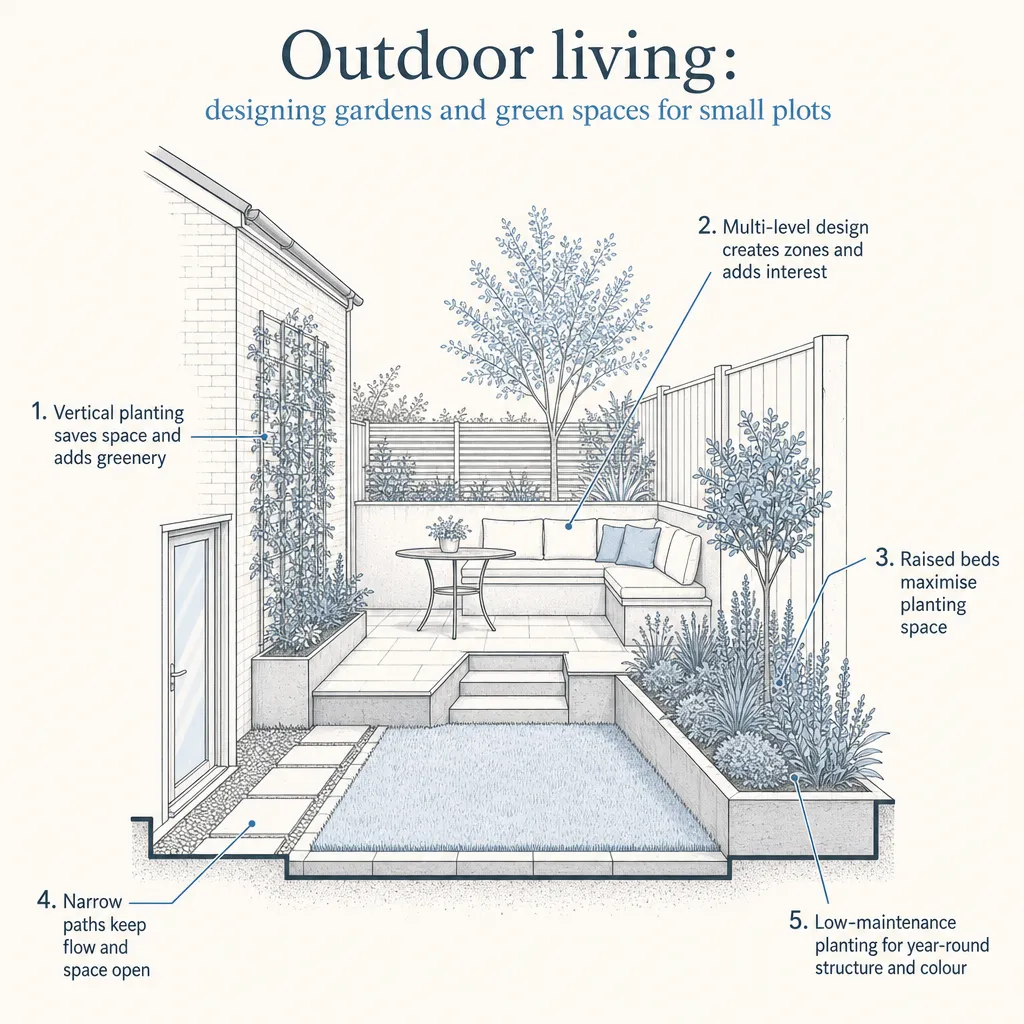
Outdoor living: designing gardens and green spaces for small plots
Small plots work best when divided into defined zones — seating, planting, and utility — before materials are chosen.
 Improvement & Build
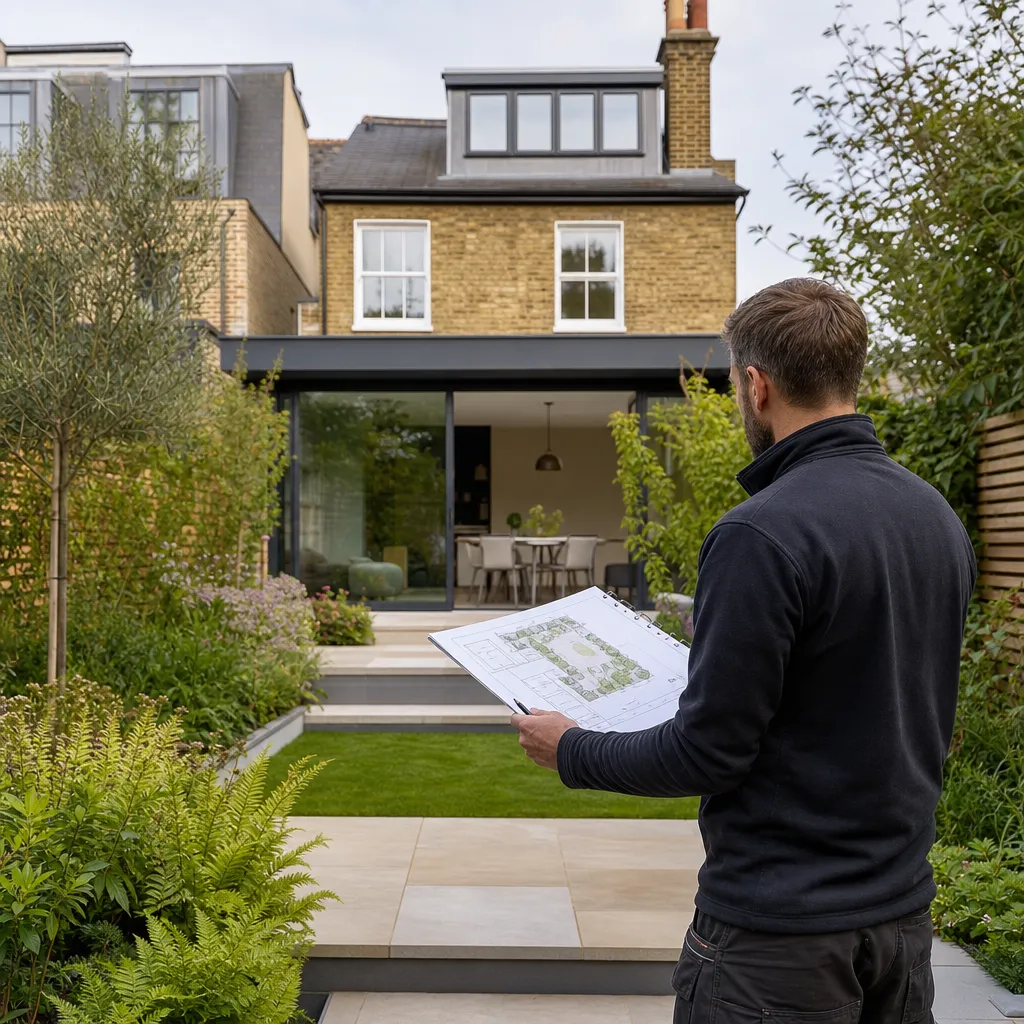
Expert advice for garden design and outdoor space planning
Effective garden design begins with a site assessment — soil type, aspect, drainage, and existing trees — before any planting or layout decisions are made.
 Improvement & Build
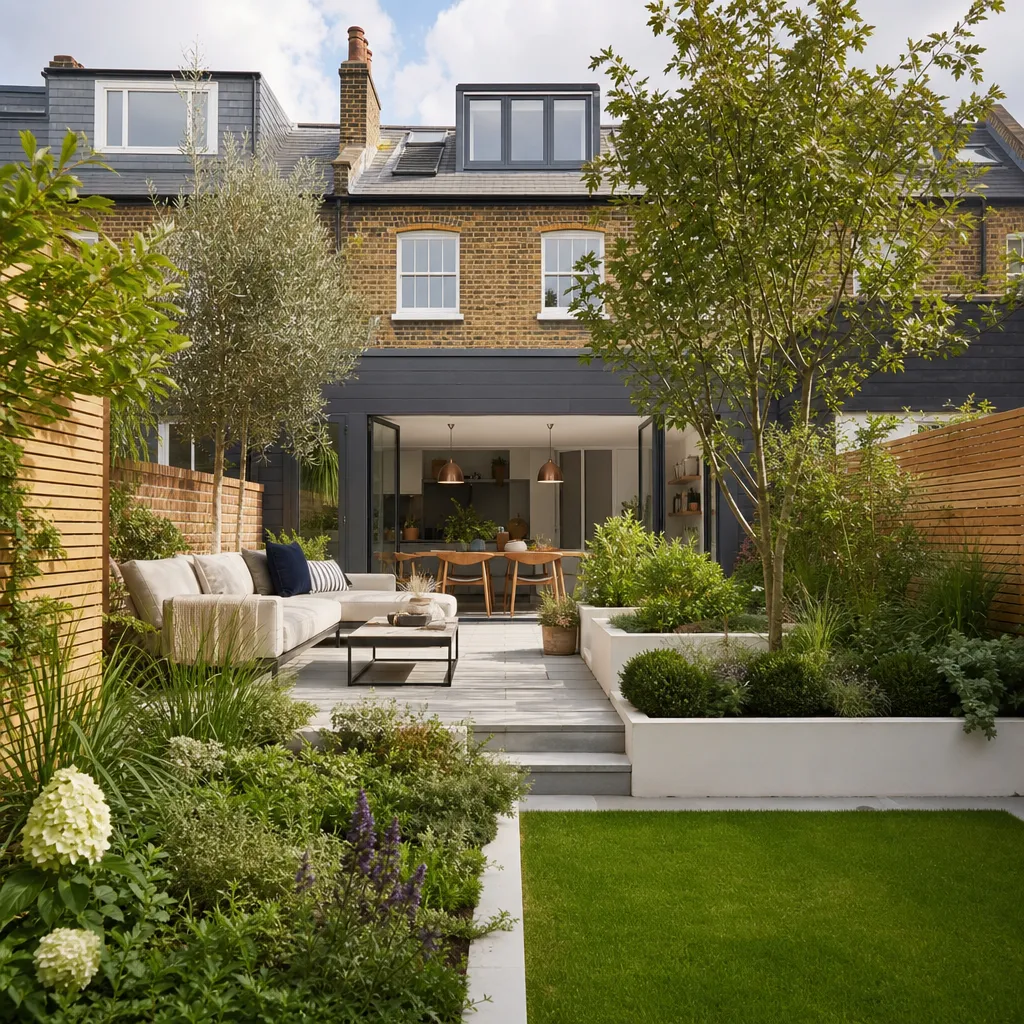
Seasonal Garden Transformations and Outdoor Design Ideas
A successful garden transformation in the UK works with the seasons rather than against them — establishing structure and hard landscaping in autumn or winter, planting in spring, and enjoying the results through summer.
 Improvement & Build
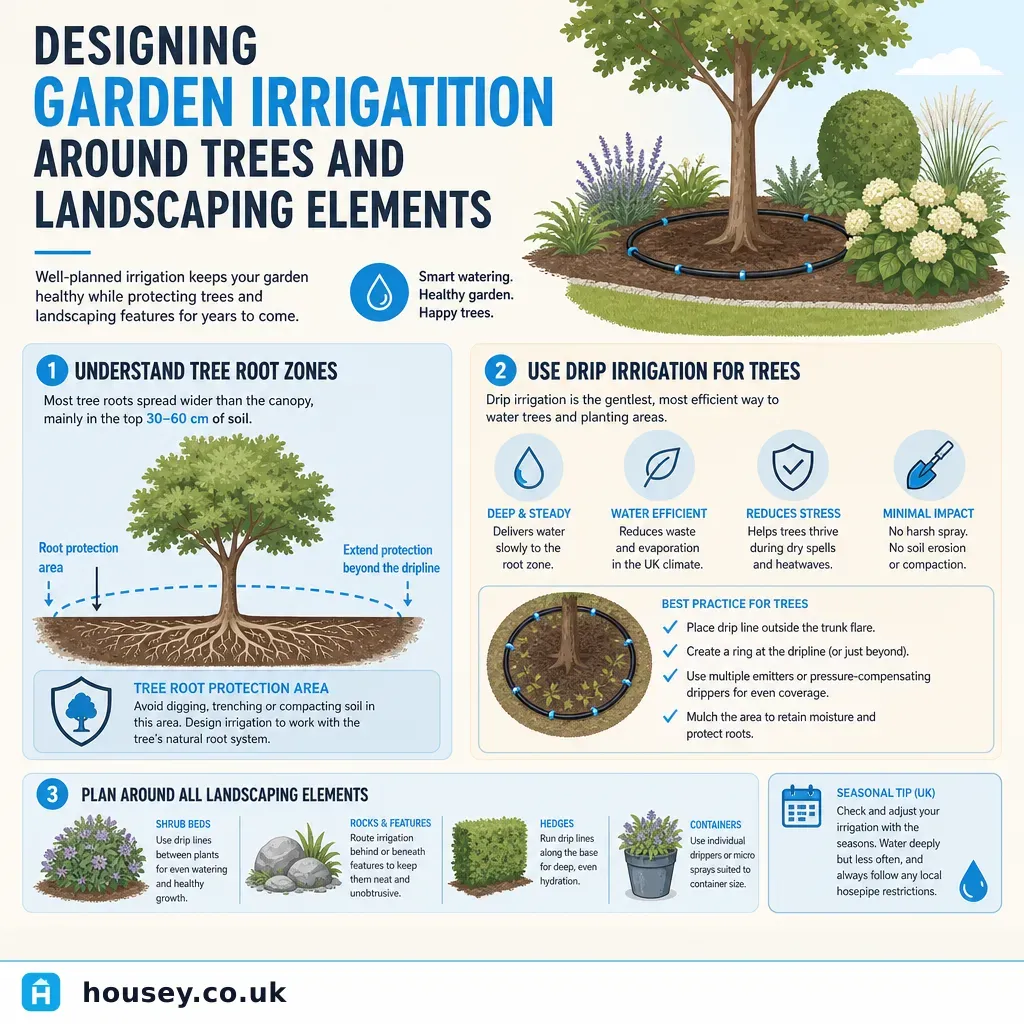
Designing Garden Irrigation Around Trees and Landscaping Elements
Design irrigation around trees by respecting the root protection area defined under BS 5837:2012, using drip or leaky pipe delivery rather than spray heads, and putting the tree zone on its own circuit.
 Improvement & Build
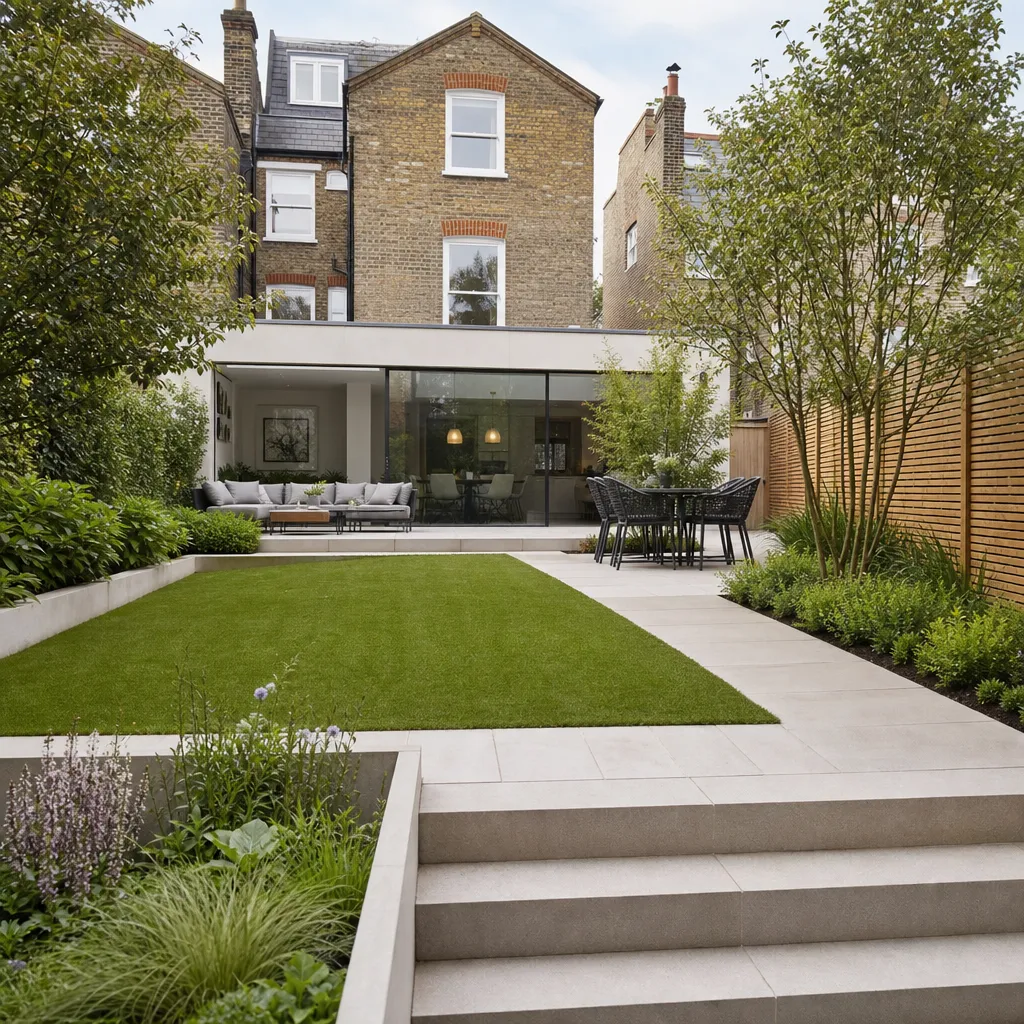
Garden Design Trends and Contemporary Landscaping Ideas
Contemporary UK garden design centres on low-maintenance naturalistic planting, multi-functional outdoor spaces, sustainable hard landscaping materials, and wildlife-friendly rewilded areas.