Outdoor living: designing gardens and green spaces for small plots
By Housey · Last reviewed 31st of May 2026
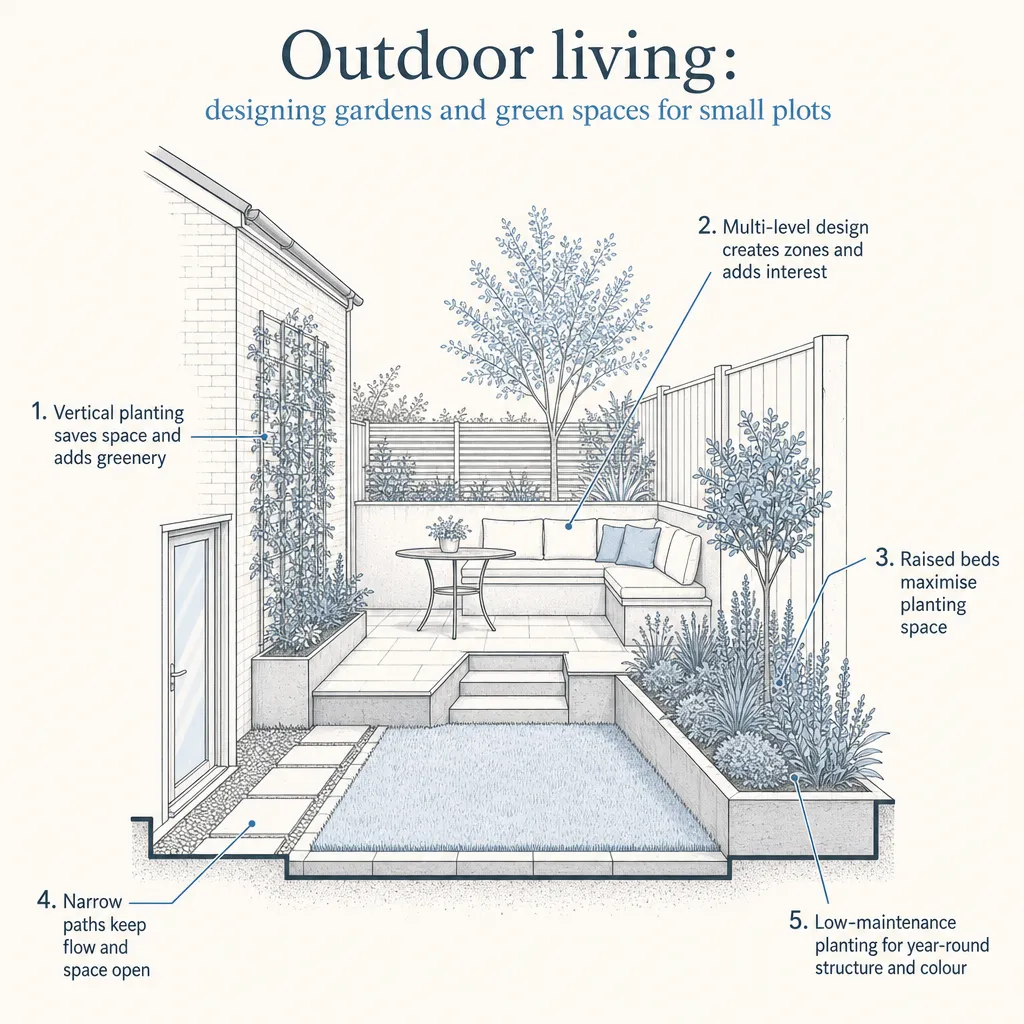
Outdoor living: designing gardens and green spaces for small plots
Small plots are one of the most common challenges facing UK homeowners, particularly in terraced houses, Victorian cottages, and new-build developments where rear gardens may measure less than 30m². Whether you have a narrow side return, a courtyard, or a modest suburban patch, the constraints of limited space sharpen every design decision — from which direction the sun tracks to whether a raised bed or a paved seating area will serve you better year-round. Getting the fundamentals right early prevents the familiar cycle of spending money on materials that then need to be redone once drainage or levels are properly addressed.
Key points
- Hard landscaping covering more than 5m² in a front garden requires permeable materials or a drainage plan under Schedule 2 of the Town and Country Planning (General Permitted Development) Order 2015, or planning permission may be needed.
- Permitted development allows most outbuildings and garden structures up to 2.5m in eaves height without a planning application, subject to conditions including not projecting forward of the principal elevation.
- A Society of Garden Designers (SGD) or BALI-registered garden designer typically charges £500–£2,000 for a concept plan and planting scheme for a small garden (indicative UK costs, last reviewed 2026-05-31; fees vary by location and complexity).
- Decking or paving covering more than 50% of a garden can worsen surface water run-off and may affect buildings insurance if it contributes to flooding — the CIRIA SuDS Manual C753 provides guidance on compliant hard surfaces.
- North-facing plots are routinely underestimated: RHS guidance confirms that shade-tolerant perennials including astrantia, ferns, and hellebores can thrive and provide year-round structure even with minimal direct sun.
How to divide a small garden into functional zones
The most common mistake in a small plot is treating it as one undifferentiated space. Defining zones — even loosely, through materials, planting, or a change in level — creates the impression of depth and gives each area a clear purpose. A plot of 30m² can comfortably hold a dining surface, a planting border, and a utility corner without feeling cluttered, provided each area is defined before the first paving slab is laid.
Typical zones for a small UK garden:
- Seating or dining area: usually closest to the house for easy access; paving, decking, or a gravel pad all work well.
- Planting beds: raised or at ground level; even 40cm-deep borders can support substantial perennials and soft fruit.
- Utility area: bin storage, compost, tool storage — ideally screened with trellis or a low hedge but kept accessible.
- Children's or activity zone: if needed; rubber tiles, a flexible paved surface, or a small grass panel.
In a plot of fewer than 25m², combining two zones — a dining area surrounded by raised beds, for instance — often produces better results than attempting to separate all four.
Zone planning decision tree
- Choose a paved dining area close to the kitchen door if outdoor eating is the main priority; keep planting to raised edges and vertical surfaces.
- Choose structural shrubs and gravel if low maintenance matters most; avoid a lawn in confined spaces, which requires regular mowing year-round.
- Prioritise rubber-bonded gravel or a durable hard surface in the activity zone if children or pets are a primary consideration; use raised beds at adult height to keep plants separate from play areas.
- Go lawn-free with native planting if biodiversity is important; a small water feature and a log pile can dramatically increase wildlife value in even a 20m² plot — consult RHS Plants for Pollinators guidance for suitable plant lists.
- If the space is an awkward shape, has multiple levels, or previous attempts have not worked, commission a concept drawing from a professional garden designer before purchasing further materials.
Vertical gardening and planting for limited ground space
When horizontal space runs out, vertical surfaces are the most underused asset in a small garden. Boundary walls, close-board fences, and the rear elevation of the house all offer growing space with no ground footprint.
Options include:
- Wall-mounted planter systems: modular pockets or rails fixed to fencing or masonry; well-suited to herbs, strawberries, and compact perennials.
- Trained climbers: wisteria, climbing hydrangea, and thornless roses can clothe an entire boundary wall within three to five years from modest ground planting.
- Trellis panels: extend height above an existing fence line. Note: fence extensions that take the total height above 2m on a boundary adjacent to a highway may need planning permission — check with your local planning authority.
- Espalier fruit trees: trained flat against a wall; productive in surprisingly small spaces and well-suited to south- or west-facing aspects.
Planting by aspect: suitability table
Aspect | Suitable plants | Notes |
|---|---|---|
South-facing | Lavender, salvia, agapanthus, fig | High sun exposure; drought-tolerant choices perform well |
North-facing | Ferns, hostas, astrantia, hellebores | Often underestimated; shade plants can be structural and lush |
East-facing | Roses, hardy geraniums, camellias | Morning sun; avoid tender plants susceptible to late frost |
West-facing | Clematis, dahlias, most vegetables | Afternoon sun; generally most productive for a kitchen garden |
Hard and soft landscaping: what works in small plots
The ratio of hard to soft surface is the single biggest decision in a compact garden. In the UK's temperate climate, an all-paved courtyard can feel unwelcoming for much of the year, while an all-grass plot may be impractical in heavy shade or high-footfall situations.
Small-garden hard landscaping: material comparison
Material | Best for | Watch out for |
|---|---|---|
Natural stone paving | Durability, appearance, long-term value | Higher installed cost (£80–£150/m², indicative 2026-05-31); quality varies widely |
Porcelain tiles | Low maintenance, contemporary finish | Slippery when wet; needs professional installation on a mortar bed |
Timber decking | Warmth underfoot; accessible DIY at low level | Requires regular treatment; can be slippery; fire risk close to a structure |
Gravel | Drainage, low cost, permeable surface | Needs solid edging to contain it; can scatter into borders |
Artificial grass | Consistent appearance, child- and pet-friendly | Drainage depends on base preparation; environmental concerns; not genuinely zero-effort |
For front gardens specifically, the Town and Country Planning (General Permitted Development) Order 2015 restricts impermeable surfaces over 5m² — use permeable paving or route drainage to a lawn or border to remain within permitted development.
Choosing between DIY, a landscaper, and a garden designer
Not every small garden project needs a professional. The right specialist adds the most value where drainage, changes in level, structural features, or detailed planting design are involved.
Which professional do I need?
Scenario | Suggested route |
|---|---|
Refreshing planting or adding containers | DIY with RHS guidance; or a one-off planting consultation |
New patio, decking, or raised beds | Local landscaper for construction; many offer a basic layout service |
Awkward plot shape, significant levels, or a full redesign | Professional garden designer for a concept plan first, then a landscaper to build |
Large trees to prune, remove, or assess before excavation | Qualified tree surgeon before any groundworks near the root zone |
Trees with a Tree Preservation Order (TPO) or in a conservation area | LPA consent required before any work — instruct a tree surgeon with TPO experience |
When to get professional help
Most small garden projects are straightforward. Seek professional advice when:
- The site has a level change of more than 600mm requiring a retaining wall — these may need structural input or building regulation compliance depending on height and loading.
- Mature trees are within 5m of planned excavations — root protection is both a legal and practical concern.
- A Tree Preservation Order is in place or the property is in a conservation area — unauthorised tree work carries a fine under the Town and Country Planning Act 1990.
- You intend to alter boundary walls forming part of a listed building or scheduled monument.
- Persistent drainage problems — pooling water or very slow drainage after rainfall — suggest an underlying issue that a surface treatment alone will not resolve.
How Housey can help
Whether you need a concept drawing for an awkward courtyard or a full team to design and build a new outdoor space, Housey connects you with vetted garden designers and landscapers in your area. For sites with established trees or Tree Preservation Orders, Housey also lists tree surgeons experienced in working around root zones and within conservation areas.
Frequently asked questions
Do I need planning permission for decking in my back garden?
In most cases, rear garden decking does not need planning permission if it is no more than 300mm above ground level and covers no more than 50% of the garden area, under Schedule 2 of the Town and Country Planning (General Permitted Development) Order 2015. Permitted development rights may be removed in conservation areas or for listed buildings. Check with your local planning authority before starting work.
How much does a garden designer cost for a small plot?
Indicative UK fees for a concept design and planting plan for a small garden (under 50m²) range from £500 to £2,000, last reviewed 2026-05-31. Fees vary by designer experience and location. Many designers offer an initial consultation for £100–£300. Look for membership of the Society of Garden Designers (SGD) or British Association of Landscape Industries (BALI) when comparing quotes.
Can I build a shed in a small garden without planning permission?
Most rear garden outbuildings are permitted development if they are single-storey with a maximum eaves height of 2.5m and do not cover more than 50% of the land around the original house. The structure must not project forward of the principal elevation or sit within 2m of a boundary if over 2.5m tall. Different rules apply in conservation areas, National Parks, and AONBs — verify with your local planning authority.
What is the best low-maintenance planting for a small UK garden?
Structural shrubs and gravel gardens offer the lowest maintenance in small UK plots. Reliable choices include sarcococca, pittosporum, and ornamental grasses such as pennisetum. Avoid bamboo in confined beds close to walls or foundations, as roots can cause long-term damage. For north-facing plots, ferns, hellebores, and astrantia are dependable performers requiring minimal intervention once established.
Sources and further reading
- Town and Country Planning (General Permitted Development) Order 2015, Schedule 2 — legislation.gov.uk
- RHS Plants for Pollinators — Royal Horticultural Society
- Planning Portal: Outbuildings permitted development guide — Planning Portal
- CIRIA SuDS Manual C753 — CIRIA
- Society of Garden Designers — Society of Garden Designers
Useful next reads
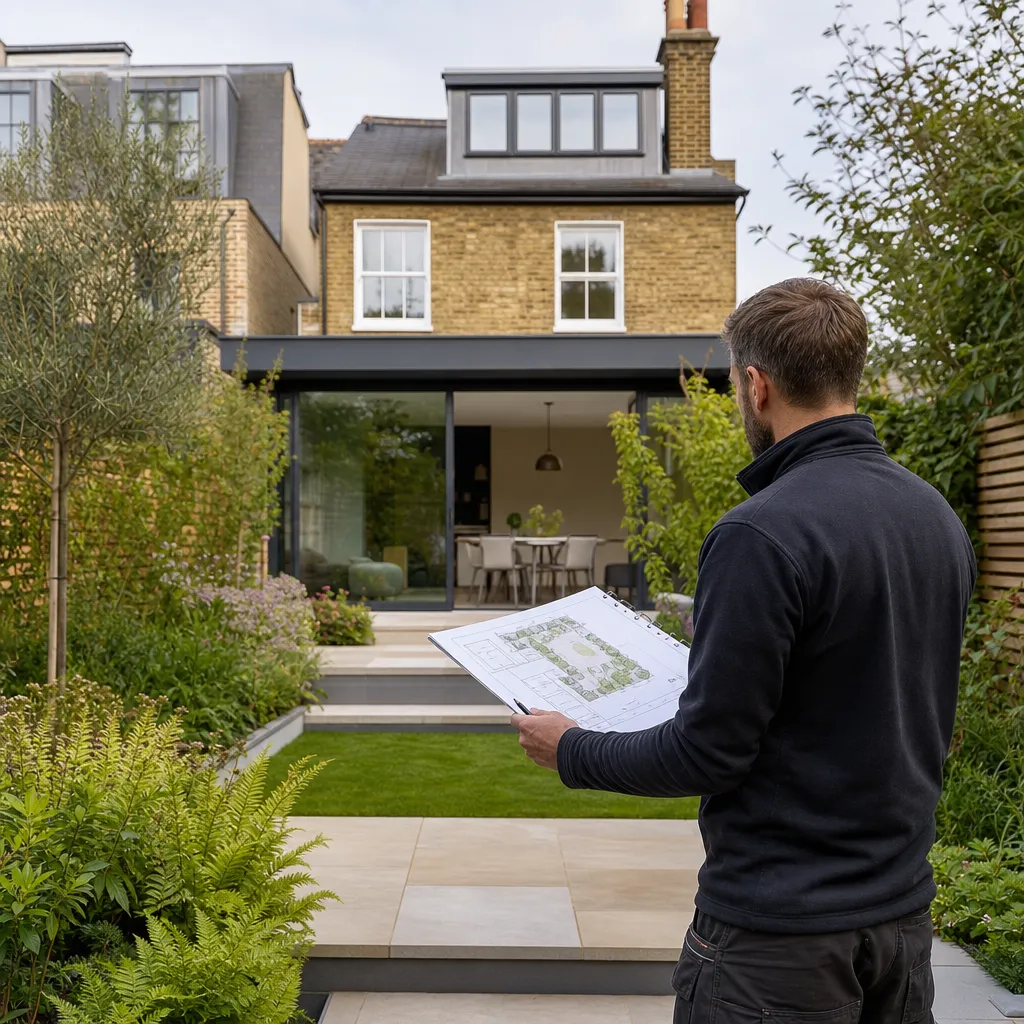 Improvement & Build
Expert advice for garden design and outdoor space planning
Effective garden design begins with a site assessment — soil type, aspect, drainage, and existing trees — before any planting or layout decisions are made.
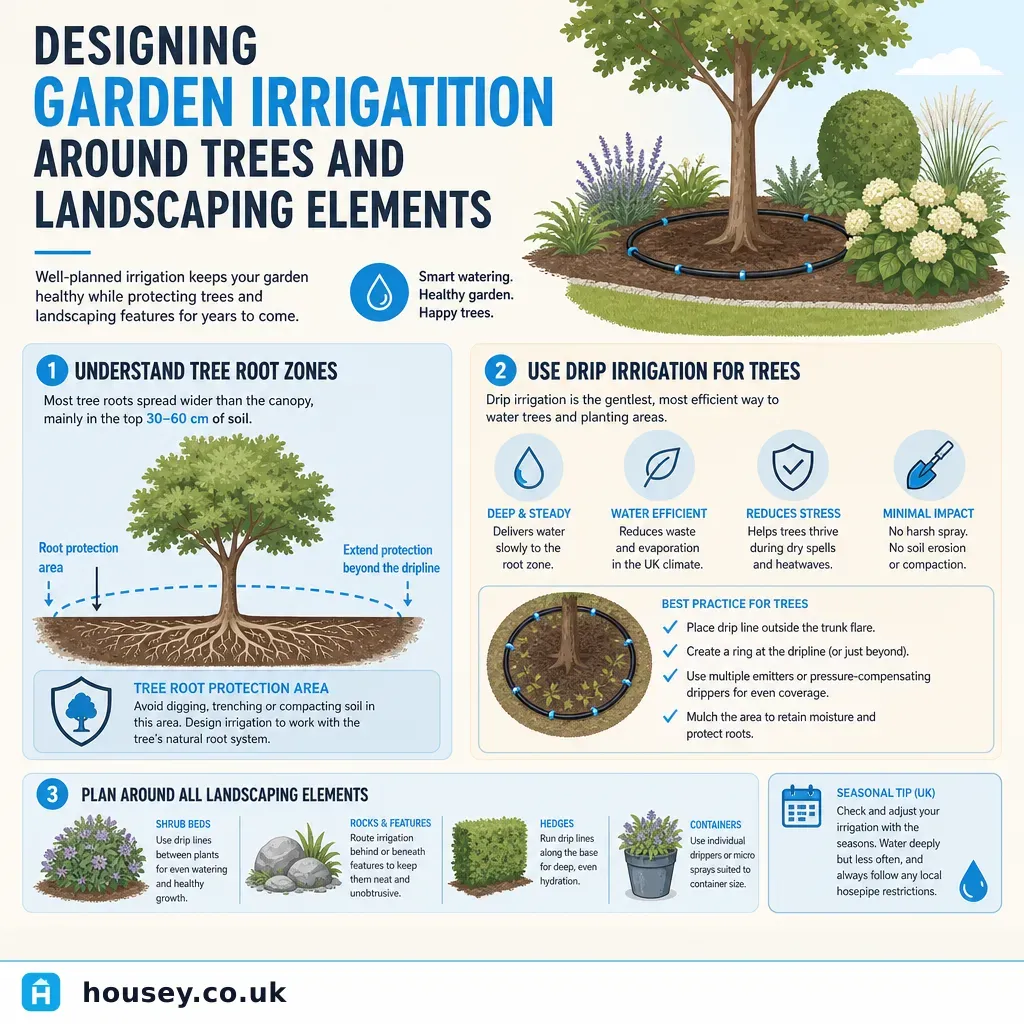 Improvement & Build
Designing Garden Irrigation Around Trees and Landscaping Elements
Design irrigation around trees by respecting the root protection area defined under BS 5837:2012, using drip or leaky pipe delivery rather than spray heads, and putting the tree zone on its own circuit.
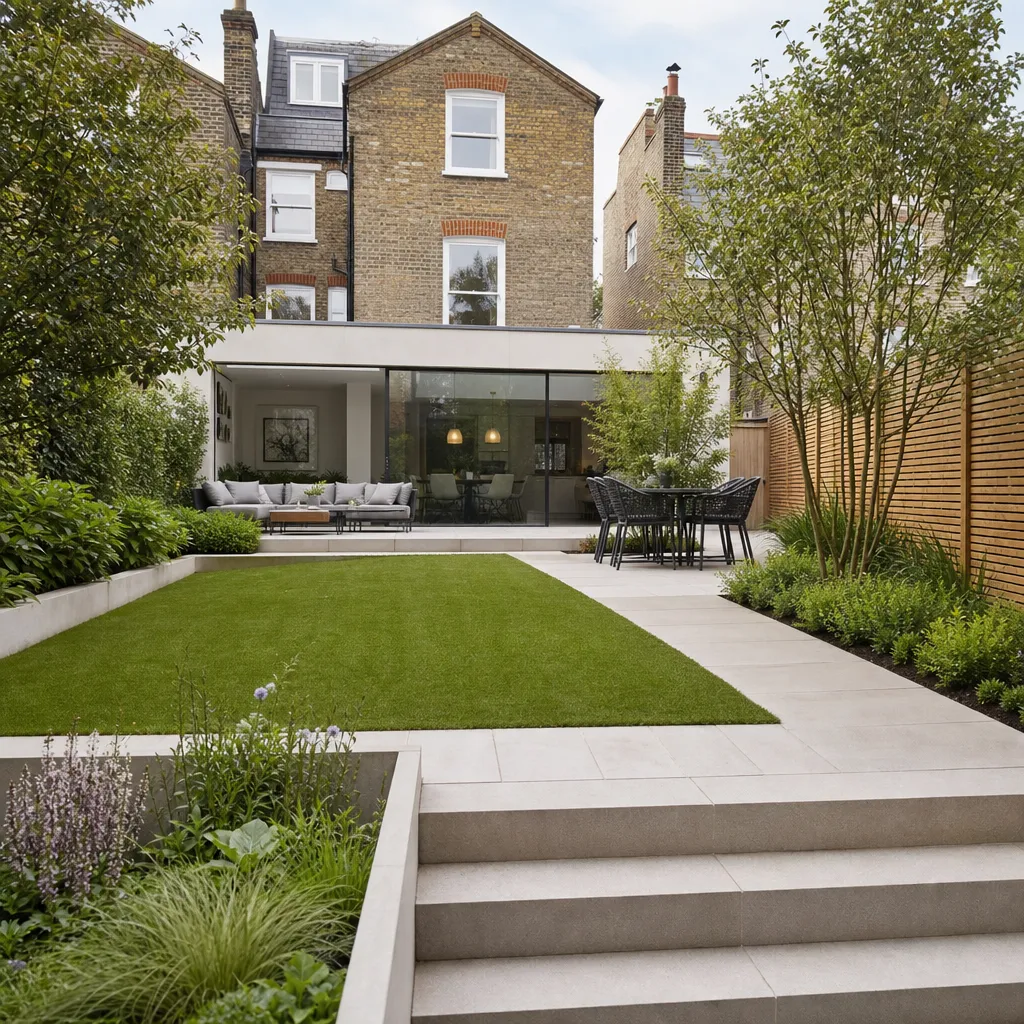 Improvement & Build
Garden Design Trends and Contemporary Landscaping Ideas
Contemporary UK garden design centres on low-maintenance naturalistic planting, multi-functional outdoor spaces, sustainable hard landscaping materials, and wildlife-friendly rewilded areas.
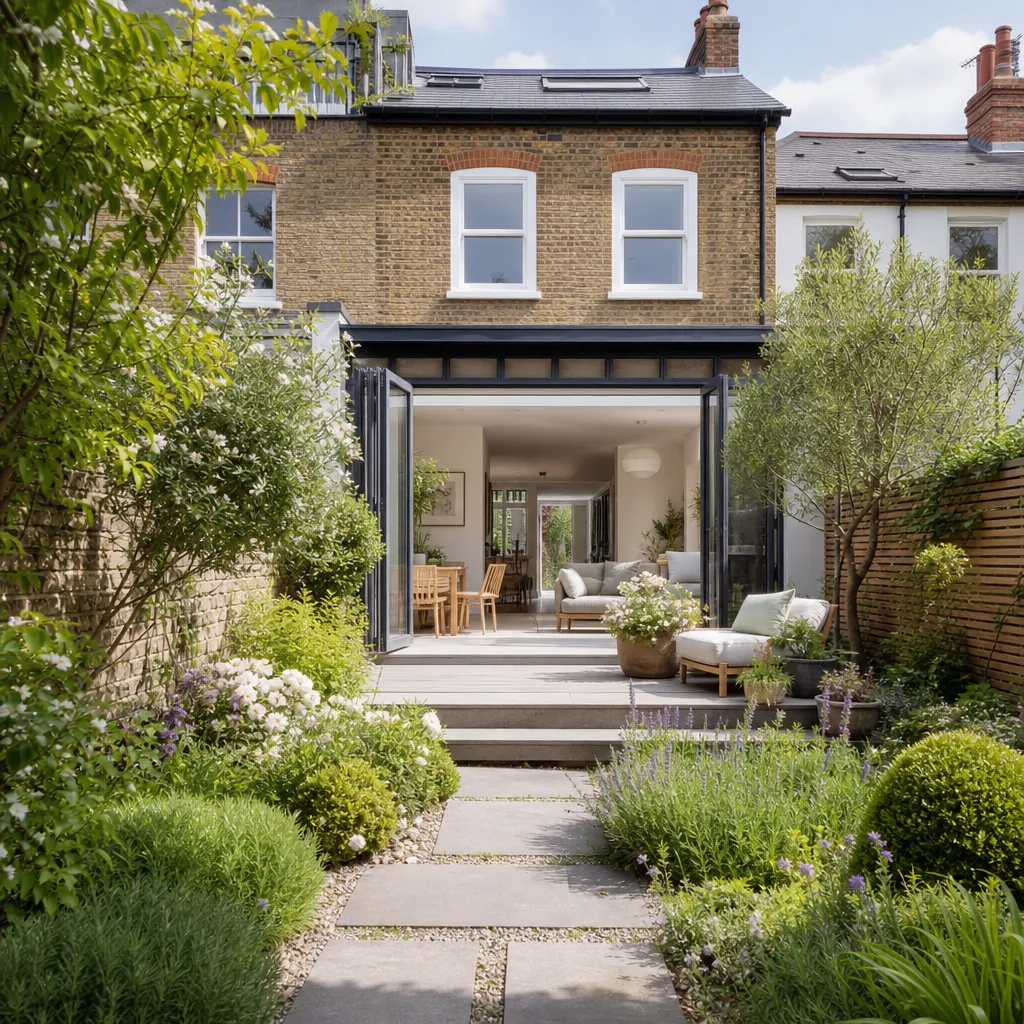 Improvement & Build
Spring Garden Transformations: Design Ideas to Enhance Your UK Property
Spring is the best time to transform a UK garden, with mild temperatures and longer days ideal for planting and landscaping.
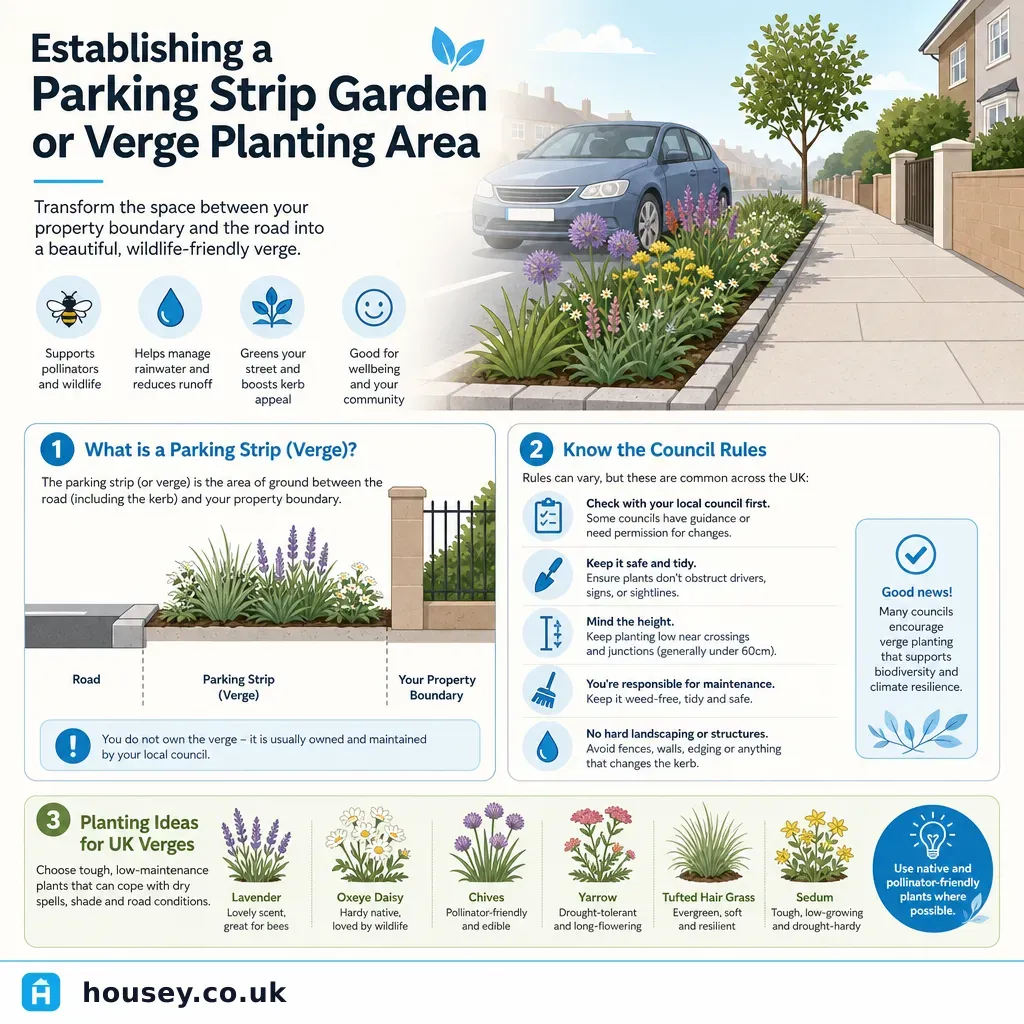 Improvement & Build
Establishing a Parking Strip Garden or Verge Planting Area
A parking strip or verge sits between your garden boundary and the road.