Expert advice for garden design and outdoor space planning
By Housey · Last reviewed 30th of May 2026
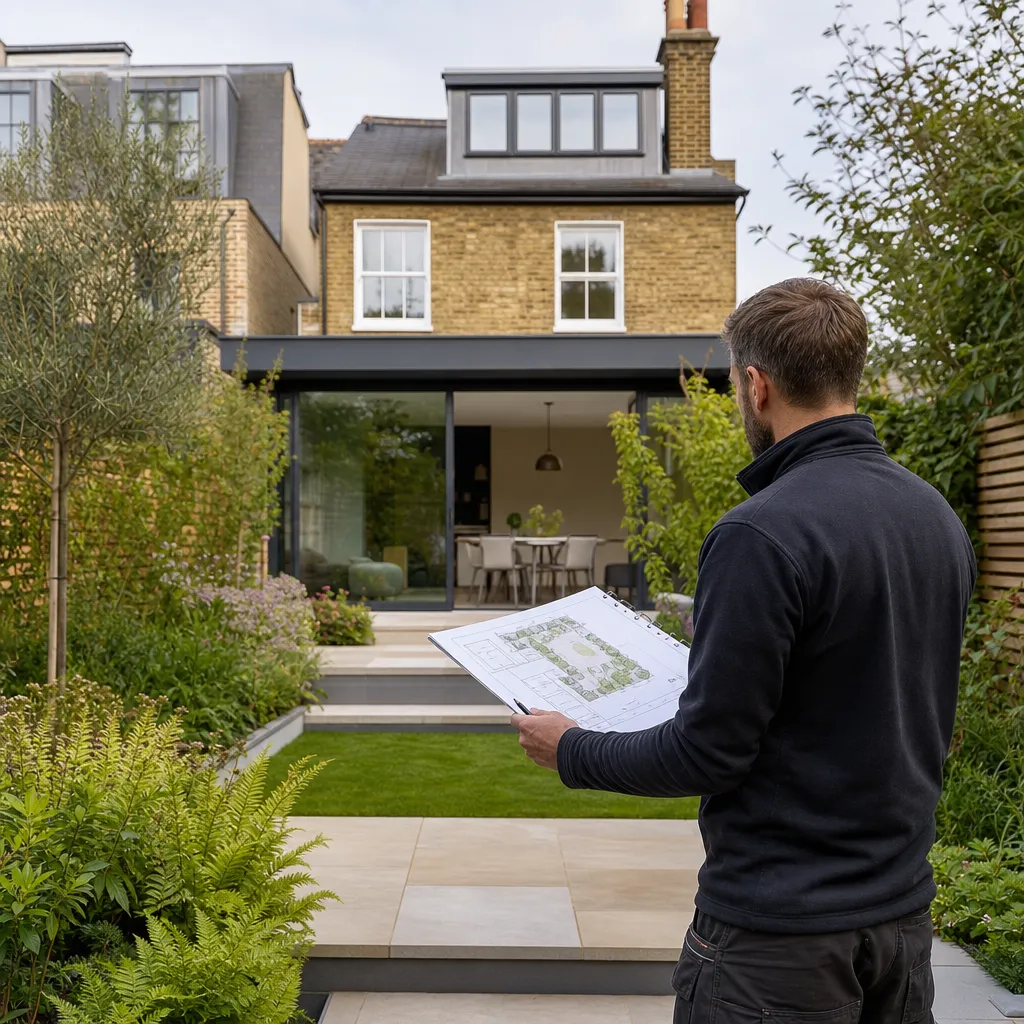
Expert advice for garden design and outdoor space planning
A well-designed outdoor space can meaningfully extend a UK home's usable footprint and improve its saleability — yet garden projects are among the most frequently underplanned home improvements. Whether you are starting from scratch on a new-build plot, reworking a tired Victorian rear garden, or redesigning the grounds of a rural property, the gap between a result you are proud of and an expensive redo usually comes down to the design process rather than the planting list. Getting the sequence right — assess first, design second, build third — sets every subsequent decision on firmer ground.
Key points
- A full garden design package (site survey, concept design, detailed drawings, planting plan, materials specification) typically costs £1,500–£5,000 before any construction begins; build costs are entirely separate and vary by scope and materials choice.
- Planning permission is not required for most garden works under permitted development rights, but excavations, raised structures, and works to listed buildings or within Conservation Areas may need consent from your local planning authority.
- Trees subject to a Tree Preservation Order (TPO) or located within a Conservation Area require at least 6 weeks' written notice to the local authority before any pruning or felling; failure to comply is a criminal offence under section 211 of the Town and Country Planning Act 1990.
- New impermeable hard surfaces over 5m² in front gardens in England require a permeable surface or adequate drainage provision under the Town and Country Planning (General Permitted Development) Order 2008.
- The Society of Garden Designers (SGD) and the Chartered Institute of Horticulture (CIH) are the principal UK professional bodies for garden designers; membership indicates a minimum standard of training and professional practice.
What does a garden designer actually do?
A garden designer assesses your outdoor space, understands your priorities and maintenance appetite, and produces a design proposal addressing layout, planting, materials, lighting, drainage, and construction phasing. Depending on scope and fee, the output typically includes:
- An initial site survey and client brief document
- A concept design (sketch or mood-board stage)
- A detailed design with scaled drawings (plan view and, for more complex schemes, elevations)
- A planting plan with named species, quantities, and spacing
- A materials and hard landscaping specification
- Construction notes and a phasing plan if budget requires staged delivery
Some designers also provide project management during the build phase; others hand over drawings and leave construction to a landscaper of your choice.
Garden designer vs landscaper: what is the difference?
Role | What they do | Best for | When you may not need them |
|---|---|---|---|
Garden designer | Produces design brief, scaled drawings, plant schedule, and materials spec | Complex schemes, significant budgets, starting from scratch | Simple lawn restoration, single-trade jobs |
Landscaper | Executes hard and soft landscaping works (patios, paths, planting, drainage) | Implementing an existing design or straightforward construction | Design input, plant expertise |
Horticulturist / planting designer | Specialises in plant selection, soil health, and maintenance plans | Naturalistic or wildlife schemes, formal borders | Hard landscaping and structural design |
Tree surgeon | Removal, pruning, crown reduction, and tree safety assessments | Existing trees including TPO trees | New planting, paving, or general garden layout |
For most significant garden projects, the most effective approach is to engage a designer first, then use their drawings as a brief for landscaper quotes. This separates the creative specification from the build price and avoids a common pitfall: a contractor who designs what is easiest and cheapest for them to construct.
How to plan a garden project step by step
Step 1: Assess what you have Walk the space at different times of day and, where possible, in different seasons. Note where sunlight falls, where the ground stays wet after rain, where existing trees cast shade, and where you naturally want to spend time. Photograph from the house looking out and from the boundary looking back.
Step 2: Define your brief A garden designer will typically ask: How do you use the space? Who uses it — adults, children, dogs? Do you want to garden actively or keep maintenance minimal? What is your approximate budget for design and build? Are there specific features you need — a kitchen garden, a lawn, a seating terrace, a pond?
Step 3: Understand constraints before designing Before committing to any layout:
- Check whether any existing trees are subject to a TPO via your local planning authority's online register.
- If the property is in a Conservation Area, confirm whether planned works require conservation area consent.
- Establish drainage conditions — sustainable drainage (SuDS) may be required for new impermeable surfaces under Schedule 3 of the Flood and Water Management Act 2010 in England.
- Identify your soil type (clay, sandy, chalky, loamy) — this determines plant viability and whether soil improvement is needed before planting.
Step 4: Commission design before build Obtain scaled drawings before approaching landscapers for quotes. All contractors can then price the same specification, and you control what gets built rather than accepting whatever a contractor proposes.
Step 5: Get three quotes for build work A reliable landscaper will provide a written, itemised quote covering groundworks, paving, planting, fencing, drainage, and any specialist features. Ask for a timeline, a payment schedule, and confirmation of who carries out any specialist trade work.
Step 6: Phase if budget is constrained A good garden designer will produce a master plan deliverable in phases. Phase one typically covers structure and hard landscaping; phase two, planting and soft landscaping; phase three, features such as lighting, irrigation, or water elements.
What to ask before hiring a garden designer
- Are you a member of the Society of Garden Designers (SGD) or the Chartered Institute of Horticulture (CIH)?
- Can I see a portfolio of completed projects of similar scale, style, or property type?
- What does your fee cover — site survey, concept, detailed drawings, planting plan, materials specification?
- Do you project-manage construction, or do you hand drawings to a contractor?
- Will your drawings be in a format that contractors can price and build from?
- What are your payment terms, and what happens if I request revisions after the design is agreed?
- Are you independent, or do you receive referral fees from specific landscapers or suppliers?
Red flags when hiring a landscaper
Watch for the following warning signs before instructing any landscaping contractor:
- Unwillingness to provide a written, itemised quote — insisting on a lump sum with no breakdown.
- Requesting a cash deposit exceeding 25–30% of the total contract value before work begins.
- No client references, reviews, or local portfolio of completed work available for inspection.
- Pressure to begin work immediately without time for you to compare other quotes.
- No discussion of waste disposal — all excavated soil and construction waste must be removed by a licensed waste carrier.
- Proposing to prune or remove a mature tree without first checking for Tree Preservation Orders.
Common garden planning mistakes to avoid
Skipping soil assessment — planting chalk-loving species in heavy clay will fail regardless of design quality. A basic soil-test kit costs under £20 from most garden centres.
Under-estimating hard landscaping costs — natural stone patios, block paving, and quality decking are typically the most expensive elements of a garden build. Allow approximately £80–£200 per square metre installed for quality paving, depending on material choice and site conditions. These are indicative UK costs, last reviewed 2026-05-30; costs vary by region and specification.
Ignoring drainage — UK gardens receive substantial and often unpredictable rainfall. Poor drainage leads to waterlogging, lawn failure, and structural damage to hard landscaping over time.
Designing without a maintenance plan — a planting scheme requiring three hours of weekly attention is not a successful outcome for most homeowners. Be honest with your designer from the outset about how much time you are willing to spend.
When to get professional help
Most garden improvements benefit from at least a consultation with a qualified designer. Professional input is particularly important when:
- You are planning significant hard landscaping such as retaining walls, terracing, steps, or drainage structures.
- There are existing trees, boundary issues, or drainage problems to navigate.
- The garden is attached to a listed building or is within a Conservation Area.
- You are investing £10,000 or more in construction and want a proper design brief to protect that investment.
- The outdoor space forms part of the property's saleability or letting value.
How Housey can help
Housey connects UK homeowners with vetted garden and landscaping professionals. Get quotes from experienced garden designers who can survey your site and produce a full design package, or compare prices from local landscapers for construction work. If there are mature trees on your plot requiring assessment, pruning, or removal, our network of tree surgeons can advise on TPO requirements and carry out work safely.
Frequently asked questions
Do I need planning permission for a garden redesign?
Most standard garden works — patios, paths, lawns, planting, and most fences — do not require planning permission under permitted development rights. However, raised structures, large ponds, outbuildings, and works to listed buildings or within Conservation Areas may require consent. Check with your local planning authority if in any doubt before starting work.
How much does a garden designer cost in the UK?
Design fees typically range from £500–£1,500 for a concept or planting plan, rising to £2,000–£5,000 or more for a full package including detailed drawings, plant schedule, and materials specification. Fees vary by designer experience, project complexity, and region. These are indicative UK costs, last reviewed 2026-05-30; always request itemised quotes.
What is the difference between a landscaper and a garden designer?
A garden designer produces plans, drawings, and specifications — the creative and technical brief. A landscaper is a contractor who builds: laying paving, constructing features, and planting. The roles are complementary. Separating them gives you independent oversight and ensures all contractors quote against the same specification rather than what is cheapest for them to construct.
Should I invest in garden design before selling my house?
Low-cost improvements — clearing overgrowth, reseeding a lawn, adding potted planting, tidying borders — often provide proportionally more value than large-scale construction at the point of sale. High-cost projects rarely return their full cost through an increased sale price. If the garden is visibly neglected, staging and tidying is usually the most cost-effective approach.
Sources and further reading
- Society of Garden Designers member directory — Society of Garden Designers
- Planning permission for householders — GOV.UK
- Tree Preservation Orders and trees in conservation areas — GOV.UK
- Soil types and planting guidance — Royal Horticultural Society
- Flood and Water Management Act 2010 — legislation.gov.uk
Useful next reads
 Improvement & Build
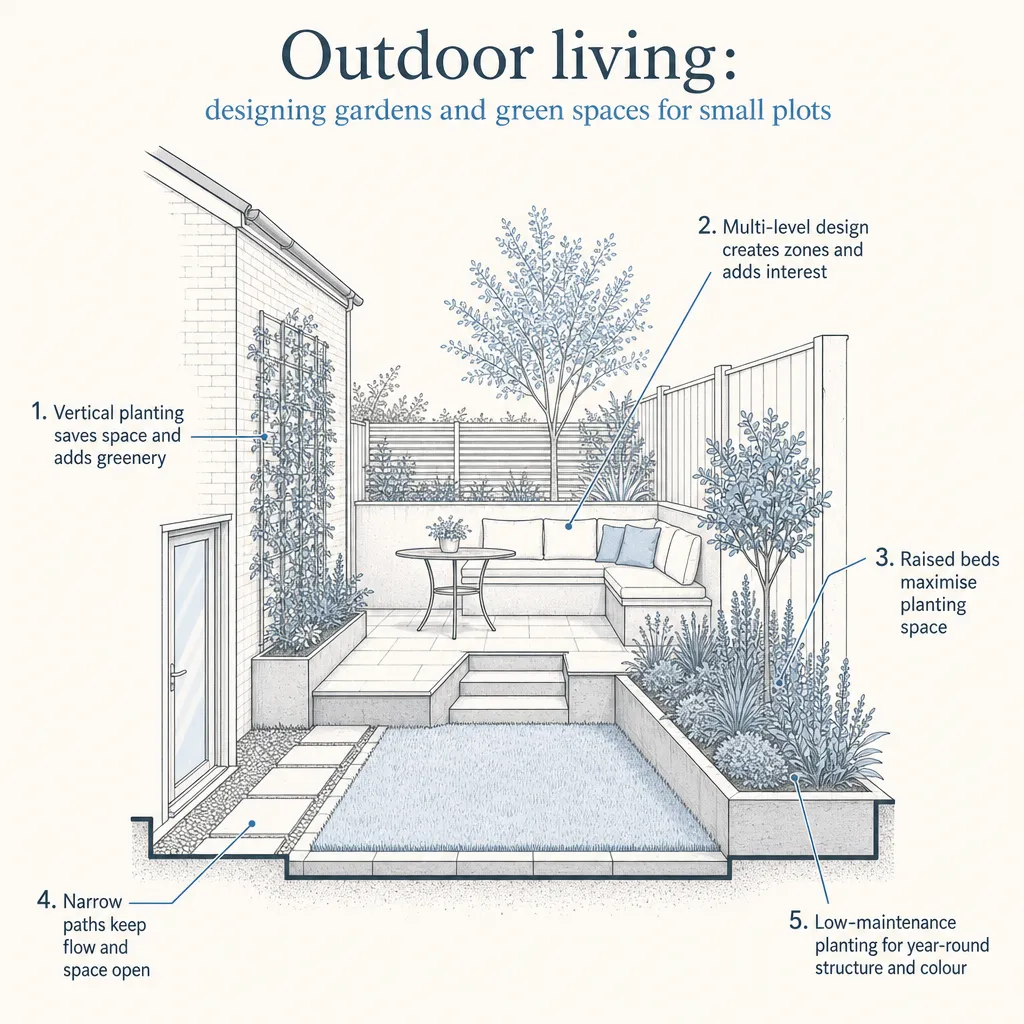
Outdoor living: designing gardens and green spaces for small plots
Small plots work best when divided into defined zones — seating, planting, and utility — before materials are chosen.
 Improvement & Build
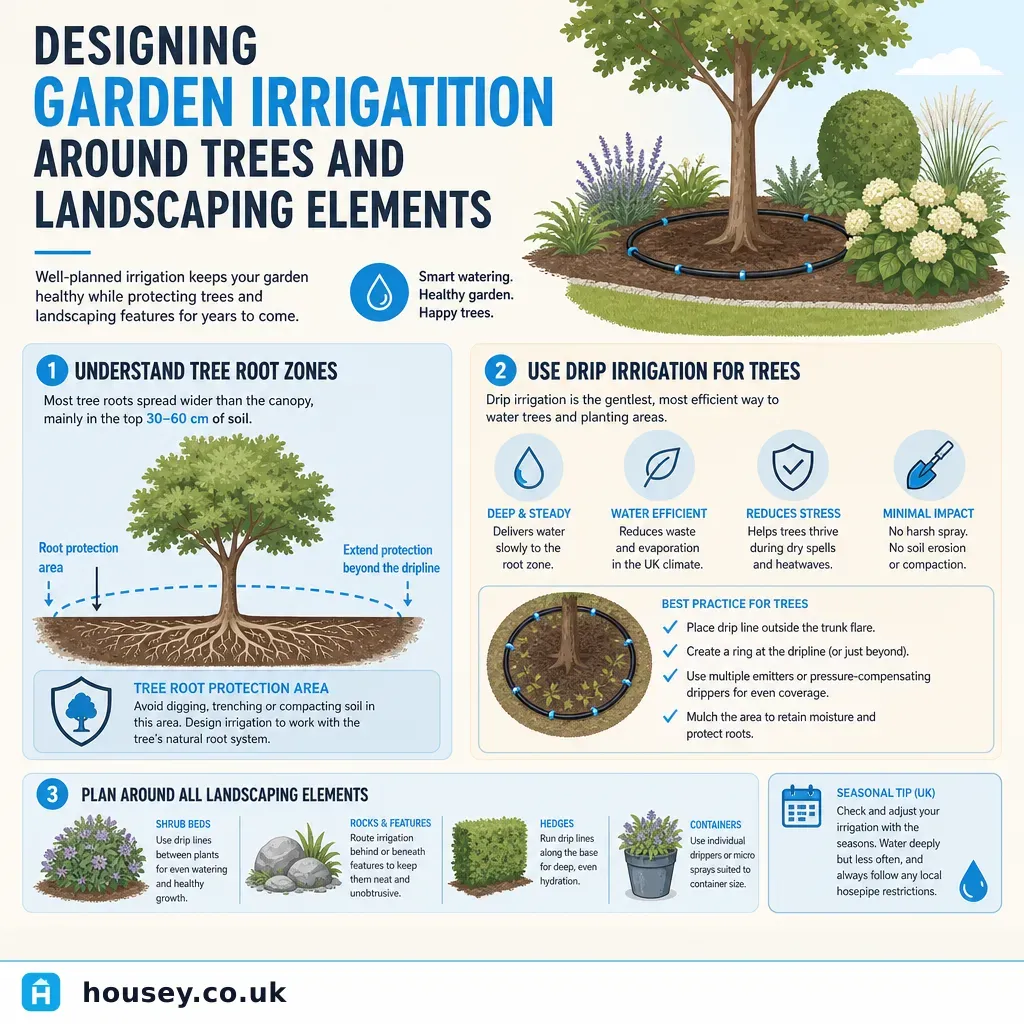
Designing Garden Irrigation Around Trees and Landscaping Elements
Design irrigation around trees by respecting the root protection area defined under BS 5837:2012, using drip or leaky pipe delivery rather than spray heads, and putting the tree zone on its own circuit.
 Improvement & Build
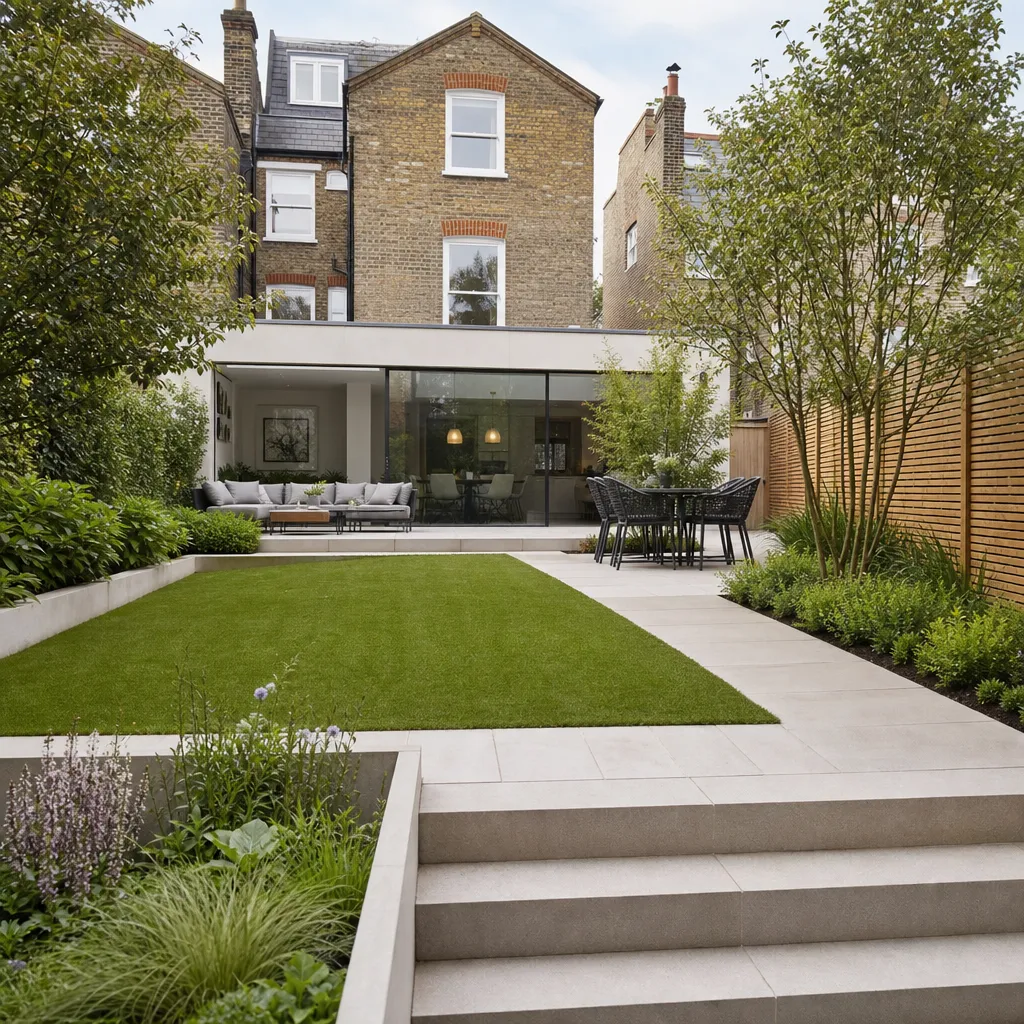
Garden Design Trends and Contemporary Landscaping Ideas
Contemporary UK garden design centres on low-maintenance naturalistic planting, multi-functional outdoor spaces, sustainable hard landscaping materials, and wildlife-friendly rewilded areas.
 Improvement & Build
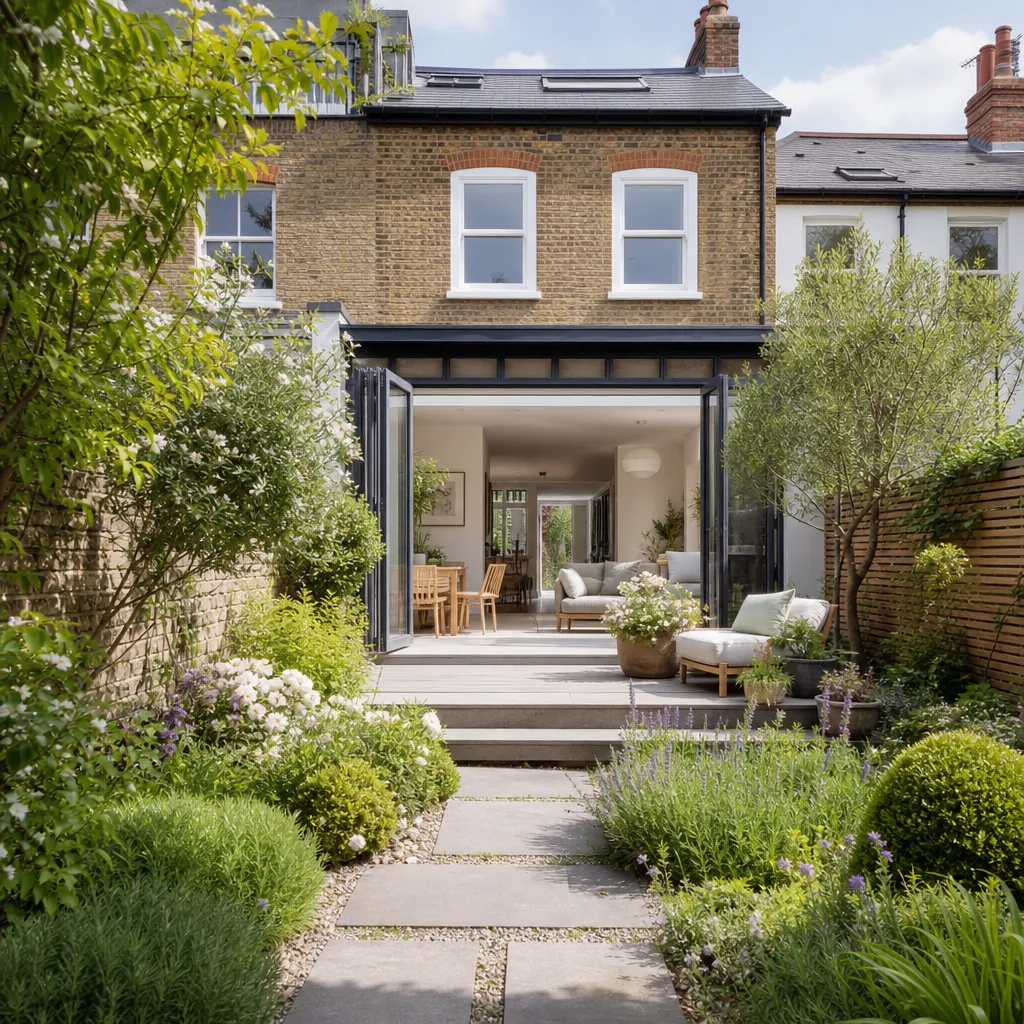
Spring Garden Transformations: Design Ideas to Enhance Your UK Property
Spring is the best time to transform a UK garden, with mild temperatures and longer days ideal for planting and landscaping.
 Improvement & Build
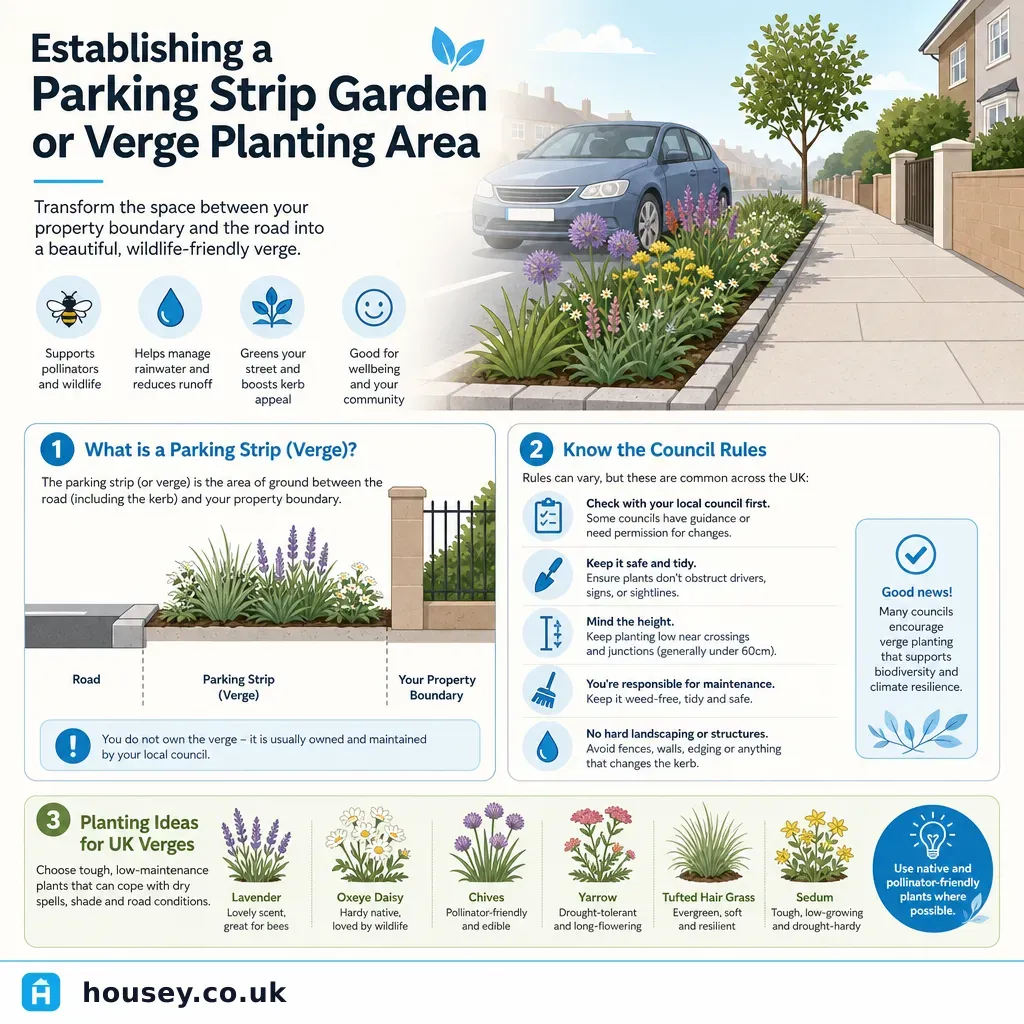
Establishing a Parking Strip Garden or Verge Planting Area
A parking strip or verge sits between your garden boundary and the road.