Creating and Maintaining Shaded Garden Spaces: Design and Planting
By Housey · Last reviewed 18th of May 2026
Creating and Maintaining Shaded Garden Spaces: Design and Planting
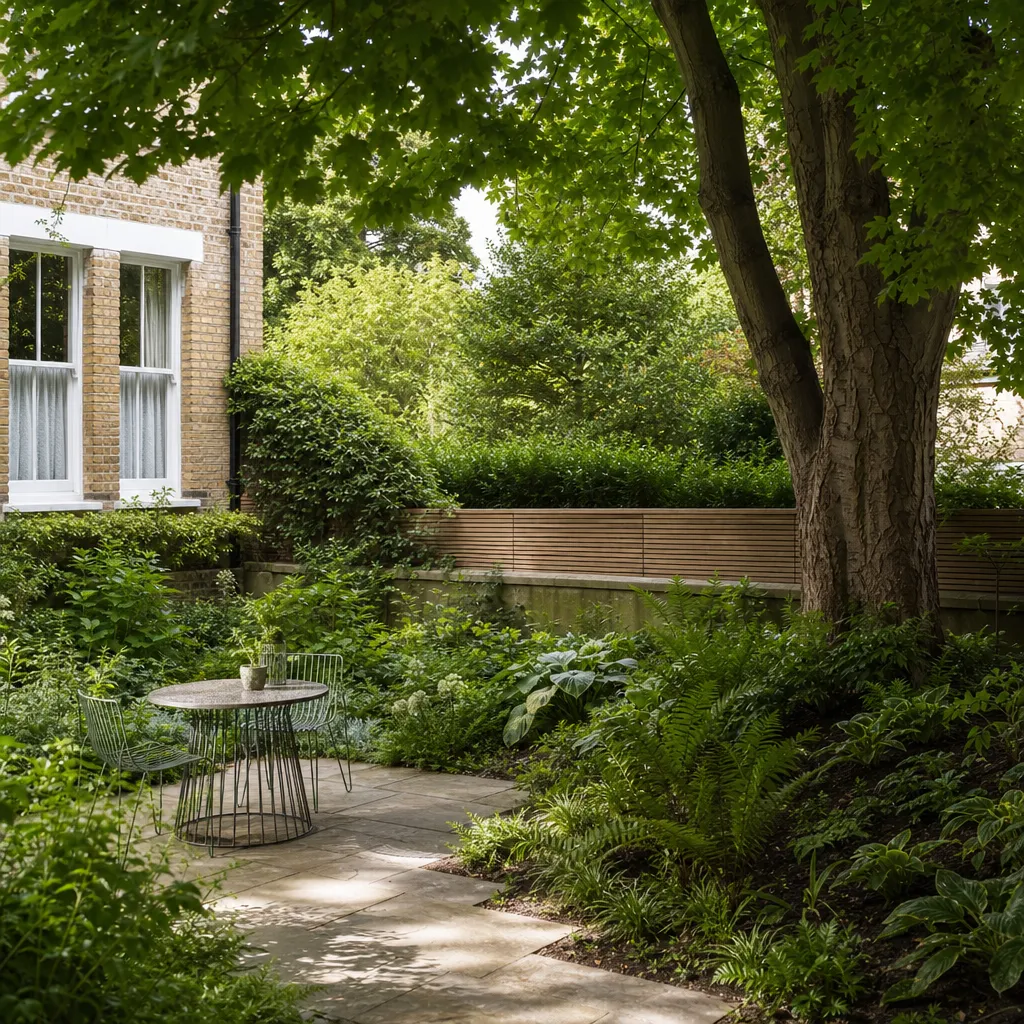
Shaded gardens are among the most common landscaping challenges in the UK, where terraced houses, mature trees, and north-facing plots create conditions that can defeat conventional planting schemes. Whether you are dealing with the deep shadow cast by a neighbour's boundary wall or the dappled canopy of an established oak, understanding your shade type is the essential starting point for any successful garden redesign.
Key points
- Shade falls into four categories — deep, partial, dappled, and dry shade — each calling for a different plant palette and soil preparation approach.
- North-facing gardens receive little or no direct sun, but many of Britain's most elegant garden plants, including hostas, ferns, and astrantias, thrive in precisely these conditions.
- Improving soil structure with organic matter is critical in shaded areas beneath trees, where roots compete aggressively for moisture and nutrients year-round.
- Light-reflective materials — pale gravel, white-painted render, mirror panels — can meaningfully increase perceived brightness in enclosed or deeply shaded courtyard spaces.
- Pruning overstory trees to raise the crown or thin the canopy can convert deep shade to dappled shade, significantly widening planting options — but may require consent if a Tree Preservation Order applies.
Understanding your shade type
Shade is not a single condition. Before choosing plants or commissioning a landscape designer, categorise the shade your plot receives.
Deep shade — fewer than two hours of direct sun per day, often below dense evergreen canopy or against a tall north-facing wall. Soil is typically dry and root-filled.
Partial shade — two to six hours of sun, usually in the morning or late afternoon. The widest range of shade-tolerant plants will succeed here.
Dappled shade — shifting, broken sunlight beneath deciduous trees. Conditions change seasonally, with bright spring light giving way to summer shadow — ideal for woodland-floor species.
Dry shade — arguably the most demanding condition, combining low light with moisture-depleted soil. Common beneath mature beeches, conifers, and ivy-covered slopes.
Which shade type do you have?
- Choose deep shade planting (ferns, epimedium, ivy, pachysandra) if your space is in shadow for most of the day.
- Choose partial shade planting (hostas, astilbe, heuchera, digitalis) if you receive morning or late-afternoon sun.
- Choose woodland planting (bluebells, wood anemone, pulmonaria, Solomon's seal) if you have dappled light beneath deciduous trees.
- Ask a tree surgeon to assess crown-lifting or thinning if you want to shift from deep to dappled shade.
- Consult a garden designer if you want to combine hard landscaping with planting for a coherent overall scheme.
Shade-tolerant plants for UK gardens
Plant | Shade tolerance | Best for | Soil preference | Notes |
|---|---|---|---|---|
Hosta | Deep to partial | Foliage interest, containers | Moist, humus-rich | Slugs a persistent issue |
Astilbe | Partial | Summer colour, damp borders | Reliably moist | Needs consistent moisture |
Epimedium | Deep, dry shade | Ground cover under trees | Dry, poor | Highly drought-tolerant once established |
Fern (Polystichum/Dryopteris) | Deep to dappled | Texture, year-round structure | Any moist soil | Many are evergreen |
Digitalis (foxglove) | Partial | Height, cottage planting | Free-draining | Biennial; self-seeds freely |
Heuchera | Partial to dappled | Coloured foliage | Well-drained | Wide colour range; slug-resistant |
Pulmonaria | Dappled | Early spring flower | Moist, humus-rich | Attractive to pollinators |
Pachysandra | Deep | Dense evergreen cover | Any | Spreads to suppress weeds |
Camellia | Partial | Evergreen shrub, spring flower | Acid, moist | Avoid east-facing walls (frost-damage risk) |
Rhododendron | Partial to dappled | Large shrub, woodland feel | Acid, humus-rich | Invasive in some regions; check before planting |
Soil preparation in shaded areas
The soil beneath trees and beside walls behaves very differently from open-border soil. Root competition from mature trees depletes moisture and nutrients year-round, and heavy shade reduces the leaf-litter decomposition that normally improves soil structure.
Before planting under an established tree:
- Remove any compacted surface layer and loosen the top 15–20 cm, taking care not to sever large surface roots.
- Incorporate well-rotted leaf mould or composted bark rather than fresh compost, which can compact in low-light conditions.
- Avoid heavy clay-ameliorating techniques such as deep cultivation that would damage tree roots.
- Consider raised planting pockets using timber edging or dry-stone retaining walls, which allow a growing medium to be built up above the root zone.
- Mulch generously each spring — a 5–7 cm layer of composted bark retains moisture and suppresses weeds without disturbing roots.
Hard landscaping options for shaded spaces
Shade affects not just planting but the choice and maintenance of hard surfaces. Moist, shaded paving is prone to algae and moss; some materials perform considerably better than others.
Better-performing materials in shaded conditions:
- Brushed concrete or textured porcelain — inherently slip-resistant and easy to clean with a pressure washer.
- Resin-bound gravel — permeable and algae-resistant; pale colours reflect available light.
- Riven sandstone or granite setts — durable with natural grip that persists when wet.
Materials to use with caution in shaded conditions:
- Smooth limestone or polished marble — becomes dangerously slippery when wet or mossy.
- Timber decking — requires regular treatment and anti-slip strips in persistently shaded, damp situations.
- Brick paviors — prone to moss in continuous shade; regular biocide treatment is needed.
Pale-coloured walls, rendered in white or light grey, can make a significant difference to perceived brightness in an enclosed shaded courtyard, reducing the need for artificial lighting during the day.
Maintenance checklist for shaded gardens
- Spring: Apply mulch under trees before new growth; divide hostas and astilbes if clumps are overcrowded; clear spent winter foliage from ferns.
- Late spring: Check for slug damage on hostas and pulmonaria; apply wildlife-friendly deterrents.
- Summer: Water newly planted shade plants through dry spells — shade does not mean drought-tolerant; weed regularly before competition establishes.
- Autumn: Plant spring-flowering woodland bulbs (bluebells, wood anemone, erythroniums); remove fallen leaves from paving promptly to prevent slipping.
- Winter: Protect borderline-hardy specimens such as tree ferns and camellias with horticultural fleece; check paving surfaces for moss build-up and treat as necessary.
When to get professional help
Most shade-garden planting is within the reach of an enthusiastic homeowner, but some situations call for professional input:
- If you need to work on or near trees protected by a Tree Preservation Order (TPO) — the local planning authority must be consulted before any pruning or felling. Unauthorised work is a criminal offence under the Town and Country Planning Act 1990.
- If a tree is in a conservation area, the local authority must be notified before significant works even without a TPO.
- If you want to redesign a substantial shaded area combining hard landscaping and planting — the interdependencies between drainage, soil preparation, and plant selection repay the cost of professional design.
- If a tree appears diseased, structurally unsound, or is encroaching on foundations or drains, a qualified arborist should assess it before any work is carried out.
How Housey can help
Housey connects you with experienced local garden designers who can assess your shade conditions and produce a planting scheme tailored to your soil type and aesthetic brief. For tree work — crown-lifting, thinning, or TPO-affected trees — our network of qualified tree surgeons can advise safely and in compliance with planning requirements. For larger projects combining hard landscaping, drainage, and planting, our vetted landscapers can manage the full scheme from initial assessment through to completion.
Frequently asked questions
Can I grow grass in a shaded garden?
Conventional lawn grass struggles in deep shade, becoming thin, mossy, and muddy. Shade-tolerant grass seed mixes containing fescue varieties can succeed in partial shade. For deep shade, replacing lawn with ground-cover planting, permeable gravel, or a combination of both is usually more practical and lower-maintenance long term.
Do I need planning permission to cut back a tree that shades my garden?
If the tree is covered by a Tree Preservation Order or is in a conservation area, you must notify or obtain consent from your local planning authority before pruning or felling. Check with your local council before any significant tree work. For boundary trees, you should also consider the legal position regarding shared ownership.
How can I add colour to a deeply shaded garden?
Deep shade suits foliage-led planting — the textures and colours of hostas, heucheras, ferns, and epimediums are very effective. For seasonal flower colour, spring-flowering bulbs such as snowdrops, bluebells, and erythroniums perform well before the canopy closes. White-flowered plants including astrantia and Hydrangea petiolaris stand out well in low light.
Is dry shade the hardest condition to plant?
It is widely regarded as the most challenging combination, requiring plants to tolerate low light and root competition from trees simultaneously. Reliable performers include epimedium, Geranium macrorrhizum, Luzula sylvatica, and established ivy. Thorough soil preparation and patient establishment are essential for dry shade planting to succeed.
Sources and further reading
- Plants for shade — Royal Horticultural Society
- Tree Preservation Orders and trees in conservation areas — GOV.UK
- Native woodland plants — Woodland Trust
Useful next reads
 Improvement & Build
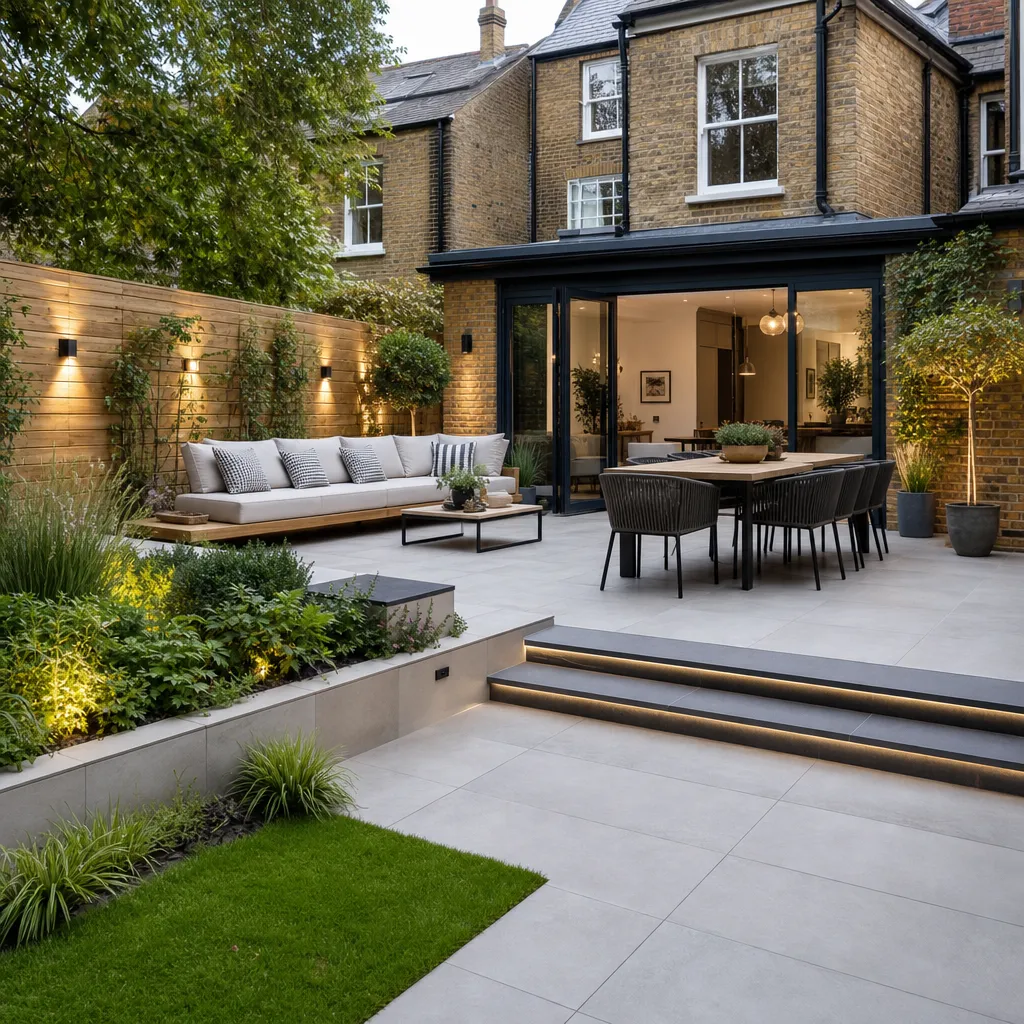
Creating Functional and Attractive Outdoor Entertainment Areas
A well-planned outdoor entertainment area combines a level surface — patio, decking, or gravel — shelter or shade, appropriate lighting, and power access if needed.
 Improvement & Build
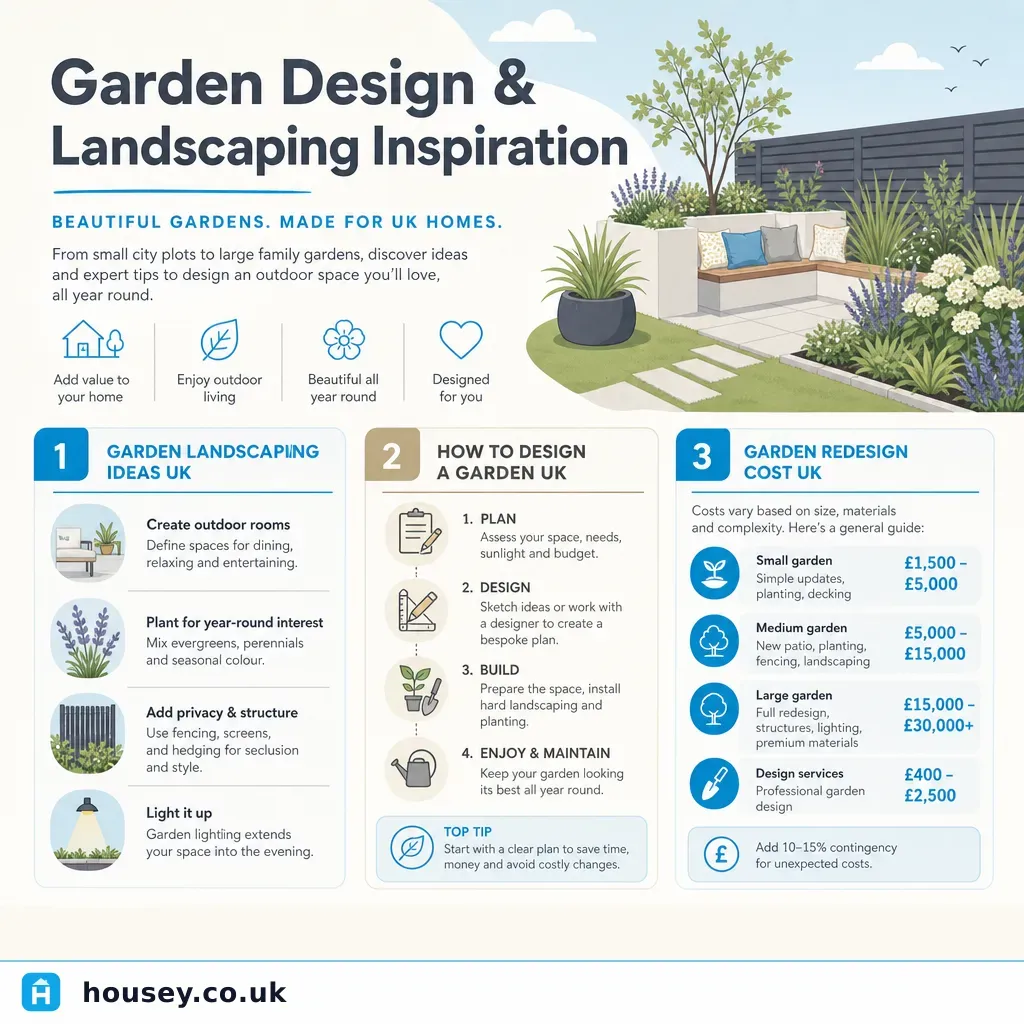
Garden Design and Landscaping Inspiration
Effective garden design starts with assessing your aspect, soil type, and existing features before commissioning any planting or hard landscaping.
 Improvement & Build
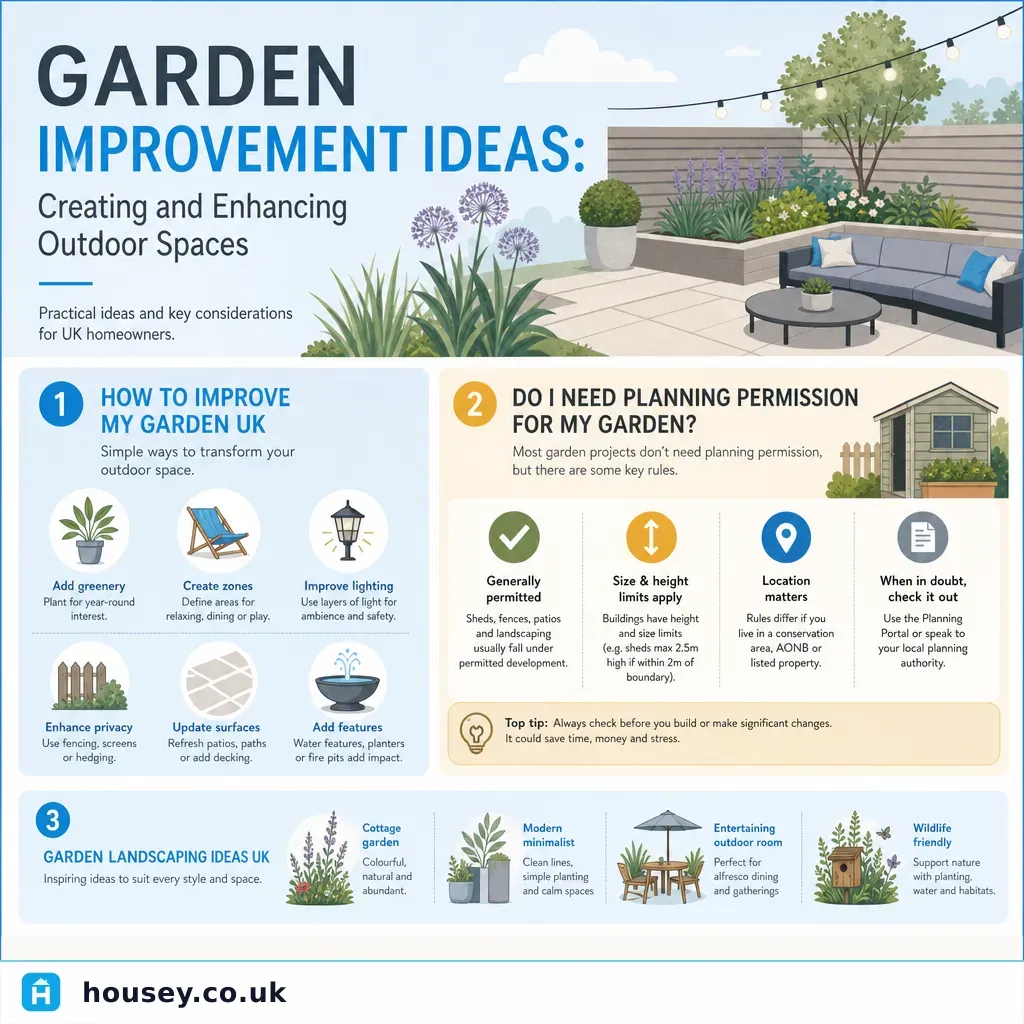
Garden Improvement Ideas: Creating and Enhancing Outdoor Spaces
Improving your garden in the UK usually starts with a clear plan covering hard landscaping, soft planting, and any structural elements.
 Improvement & Build
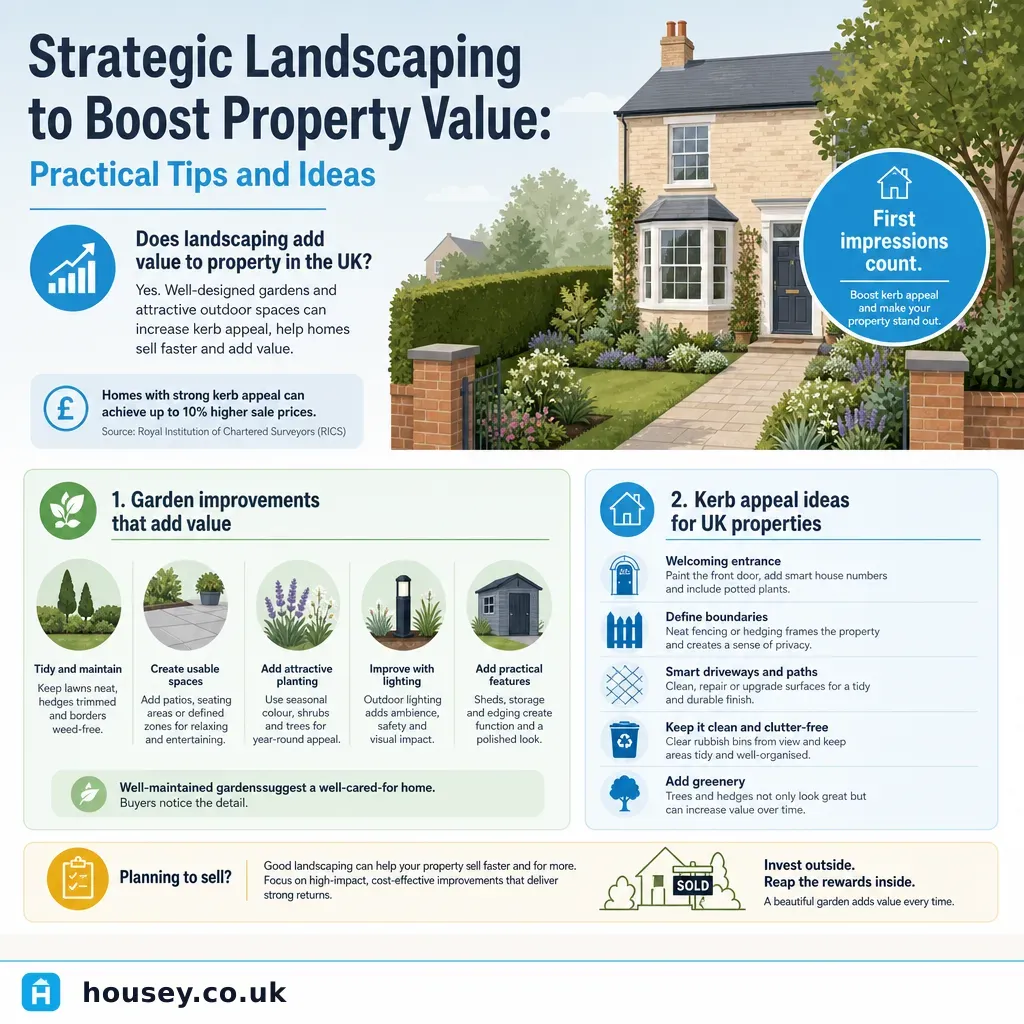
Strategic Landscaping to Boost Property Value: Practical Tips and Ideas
Landscaping can add 5–15% to a UK property's perceived value, though the return varies by improvement type.
 Improvement & Build
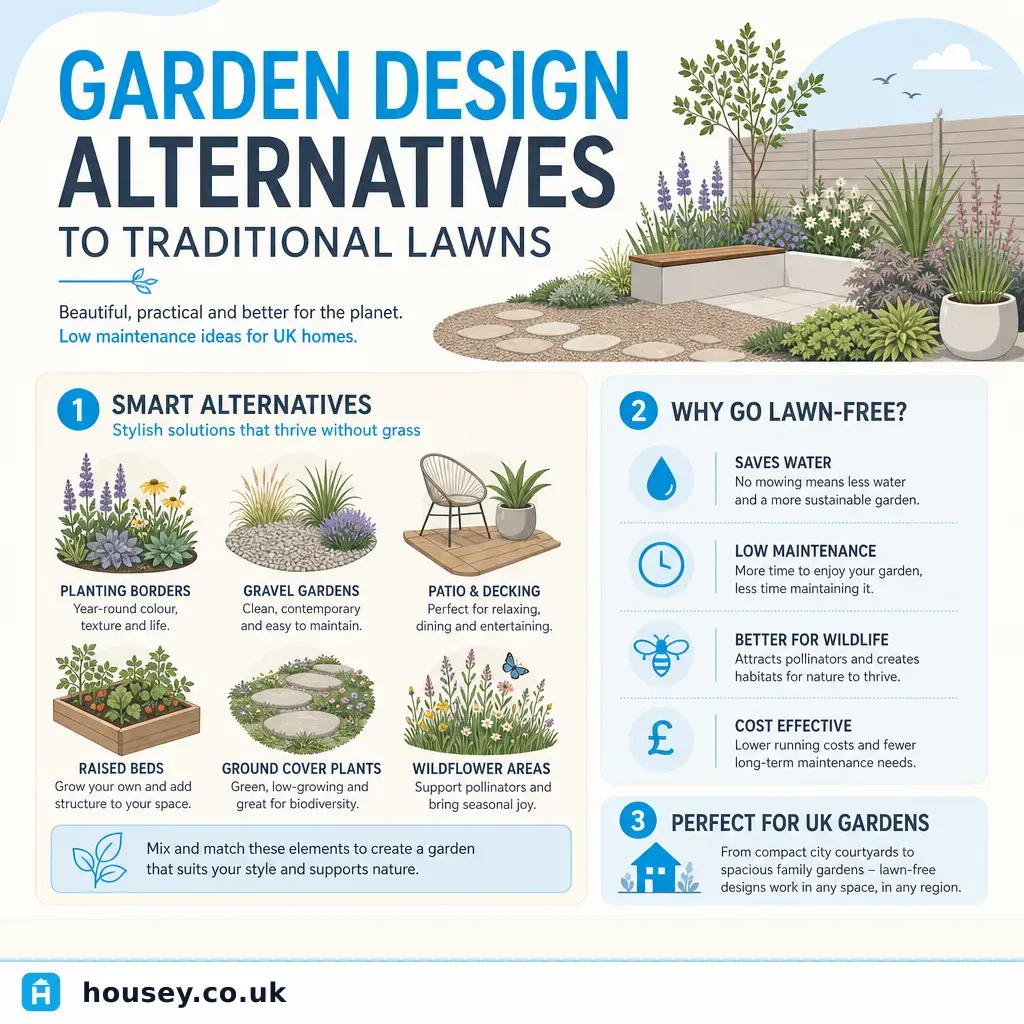
Garden Design Alternatives to Traditional Lawns
Popular alternatives to a traditional grass lawn in UK gardens include gravel, wildflower meadow planting, permeable paving, and ground-cover plants.