Garden Design Alternatives to Traditional Lawns
By Housey · Last reviewed 30th of May 2026
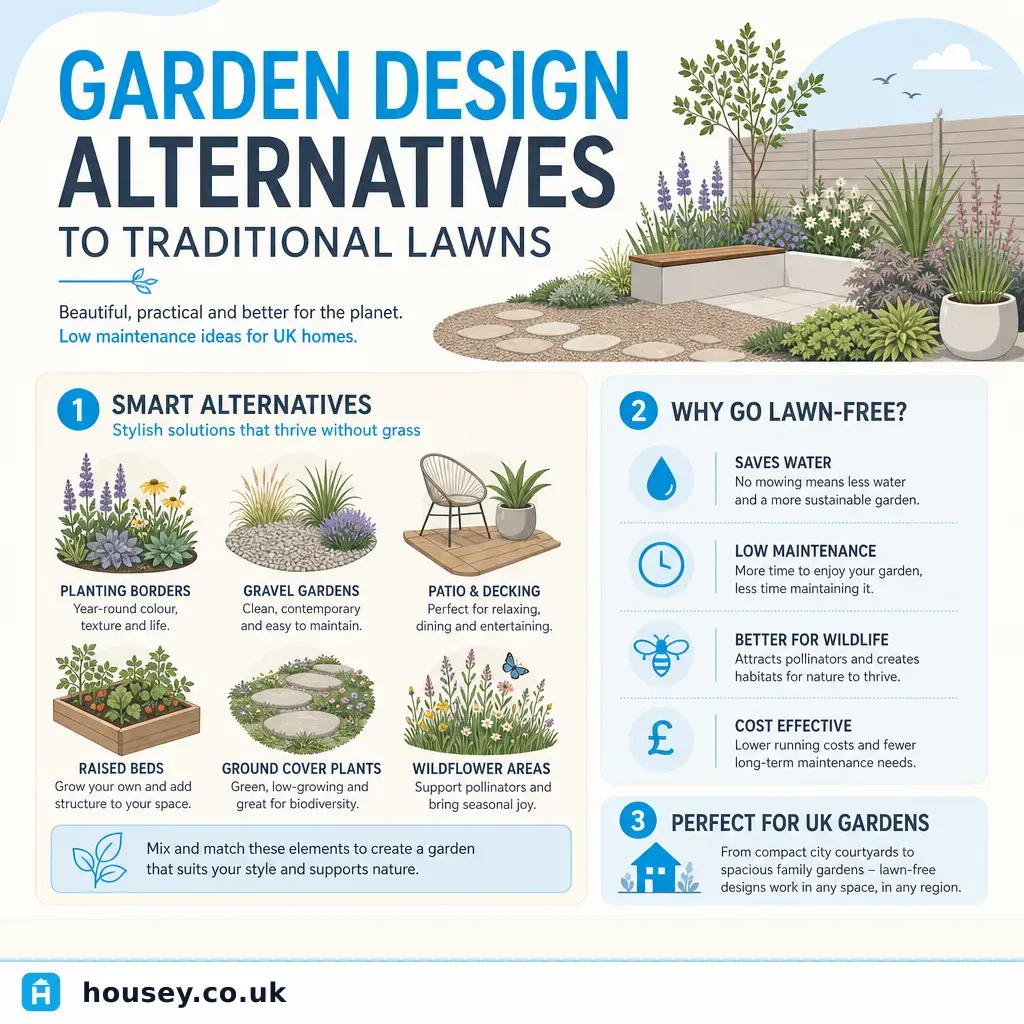
Garden Design Alternatives to Traditional Lawns
Many UK homeowners are rethinking the traditional grass lawn — whether because of summer drought restrictions, the growing time commitment of weekly mowing, wildlife concerns, or a desire for a more distinctive outdoor space. The question of what to plant or lay instead arises at various stages: during a whole-garden redesign, when taking on a property with a neglected or worn-out lawn, or when a front garden needs surfacing for off-road parking. The right alternative depends on how you actually use your outdoor space, your local climate and soil type, and the balance you want between maintenance effort, aesthetic, and ecological value.
Key points
- Paving over a front garden with impermeable materials requires planning permission under The Town and Country Planning (General Permitted Development) (England) Order 2008 if the area exceeds 5m²; using permeable surfaces avoids this requirement in most cases.
- Wildflower meadow planting is recognised by Natural England as beneficial for pollinators and biodiversity, and can contribute positively to Biodiversity Net Gain assessments under the Environment Act 2021.
- Artificial grass is not classified as a permeable surface for planning purposes and provides no drainage benefit, wildlife value, or contribution to cooling urban heat island effects.
- Ground-cover plants such as thyme, white clover, and creeping Jenny can fix nitrogen, reduce weeding effort once established, and tolerate drought better than monoculture ryegrass.
- The RHS promotes sustainable garden surfaces that allow rain infiltration, citing their importance for urban flood management and groundwater recharge in built-up areas.
Why UK homeowners are moving away from traditional lawns
A traditional grass lawn requires regular mowing (typically weekly from March to October), fertilising, aerating, scarifying, and watering during dry spells. In parts of the UK, hosepipe bans during summer droughts can leave lawns brown and patchy regardless of care invested.
Ecologically, a close-mown monoculture of ryegrass provides limited value for bees, butterflies, and other pollinators. The RHS 'Perfect for Pollinators' scheme and Natural England guidance both encourage surfaces and planting choices that actively support native wildlife.
Front gardens present a specific regulatory dimension. Many UK homeowners have progressively paved front gardens for car parking, contributing to surface water run-off and local flood risk. Planning rules in England require permeable materials — or planning permission — for new hard surfaces over 5m² in the front garden. Separate rules apply in Wales, Scotland, and Northern Ireland.
Comparing popular lawn alternatives
Option | Best for | Maintenance level | Permeable? | Wildlife value | Indicative cost per m² installed |
|---|---|---|---|---|---|
Gravel or crushed stone | Low-maintenance front or rear garden | Low — weed membrane helps | Yes | Low | £10–£25 |
Wildflower meadow | Large areas, wildlife gardens, informal style | Medium — cut once or twice yearly | Yes | High | £2–£8 seed or plug plants |
Artificial grass | Children's play areas, small spaces, high wear | Low — brush and clean periodically | No | None | £30–£80 |
Permeable block or resin-bound paving | Driveways, structured patios, formal gardens | Low | Yes | Low | £50–£150 |
Ground-cover planting | Shaded areas, slopes, low-maintenance borders | Low once established | Yes | Medium to high | £5–£20 plants and mulch |
Bark mulch or wood chip | Tree bases, woodland gardens, informal beds | Low | Yes | Medium | £3–£10 |
Pebble or cobble | Feature areas, Japanese-inspired or coastal gardens | Very low | Yes | Low | £20–£50 |
Indicative UK costs, last reviewed 2026-05-30. Prices vary significantly by region, ground conditions, and access. Obtain at least three quotes before committing.
Wildflower meadows: what to know before you start
A wildflower meadow is not simply a matter of stopping mowing. Success requires soil preparation, an appropriate seed mix, and a different annual management cycle:
- Reduce soil fertility — wildflower plants thrive in low-nutrient conditions. Removing topsoil or introducing yellow rattle (a semi-parasitic plant that suppresses coarse grass) helps establish the right balance.
- Choose species suited to your conditions — an RHS-endorsed seed mix matched to your soil type (clay, chalk, or sandy loam) will establish far better than a generic wildflower mix.
- Mow once or twice yearly — typically in late summer after seeds have set, and optionally again in early spring. Remove all cuttings to avoid returning nutrients to the soil and encouraging coarse grass to dominate.
- Be patient — a wildflower meadow can take two to three full growing seasons to establish visibly.
Permeable paving: planning and drainage rules
If you want to replace a front lawn with a hard surface, the choice of material has legal implications. Under The Town and Country Planning (General Permitted Development) (England) Order 2008, new hard surfaces in a front garden are permitted development only if:
- The surface is permeable — options include resin-bound gravel, permeable block paving, or loose gravel over a porous sub-base; or
- Surface run-off is directed to a lawn or planted border rather than the public highway.
Standard concrete or tarmac over 5m² in a front garden requires planning permission in England. Always check with your local planning authority before work begins; rules differ in Wales, Scotland, and Northern Ireland.
Resin-bound paving has become widely used for residential driveways because it satisfies permitted development requirements, drains quickly in heavy rain, and requires minimal maintenance once laid.
Ground-cover plants as lawn alternatives
For gardeners who want living ground cover without the mowing regime, low-growing perennials and sub-shrubs work well once established:
- Thyme (Thymus spp.) — drought-tolerant, fragrant underfoot, and a magnet for bees. Works best in sunny, free-draining positions.
- White clover (Trifolium repens) — nitrogen-fixing, drought-resistant, and attractive to bees. Can be overseeded into an existing lawn to improve its ecological value without starting from scratch.
- Creeping Jenny (Lysimachia nummularia) — tolerates shade and moisture; bright yellow-green foliage that spreads to form a dense mat.
- Mind-your-own-business (Soleirolia soleirolii) — very low-growing, ideal for shaded courtyards, though it spreads aggressively in moist conditions and should be chosen carefully.
- Non-flowering chamomile (Chamaemelum nobile 'Treneague') — a traditional lawn chamomile, fragrant and soft underfoot, used in historic walled gardens.
Suppressing weeds during establishment using a weed-suppressing membrane or mulch is essential; most ground-cover alternatives take a full growing season to knit together sufficiently.
Homeowner checklist: choosing your lawn alternative
Work through this checklist before committing to a specific surface or planting approach:
When to get professional help
Most lawn alternative projects are accessible to a confident homeowner, but there are situations where professional input adds clear value:
- If the garden has significant level changes, persistent drainage problems, or heavy clay that retains water, a landscaper can advise on appropriate subgrade solutions before expensive materials are laid.
- If you are replacing a front lawn and are unsure whether planning permission is required, contact your local planning authority before starting.
- If you want a bespoke design — a formal parterre, a Japanese gravel garden, or a contemporary courtyard — a garden designer can produce a scheme, specify plants and materials, and manage contractors.
- If existing trees are present, check whether a Tree Preservation Order (TPO) applies before any excavation, root-zone work, or hard surfacing is undertaken.
How Housey can help
Whether you need a complete garden redesign or professional installation of a chosen surface, Housey can connect you with local garden designers who can plan a bespoke scheme for your plot, and experienced landscapers who can carry out groundworks, planting, and hard landscaping. Submit a brief and receive quotes from professionals in your area.
Frequently asked questions
Do I need planning permission to remove my lawn and lay gravel?
In a rear garden, planning permission is not normally required. In a front garden in England, you can lay loose or permeable gravel without permission, but impermeable hard surfaces over 5m² do require it. Rules differ in Wales, Scotland, and Northern Ireland. If in any doubt, check with your local planning authority before starting work.
Is artificial grass a good lawn alternative for UK gardens?
Artificial grass eliminates mowing and stays green year-round, but it does not drain like a natural surface, generates microplastic particles over time, provides no wildlife benefit, and can become uncomfortably hot in summer sun. Many local authorities discourage it on sustainability grounds, and some buyers are put off by it when viewing family homes for sale.
How much does it cost to replace a lawn in the UK?
Costs vary widely by material, area, ground preparation, and region. As a rough guide: gravel installation typically falls in the £10–£25 per m² range, permeable block paving £50–£100 per m², and wildflower seeding £2–£8 per m². Indicative UK costs, last reviewed 2026-05-30. Always obtain at least three quotes from local professionals.
Can wildflowers grow in a shaded UK garden?
A full wildflower meadow generally needs an open, sunny aspect to establish well. For shaded areas, wood anemone, foxglove, native ferns, and hardy geraniums are more appropriate alternatives. The RHS plant selector tool at rhs.org.uk filters by soil type and light conditions to help you identify suitable species.
Sources and further reading
- RHS: Sustainable gardening — Royal Horticultural Society
- Permeable surfacing of front gardens and driveways — GOV.UK
- Town and Country Planning (General Permitted Development) (England) Order 2008 — legislation.gov.uk
- Biodiversity Net Gain guidance — GOV.UK
- Natural England: Wildflower habitats — Natural England
Useful next reads
 Improvement & Build
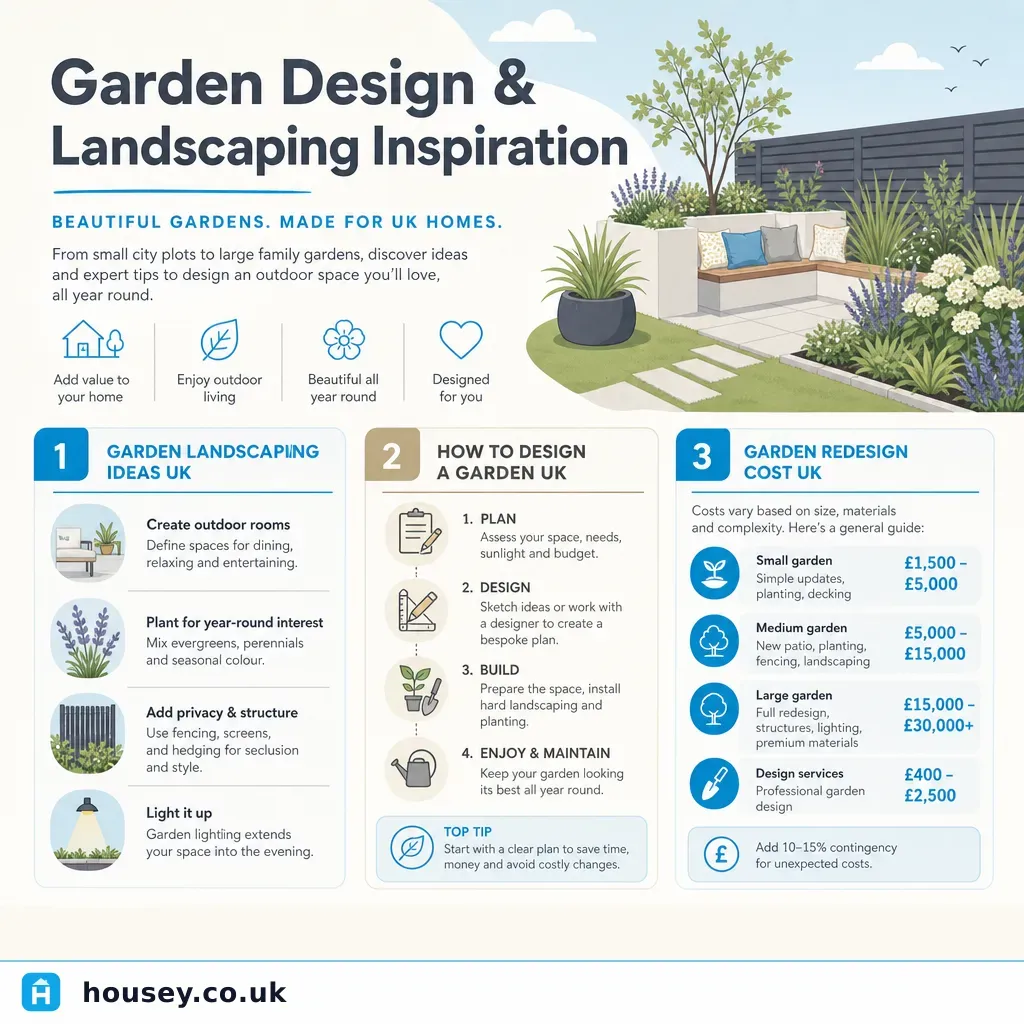
Garden Design and Landscaping Inspiration
Effective garden design starts with assessing your aspect, soil type, and existing features before commissioning any planting or hard landscaping.
 Improvement & Build
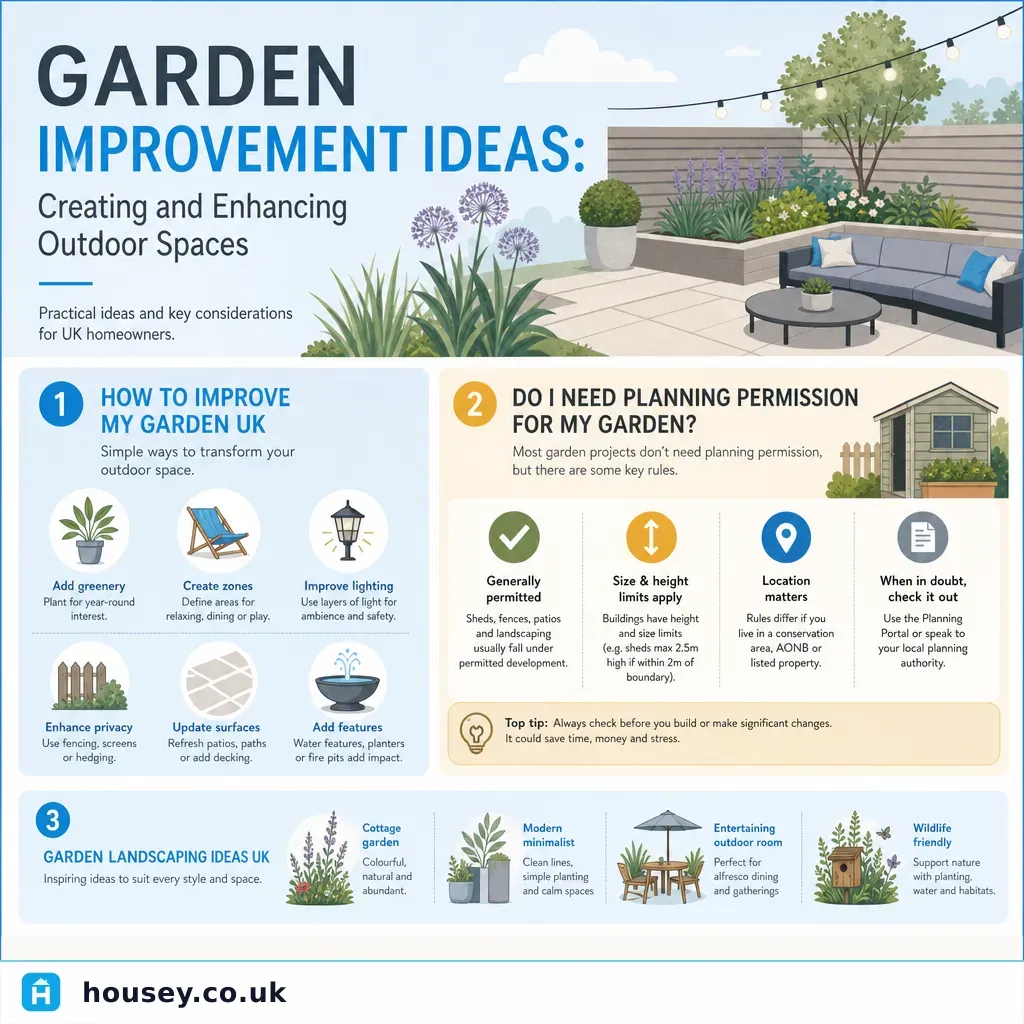
Garden Improvement Ideas: Creating and Enhancing Outdoor Spaces
Improving your garden in the UK usually starts with a clear plan covering hard landscaping, soft planting, and any structural elements.
 Improvement & Build
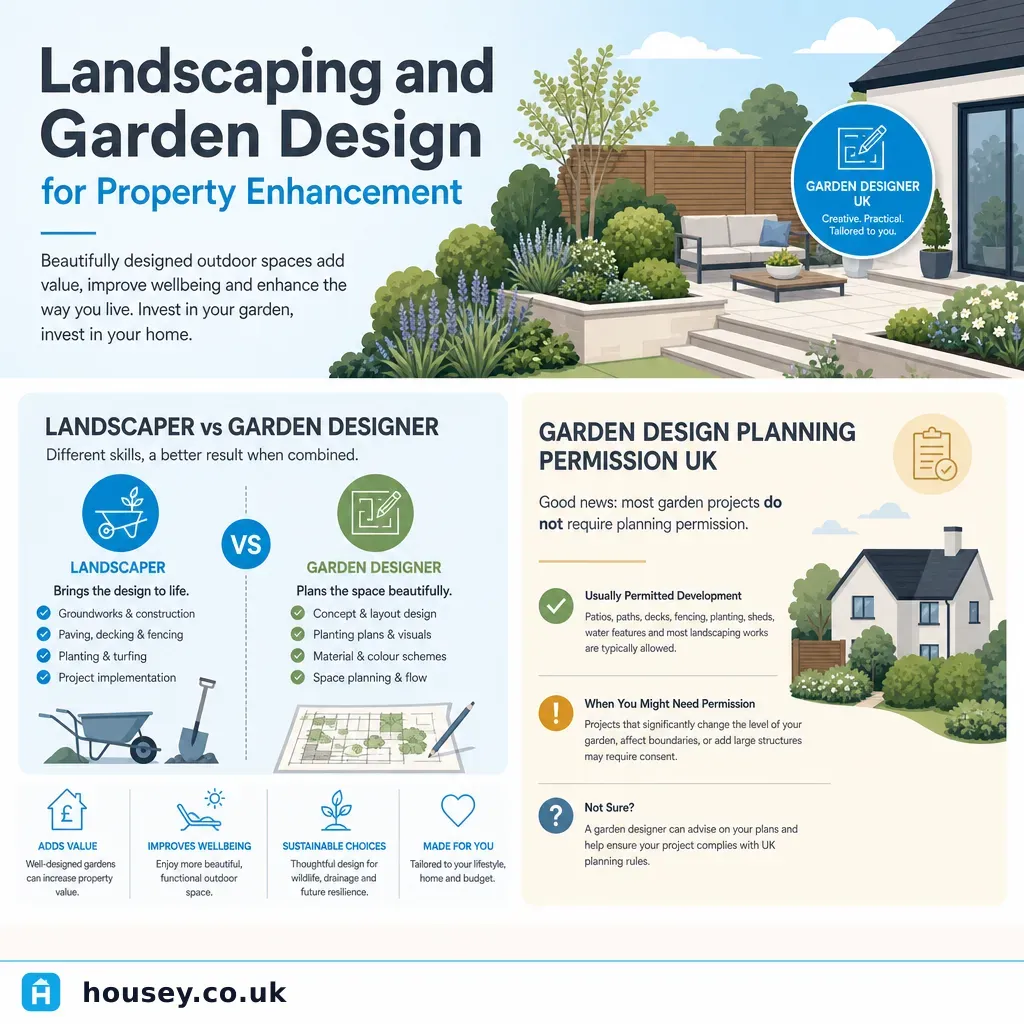
Landscaping and Garden Design for Property Enhancement
Landscaping and garden design involve planning and building outdoor spaces — from patios and raised beds to planting schemes and drainage.
 Improvement & Build
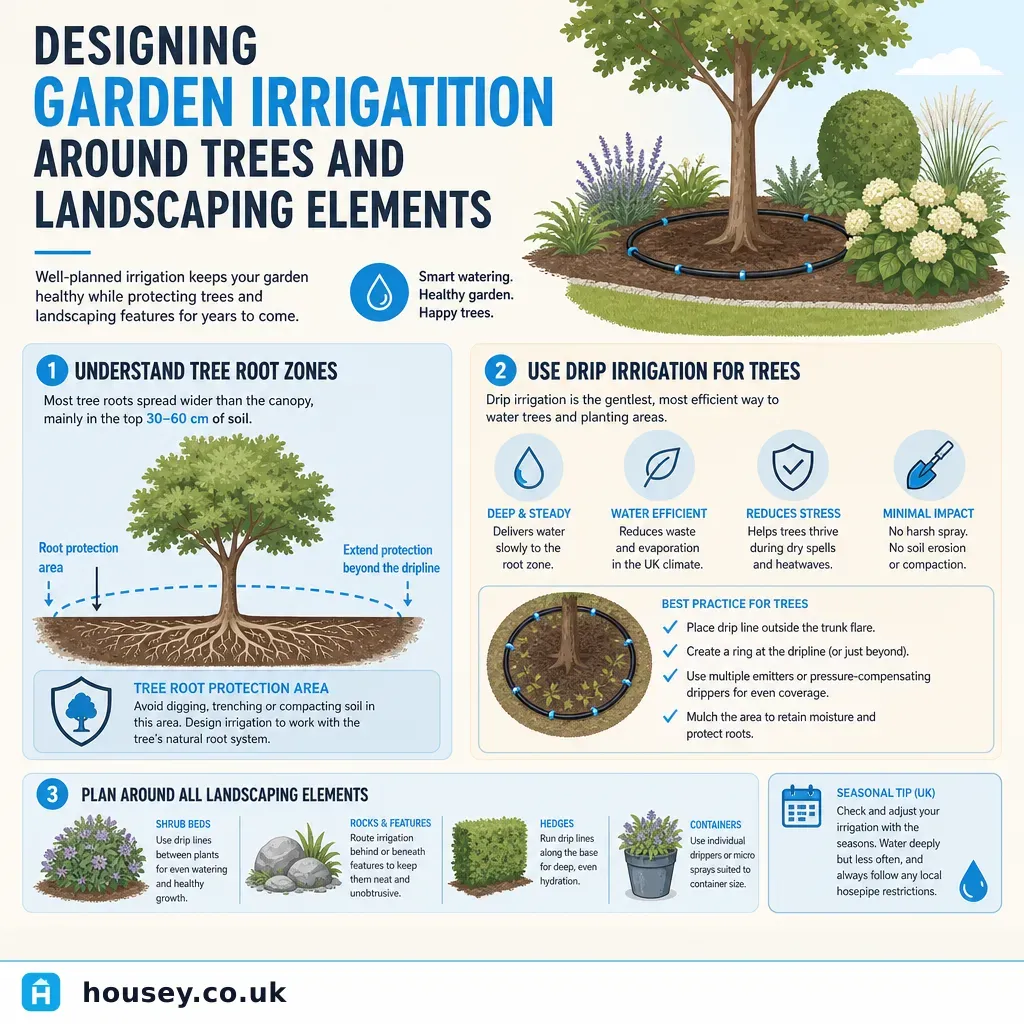
Designing Garden Irrigation Around Trees and Landscaping Elements
Design irrigation around trees by respecting the root protection area defined under BS 5837:2012, using drip or leaky pipe delivery rather than spray heads, and putting the tree zone on its own circuit.
 Improvement & Build
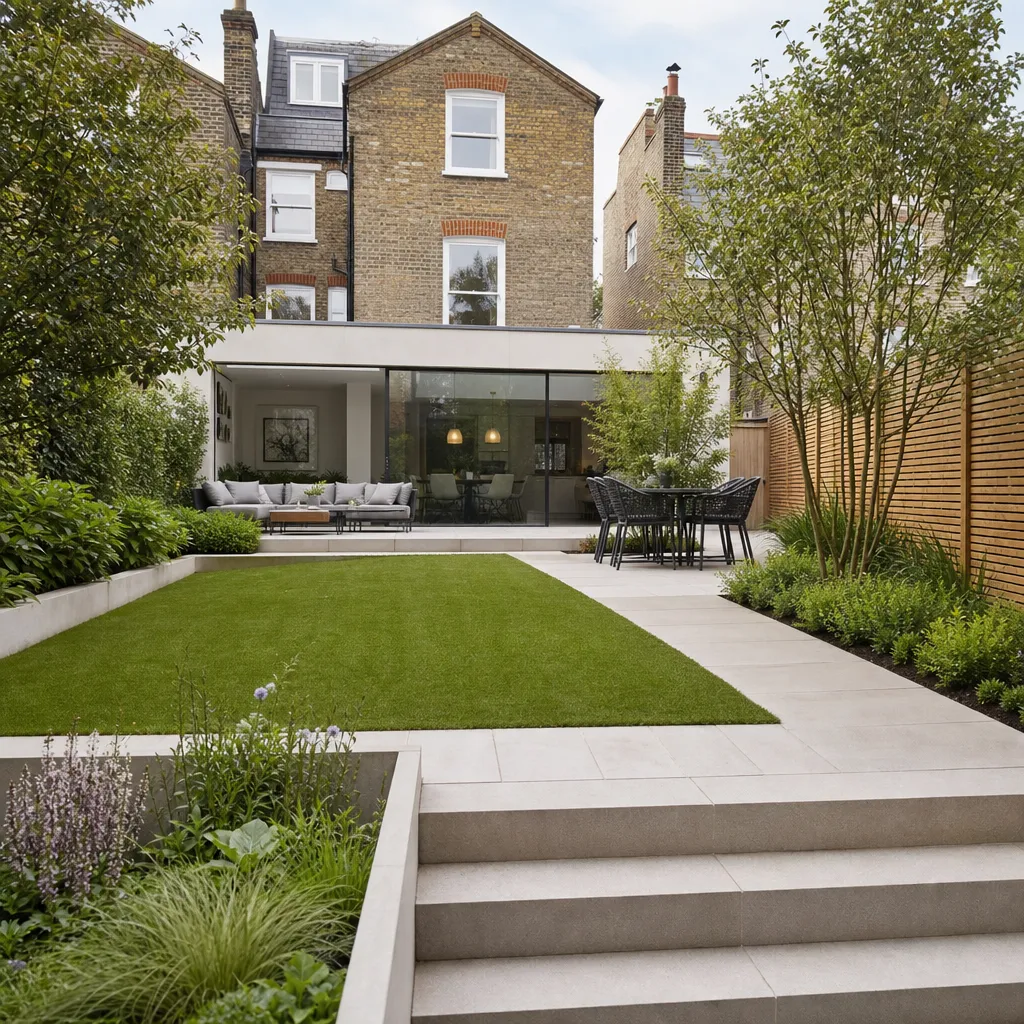
Garden Design Trends and Contemporary Landscaping Ideas
Contemporary UK garden design centres on low-maintenance naturalistic planting, multi-functional outdoor spaces, sustainable hard landscaping materials, and wildlife-friendly rewilded areas.