Strategic Landscaping to Boost Property Value: Practical Tips and Ideas
By Housey · Last reviewed 31st of May 2026
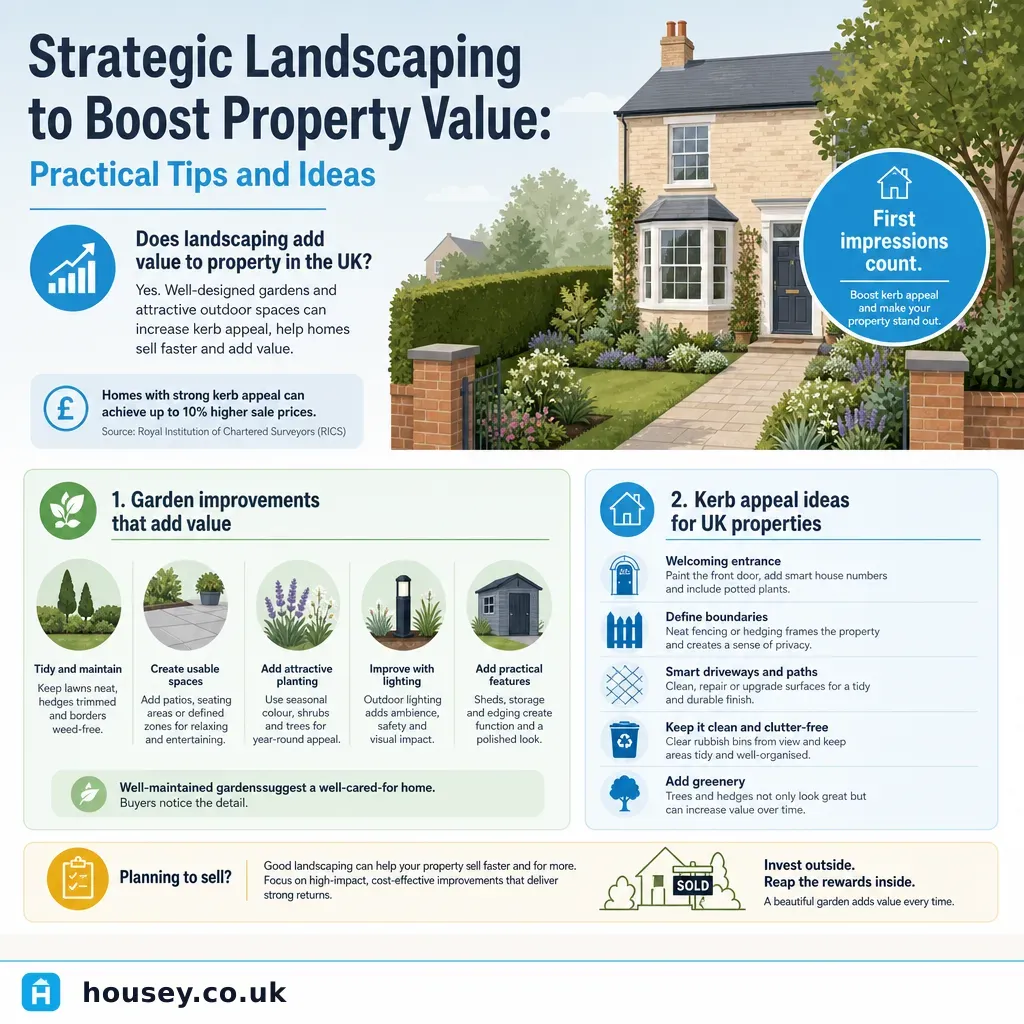
Strategic Landscaping to Boost Property Value: Practical Tips and Ideas
Gardens and driveways form a buyer's first impression of a UK property — and that impression shapes what they are prepared to offer before they step inside. Whether you are preparing to sell, planning a longer-term investment in your outdoor space, or working out where to focus a finite landscaping budget, understanding which improvements carry measurable returns and which are primarily personal choices helps you spend more wisely.
Key points
- Research by property professionals suggests well-designed landscaping can add between 5% and 15% to a property's perceived value, with the strongest returns from off-street parking and purposeful outdoor living spaces.
- Trees protected by a Tree Preservation Order (TPO) cannot be removed, topped, or significantly pruned without prior written consent from the local planning authority; works without consent carry unlimited fines under the Town and Country Planning Act 1990.
- Under Schedule 2, Part 1 of the Town and Country Planning (General Permitted Development) (England) Order 2015, covering more than 5 m² of a front garden with an impermeable surface requires planning permission; permeable alternatives — gravel, resin-bound surfacing, block paving with open joints — generally do not.
- Creating a new vehicular access from a classified road requires planning permission and typically a separate highways authority licence for the dropped kerb, regardless of the surfacing material chosen.
- Artificial turf is increasingly viewed negatively by environmentally aware buyers and some valuers, as it can impair drainage and biodiversity; natural turf or planted alternatives are generally received more favourably.
Which landscaping improvements add the most property value?
Property value impact varies significantly by improvement type and local market conditions. The table below draws on evidence from estate agents and property professionals to separate high-return investments from largely personal choices.
Improvement | Likely value impact | Notes |
|---|---|---|
Off-street parking (driveway) | High — especially in urban and suburban areas | Buyers pay a premium where street parking is scarce |
Well-maintained lawn and planting | High — avoids negative detraction | Neglect actively reduces offers; upkeep costs little |
Defined patio or terrace | Moderate | Proportionate to house size; low-maintenance schemes are preferred |
Boundary definition (walls, fencing, hedges) | Moderate | Missing or disputed boundaries are flagged at survey |
Structural planting and mature shrubs | Moderate | Adds a settled, established feel; over-complex planting can deter buyers |
Garden lighting | Low to moderate | Attractive but replicable; rarely the decisive factor |
Swimming pool | Neutral to negative | High maintenance costs and safety concerns; rarely returns full cost |
Artificial turf | Neutral to negative | Drainage concerns and perceived low quality deter some buyers |
Elaborate water features | Low | Seen as a high-maintenance burden by most buyers |
Worked UK property scenario: Bristol 1930s semi
A homeowner preparing to list a 1930s semi-detached house in Bristol has a front garden used informally for parking on compacted soil, and a rear garden that is overgrown but structurally sound — a mature apple tree and sound boundary fencing. Before listing, they take four targeted actions:
- Install a resin-bound permeable driveway on the front — no planning permission needed (permeable surface), with an indicative cost of £2,500–£4,500 for a single-car width. (Indicative UK cost, last reviewed 2026-05-31)
- Commission an arboricultural survey on the apple tree to confirm it carries no TPO and is structurally sound before any pruning is instructed.
- Clear and re-turf the rear garden, adding a simple slate-edged border with low-maintenance evergreen structural planting.
- Replace two broken rear fence panels to remove a potential flag on boundary condition during a buyer's survey.
The estate agent's assessment: the property moves into search results for homes with off-street parking — a genuine positioning shift in a street where on-street spaces are highly competitive.
Kerb appeal: what buyers notice first
Estate agents consistently report that first impressions form within seconds at the kerbside. Front-of-house improvements with the clearest effect on buyer perception:
- Driveway condition — cracks, weeds, and staining signal deferred maintenance throughout the property.
- Front boundary — a well-maintained hedge, wall, or fence with a defined gate creates a sense of security and ownership.
- Path to front door — clearly defined, level, non-slip, and usable in all weathers.
- Structural planting — evergreen shrubs and small ornamental trees provide year-round visual structure without demanding constant seasonal maintenance.
- Bin and utility screening — defined, screened storage removes clutter that photographs poorly and reads as an afterthought in online listings.
Trees, boundaries and planning considerations
Several landscaping decisions intersect with legal and regulatory requirements that are easy to overlook.
Tree Preservation Orders — before removing or significantly pruning any mature tree, check whether it carries a TPO via your local council's planning portal, which usually has a searchable TPO map. Works without consent can result in prosecution and an unlimited fine. A TPO tree removed unlawfully before a sale may be identified during conveyancing searches, potentially delaying or complicating the transaction.
Conservation areas — if your property is in a conservation area, you must give the local planning authority six weeks' written notice before carrying out significant works to any tree with a trunk diameter above 75 mm measured at 1.5 m height. The authority can impose a TPO during that notice period.
Driveways and front garden surfacing — the 5 m² impermeable surface rule applies under permitted development in England. Scotland, Wales, and Northern Ireland each have their own planning rules; always check with the relevant devolved planning authority if your property is outside England.
Boundary ownership — your title deeds or the Land Registry title plan usually indicate which boundaries you are responsible for. Installing fencing or a wall on a neighbour's land is a civil matter that can surface during conveyancing and delay a sale.
How much should you spend on landscaping?
Spend is constrained by two practical limits: the value of the property (over-spending is rarely fully recovered in a sale) and the local market (buyers in a city-centre street with scarce parking value a driveway differently from buyers in a rural area with ample space).
Rough proportion guide:
- Maintenance and tidying — mowing, clearing, fence repair, repainting: usually recovers cost or better.
- Structured improvements — driveway, patio, planting scheme: aim to spend no more than 5–10% of the property's asking price in total on landscaping.
- Premium features — outdoor kitchens, pools, bespoke water features: rarely recover full cost in the UK market; only worthwhile if you will personally enjoy them over a long ownership period.
What to ask before accepting a landscaping quote
- What preparation work is included — site clearance, excavation, soil improvement?
- Have any TPO checks or planning permission requirements been considered and addressed?
- What materials are specified, and what alternatives exist at different price points?
- What is the finished scheme's ongoing maintenance requirement?
- Who disposes of excavated material and green waste, and at what cost?
- Is VAT included at the correct rate, and what is the payment schedule?
- What happens if underground utilities are discovered during excavation?
When to get professional help
Most domestic landscaping is standard property maintenance requiring no formal professional engagement beyond a competent contractor. However:
- Commission an arboricultural survey before removing or significantly pruning any mature tree — particularly ahead of a sale, as an undisclosed TPO breach discovered during conveyancing can halt a transaction.
- Consult your local planning authority before creating hard surfaces or vehicular access in a conservation area, or whenever the scale of work creates uncertainty about permitted development rights.
- Instruct a garden designer for significant schemes intended to achieve a specific price-point appeal — a professional planting plan and material specification reduces the risk of overspending on a scheme that looks unresolved to buyers.
Red flags that mean pause and seek advice before proceeding:
- A contractor who recommends removing a large mature tree without first confirming TPO status.
- A quote proposing a new dropped kerb without mentioning planning permission or highways authority involvement.
- No drainage plan included for a large new hard surface adjacent to a building or shared boundary.
- Any works touching a boundary where ownership is not confirmed in writing.
How Housey can help
Housey connects you with vetted landscapers and garden designers who understand both aesthetic appeal and the planning framework for residential outdoor projects. If mature trees are part of your scheme, our arboricultural survey specialists can confirm TPO status and structural condition before any contractor starts work.
Frequently asked questions
Does landscaping genuinely add value to a UK property?
It depends on quality and type. Neglected gardens reduce buyer offers — clearance costs are factored into bids. Well-maintained gardens with practical features such as off-street parking or a usable patio consistently attract better offers relative to equivalent properties without them. Highly personalised features such as pools rarely return their full investment in a UK sale.
Do I need planning permission to pave my front garden?
In England, covering more than 5 m² of a front garden with a non-permeable surface requires planning permission. Permeable surfaces — resin-bound gravel, permeable block paving — generally do not. A new dropped kerb or vehicular access from a classified road requires separate planning permission and a highways authority licence, regardless of the surfacing material. Rules differ in Scotland, Wales, and Northern Ireland.
Does a garden affect a property's EPC rating?
No. An Energy Performance Certificate assesses the thermal performance of the building's fabric and fixed building services — not the garden or external landscaping. Landscaping changes do not appear in or affect an EPC assessment, regardless of how extensive or well-specified the outdoor works are.
How long before selling should I carry out landscaping work?
Complete structural works — driveway, patio, fencing, and planting — at least four to six weeks before listing, to allow disturbed ground and new turf to establish visibly before viewings. If the timeline is tighter, focus on maintenance: mowing, edging, weed clearance, and fence repairs photograph well and cost far less than a rushed landscaping scheme.
Sources and further reading
- Town and Country Planning (General Permitted Development) (England) Order 2015, Schedule 2 — legislation.gov.uk
- Tree Preservation Orders and trees in conservation areas — GOV.UK
- HM Land Registry: title register information — HM Land Registry
- Propertymark: adding value to your home — Propertymark
- Royal Horticultural Society: garden planning guidance — Royal Horticultural Society
Useful next reads
 Improvement & Build
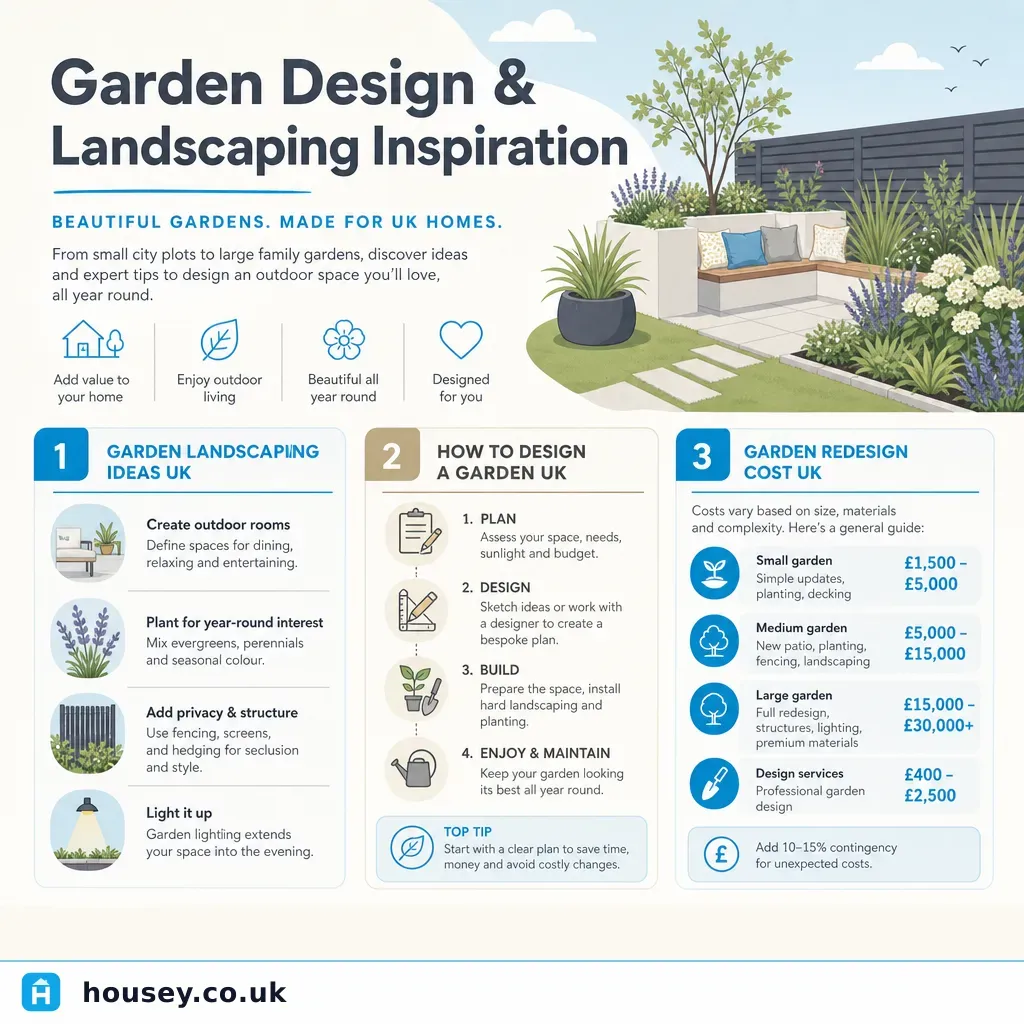
Garden Design and Landscaping Inspiration
Effective garden design starts with assessing your aspect, soil type, and existing features before commissioning any planting or hard landscaping.
 Improvement & Build
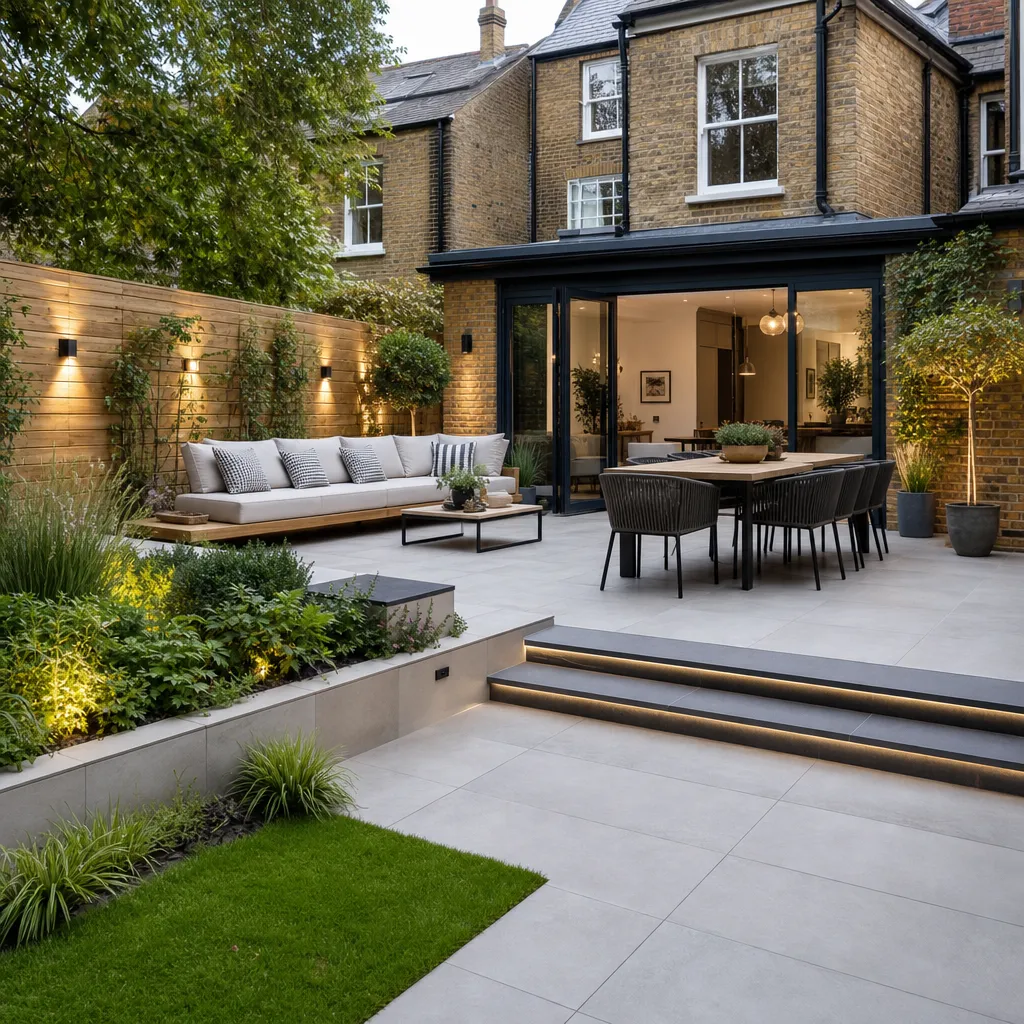
Creating Functional and Attractive Outdoor Entertainment Areas
A well-planned outdoor entertainment area combines a level surface — patio, decking, or gravel — shelter or shade, appropriate lighting, and power access if needed.
 Improvement & Build
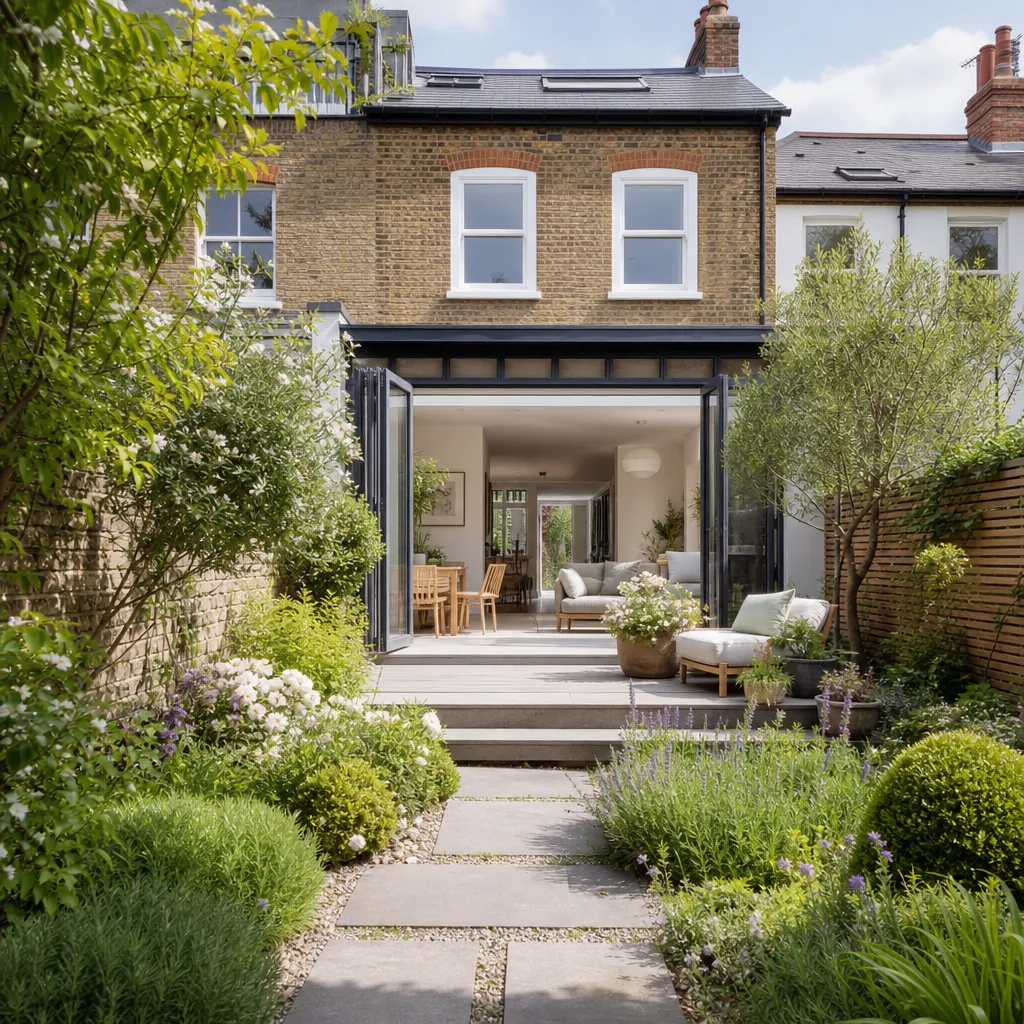
Spring Garden Transformations: Design Ideas to Enhance Your UK Property
Spring is the best time to transform a UK garden, with mild temperatures and longer days ideal for planting and landscaping.
 Improvement & Build
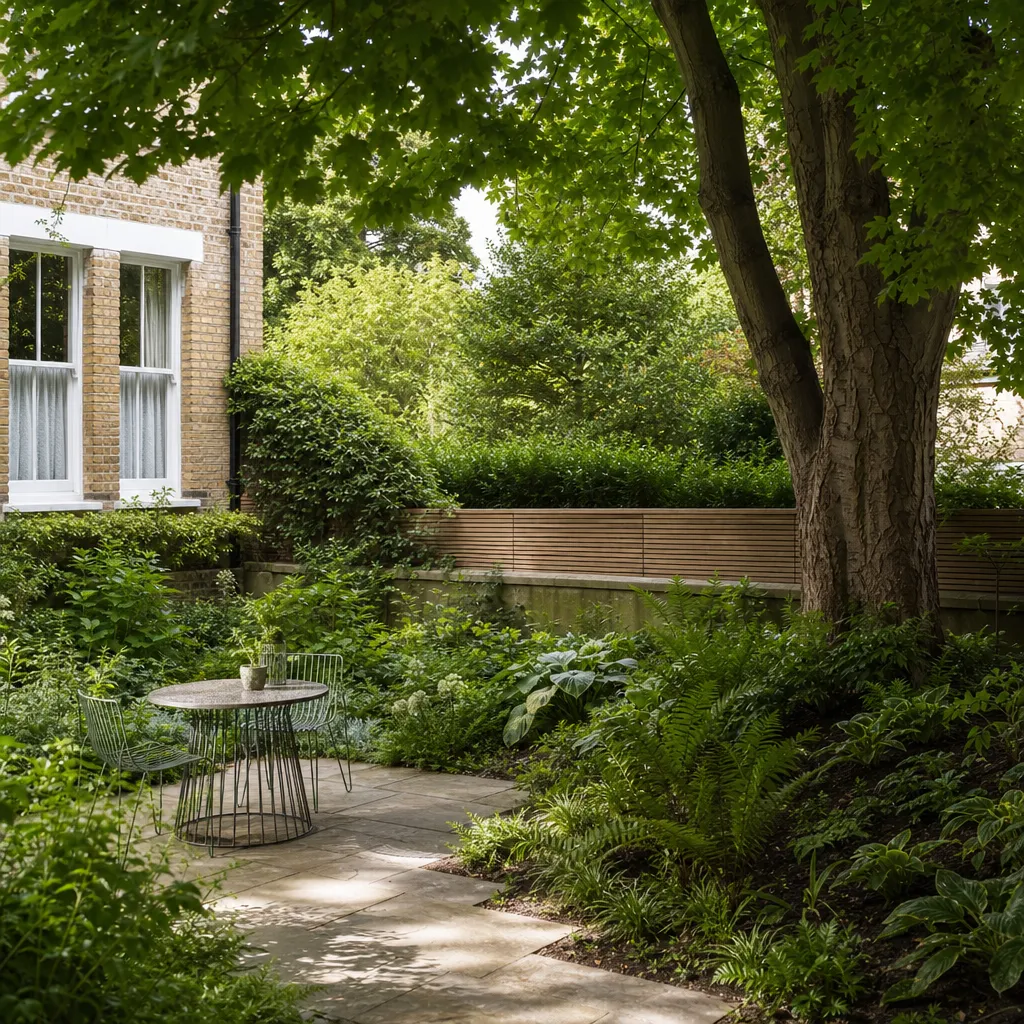
Creating and Maintaining Shaded Garden Spaces: Design and Planting
In UK shaded gardens, success depends on identifying your shade type — deep, partial, dappled, or dry — then matching plants and soil preparation to those conditions.
 Improvement & Build
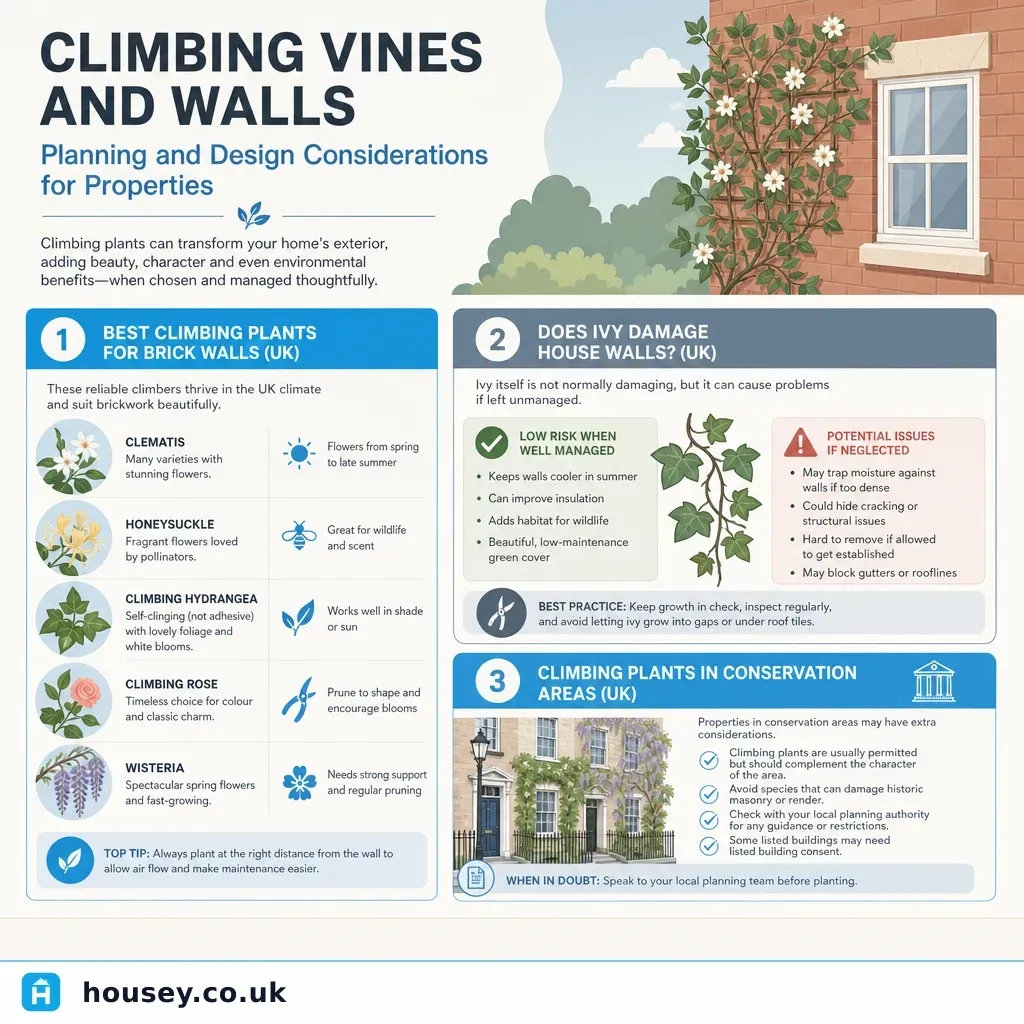
Climbing Vines and Walls: Planning and Design Considerations for Properties
Climbing plants can enhance a property but choice of species, wall condition, and maintenance all affect whether damage occurs.