Creating Comfortable Additional Rooms: Design and Construction Best Practices
By Housey · Last reviewed 1st of June 2026
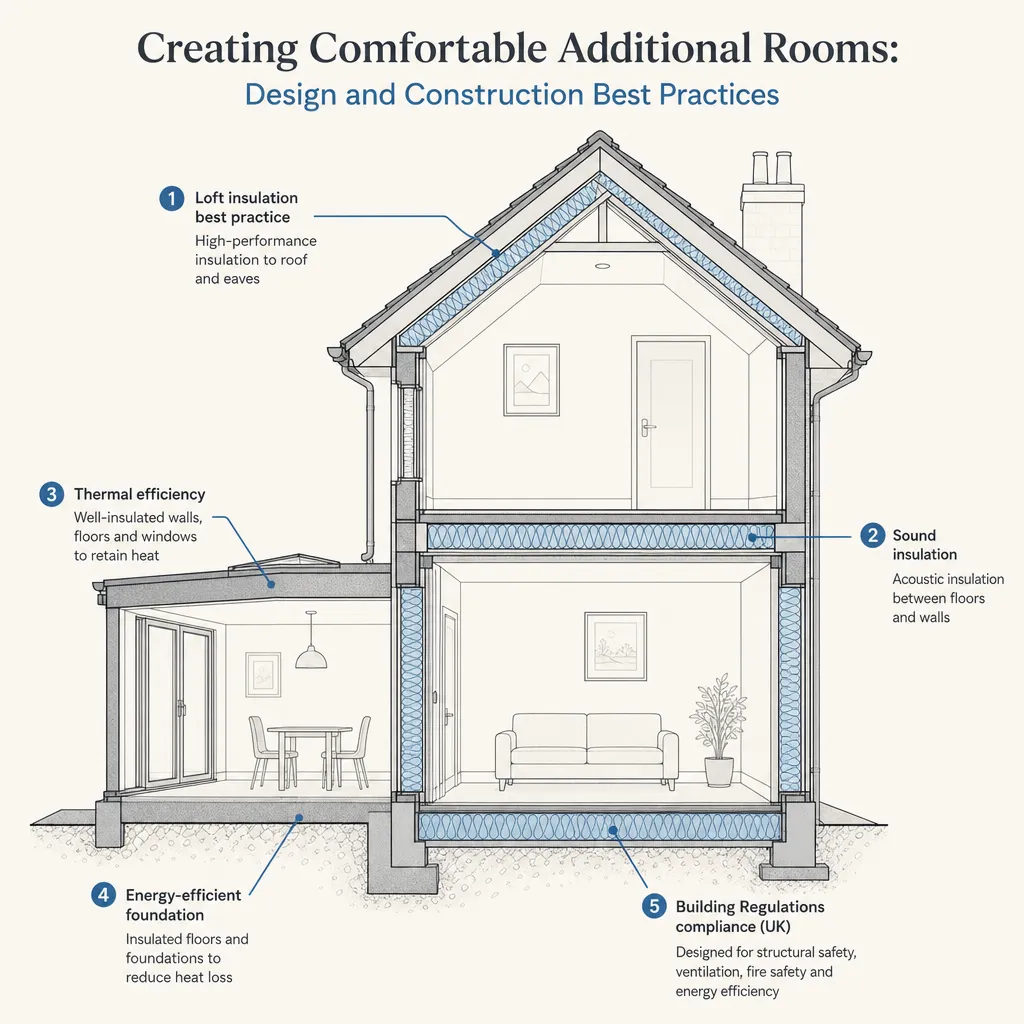
Creating Comfortable Additional Rooms: Design and Construction Best Practices
Homeowners adding a rear extension, side return, or loft conversion typically focus on floor area, aesthetics, and planning permission — and then discover, once in occupation, that the new room is too cold in winter, overheats in summer, or lets in more noise than expected. These problems are almost always cheaper and easier to prevent at design stage than to address after the roof tiles are on. Getting the comfort variables right from the outset — thermal performance, ventilation, acoustic separation, and daylighting — avoids the frustration of a costly addition that falls short of what was imagined.
Key points
- Building Regulations Approved Document L (2021, England) requires new extensions to meet minimum U-values: walls ≤0.18 W/m²K, roofs ≤0.15 W/m²K, floors ≤0.18 W/m²K, and windows ≤1.6 W/m²K (whole-window value).
- Approved Document E requires a minimum of ≥45 dB DnTw airborne sound insulation for separating walls and floors between your home and an adjoining property.
- Approved Document F (2022) requires background ventilators (minimum 5,000 mm² equivalent area) in all new habitable rooms, plus extract ventilation in any kitchen or bathroom created within the addition.
- Approved Document O (England, 2022) applies to material changes of use and new dwellings — south- or west-facing rooflights in loft conversions are a common overheating risk.
- All extensions and loft conversions involving structural work or habitable rooms require building control approval under the Building Regulations, regardless of whether planning permission is needed.
Why comfort needs to be planned from day one
A common pattern in UK extension and loft conversion projects is that the brief is written around floor area and aesthetics alone. Builders price what is specified, and standard specifications often meet Building Regulations minimums without going further. The result can be a legally compliant room that is cold near the glazing, prone to condensation, and noticeably noisy during a conversation downstairs.
Integrating comfort requirements into the brief from the start means:
- Insulation thickness is accounted for in floor plan dimensions and ceiling heights, not squeezed in as an afterthought.
- Acoustic separation is detailed at the structural stage, not patched with additional plasterboard after completion.
- Ventilation openings and extract fan positions are coordinated with joinery, not cut in after cabinets are fixed.
- Thermal mass decisions — concrete screed versus a floating timber floor, for example — are made while they still influence the structural design.
Thermal comfort: insulation and U-values
The Building Regulations minimums are a legal floor, not a comfort target. Going beyond the minimum for roofs, floors, and glazing is usually cost-effective over the lifetime of the addition.
Extension walls and floors
For a single-storey rear extension in standard masonry construction:
- Full-fill cavity wall (100 mm mineral wool): achieves approximately 0.18 W/m²K — the Part L minimum. Adding 50 mm of external or internal insulation board can reach 0.14–0.15 W/m²K.
- Timber-frame extension: a 140 mm insulated stud with service cavity typically achieves 0.14–0.16 W/m²K and manages moisture risk well in UK climates.
- Floor insulation: 100 mm rigid PIR between joists or under a concrete slab is a realistic minimum; 150 mm delivers a noticeably warmer floor surface in cold weather.
Loft conversion roof approaches
Loft conversions present a condensation risk if insulation and vapour control are not designed as a system. The three main approaches are compared below.
Approach | How it works | Pros | Cons |
|---|---|---|---|
Between-rafter insulation only | Mineral wool or rigid board between rafters; cold void above | Lower material cost | Condensation risk if vapour control is inadequate; U-value harder to achieve |
Warm roof (insulation above structural deck) | Rigid insulation above deck, cold side fully outside | Low condensation risk; achieves high U-value | Higher cost; requires a structural deck layer |
Hybrid (between and over rafter) | Mineral wool between rafters plus rigid board above or below | Achieves ≤0.15 W/m²K; moisture-managed | Most expensive; requires experienced installer |
In all approaches, a vapour control layer on the warm side of the insulation must be continuous and sealed at all junctions, eaves, and service penetrations.
Windows and rooflights
Windows and rooflights are the weakest thermal elements in most extensions. Part L requires a whole-window U-value of ≤1.6 W/m²K. Triple glazing (typically 0.8–1.0 W/m²K) meaningfully improves comfort near the glazed surface, particularly in a loft bedroom used year-round. Rooflights lose proportionally more heat than vertical windows and increase overheating risk — specify the minimum area needed for the daylighting quality you want, and no more.
Acoustic comfort: separating new rooms from noise
Noise complaints are among the most common dissatisfactions in newly completed loft conversions, particularly where a bedroom is directly above a kitchen or a lively sitting room.
What Part E requires
Approved Document E sets minimum standards for sound insulation between separating elements — walls or floors shared with an adjoining property or a different dwelling. For extensions sharing a wall with a neighbour, the separating wall must achieve:
- Airborne sound: ≥45 dB DnTw (weighted standardised level difference).
- Separating floors (where applicable): ≥45 dB DnTw airborne and ≤62 dB L'nTw impact.
For internal floors within the same single dwelling — for example, a loft bedroom above a living room — Part E does not set a specific performance requirement. A reasonable voluntary target to specify is 40 dB Rw (weighted sound reduction index), which noticeably reduces conversation noise between floors.
Practical acoustic measures
- Resilient bar ceiling systems: decoupled plasterboard ceiling on resilient bars, installed below an existing or new floor construction, significantly reduces impact sound transmission.
- Acoustic mineral wool between joists: addresses mid-frequency airborne sound within the floor build-up.
- Floating floor or acoustic underlay: effective for new-build extension floors, particularly over a concrete slab.
- Seal all penetrations: an unsealed downlight hole, pipe sleeve, or cable entry can undermine an otherwise well-specified partition through flanking transmission.
Ventilation: managing moisture and summer heat
Moisture and condensation control
Newly insulated and draught-proofed additional rooms generate more moisture relative to their air change rate. Approved Document F (2022) requires:
- Background ventilators (trickle vents) in all new habitable rooms: minimum 5,000 mm² equivalent area for most room types.
- Intermittent or continuous extract ventilation in any bathroom, en-suite, or kitchen created within the addition or conversion.
Ensure the extract fan discharges directly to outside, not into the roof void or a ceiling space.
Overheating in loft conversions
South- or west-facing rooflights in loft bedrooms are a frequent overheating cause in UK homes. In order of effectiveness, mitigation options are:
- Reduce rooflight area and reorient to north or east where the brief allows.
- Specify rooflights with external solar-control glazing or external blinds (internal blinds have limited effect once heat is inside the glazing unit).
- Provide openable rooflights for night-purge ventilation — CIBSE guidance suggests an openable area of at least 1/20th of the floor area.
- Include thermal mass (a concrete screed floor, for example) to absorb daytime heat and release it gradually overnight.
Homeowner checklist: before you appoint a builder
Important limitations
This article covers general UK best practice for comfort in extensions and loft conversions, primarily reflecting Building Regulations in England. Regulations differ in Scotland (Section 6 of Technical Standards), Wales (Technical Guidance Documents), and Northern Ireland (Technical Booklets). Structural calculations must be carried out or checked by a qualified structural engineer for your specific building and ground conditions. Listed buildings and properties in conservation areas may face additional constraints on insulation methods, window specifications, and rooflight designs. This article does not constitute structural, planning, or building control advice.
What to ask a qualified professional
Before appointing a builder or designer, ask:
- What U-values will the completed walls, roof, floor, and windows achieve, and how do these compare to Part L minimums?
- How is insulation continuity maintained at eaves, reveals, and structural junctions — and who details these?
- What is the vapour control strategy for the roof construction, and who is responsible for the junction details?
- How is acoustic separation between the new room and the adjoining property — or floors within the home — being addressed?
- What ventilation is being provided, and where are the background ventilators and extract points located?
- Have rooflights been assessed for overheating risk, particularly for south or west orientations?
- Who obtains and manages building control approval, and will they provide a final completion certificate?
When to get professional help
Seek professional advice before starting work if any of the following apply — these are red flags that require specialist input:
- Structural alterations are involved — removing walls, cutting into roof structure, or altering foundations.
- Your property is listed or in a conservation area, where standard insulation products or replacement windows may require listed building consent or planning permission.
- The project affects a party wall or shared roof structure, where the Party Wall etc. Act 1996 may require a formal award process.
- You have received building control queries about compliance and are unsure how to respond.
- You suspect existing dampness, rot, or asbestos-containing materials in the area being converted — do not proceed until these are professionally assessed.
How Housey can help
Housey helps you find the right professionals at every stage of your project. Connect with experienced extension builders who can build to a detailed comfort specification, find specialist loft conversion companies familiar with thermal, acoustic, and ventilation performance requirements, or engage a project manager to coordinate consultants, building control, and contractors from brief through to final sign-off.
Frequently asked questions
Does an extension or loft conversion always need building control approval?
Almost always, yes. Extensions to a dwelling and all loft conversions creating habitable rooms require building control approval under the Building Regulations. You can use either the local authority building control service or a registered building control approver. A building notice or full plans application must be submitted before structural work begins. Completion without a final certificate can complicate future sales and mortgage valuations.
What insulation is best for a loft conversion?
There is no single best product — the right choice depends on rafter depth, headroom constraints, budget, and moisture risk. A common approach is 100 mm mineral wool between rafters combined with 60 mm rigid PIR board below, achieving approximately 0.13–0.15 W/m²K. Vapour control and continuity at junctions matter as much as the product's nominal U-value. An insulation installer or energy consultant can advise for your specific roof structure.
How do I reduce noise travelling between a loft bedroom and the room below?
The most effective measures are a resilient bar and acoustic plasterboard ceiling on the underside of the floor, acoustic mineral wool between joists, and a floating floor or acoustic underlay above. Sealing all penetrations — pipes, cables, downlight holes — is equally important, as flanking paths through small gaps can transmit as much sound as the main structure. Specify acoustic performance requirements before work starts, not as a retrofit after the floor is complete.
Do I need planning permission for a loft conversion or single-storey extension?
Many loft conversions and single-storey rear extensions qualify as permitted development under the Town and Country Planning (General Permitted Development) (England) Order 2015, subject to conditions on size, height, materials, and boundary proximity. Permitted development rights do not apply to listed buildings, some conservation area properties, or homes where PD rights have been removed by the local planning authority. Check the Planning Portal and confirm with your local authority before relying on permitted development.
Sources and further reading
- Approved Document L: Conservation of Fuel and Power — GOV.UK
- Approved Document E: Resistance to the Passage of Sound — GOV.UK
- Approved Document F: Ventilation — GOV.UK
- Approved Document O: Overheating — GOV.UK
- Planning Portal: Permitted Development Rights — Planning Portal
Useful next reads
 Improvement & Build
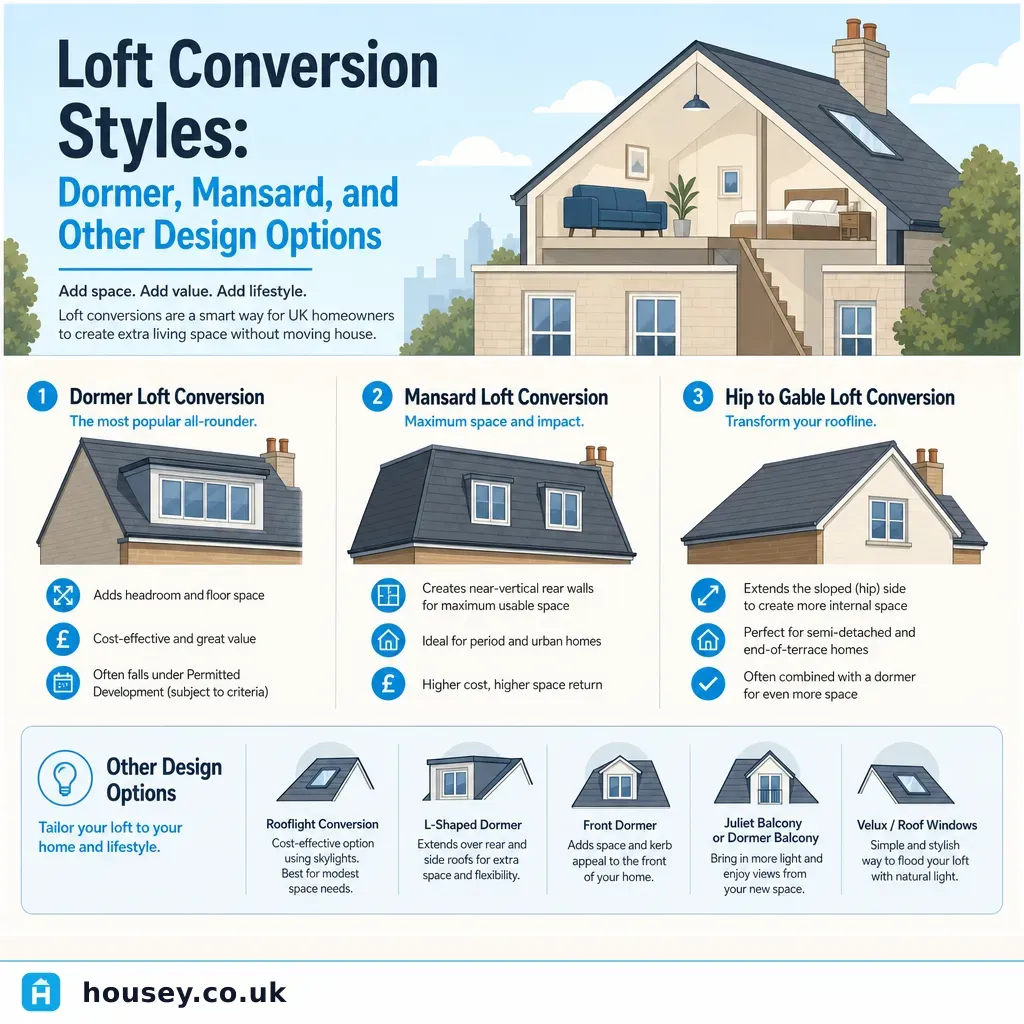
Loft Conversion Styles: Dormer, Mansard, and Other Design Options
The main loft conversion types in the UK are rooflight, dormer, hip-to-gable, and mansard.
 Improvement & Build
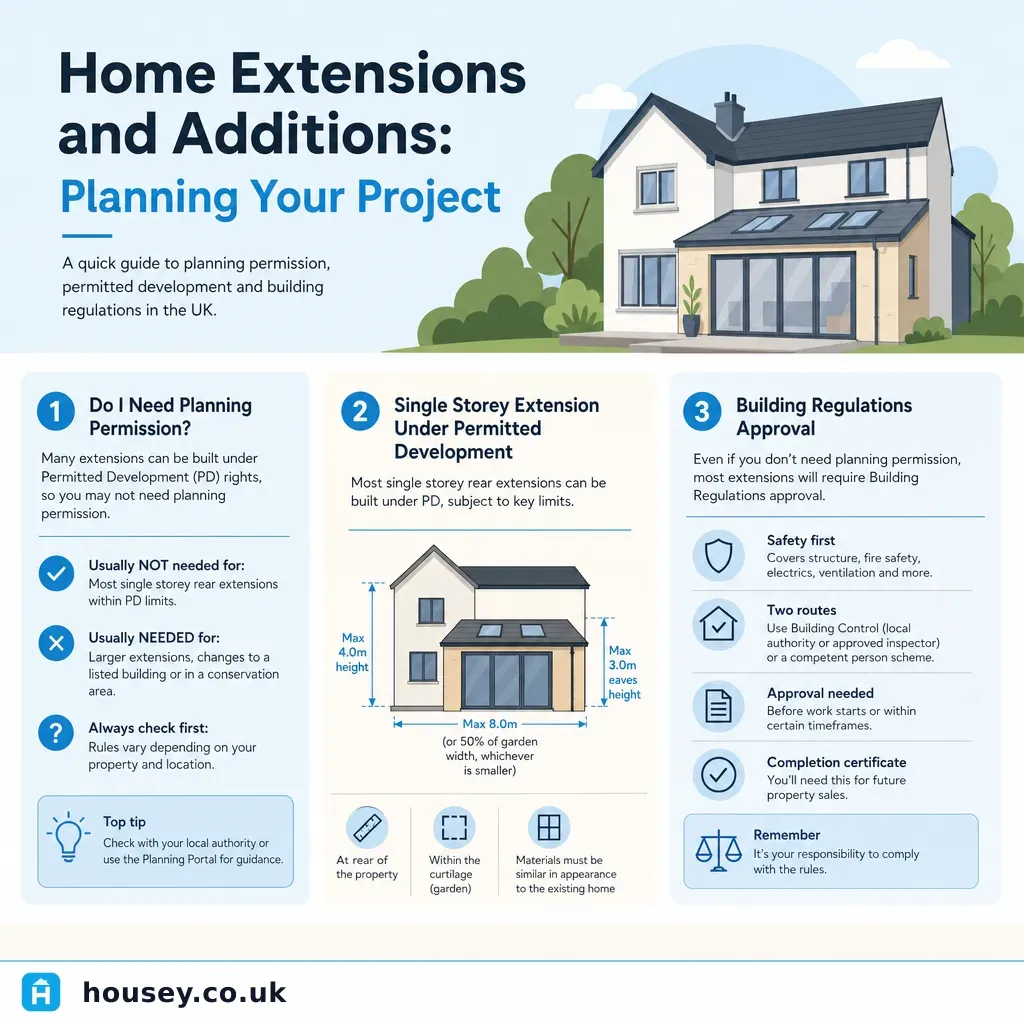
Home Extensions and Additions: Planning Your Project
Most single-storey rear extensions can be built under permitted development without a full planning application, provided they stay within depth limits of 4 m for detached or 3 m for semi-detached and terraced properties.
 Improvement & Build
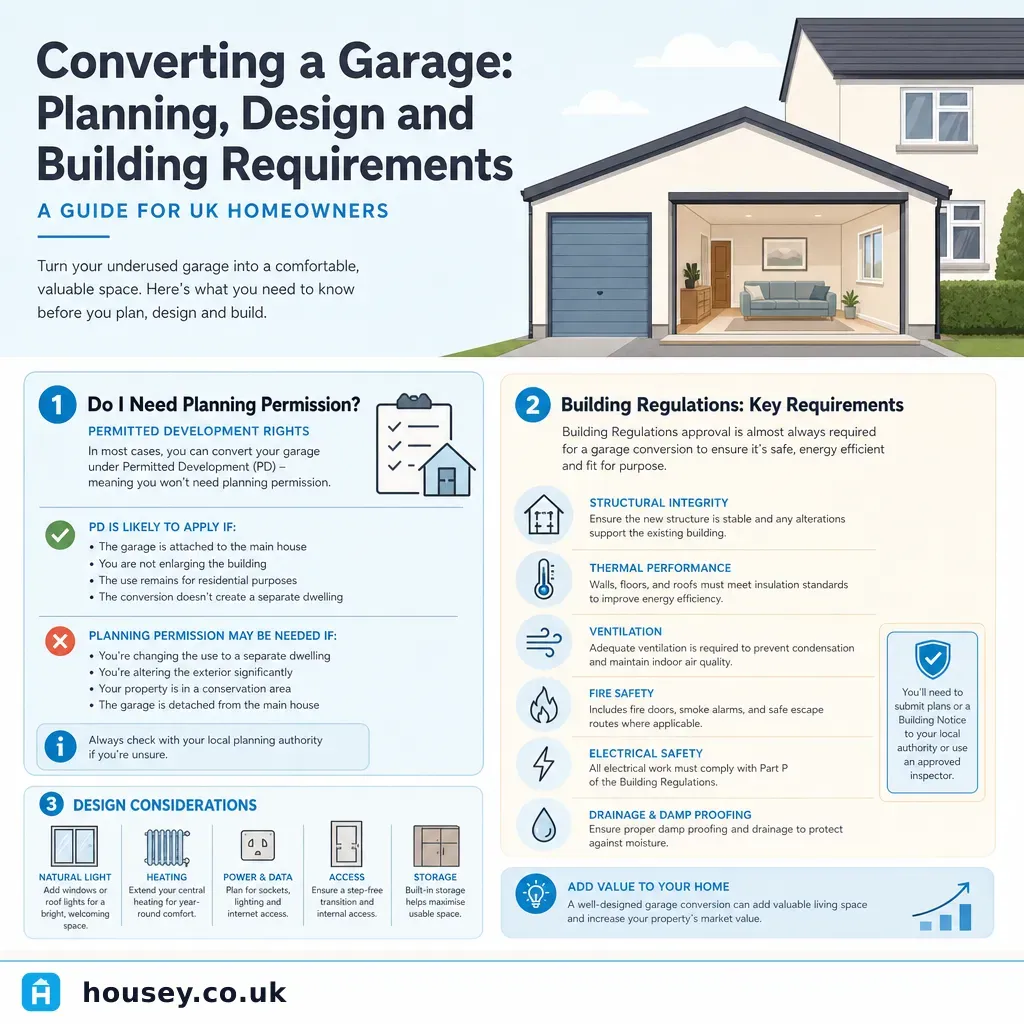
Converting a Garage: Planning, Design and Building Requirements
Most garage conversions in England do not need planning permission under permitted development rights, but all conversions require Building Regulations approval covering structure, thermal insulation, fire safety, and ventilation.
 Improvement & Build
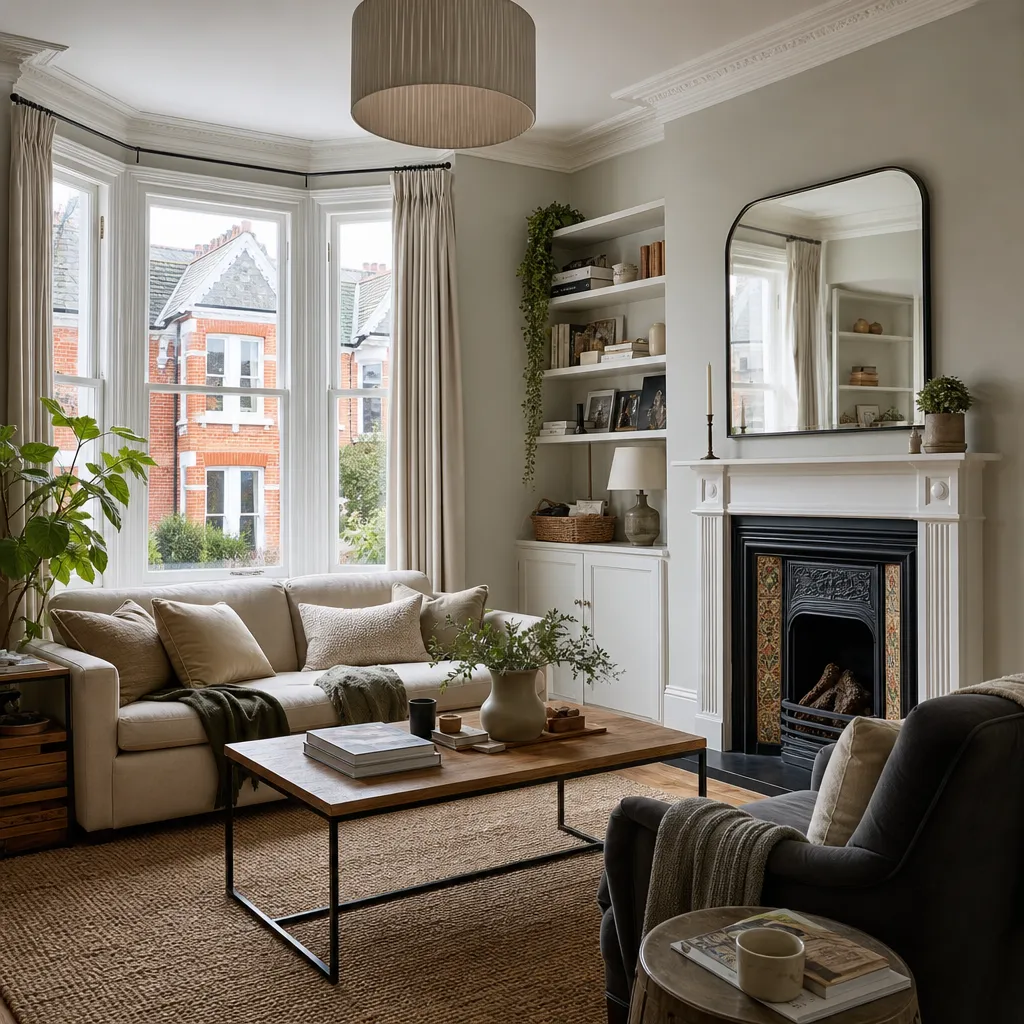
Creating Your Home Sanctuary: Design and Comfort Principles
Creating a home sanctuary is about balancing sensory comfort, functional layout, and personal aesthetic.
 Improvement & Build
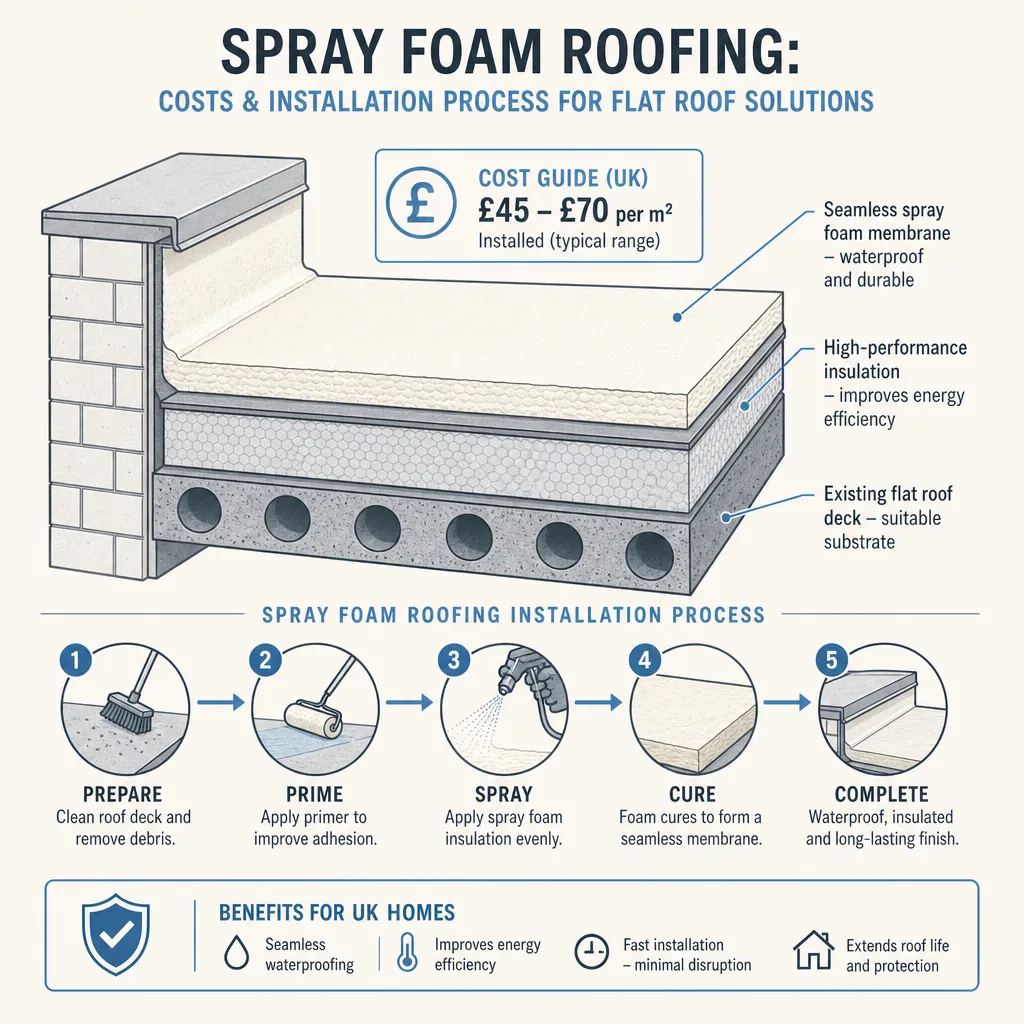
Spray foam roofing: costs and installation process for flat roof solutions
Spray foam roofing for a domestic flat roof in the UK typically costs between £70 and £120 per square metre including preparation, foam application, and UV-protective topcoat, though prices vary with roof size, access, existing substrate condition, and region.