Spray foam roofing: costs and installation process for flat roof solutions
By Housey · Last reviewed 12th of May 2026
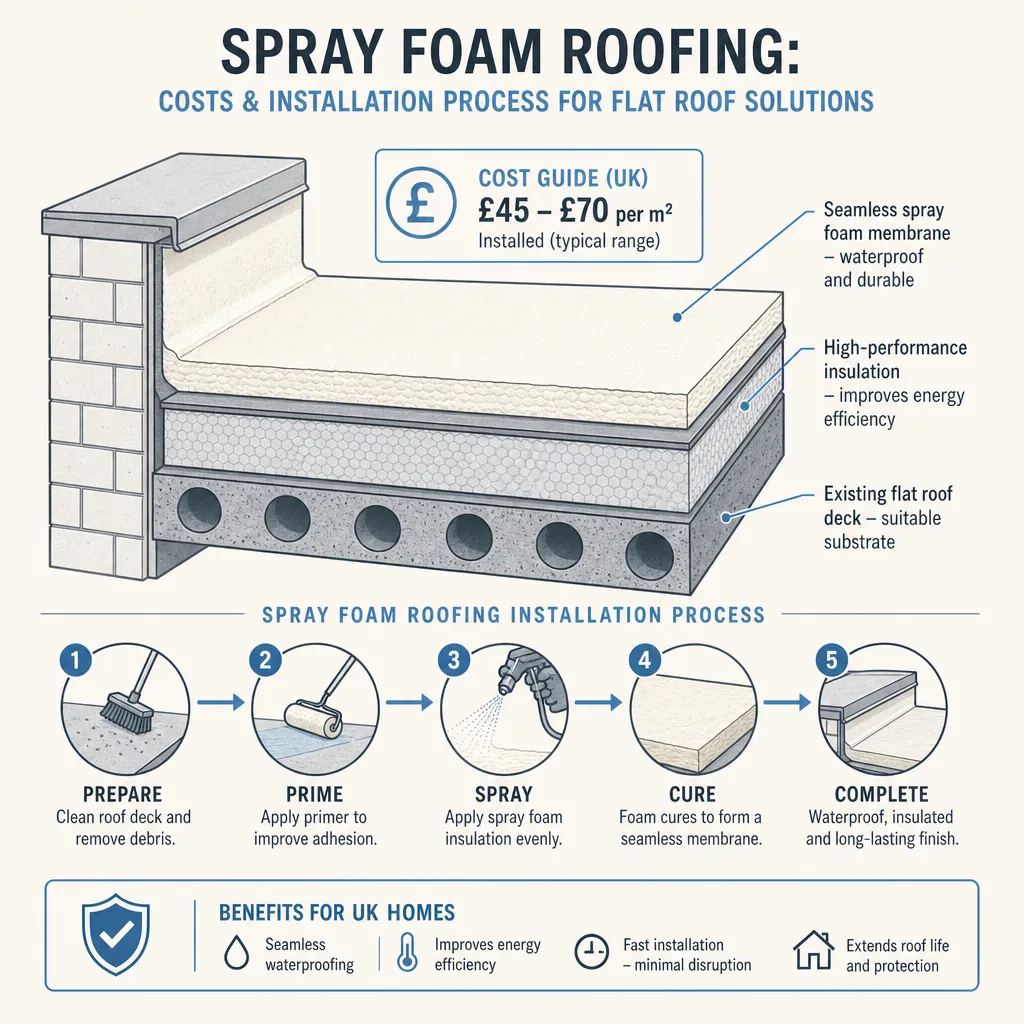
Spray foam roofing: costs and installation process for flat roof solutions
Flat roof refurbishment is a regular maintenance reality for UK homeowners with extensions, garages, and bay windows, and spray polyurethane foam (SPF) roofing is one option that combines waterproofing and insulation in a single application. Understanding what drives the installed cost and how the installation sequence unfolds helps you assess contractor quotes on a like-for-like basis and avoids unwelcome surprises once work is under way.
Key points
- Spray foam roofing for a domestic flat roof typically costs £70–£120 per square metre installed in the UK, including substrate preparation, foam application, and UV-protective topcoat (indicative, last reviewed 2026-05-12).
- Substrate condition is the single biggest cost variable — deck repairs or a full strip before SPF application can add £15–£35 per square metre to the total.
- SPF application requires specialist heated plural-component spray equipment and controlled temperature and humidity conditions; it is not a DIY undertaking and improper installation voids manufacturer warranties.
- Building Regulations notification may be required where SPF improves the roof's thermal performance to meet Part L — confirm with your local building control body before work begins.
- VAT at 20% applies to most roofing works on existing dwellings; confirm the applicable rate with your contractor before accepting any quote.
What drives the cost of spray foam roofing?
Several factors determine the final installed cost, and an accurate quote requires a contractor to inspect the roof in person rather than estimate from measurements alone.
Roof area and complexity. Cost per square metre typically falls for larger, simpler roofs. Awkward shapes, multiple penetrations (rooflights, soil pipes, vents), and complex parapets add to labour time.
Substrate condition. If the existing deck is sound, dry, and firmly adhered, SPF can often be applied over it after cleaning and priming. If the deck is rotten, delaminated, or waterlogged, stripping and replacement are needed first — adding significant cost and extending the programme.
Foam thickness and U-value target. Building Regulations Part L sets a minimum U-value target for refurbished flat roofs — typically 0.18 W/m²K. Achieving this may require 80–120 mm of closed-cell SPF. Greater thickness costs more in material but may eliminate the need for separate insulation boards, potentially offsetting some of the increase.
Topcoat specification. Polyurea topcoats are generally more durable and faster-curing than elastomeric coatings but cost more upfront. The choice affects both initial and long-term maintenance costs.
Access. Ground-floor extensions with clear perimeter access are cheaper to work on than roofs above first-floor level or those restricted by boundary walls, conservatories, or overhead cables.
Location. Labour rates in London and the South East tend to be higher than in other UK regions.
Indicative cost breakdown
Indicative UK costs, last reviewed 2026-05-12. Costs vary significantly by roof area, complexity, access, substrate condition, and region. Obtain at least three quotes before proceeding. All figures exclude VAT at 20%.
Cost element | Indicative range |
|---|---|
Substrate preparation (cleaning, priming) | Typically included in quote |
Deck repairs if required (18–22 mm WBP plywood) | £15–£35/m² additional |
SPF foam application (60–100 mm closed-cell) | £35–£65/m² |
UV-protective topcoat (elastomeric or polyurea) | £20–£35/m² |
Upstand and penetration detailing | £150–£500 per penetration |
Total installed (sound substrate) | £70–£120/m² |
Total installed (deck replacement required) | £90–£155/m² |
The installation process, step by step
Understanding the installation sequence helps you assess contractor proposals and manage the project effectively.
1. Survey and substrate assessment. A reputable SPF contractor inspects the existing roof covering, probes for moisture in the substrate, and checks drainage before quoting. This assessment is fundamental — SPF applied to a wet or failing substrate will eventually fail itself.
2. Substrate preparation. The surface is cleaned of moss, algae, oils, and loose material. Drains and outlets are cleared. Any loose or lifted sections of existing membrane are cut back and made good.
3. Deck repair where required. Failed or saturated decking is removed and replaced, usually with 18–22 mm WBP plywood. Structural issues with joists are identified and addressed at this stage, before any surface treatment proceeds.
4. Priming. A primer compatible with the existing substrate is applied and allowed to cure. Using the correct primer for the substrate is product-specific — incorrect primer selection can void manufacturer warranties.
5. Foam application. The two-component SPF system — polyol resin and isocyanate — is mixed at a heated plural-component spray gun and applied to the deck. The foam expands rapidly and begins curing within seconds. Installers build thickness in multiple passes, working methodically across the surface. Application must occur within suitable conditions: typically 10–35°C ambient temperature and relative humidity below 85%.
6. Foam inspection. The cured foam is inspected for coverage, adhesion, and surface quality. Thin areas or voids are repaired before topcoat application proceeds.
7. Topcoat application. The UV-protective topcoat is applied by spray or roller in at least two coats, achieving an even, pinhole-free film. This is the primary weathering surface of the finished system and must be continuous.
8. Upstand and penetration detailing. SPF is sprayed up and around parapets, upstands, rooflights, and pipe penetrations to create a continuous waterproof layer. These details are the most labour-intensive element of the installation.
9. Inspection and handover. A final inspection checks drainage, detailing, and topcoat finish. Documentation should include the foam product data sheet, topcoat specification, warranty paperwork, and a maintenance schedule.
Worked example: kitchen extension flat roof, East Midlands
A homeowner in the East Midlands has a 30 m² single-storey kitchen extension with a 20-year-old torch-on felt roof showing surface crazing and minor blistering. A contractor survey confirms the deck beneath is sound and dry.
- Substrate preparation and priming: included in quote
- Closed-cell SPF at 80 mm targeting 0.18 W/m²K: ~£45/m² = £1,350
- Elastomeric topcoat (two coats): ~£25/m² = £750
- Upstand detailing (four sides, no penetrations): £400
- Total before VAT: approximately £2,500
- VAT at 20%: £500
- Total including VAT: approximately £3,000
If the deck survey had revealed saturation requiring a full deck replacement at £20/m², the pre-VAT cost would rise to approximately £3,100.
This scenario is illustrative only. Actual costs depend on site survey findings, contractor, specification, and regional labour rates.
Homeowner checklist before installation begins
Confirm each of the following before work starts:
What to ask when comparing quotes
- What substrate preparation is included, and what triggers additional deck-repair costs?
- What foam product is specified, and what are its certified lambda value and fire classification?
- What topcoat system is proposed, and what is the manufacturer's warranty period for it?
- Is the overall system covered by a single manufacturer warranty, or separate foam and topcoat warranties?
- What thickness of foam is being applied, and does this meet Part L U-value requirements for flat roof refurbishment?
- Is VAT included in the quoted figure?
- Will the work be carried out by directly employed installers or subcontractors?
- Can the contractor provide references for at least two comparable domestic flat-roof installations?
When to get professional help
If your flat roof shows signs of deflection, ponding water, or persistent internal damp, obtain a professional condition survey before committing to any surface-applied system. SPF applied over a failing substrate will not resolve the underlying problem and is likely to fail prematurely, leaving you with the cost of removal as well as replacement.
An experienced flat roof specialist can survey the existing structure, confirm whether SPF is appropriate, and advise whether full membrane replacement would offer better long-term value for your specific roof.
How Housey can help
Housey connects you with vetted flat roof specialists experienced in spray foam application and alternative flat roof systems. Request quotes from multiple contractors, compare their specifications and warranties, and make a confident, informed choice before any work begins.
Frequently asked questions
How much does spray foam roofing cost per square metre in the UK?
For a domestic flat roof with a sound existing substrate, indicative installed costs are £70–£120 per square metre including substrate preparation, foam, and UV-protective topcoat (last reviewed 2026-05-12). VAT at 20% is additional for most roofing works. Costs rise significantly if deck replacement is required or if the roof has many penetrations, complex geometry, or difficult access.
How long does spray foam roof installation take?
Most domestic flat roof spray foam projects — extensions, garages, bay windows — are completed within one to two days. Larger roofs, those requiring deck repairs, or properties with restricted access may take three to four days. Expect some disruption to external access around the building during the application and curing period.
Can I get spray foam roofing installed on my garage?
Yes, SPF roofing is well-suited to domestic garage flat roofs where existing felt has deteriorated and the deck is confirmed sound. Costs and the installation process are the same as for any domestic flat roof. If the garage is attached to the house, check whether the works affect any party structure or require building control notification.
Does spray foam roofing count as insulation for Building Regulations purposes?
Yes. When SPF improves the thermal performance of a flat roof, the works may be subject to Building Regulations Part L. A minimum U-value of 0.18 W/m²K is generally required for flat roof refurbishments. Your contractor should confirm the specified foam thickness achieves compliance and advise whether a building notice or full plans application is needed before work starts.
Sources and further reading
- Building Regulations Approved Document L: Conservation of Fuel and Power — GOV.UK
- Flat roofing: permitted development — Planning Portal
- VAT on construction and building work — HMRC
- NHBC Standards — NHBC
Useful next reads
 Improvement & Build
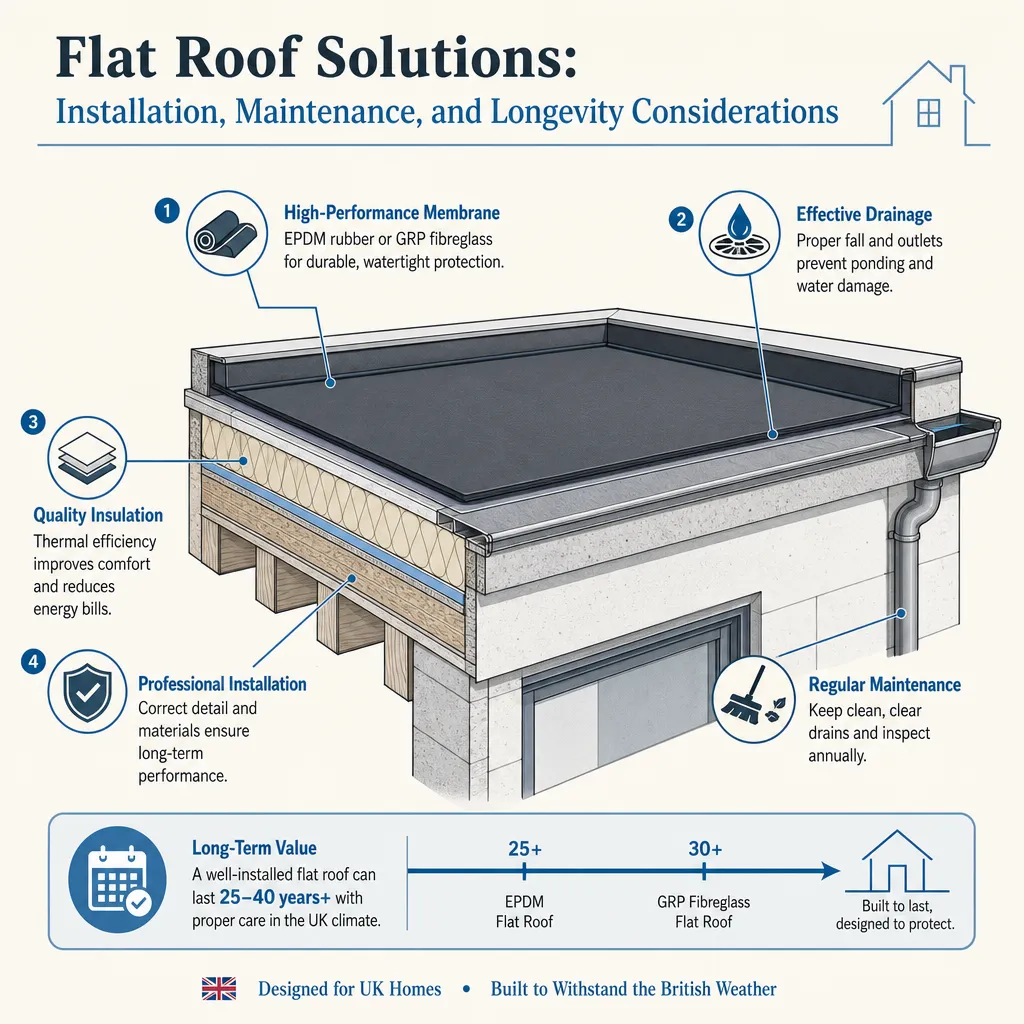
Flat Roof Solutions: Installation, Maintenance, and Longevity Considerations
Flat roofs use several waterproofing systems — EPDM rubber, GRP fibreglass, liquid-applied coatings, modified bitumen felt, lead, and zinc — each with different lifespans and installation requirements.
 Improvement & Build
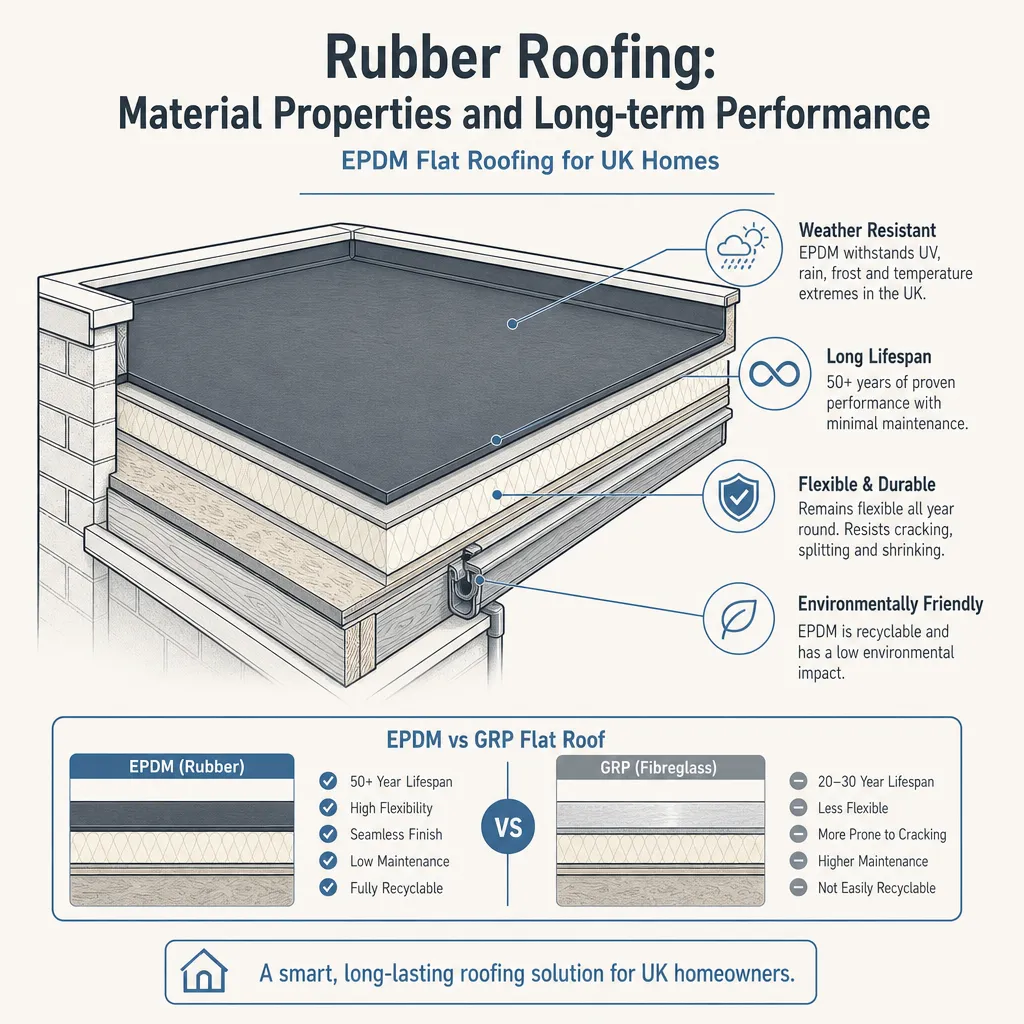
Rubber Roofing: Material Properties and Long-term Performance
EPDM rubber roofing is a synthetic rubber membrane used on UK flat roofs, available in large sheets that minimise seams.
 Improvement & Build
Comparing Flat and Pitched Roofing: Costs, Durability and Maintenance
Flat roofs typically cost less to install per square metre but require more maintenance and have a shorter lifespan than pitched roofs.
 Improvement & Build
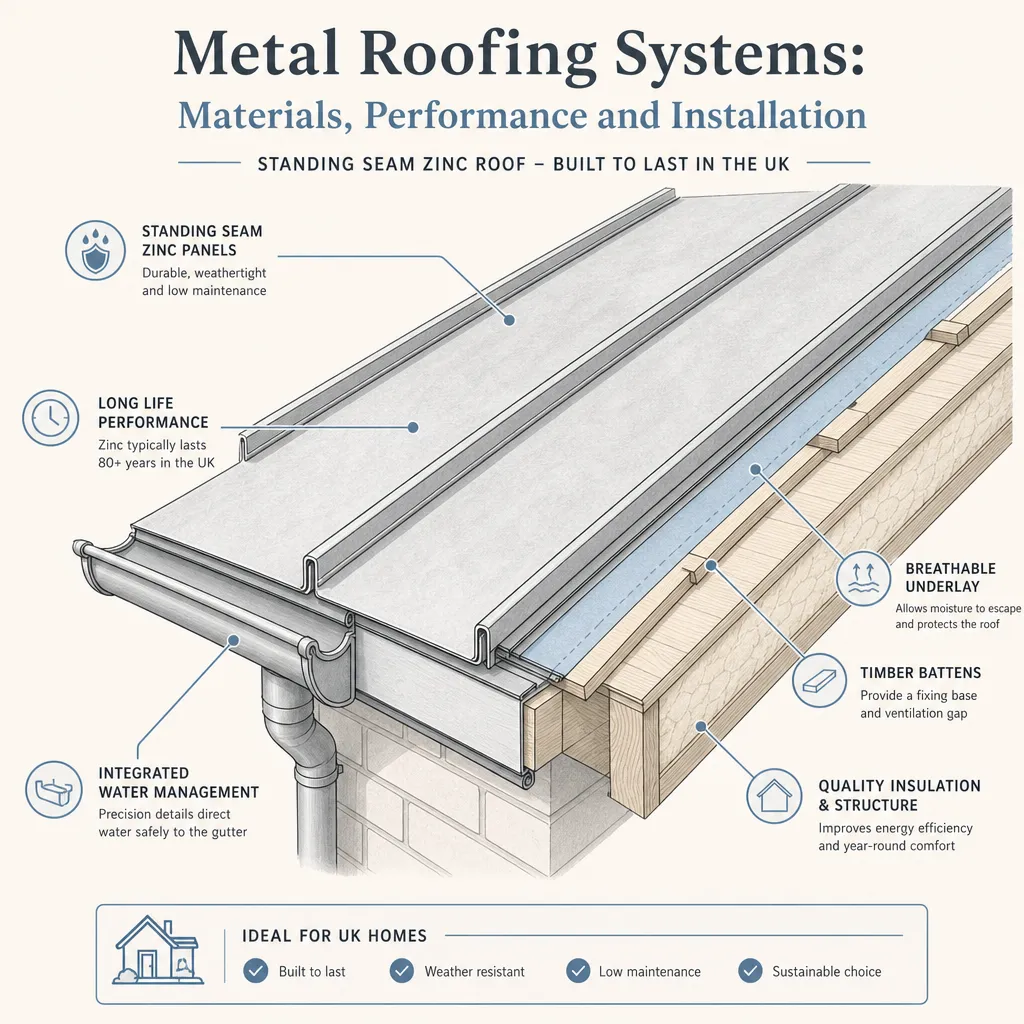
Metal Roofing Systems: Materials, Performance and Installation
Metal roofing systems in the UK include standing seam zinc, coated steel, aluminium, and copper panels, as well as profiled sheets.
 Improvement & Build
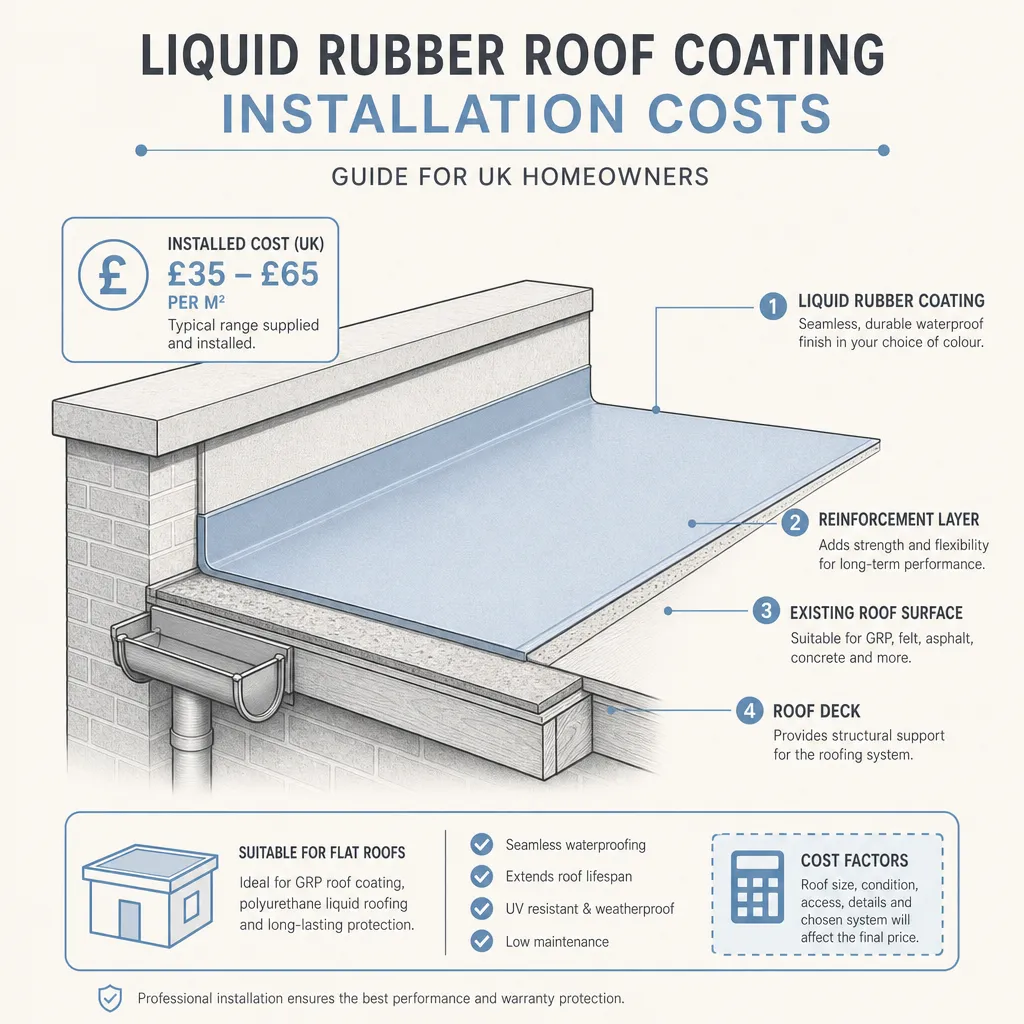
Liquid Rubber Roof Coating Installation Costs
Professional liquid rubber roof coating in the UK typically costs £50 to £120 per m² installed, depending on system type, roof condition, and location.