Creating Watertight Walls: Waterproofing Methods and Materials
By Housey · Last reviewed 24th of May 2026
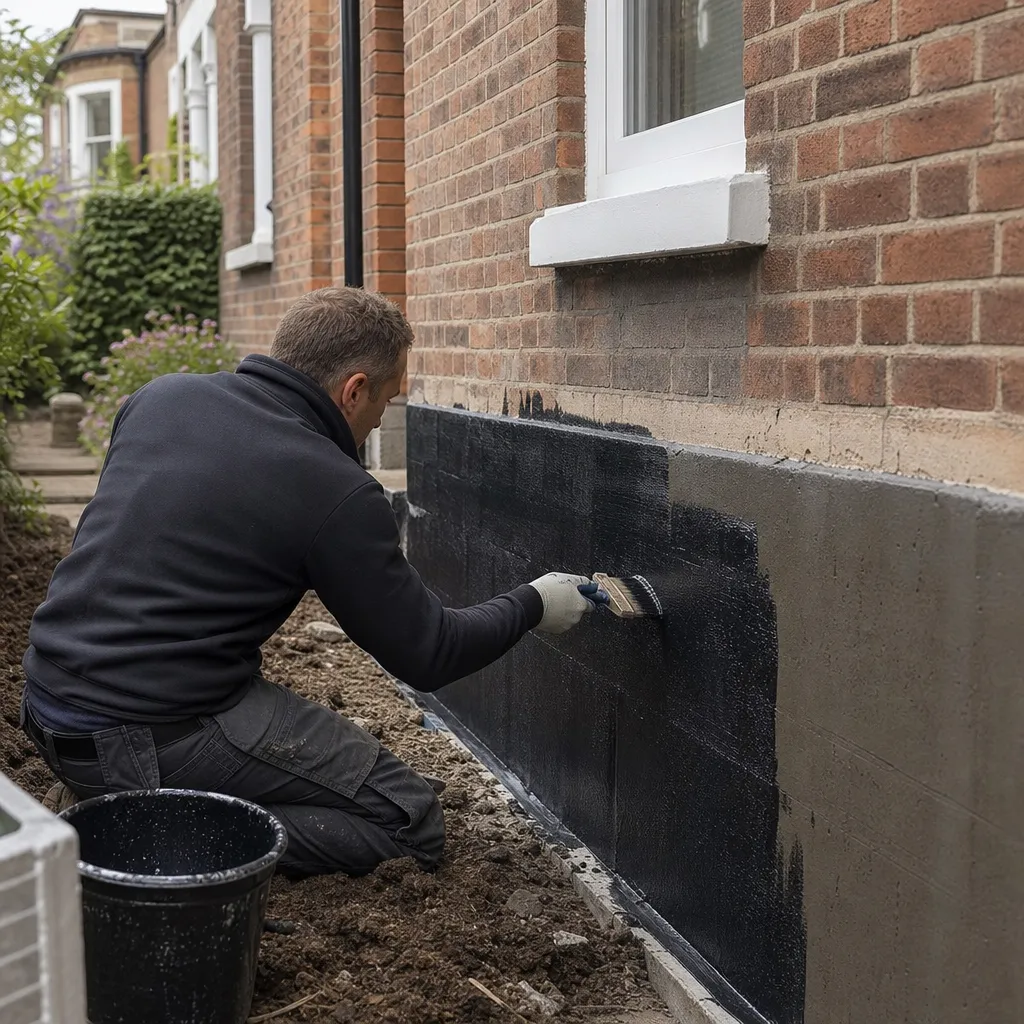
Creating Watertight Walls: Waterproofing Methods and Materials
Damp walls are one of the most frequently misdiagnosed and incorrectly treated problems in UK housing stock. Whether the issue is in a Victorian terrace with failed pointing, a 1930s semi with a bridged damp-proof course, or a semi-basement flat being converted to habitable use, the choice of waterproofing method is critical. A poorly matched treatment can trap moisture, damage historic masonry, create conditions for mould and timber decay, and — where wall insulation is also planned — substantially increase the risk of interstitial condensation and long-term structural deterioration.
Key points
- BS 8102:2022 (Protection of below-ground structures against water from the ground) defines three waterproofing types — A (barrier), B (structurally integral), and C (drained cavity) — and specifies the appropriate system for each grade of protection and intended use.
- PAS 2035:2019 requires a moisture risk assessment before adding wall insulation to any existing dwelling — skipping this step is a leading cause of post-retrofit mould, decay, and warranty disputes.
- Rising damp is significantly rarer than its diagnosis rate suggests; RICS guidance notes that many rising damp diagnoses in UK housing are actually condensation or penetrating damp, with hygroscopic salts in old plaster producing misleadingly high meter readings.
- Chemical damp-proof course (DPC) injection is appropriate only for confirmed genuine rising damp and must be followed by replastering with sulphate-resistant plaster — otherwise salts contaminate the new surface.
- A Type C cavity drain membrane system is generally the most reliable remedial approach for below-ground habitable spaces in the UK, because it manages water ingress rather than relying on a continuously watertight seal.
Understanding the types of wall dampness in UK homes
Before any waterproofing treatment can be correctly specified, the moisture source must be accurately identified. In UK residential property, the three main categories are:
Rising damp: Groundwater drawn upwards through masonry by capillary action where the existing damp-proof course is absent, failed, or bridged by raised external ground levels, render, or debris. Usually confined to the lower metre of ground-floor walls; characterised by a high-tide mark and hygroscopic salts in the plaster.
Penetrating damp: External moisture entering through the wall face — via defective pointing, failed render, damaged gutters, blocked downpipes, cracked flashings, or a bridged cavity. Can affect walls at any height. Common in solid-wall Victorian and Edwardian properties and in high-exposure coastal or upland locations.
Condensation: Moisture from warm internal air depositing on cold surfaces, particularly cold external walls, window reveals, and thermal bridges. Extremely common in UK homes — especially solid-wall and poorly ventilated properties — and frequently confused with penetrating or rising damp.
Accurate diagnosis is the single most important step in any waterproofing project. Electronic moisture meters used alone are unreliable diagnostically — hygroscopic salts in old plaster retain moisture and produce high readings regardless of whether active water ingress is currently occurring.
Comparing waterproofing systems for UK walls
System | BS 8102 type | Best for | Key limitations | Typical professional |
|---|---|---|---|---|
Cementitious tanking (internal) | Type A | New-build basements; low hydrostatic pressure internal applications | Single point of failure if breached; limited under significant positive water pressure | Waterproofing specialist or damp contractor |
Sheet membrane (external) | Type A | New-build below-ground structures during construction | Not practical as a remedial option where no external access exists | Specialist waterproofing contractor |
Integral concrete waterproofing (crystalline additive) | Type B | New reinforced concrete construction only | Cannot be applied retrospectively to existing masonry | Structural engineer and specialist supplier |
Cavity drain membrane with sump and pump | Type C | Habitable basements; below-ground retrofits; cellar conversions | Requires drainage channel, sump, and pump; takes up wall and floor space; pump needs maintenance | BBA-certificated specialist basement contractor |
Chemical DPC injection | Above-ground only | Confirmed genuine rising damp in masonry walls | Ineffective if bridging is not removed; must be followed by sulphate-resistant replastering | PCA-member or RICS-accredited damp specialist |
Silane/siloxane masonry water repellent | Above-ground only | Porous brick or stone in high-exposure locations | Supplementary only; does not resolve internal moisture sources | Competent builder or damp specialist |
External wall insulation with render (EWI) | Above-ground only | Solid-wall properties; addresses cold surfaces causing condensation | Correct detailing essential; moisture risk assessment required per PAS 2035 | TrustMark or MCS-registered retrofit installer |
Indicative suitability only — always obtain an independent survey before specifying treatment. Costs vary significantly; last reviewed 2026-05-24.
Which waterproofing approach should you choose?
- Choose Type C cavity drain membrane if you are converting a basement or below-ground space to habitable use — it is the most reliable remedial approach in UK conditions and manages water rather than depending on a perfect seal.
- Choose Type A cementitious tanking for modest internal applications where water pressure is low and external access is not possible, while accepting the limitations of a barrier approach.
- Choose chemical DPC injection only after an independent survey has confirmed genuine rising damp, all sources of bridging have been identified and removed, and the contractor plans sulphate-resistant replastering.
- Choose silane/siloxane water repellent as a supplementary treatment for porous external masonry in high-exposure locations — not as a standalone treatment for significant penetrating damp.
- Seek a damp and timber survey if you are uncertain about the moisture source — independent diagnosis before any treatment avoids costly and potentially damaging misspecification.
- Instruct a damp proofing specialist with Property Care Association (PCA) membership or BBA-certificated system experience for any below-ground or structural waterproofing project.
- Check PAS 2035 moisture risk requirements before combining waterproofing with any planned wall insulation works.
What a damp survey should cover
An independent damp survey — not conducted by a company with a commercial interest in selling remedial treatments — should identify:
- The moisture source and type: rising damp, penetrating damp, or condensation.
- Moisture readings at key points using calibrated meters, with salt content analysis where old plaster is present.
- Whether an existing damp-proof course is present, absent, failed, or bridged by external ground levels, built-up render, or debris.
- The condition of external walls, pointing, render, gutters, downpipes, and flashings that may be contributing to penetrating damp.
- Ventilation deficiencies that may be causing or worsening condensation.
- A treatment specification citing BS 8102, BS 6576 (code of practice for DPC installation in masonry walls), or PAS 2035 as applicable.
RICS-accredited surveyors and Property Care Association (PCA) members are the recognised competent professionals for residential damp diagnosis in the UK.
Important limitations
This article provides general information about wall waterproofing methods and materials relevant to UK residential properties. Moisture management in buildings is a technically complex area where incorrect diagnosis or treatment can cause serious harm to building fabric, reduce energy performance, and create conditions for mould and timber decay. Appropriate systems vary considerably by property type, age, construction method, exposure zone, ground conditions, and intended use. This article is not a substitute for an independent professional assessment. The interaction between waterproofing and proposed wall insulation must be assessed by a qualified professional with reference to PAS 2035 — failure to do so is a recognised cause of retrofit-related mould, structural damage, and warranty disputes.
When this becomes urgent
Seek professional advice without delay if:
- You can see mould growth on internal wall surfaces, particularly at junctions with floors, ceilings, window reveals, or external corners.
- Skirting boards, floor joists, or structural timber elements near damp walls feel soft, show dark staining, or have evidence of active wet rot decay.
- You are planning to add insulation to any solid wall, cavity wall, or basement wall without a prior moisture risk assessment.
- A damp or condensation problem has persisted or worsened despite previous treatment.
- You are planning a basement conversion and have not yet obtained a waterproofing specification based on BS 8102:2022.
What to ask a qualified professional
- Is this survey completely independent of any remedial treatment company, or does your organisation also sell treatments?
- What specific moisture source have you identified — rising damp, penetrating damp, or condensation — and what evidence supports that diagnosis?
- Are you a member of the Property Care Association (PCA) or RICS-accredited for damp surveying work?
- Which British Standard does your proposed treatment system comply with, and can you cite the relevant clause?
- If recommending DPC injection, what plaster specification will follow, and why sulphate-resistant plaster specifically?
- If recommending a Type C cavity drain system, which BBA-certificated membrane product are you specifying, and who maintains the sump pump long-term?
- Does your treatment come with an insurance-backed guarantee, and which insurer provides it?
- Have you assessed the moisture risk implications of any planned insulation under PAS 2035?
When to get professional help
Any wall waterproofing beyond basic external maintenance — such as applying a water repellent to sound external brickwork — should involve professional assessment before treatment is specified. Seek professional input if:
- Visible mould or salt efflorescence is present on internal wall surfaces.
- Skirting boards or structural timber near external walls feel soft or show signs of decay.
- Damp readings are inconsistent, unexplained, or have not responded to previous treatment.
- The project involves a below-ground or semi-basement space.
- Wall insulation is planned on a solid-wall or solid-floor property.
A damp and timber survey provides an independent baseline before any contractor is instructed. A qualified damp proofing specialist with verifiable credentials can then specify and guarantee a correctly matched treatment system.
How Housey can help
Housey connects you with independent damp and timber surveyors and accredited damp proofing specialists across the UK. Get the diagnosis right first, then compare quotes for treatment from vetted professionals who understand which waterproofing system suits your property type and moisture challenge.
Frequently asked questions
What is the difference between Type A, B, and C waterproofing under BS 8102?
BS 8102:2022 defines three system types for below-ground waterproofing. Type A is a barrier approach — coatings, membranes, or tanking applied to exclude water. Type B relies on structurally integral concrete or masonry and applies only to new construction. Type C manages water through a drained cavity system with sump pump. For below-ground retrofits in UK homes, Type C is generally the most reliable because it does not depend on maintaining a continuously perfect seal.
Is rising damp common in UK homes?
Less common than widely believed. RICS guidance and independent research note that many rising damp diagnoses are actually condensation, penetrating damp, or hygroscopic salt activity in old plaster producing misleadingly high meter readings. A reliable diagnosis requires relative humidity probes, salt analysis, and assessment of external factors — not a single hand-held meter reading alone. Always obtain an independent survey before specifying any treatment.
Can I waterproof a wall myself?
Applying a silane/siloxane water repellent to sound external masonry is within the reach of a competent homeowner following manufacturer instructions. However, any below-ground waterproofing, chemical DPC injection, internal tanking, or work intended to make a basement habitable should be designed and installed by a qualified specialist. Incorrectly installed systems typically trap moisture and cause far greater and more expensive damage than the original problem.
Does waterproofing affect a property's EPC rating or energy efficiency grant eligibility?
Waterproofing itself does not directly improve an EPC rating, but resolving moisture is often a prerequisite for safely adding insulation — which does improve EPC performance. Under ECO4 and the Great British Insulation Scheme, properties with active damp may be ineligible for grant-funded insulation until moisture is addressed. Under PAS 2035, retrofit coordinators must ensure moisture risk is assessed and mitigated before insulation measures proceed.
Sources and further reading
- BS 8102:2022 — Protection of below-ground structures against water — BSI Group
- PAS 2035:2019 — Retrofitting dwellings for improved energy efficiency — BSI / DESNZ
- RICS guidance on damp and condensation in housing — RICS
- Property Care Association: Damp treatment guidance — PCA
- ECO4 scheme guidance for installers — GOV.UK / Ofgem
- Energy Saving Trust: Solid wall insulation — Energy Saving Trust
Useful next reads
 Surveys & Inspections
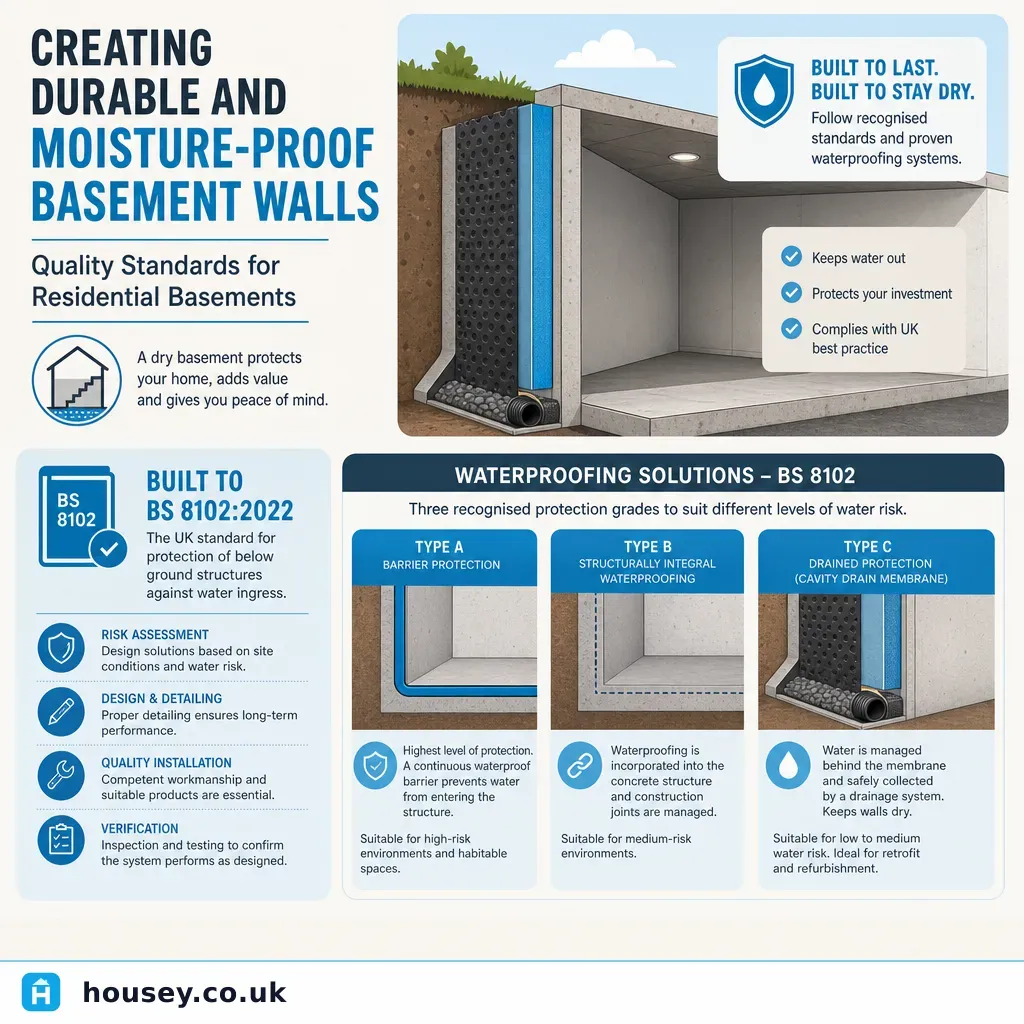
Creating Durable and Moisture-Proof Basement Walls: Quality Standards for Residential Basements
Basement waterproofing in UK homes must meet BS 8102:2022 requirements.
 Surveys & Inspections
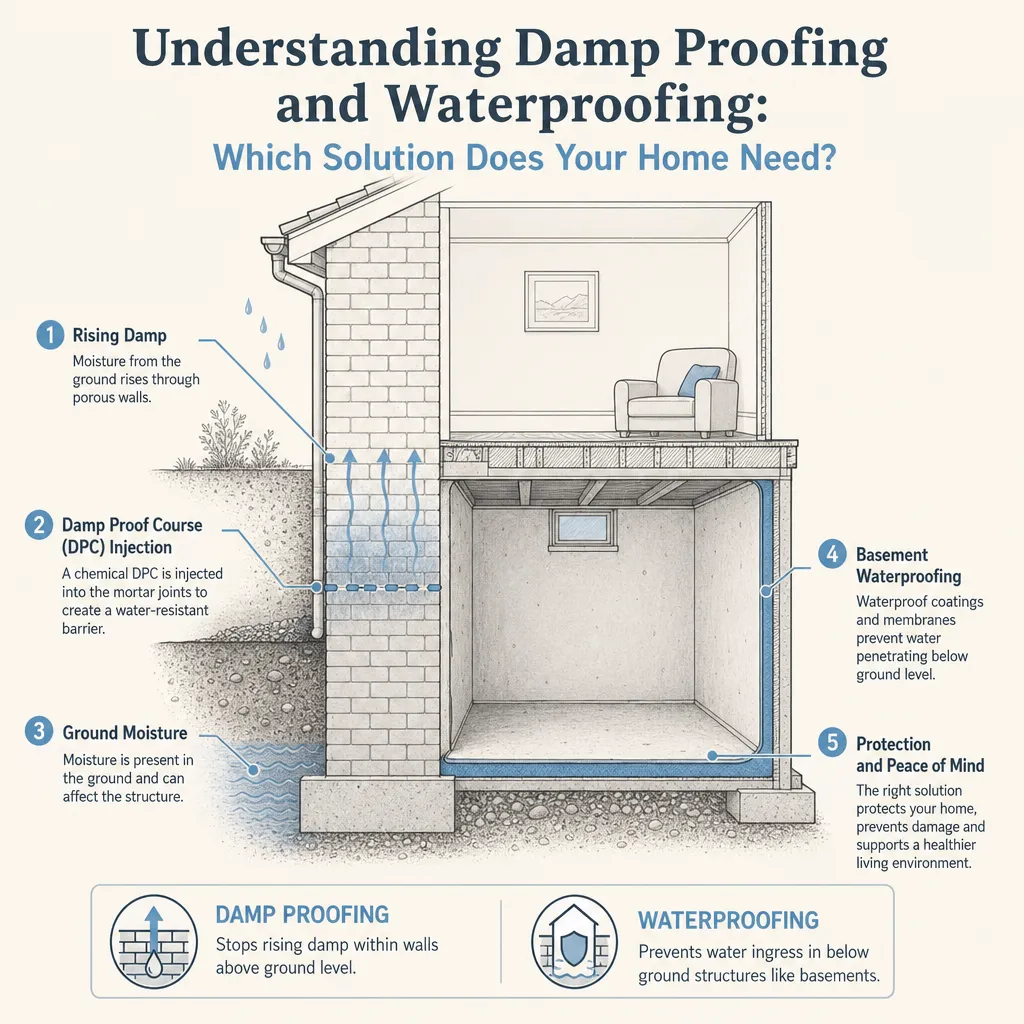
Understanding Damp Proofing and Waterproofing: Which Solution Does Your Home Need?
Damp proofing controls moisture movement through above-ground walls, while waterproofing excludes groundwater from below-ground structures.
 Surveys & Inspections
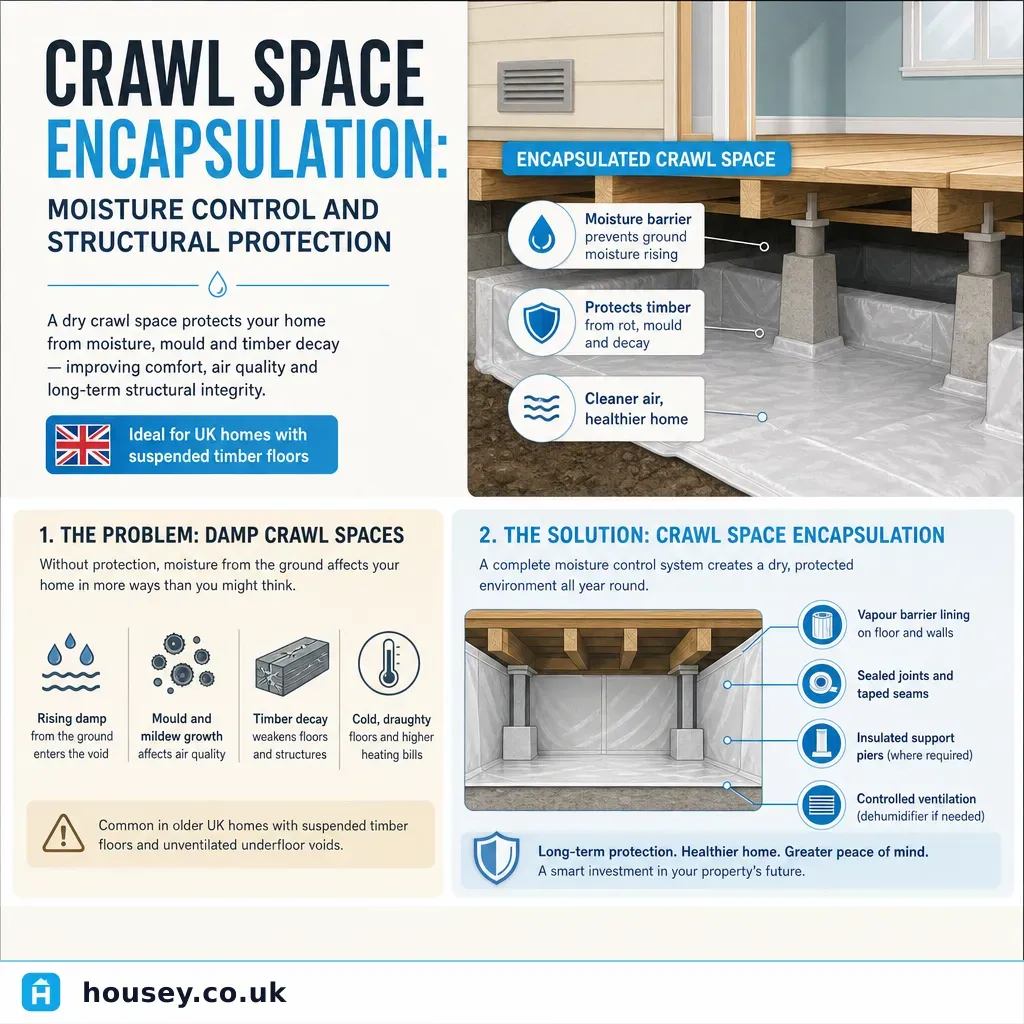
Crawl Space Encapsulation: Moisture Control and Structural Protection
Crawl space encapsulation seals the subfloor void beneath suspended timber floors with a vapour control layer and improved ventilation to prevent rising damp, condensation, timber rot and structural damage.
 Surveys & Inspections
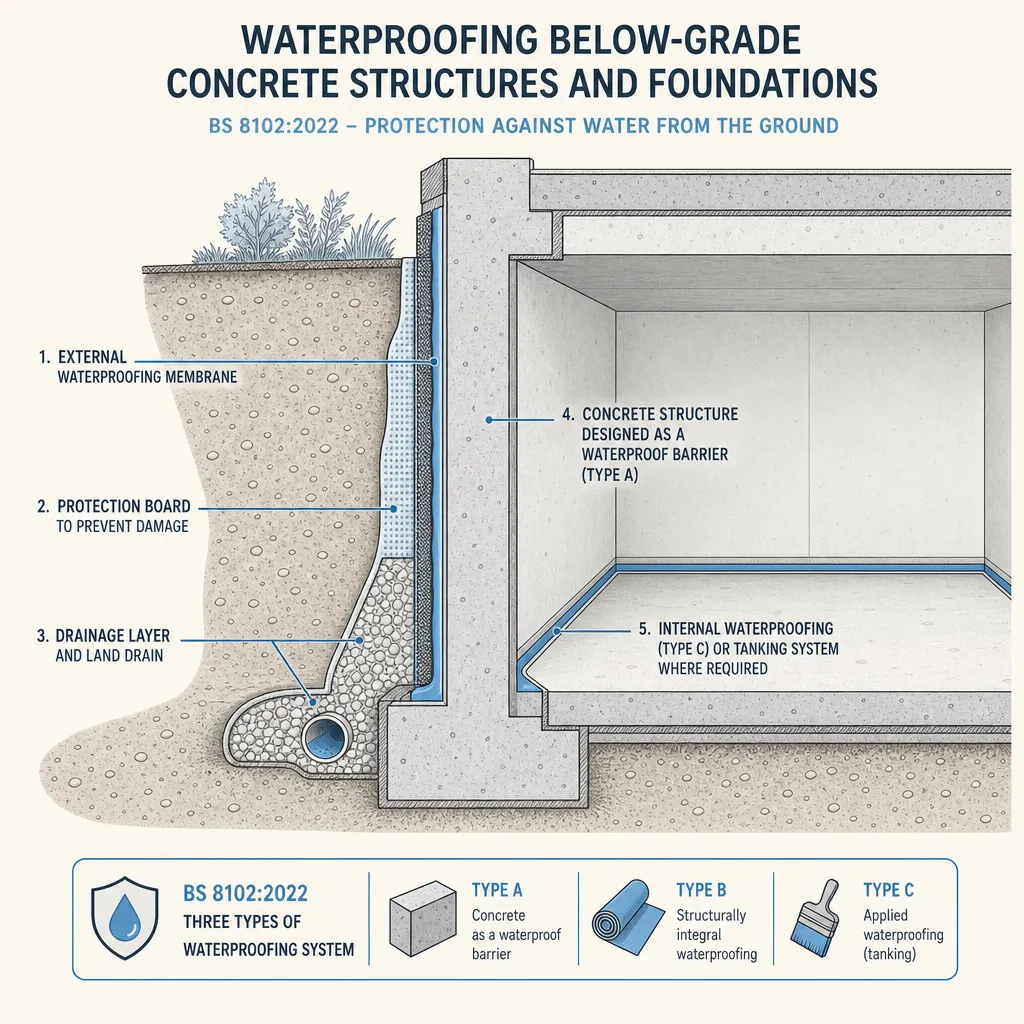
Waterproofing Below-Grade Concrete Structures and Foundations
Below-grade waterproofing in the UK should be designed to the grade of protection required under BS 8102:2022.
 Surveys & Inspections
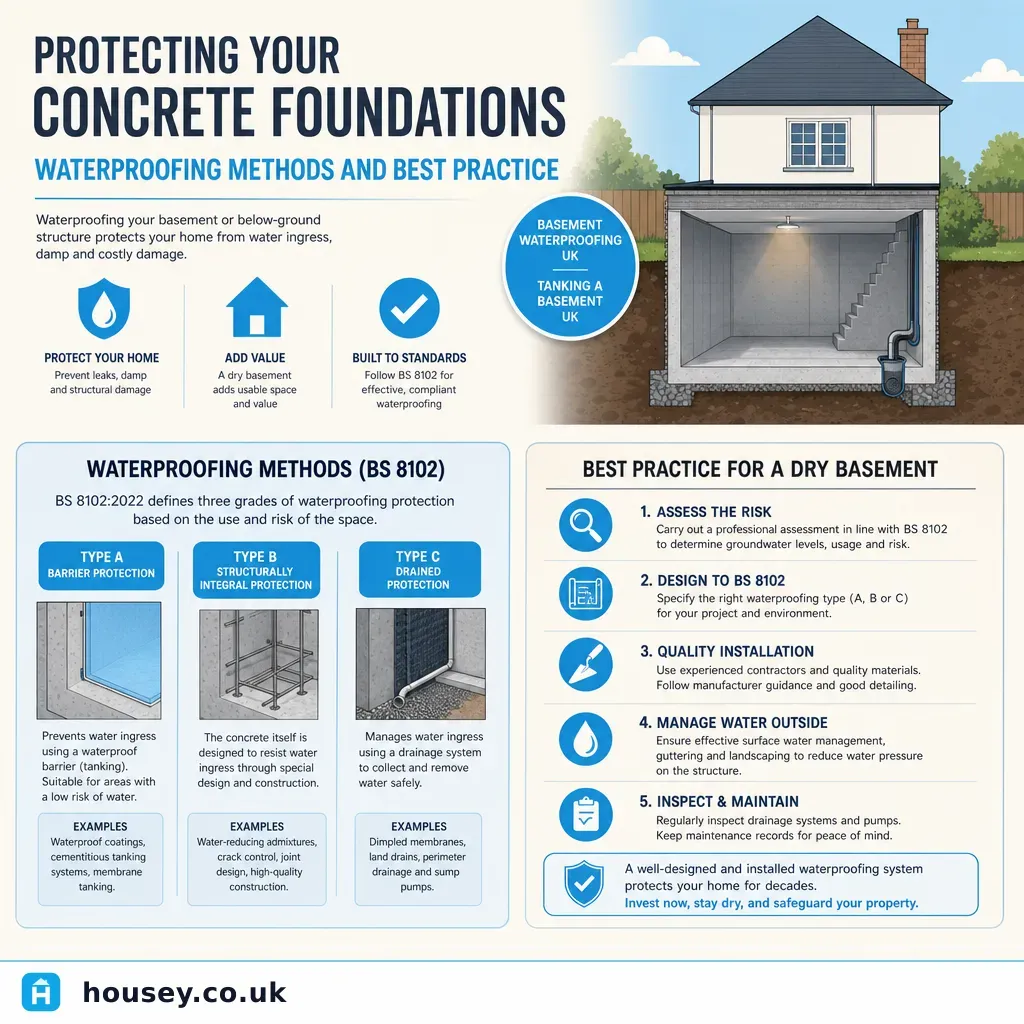
Protecting Your Concrete Foundations: Waterproofing Methods and Best Practice
Foundation waterproofing protects below-ground concrete structures from hydrostatic pressure and soil moisture.