Crown Moulding Installation and Cornice Trimming Costs
By Housey · Last reviewed 6th of May 2026
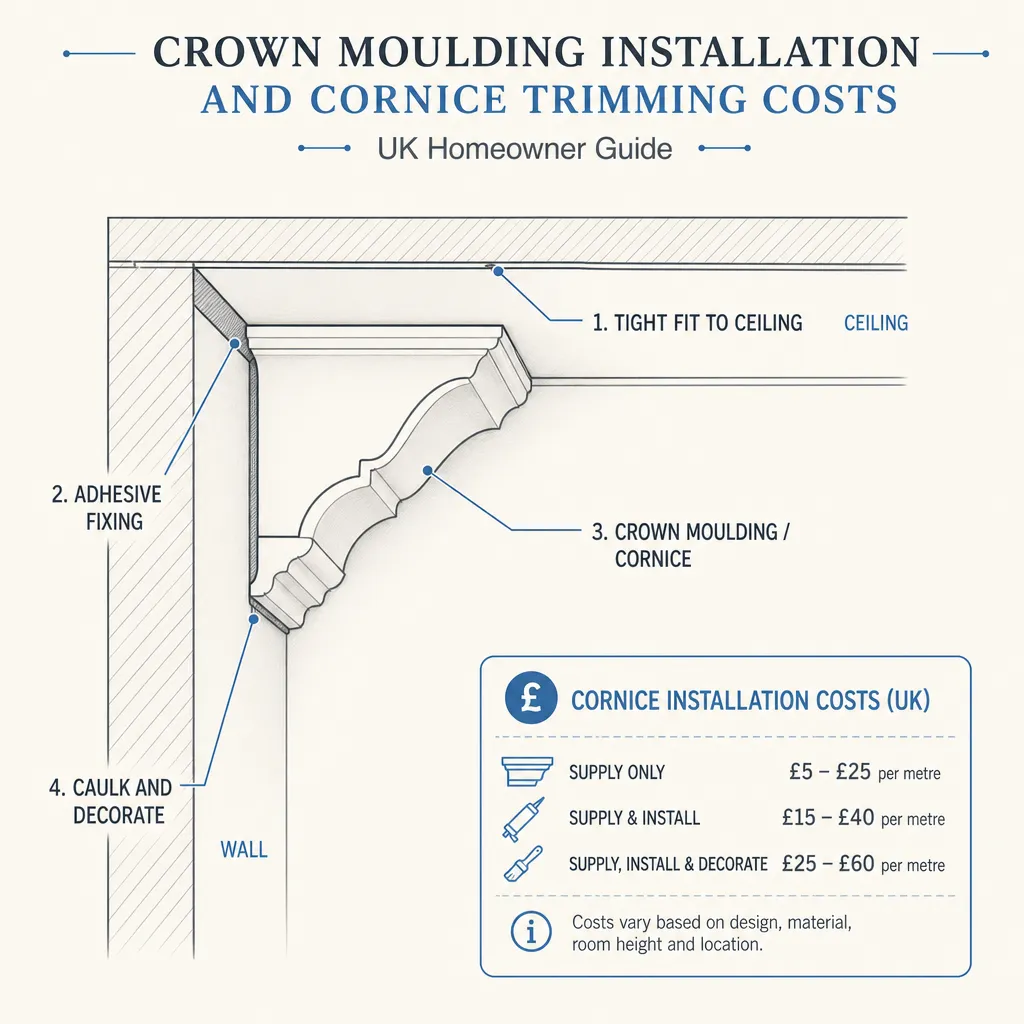
Crown Moulding Installation and Cornice Trimming Costs
In the UK, what is often called "crown moulding" in American interiors is more commonly described as cornice or coving — the decorative trim at the junction between wall and ceiling. Whether you are reinstating period plasterwork in a Victorian terrace, adding a simple coved profile to a new-build room, or matching an existing cornice line after a loft conversion, the right material, the right tradesperson, and a realistic understanding of costs all vary considerably depending on what you need and what is already there.
Key points
- Standard coving (plain coved profile in polystyrene or pre-cast plaster) costs approximately £15–£25 per linear metre installed; more detailed decorative cornice in plaster or MDF typically costs £25–£45 or more per linear metre (Indicative UK costs, last reviewed 2026-05-06).
- In listed buildings, original decorative plasterwork is commonly protected by the listing; alteration or removal without listed building consent may be unlawful under the Planning (Listed Buildings and Conservation Areas) Act 1990.
- A standard 4m × 4.5m bedroom (approximately 17 linear metres of perimeter) might cost £270–£760 to cornice including supply and fit, before any removal of existing material (Indicative UK costs, last reviewed 2026-05-06).
- Run-in-place cornice — formed on site by a specialist heritage plasterer — is the most expensive option but is often required for listed properties or exact period profile matching.
- Cornice installation is not a licensed trade in the UK; it may be carried out by a decorator, joiner, plasterer, or specialist cornice fitter depending on the material and profile chosen.
Types of cornice available in the UK
Polystyrene coving
The most affordable option, sold widely in DIY outlets. Lightweight and quick to fit but limited to simple profiles and prone to visible joins at corners. Rarely specified in professional interior projects.
Pre-cast plaster coving and cornice
The most common mid-market option. Available in a wide range of profiles — from simple coving to detailed egg-and-dart or dentil cornices — from specialist plaster moulding suppliers. Pre-cast plaster can be painted to a high standard and is significantly more durable than polystyrene.
MDF cornice
MDF cornice profiles are machine-cut and dimensionally stable. They accept paint finishes well, are available in a wide range of profiles, and are typically fitted by a joiner or finish carpenter. Not suitable for damp rooms.
Polyurethane (PU) cornice
PU mouldings mimic the appearance of plaster, are lightweight and moisture-resistant — useful in kitchens and bathrooms — and are easier to cut and fit than plaster. Quality varies between suppliers; mid-range PU can be a cost-effective alternative to pre-cast plaster for many domestic applications.
Run-in-place (fibrous or solid plaster)
Formed on site by a specialist plasterer using a running mould to produce a continuous profile with no visible joints. Required for exact matching of existing cornice on listed or historic properties. The most expensive and time-consuming option, requiring highly skilled labour.
How much does cornice installation cost in the UK?
Indicative UK costs, last reviewed 2026-05-06 (quotes will vary by region, profile, and specification):
Material | Supply (per linear metre) | Installation labour (per linear metre) | Typical total (per linear metre) |
|---|---|---|---|
Polystyrene coving (DIY grade) | £3–£7 | £8–£12 | £15–£20 |
Pre-cast plaster coving/cornice | £8–£20 | £12–£20 | £20–£40 |
MDF cornice | £10–£25 | £12–£20 | £22–£45 |
Polyurethane (PU) cornice | £10–£30 | £12–£18 | £22–£48 |
Run-in-place plaster (specialist) | Materials included in rate | £40–£100+ | £40–£100+ |
Removal of existing cornice typically adds £5–£15 per linear metre in additional labour, plus disposal costs. Preparation of the ceiling and wall substrate — filling, sanding, priming — is usually costed separately.
Worked example: a living room in an Edwardian semi
A homeowner in Birmingham wanted to reinstate plaster cornice in a 4m × 5m front reception room (approximately 18 linear metres of perimeter). An existing damaged cornice had already been removed. The scope covered supply and fit of pre-cast plaster cornice to match the profile in the adjacent dining room:
- Supply: 18m × £15 = £270
- Installation: 18m × £17 = £306
- Substrate preparation (filling and priming): £80
- Total estimate: approximately £656 before decoration (Indicative UK costs, last reviewed 2026-05-06)
This does not include painting or the additional time spent sourcing a matching profile from a specialist supplier.
What affects the price?
- Profile size and complexity: A 50mm plain cove is straightforward to mitre; a 150mm dentil cornice with multiple runs requires significantly more skill and time.
- External and internal corners: Each mitred corner adds complexity; angled walls and bay windows increase the number of joints and the risk of visible mismatches.
- Ceiling height: Working above approximately 3.5m requires scaffold boards or a tower scaffold, usually included in the quote or charged as an extra.
- Substrate condition: Cracked, uneven, or previously textured ceilings need preparation before cornice can be bonded cleanly.
- Existing cornice removal: Victorian and Edwardian plaster cornice may be lime-plastered directly to the substrate and can be difficult to remove without damaging the ceiling.
- Matching existing profiles: Sourcing or casting a matching profile adds cost and time, particularly on older properties.
- Listed building requirements: May require specialist in-situ plaster work and conservation-grade materials.
Comparison: cornice materials at a glance
Material | Best for | Not ideal for | Typical professional | Main risk |
|---|---|---|---|---|
Pre-cast plaster | Period rooms, most domestic settings | High-humidity rooms; very large-format profiles | Plasterer or cornice specialist | Cracking at joints if poorly bonded or substrate moves |
MDF | Modern interiors, painted finishes | Damp rooms; intricate period profiles | Joiner or finish carpenter | Swelling and joint failure if moisture ingress occurs |
Polyurethane (PU) | Kitchens, bathrooms, budget projects | Listed properties; high-detail period profiles | Decorator or joiner | Variable quality between suppliers |
Run-in-place plaster | Listed buildings; exact period matching | Budget projects; fast programmes | Specialist heritage plasterer | High cost; requires a skilled, experienced tradesperson |
Do you need listed building consent or planning permission?
For most domestic cornice installation — fitting new coving or replacing like-for-like in an unlisted home — no planning permission or Building Regulations approval is required.
There are important exceptions:
- Listed buildings: Original decorative plasterwork is typically part of the listed structure or its fixtures. Removal, alteration, or replacement without listed building consent may be unlawful under the Planning (Listed Buildings and Conservation Areas) Act 1990. Enforcement can result in criminal prosecution. Always consult your local planning authority before touching historic plasterwork in a listed building.
- Conservation areas: Internal cornice changes are generally not subject to conservation area controls, but external architectural mouldings visible from the street may require consent. If in any doubt, check with your local planning authority's conservation officer before starting work.
Homeowner checklist: preparing for a cornice quote
Before requesting quotes, prepare the following:
What to ask before accepting a quote
- What material and profile are you quoting for, and can you provide a sample or product reference?
- Is removal of existing cornice included, and how will the substrate be prepared afterwards?
- How will mitred corners and joins be finished — will they be visible, and how will they be filled?
- Is priming and painting included, or quoted separately?
- What access equipment will you use for rooms with ceilings over 3.5m?
- Is VAT included in the total price?
- What is the expected duration of the work, and will the rooms be usable during the job?
- Do you have experience working on listed properties or matching historic profiles?
When to get professional help
Most domestic cornice installation is well within the capability of an experienced decorator, joiner, or plasterer. Seek a specialist if:
- Your property is listed and you need to match, repair, or reinstate original decorative plasterwork
- Cornice removal has revealed substrate damage, mould, or evidence of damp — a damp specialist or plasterer should assess before work continues
- You need run-in-place plaster cornice that exactly replicates an existing historic profile
- You are uncertain whether listed building consent or local planning authority approval is required
How Housey can help
Housey helps UK homeowners request quotes from local, vetted tradespeople for interior and exterior improvement work. Whether you need a plasterer to reinstate period cornice, a joiner to fit MDF profiles, or a specialist to match an existing detail after an extension or repair, Housey can help you compare quotes and check credentials before committing to a contractor.
Frequently asked questions
How long does cornice installation take?
A typical room of 15–20 linear metres can be corniced in half a day to a full day, depending on the profile, number of corners, and substrate condition. Rooms with bay windows, alcoves, or difficult substrates take longer. A whole-house installation across several rooms may take two to four days, not including preparation, drying time, and decoration.
Can I fit cornice myself?
Simple polystyrene or lightweight polyurethane coving can be fitted by a confident DIYer with suitable adhesive, a mitre saw, and patience. Pre-cast plaster and MDF cornice require more skill — particularly for accurate mitring at corners — and professional fitting gives a cleaner result. Run-in-place plaster cornice requires a specialist plasterer and should not be attempted as a DIY project.
What is the difference between coving and cornice?
Coving refers to a plain coved profile — typically a simple concave curve — at the wall-ceiling junction. Cornice is a broader term encompassing more elaborate decorative profiles such as egg-and-dart, dentil, or ogee, often associated with period properties. In everyday UK use, the terms are frequently interchangeable, though trade professionals typically distinguish between them by profile complexity.
Do I need building control approval for cornice installation?
No. Fitting cornice or coving is a decorative finish and does not require Building Regulations approval. If your property is listed, you may need listed building consent from your local planning authority before altering or removing original plasterwork. This is separate from building control and applies even to internal decorative works in listed buildings.
How do I match existing cornice after an extension or repair?
Take a plaster cast or detailed photograph of the existing profile and bring it to a specialist plaster moulding supplier. Many UK suppliers can cast bespoke profiles to order from a sample of the existing cornice. The supplier will advise on the closest available match or quote for a custom-run profile. A heritage plasterer can also advise on options for listed properties.
Sources and further reading
- Planning (Listed Buildings and Conservation Areas) Act 1990 — legislation.gov.uk
- Historic England: Advice on decorative plasterwork — Historic England
- GOV.UK: Planning permission — listed buildings — GOV.UK
- Federation of Master Builders: Find a tradesperson — Federation of Master Builders
Useful next reads
 Improvement & Build
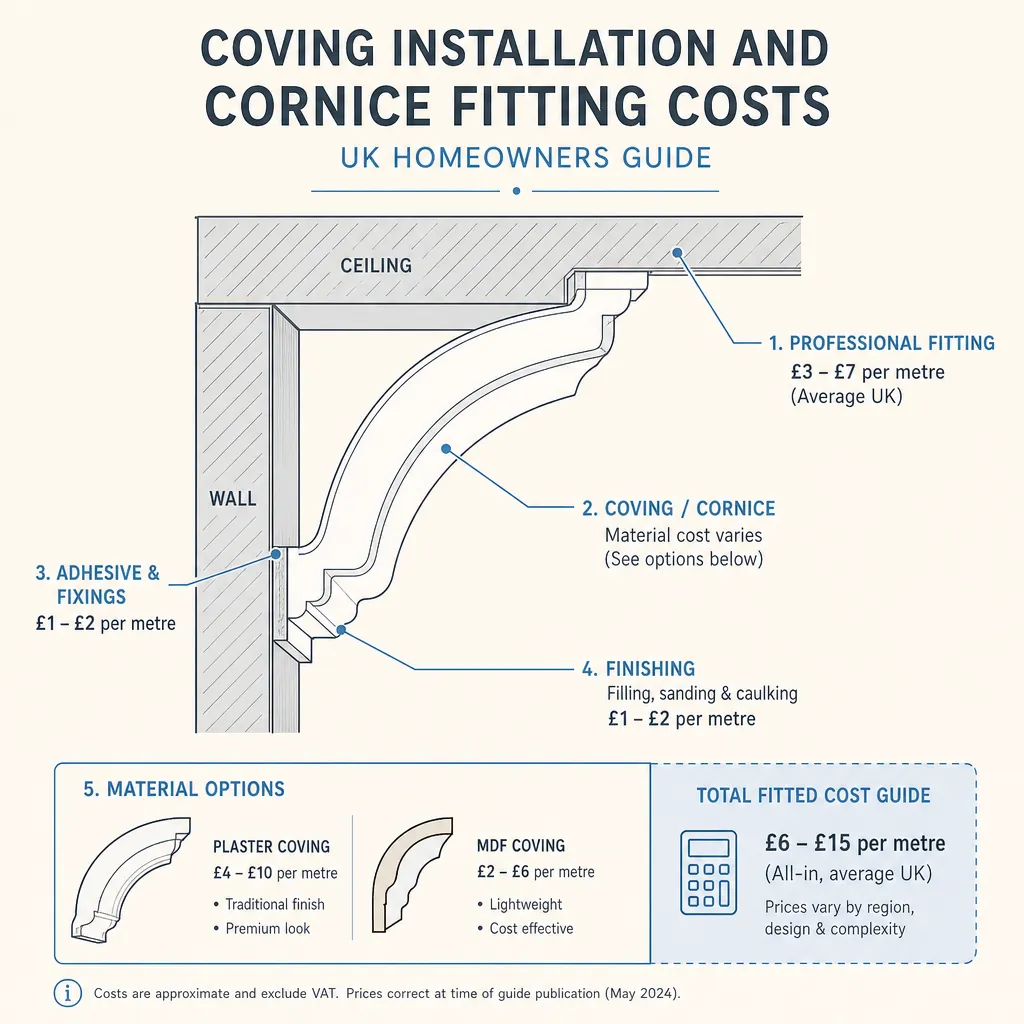
Coving Installation and Cornice Fitting Costs
Coving installation in the UK typically costs £15–£50 per linear metre for supply and fitting.
 Improvement & Build
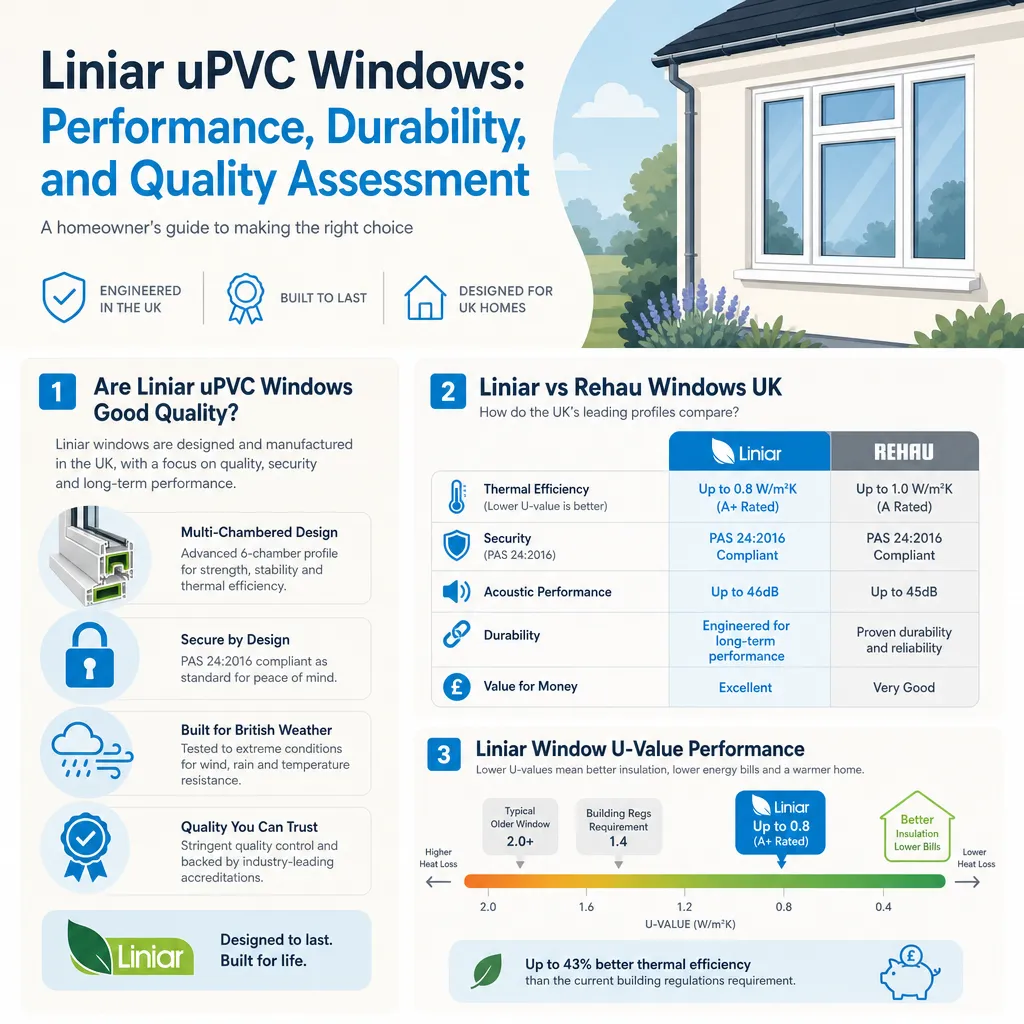
Liniar uPVC Windows: Performance, Durability, and Quality Assessment
Liniar uPVC window profiles are manufactured in the UK using multi-chambered, foamed frames.
 Improvement & Build
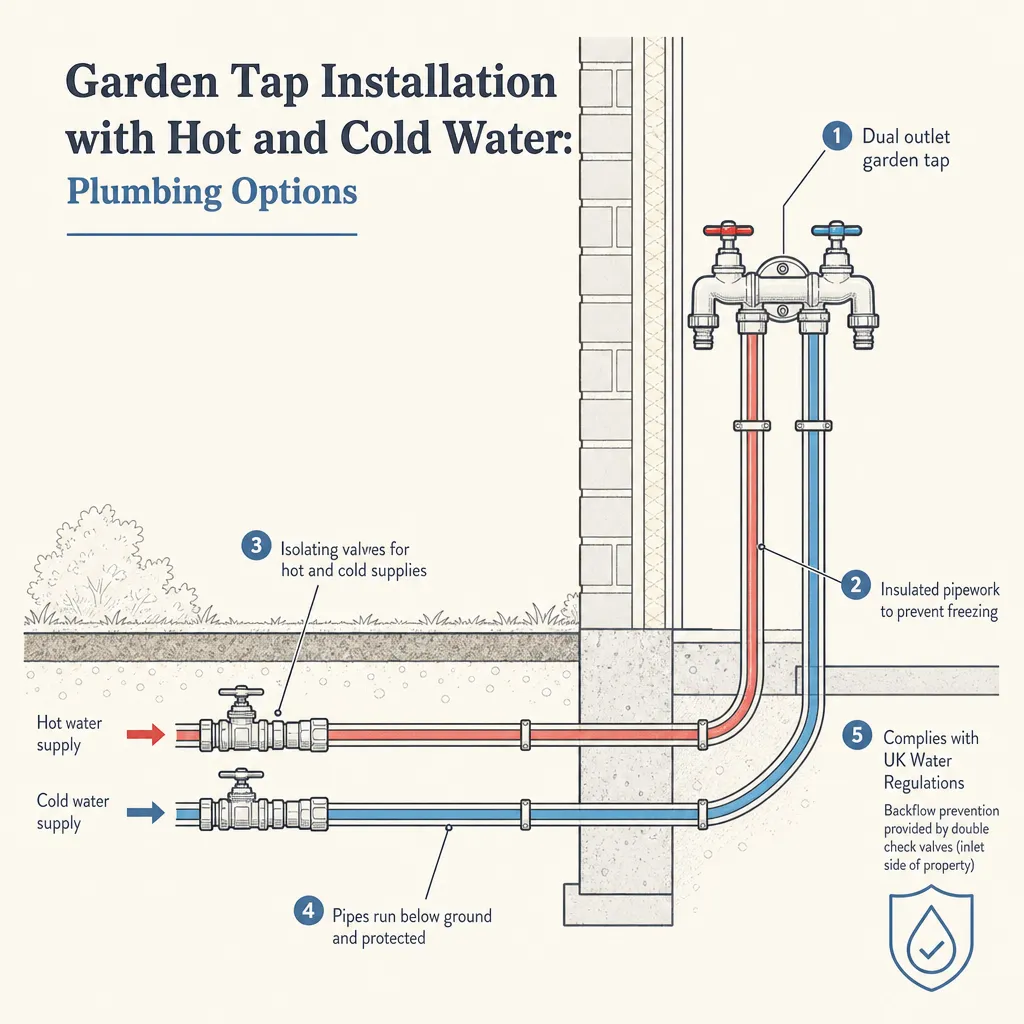
Garden Tap Installation with Hot and Cold Water: Plumbing Options
Adding a cold garden tap is a common DIY project, but routing hot water outdoors requires a plumber to connect to your domestic hot water system and comply with the Water Supply (Water Fittings) Regulations 1999.
 Improvement & Build
Sealing and Maintaining Historic Leaded Glass Windows: Preservation and Performance
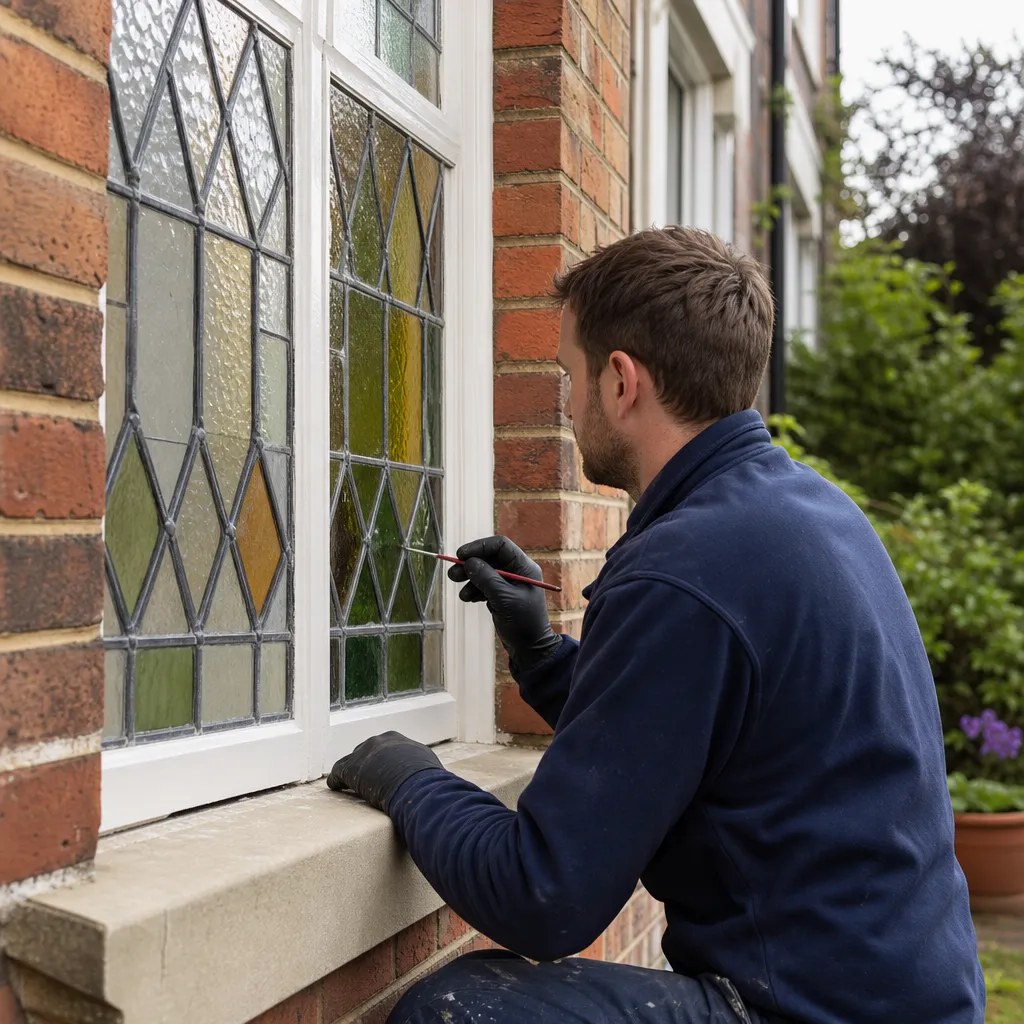
Leaded glass windows are maintained using traditional linseed oil cement — not silicone or modern sealants, which prevent natural movement in the lead came.
 Improvement & Build
Greenhouse Construction: Glass Versus Polycarbonate Materials
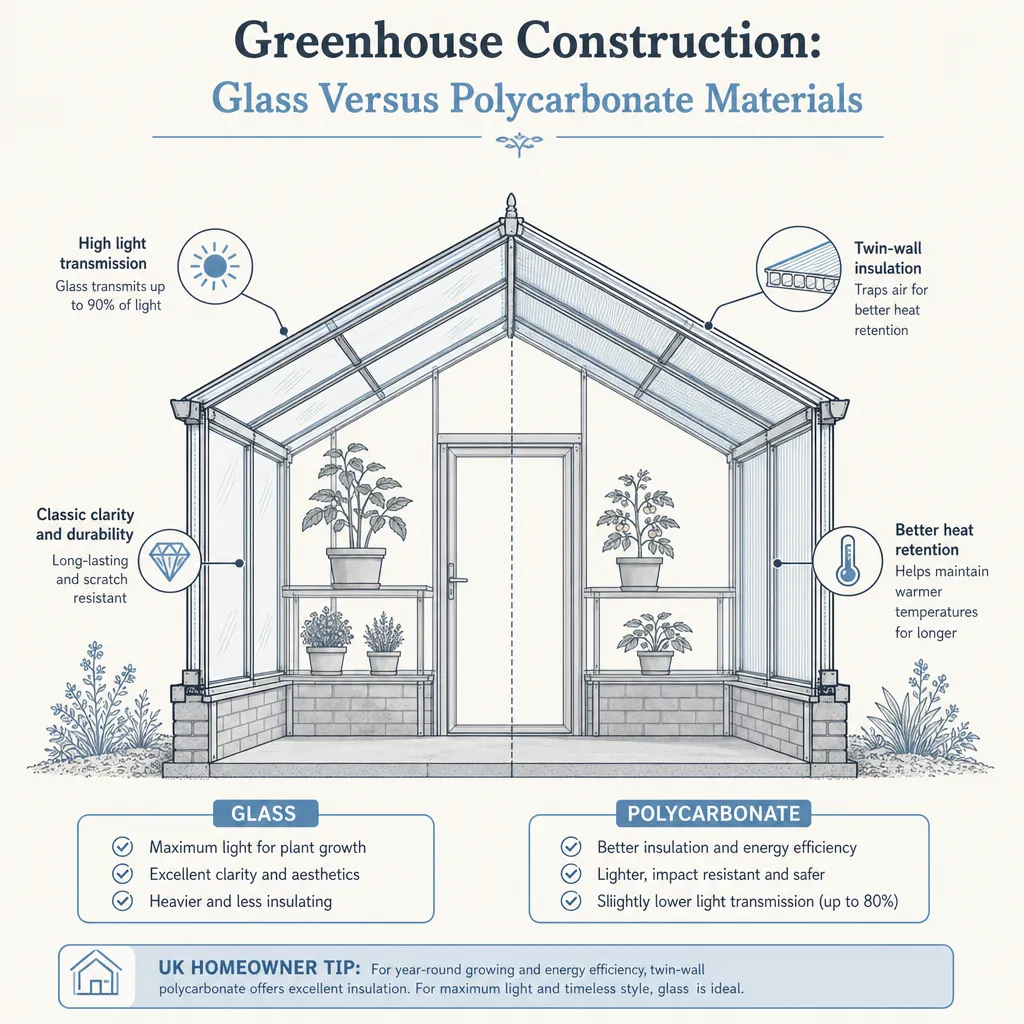
Glass transmits around 90% of available light and lasts indefinitely if unbroken, but insulates poorly and shatters into sharp fragments.