Crown Reduction and Crown Thinning: Methods for Professional Tree Care
By Housey · Last reviewed 25th of May 2026
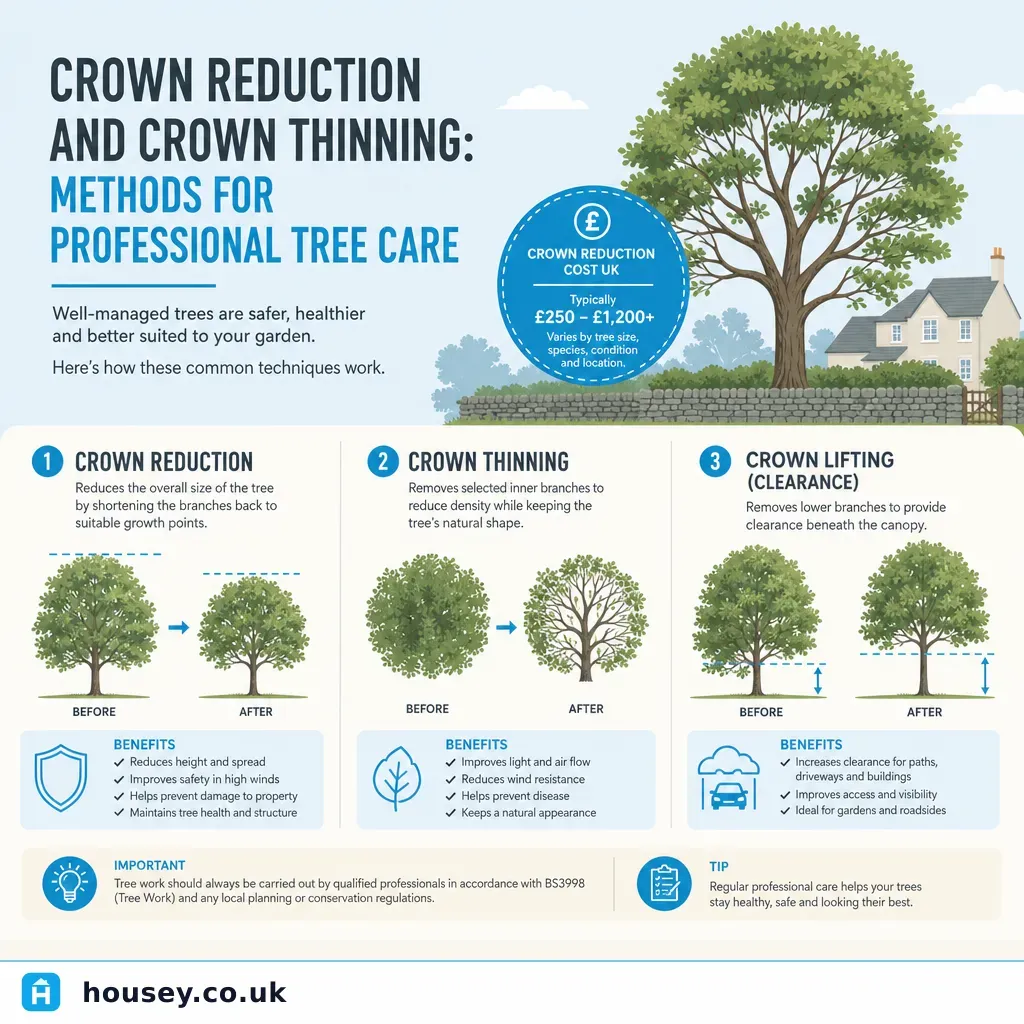
Crown Reduction and Crown Thinning: Methods for Professional Tree Care
Crown management work — whether reducing overall canopy size or thinning to improve light penetration — is one of the most frequently requested arboricultural services in UK domestic gardens. Choosing the wrong technique, or instructing an unqualified contractor, can cause lasting structural damage to a tree and in some cases create a safety risk. Understanding what each method involves helps you instruct work accurately and assess whether a quote is appropriate.
Key points
- Crown reduction and crown thinning are distinct techniques, both governed by BS 3998:2010 Recommendations for Tree Work — the British Standard that sets out how qualified arborists should approach pruning decisions.
- BS 3998:2010 advises that crown reduction should not remove more than approximately 30% of the live crown in a single operation; excessive removal causes dieback and creates entry points for decay fungi.
- Trees in a Conservation Area or protected by a Tree Preservation Order (TPO) require prior notification to or written consent from the local planning authority before any pruning work begins — unpermitted work on a TPO tree carries an unlimited fine on conviction.
- Crown thinning should be distributed evenly throughout the canopy; concentrating removal only in the outer crown — known as lion-tailing — is specifically discouraged by BS 3998 and can compromise the tree's mechanical stability.
- Crown lifting — the third common pruning technique — raises the lower canopy by removing the lowest limbs and is distinct from both reduction and thinning.
What is crown reduction?
Crown reduction decreases the overall height and/or spread of a tree's canopy by cutting branches back to suitable lateral growth points. Under BS 3998:2010, the retained lateral should be at least one-third the diameter of the removed portion, and the resulting branch structure should maintain the tree's natural form.
Crown reduction is usually requested when a tree:
- Has outgrown its allocated space and is encroaching on a structure, overhead cables, or a neighbouring property
- Requires structural rebalancing following storm damage
- Was previously topped (a practice BS 3998 specifically discourages) and needs remedial restructuring
What crown reduction is not: it is not the same as topping — cutting branches flush to stubs — which produces weak epicormic regrowth, large wound areas, and accelerated decay. Pollarding is a managed regime of severe periodic cutting to established knuckles that is appropriate for certain species such as willows, London planes, and limes, but only when introduced early in the tree's life. Applying pollarding to a mature, previously unpollarded tree is generally harmful.
What is crown thinning?
Crown thinning removes selected branches from throughout the canopy — typically dead, weak, crossing, rubbing, or epicormic (water shoot) growth — to increase light penetration and air movement without reducing the overall canopy dimensions.
It is usually the preferred technique when:
- Garden planting or windows are significantly shaded but the tree's overall size is not the problem
- The tree has a dense, congested canopy generating excessive wind resistance
- There is a high proportion of dead or crossing growth that should be removed for tree health reasons
The key principle under BS 3998 is even distribution of thinning throughout the crown. Removing material only from the outer canopy while leaving the inner structure dense (lion-tailing) weakens long limbs and is classified as bad practice.
Crown reduction vs crown thinning vs crown lifting: a comparison
Technique | What it does | Reduces overall canopy size? | Best for | Cautions |
|---|---|---|---|---|
Crown reduction | Cuts back to laterals; reduces height and/or spread | Yes | Trees too large for their setting; post-storm rebalancing | Do not remove more than ~30% of live crown in one season |
Crown thinning | Removes internal and congested growth; maintains overall dimensions | No | Improving light penetration; reducing wind resistance | Avoid lion-tailing (outer-only removal) |
Crown lifting | Removes lower limbs to raise clearance beneath the canopy | No (height and spread unchanged) | Clearance over paths, driveways, and buildings; ground-level light | Not suitable for young trees with limited live crown below the proposed lift height |
Which technique should you choose?
Use this guide as a starting point, then confirm with a qualified arborist who has assessed the individual tree.
- Choose crown reduction if the tree is visibly too large for its space, is encroaching on a neighbour, structure, or utility cables, or needs rebalancing after storm damage.
- Choose crown thinning if the overall size is acceptable but you want more light through the canopy or to reduce wind loading on the crown.
- Choose crown lifting if you need improved clearance beneath the canopy for pedestrians, vehicles, or ground-level planting.
- Ask an arborist first if the tree shows signs of structural weakness, fungal growth, or significant dieback — the pruning question may be secondary to a condition assessment.
- Check with your local planning authority if the tree has a TPO or stands in a Conservation Area before any work begins.
Trees with preservation orders: what you must do before work begins
If your tree is protected by a TPO or stands in a Conservation Area, the legal requirements differ:
- TPO trees: submit a formal application for works consent to your local planning authority (LPA). Standard determination takes up to 8 weeks.
- Conservation Area trees: submit a Section 211 Notice to the LPA at least 6 weeks before work begins. The authority may use this period to impose a TPO.
Unpermitted work on a TPO tree is a criminal offence under the Town and Country Planning Act 1990 (as amended) and the Town and Country Planning (Tree Preservation) (England) Regulations 2012. Fines are unlimited in the Crown Court, and ignorance of an existing TPO is not a defence.
Search for existing TPOs through your local council's planning portal.
What to ask your arborist before crown work
Before instructing any contractor, ask:
- Are you working to BS 3998:2010?
- What qualifications do your climbing operatives hold? (Look for NPTC/City & Guilds Level 3 Award in Arboriculture and a current chainsaw certificate)
- Are you a member of the Arboricultural Association Approved Contractor scheme or the International Society of Arboriculture (ISA)?
- What is the maximum percentage of live crown you propose to remove?
- Have you confirmed whether this tree has a TPO or sits in a Conservation Area?
- Will you remove the brash and timber, or leave it on site — and is removal included in the quote?
- Do you carry adequate public liability insurance? (Request the current certificate)
- Is VAT included in the quoted price?
When to get professional help
Crown reduction and thinning always require a qualified arborist — both involve working at height, chainsaw competency, and an understanding of tree mechanics. Seek professional attention urgently if the tree shows any of the following before or after crown work is planned:
- Cracks or splits in the main stem or at major branch unions
- Visible fungal brackets or conks at the base, on the trunk, or on major root buttresses
- Significant dieback across more than approximately 25% of the canopy
- A noticeable lean that has developed or worsened recently
- Cracking or heaving of the soil or paving around the root zone
How Housey can help
Housey connects you with qualified tree surgeons experienced in crown reduction, thinning, and lifting. Submit your tree details and we will match you with professionals who can assess the work and provide accurate quotes.
Frequently asked questions
How much does crown reduction cost in the UK?
Costs vary by tree size, species, access, and extent of work required. As an indicative guide, crown reduction on a medium-sized garden tree typically ranges from £200–£600 (indicative UK costs, last reviewed 2026-05-25; quotes vary significantly). Always obtain at least three quotes and confirm the contractor works to BS 3998:2010 before instructing.
How often should a tree be crown-thinned?
There is no fixed schedule — frequency depends on species, growth rate, and the original objective of the thinning. Many trees are reassessed every 3–5 years. Fast-growing species such as sycamore and silver birch may need attention more regularly. An arborist can recommend a management schedule following an initial inspection.
Can I thin my own tree?
Minor removal of dead growth from small ornamental trees at ground level is within homeowner capability. However, crown thinning on mature trees involves working at height and cutting equipment requiring proper training. The Arboricultural Association does not recommend homeowners attempting crown work on mature trees without appropriate qualifications and equipment.
Will crown thinning damage my tree?
Correctly executed crown thinning to BS 3998:2010 — cuts made to suitable laterals, no more than approximately 30% of live crown removed — is well tolerated by most species. Poorly carried-out thinning, particularly lion-tailing, can compromise mechanical stability and create disease entry points, potentially reducing the tree's lifespan.
Sources and further reading
- Tree Preservation Orders and protected trees — GOV.UK
- BS 3998:2010 Tree work recommendations — BSI
- Conservation Area trees — Arboricultural Association
- Town and Country Planning Act 1990 — legislation.gov.uk
- Town and Country Planning (Tree Preservation) (England) Regulations 2012 — legislation.gov.uk
Useful next reads
 Improvement & Build
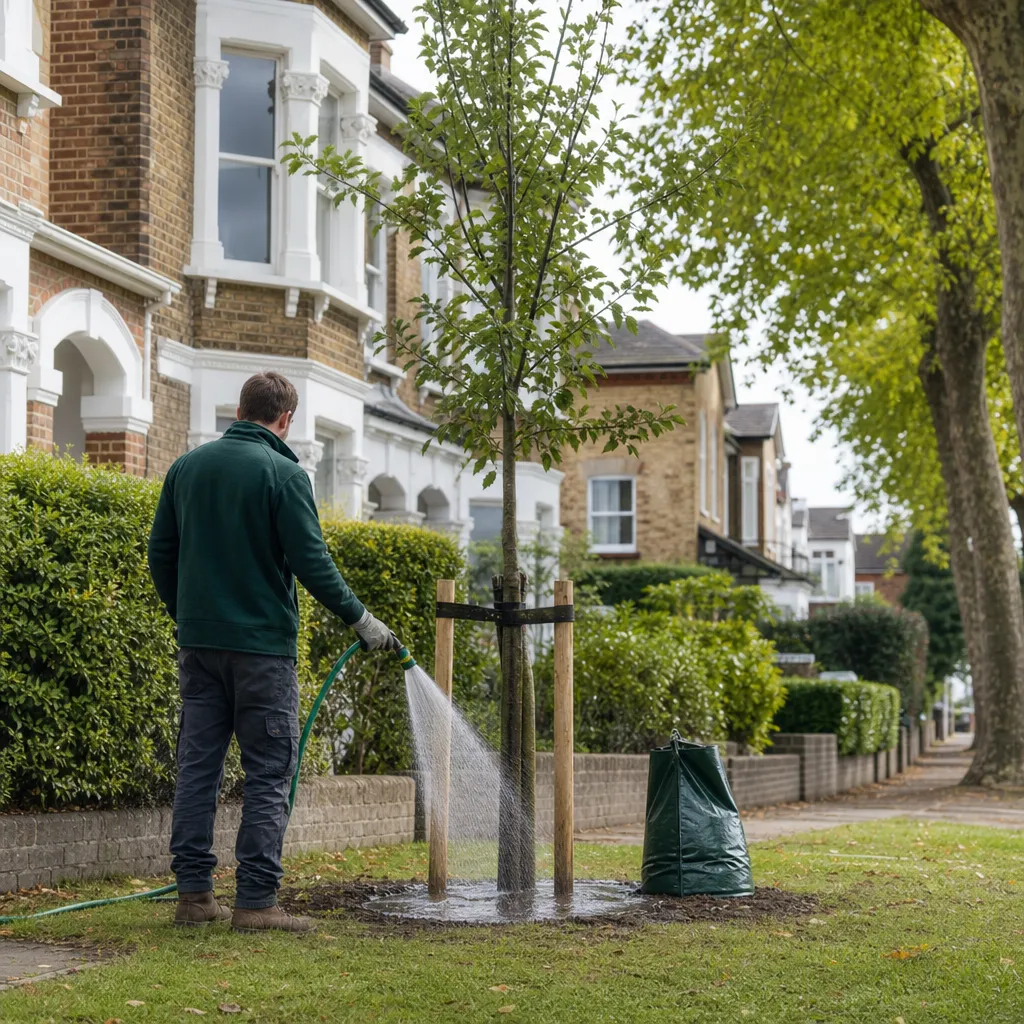
Watering Large Trees: Techniques and Frequency for Establishment
Newly planted large trees typically need 50–90 litres of water per week during the growing season for the first two to three years.
 Improvement & Build
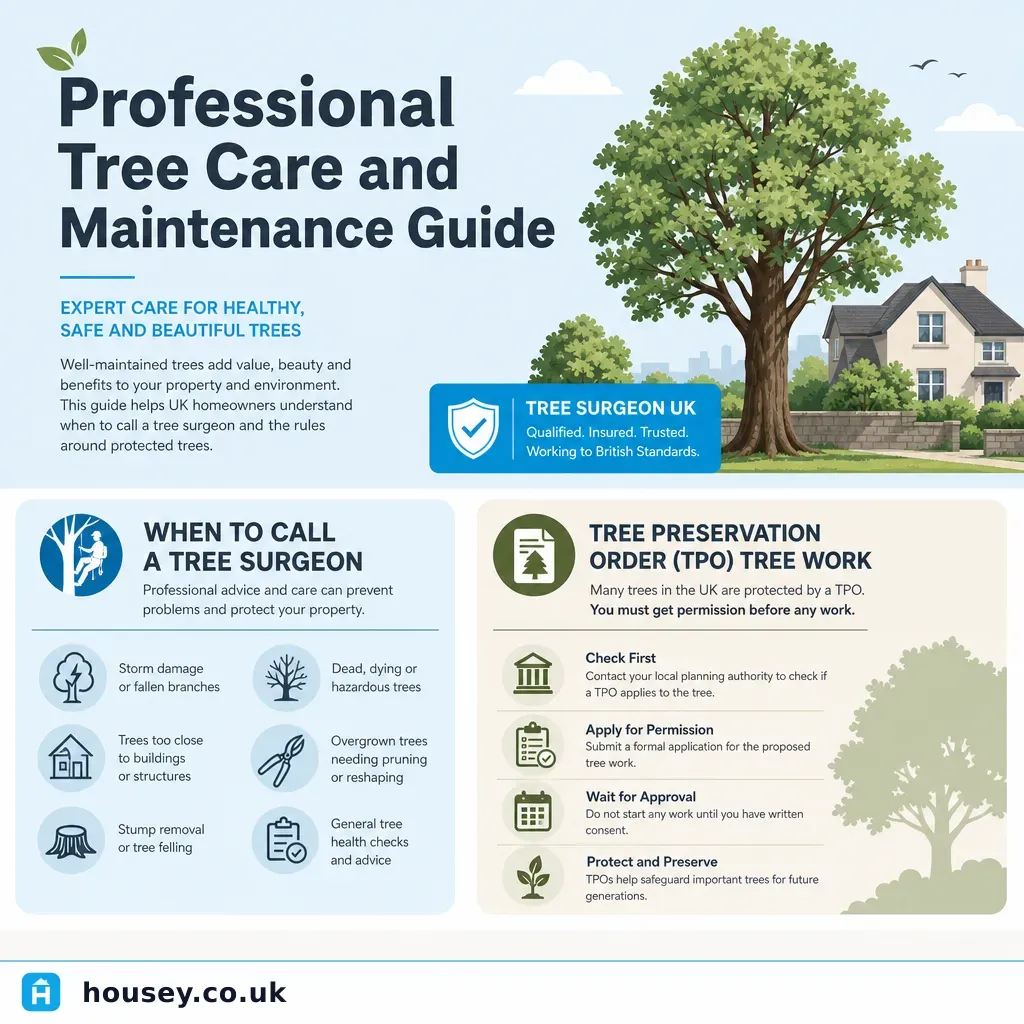
Professional Tree Care and Maintenance Guide
Professional tree care covers pruning, crown reduction, felling, and health assessments carried out by qualified arborists.
 Improvement & Build
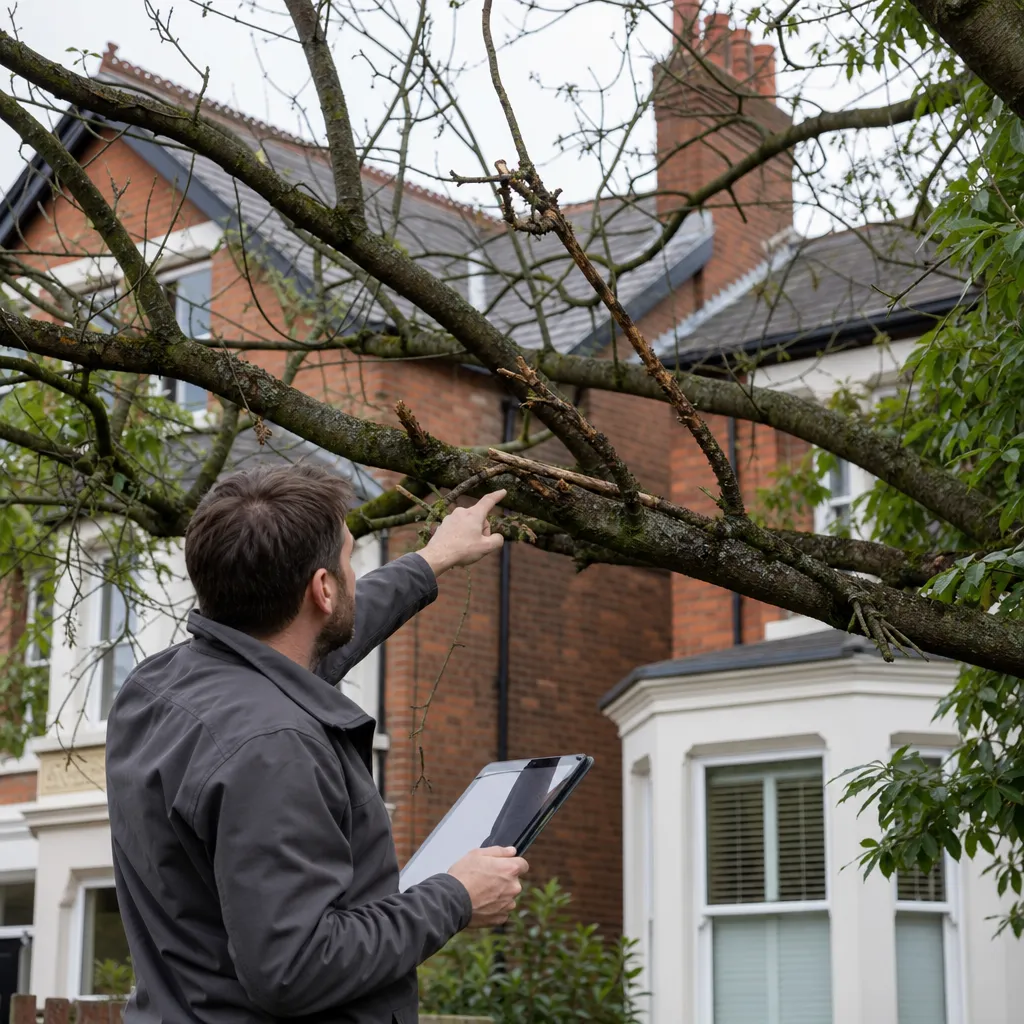
Identifying and Addressing Dying Tree Branches: Common Causes
Dying branches on UK garden trees can result from fungal diseases such as ash dieback or honey fungus, pest damage, drought stress, physical injury, or root problems.
 Improvement & Build
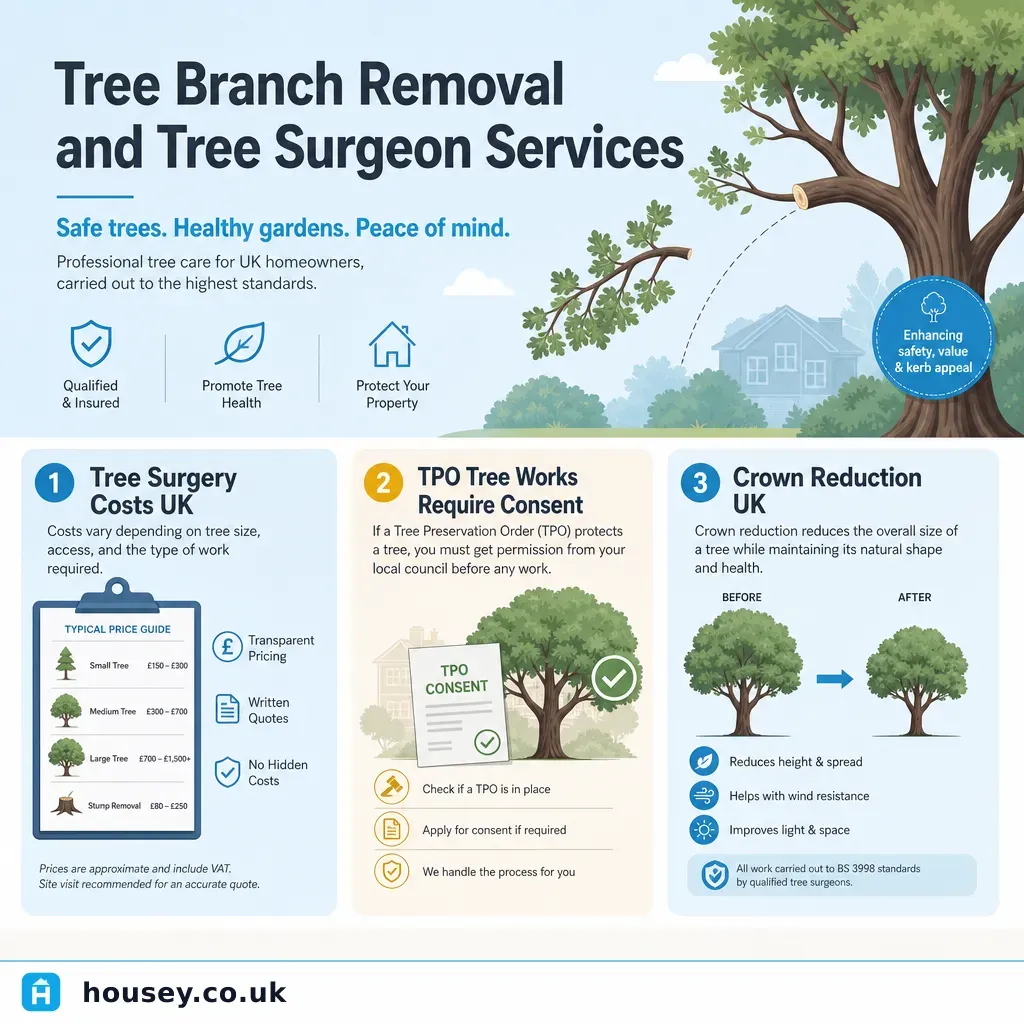
Tree Branch Removal and Tree Surgeon Services
Tree surgery — from deadwooding and crown reduction to branch removal and felling — must be carried out by qualified, insured contractors in the UK.
 Improvement & Build
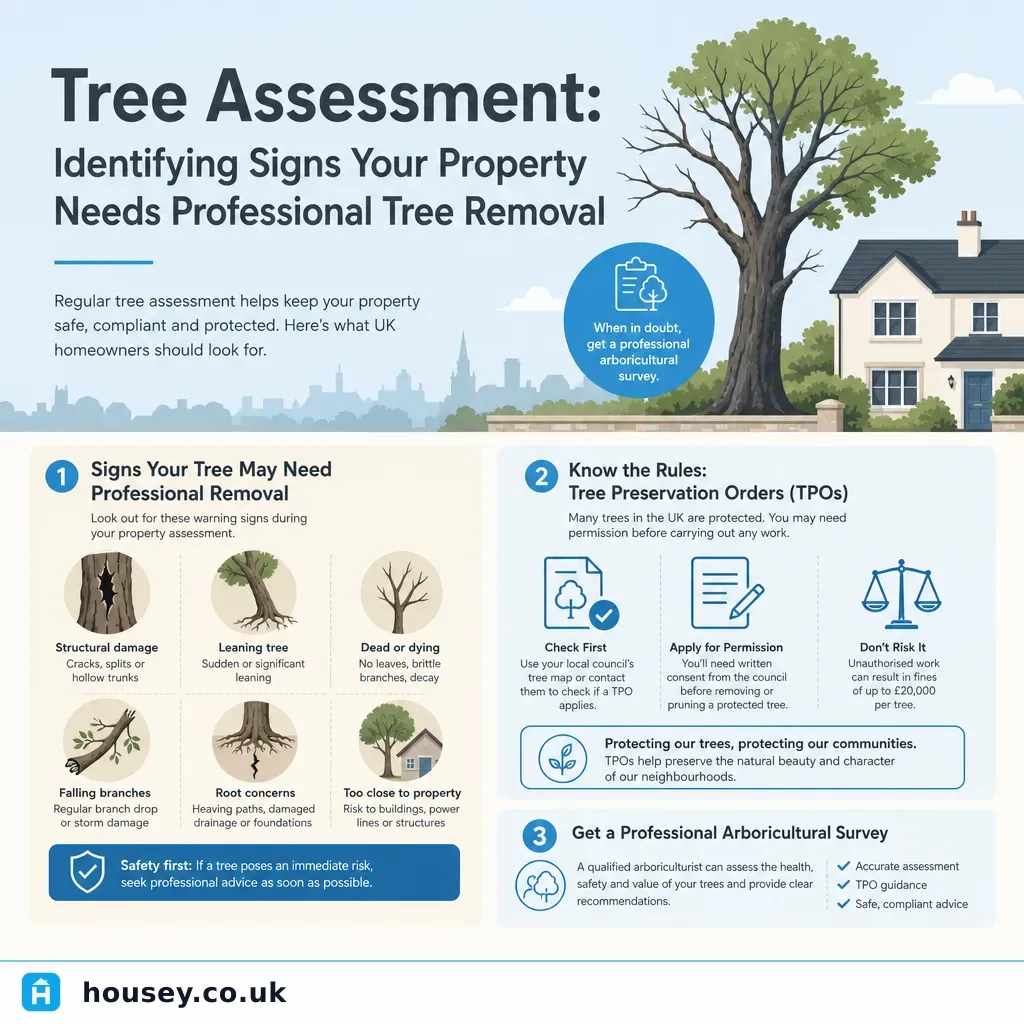
Tree Assessment: Identifying Signs Your Property Needs Professional Tree Removal
Key signs a tree may need professional removal include fungal brackets on the trunk, a sudden change in lean, dead or hanging branches, root heave, and visible cavities or decay.