Professional Tree Care and Maintenance Guide
By Housey · Last reviewed 11th of May 2026
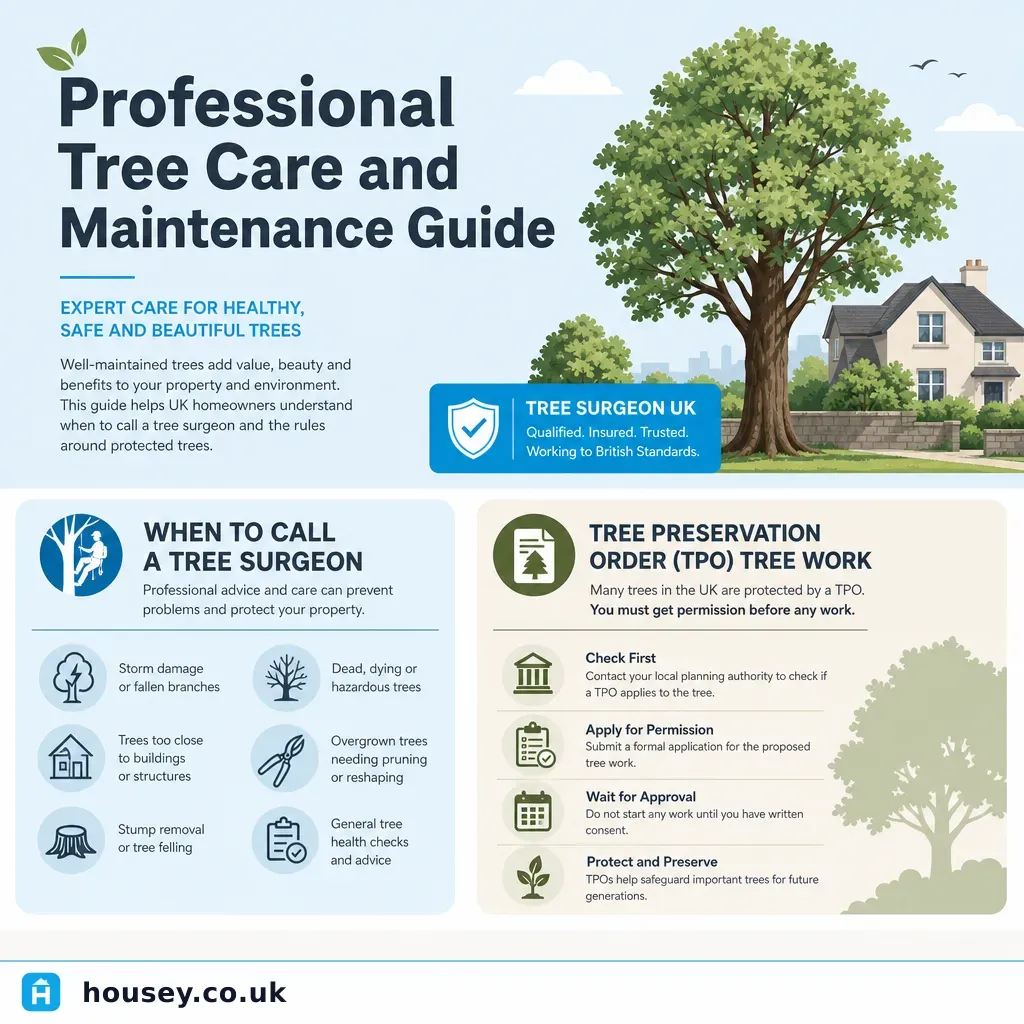
Professional Tree Care and Maintenance Guide
Trees on UK domestic plots range from ornamental cherries planted in the 1990s to centuries-old oaks that predate the houses around them. When a tree grows too close to a structure, shows signs of disease, or needs work before a building project begins, homeowners need to understand both the practical and legal dimensions of tree care — including when council consent is required and who is qualified to carry out the work.
Key points
- Trees subject to a Tree Preservation Order (TPO) require written consent from your local planning authority before pruning, felling, or any significant works are carried out.
- Trees in designated conservation areas are automatically protected; you must give six weeks' written notice to your local council before works to any tree with a trunk diameter of 75 mm or more at 1.5 m above ground level.
- BS 3998:2010 is the British Standard for tree work recommendations, setting best-practice requirements for all arboricultural operations.
- Reputable tree surgeons should carry public liability insurance of at least £5 million and hold relevant NPTC or LANTRA chainsaw certificates.
- A BS 5837:2012 tree survey is typically required by local planning authorities when a planning application involves development near existing trees.
What does professional tree care involve?
Professional tree care — arboriculture — covers the cultivation, management, and assessment of trees and woody plants. The most common services UK homeowners commission include:
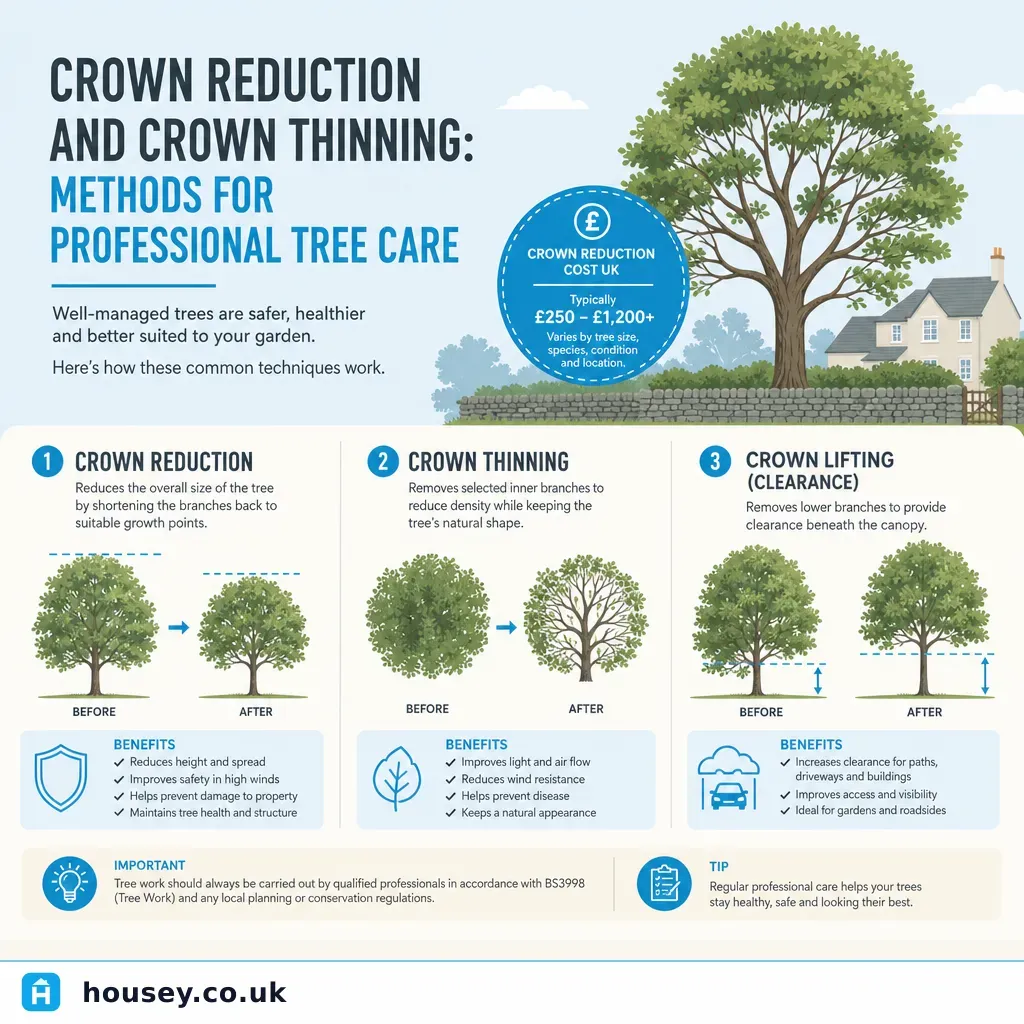
- Crown pruning and thinning: selectively removing branches to improve structure, light penetration, and airflow.
- Crown reduction: reducing overall canopy size while preserving the tree's natural form, carried out to BS 3998:2010.
- Deadwooding: removing dead, dying, or hazardous wood to reduce the risk of falling material.
- Felling and stump grinding: complete removal of the tree above and, optionally, below ground.
- Tree health assessments: diagnosing disease, pest damage, or structural defects.
- Formative pruning: shaping young trees to encourage a sound structure from the outset.
The terms tree surgeon and arborist are often used interchangeably, but an arborist typically has broader training in tree biology and consultancy, while a tree surgeon focuses primarily on physical works. For complex planning or disease situations, a consulting arborist producing a written report may be the more appropriate appointment.
Do you need permission for tree work in the UK?
Tree Preservation Orders
A Tree Preservation Order (TPO) is a legal instrument issued by a local planning authority (LPA) to protect trees of significant amenity value. If your tree has a TPO, you must apply for consent before any pruning, felling, or root work begins. Unauthorised work on a TPO tree is a criminal offence under the Town and Country Planning Act 1990 and can attract a fine of up to £20,000 per tree.
You can check for TPOs through your council's online planning portal or by submitting a written request to the LPA.
Conservation areas
If your property is within a designated conservation area, any tree with a trunk diameter of 75 mm or more at 1.5 m above ground is automatically protected. You must submit a written notice (a Section 211 notice) to your LPA at least six weeks before carrying out works. During that period the council can issue a TPO if it considers the tree significant enough to warrant permanent protection.
Permitted development
Trees on private land that are neither TPO-protected nor in a conservation area are generally not subject to planning control for pruning in domestic gardens. However, felling may still require notification in some circumstances, and commercial felling is covered by separate Forestry Commission licensing. Always confirm the position with your LPA before removing any significant tree.
Which tree professional do you need?
Situation | Professional to contact | Key qualification or accreditation |
|---|---|---|
Routine crown pruning or reduction | Arboricultural Association Approved Contractor | AA approval plus NPTC chainsaw tickets |
Disease identification such as ash dieback or Phytophthora | Consulting arborist or tree health specialist | Level 3 arboriculture qualification |
Tree near a building with root or structural concern | Consulting arborist; structural engineer if building damage is present | BS 5837:2012 assessment |
TPO application or consent report for the LPA | Consulting arborist | Professional report format required by LPA |
Planning application tree survey | Consulting arborist | BS 5837:2012 Arboricultural Impact Assessment |
Emergency felling after storm damage | Approved tree contractor with current insurance | Public liability of at least £5 million; NPTC emergency felling ticket |
What to ask before accepting a quote
Before instructing a tree surgeon, confirm the following:
- Will all works be carried out to BS 3998:2010?
- Who specifically will perform the work — the named contractor or a sub-contracted crew?
- What qualifications and NPTC or LANTRA tickets does each operative hold?
- What level of public liability and employer's liability insurance is in place?
- Have you confirmed whether a TPO or conservation area designation applies to this tree?
- What will happen to arising material such as logs and chippings?
- Is VAT included in the quoted price?
- What circumstances could change the price or scope — for example, discovering hidden decay or needing a traffic management plan?
Tree health: red flags that need prompt attention
Contact a qualified arborist if you observe any of the following:
- Large hanging or cracked branches — falling limbs are a serious risk to people and property below.
- A new or noticeably increasing lean — especially after prolonged wet weather, drought, or wind events.
- Fungal brackets or conks at the base or on the trunk — these frequently indicate advanced internal decay.
- Crown dieback from the apex — can indicate root disease, drought stress, or a pathogen such as Phytophthora ramorum.
- Cracks, splits, or hollow sections in the main stem — structural integrity may be seriously compromised.
- Weeping wounds or dark staining on the bark — a possible sign of bacterial or fungal infection.
Do not attempt to inspect, prune, or stabilise a structurally compromised tree yourself. The HSE's guidance on arboriculture and tree surgery classifies tree felling as a high-risk activity requiring formal competency certificates.
Tree surveys for planning applications
If you are extending your home or adding an outbuilding near existing trees, your planning submission will usually require a tree survey to BS 5837:2012 (Trees in Relation to Design, Demolition and Construction — Recommendations). This survey:
- Maps root protection areas (RPAs) for every tree on or adjacent to the site.
- Categorises trees as A (high quality, long life expectancy), B (moderate quality and expectancy), or C (low quality or short life expectancy), plus U for trees to be removed.
- Specifies protective fencing positions and working method statements to safeguard retained trees during construction.
Planning authorities can refuse permission or impose costly retrospective conditions if this survey is absent or inadequate.
When to get professional help
Tree surgery involving climbing, chainsaw operation, or working at height beyond 2 m is specialist work. Always use a qualified, insured arboricultural contractor for:
- Any operations requiring aerial access, whether by rope climbing or mobile elevated work platform.
- Felling of any tree above head height.
- Work near overhead power lines — contact your network operator before any approach; they may arrange works directly.
- Trees showing signs of decay, instability, or suspected disease.
- All TPO-protected trees and trees within conservation areas.
How Housey can help
Housey connects UK homeowners with qualified, vetted tree surgeons matched to your location and the specific work required — from routine crown maintenance and emergency felling to BS 5837:2012 planning surveys. All contractors on the platform carry public liability insurance and are assessed against relevant qualification requirements.
Frequently asked questions
Do I need permission to cut branches off a tree in my garden?
If the tree has a Tree Preservation Order, or sits in a designated conservation area with a trunk diameter over 75 mm at 1.5 m height, you need consent or must give notice to your local planning authority before work begins. Trees on private land that are neither TPO-protected nor in a conservation area can generally be pruned without permission, but check with your LPA if in doubt.
How much does tree surgery cost in the UK?
Costs vary widely by tree size, species, access, and location. Indicative UK costs, last reviewed 2026-05-11: crown pruning of a small to medium tree typically ranges from around £150 to £400, while felling and stump grinding of a large specimen can exceed £1,000. Always obtain at least three itemised quotes and confirm whether VAT is included. Costs are often higher in London and the South East.
What qualifications should a tree surgeon have?
Look for NPTC or LANTRA chainsaw certificates (CS30 and CS31 for basic operations; CS38 and CS39 for aerial work), a Level 3 qualification in arboriculture, and Arboricultural Association Approved Contractor status. All operatives working with chainsaws at height should hold a current aerial rescue certificate. Always ask to see both qualifications and insurance documents before instructing.
What is a BS 5837:2012 tree survey?
BS 5837:2012 is the British Standard for assessing trees in relation to design, demolition, and construction. A consulting arborist maps root protection areas, categorises tree quality and life expectancy, and specifies protective measures for construction. Most local planning authorities require this report when approving extensions or outbuildings near existing trees.
Sources and further reading
- Tree Preservation Orders and trees in conservation areas — GOV.UK
- Arboricultural Association Approved Contractor directory — Arboricultural Association
- Arboriculture and tree surgery — Health and Safety Executive (HSE)
- BS 5837:2012 Trees in Relation to Design, Demolition and Construction — BSI Group
Useful next reads
 Improvement & Build
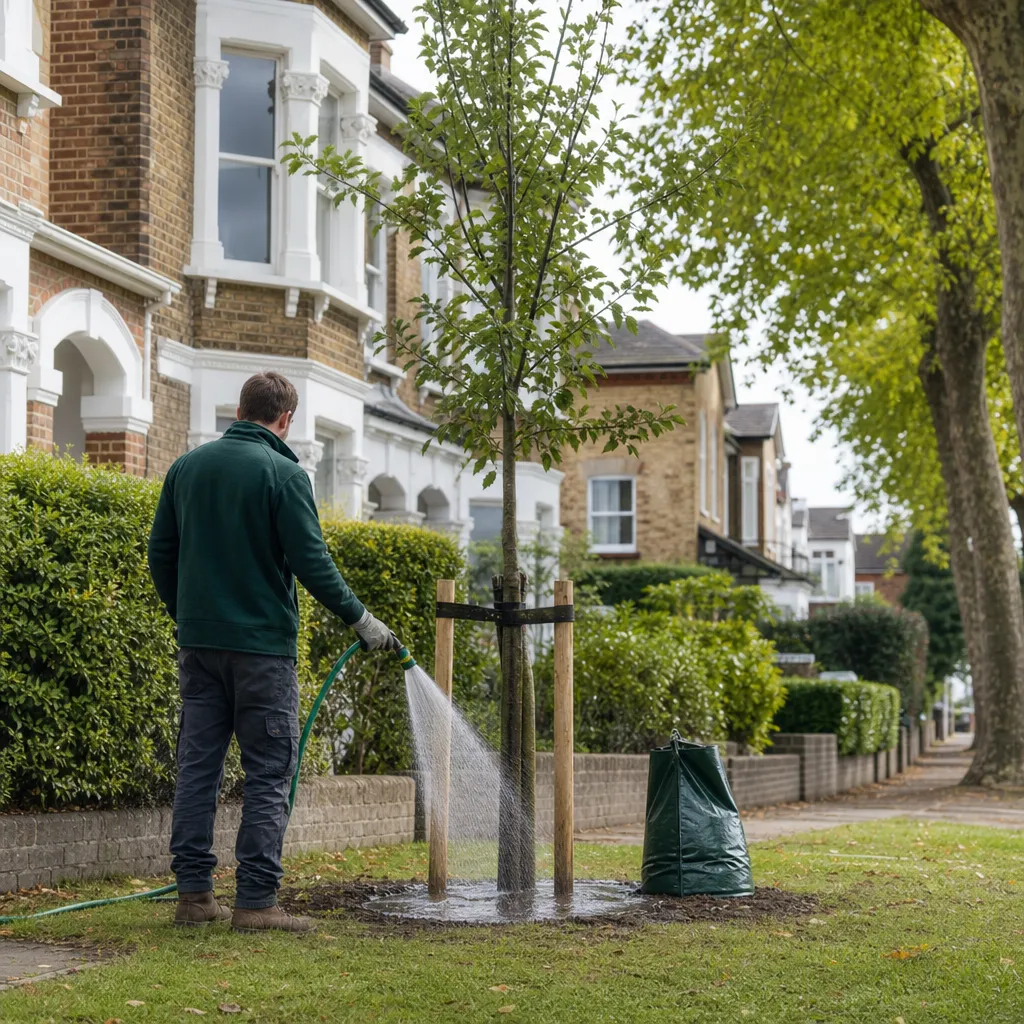
Watering Large Trees: Techniques and Frequency for Establishment
Newly planted large trees typically need 50–90 litres of water per week during the growing season for the first two to three years.
 Improvement & Build
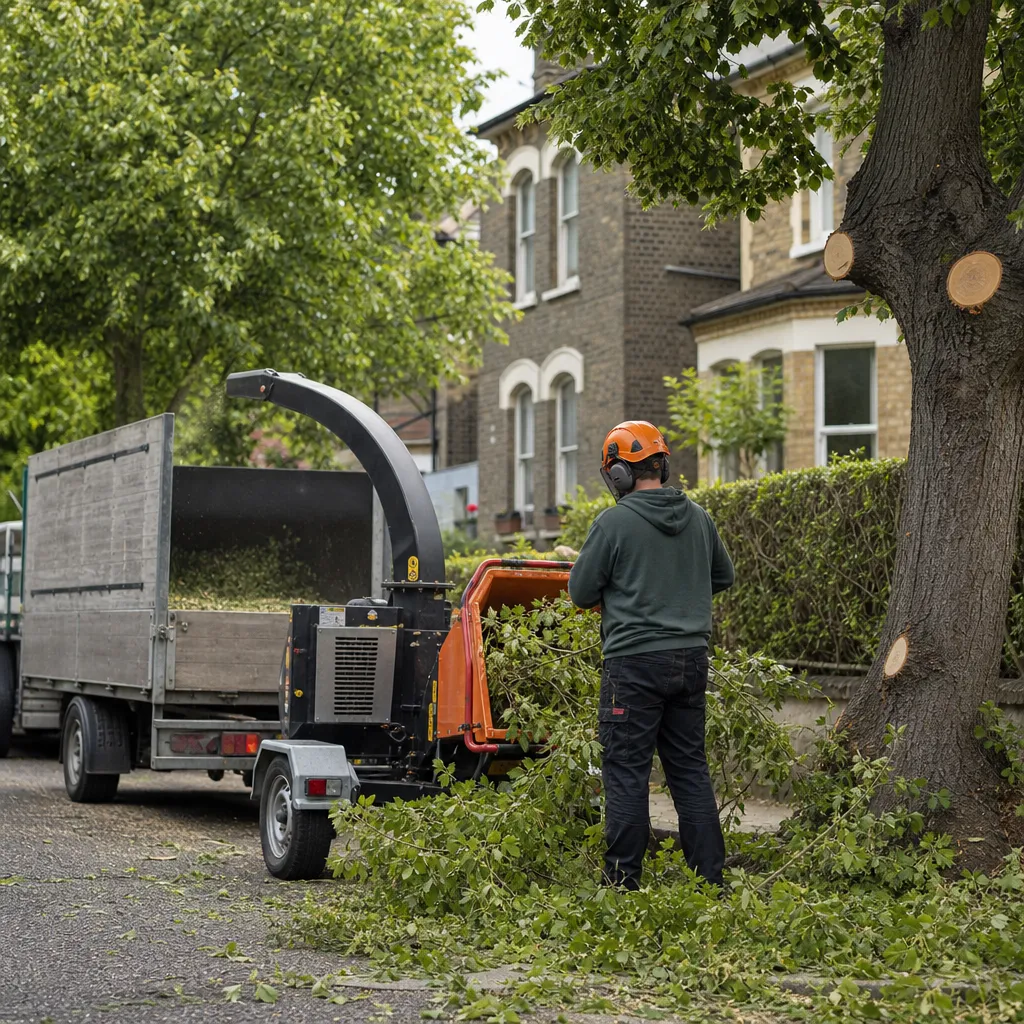
Professional Tree Trimming and Limb Removal Equipment Explained
Professional tree surgeons use chainsaws, pole pruners, rope-access climbing rigs or mobile elevated work platforms, wood chippers, and stump grinders depending on the job.
 Improvement & Build
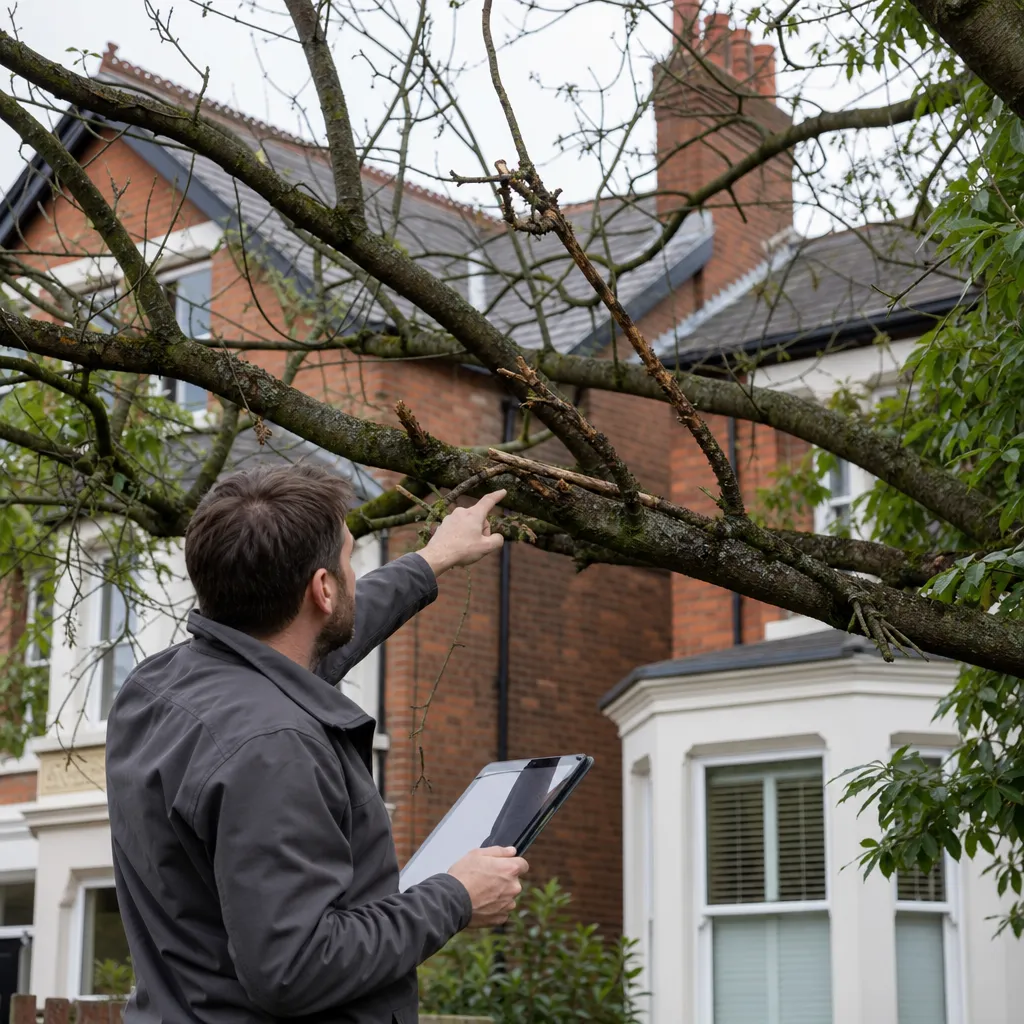
Identifying and Addressing Dying Tree Branches: Common Causes
Dying branches on UK garden trees can result from fungal diseases such as ash dieback or honey fungus, pest damage, drought stress, physical injury, or root problems.
 Improvement & Build
Crown Reduction and Crown Thinning: Methods for Professional Tree Care
Crown reduction cuts the canopy back to lateral growth points, reducing overall height or spread.
 Improvement & Build
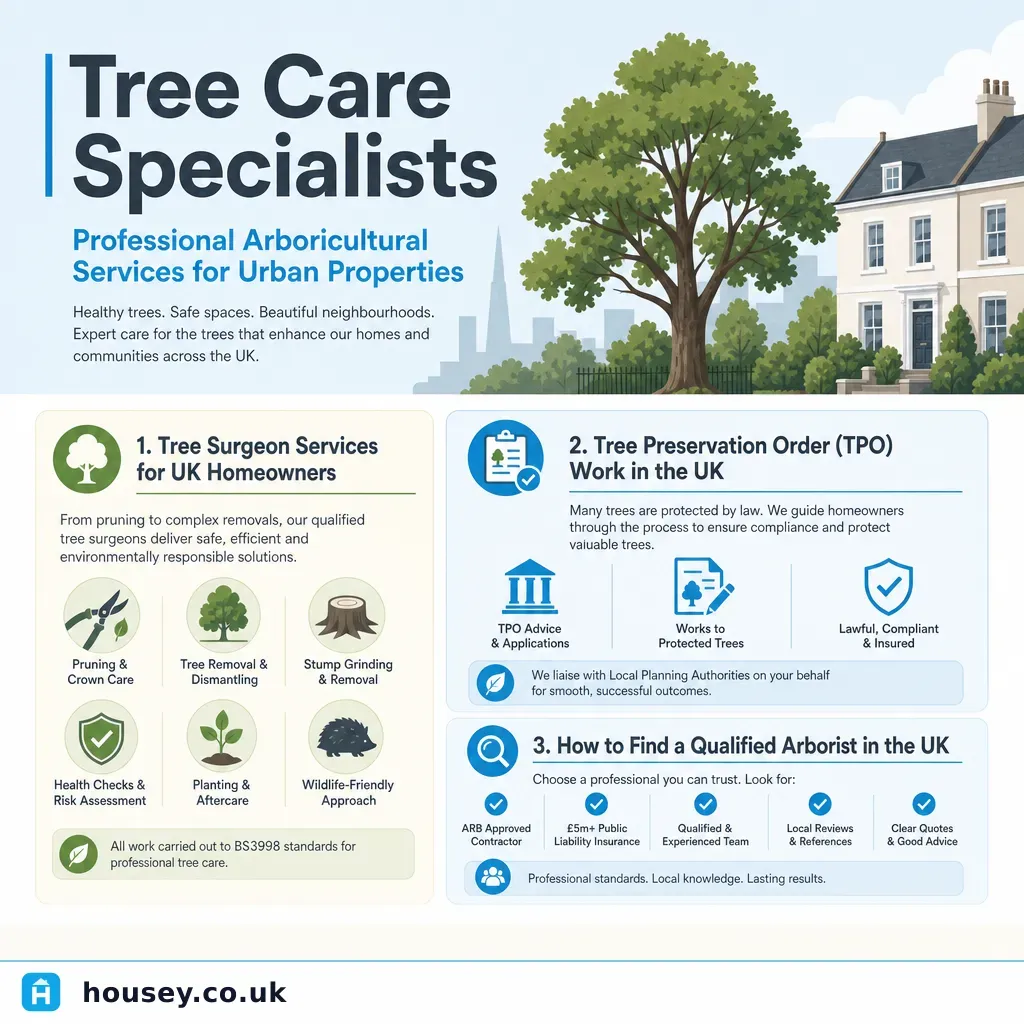
Tree Care Specialists: Professional Arboricultural Services for Urban Properties
Professional arboricultural services cover tree surgery, pruning, crown reduction, felling, and health assessments.