Identifying and Addressing Dying Tree Branches: Common Causes
By Housey · Last reviewed 11th of May 2026
Identifying and Addressing Dying Tree Branches: Common Causes
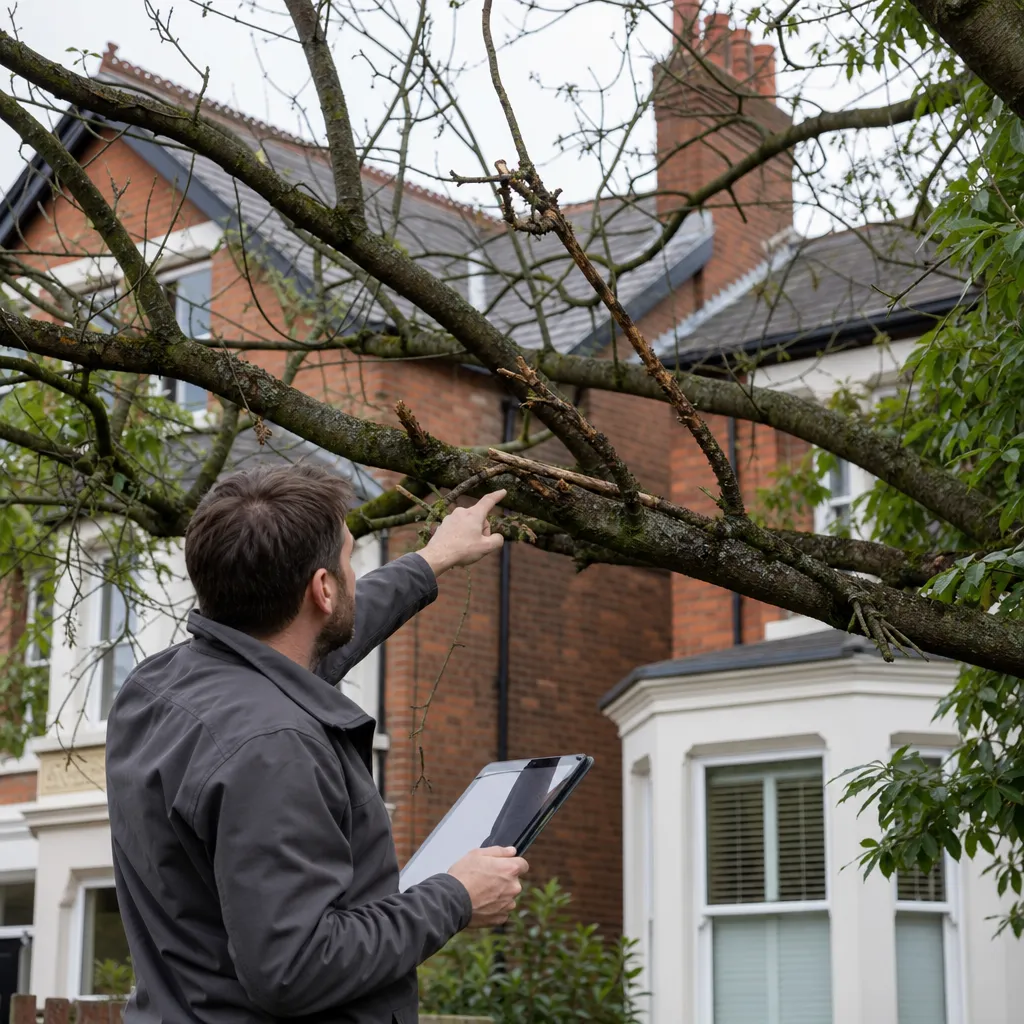
Discovering that branches on a garden or boundary tree are losing leaves out of season, failing to bud in spring, or showing cracked and darkened bark is a concern that many UK homeowners encounter. Whether the tree is a mature oak, a garden apple, an ornamental cherry, or a young street tree, understanding what is causing dieback matters — both for saving the tree where possible and for managing the safety risk that dead branches above paths, outbuildings, or neighbouring land can present.
Key points
- The scratch test — lightly scoring bark with a fingernail or clean knife — is the quickest first check: green or moist tissue underneath indicates a live branch; brown or dry tissue suggests it is dead or dying.
- Ash dieback (Hymenoscyphus fraxineus), now widespread across England and Wales, causes progressive crown dieback in ash trees; the Forestry Commission and Forest Research publish identification and management guidance.
- Honey fungus (Armillaria species) is among the most destructive causes of tree and shrub death in UK gardens, attacking roots and the root collar; there is no effective chemical treatment.
- Dead branches above 3 m in height present a genuine falling hazard and should be assessed by a qualified arborist registered with the Arboricultural Association rather than removed by a householder.
- Trees with Tree Preservation Orders (TPOs) or located in conservation areas require consent from the local planning authority before any pruning or removal, regardless of the tree's condition.
How to confirm a branch is dead or dying
Not all bare branches in winter are dead — dormant deciduous trees shed all foliage between November and April. The scratch test is the most reliable quick method at any time of year: use a fingernail or a clean knife to remove a small sliver of outer bark. Living tissue immediately below will be green, white, or cream and slightly moist. Dead or dying tissue will be dry, brown, or blackish throughout.
Additional signs a branch is in serious decline:
- No bud development when surrounding branches are actively budding in spring
- Bark that is peeling, splitting longitudinally, or covered in fungal bracket growths
- Epicormic shoots — dense clusters of thin shoots — erupting from the trunk directly below affected limbs, which is a recognised stress response
- Visible cankers (sunken, discoloured lesions) on the bark surface
- Wilting or browning foliage that does not recover after a dry spell
Common causes of branch dieback in UK trees
Cause | Typical signs | Trees most affected | Recommended action |
|---|---|---|---|
Fungal disease (e.g., ash dieback, Phytophthora) | Wilting leaves, crown dieback from tips, lesions on bark | Ash, beech, alder, and many others | Arboricultural assessment; notify Forestry Commission for notifiable species |
Honey fungus (Armillaria species) | White mycelial sheets under bark at root collar, bootlace rhizomorphs in soil, honey-coloured toadstools in autumn | Broad range of trees and shrubs | Remove infected material promptly; no effective chemical treatment available |
Bacterial canker | Sunken, oozing lesions; gum exudate; dieback beyond the canker | Plum, cherry, and other Prunus species | Prune to clean wood; disinfect tools between cuts; professional advice for severe cases |
Drought stress | Progressive tip dieback; early leaf drop; fine root damage | Any tree, especially on paved or compacted sites | Improve irrigation and soil aeration; mulch the root zone |
Physical damage or girdling | Clean wound or ring of damage around trunk or branch | Any tree near roads, machinery, or mowers | Assess wound; consult arborist if structural integrity is affected |
Pest damage (e.g., horse chestnut leaf miner, elm bark beetle) | Leaf scorch, galleries under bark, holes in bark | Horse chestnut, elm, and others | Species-specific management — consult arborist or Forest Research |
Root compaction or waterlogging | General crown thinning; small leaves; progressive dieback | Any tree on clay or compacted urban soils | Improve drainage; aerate root zone; arborist assessment |
Red flags: when dieback signals serious risk
Some dieback patterns are warning signs that go beyond routine maintenance. Seek professional advice promptly if you observe any of the following:
- Crown dieback exceeding 25–30% of the canopy — suggests severe root, vascular, or systemic disease and may indicate the tree cannot be saved.
- Bracket fungi (shelf fungus) growing from the trunk or major limbs — these fruiting bodies indicate significant internal wood decay that reduces structural integrity.
- Cracks in the main trunk or at major branch unions — may indicate structural failure risk independently of the dieback itself.
- Dieback directly above a structure, path, road, or garden boundary — a falling branch is both a safety hazard and a potential liability.
- Any sudden collapse of a large limb — even in apparently healthy trees, sudden branch drop is most common in mature oaks and beech during summer heat and is a recognised arboricultural hazard.
What to ask a tree surgeon or arborist
Before instructing a tree surgeon, ask the following questions to help you evaluate their assessment:
- Are you registered with the Arboricultural Association or do you hold ISA Certified Arborist status?
- Can you provide a written assessment of the cause before recommending removal?
- Is selective pruning sufficient, or is full removal required — and what is your reasoning?
- Does this tree have a Tree Preservation Order, or is it in a conservation area? Have you confirmed this with the local planning authority?
- What will happen to the removed material — chipped on site, taken away, or left as logs?
- Is a follow-up inspection recommended and, if so, when?
When to get professional help
Always commission a qualified arborist — look for Arboricultural Association Approved Contractor status or ISA Certified Arborist qualification — for:
- Any dieback in a tree over 5 m tall, where work requires climbing or aerial access
- Suspected notifiable disease, including ash dieback (Hymenoscyphus fraxineus), Phytophthora ramorum, or oak processionary moth infestations
- Trees with TPOs or in conservation areas
- Any tree where falling material could reach a building, vehicle, or neighbouring property
- Bracket fungi on the main stem or major scaffold branches
- Dieback affecting more than one-third of the crown
Do not attempt to remove branches above 2 m using ladders without professional equipment and appropriate training.
How Housey can help
If you are concerned about dying branches on a tree in your garden, find a qualified tree surgeon through Housey to assess the cause and recommend the right course of action. For a formal written report — which may be required by your insurer, lender, or local planning authority — Housey also connects homeowners with arboricultural survey specialists.
Frequently asked questions
Do I need permission to prune or remove a tree in my garden?
Not always. If the tree does not have a Tree Preservation Order and is not in a conservation area, you generally do not need consent in England. You must check both conditions with your local planning authority before proceeding — penalties for unlawful tree works can be significant.
How can I tell if a branch is dead in winter?
Use the scratch test: scrape a small area of outer bark with a clean fingernail or knife. Green, moist tissue underneath means the branch is alive. Dry, brown, or blackened tissue indicates it has died. Repeat at multiple points along the branch, as dieback may be partial.
Can a tree recover from partial dieback?
Often yes, if the cause is identified and addressed early. Drought-stressed trees may recover with improved irrigation and soil management. Trees with localised fungal cankers can sometimes be saved by targeted pruning to clean wood. Systemic diseases affecting the whole crown carry a much poorer prognosis.
What is the Arboricultural Association?
The Arboricultural Association is the professional body for arborists in the UK. Their Approved Contractor scheme provides a directory of vetted tree surgery businesses that hold appropriate insurance and employ qualified staff. You can search for a local contractor at trees.org.uk.
Sources and further reading
- Forest Research: tree pests and diseases — Forest Research / Forestry Commission
- Arboricultural Association: find an approved contractor — Arboricultural Association
- GOV.UK: tree preservation orders and trees in conservation areas — GOV.UK
- RHS: honey fungus identification and management — Royal Horticultural Society
Useful next reads
 Improvement & Build
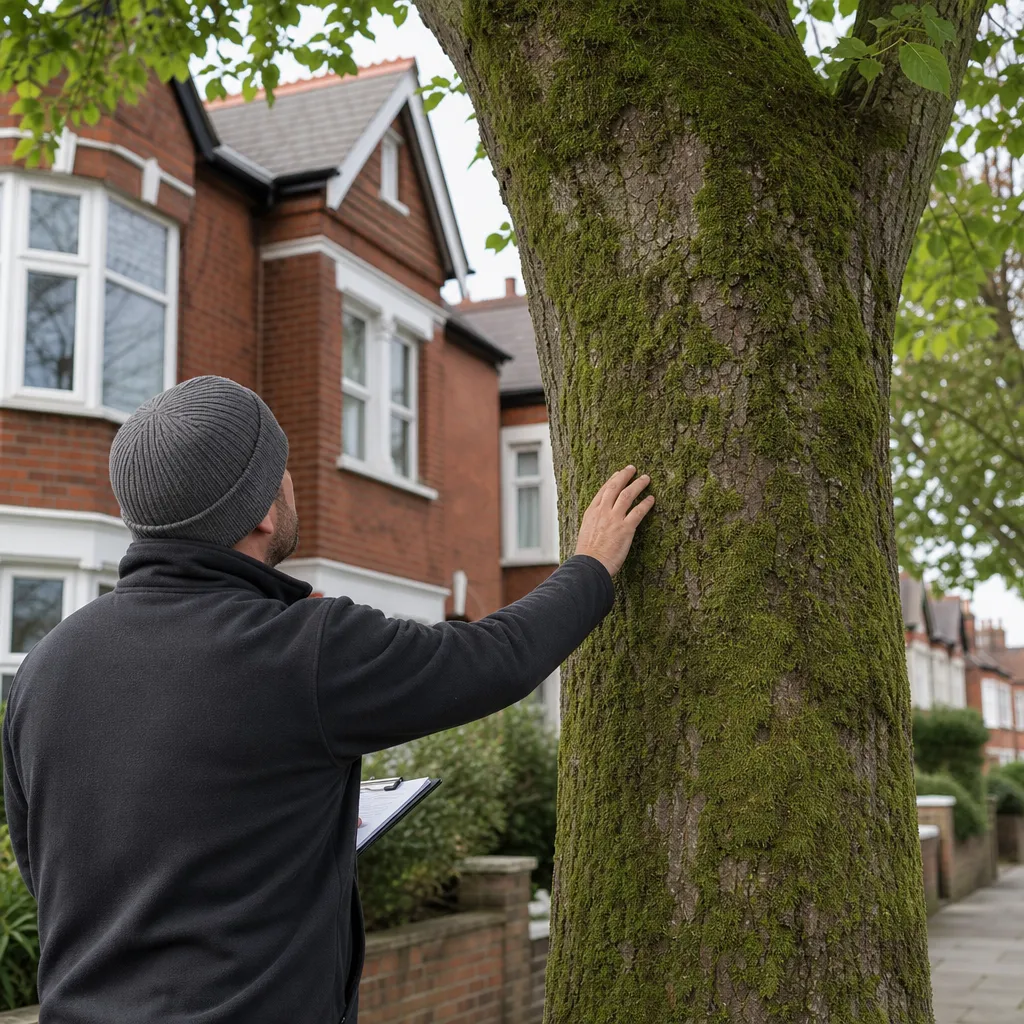
Moss on Trees: Causes, Identification, and Management
Moss growing on trees is usually harmless — it does not parasitise or feed on the tree.
 Improvement & Build
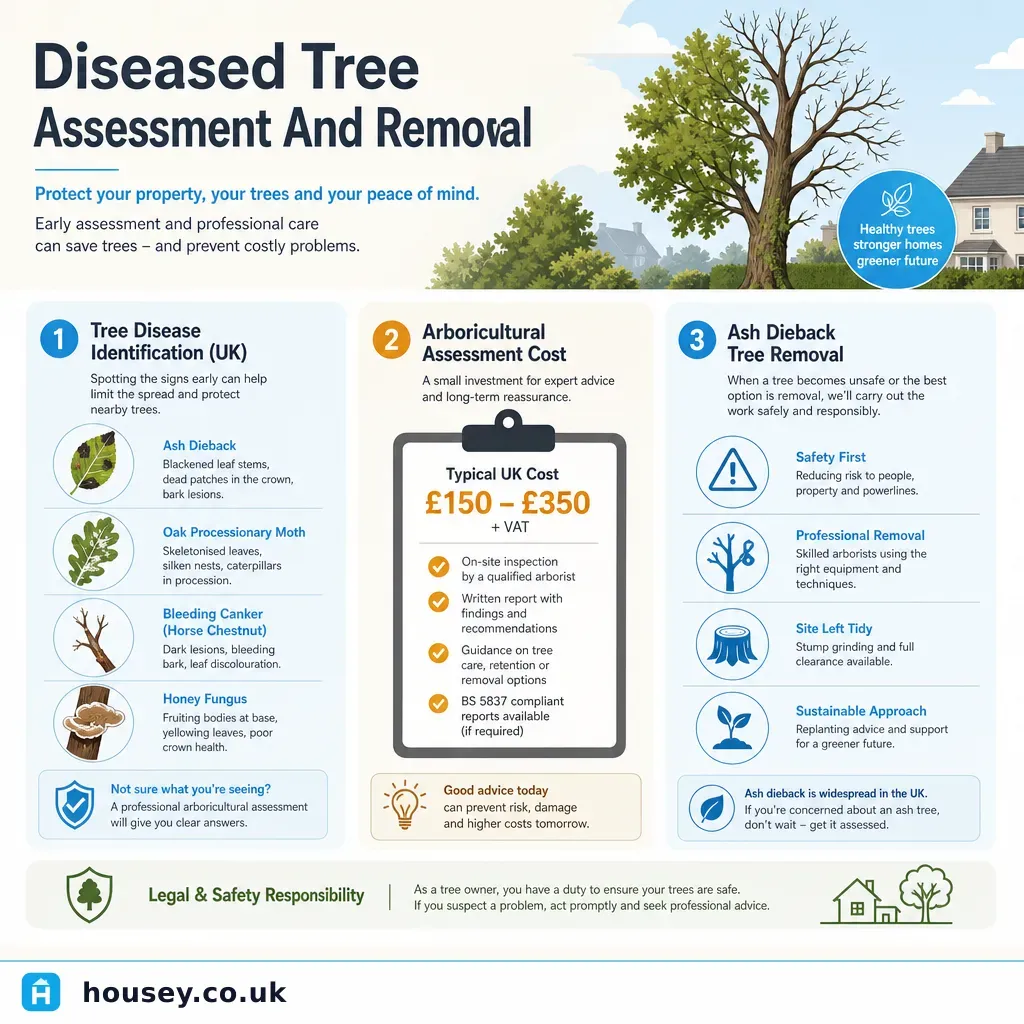
Diseased Tree Assessment And Removal
A diseased or structurally compromised tree can pose a serious safety risk, but not every unhealthy-looking specimen needs to come down.
 Improvement & Build
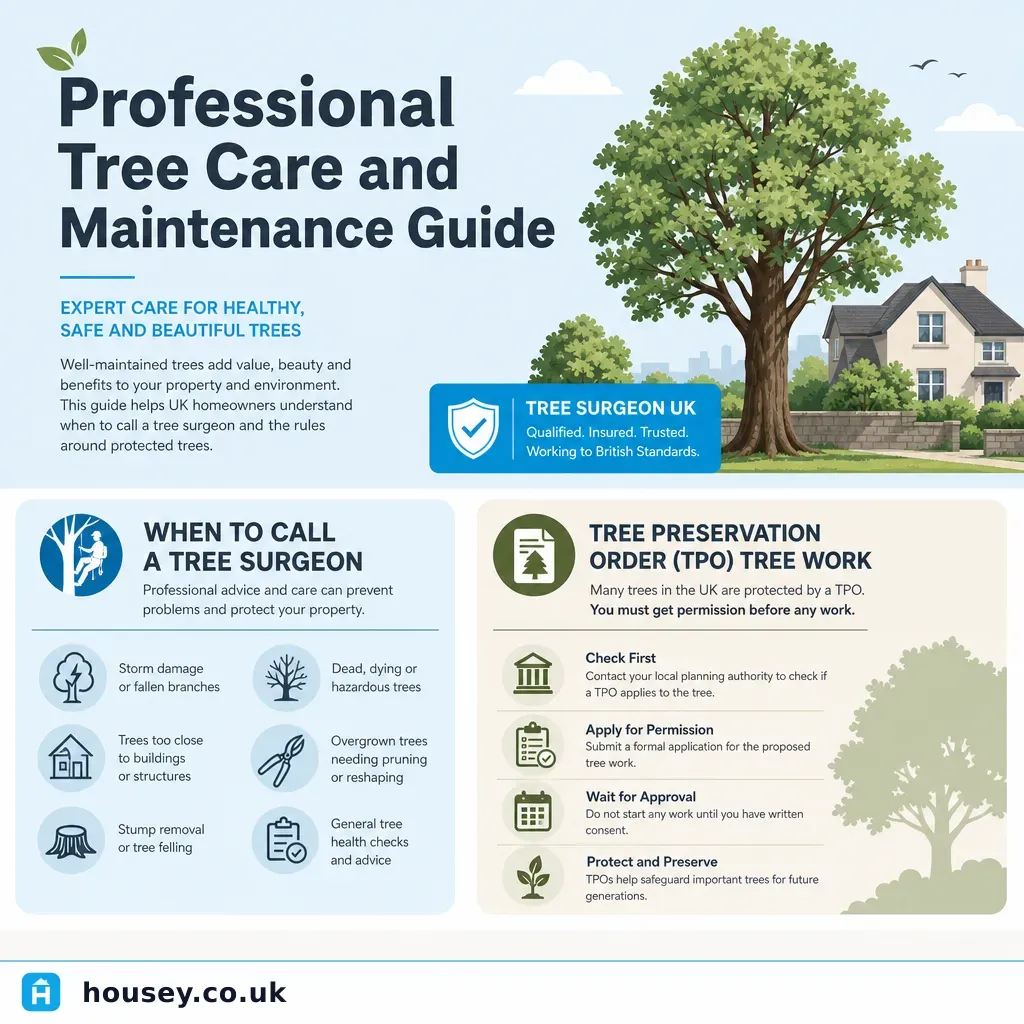
Professional Tree Care and Maintenance Guide
Professional tree care covers pruning, crown reduction, felling, and health assessments carried out by qualified arborists.
 Improvement & Build
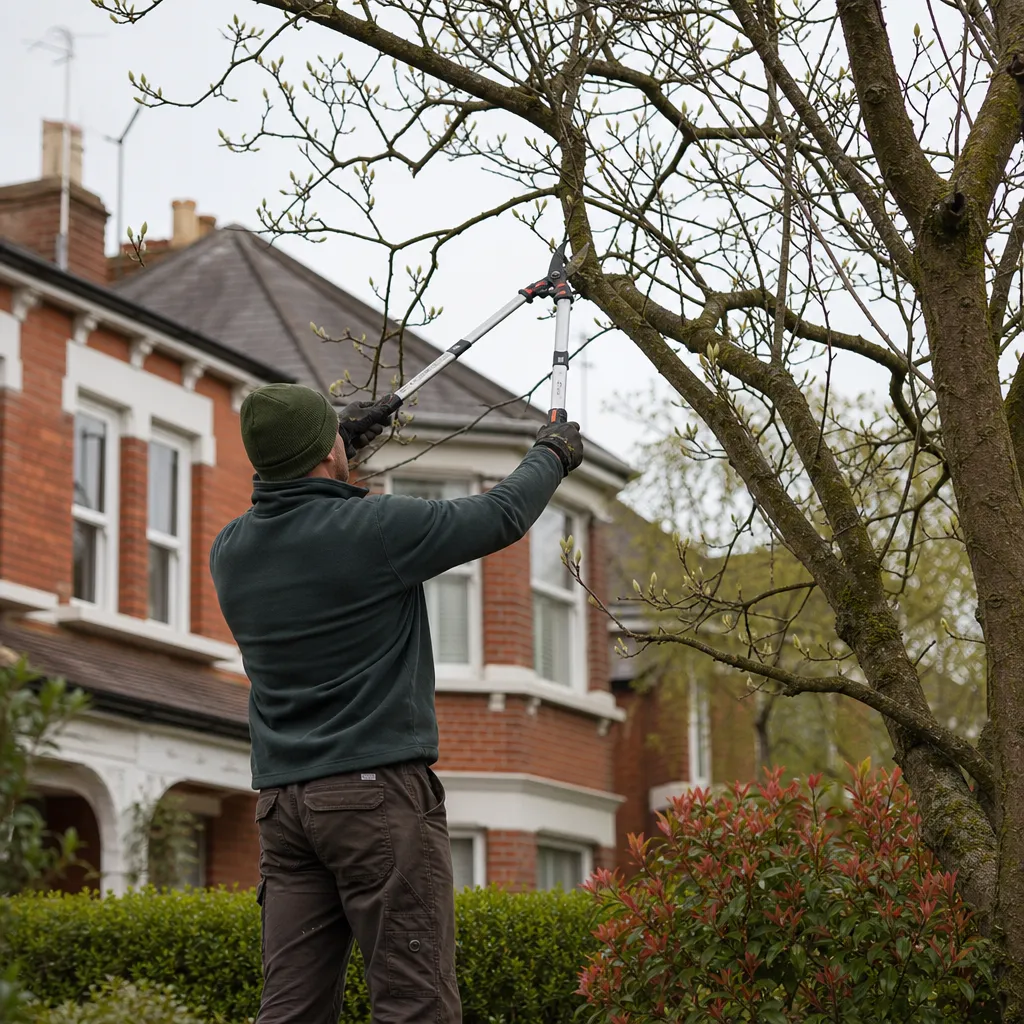
When to Prune Trees: Timing Guide for UK Tree Care
Most deciduous trees are best pruned between November and February, when dormancy reduces disease risk.
 Improvement & Build
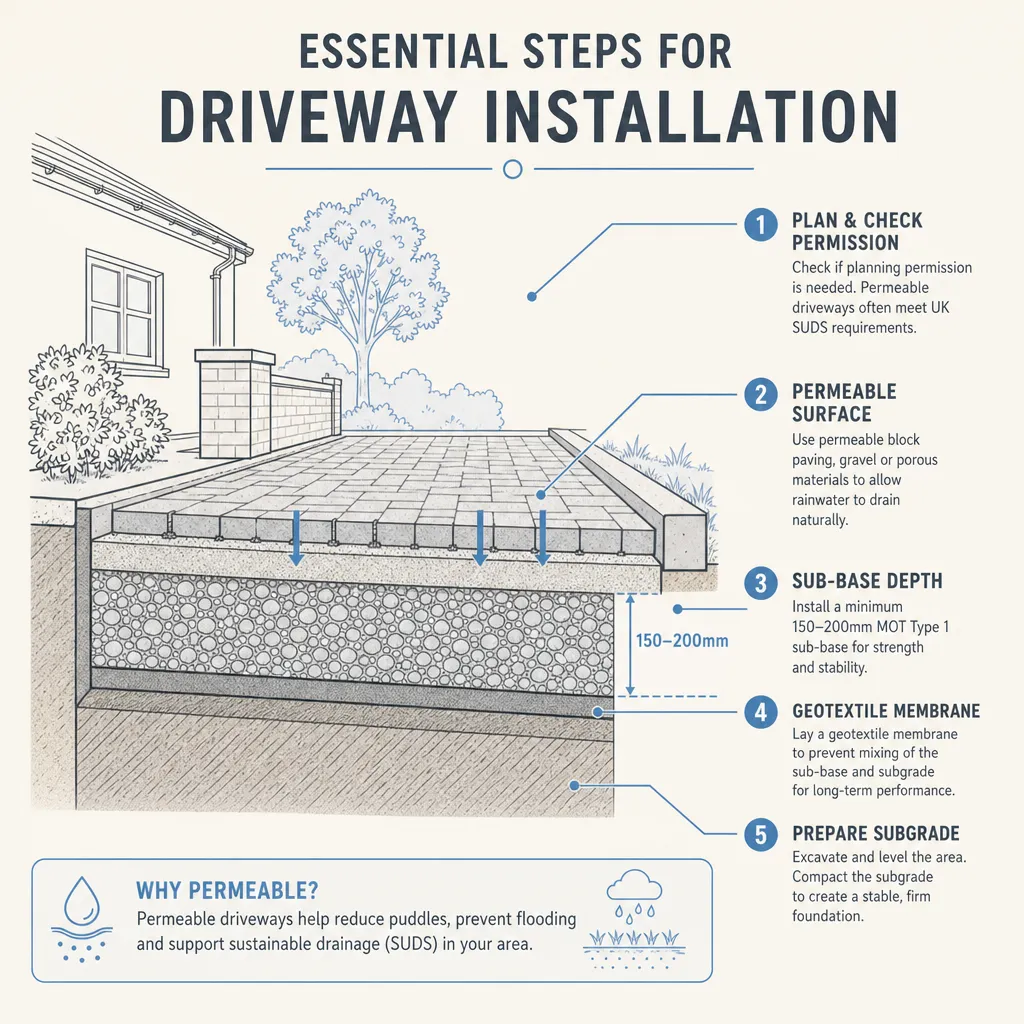
Essential Steps for Driveway Installation
Installing a driveway in England requires planning permission only when using an impermeable surface (standard tarmac, concrete, or block paving) on a front garden area over 5 m².