Watering Large Trees: Techniques and Frequency for Establishment
By Housey · Last reviewed 11th of May 2026
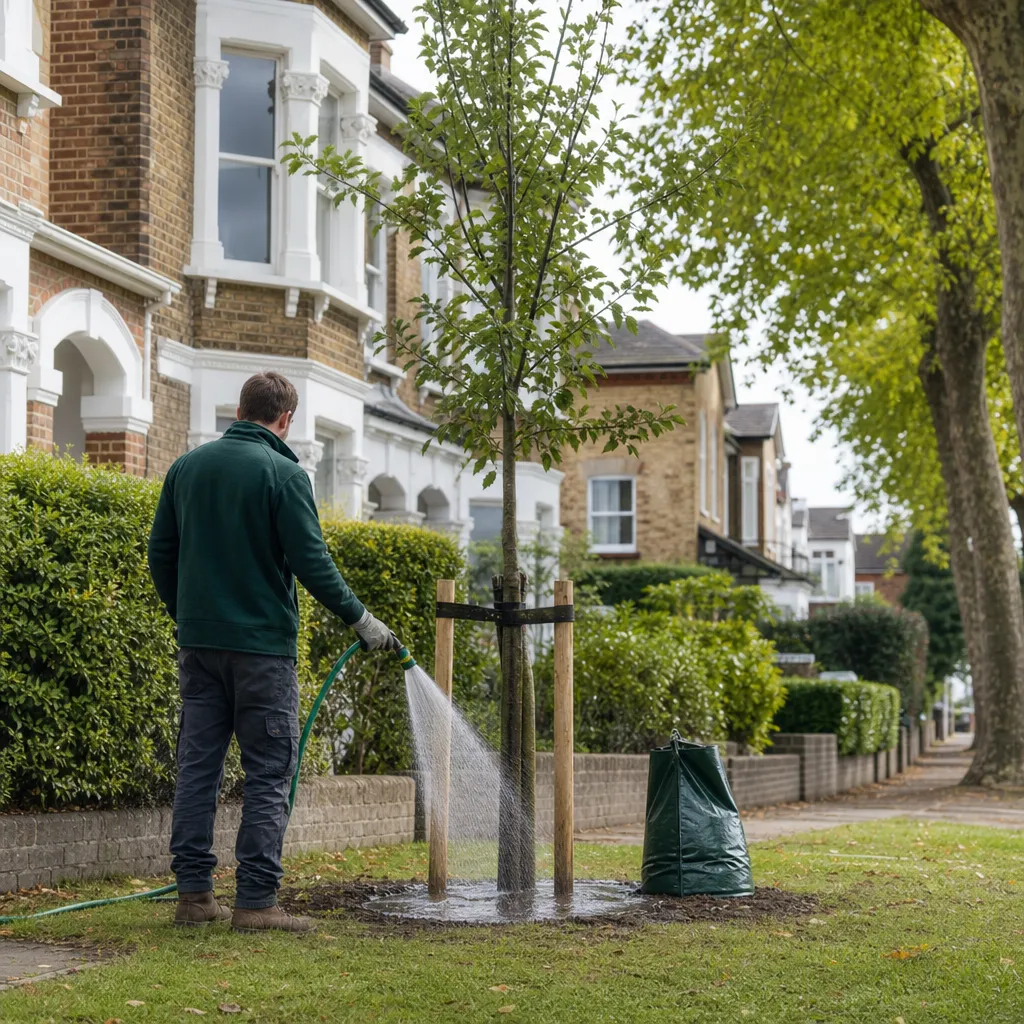
Watering Large Trees: Techniques and Frequency for Establishment
The first two to three years after planting are the most critical period in a large tree's life in a UK garden or landscape. During this establishment phase, the tree's root system is far smaller than the canopy it must support — and regardless of typical UK rainfall — it cannot yet draw sufficient moisture from the surrounding soil without supplementary watering. Poor establishment watering is one of the most common reasons newly planted trees fail, and the problem is often invisible until the damage is already done.
Key points
- The RHS recommends watering newly planted trees at approximately 50–90 litres per week during dry periods in the growing season (spring to autumn), adjusted for tree size and soil type.
- Establishment typically takes around one year per centimetre of stem diameter at 1 m height — the standard measure used in BS 8545:2014 (Trees: from nursery to independence in the landscape).
- Deep, slow watering at the root zone is significantly more effective than surface spray irrigation — the goal is root-zone saturation, not surface wetting.
- A 75–100 mm mulch layer within a 1 m radius of the trunk can substantially reduce moisture evaporation and reduce the frequency of watering needed during dry spells.
- Sandy and chalky soils require more frequent watering than heavy clay soils, which retain moisture longer but can become waterlogged in poorly draining ground.
How much water does a large tree actually need?
The volume required depends on stem size, species, season, and soil type. As a working guide:
- Small transplants (stem diameter under 6 cm): 20–40 litres per week in dry conditions.
- Medium nursery trees (stem diameter 6–12 cm): 40–70 litres per week.
- Large semi-mature trees (stem diameter over 12 cm): 70–120 litres per week, or more in hot or windy conditions.
These are indicative values. In the UK, the growing season runs broadly from March to October. Outside this period — particularly November through February — established trees rarely need supplementary watering unless conditions are unusually dry.
Watering techniques for large trees
Slow drip at the root zone. The most effective method for establishment. A leaky pipe, drip irrigation ring, or purpose-designed slow-release system delivers water directly to the root ball over several hours, encouraging deep root development. Avoid hosepipe spraying over the canopy — it does little for root establishment.
Bucket or water-well method. A 30–50 litre bucket with a small drainage hole placed over the root zone delivers steady, controlled water with no specialist equipment. Many tree stakes incorporate a water tube for this purpose.
Tree watering bags. Slow-release bags — widely used in urban tree planting schemes run by local authorities across England — typically hold 70–80 litres and release water over 5–9 hours. Practical for trees in hard-standing areas or where manual watering is infrequent.
General sprinkler or spray irrigation. Surface sprinklers are largely ineffective for establishing large trees. They wet the ground surface but rarely penetrate to the depth at which tree roots are developing.
How often should you water?
Watering frequency depends on weather, soil type, and the tree's stage of establishment. Use this as a guide:
- Typical UK spring or autumn conditions: once per week.
- Dry spells (no significant rain for 10 or more days): every 3–4 days.
- Hot, windy summer conditions: every 2–3 days for recently planted large specimens.
- Heavy clay soil: reduce frequency slightly; monitor for standing water around the root zone.
- Sandy or free-draining soil: increase frequency; check soil moisture at 15–20 cm depth before each session.
- After heavy rainfall (more than 15 mm in 24 hours): skip the next scheduled watering and check soil moisture before resuming.
Which watering approach suits your situation?
- Choose drip or slow-release watering if the tree was planted this season, the soil is free-draining, or you cannot water frequently throughout the growing season.
- Choose bucket or water-well watering if you are managing a small number of trees and prefer hands-on control with no additional equipment.
- Choose tree watering bags if the tree is in a hard-standing or urban setting, or where access for regular manual watering is difficult.
- Consult a tree surgeon or arborist if the tree shows persistent drought stress despite regular watering, the root zone is heavily compacted, or the tree was a large semi-mature specimen transplanted at significant cost.
- Check with your local planning authority if the tree was planted under a planning condition or is subject to a Tree Preservation Order (TPO) — significant root-zone intervention may require prior consent.
Mulching: the most effective watering supplement
Applying a 75–100 mm layer of organic mulch — wood chip, composted bark, or leaf mould — to a 1 m radius around the tree base substantially reduces surface evaporation and moderates soil temperature. The RHS identifies mulching as one of the most effective actions a homeowner can take to support establishment between watering sessions.
Keep a 100 mm gap between the mulch and the trunk itself to prevent collar rot. Avoid:
- Rubber or volcanic stone mulches, which add no organic matter to the soil.
- Mulch piled against the trunk base.
- Grass growing right up to the trunk — grass competes strongly for moisture and nutrients during the first two years.
Signs your tree needs more water
Watch for the following indicators between watering sessions:
- Leaves wilting, curling inward, or developing crispy edges before autumn.
- Early, significant leaf drop during summer.
- Yellowing of leaves not explained by pests or nutrient deficiency.
- Bark that appears shrunken or beginning to separate from the trunk.
- Soil that is dry and crumbly at 15–20 cm depth when tested with a finger or trowel.
Conversely, signs of overwatering in poorly draining soils include persistently soggy ground around the root zone, yellowing lower leaves, and fungal growth at the trunk base.
A tree establishment watering checklist
Use this checklist for each watering session during the first two growing seasons.
When to get professional help
Seek advice from a qualified arborist or tree surgeon if:
- The tree has been planted for more than a year and continues to show drought stress despite regular watering.
- The root zone is waterlogged or the soil has compacted significantly since planting.
- The tree shows signs of canker, fungal infection at the base, or physical bark damage.
- The tree is subject to a Tree Preservation Order (TPO) or was planted under a planning condition — significant root-zone work may require prior consent from the local planning authority.
- You need a formal establishment watering specification for a BS 8545-compliant planting scheme.
How Housey can help
For newly planted trees that are struggling despite regular watering, or for larger planting schemes that need ongoing professional management, tree surgeons and landscapers listed on Housey can assess root-zone conditions, recommend a tailored irrigation approach, and carry out any remedial work needed to support successful establishment.
Frequently asked questions
How do I know if my newly planted tree needs more water?
Push a finger or trowel into the soil at 15–20 cm depth close to the root ball. If the soil is dry and crumbly, watering is needed. Watch for wilting, curling, or crispy leaf edges outside of autumn — these are early drought stress indicators. If the tree has dropped significant leaf cover during summer, seek arborist advice as the stress may already be severe.
Can you overwater a large tree?
Yes. Overwatering in heavy or poorly draining soil causes waterlogging, which deprives roots of oxygen and can lead to root rot. Symptoms include yellowing lower leaves, persistently soggy soil around the base, and fungal growth at the trunk. The key is to check soil moisture before each watering session rather than following a rigid timetable.
Should I water trees during winter in the UK?
Supplementary watering is rarely needed for deciduous trees during the UK winter (November to February), as they are dormant and rainfall is typically sufficient. Evergreen trees may benefit from occasional watering during prolonged dry, cold spells. Avoid watering when the ground is frozen.
Does soil type affect how often I need to water a new tree?
Yes, significantly. Sandy and chalky soils drain quickly and may require watering every 2–3 days in dry conditions. Clay soils retain moisture longer but risk waterlogging if drainage is poor. Adding organic matter to the planting pit at installation improves moisture retention in sandy soils and drainage structure in clay-heavy ground.
Sources and further reading
- RHS: Watering trees and shrubs — Royal Horticultural Society
- Arboricultural Association: Tree planting and establishment — Arboricultural Association
- BS 8545:2014 Trees: from nursery to independence in the landscape — BSI (British Standards Institution)
- Forestry Commission: Urban tree planting guidance — Forestry England
Useful next reads
 Improvement & Build
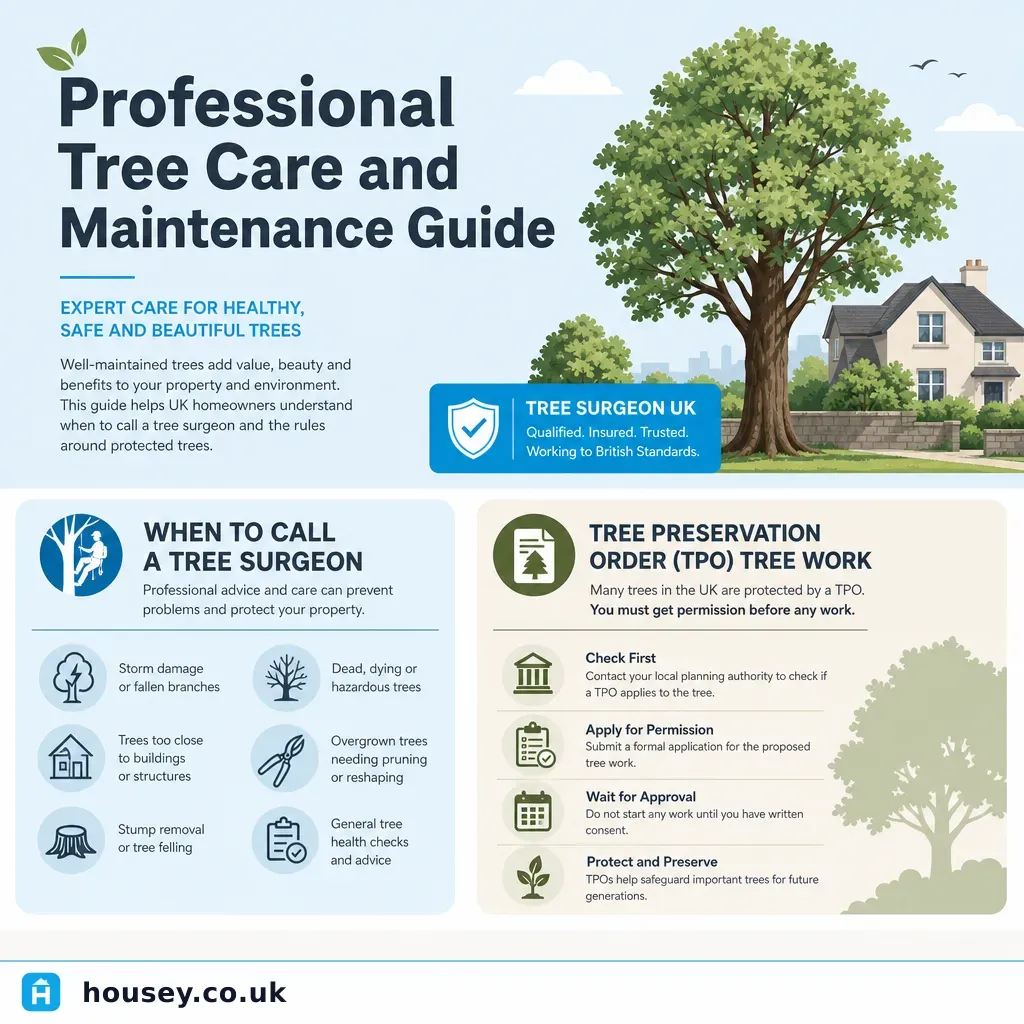
Professional Tree Care and Maintenance Guide
Professional tree care covers pruning, crown reduction, felling, and health assessments carried out by qualified arborists.
 Improvement & Build
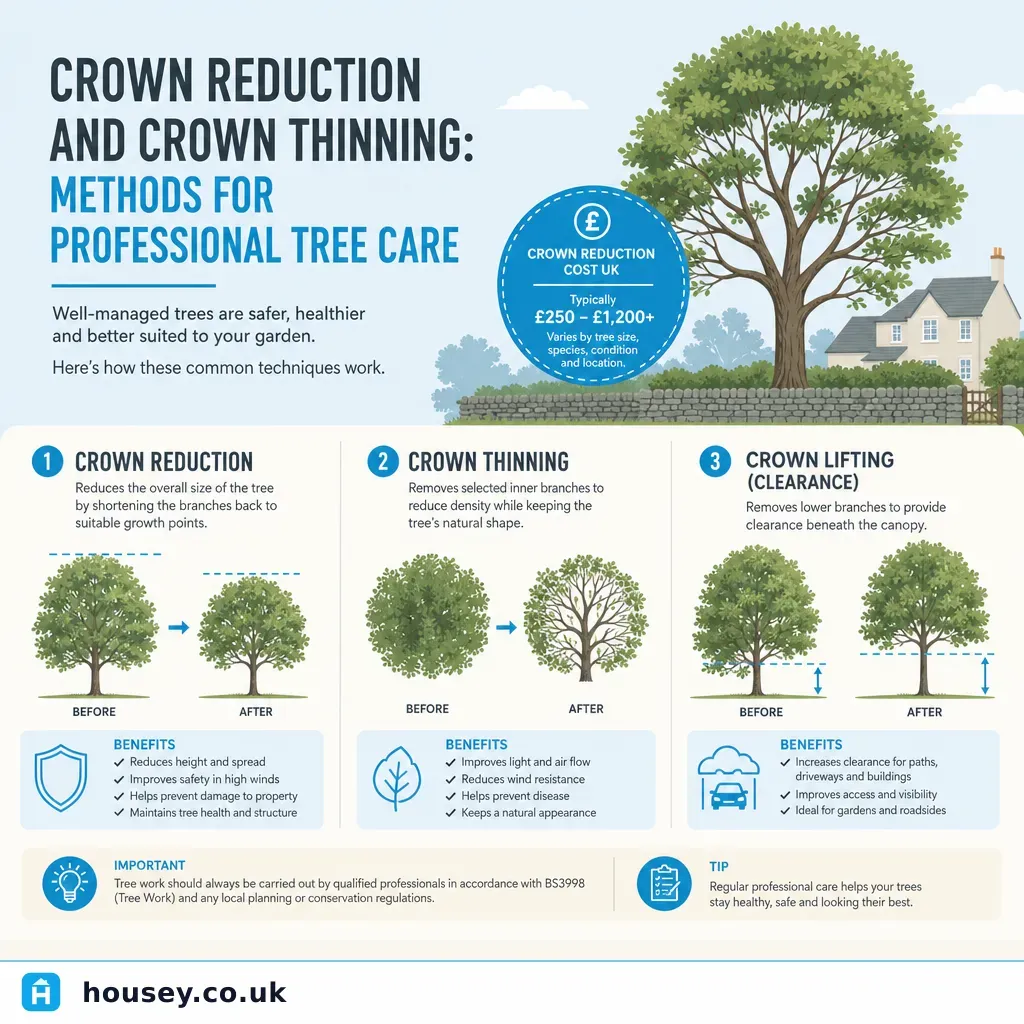
Crown Reduction and Crown Thinning: Methods for Professional Tree Care
Crown reduction cuts the canopy back to lateral growth points, reducing overall height or spread.
 Improvement & Build
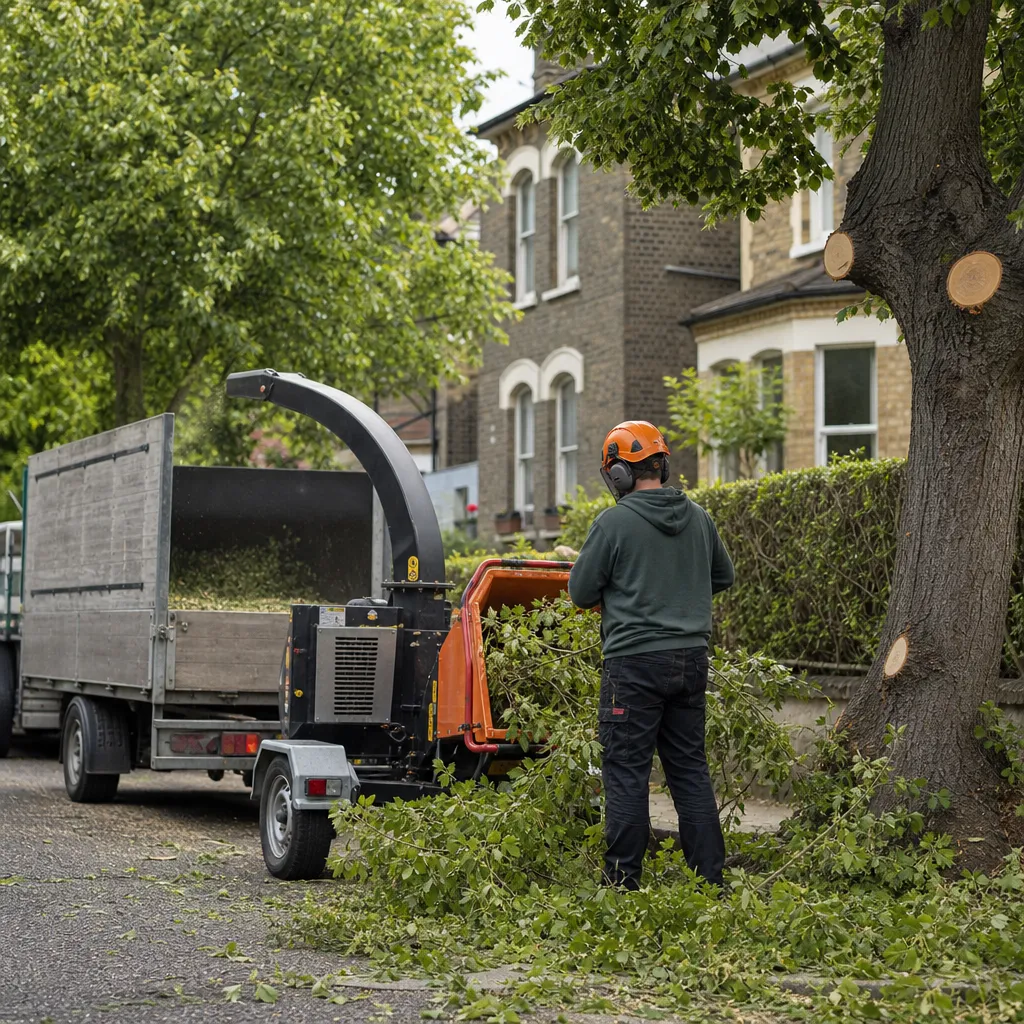
Professional Tree Trimming and Limb Removal Equipment Explained
Professional tree surgeons use chainsaws, pole pruners, rope-access climbing rigs or mobile elevated work platforms, wood chippers, and stump grinders depending on the job.
 Improvement & Build
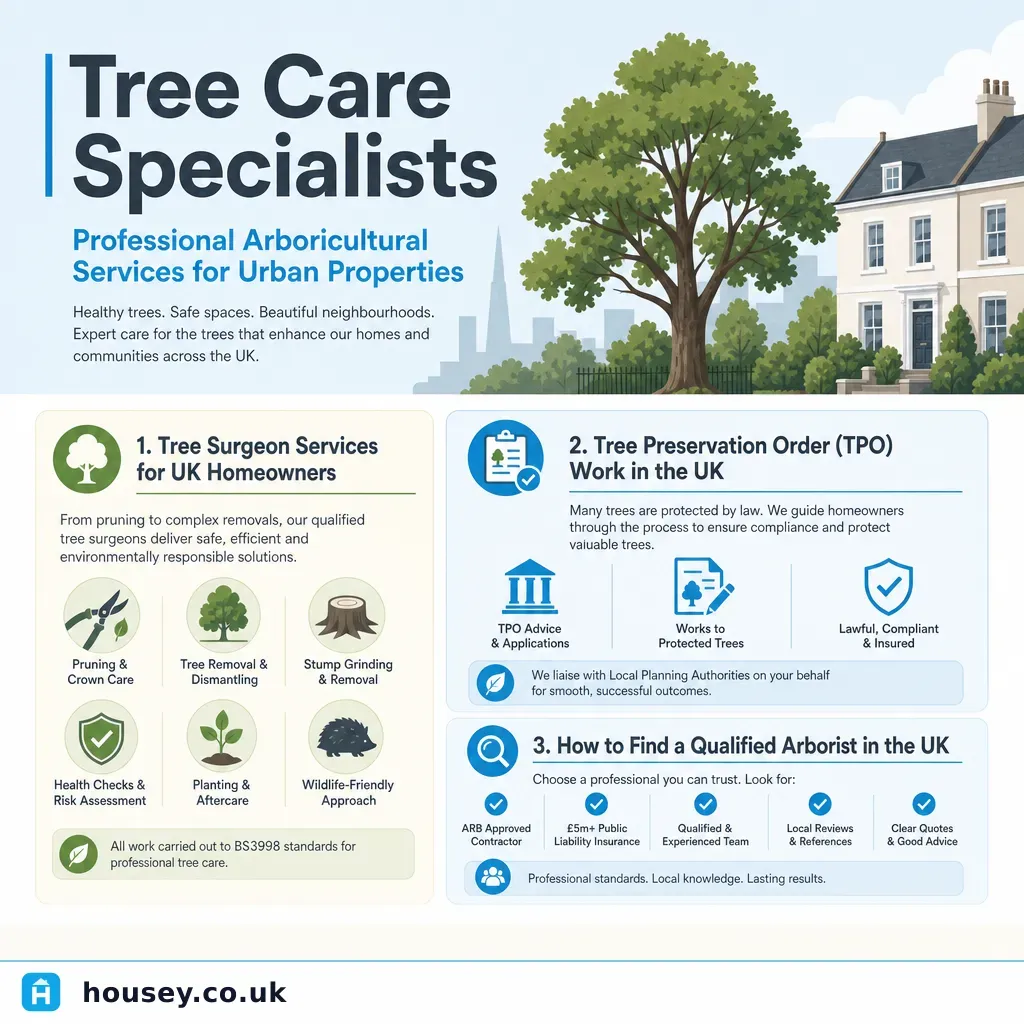
Tree Care Specialists: Professional Arboricultural Services for Urban Properties
Professional arboricultural services cover tree surgery, pruning, crown reduction, felling, and health assessments.
 Improvement & Build
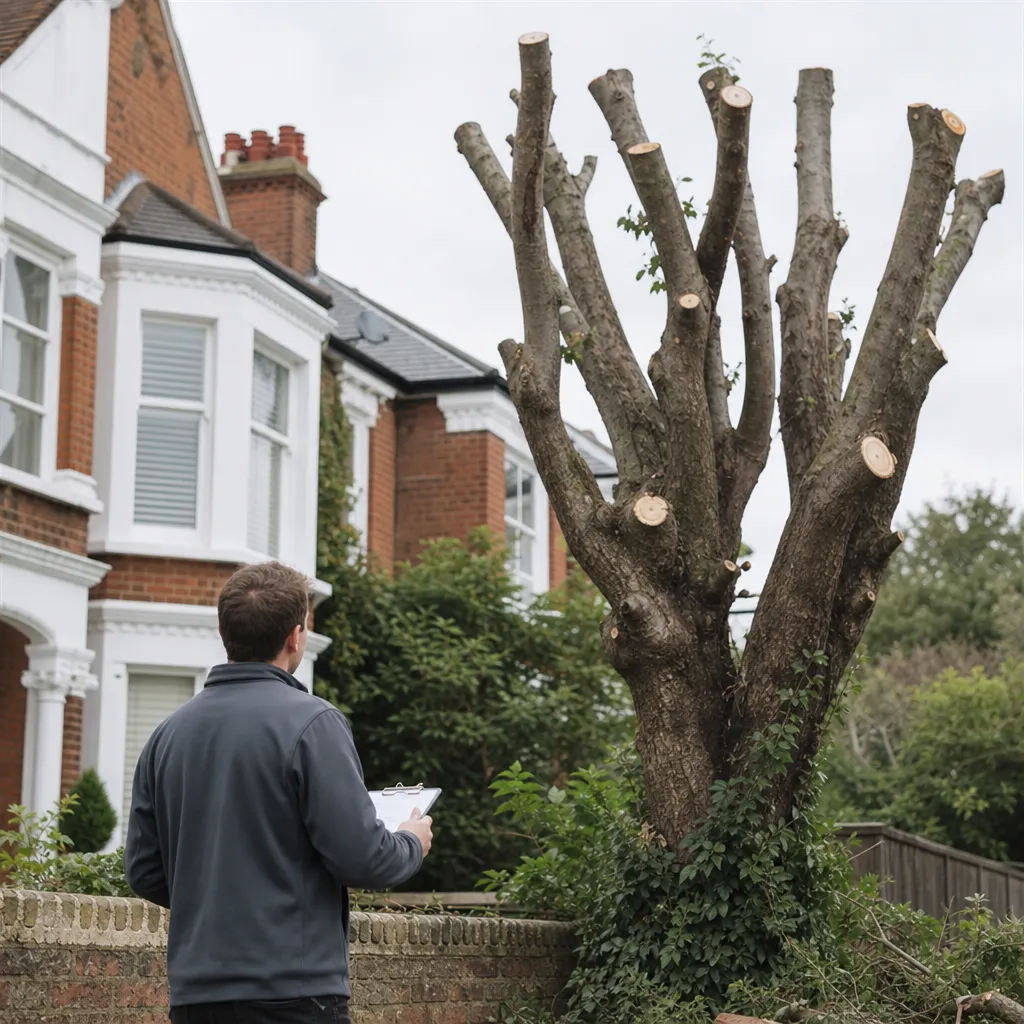
Tree Topping: Why It's Harmful and Better Alternatives for Tree Care
Tree topping — removing large sections of a tree's crown through indiscriminate cuts — causes serious structural weakness, fungal decay, and vigorous but poorly attached regrowth.